Blog

  • Too Much Prayer, Too Little Work? -Prof Bagambaki Reads The Manual on Laziness To Ugandan Believers.

    Too Much Prayer, Too Little Work? -Prof Bagambaki Reads The Manual on Laziness To Ugandan Believers.

    Preamble: Welcome to The TEU Workshop.

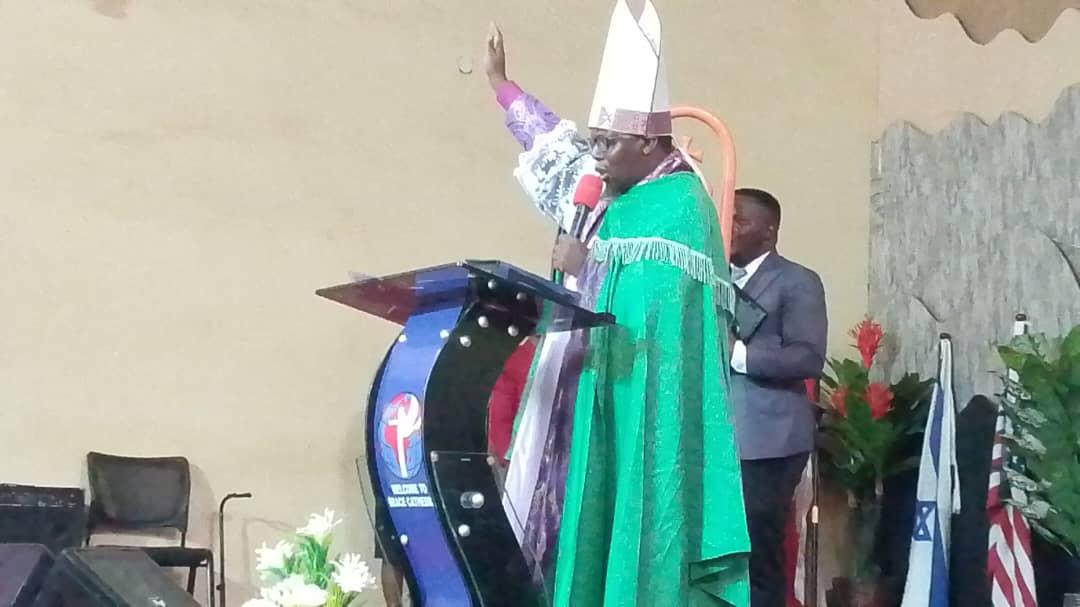
    Workshop Foreman’s Voice: “Welcome to the TEU Supersonic Workshop, Station 20260518. I’m your foreman today, Archbishop Elect Professor Mugume Bagambaki Richard, and this is not a talk shop but a place where we fix things with tools in hand.

    On the bench before you lies, The Manual, not a party manifesto or policy brief but the Bible, which we handle the way engineers handle a service manual: to check the original design specs, diagnose what has gone wrong, and restore function.

    Look around this workshop. There is grease on the floor, sawdust in the air, oil on the benches, and the sharp bite of metal from the saws. The welder stands in the corner with his mask down, the protective glass shielding his eyes from the excessive bright light that would otherwise blind him.

    The electrician moves past in heavy boots, pliers in hand, because one wrong touch here can end a life. Occasionally a spanner slips and skins a knuckle. Sometimes the dust gets in your eyes and you cough. Mechanics leave here with dirty overalls and sometimes with bandages, and people on the street call them dirty.

    The Manual is the same, it is not a clean, decorative book for display. It occasionally commands things that get under your nails, that challenge your pride, that expose your faults and leave you feeling stripped and dirty.

    It can even rebuke in ways that feel like a wound. Proverbs 27:17 says iron sharpens iron, and that process throws sparks.

    Yet if you follow The Manual carefully, it is excellent guidance. It builds what is broken, aligns what is crooked, and gets the engine running right. Above the door hangs the sign that reads, GET OUT OF LAZINESS. WHOSEVER DOES NOT WORK SHOULD NOT THINK EVEN OF EATING EITHER,’ taken from 2 Thessalonians 3:10, and the fine print on the workbench clarifies that this targets unwillingness rather than inability because the same Manual commands us to look after widows, orphans, the elderly, the sick and the disabled in James 1:27.

    Today we are stripping the engine of ‘work’ to ask what it really is, who qualifies as a worker, and why Uganda continues to act as though half the engine does not exist. Put on your overalls, your mask, and your boots. Expect some grease and some sparks. Pick up your tools. The Manual is open. Let’s work.”

    The Workshop Report: Theology, Economics And the Ugandan Who Is Already Working.

    Archbishop Elect Prof. Bagambaki begins by turning to 2 Thessalonians 3:6–15, a letter Paul wrote around 51 A.D to a church where some believers had laid down their tools.

    Convinced that Christ’s return was imminent, they stopped working, became meddlers rather than laborers, and expected others to feed them. Paul’s answer was direct: “The one who is unwilling to work shall not eat,” and he offered himself as the example by reminding them that he and his companions had worked night and day so as not to be a burden.

    The rule, Prof. Bagambaki stresses, is aimed at idleness by choice and not at poverty by circumstance.

    From The Manual, the foreman draws a wider picture of work. Genesis shows God himself as the first worker, creating for six days and resting on the seventh, and Adam placed in the garden to cultivate and maintain it before the Fall ever occurred.

    After the Fall, work became toil and the ground was cursed, yet it did not become sin, for Proverbs still calls the slack worker a brother to the destroyer and warns that laziness brings hunger. At the same time, Scripture never confuses inability with laziness, and it insists that true religion looks after orphans and widows, the disabled and the elderly.

    That distinction reshapes how the workshop defines work. Prof. Bagambaki says work is any intentional and productive activity that cultivates, maintains or improves life and community and therefore reflects God’s character.

    Economists may measure work by goods and services that carry value, while development economists insist on measurable contributions to wellbeing, but the theological lens sees work as co-creation with God in Colossians 3:23 and as fruit that reveals character in Matthew 7:16. When these two perspectives collide in Uganda, they expose a blind spot where large sections of the population are laboring without being named as workers.

    Through the workshop window the foreman points to the streets of Kampala, Jinja, Lira and Arua, where the economy is being built by hands that national budgets rarely count. There is the woman from Anyomolyec in Otwal who rises before dawn to sweep a grass-thatched kitchen and light firewood, producing meals, health and childcare that economists call unpaid care work and that Uganda’s GDP does not capture even though the United Nations estimates such labor equals roughly nine percent of global output.

    There is the old man trimming a hedge for cash, the youth washing cars in Wabigalo, Namuwongo, Kazimingi and Mafubira, and the disabled man on Lira Main Street or Obote Avenue who sits on a verandah to shine shoes.

    None of them carry contracts or pay NSSF, yet the transport touts shouting “Kampala Kampala! Mbarara! Arua Pakwach or West Nile!” are the reason buses and taxis move at all.

    The Uganda Bureau of Statistics (UBOS)headed by Dr Chris Ndatira Mukia as ED estimates that the informal sector accounts for about fifty-one percent of GDP and employs more than eighty percent of the workforce, which means policy continues to be designed for the minority and expected to serve the majority.

    It is at this point that the foreman addresses a tension common in many church buildings across Uganda, where believers spend the whole week praying, shouting “Hallelujah!” and “I receive it in Jesus’ name!” while following pastors who teach them to PUSH, which means Pray Until Something Happens, and yet they must still eat.

    Paul, Prof. Bagambaki notes, never opposed prayer because he himself wrote “pray without ceasing” in 1 Thessalonians 5:17, but he confronted the Thessalonians because they had turned prayer into an excuse for idleness.

    The apostle called them busybodies, not busy people, and set himself as a model by working night and day before delivering the rule that the unwilling should not eat.

    In the workshop’s reading, prayer and work are the two hands of the believer, one lifted to God and the other holding the hoe, the spanner or the shoe-shine brush, and if both hands remain in the air, then no door is opened and no food is earned.

    The Manual insists on balance: Psalm 127:1 says that unless the Lord builds the house the builders labor in vain, yet James 2:17 reminds us that faith without works is dead. To those who PUSH all week, the foreman’s message is that they should also PRODUCE, because God may send ravens to Elijah but He tells the disciples, “You give them something to eat.”

    The church therefore has a duty to teach both altars and anointing oil and hoes and hammers, lest it produce believers who are loudest on Sunday and hungriest on Monday.

    From theology the workshop moves to policy. Prof. Bagambaki argues that Uganda must first correct a distorted theology that either treats work as a curse, as in Bob Black’s 1985 essay “The Abolition of Work,” or preaches that blessing means not working at all, for The Manual treats work as worship and laziness as sin while still demanding that work be dignified.

    (For context: Bob Black whose real name was Robert Charles Black born in 1951 was an American anarchist, essayist and lawyer known for critiquing the modern work ethic from an anarchist/post-left perspective.

    He argues that compulsory wage labor or work is the main source of human misery and should be abolished, replaced by voluntary, playful, self-directed activity).

    Second, the country must redefine who counts as a worker, because if budgets and statistics only reward the salaried then they will keep missing the woman at the firewood, the car-washer and the shoe-shiner, and social protection, SACCOs and market infrastructure will continue to be built from the boardroom instead of the workshop floor.

    Third, the workshop must address habits of lateness and laziness, which The Manual does not legislate as a commandment but treats as matters of love and reputation, for 1 Corinthians 13:5 says love is not rude and Ecclesiastes 7:1 says a good name is better than precious ointment, meaning that chronic tardiness damages Christ’s reputation and must be corrected through awareness, planning and prayer for wisdom in James 1:5.

    On welfare, the foreman recalls that the Bible’s system was/is work-based, as seen in Leviticus where the poor were allowed to glean fields, and that 1 Timothy 5:8 is severe in declaring that anyone who does not provide for his household has denied the faith and is worse than an unbeliever. The line is therefore clear: those who can provide must do so, and those who cannot must be helped with dignity.

    The workshop concludes by recalling that while the Fall made work hard, Revelation shows a future where work is restored without thorns and thistles, and until that day Jesus’ standard remains, “My food is to do the will of him who sent me and to finish his work.”

    From that standard the TEU workshop draws its final judgments. Work is good because it reflects God and is the path of Uganda’s development. Unwillingness to work is sin, but inability is not, and the church and the state must learn to tell them apart. Prayer is fuel but never an excuse, and those who PUSH must also PRODUCE.

    Uganda’s real workers are often invisible, yet the woman at the firewood, the tout and the shoe-shiner are building the country, and national budgets must begin to see them or they will keep designing for a workshop that does not exist.

    Finally, lateness and laziness are reputation issues that tell the world Christ is unreliable, and the workshop fixes them with love, discipline and wisdom.

    Foreman’s Closing Message.

    “Tool down. The Manual is closed for today. If you can work, work. If you cannot, you will not be left to starve. If you are already working but no one sees you, The Manual sees you, and TEU sees you. That is the job.

    Archbishop Elect Professor Mugume Bagambaki Richard.

    Ecclesiastical Episcopal Conference Patriarch of Five-Fold Episcopal World Federation

    Archbishop of Upper City Covenant Churches

    President and Chancellor, UCCSAT University

    Contact: +256775050183.

    We are The Exposure Uganda (TEU) with our acclaimed slogan We Expose, You Decide.

    No topic is complicated or controversial enough for us not to tackle. We do it with a lot of fairness, objectivity and professionalism. We are also not ashamed or afraid to guide when and where necessary.

     

  • Ex-Minister Asuman Kiyingi on Parliament, the Law and The Flight Plan.

    Ex-Minister Asuman Kiyingi on Parliament, the Law and The Flight Plan.

    Preamble to The Exposure Uganda (TEU)  

    In-Flight Briefing TEU-20260518

    Welcome aboard TEU Supersonic.

    Relax, this is not a fighter jet and we are not dropping anything except footnotes. TEU Supersonic is a passenger plane, and you are the kind of passenger we like: smart, restless, allergic to half-truths, and thirsty for information that actually makes sense.

    We are flying at cruising altitude of “Let’s Talk About It Properly.” Destination: a clearer view of Parliament, the law, and why both should behave like they belong to you.

    For this trip, please switch your mind to “curious” mode and stow away “I already know everything” mode. It will not fit in the overhead bin.

    Keep your skepticism on. Keep your sense of humor on. If an idea makes you uncomfortable, breathe, read it again, then decide. Our job is not to sell you a destination. It’s to make sure you can see the map, read the compass, and ask why the plane keeps circling the same runway.

    A plane only works if the crew knows the manual and the passengers know where it’s supposed to go. Lately, Parliament has felt less like a deliberative body and more like a lounge where the guest list gets decided before you arrive. That’s not how it’s supposed to work.

    Here’s the simple philosophy: a republic is a shared aircraft. The Constitution is the manual. The people are both passengers and part-owners. When the manual gets ignored, everyone feels the turbulence.

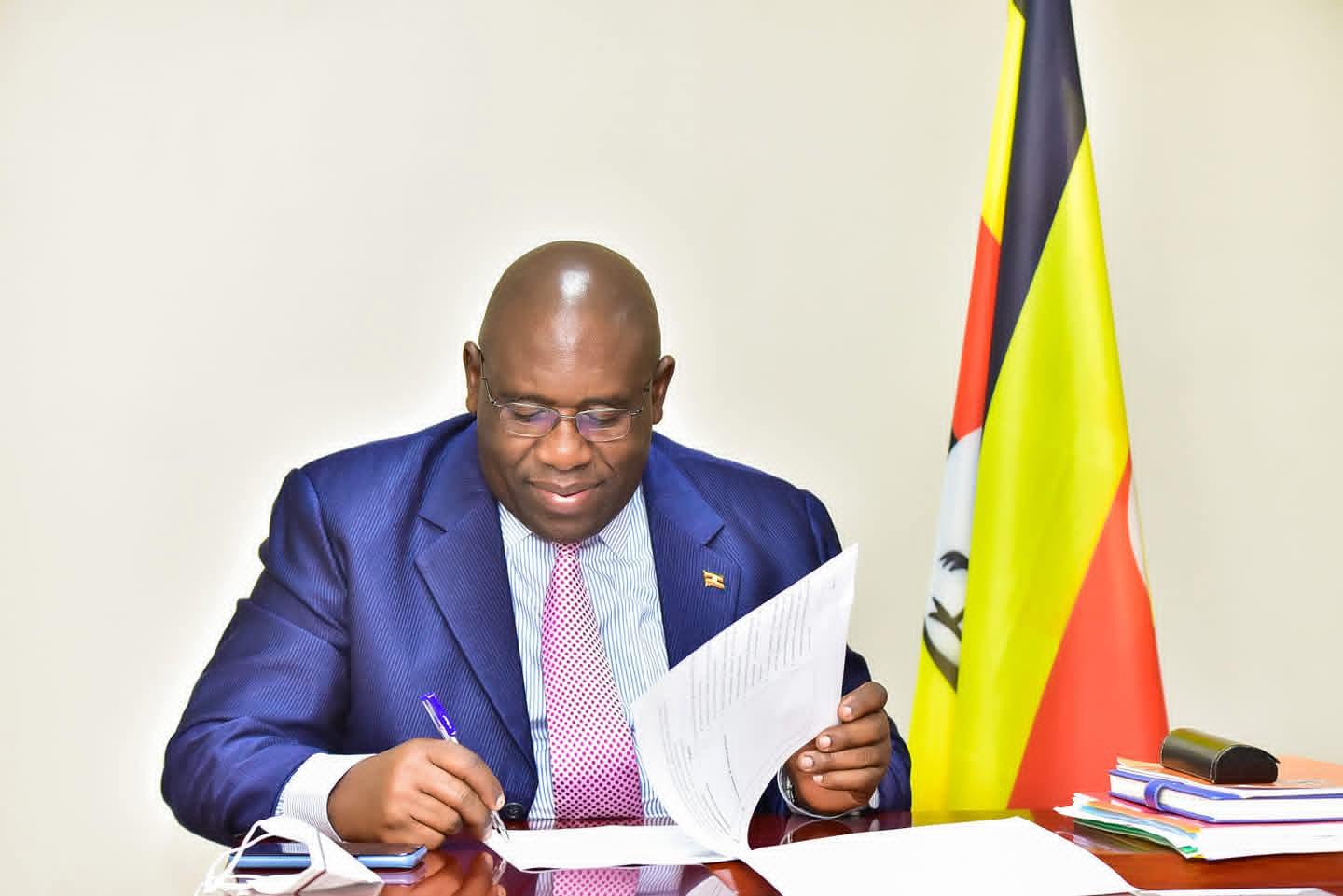
    So, we have invited Hon. Asuman Kiyingi to the cockpit for today’s leg. He is not here to shout. He is here to read the manual out loud, explain why Article 82 and Article 208(2) matter, and show what happens when Parliament and the law stop being spectators in their own story.

    Think of this as your in-flight briefing no jargon without translation, no outrage without context. Just a clear, sharp look at where we are, why it matters, and what a functioning flight plan looks like.

    Fasten your seatbelts, open your mind, and keep your questions ready. Hon. Asuman Kiyingi will be with you shortly.

    TEU Supersonic: We Expose, You Decide.  

    Transporting the knowledge-thirsty, one honest conversation at a time.

    Beyond Anita Among: What Must Be Done to Reclaim Parliamentary Independence and the Rule of Law in Uganda

    By Asuman Kiyingi

    The high-stakes political crisis unfolding as the 12th Parliament takes shape—marked by citizen petitions under the Leadership Code Act, high-profile asset investigations, cash seizures, and the sudden withdrawal of political endorsements for the outgoing Speaker, Anita Annet Among, and her deputy, Thomas Tayebwa—has left the Ugandan public locked in a state of shock and anxiety. From the ostentatious displays of multi-billion-shilling luxury vehicles amidst widespread economic distress to the current dramatic security operations on Anita Among’s residences in Nakasero and Kigo, the balance of power is shifting rapidly.

    Yet, as the state security apparatus and ruling party factions scramble to manage this fallout, the most damning indictment is not directed solely at the beleaguered outgoing leadership of the August House. It should be shared with the formal Opposition, whose silence and strategic paralysis have reduced them to passive spectators of their country’s destiny.

    The Costs of Safe Cynicism: The Opposition’s Abdication of Duty

    Faced with this seismic rift within the National Resistance Movement (NRM) coalition, the main opposition parties have offered neither a unified institutional statement nor hinted at a consensus candidate for the Speakership. Instead, the opposition’s response has been outsourced to individual outbursts of safe cynicism and sharp wit. While theatrical advice urging the embattled Speaker to “use her resources and fight on,” or mocking the executive’s hypocrisy, makes for engaging political satire, it is a poor substitute for a robust counter-narrative and strategy.

    By retreating into silence, the opposition has effectively conceded that the Speakership of the 12th Parliament is an “internal NRM affair.” This passive stance permits President Yoweri Museveni and the leadership of the Patriotic League of Uganda (PLU) to project themselves as anti-corruption crusaders.

    Yet this posture is a profound historical distortion. The current enforcement is deeply duplicitous; it is a half-hearted commitment to anti-corruption operating strictly on the calculus of a “use-and-dump” strategy.

    The historical timeline exposes this acute duplicity:

    1. The Trigger: Digital Exposure and Institutional Shielding

    The current crisis traces its most recent origins directly to February and March 2024, when Agora Discourse—whose leading public figures included investigative journalist Agather Atuhaire, lawyer Godwin Toko, and Dr. Jimmy Spire Ssentongo—launched the #UgandaParliamentExhibition on X. The exhibition unmasked Speaker Anita Among’s massive per diem allocations, multi-billion-shilling “Corporate Social Responsibility” (CSR) funds routed through private staff accounts, nepotism, and the controversial 500-million-shilling “Service Award.”

    Following these explosive revelations, public interest lawyers formally petitioned the Inspectorate of Government (IGG) to investigate. Rather than launching an immediate probe, the IGG deployed an administrative delaying tactic, advising that the office could not act because the Auditor General was handling a routine financial audit of Parliament. Frustrated, activist lawyers bypassed the IGG and directly petitioned the Leadership Code Tribunal (LCT). The LCT flatly rejected the petition on jurisdictional grounds, clarifying that under the statutory command of the Leadership Code Act, it cannot receive direct complaints from citizens; it can only adjudicate cases exclusively investigated and referred to it by the IGG.

    1. The Street Mobilization and State Repression

    While the formal avenues of accountability were blocked by this bureaucratic game of legal “ping-pong,” public anger boiled over. Inspired by youth movements across the region, a decentralized coalition organized the #March2Parliament anti-corruption demonstrations between July 22 and July 25, 2024.

    Instead of listening to the citizens, the executive stood firmly behind Anita Among, shielding her from scrutiny. President Museveni issued televised warnings that protesters were “playing with fire.” Security forces responded with iron-fisted repression. Over 104 individuals were arrested. High-profile figures at the National Unity Platform (NUP) headquarters, including Deputy President Dr. Lina Zedriga Waru and Members of Parliament Francis Zaake, Charles Tebandeke, and Hassan Kirumira, were targeted. On the streets, prominent youth leaders like former Makerere University Guild President Salim Papa Were and activist Praise Aloikin were dragged into police vans.

    The state deployed a tactical legal shortcut to break the movement’s momentum: approximately 100 peaceful citizens were hurried through magistrates’ courts, charged with the colonial-era misdemeanor of “Common Nuisance” under the Penal Code Act, and systematically denied bail—remanding them to facilities such as Luzira Prison and Kitalya Prison for weeks.

    To allow the executive to now rewrite history, activating the IGG and deploying security agencies in highly publicized searches and operations only when it becomes politically convenient to neutralize Among as a front-runner for the 12th Parliament, is a catastrophic failure of opposition leadership. It validates a system where accountability is never structural, but merely a weapon of selective enforcement used to discard loyalists who have outgrown their political utility.

    The Constitutional Overreach: The Shadow of Military Dictation

    Compounding this institutional vacuum is the deeply troubling, unconstitutional behavior of external political and military actors seeking to dictate the leadership of Parliament, a co-equal branch of government. The aggressive posturing by the Chief of Defence Forces (CDF) and the leadership of the PLU represents a serious encroachment on the constitutional order.

    This overreach was plainly on display during a thanksgiving party held in Kyungu, Mukono District, for outgoing Defence Minister hon Jacob Oboth-Oboth. At the event, PLU Secretary General and Kasambya County MP Hon David Kabanda went as far as to explicitly proclaim Oboth-Oboth the “next Speaker of Parliament.” Kabanda openly stated that he was executing direct instructions from the Chairman of the PLU, CDF Gen. Muhoozi Kainerugaba, and that the choice had been formally endorsed by President Museveni.

    To have the leadership of Parliament decreed at a private celebratory function by a military command structure is not only a violation of basic democratic tenets but a direct affront to Uganda’s Constitution:

    Article 208(2) of the Constitution explicitly mandates that the Uganda People’s Defence Forces (UPDF) must be non-partisan, national in character, and subordinate to civilian authority. When the choice of the next Speaker is openly dictated by the CDF through a political pressure group, the constitutional wall separating the military from civilian politics collapses.

    Article 82 provides that the election of the Speaker is the exclusive, sovereign prerogative of elected Members of Parliament. This mandate is executed through a secret ballot free from external coercion, as required under Rule 5 of the Rules of Procedure of the Parliament of Uganda.

    When military and factional entities treat the Speakership as a fait accompli to be settled via executive fiat or military decrees before the House even convenes, they reduce Parliament to a mere department of State House. The opposition’s failure to forcefully denounce and voice a constitutional objection to this overreach is an abdication of its duty to defend democratic governance.

    A Strategic Path Forward: Exploiting Fractures and Building a National Consensus

    The opposition must immediately abandon its current positioning as an audience to NRM theater and recognize that public anger across Uganda has created a rare opening for genuine structural change. Even from a position of numerical minority in the House, a sophisticated, proactive strategy can fundamentally alter the dynamics of the 12th Parliament.

    1.Court Courageous NRM Independents and Reformers

    The heavy-handed tactics used to neutralize the incumbent Speaker, combined with the overt military dictation of her successor witnessed in Mukono, have sent shockwaves through the backbenches of the ruling party. Many NRM and independent legislators are quietly terrified, realizing that the executive and military apparatus can completely bypass party organs and parliamentary rules to impose leaders.

    The opposition need not field a purely partisan candidate destined for certain defeat. Instead, they can actively court, endorse, and build a coalition around a courageous, independent-minded NRM candidate or a respected legal institutionalist willing to contest as an independent in the Speaker race. By exploiting internal anxieties through the constitutional and procedural guarantee of a secret ballot in the election of the Speaker, the opposition can galvanize a cross-party alliance of legislators eager to reclaim parliamentary independence from military and executive dictation.

    2.Make Universal Prosecution the Clarion Call.

    The opposition must shift the national narrative from the vulnerabilities of an individual to a systemic demand for uniform rule of law. The clarion call must be unambiguous: the full, transparent prosecution of all implicated culprits.

    The recovery of massive, unmapped cash reserves from a leader’s residence triggers immediate public outrage. While establishing strict criminal convictions for illicit enrichment under Section 31 of the Anti-Corruption Act or money laundering under the Anti-Money Laundering Act (AMLA) requires proving the underlying offense and navigating shifting evidentiary burdens, the state has shown it can move swiftly when motivated.

    The opposition must demand that this standard be universally applied. If the state is genuinely fighting corruption, lifestyle audits, asset tracing, wealth declarations, residential searches, and forensic audits currently deployed against the outgoing Speaker must be extended to all. Demanding equal enforcement exposes the selective nature of the current crackdown and prevents the regime from using anti-corruption rhetoric as a tool for selective political containment and fixing the Speaker race.

    1. Champion Legislative Decoupling

    The current crisis provides the ultimate justification for a comprehensive Parliamentary Reform Bill. The opposition must lead the charge to strip the Office of the Speaker of the immense, unilateral financial patronage and budgetary discretion that has turned the position into a toxic prize and an executive target. By tabling structural reforms to insulate oversight committees such as COSASE and PAC, and demanding total transparency in parliamentary expenditure, the opposition can channel public outrage into lasting institutional safeguards.

    Conclusion

    Ugandans are weary of a political landscape where accountability is only delivered as a byproduct of elite betrayal and “use-and-dump” calculations. The national anger generated by the exposure of systemic rot in the 11th Parliament must not be squandered or allowed to be co-opted by those who tolerated, built, or maintained the patronage network in the first place.

    The current crisis presents an opportunity that transcends the woes of any individual politician. If the opposition can rise above its paralyzing cynicism, stand firmly behind the constitutional independence of the legislature, and construct a broad anti-corruption consensus with courageous independent reformers, a new path becomes possible. The battle for the 12th Parliament must not be about which faction of the ruling establishment has the upper hand; it must be about dismantling the parchment barriers that protect the corrupt and beginning the arduous work of building a truly accountable, corruption-free Uganda.

    The writer is a Senior Advocate and former Minister.


  • How Prof Lubogo Unpacks the Ezeulu Syndrome For Rt Hon Anette Anita Among & Company: Power, Priesthood and the Cost of Misreading the ‘Gods’.

    How Prof Lubogo Unpacks the Ezeulu Syndrome For Rt Hon Anette Anita Among & Company: Power, Priesthood and the Cost of Misreading the ‘Gods’.

    The Exposure Uganda (TEU) Preamble:

    “Vanity of vanities, saith the Preacher, vanity of vanities; all is vanity: Ecclesiastes 1:2

    This was the lament of Solomon, son of David, king of Israel, a man who had tasted every privilege power could offer. He built palaces, commanded armies, accumulated wealth, married alliances, and was hailed as the wisest ruler of his age. Yet in his old age, stripped of illusion, he looked back at the stagecraft of court, the flattery of courtiers, the theatrics of loyalty, and called it what it was: vanity.

    Solomon spoke not as a cynic, but as a man who had mistaken the scaffolding for the house. He had seen how easily proximity to the throne breeds the delusion of permanence. How quickly titles become idols. How men begin to worship the system that once served the people, until the system discards them and moves on without a backward glance.

    It is in that same spirit that Prof. Isaac Christopher Lubogo approaches this essay. He is a legal surgeon by training, accustomed to dissecting statutes, precedent, and constitutional fictions with precision.

    But he is also armed with the tools of literature, history, and philosophy. Lubogo knows how to choose his diction the way a surgeon knows which scalpel and instrument fits the patient. Every word here is deliberate, every analogy calibrated, every satirical cut made to expose the tissue beneath the pomp.

    Read this essay therefore not as mere polemic, but as a clinical examination of power and its illusions. The names may be Ugandan, the context contemporary, but the diagnosis is as old as Solomon’s lament.

    Disclaimer.

    This essay is a work of political commentary, literary satire, philosophical reflection, and socio-political analysis written in the public interest. It draws upon publicly available political statements, symbolic expressions, literary analogies, and historical patterns within governance and power relations in Africa.

    The views, metaphors, parallels, and interpretations expressed herein are solely those of the author and are intended for academic discussion, intellectual engagement, political criticism, and freedom of expression purposes.

    Any references to individuals, institutions, religious symbolism, or political actors are used within the broader context of satire, literary critique, and constitutional commentary, and should not be construed as statements of criminal liability, malicious intent, or factual allegations beyond matters already existing in the public domain.

    The essay particularly employs comparative literary references—including Arrow of God and the tragic figure of Ezeulu—as interpretive frameworks through which questions of power, loyalty, political symbolism, and institutional dynamics may be examined.

    Readers are encouraged to approach the text as a contribution to democratic discourse, political philosophy, and African intellectual tradition.

    The Tragedy of Political Deification: Triple A, the Holy Trinity of Power, and the Ezeulu Syndrome

    By Isaac Christopher Lubogo.

    There is something profoundly tragic—almost Shakespearean—when a politician moves from merely seeking power to sanctifying power itself. In Uganda’s recent political theatre, few moments captured this transformation more dramatically than when Anita Among publicly invoked the language of the Holy Trinity and symbolically assigned political identities to it: President Yoweri Museveni as “God the Father,” Gen. Muhoozi Kainerugaba as “God the Son,” and the political faithful as the “Holy Spirit.”

    At the time, many dismissed it as ordinary political exaggeration—the ritual excesses of patronage politics. Others condemned it as blasphemous political worship. But today, as political winds shift, alliances tremble, and silence grows around her, the statement returns like a haunting prophecy against its own author.

    For history is merciless toward those who mistake proximity to power for permanence.

    And perhaps nowhere is this tragedy better captured than in the lament of Ezeulu, the tormented chief priest in Chinua Achebe’s Arrow of God. At the height of his isolation and collapse, Ezeulu painfully wonders whether he had been serving the wrong god all along—or whether the gods themselves had abandoned him.

    That question now hangs symbolically over Anita Among’s political journey.

    When Politicians Become Theologians of Power.

    African politics has always possessed religious undertones. Leaders are rarely presented merely as administrators; they are framed as saviours, liberators, fathers of nations, defenders of destiny, guardians of stability. Political systems survive not only through institutions, but through mythology.

    Yet there is a dangerous threshold where loyalty ceases to be political and becomes theological.

    When Anita Among invoked the Trinity metaphor, she was not merely campaigning. She was participating in what political philosophers call the sacralization of state power—the transformation of political authority into something holy, untouchable, and spiritually ordained.

    In such systems, dissent becomes heresy. Criticism becomes betrayal. And loyalty becomes worship.

    The irony, however, is devastating: political gods are unlike divine gods. They age. They recalculate. They abandon. They reorganize alliances according to survival—not affection.

    And this is where the tragedy deepens.

    Because the very “holy trinity” she publicly exalted now appears politically distant, fragmented, or strategically silent toward her amid growing controversies and shifting political calculations.

    The Cruelty of Power: It Never Loves Anyone.

    One of the greatest misunderstandings in politics is believing that power rewards loyalty indefinitely.

     It does not. Power rewards usefulness.

    The moment usefulness declines—or becomes politically expensive—the once celebrated loyalist suddenly discovers the terrifying emptiness of political loneliness.

    This is the ancient tragedy of court politics. Yesterday’s indispensable defender becomes today’s expendable burden.

    And Uganda’s political history is filled with such figures: men and women who once spoke with the confidence of immortality, only to later discover that the palace has no permanent tenants except uncertainty itself.

    The silence surrounding Anita Among in recent political storms has therefore generated symbolic interpretations among observers. The same networks once loudly associated with her now appear cautious, strategic, or withdrawn. Whether temporary or permanent, the optics are politically devastating.

    Because in politics, silence is never neutral.

    Silence is often a message. The Ezeulu Syndrome

    Ezeulu’s tragedy in Achebe’s masterpiece was not merely pride. It was miscalculation.

    He believed he and the gods were inseparable. He imagined himself indispensable to divine order. But eventually he discovered a horrifying truth: the gods could continue without him.

    That realization shattered him psychologically.

    Similarly, modern political actors often confuse access with ownership. They mistake favor for covenant. They interpret temporary closeness as eternal security.

    But power is transactional.

    The same system that elevates can isolate overnight.

    Thus, Anita Among’s present political predicament—whether temporary or structural—resembles the Ezeulu syndrome: the painful realization that the altar one defended may not defend back.

    And perhaps that is why political over-deification is dangerous. Because once you publicly elevate leaders into sacred beings, your own political survival becomes tied to their perpetual favor.

    The moment they retreat, you do not merely lose allies—you lose your theology.

    The Satire of the “Abandoned Trinity” The satire writes itself. (Ed: Satire in Literature in English is a literary technique where the writer uses humor, irony, exaggeration or ridicule to expose and criticize folly, vice, corruption or hypocrisy in individuals or society. It is not just making fun of things, the joke is the vehicle, the goal is correction or exposure).

    The woman who once publicly proclaimed, “We believe in the Father, the Son, and the Holy Spirit,” now appears, in the eyes of critics and commentators, politically stranded between earthly institutions and fading divine metaphors.

    The “Father” appears distant. The “Son” appears unpredictable.

    The “Holy Spirit” of mass political enthusiasm appears restless.

    And suddenly the political cathedral feels empty.

    This is why political satire can be so cruel: because it exposes the temporary nature of manufactured sacredness.

    Yesterday’s triumphant declarations become today’s haunting echoes.

    Uganda’s Political Lesson.

    But beyond Anita Among herself lies a broader national lesson.

    A republic becomes fragile when politics turns into worship culture.

    When leaders are treated as supernatural beings rather than constitutional office holders, institutions weaken and personal loyalty replaces principle.

    The danger is not merely religious offense. The danger is political infantilization.

    Citizens stop asking: “Is this policy constitutional?”

    and begin asking: “Is this person loyal to the supreme figure?”

    That is how republics quietly decay.

    And perhaps this explains why history repeatedly humbles political absolutism. Not because history hates strong leaders, but because history despises the illusion of permanence.

    Empires fall. Dynasties fracture. Favorites are replaced. Courts reorganize themselves.

    And those who once sounded untouchable suddenly begin speaking the language of survival.

    Conclusion: Between the Palace and the Wilderness.

    Anita Among’s story—real or perceived—is increasingly unfolding like an African political tragedy written somewhere between Parliament and mythology.

    It is the story of a politician who rose meteorically through loyalty, symbolism, and strategic proximity to power, but who now faces the eternal danger confronting all court politicians:

    What happens when the throne no longer speaks your language?

    And in the shadows of this question stands Ezeulu, whispering across African literature and political history:

    “Was I serving the wrong god… or have the gods abandoned me?”

    That is the terrifying question every political priest eventually confronts when the drums stop beating.

    TEU Explainer. Who Ezeulu Was?

    For readers unfamiliar with the novel, Ezeulu is the chief priest of Ulu, the god of six Igbo villages in colonial Nigeria. He is proud, intelligent, and convinced that his role makes him indispensable to both the people and the gods.

    When he believes his authority is being undermined by the encroaching colonial administration and Christian missionaries, he makes a fateful decision. He refuses to eat the new yams at the New Yam Festival, hoping to force the community to acknowledge his power and the power of Ulu.

    The gamble fails because while Ezeulu waits for the gods and the people to submit, the colonial system advances, his own influence erodes, and he is left isolated, betrayed by his own calculation.

    In his final moments of collapse, he wonders aloud whether he had been serving the wrong god all along, or whether the gods had abandoned him.

    The Syndrome Explained.

    This is the “Ezeulu Syndrome.” It describes the condition of a political actor who becomes so identified with power that they confuse proximity to it with control over it.

    Three elements define it: Mistaking role for Ownership. The priest believes he is the god, not the servant of the god. In politics, the loyalist begins to believe they are inseparable from the system they serve.

    Miscalculation of Indispensability. Ezeulu thought the community and the gods could not function without him. He discovered too late that institutions reorganize themselves when the old priest becomes inconvenient.

    Pride Leading to Isolation. His need to prove a point left him abandoned by both the traditional order and the new order.

    That is why the syndrome fits. Anita Among’s present political predicament, whether temporary or structural, mirrors this arc. The woman who publicly proclaimed, “We believe in the Father, the Son, and the Holy Spirit,” now appears, in the eyes of observers, politically stranded between earthly institutions and fading metaphors. The “Father” appears distant. The “Son” appears unpredictable. The “Holy Spirit” of mass political enthusiasm appears restless.

    The Broader Lesson.

    Beyond any individual lies a national lesson. A republic becomes fragile when politics turns into worship culture. When leaders are treated as supernatural beings rather than constitutional office holders, institutions weaken and personal loyalty replaces principle.

    Citizens stop asking, “Is this policy constitutional?” and begin asking, “Is this person loyal to the supreme figure?” That is how republics quietly decay.

    And perhaps this explains why history repeatedly humbles political absolutism. Not because history hates strong leaders, but because history despises the illusion of permanence. Empires fall. Dynasties fracture. Favorites are replaced. Courts reorganize themselves.

    Ezeulu’s final question still echoes across African political history:

    “Was I serving the wrong god, or have the gods abandoned me?” It is the terrifying question every political priest eventually confronts when the drums stop beating.

    The woman who publicly proclaimed, “We believe in the Father, the Son, and the Holy Spirit,” now appears, in the eyes of observers, politically stranded between earthly institutions and fading metaphors. The “Father” appears distant. The “Son” appears unpredictable. The “Holy Spirit” of mass political enthusiasm appears restless.

    About the writer:

    Prof. Isaac Christopher Lubogo is a Ugandan legal scholar, author of over 70 books, and CEO of Suigeneris Legal Legacy. He teaches law and jurisprudence at multiple Ugandan universities and was named Outstanding Legal Scholar of the Year at the 2025 SMEGAfrica Excellence Awards.

    This piece is published in partnership with The Exposure Uganda (TEU), the digital platform committed to unfiltered truth and accountability under the celebrated slogan “We Expose, You Decide.”


  • Prayerful Uganda, Broken Systems: Nabbi Daudi Takes Message Of Real Righteousness to Luwero Mega Gospel June 14.

    Prayerful Uganda, Broken Systems: Nabbi Daudi Takes Message Of Real Righteousness to Luwero Mega Gospel June 14.

    During the 17th May, 2026 Sunday service in Jinja Zone, Assistant Overseer (Mulabirizi) Andrew Mukisa of the Universal Apostles Fellowship of Righteousness Church (UAFCR) called on Ugandans to embrace righteousness, reiterating the uncompromised message repeatedly preached by the church’s Supreme Spiritual Leader, Prophet David Isanga, known as Nabbi Daudi.

    Nabbi Daudi’s Uncompromised Stand.

    Prophet David Isanga, a medical doctor-turned cleric, has made righteousness the non-negotiable center of his ministry. His emphasis has never shifted: without righteousness in personal life and public conduct, Uganda cannot find stability, justice, or lasting progress.


    “His message is uncompromised it applies to everyone equally, whether you are a farmer in the village or a leader in Kampala. Righteousness is not optional. It is the only safe path for this life on earth”, Mukisa told the congregation at the Acacia based road in Jinja City.

    Nabbi Daudi has consistently taught that Uganda’s challenges like corruption, abuse of office, immorality, and violence,among others are ultimately moral and spiritual problems. Policies and security measures alone cannot fix a society that abandons God’s standards.

    Church Discipline Reflects the Message.

    Speaking boldly, Mukisa said UAFCR enforces that standard in practice and that anyone found in adultery, fornication, or other conduct contrary to Scripture is dismissed from fellowship, regardless of wealth or status.

    “We do not treat God like a brother-in-law, you cannot claim to be close to Him while living in open defiance of His Word. Grace does not cancel accountability”, he said.

    Righteousness Defined and Applied.

    Mukisa explained righteousness as both right-standing with God and right-living with people. He drew from Acts 2:42-47 to show what that looks like in community:

    Devotion to teaching by grounding decisions in biblical truth, not trends.

    Fellowship through sharing burdens and resources in genuine partnership.

    Breaking of bread in worship and meals that unite rich and poor and in prayer through dependence on God for strength and direction.

    He challenged members with practical application: “If God has blessed you with clothes, food, and utensils in excess, share with those who have nothing. It is meaningless to throw away leftovers when others lack one meal a day.”

    Nabbi Daudi on Legalism vs Righteousness.

    Prophet David Isanga has repeatedly warned that religious rituals alone do not make a person right before God.

    He says that praying every Sunday or Saturday, observing the five daily prayers, making pilgrimages to holy sites like Mecca, Vatican and Jerusalem, partaking of the sacraments, or wearing a rosary are outward acts.

    On their own, he says they carry no moral weight with God if the heart and conduct remain unchanged.

    His emphasis is direct: it is the pursuit of righteousness that makes a person good before God.

    Nabbi Daudi argues that many people fall into legalism, strictly observing every regulation of the church or religious community while living in contradiction to those same standards in private and public life. They are the same people who steal, embezzle, rob, commit adultery and fornication, then return to places of worship presenting themselves as humble and pious.

    He compares this to the biblical Pharisees whom Jesus rebuked them in Matthew 23 for being meticulous about external observance while neglecting justice, mercy, and faithfulness.

    To Nabbi Daudi, the danger is the same today: a faith reduced to performance, where appearance replaces substance.

    Why he makes the distinction: Righteousness addresses the heart, not just the habit. External acts can be done for show, status, or habit. Righteousness requires honesty, integrity, and a consistent life that matches what is confessed in worship.

    Legalism breeds hypocrisy is when people focus only on rules, they can maintain the appearance of holiness while violating the very principles those rules were meant to protect.

    On the other hand, righteousness has public consequences. Theft, corruption, and sexual immorality do not stay private, they erode trust, weaken institutions, and harm the vulnerable. Ritual without righteousness leaves those problems untouched.

    How he frames it for believers:  

    Nabbi Daudi does not dismiss prayer, sacraments, or pilgrimage as worthless, his point is hierarchy: those practices are meant to form a person toward righteousness, not replace it. If after years of religious activity, a person is still dishonest in business, abusive in family, or corrupt in office, then the outward observance has not achieved its purpose.

    The Ugandan Paradox and UAFCR’s Response.

    Uganda is often described as one of the most prayerful nations in the world. Every village has a church or mosque, and in towns and cities, worship places line nearly every street. Many people hold all-night prayers and attend services from Sunday to Sunday.

    Yet the country still grapples with high rates of crime, drunk driving and accidents, divorce, prostitution, infidelity, and corruption. Contracts are inflated, jobs and promotions are sold, and witchcraft remains widespread in many communities.

    This is the contradiction Nabbi Daudi confronts head-on. His church does not tolerate a split life where religious activity coexists with public misconduct. The moment a member is found in persistent sin, they are dismissed from fellowship. For UAFCR, discipline is not cruelty — it is the only way to keep the message of righteousness credible.

    Context of Gratitude and Mission.

    Mukisa also thanked God for the peaceful environment that allowed President Gen (Rtd) Yoweri Kaguta Museveni’s swearing-in on 12th May 2026 to proceed despite threats. He urged Ugandans to value that stability as the space in which righteousness can take root.

    He announced the 14th June Mega Gospel Crusade in Luwero as the next step in spreading Nabbi Daudi’s message: “The goal is liberation from the bondage of sin through the truth lived out in righteousness.”

    Why It Matters Now.

    In a climate where corruption empties public services and immorality breaks families, Nabbi Daudi’s uncompromised emphasis is clear: laws and oaths only hold if people choose righteousness when no one is watching. Without it, institutions fail. With it, grace and mercy have a foundation to build on.

    Conclusion.

    Uganda must redefine what it means to be spiritually alive, it is no longer enough to sit in pews, sing polished hymns, and nod to theologically laced sermons that sound holy but leave hearts unchanged.

    God is not pleased by performance, and neither is humanity when those same voices lead double lives. According to statistics, many of the thieves, corrupt officials, and morally bankrupt elements in public office are known as respected Christians and church leaders on Saturday and Sunday.

    That contradiction is the hollow core of our religious culture, because if faith does not produce honesty in business, faithfulness in marriage, and accountability in office, then it is empty. The call now is simple: let worship break you, remake you, and send you out to live righteously on Monday. Until that happens, Uganda will remain a nation loud in prayer and weak in justice.

    This message is landing at a moment when former Speaker of Parliament Rt. Hon. Annette Anita Among and her associates are the subject of widespread public discussion.

    The conversation is playing out in towns, trading centers, bars, pork joints, taxis, buses, and among boda boda riders, after reports that large sums of cash in multiple currencies and items linked to witchcraft were recovered from her residence.

    The same Speaker has previously appeared in public photographs beaming alongside the Pope, presenting a picture of piety. She is currently at the center of investigations into alleged abuse of office and corruption. As of now, she has not been formally charged in any court.


  • The Oath Without A Bible, Quran: What Ofwono Opondo’s Swearing-In Says About Uganda’s Law.

    The Oath Without A Bible, Quran: What Ofwono Opondo’s Swearing-In Says About Uganda’s Law.

    An Oath Without a Book: Law, Perception, and the Weight of a Promise.

    There has been a lot of hullabaloos about the non-holding of any of the holy Books during the just concluded swearing-in of MPs when Hon Ofwono Opondo, the Eastern MP for the Elderly took his oath with a raised hand instead.

    “I swear by Almighty God that the evidence I shall give shall be the truth, the whole truth, and nothing but the truth.”-Oaths Act, Cap 19, Laws of Uganda.

    This is Uganda’s legal form of oath, inherited from British common law. It once assumed a Christian-majority state where invoking God deterred perjury.


    “No one is bound to swear against his conscience.”  — St. Thomas Aquinas, Summa Theologica.


    Aquinas wrote this in the 13th century to argue that forcing someone to swear against their belief makes the oath meaningless. It’s the philosophical basis for allowing affirmation.

    “The law is reason free from passion.”  — Aristotle, Politics

    For Aristotle, law works only when it rises above emotion and prejudice. In today’s debate, it reminds us to judge by the Constitution, not by gesture.

    Hon. Ofwono Opondo’s decision to take the parliamentary oath by raised hand, without holding a Bible or Quran, has stirred the country. The image went viral. Talk shows debated it. Social media split into two camps: those who saw disrespect, and those who saw constitutionalism in action.

    The debate is less about the man and more about what we expect an oath to mean in 2026. These three quotes frame it: the legal form we inherited, the conscience clause that makes it fair, and the reasoned standard we should apply.

    What the Law Actually Says.

    The law is straightforward. The Oaths Act, Cap 19, Section 5(1)(a) provides that a Christian holds the Gospels and a Muslim holds the Quran when swearing. But Section 5(1)(b) immediately adds “in any other manner which is lawful according to any law, customary or otherwise, in force in Uganda.”


    The Constitution’s Fourth Schedule gives the MP’s oath with a deliberate choice: “swear in the name of the Almighty God /solemnly affirm”.


    Article 81(4) makes it mandatory to take one of the two before sitting in Parliament. It does not mandate a book.

    The implication is clear: Hon. Ofwono Opondo’s solemn affirmation with a raised hand is lawful. Refusing to take either oath or affirmation would disqualify him. Choosing affirmation does not. 

    The Principle Behind the Provision:

    We have not been able to get comments from legal experts like Dr. Sarah Bireete or Prof. Fredrick Ssempebwa on this specific swearing-in, but their public record on constitutionalism tells us why the “solemnly affirm” option exists.

    Dr. Bireete, Executive Director of the Center for Constitutional Governance, has consistently argued that constitutional provisions must protect freedom of conscience and prevent the state from imposing one standard on all citizens. Actions that force uniformity, she has warned, disproportionately target and exclude.

    Prof. Ssempebwa, a member of the 1995 Odoki Commission, explained in a 2024 interview that the Constitution was designed to make Parliament independent and inclusive.

    The inclusion of affirmation was part of that design to allow Ugandans of all beliefs, or none, to serve in public office without violating conscience.

    In short, the provision is not a loophole. It is a feature.

    History and Practice:

    Oaths on holy books trace back to medieval Europe, where the state and church were fused. Touching the book called God as witness and raised the perceived cost of lying.


    Britain began allowing affirmations for Quakers in 1695, and extended it to anyone with conscientious objection by 1888. Uganda inherited that model.

    In practice, Uganda’s Chief Registrar or the officer administering the oath asks the person which faith they profess to provide the right book. If none is professed, the affirmation route is used. Parliament’s records show both oaths and affirmations have been taken since 1995.


    Internationally, Article 18 of the International Covenant on Civil and Political rights (ICCPR) protect freedom of thought, conscience, and religion. Forcing a religious oath would breach that standard.

    It is a UN treaty adopted in 1966 that sets out the basic civil and political rights people are entitled to. Uganda ratified it in 1995 so it is binding on the state under international law.

    Key Part Relevant to this article:

    Article 18 protects freedom of thought, conscience and religion. It says everyone has the right to freedom of thought, conscience and religion which includes the right to have or adopt a religion or belief of one’s choice.

    It also says no one shall be subject to coercion which would impair their freedom to have or adopt a religion or belief of their choice.

     Why It Matters:

     Forcing an MP to swear on a Bible or Quran when they do not believe in it, like the case of Hon Ofwono Opondo would be coercion of belief. It is the reason the Constitution gives the ‘solemnly affirm’ option. Uganda’s oath/affirmation choice keeps us in line with Article 18.

    In short ICCPR is the international rulebook saying the state can not force you to swear by a God you do not believe in. The Constitution’s affirmation clause is how Uganda complies.

    The real debate: perception vs. substance.

    So why does this still cause controversy?

    Legal Meaning: The binding act is the spoken promise recorded in Hansard. Holding a book is optional.  

    Ethical Meaning: Perjury laws apply equally to oaths and affirmations. Lying under affirmation carries the same criminal penalty.

    Political Meaning: In Uganda, the gesture carries symbolic weight. Many voters equate holding a book with “fear of God.” Choosing affirmation can be read as secular, pragmatic, or as an attempt to avoid hypocrisy.

    Ugandans have a saying for this: “He says he does not eat chicken, but he drinks the soup”. The point is simple: the outward refusal means little if the substance remains.

    In the same way, holding a Bible or Quran in your hand does not make you honest, just as refusing it doesn’t make you dishonest.

    There’s also the Luganda proverb: “Ekibi tekyeyongerako mu ddini” loosely translated as evil does not increase because of religion. The book does not sanctify the hand that holds it. Integrity comes from what you do after the oath, not from the prop you hold during it.

    Ugandans have seen both types in Parliament, the one who swears on the Bible and steals, and the one who affirms and serves. A book does not guarantee integrity, an affirmation does not preclude it.

    The Test That Really Matters:

    The Constitution designed this choice deliberately. The binding force of the oath is the promise to the Republic and to the people of Eastern Region’s older persons, not the material object in the hand.


    The real test for Hon. Ofwono Opondo, and for all MPs, will not be what they held on 14 May 2026. It will be what they deliver in the next five years.

    We do not have to look far to see why a book in the hand has never been a guarantee of truth. In courts across Uganda and around the world, complainants, defendants and witnesses raise the Bible, Quran or swear “so Help Me God”, then walk out and deliver testimony that collapses under cross examination. Perjury cases exist precisely because the gesture fails.

    From land disputes to high-profile corruption trials, the record is full of people who swore on the holiest texts and lied with conviction. The same happens everywhere globally where “so help me God” is recited daily, yet false affidavits, fabricated witnesses and manufactured evidence still reach the dockets. If holding the book made people incapable of lying, we would not need perjury laws, contempt charges or forensic verification.

    What happened on 14 May 2026 was a legal act, recorded in Hansard. What matters now is whether the act translates into service for Ugandans over the next five years.

    If we want less hypocrisy in public life, we stop mistaking symbols for substance. Measure the MPs by what they do after the oath not by what was in their hands during the oath-taking.

  • The Speed of Icarus: How Uganda’s Power Eats Its Own When It Forgets It Is On Loan.

    The Speed of Icarus: How Uganda’s Power Eats Its Own When It Forgets It Is On Loan.

    Preamble: The Speed of Icarus.

    Icarus, a figure from Greek mythology, was given wings of wax and feathers to escape Crete. His father warned him: fly too low and the sea will drown you; fly too high and the sun will melt you.

    Drunk on flight, Icarus ignored the limits and soared too high. The sun melted the wax, he fell, and died.

    “Icarus” is shorthand for someone who rises too fast, gets intoxicated by power and status, ignores limits and warnings, and then suffers a sudden, self-caused fall.

    That is why The Speed of Icarus fits the theme of leaders who look untouchable until their patronage-based power collapses overnight. It’s the oldest warning about power: rise without restraint, and gravity reclaims you.

    History rarely gives warning when it decides to humble the mighty.

    Nicolae Ceaușescu ruled Romania for 24 years as a near-absolute dictator, surrounded by a cult of personality and feared security apparatus. He was cheered one morning in Bucharest in December 1989. Four days later he was arrested, tried, and executed. The system that built him unmade him in under a week.

    Lavrenti Beria was Stalin’s chief of secret police and the most feared man in the Soviet Union. He ran the purges, the Gulag, and the atomic bomb project. When Stalin died in 1953, Beria’s own comrades arrested him in a 30-minute palace coup. He was executed six months later. The terror he wielded turned on him overnight.

    Even Scripture records it. King Nebuchadnezzar built the Babylonian Empire, conquered Jerusalem, and declared himself untouchable. In Daniel 4, he brags of his glory and is struck with madness, driven from his throne to live like an animal for seven years. He is restored only when he acknowledges that “the Most High rules the kingdom of men.” No height, wealth, or army makes you immune.

    Power built on patronage, not principle, is like wax under the sun: it shines brightly until the heat of public anger and elite recalculation melts it.

    What you are about to read is not a score settled, it is a witness account from inside Uganda’s accountability machinery.

    Hon. Asuman Kiyingi, former Deputy Chairperson of the Leadership Code Tribunal and former Minister, lays bare the pathology of institutional capture and the fragility of personalist power as seen in the unraveling of Speaker Anita Among.

    This is the story of how a political titan, elected unopposed, elevated over rivals, backed by vast networks, can become disposable the moment utility expires. It is the story of a Janus-faced anti-corruption system that sleeps when friends rule and wakes when enemies fall.

    Buckle in. This is not gossip. It is political anatomy. Welcome aboard the supersonic TEU plane. The ride is fast, uncomfortable, and necessary.

    The Crucible of Institutional Capture: Why My Witness to the Fall of Anita Among Offers No Comfort.

    By Asuman Kiyingi

    The dramatic, high-stakes unraveling of former Speaker of Parliament Rt Hon Anita Annet Among’s political dominance in Uganda offers a classic study in the pathology of institutional capture, patronage, and the fragile nature of personalist power. Within a remarkably short period, a political titan—elected unopposed in Bukedea, victorious over the formidable Rt Hon Rebecca Alitwala Kadaga for the NRM’s Second National Vice Chairperson position, and backed by a vast patronage network—now appears to face unprecedented resistance within the ruling establishment itself.

    As a former insider within Uganda’s accountability framework, I view these developments not with personal triumph, but with deep structural anxiety. The rapid realignment of power in Kampala raises profound questions about the integrity of our governance institutions, the selective application of anti-corruption mechanisms, and the increasingly overt militarization of civilian political processes.

    The Historical Cycle of the “Defanged Speaker”

    To understand the current crisis, one must recognize that Anita Among’s trajectory fits into a recurring historical pattern within Uganda’s political architecture. The Executive branch has historically struggled to tolerate an independent or competing center of power within the Legislature. Over time, Parliament’s leadership has repeatedly been managed through a cycle of co-optation, exhaustion, containment, or political displacement.

    Early manifestations of this dynamic emerged during the eras of James Wapakhabulo and Edward Ssekandi, where tensions periodically surfaced between the institutional autonomy of Parliament and the expanding dominance of the Executive. The pattern became more visible during the tenure of Rebecca Kadaga, particularly amid disputes concerning parliamentary independence, legislative oversight, and the growing centralization of political authority.

    Among’s predicament, however, represents a more complex mutation of this cycle. Unlike some of her predecessors, she was not perceived as challenging executive authority through parliamentary independence. On the contrary, her leadership was widely associated with the consolidation of executive dominance over the Legislature. Yet in Uganda’s political economy, even loyalty does not guarantee permanence. Once personal patronage networks grow sufficiently expansive, autonomous, and politically consequential, they may themselves become objects of suspicion within the broader architecture of power.

    From Ascendancy to Vulnerability: The Anatomy of an Executive Pivot

    The speed with which the political ground appears to have shifted beneath the Speaker illustrates the fragility of transactional political loyalty. The chronology of recent events is instructive:

    The Zenith of Influence: Among consolidated her position within the ruling establishment by defeating Rebecca Kadaga for the influential office of NRM Second National Vice Chairperson, reinforcing her standing as one of the country’s most powerful political actors.

    The Consolidation of Executive Dominance Over Parliament: Under her stewardship, Parliament increasingly attracted criticism for functioning less as an independent legislative body and more as an extension of executive power. The “tyranny of numbers” repeatedly neutralized opposition initiatives and facilitated the passage of controversial legislation, including the recent Protection of Sovereignty Bill which has now been assented to by the president.

    Institutional Endorsement: The NRM Central Executive Committee reportedly endorsed both the Speaker and her Deputy, Thomas Tayebwa, to retain their respective leadership positions in Parliament, reflecting apparent confidence in their continued stewardship.

    The Crisis of Optics and Elite Perception: However, growing public scrutiny surrounding ostentatious displays of wealth and widening allegations of corruption appear to have altered political calculations within sections of the ruling establishment. The controversy surrounding the acquisition of a luxury Rolls Royce vehicle became symbolically damaging at a time of mounting public economic hardship and governance criticism.

    The Militarization of Political Signaling: The subsequent public interventions by the Patriotic League of Uganda (PLU), associated with the Chief of Defence Forces, dramatically escalated the situation. Statements and social media messaging perceived as favouring specific political outcomes in the parliamentary leadership contest deepened concerns regarding military involvement in civilian political processes.

    The Emerging Realignment: Reports of high-level consultations at State House involving senior ruling party figures and discussions regarding alternative parliamentary leadership candidates further reinforced perceptions that a coordinated political realignment was underway.

    Conceptualizing the Crisis: The Janus-Faced Integrity Apparatus

    To fully grasp the gravity of this moment, we must demystify the technical realities underpinning Uganda’s governance crisis.

    In Roman mythology, Janus is the god of two faces, simultaneously looking in opposite directions. Uganda’s anti-corruption architecture—comprising institutions such as the Inspectorate of Government (IGG), the Leadership Code Tribunal (LCT), the Auditor General, and other accountability organs—often appears trapped in a comparable duality.

    When politically connected actors remain in favour, accountability institutions frequently become procedurally cautious, legally restrained, and administratively dormant. Technicalities multiply. Processes stall. Investigations await “appropriate timing” or further reports. Yet once political protection weakens, the same institutions can suddenly transform into hyperactive instruments of enforcement.

    This selective elasticity damages public confidence. The issue is not whether corruption should be investigated—it absolutely must be—but whether accountability mechanisms operate according to constitutional principle or fluctuating political convenience.

    The controversy surrounding the Parliamentary Commissioners’ service awards exemplified this institutional dilemma. Critics argued that substantial awards were approved under circumstances raising serious concerns regarding fiduciary responsibility and conflict-of-interest safeguards. Yet meaningful institutional intervention appeared hesitant until broader political tides began to shift.

    The Rise of the Praetorian State.

    Equally troubling is the increasingly visible role of military actors within civilian political contests.

    A praetorian state is one in which the military establishment ceases to function merely as an instrument of national defense and instead emerges as a decisive arbiter in civilian political transitions and governance disputes.

    Uganda’s Constitution, under Article 208(2), explicitly requires the UPDF to remain non-partisan, national in character, and subordinate to civilian authority. Yet recent political developments have increasingly blurred these constitutional boundaries. When senior military-linked actors openly participate in political signaling surrounding parliamentary leadership contests, the perception inevitably emerges that military endorsement is becoming an influential factor in civilian political outcomes.

    That perception alone is profoundly damaging to constitutionalism.

    The election of the Speaker under Article 82 of the Constitution was intended to reflect the free and independent judgment of Members of Parliament—not the visible shadow of coercive political power.

    A Direct Appeal to the President: Restoring Institutional Integrity

    Your Excellency, as the appointing authority under whom many of our accountability institutions ultimately function, you must reflect carefully on how the struggle against corruption has itself been undermined by political interference and institutional domestication.

    Public confidence will not be restored merely by removing one compromised political figure while leaving intact the structural injustices and institutional sabotage that flourished under the same system.

    While serving as Deputy Chairperson of the Leadership Code Tribunal, I took my oath of office seriously. Alongside other principled members, I insisted that the Leadership Code Act be enforced without fear or favour, including in relation to the controversial parliamentary service awards and related conflict-of-interest allegations involving parliamentary leadership.

    My insistence on institutional autonomy and equal application of the law generated visible resistance within sections of the political and administrative establishment. During internal engagements, concerns were openly raised regarding my Constitutional Court petition seeking to affirm the autonomy and judicial character of the Tribunal. It became increasingly clear that my defence of institutional independence would weigh heavily against the renewal of my contract.

    Over time, I learned from various insider sources within the Tribunal, supervising ministries, and political circles close to Parliament that powerful interests aligned to the parliamentary leadership were deeply unhappy with efforts to subject parliamentary commissioners to Leadership Code accountability. The convergence of political hostility, administrative obstruction, and the subsequent non-renewal of our mandates strongly demonstrated a coordinated effort to neutralize an assertive, independent Tribunal.

    This is the deeper national tragedy: accountability institutions were not merely weakened by corruption; they were weakened by the deliberate erosion of their autonomy.

    Mr. President, if the current campaign against parliamentary corruption is to be viewed as a genuine national correction rather than a selective political purge, then institutional justice must accompany political rhetoric. The state cannot continue benefiting from the marginalization of officers who sought to uphold the law in difficult circumstances.

    Reinstating principled accountability officers who were pushed aside for defending institutional autonomy would send a powerful signal throughout the public service that integrity, constitutional fidelity, and professional courage are no longer liabilities within the Ugandan state.

    The Way Forward: Restoring Constitutionalism

    If Uganda is to emerge from this constitutional nadir, the remedy must be systemic rather than factional.

    Universality of Accountability: The current investigations into Parliament must not become instruments of selective justice or elite factional warfare. Accountability processes should comprehensively examine the 2024 and 2025 service awards controversies, allegations surrounding inflated parliamentary expenditures, the mabaati scandal, and all related questions of abuse of office—regardless of political alignment.

    Demilitarization of Civilian Politics: The Commander-in-Chief must ensure that military actors and affiliated political formations refrain from involvement in civilian legislative contests. Constitutional governance demands a clear separation between military command structures and parliamentary politics.

    Restoration of Institutional Independence: Uganda must revisit the unresolved constitutional question concerning the autonomy of accountability bodies such as the Leadership Code Tribunal. Institutions tasked with enforcing ethical governance cannot function effectively if they remain vulnerable to political intimidation, administrative retaliation, or executive domestication.

    Protection of Accountability Officers: Public officials who act in defence of constitutionalism and institutional integrity must not be politically isolated, professionally punished, or administratively discarded. A state that punishes integrity ultimately institutionalizes corruption.

    Conclusion.

    The current troubles confronting Anita Among should serve as a sobering lesson to all who believe that uncritical political loyalty and expansive patronage networks guarantee permanent protection from accountability.

    Yet if political transition is ultimately achieved through selective prosecution, institutional manipulation, and the visible intrusion of military influence into civilian governance, Uganda risks exchanging parliamentary kleptocracy for militarized authoritarianism.

    True reform requires more than the fall of individuals. It requires a genuine return to constitutionalism, the restoration of institutional autonomy, equal application of the law, and the protection of those who risked their careers to defend the integrity of the Republic.

    About the writer:

    The writer is a former Deputy Chairperson of the Leadership Code Tribunal and former Minister.

  • Fattening For Slaughter: The Politics of Utility, Power and The Disposable ‘Gods’ of Ugandan Politics.

    Fattening For Slaughter: The Politics of Utility, Power and The Disposable ‘Gods’ of Ugandan Politics.

    Power rarely collapses suddenly, it is fattened, decorated and protected until its contradictions become too heavy to conceal. As Lord Action warned: “power tends to corrupt and absolute power corrupts absolutely”.

    In the theatre of statecraft, every actor knows that “si vis pacem,para bellum”.If you want peace, prepare for war, because utility expires the moment it ceases to serve the center.

    And in such systems, silence is never neutral. “Qui tacet consentire videtur”-he who is silent is taken to agree so those once shielded find themselves exposed when the winds shift.

    For once the calculations are made and the knives prepared, there is no turning back.

    “Alea iacta est”, the die is cast.

    Politics, like war, is governed by axioms older than constitutions. It rewards utility, punishes obsolescence, and remembers loyalty only as long as it serves the moment. In the theater of statecraft, no actor is ever too high to be recast, and no shield too polished to be lowered when the winds of public mood shift.

    What follows is not an indictment. It is a dissection.

    Isaac Christopher Lubogo invites you into a philosophical and metaphorical autopsy of power in contemporary Uganda, an examination of how systems elevate, protect, utilize, and eventually isolate the very figures they once adorned. 

    At the center of this discourse stands the name that has dominated Uganda’s political lexicon for years: Rt. Hon. Annet Anita Among, referred to here as AAA.

    From parliamentary obscurity to the Speaker’s chair, from trusted enforcer to public lightning rod, her trajectory embodies the ancient ritual Lubogo describes as “fattening for slaughter.”

    Not a literal destruction, but a political preparation, the grooming of a figure for eventual sacrifice when institutional survival demands a scapegoat.

    Lubogo does not ask you to accept guilt where none is proven. He asks you to see the pattern. To recognize how African political systems manufacture hyper-visible personalities to absorb the anger that should rightly fall on faceless structures.

    To understand why symbols, burn faster than individuals, and why utility expires faster than loyalty in Machiavellian corridors.

    This is a discourse on power, symbolism, accountability, and the psychology of political survival. It draws from history, proverb, philosophy, and the cold logic of statecraft. It respects the presumption of innocence and the dignity of all persons. It is opinion, analysis, and warning, not accusation.

    So, brace yourself. The ride is cerebral, surgical, and unflinching. 

    From us at The Exposure Uganda, we invite you to enjoy Isaac Christopher Lubogo’s ride, as AAA’s name dominates debate in her desperate quest to bounce back amidst all odds.

    The Politics of Fattening: Anita Among and the Anatomy of Political Slaughter. By: Isaac Christopher Lubogo.

    15 May 2026 

    Disclaimer.

    This discourse is a philosophical, political, and metaphorical reflection on the nature of power, political systems, elite construction, and public accountability within contemporary African governance. It does not purport to assert criminal liability, personal guilt, or factual wrongdoing against Anita Among or any other individual. The arguments herein are interpretive, analytical, and opinion-based, grounded in political philosophy, historical observation, and civic commentary.

    The metaphor of “fattening for slaughter” is employed symbolically to examine how political systems often elevate, protect, utilize, and eventually isolate public figures in moments of institutional crisis or public dissatisfaction. Readers are therefore encouraged to engage this work as a critical intellectual discourse on governance, power, symbolism, and statecraft rather than as a statement of verified fact or malicious intent.

    The discourse equally recognizes the constitutional principle of the presumption of innocence, respect for human dignity, and the importance of fair public dialogue in democratic societies.

    The political history of Uganda, and indeed of many post-colonial African states, teaches one painful lesson repeatedly: power rarely collapses suddenly. It is usually fattened first. Decorated. Praised. Protected. Elevated beyond ordinary criticism. And then, when the contradictions become too heavy to conceal, the same system that nourished the figure begins preparing the knives.

    In this sense, the story surrounding Anita Among increasingly resembles the ancient political ritual of “fattening for slaughter.” Not necessarily a literal destruction, but a calculated preparation of a political actor for eventual sacrifice at the altar of regime preservation, public anger, institutional survival, and elite reconfiguration.

    In many African societies, the animal prepared for slaughter is not starved. It is fed generously. Protected from hardship. Groomed. Displayed proudly before the public feast. Yet the feeding is not always an act of love; sometimes it is merely preparation for consumption. Politically, this metaphor becomes deeply instructive.

    For years, Anita Among’s political ascent was astonishingly rapid. She rose from parliamentary obscurity into the very center of Uganda’s political architecture. She became Speaker, accumulated enormous influence, commanded loyalty networks, projected confidence, and increasingly embodied the muscular face of state authority. Around her emerged the familiar ecosystem that often surrounds rapidly ascending political elites in Africa: praise singers, opportunists, patronage brokers, and ideological defenders.

    In authoritarian or semi-authoritarian political systems, rapid elevation is rarely accidental. Systems create political shields when they need them. Sometimes they require loyal enforcers. Sometimes they need symbolic figures capable of absorbing public anger on behalf of the deeper state. Sometimes they need individuals who can centralize controversial decisions while insulating the ultimate centers of power from direct accountability.

    That is where the danger begins.

    The tragedy of political fattening is that the beneficiary often mistakes utility for permanence.

    A ruler may clap for you today not because you are indispensable, but because you are presently useful. The same crowd chanting your name may tomorrow pretend never to have known you. African political history is full of such examples. Men and women who once seemed untouchable suddenly became liabilities. Once public frustration intensified, the system instinctively searched for a sacrificial offering to preserve itself.

    One must therefore examine the evolving public perception of Anita Among carefully. Increasingly, she is no longer viewed merely as an individual politician. She has become a symbol onto which many Ugandans project broader frustrations: corruption allegations, parliamentary extravagance, elite detachment, patronage politics, suppression of dissent, and the widening emotional distance between rulers and ordinary citizens struggling economically.

    This transformation from politician to symbol is politically dangerous.

    Individuals can survive scandals. Symbols rarely survive collective anger.

    The problem with becoming the face of excess in a poor society is that eventually the political system calculates costs. When international criticism mounts, when donor discomfort grows, when internal factions reposition themselves, and when public anger threatens institutional legitimacy, systems begin strategic distancing.

    The once-protected figure slowly notices reduced enthusiasm, selective silence from former allies, controlled leaks, carefully timed criticism, and subtle abandonment disguised as neutrality.

    Political slaughter in this context does not always mean imprisonment or assassination. Sometimes it means isolation. Sometimes reputational destruction. Sometimes gradual political suffocation. Sometimes tactical exposure to public outrage without the previous institutional protection.

    And history shows that systems often survive by sacrificing visible actors while preserving invisible structures.

    The irony is profound. Those who most aggressively defend systems of unchecked power often become the first casualties once the system needs cleansing symbols. Machiavellian politics has little room for permanent friendship. Utility expires.

    There is also a deeper philosophical dimension here concerning the psychology of power itself. Excessive praise is one of the most dangerous substances in politics. It intoxicates leaders into believing they are invincible. They stop hearing warning horns. They dismiss criticism as jealousy. They surround themselves with applause instead of truth. The Baganda proverb “akaanafa tekawulira ng’ombe” becomes relevant here: the one destined for danger ignores the warning horn. Political arrogance frequently begins where political listening ends.

    Equally relevant is the proverb “olunatta embwa lugigala enyindo” — that which kills the dog first destroys its sense of smell. Politically, this means systems often destroy a leader’s instinct before destroying the leader. The person loses the ability to detect danger, betrayal, shifting loyalties, and public mood. Luxury, praise, and insulation slowly anesthetize political senses.

    Yet this discourse should not be reduced merely to an attack on Anita Among personally. It is bigger than one individual. It is a reflection on the anatomy of power in Uganda and beyond. Political systems often manufacture hyper-visible personalities precisely so that structural accountability can remain invisible. Citizens become emotionally fixated on personalities while institutions evade deeper scrutiny.

    Today it may be Anita Among. Tomorrow it will be another political figure elevated, defended, fattened, and eventually abandoned.

    The deeper question therefore is not whether Anita Among is being prepared for political slaughter. The deeper question is why African political systems repeatedly construct disposable political gods instead of durable democratic institutions.

    For nations that personalize power eventually cannibalize their own elites.

    And perhaps the cruelest aspect of political slaughter is this: the crowd that once celebrated the feast rarely remembers who was sacrificed to prepare it.


    About the writer:


    Isaac Christopher Lubogo is a Ugandan born legal scholar, author, lawyer and public intellectual.

    He is currently a Doctor of Law fellow at Makerere University School of Law, working on a thesis titled Ubuntu and the Law in Uganda: Towards A New Constitutional Dispensation.

    He is also the founder and principal of Suigeneris Consultancy/Legal Legacy which runs Suigeneris Publishers and the Suigeneris Law App.

    Lubogo is the kind of figure who writes both heavy academic texts and public-facing political/philosophical commentary like the one you have just read above.

  • “If Nabambula Has A Case, What Happened To His Case Against Patel” Retiring Judge Justice Egonda Ntende Farewell’s Speech Sparks Debate On Equal Justice.

    “If Nabambula Has A Case, What Happened To His Case Against Patel” Retiring Judge Justice Egonda Ntende Farewell’s Speech Sparks Debate On Equal Justice.

    As the judiciary celebrated Court of Appeal Justice Dr. Fredrick Steven Martins Egonda Ntende’s retirement recently, the jurist used his farewell speech to issue a rare public rebuke: judicial officers must resist becoming “enablers” of rights violations by the powerful.

    His remarks have now drawn fresh attention to the case of Jinja City Councilor-elect Julius Kayiira, alias Nabambula, who has spent nearly three months in Kirinya Prison on charges of criminal trespass and inciting violence.

    This article does not address the merits or demerits of any pending criminal matter. It examines the broader concern raised by Justice Egonda Ntende: whether Uganda’s lower bench and law enforcement are consistently applying the principle of equal protection before the law, particularly when political and economic interests collide.

    “Team Judiciary, which society treats its children like this?”

    Speaking at a luncheon hosted by the Judiciary at its headquarters, Dr. Egonda Ntende urged colleagues to “stand firm” and let “nothing move you” from the constitutional duty to administer justice without fear or favor.

    Without naming him directly, the judge referenced the detention of NUP deputy spokesperson Alex Waisswa Mufumbiro, whose children buried their mother (Edith Katende) while their father remained in custody.

    He described the continued detention beyond the constitutionally mandated bail threshold as a failure of judicial courage.

    “Team Judiciary, I am here to ask us to reflect on the question— which society treats its children like this?” he asked, invoking the biblical call to pursue what is “true, noble, right, pure, lovely and admirable.”

    Justice Egonda Ntende’s remarks were widely reported by the independent Daily Monitor under the Nation Media Group (NMG), Mulengera News (owned by veteran journalist John Serwaniko), and other outlets, amplifying the debate on judicial independence ahead of his retirement to his farm in Jinja.

    The Nabambula Case: Competing Complaints, Divergent Outcomes.

    Councilor-elect Julius Kayiira has been in detention since early this year 2026. Police charged him with criminal trespass and inciting violence, allegations arising from a wetland issue in Jinja City and a not so clear election related one.

    What has fueled public debate is the sequence of events preceding his arrest. Late last year, Kayiira filed a complaint with the National Environment Management Authority (NEMA) and petitioned the President, alleging malicious damage and wetland degradation against businessman Patel M. Magan, who owns multiple industries in Jinja and Busoga, including the former Odokomit Cotton Ginnery in Lira, now Nile Agro Industries Ltd

    Patel was arrested by armed men in military uniform and taken to Kampala following a NEMA order.

    Hours after the arrest, NEMA issued a brief statement owning the arrest of Patel: “five suspects including the investor reported to be of Asian origin were arrested during an operation conducted on Sunday 28th December, 2025 and transferred to Kampala to facilitate further investigations. In the course of the operation, five Sino trucks and two tractors suspected to have been used in the illegal activity were impounded. Two of the suspects were later released on police bond on medical grounds”, the press release read.

    Kayiira had also lodged a formal complaint at CPS Jinja on the same matter with regards to fish ponds that were allegedly damaged.

    According to sources familiar with the file, that complaint has since been “permanently closed” after the officers handling it were allegedly “well facilitated.”
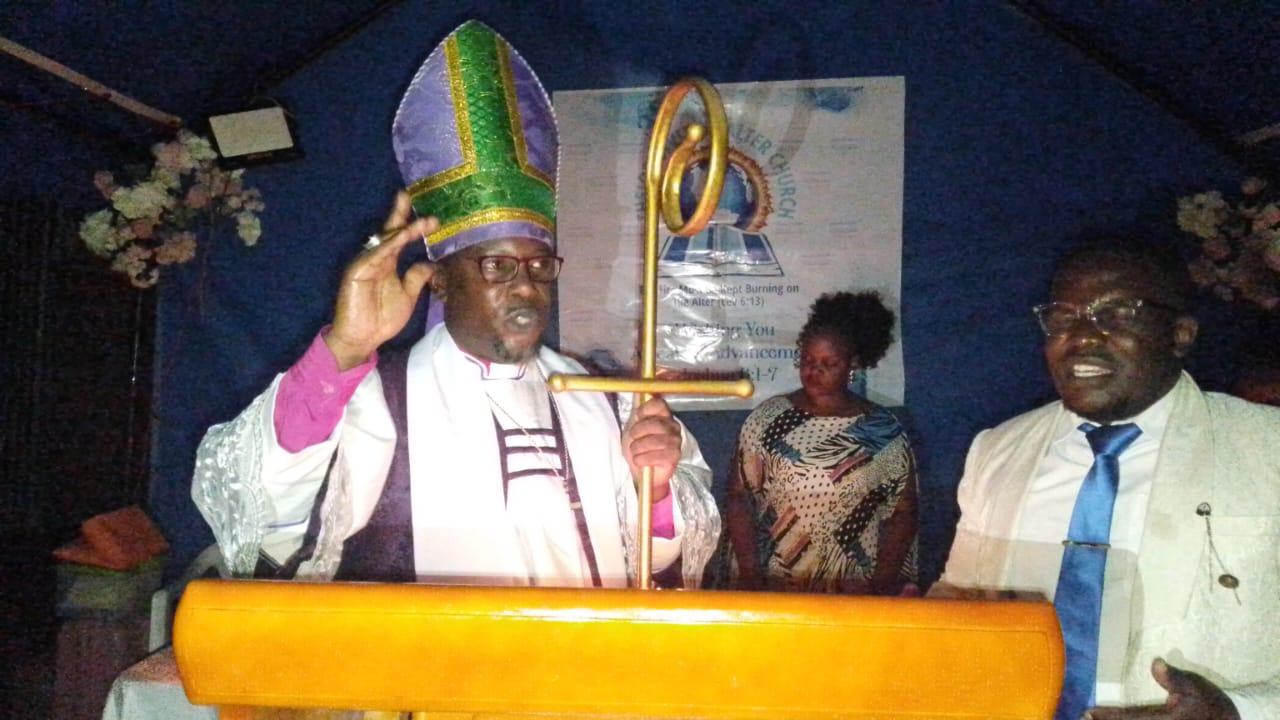
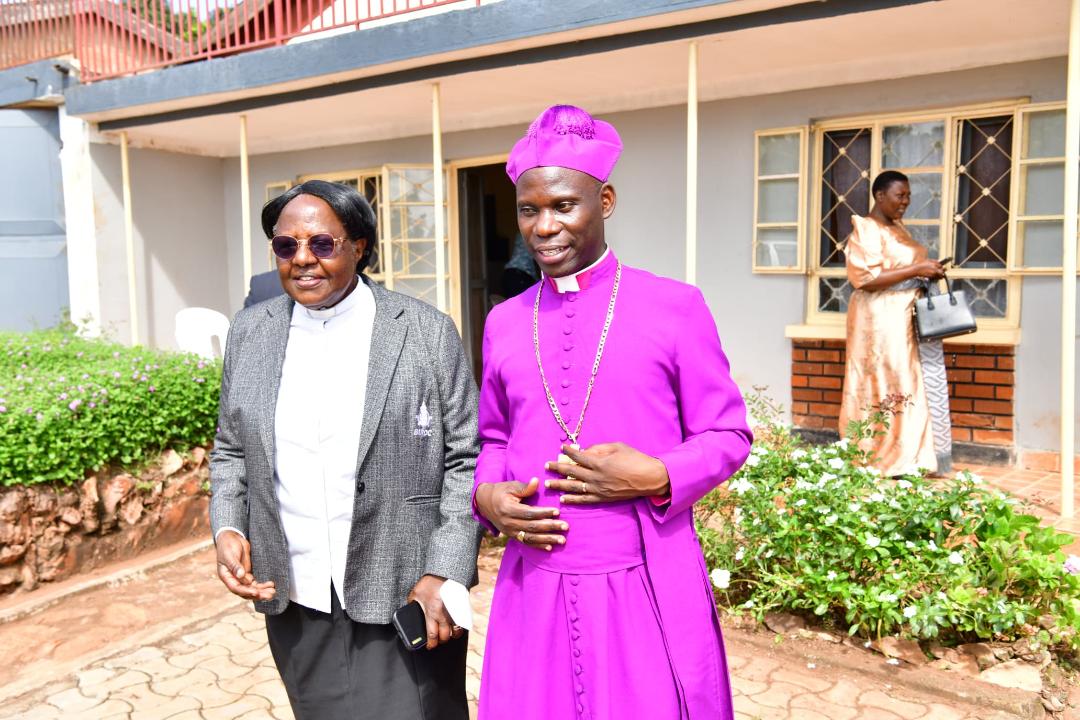
    The Exposure Uganda (TEU) has not independently verified the circumstances of the closure, and no official statement has been issued by Uganda Police Force as of press time.

    Shortly afterward, Patel’s associate, Francis Baganzi, lodged a complaint of alleged criminal trespass against Kayiira leading to his arrest by police attached to the Flying Squad.

    It is that complaint that has kept the councilor-elect in Kirinya Prison for about three months, with no clear indication of when bail or trial will proceed.

    Legally, both matters involve cognizable offenses under the Penal Code Act and NEMA Act. The question for observers is procedural consistency: if one complaint can proceed to arrest and detention, why has the counter-complaint been closed without public explanation?

    A Systemic Question Beyond One Case.

    The concern is not limited to Kayiira. Legal aid lawyers and rights groups in Busoga and beyond have long argued that many Ugandans languish on remand over petty offenses because the complainant is well-connected, or simply because the accused is poor, politically isolated, and lacks the means to secure legal representation or bail.

    When a complaint by a person of influence moves swiftly through the system while a similar complaint by a lesser-known citizen stalls or disappears, it breeds the perception of a two-tier justice system.

    Article 21 of the Constitution prohibits discrimination and guarantees equal protection of the law. Article 28 guarantees the right to a fair and speedy hearing. Where those principles are not visible in practice, public trust erodes.

    Justice Egonda Ntende invoked the precedent of Chief Justice Emeritus Benedicto Kiwanuka and Chief Magistrate Kityo’s stand against Idi Amin’s directive to jail women for wearing miniskirts.

    He reminded the bench that the doctrine of separation of powers applies even in the absence of Parliament, and that sanctioning judicial officers lies with the judiciary, not the executive.

    “The required level of courage by individual judicial officers is achievable once each one of them puts Godliness over and above all their respective fears,” he said.

    The Legal Principle at Stake.

    The doctrine of nemo judex in causa sua a Latin for “no one should be a judge in their own cause”, which underpins the expectation that state actors resist external influence. Judicial officers and police are bound by the Judicial Code of Conduct and Police Standing Orders to avoid both actual bias and the appearance of bias.

    Section 14 of the Judicature Act empowers courts to grant bail, and Article 23(6) of the Constitution makes bail mandatory after 60 days for offenses triable by the High Court and 48 hours for others, unless sufficient cause is shown.

    Where those timelines are exceeded without clear justification, the burden shifts to the state to demonstrate why continued detention serves the interests of justice.

    TEU’s Stand: Journalism Without Fear or Favor.

    At The Exposure Uganda, our mandate is clear: we do not fear to tackle any topic, however sensitive. We are not for or against any individual, political party, or business interest.

    Our role is to inform the public with facts, ask the questions that matter, and hold power to account within the bounds of the law.

    We execute this work with fairness, professionalism, and objectivity. Where allegations are made, we seek verification. Where responses are due, we give space for them. Our loyalty is to the truth and to the public’s right to know, not to personalities or patronage.

    What Next?

    Justice Egonda Ntende’s parting shot was a question, not a judgment: “Team Judiciary, what happened? Where is your Kityo and Wambuzi at this hour?”

    For Jinja, the immediate test lies with the magistracy handling Kayiira’s matter and with the Uganda Police Force’s Directorate of Professional Standards Unit(PSU).

    Will the court determine bail and trial dates in line with constitutional timelines? Will the DPP review why the complaint filed by Kayira against Patel was closed, and whether reopening it is warranted in the public interest?

    For the justice system nationally, the test is whether Justice Egonda Ntende’s call for courage translates into consistent application of the law, regardless of who the accused or complainant is, and regardless of whether the accused is known or unknown, rich or poor.

    As the saying goes, justice must not only be done, but must be seen to be done. In a democracy, the sight of justice is as important as its substance.

     TEU Editor’s Note: This article report is on public statements made by a retiring judge at a public judicial event and on allegations regarding police case files that are circulating in the public domain.

    It does not seek to adjudicate the guilt or innocence of any party. The principle under discussion is equal application of the law under Article 21 and 28 of the Constitution of Uganda.


  • “Why Worry Much, God Knows Your Condition”: Prof. Bagambaki Offers Scriptural Antidote to Uganda’s Anxiety Crisis.

    “Why Worry Much, God Knows Your Condition”: Prof. Bagambaki Offers Scriptural Antidote to Uganda’s Anxiety Crisis.

    From the crowded streets of Kampala to other cities and urban centers, down to rural trading posts and deep villages, worry and anxiety are quietly eroding the health and hope of Ugandans.

    In response, many have turned to structured routines of jogging at dawn, paying for gym memberships, and booking sessions with therapists and wellness coaches. Others, however, have resorted to heavy alcohol consumption and substance abuse in a desperate bid to numb the pressure emanating from strained homes, demanding workplaces, and debts that refuse to yield.

    Yet beneath these coping mechanisms lies a deeper question: what exactly is worry, and why does it grip so many with such tenacity?

    What Is Worry? Three Angles to Understand It.

    The Dictionary Angle.

    The Oxford English Dictionary defines worry as giving way to anxiety or unease, allowing one’s mind to dwell on difficulty or trouble. In common usage, it denotes a mental preoccupation with a problem, usually projected into the future, that generates persistent unease and saps the present of peace.

    The Clinical Angle.

    Psychology describes worry as a chain of negative, repetitive thoughts and images concerning uncertain future outcomes that feel largely uncontrollable. According to the American Psychological Association, it represents an attempt to mentally solve a problem whose resolution remains ambiguous yet potentially threatening.

    When it becomes excessive and persistent, worry evolves into a core feature of Generalized Anxiety Disorder. Clinically, it is future-focused, intrusive, out of proportion to the actual risk, and often interferes with sleep, concentration, work productivity, and interpersonal relationships.

    The Biblical and Theological Angle.

     Scripture frames worry not merely as an emotional state but as anxiety over the future that arises from misplaced trust. Jesus addressed it directly in Matthew 6:25-34, saying, “Do not worry about your life… Can any one of you by worrying add a single hour to your life?” He labeled it futile and a symptom of little faith, calling instead for a prior pursuit of God’s kingdom and trust in His provision.

    The Apostle Peter later reframed it in 1 Peter 5:7 with the instruction, “Cast all your anxiety on Him because He cares for you.” Thus, biblically understood, worry is a spiritual issue of attempting to control what belongs to God alone.

    All three perspectives agree that worry is draining and ineffective. Where they diverge is in the prescribed remedy: psychology leans toward cognitive restructuring and behavioral intervention, while Scripture calls for surrender, prayer, and a renewed trust in God’s character.

    The God Who Sees and Provides: Jehovah Jireh and Jehovah Roi.

    The God revealed in Scripture is not distant or detached from human suffering. He is personal, and He makes Himself known through names that describe how He engages with human need. For anxious Ugandans today, two names stand out with particular relevance: Jehovah Jireh and Jehovah Roi.

    Jehovah Jireh – “The Lord Will Provide”.

    This name originates in Genesis 22:14, following Abraham’s ordeal on Mount Moriah. Having been commanded to offer Isaac, Abraham walked to the very edge of obedience when God intervened and provided a ram caught in the thicket as a substitute. Abraham named the place Jehovah Jireh, meaning “The Lord will provide.”

    The context is crucial: Abraham faced a situation that was humanly impossible and emotionally devastating. Yet God saw the crisis, intervened at the decisive moment, and provided precisely what was needed. The Hebrew word jireh conveys the idea of seeing to a matter, providing, and caring for it with intention.

    Bringing this home:Many Ugandans today find themselves on their own Mount Moriah, pressed to the edge by school fees, rent arrears, medical bills, and business debts that seem insurmountable.

    Jehovah Jireh does not promise that the walk to the mountain will be avoided. He promises that He sees the ram in the thicket before His people arrive there.

    Provision may not arrive in the expected form or on the expected timeline, but it comes from the God who knows the full extent of the condition.

    Jehovah Roi – “The God Who Sees Me”.

    This name emerges in Genesis 16:13, when Hagar fled into the wilderness pregnant, rejected, and alone. An angel met her at a spring and promised her a future, prompting her to declare, “You are the God who sees me, for I have now seen the One who sees me.” Hagar was a servant, a foreigner, and socially invisible, yet God saw her distress, heard her affliction, and addressed her by name.

    For the Ugandan who feels invisible: betrayed by family, overlooked at work, forgotten in community, Hagar’s testimony is a lifeline. Jehovah Roi sees you in the wilderness. He sees the tears shed at night when no one else is aware. Your pain has not escaped His notice, and your story has not been forgotten by Him.

    The Pattern Continues Throughout Scripture.

    At Cherith and Zarephath in 1 Kings 17, when the brook dried up, God sent ravens and then a widow to sustain Elijah, demonstrating that He knew exactly where His prophet was and met him there. Psalm 23:1 declares, “The Lord is my shepherd, I shall not want,” portraying a shepherd who sees the sheep, knows their need, and provides pasture accordingly.

    In Matthew 6:26-32, Jesus points to the birds of the air and the lilies of the field to argue that if God feeds and clothes them, He will certainly provide for those of greater value.

    The theological thread running through these accounts is consistent: the Bible never promises the removal of every wilderness, but it insists that in every wilderness, God sees, He knows, and He provides. His provision is often not early by human standards, but it is never late by divine timing.

    Therefore, when Prof. Bagambaki says, “Why worry much? God knows your condition,” he is echoing these ancient names of God. Jehovah Roi sees you, and Jehovah Jireh will provide for you. The central question is not whether God sees, but whether you will trust Him when He declares, “I have overcome the world.”

    A God Who Knows and Provides.

    It is this burden of worry that Archbishop Elect Professor Mugume Bagambaki Richard says the Gospel addresses directly and authoritatively.

    Speaking from his office, Prof. Bagambaki, Patriarch of the Five-Fold Episcopal World Federation and Chancellor of UCCSAT University, anchored his counsel in 1 Corinthians 10:13:

    “No temptation has overtaken you except what is common to mankind. And God is faithful; He will not let you be tempted beyond what you can bear. But when you are tempted, He will also provide a way out so that you can endure it.”

    Historical context: Paul wrote this letter to the Corinthian church around 55 AD. Corinth was a wealthy, morally compromised port city where believers confronted sexual immorality, idolatry, and social pressure to compromise their convictions.

    Paul’s message was pastoral and reassuring: your trials are not unique, God sets a limit to what you will face, and He provides a way of endurance.

    Bringing it home: Today’s Ugandan faces analogous pressure to cut ethical corners at work, to abandon faith for financial gain, and to capitulate when a business collapses or a relationship fractures.

    “God will not allow a burden that His grace cannot carry,” Prof. Bagambaki explained. “The way out may not remove the problem instantly, but it will give you the strength to stand upright under it.”

    Trouble Is Real, But Victory Is Secured.

    Citing John 16:33, he reminded Ugandans that Jesus spoke with unflinching realism and enduring hope: “In this world you will have trouble. But take heart! I have overcome the world.”

    Historical context: Jesus spoke these words in the Upper Room on the night before His arrest. His disciples were about to face betrayal, fear, dispersion, and persecution. Yet He spoke of victory as already secured, not as a distant possibility.

    Bringing it home: Ugandans confronting job loss, familial betrayal, or devastating medical diagnoses often feel abandoned and exposed. “Your situation may look like Friday night,” Prof. Bagambaki said, “but Sunday is coming. Do not allow the present darkness to erase the promised dawn.”

    Strength Beyond Ourselves.

     Drawing on 2 Corinthians 1:8-9, he observed that even the Apostle Paul experienced pressure “far beyond our ability to endure, so that we despaired of life itself.”

    Historical context: Paul was likely recounting near-death experiences in Ephesus (now located in western Turkey in Izmir Province right next to the modern town of Selcuk-about 3km southwest of Selcuk’s center), stemming from persecution or severe illness. His conclusion reframed the purpose of such extremity: “This happened that we might not rely on ourselves but on God, who raises the dead.”

    Bringing it home: “Many Ugandans feel overwhelmed beyond their strength,” Prof. Bagambaki noted. “God permits that moment so that you cease trusting in your salary, your connections, or your own resilience, and begin to lean entirely on Him. That is precisely where genuine endurance and peace are born.”

    He reinforced this with Romans 8:37, 1 John 5:4, and Psalm 129:2 texts written to communities under Roman persecution, theological distortion, and centuries of affliction. The consistent message is that God’s people prevail not by escaping hardship, but by overcoming it in Him.

    The Exposure Uganda (TEU) Dissect: Let Scripture Interrogate Your Situation.

    We Expose: Many Ugandans are carrying burdens in isolation, and the coping methods chosen are often deepening rather than resolving the wound.

    You Decide: Ask yourself honestly and without evasion:

    Are you suffering from depression following a breakup and feel as though life has lost its meaning?

    Are you low in spirit because a doctor has delivered devastating news regarding a terminal illness?

    Has the business in which you invested heavily collapsed, leaving you uncertain where to begin again?

    Have you been betrayed, not once, not twice, not five times, but repeatedly, by friends, family, or colleagues you trusted?

    Do you consider yourself unlucky, cursed, or abandoned by both God and man?

    If your answer to any of these questions is yes, then hear this with clarity: the God of 1 Corinthians 10:13 knows the exact weight you carry. The Christ of John 16:33 has already overcome the power behind your trouble. The God of 2 Corinthians 1:9 desires that you cease relying on your own strength and begin leaning fully on Him.

    Your situation is not final, and your faith is not foolish, because the same God who delivered Paul, strengthened David, and sustained the early church is present with you in Uganda today.

    Contact: Archbishop Elect Prof. Mugume Bagambaki Richard

    Phone: +256775050183 | Email: mugumebagambakirichard@gmail.com

  • President Museveni To Join Busoga’s Daughter Prof Muranga In Olympic Day Tooke Run 2026 To Fund Athlete Nutrition.

    President Museveni To Join Busoga’s Daughter Prof Muranga In Olympic Day Tooke Run 2026 To Fund Athlete Nutrition.

    President Gen (Rtd)Yoweri Kaguta Museveni, fresh from swearing in for the 7th term, is expected as Guest of Honour and Chief Runner for the Olympic Day Tooke Marathon 2026 in the Greater Bushenyi Area on 20 June 2026. The event aims to raise funds for athlete nutrition under the theme: “Move, Learn, Discover With Nutrition-Care.”

    The run is being spearheaded by Rev. Canon Prof. Florence Isabirye Muranga, Director General of the Presidential Initiative on Banana Industrial Development (PIBID), in partnership with the Uganda Olympic Committee (UOC.

    According to Henry Mugisha, Tooke Brand Ambassador and Chief Intercessor to the Archbishop of the Church of Uganda, the choice of Prof. Muranga is strategic. She is Uganda’s first Nutrition Ambassador for the UOC and developed matooke flour and other banana-based products through the Banana Industrial Research and Development Centre BIRDC the technical arm of PIBID based in Nyaruzinga, Bushenyi District.

    Olympic Day: Where It Started and Why It Matters.

    Olympic Day is celebrated worldwide on 23 June to commemorate the founding of the modern Olympic Games in 1894 in Paris by Pierre de Coubertin. The first Olympic Day was held in 1948.

    In over 200 countries, the day is marked with mass runs and walks open to everyone regardless of age or fitness level, sports clinics and exhibitions where athletes and coaches teach basic skills, education sessions on Olympism and fair play, and cultural events that celebrate national identity through sport.

    Uganda’s 2026 edition shifts the focus to nutrition. The idea is simple: you cannot “Move, Learn, Discover” without fuel. That’s where matooke flour comes in.

    He says President Museveni who is also the Patron of the multi billion shillings project has accepted to join and flag off the hundreds of runners on the day.

    Why Athletes Need Special Diets.

    Sport at high level breaks the body down. Recovery and performance depend on what goes in. Athletes burn between 2,000 and 5,000 calories daily, and without the right diet they face fatigue, injury, and slow recovery.

    Slow-releasing carbohydrates from matooke flour give sustained energy during training and competition. BIRDC’s fortified banana products support muscle repair and recovery. Because the flour is shelf-stable, athletes get consistent nutrition year-round, unlike with perishable fresh matooke. Countries that win medals treat nutrition as part of training, and Uganda is now building that system locally.

    The Fundraising Breakfast: What Happens and Why It Matters.

    Before the 20 June run, a fundraising breakfast for the Eastern Region will be held in Jinja City. The date is yet to be announced.

    This is not just food and speeches. It is a structured engagement where project goals and budgets are presented to potential funders, partners and sponsors commit financially or in-kind, and leaders and the business community align on their role in supporting athletes. The breakfast turns private sector and political goodwill into tangible support.

    Ambassador Mugisha has called on newly sworn-in MPs, LC5 Chairpersons, Mayors, the business community, and investors to attend. The ask is clear: if you want Uganda to win, fund what feeds the winners.

    The new Butembe MP Hon Grace Paddy Kirya Wanzala has pledged UGX 1,000,000 toward the cause, becoming one of the first leaders to publicly back the initiative.


    Jinja North MP Hon Hussein Muyonjo aka Swengere says part of the cash he gets from Parliament will go towards the cause.


    Why Busoga Should Be Part of It.

    Busoga has athletes, schools, and a young population with energy to burn. But it also has banana farmers who lose income to post-harvest waste. The Tooke Run links the two.

    Participation creates markets for farmers in Iganga, Mayuge, Kamuli, and Jinja. It builds pride as Busoga athletes get direct support and the region gains visibility on a national platform. Most importantly, it builds unity.

    Busoga has every reason to rally behind this cause. Rev. Canon Prof. Florence Isabirye Muranga hails from Bufuula Village in Jinja City.

    To the Busoga sub region, she is not just a scientist and academic, she is a daughter, a sister, an aunt, a mother, and a grandmother. Supporting her work is supporting one of their own who has taken Busoga’s name and banana to the national and international stage. Sport as the Unifying Factor After Election Noise.

    Uganda has just come out of campaigns and elections, that season divides people who line up behind parties, candidates, and personalities.

    Sports does the opposite because on a track, in a stadium, or at a run, you do not see NRM, NUP, FDC, UPC, ANT, or independent. You see Ugandans. Color, race, religion, and status are stripped away and replaced by a shared goal: to move, to compete, to win for Uganda.

    That’s why the timing of the Olympic Day Tooke Run 2026 matters. It comes after the noise, when the country needs something that pulls people back together.

    TEU Explainer:

     “It is Good for Kinsmen to Dine Together”: Achebe’s Wisdom and the Call to the Jinja Breakfast.

    West African literary giant Chinua Achebe, in his seminal 1958 novel Things Fall Apart, captured a truth about African communal life that still resonates today. Through the voice of Umuofia’s elders, Achebe wrote:

    “A man who calls his kinsmen to a feast does not do so to save them from starving. They all have food in their own homes. When we gather together in the moonlit village ground it is not because of the moon. Every man can see it in his own compound. We come together because it is good for kinsmen to do so”.

    Academic Reading of the Passage.

    Achebe is making a distinction between need and purpose. The feast is not charity for the hungry, nor is the gathering a response to physical darkness that the moon alone can dispel.

    Rather, the gathering fulfills a social, cultural, and moral function: it reaffirms kinship, strengthens solidarity, and reminds people that identity is built in communion, not isolation.

    In African philosophy (including Busoga’s), this aligns with ubuntu “I am because we are.” The act of coming together is itself the value.

    Linking to the Olympic Day Tooke Run 2026 Fundraising Breakfast.  

    This is precisely the spirit behind the fundraising breakfast for the Eastern Region in Jinja City mentioned in the article ahead of the Olympic Day Tooke Marathon 2026.

    We are not calling leaders, MPs, LC5 Chairpersons, Mayors, and the business community to Jinja because they have no breakfast at home. Every man and woman of goodwill can eat in their own compound.

    We are calling them together because the cause is noble, and it is our culture to dine together when a communal purpose demands it.

    The cause is clear: to raise funds for the nutrition of Ugandan athletes, to create markets for Busoga’s banana farmers, and to cement a partnership between PIBID/BIRDC and the Uganda Olympic Committee that links agriculture to sport.

    Just as Umuofia gathered under the moon not for light but for unity, we gather in Jinja City not for a meal, but for a mission. 

    The TEU Call.

    We Expose: The breakfast is not about individual hunger. It is about collective responsibility.

    You Decide: Will you attend because it is good for kinsmen to do so, because it is good for Busoga and Uganda to move together?


    If the people of Busoga understand that supporting their daughter, sister, aunt, mother and grandmother Rev. Canon Prof. Florence Isabirye Muranga is supporting their own, then the Jinja breakfast becomes more than an event.


    It becomes a reaffirmation of culture, solidarity, and purpose after a divisive election season.

    Reference

    Achebe, C. Things Fall Apart. London: Heinemann, 1958.