Blog

  • “The Problem Is Some Ugandans Still Sleeping”, M7 Tells Labour Day Crowd To Wake Up, Invest & Use Wetlands Wisely.

    “The Problem Is Some Ugandans Still Sleeping”, M7 Tells Labour Day Crowd To Wake Up, Invest & Use Wetlands Wisely.

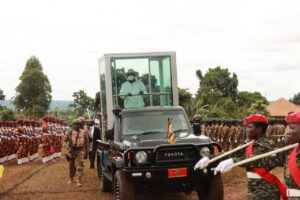
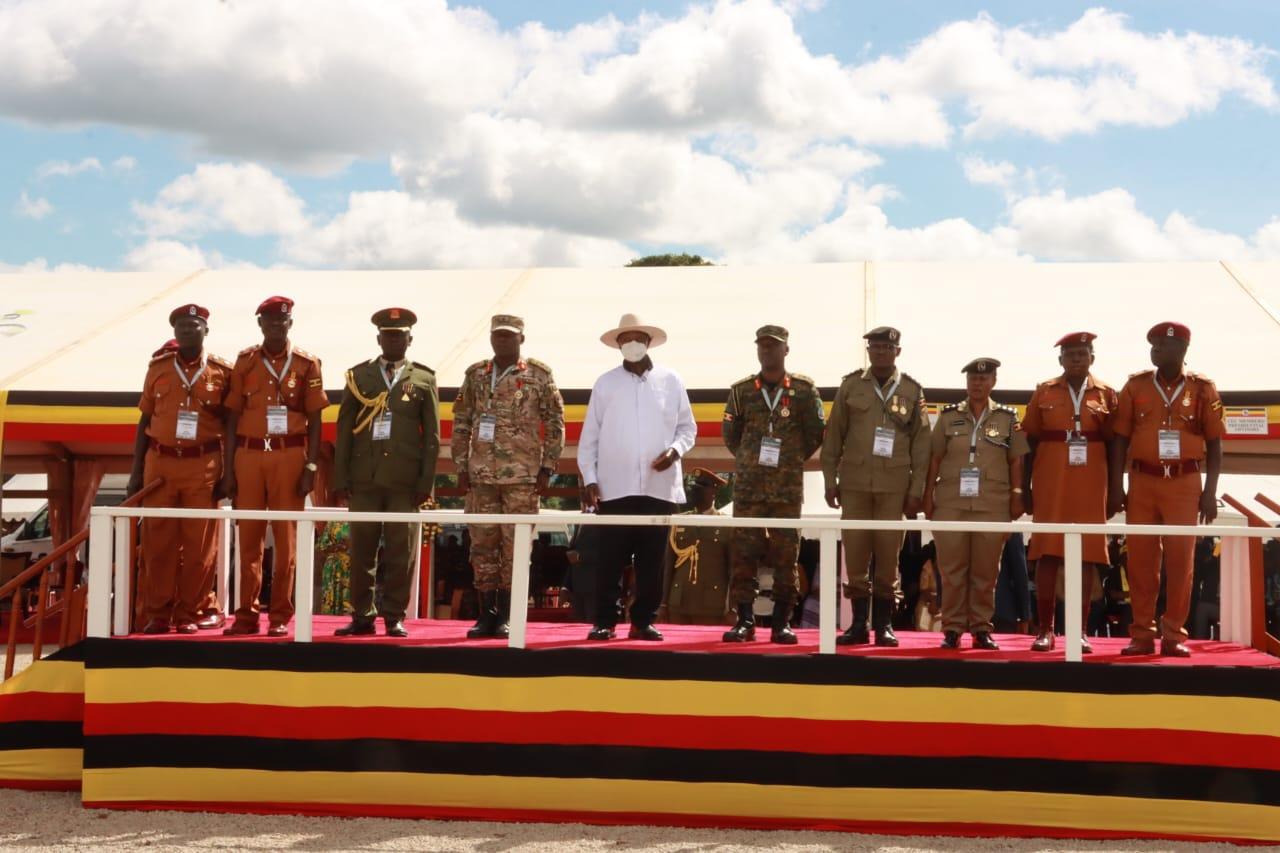
    The President of the Republic of Uganda and Commander-in-Chief of the UPDF, H.E. Gen (Rtd) Yoweri Kaguta Museveni, on Friday presided over celebrations to mark International Labour Day at Nkoyoyo Boarding Primary School Grounds in Matale, Buikwe District.

    The function was held under the theme: “Safeguarding Uganda’s Progress: Empowering the Workforce and Promoting a Decent Workforce for Competitive Enterprises.”

    President Museveni commended Ugandans for marking the day and advised them to continue working hard to eliminate poverty by taking full advantage of the Four Acre Model and prioritizing investment.

    He said: “The problem is not jobs. The problem is people sleeping.”

    He noted that Uganda still has many investment opportunities, especially in agriculture, fishing and the proper utilization of wetlands.

    He advised the public to become beneficiaries of Parish Development Model (PDM) funds and to avoid borrowing from commercial banks that charge high interest rates, urging them instead to borrow from the Uganda Development Bank, which offers lower rates. He questioned why people borrow at such exorbitant interest rates.

    “PDM will soon phase out money lenders and commercial banks,” he said. He promised to inject more money into PDM to the tune of Shs 200 million per parish and cautioned village chiefs to ensure that everyone is involved, since the money is a revolving fund.

    He added that proper planning is required before one engages in any income-generating activity.

    On the issue of accommodation for workers in industrial parks to improve their safety, given that most leave work late, the President promised to make it a policy that every industrial park be allocated nearby land for housing.

    “We shall get investors to build low-cost houses nearby on land provided by Government,” he stressed, further advising the National Housing Corporation to become the lead agency to that effect.

    On the issue of students pursuing courses that are not aligned with available jobs, the President directed the Ministry of Education to issue guidelines on what to study. “Carefully select courses,” he advised.

    On the mushrooming factories across the country, the President explained that this is a result of existing peace and security, an improved road network and electricity. “Once power and transport are fine, then jobs will be created,” he observed.

    On fishing, the President advised fishing communities to practice good fishing methods to ensure sustainability, urging them to stop overloading water bodies.

    “We should all know that water bodies should not be overwhelmed by numbers,” he warned, adding that wetlands should be used appropriately.

    He further implored communities to establish fishponds alongside wetlands, so that they can access water for irrigation and fish for both food and income. He cited the example of Limoto wetland in Pallisa. He said fish farming would be a priority for Government in 2027.

    “I want both wetlands and upland areas to maximally benefit communities,” he noted, promising a campaign against wetland degradation.

    He concluded by advising organizations with substantial funds, such as NSSF, to invest in building toll roads where they can collect fees from road users, rather than investing in shares or bonds which yield smaller returns.

    “You should invest that NSSF money in toll roads, although Government will continue building roads,” he promised.

    He, however, noted that prioritization is required for an economy to grow.

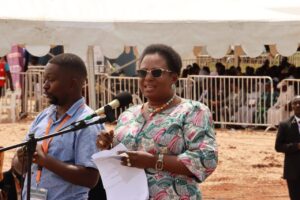
    In her remarks, the Minister for Gender, Labour and Social Development, Hon. Betty Amongi Ongom, commended the existing macro and micro economic policies, saying they have created jobs in Uganda.

    She noted that labour remains Uganda’s biggest factor of production. “Without labour there is no progress,” she emphasized. She said skilling centres, the Occupational Safety Act, Presidential hubs, the NSSF Amendment Act, apprenticeship programmes and the externalization of labour have raised opportunities for improving workers’ welfare and strategies that enhance workforce productivity and competitiveness.

    She noted that requiring Shs 100 million as a mandatory capital base for any company before it engages in labour export has helped curb problems associated with labour externalization.

    She called for dialogue between workers and employers to curb the casualization of labour, and decried the high interest rates charged by commercial banks.

    Hon. Amongi thanked partners such as the National Organization of Trade Unions (NOTU) and the Federation of Uganda Employers, among others, for creating employment and fighting for workers’ rights.

    Hon. Diana Mutasingwa, Woman MP for Buikwe, praised the President for the existing Government welfare programmes in the district and requested the building of a vocational school in Kitaka to create more skilling opportunities.

    The workers’ representative commended the proposed Public Service Pension Scheme, saying it would place retirees in a better position. He thanked the President for the vision of introducing industrial parks, although he told the President that the externalisation of labour, a mismatch between education and available jobs, and the need for accommodation for workers in the parks were some of the problems still facing workers.

    The Master of Ceremonies, representing the Chancellery and Chief of Formal Education, Sports and Culture, Brig Gen Richard Karemire, on behalf of the President, awarded 50 medals — 11 of which went to women — to security officers and civilians in recognition of their outstanding contribution to the growth and safety of Uganda.

    Brig Gen Paul Namawa and Brig Gen Ernest Nuwagaba were among the medalists.

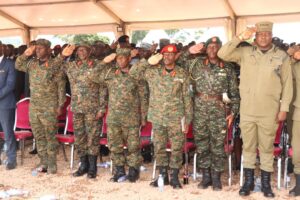
    The function was also attended by the Vice President, Hon. Maj (Rtd) Jessica Alupo; Chief Justice Dr Flavian Zeija; 3rd Deputy Prime Minister Hon Lukia Nakadama; UPDF General Officers including the Deputy Chief of Defence Forces, Lt Gen Samuel Okiding; Inspector General of Police Abbas Byakagaba; Service Chiefs; Senior and Junior Officers; and cultural and religious leaders. Others present were diplomats, ministers, Members of Parliament and local residents.

  • Jinja Nile Resort Land Fight Exposes Leadership-Character Rift As Mada Holdings Vows To Petition M7

    Jinja Nile Resort Land Fight Exposes Leadership-Character Rift As Mada Holdings Vows To Petition M7

    Leadership without character is like a river without banks—a force that destroys what it should sustain.” That warning echoes across Kimaka Cell, Jinja, where outgoing Butembe MP David Livingstone Zijjan’s contested sale of three acres claimed by Jinja Nile Resort has residents questioning whose interests power really serves.

    “The truth of the matter is that we know the land belongs to Jinja Nile Resort and to the best of our knowledge anybody else purporting to have bought the land is a joker and liar,” LC1 chairperson Vincent Makanga Mayega says.


    Councilor-elect for the elderly to Southern Division Patrick Musinguzi, a 50‑year resident, adds: “This is not a small company that should be tampered with, considering its strategic importance in the promotion of tourism and trade in Jinja City and Uganda as a whole.”

    The Southern Division Mayor-elect Simon Kasirye who visited the site was equally perturbed that those meant to promote and encourage foreign investors are the very ones frustrating.

    “Why on earth should a leader engage in such fraudulent activity, now who should the investors run to, it is unacceptable and we shall do everything to ensure this is reversed…”, Kasirye who takes over in May said.

    A visit by The Exposure Uganda (TEU)reporter found private security guards hired by Mada Holdings Uganda Ltd literally in charge. There is a functional guard house and sanitary facilities to ensure no criminal trespass or encroachment by anyone.

    Long-serving Mada Holdings Director Rakesh Pant says the company bought the plot on 30 April 2007 from late James Kiili, witnessed by Martha Apolot of Okalang Law Chambers, LC1 chief Emmanuel Bangaya and Kiili’s widow Regina Chandiru.

    It was reported that Hon Zijjan sold the land in question on 19 June 2025 (the same day that Mada holdings Ltd had reported a case of criminal trespass by some unknown youth), to the twin sons (names withheld) of the Speaker of Parliament Rt Hon Anette Anita Among and was witnessed by Musongola Advocates and Solicitors.

    “…we understand that the same certificate of title under LAF JJ/4387 freehold register Volume JJA1169 Folio 4 has been transferred to the names of the twin children who are minors” Rakesh said while on site.

    He says they have injected money and will not allow anyone, regardless of the status to intimidate them into surrender but quickly wonders why police files (CRB 455/2025, CRB 456/2025) opened after youth raids in June have not escalated to the courts of law.

    However, Hon Zijjan counters by phone: “I buy and sell land with credible and genuine documents and people, so whoever is linking my name to such allegation does not know that I am an honest and transparent person.”

    He claims he purchased from Pande Sosupateli and Jessica Nakiwala on 13 May 2025; sources say the pair admitted being paid UGX 4 million each to sign papers they did not understand.

    Background.

    According to Sale Agreement whose copy was obtained by this publication, the now deceased Kili James of P.O.Box 2070 Jinja sold the land to Mada Holdings Uganda Ltd represented by Rakesh Pant  at 8 Million Uganda shillings.

    The transaction that featured Ms. Jimia, Evaristo and Juma as immediate neighbors was done in the presence of M/s Okalang Law Chambers.

    In the Agreement, Kili James as ‘Vendor’ warranted that he had the lawful title to the said land and undertook to refund 8 million Ugandan shillings plus additional penalty of 10 million Uganda shillings and indemnify the ‘purchaser’ for any loss that may occasion and result due to any defect in the ‘vendors’ title to the said land.

    The Allegations.

    According to Rakesh Pant who executed the deal on behalf of Mada Holdings Uganda Ltd, the company bought the land on 30 April, 2007 and has been in possession of it since then.

    Rakesh says the transaction was witnessed by Martha Apolot of M/S Okalang Law Chambers and Legal Consultants, the area LC1 chairperson the late Emmanuel Bangaya and Regina Chandiru wife to the late Kiili, among others.

    However, on 19th June 2025, its reported that a group of irate youth stormed the property, claiming ownership and ordering the guards to leave.

    The Company through Rakesh reported the incident to the police and a case was opened up Vide ref:144/19/06/2025, later CRB 455/2025 after recording a statement from the reporter Ambrose Okori one of the guards affected in the night raid.

    A few days later on 23 June 2025 a case file of Criminal Trespass (CT) Vide SD ref: 127/23/6/2025 later CRB 456/2025 was reported by Joseph Igodobe said to be a brother to Hon Zijjan and a resident of Wanyange, Northern Division in Jinja City

    Detectives led by the Officer in Charge (OC)Criminal Investigation Department (CID)Detective Superintendent of Police(D/SP) Loy Gift Namono visited the scene of crime and recorded statements from witnesses with relevant accompanying documents.

    Local leaders and neighboring residents who were interviewed confirmed to detectives that for more than 15 years they knew the land in dispute belonged to the hotel and were shocked another person is also claiming ownership.

    The survivors of the late James Kiili who sold the land to Mada Holdings Ltd also confirmed that he had earlier in 1991 bought the land from a one Benjamin Joseph.

    Reports say Hon Zijjan was also invited through his brother Joseph Igodobe by the police at CPS Jinja to furnish them with information and he accordingly recorded a statement.

    Hon Zijjan told detectives he bought the same land from a one Pande Sosupateli and Jessica Nakiwala on 13 May,2025 which was witnessed by Rwabugaire Dan Advocates.

    The certificate of title bears the name of Pande Sosupateli and Jessica Nakiwala as first re registered proprietor who allegedly sold it to Hon Zijjan.

    Upon interrogation, reports say the two were actually induced with 4 million shillings each to sign documents which they did not understand the content and implications.

     Hon Zijjan’s Response:

    In a phone interview, Hon Zijjan said “…I buy and sell land with credible and genuine documents and people, so whoever is linking my name to such allegation does not know that I am an honest and transparent person…”.

    Hon Zijjan who will cease to be the Butembe MP in a few days’ time claimed that he bought the land from Pande Sosupateli and Jessica Nakiwala who sold it to him without any encumbrance.

    Investigation Stalled:

    The police acted swiftly by launching an investigation into the matter unearthing glaring anomalies and Hon Zijjan has recorded a statement. Local leaders

    Rakesh Pant says in spite of the hullabaloo, Mada Holdings Uganda is in possession and that they are ready and prepared to defend their rights as investors who are in good books with the government of Uganda led by President Yoweri Museveni.

    According to Mada Holdings Uganda Ltd Director, this was a calculated maneuver by Hon Zijjan to undermine relevant authorities since the matter was still under investigations.

    Further Frustrations:

    Attempts by Mada Holdings for a Public hearing with the Commissioner Land Registrations did not yield any tangible results as on two occasions no representative from Hon Zijjan surfaced and instead was making moves behind the scene to move ahead with his land transactions.

    The directors and management of Mada Holdings Uganda say they are disappointed that despite a very clear and loud message by President Yoweri Museveni to woo foreign investors to Uganda, a handful of unpatriotic people are using their positions to frustrate the same.

    “…we are shocked and disturbed that some individuals are so powerful and connected that they can easily circumvent all systems to get what they want at all costs and even officials in government offices cow down for fear of reprisals…”, Rakesh laments.

    But Hon Zijjan is not bothered saying he does not know anything that Mada leaders are saying since he has never handled any land matter or transactions linked or connected to the company and hotel.

    Escalation To President Museveni.

    Management of Mada Holdings Uganda Ltd have vowed to escalate the matter to the highest office in the land by petitioning President Yoweri Museveni to intervene.

    They are just waiting for the Big Man to be sworn in on 12th May,2026 and find ways of submitting their petition to State House since it appears the police and court officials fear the matter.

    “…we badly need this land for expansion because we have innovations that require more space and the fact that we injected money is a good enough factor that will not allow us to surrender…” Rakesh vowed.

    Jinja City’s land Controversy Hotspot:

    The case is just one of the many chronic land-related conflicts that have plagued Jinja city, earning it a reputation as one of the most contentious land dispute hubs in Uganda, second only to Wakiso and Kampala.

    Insiders reveal that top public and civil servants are often embroiled in these disputes driven by the lure of easy money or pressure from powerful government officials.

    The plot has now thickened with the revelation that Hon Zijjan has allegedly involved the Speaker of Parliament Rt Hon Anita Among in this land dispute.

    The speaker being the third-highest official and now a senior member of the NRM who sits in the party’s Central Executive Committee (CEC)in Uganda has significant influence and her involvement has just added fuel to the fire.

    As to whether investigation will continue or not, Jinja city residents and investors, particularly Mada Holdings Uganda Ltd are watching with bated breath wondering if justice will really prevail.


  • The New Gold Is Grease: Why Berlin Is Paying Lango Youth To Learn, Not Wait-FIMAT Opens 5-Week Energy Bootcamp.

    The New Gold Is Grease: Why Berlin Is Paying Lango Youth To Learn, Not Wait-FIMAT Opens 5-Week Energy Bootcamp.

    A rare golden window has opened for youth in Lango and Northern Uganda as the Fountainhead Institute of Management and Technology (FIMAT) announces a fully residential five-week technical course in Productive Use of Energy and Operations & Maintenance.

    The programme, which runs from 18th May to 23rd June 2026 at FIMAT’s campus in Awita Cell, Lira City West, is funded by the Government of Germany and implemented through GIZ, the German Agency for International Cooperation.

    GIZ (Deutsche Gesellschaft fur Internationale Zusammenarbeit) or German Society for International Cooperation is a federal enterprise owned by the German government that manages development projects worldwide on behalf of German ministries.

    In Uganda, GIZ works on skills development, renewable energy, agriculture, and private sector growth, with a strong presence in Northern Uganda. When GIZ backs a training, it means the curriculum and certification meet international standards that are recognized beyond Uganda’s borders.

    This is not another classroom workshop. The FIMAT-GIZ course is designed as a bootcamp for problem-solvers. Over five weeks, participants will learn how to size productive use of energy equipment so that a farmer or shop owner buys the right solar pump, fridge, or miller for their needs.

    They will be trained in preventive maintenance to keep machines running through harvest seasons, and in troubleshooting energy-efficient machinery so that breakdowns no longer cripple small businesses.

    In a job market that now demands skills rather than papers, the course aims to turn unemployed youth into employable, billable, and bankable technicians in just 35 days.

    FIMAT, founded and directed by a Lango-born industrious educationist Tom Okao, is one of the very few such institutions that have stood the test of time. Even during the once unpredictable COVID-19 period when Uganda and the entire world went into lockdown, the institute weathered the storm.

    FIMAT says the training targets practicing technicians who want to upgrade from trial-and-error to certified skill, small and medium enterprise owners who are losing money to broken equipment and young people who are tired of betting and the so called “Rich Men in The Waiting” culture that has trapped a generation.

    According to Okao, women and persons with disabilities are especially encouraged to apply, with accommodation and meals fully provided for all successful applicants to remove financial barriers.

    Why Vocational Skills Are Global Currency.

    Globally, the tide has turned. According to The World Economic Forum’s Future of Jobs Report 2025,60% of employers worldwide now prioritize hands-on skills over degrees. Germany, Japan and Switzerland, among others of the world’s industrial engines, run on apprenticeships not just universities.

    In Germany,50% of school leavers choose dual vocational training with amazing results.

    Youth unemployment sits below 6% while in the U.S, PUE technicians earn 28-45USD per hour, often out-earning degree holders. The message from Tom Okao and the country is brutal clear that the world no longer hires what you studied, it hires what you can fix.

    FIMAT has for decades opened its gates to youth from even the most unprivileged backgrounds and has become a household name in Lango and Northern Uganda for practical, hands-on training that leads directly to work.

    For decades, families in Lango sold cattle and land to buy university degrees that produced talkers rather than solvers. Tom Okao says the economy of the time is now different.

    Uganda now needs welders who can fix solar dryers, electricians who can wire agro-processors, and technicians who keep village health centers running.

    Germany understands this shift and it is the reason Berlin is paying for board and meals in Lira, not Kampala. GIZ is betting that Northern Uganda can power agro-industrialisation, but only if young people arrive with grease on their overalls instead of CVs in their pockets.

    Thomas Edison once warned that opportunity is missed by most people because it is dressed in overalls and looks like work. This FIMAT course is the overall. The residential model is deliberate. For five weeks, trainees will live on campus with zero distractions from boda-boda side hustles or village meetings.

    They will eat the same meals, use the same labs, and leave with the same German-standard certificate whether they come from Amolatar, Kwania, Oyam or Lira City. And the market is waiting.

    Parents, guardians, and clan leaders across Lango are being urged to treat this as the new inheritance. One child with PUE skills can feed ten homes.

    According to experts, one technician per parish can end post-harvest losses, one certified youth can employ five others. The world is no longer hiring office assistants, it is hiring energy solutions technicians. Employers are no longer asking what you studied. They are asking what you can fix.

    Uganda’s Painful Paradox: Glamourous Grads, Jobless Homes.

    Uganda, unfortunately is living the opposite. Every February and October assembly squares and graduation tents fill with ululation and all sorts of entertainment including cultural melodies and dance strokes. Gowns fly, parents weep in joy.

    Makerere, Kyambogo, Mbarara, Gulu, Lira and dozens of private campuses release over 400,000 graduates annually, yet UBOS data shows 83% of youth aged 18-30 remain unemployed or underemployed.

    The National Planning Authority (NPA)headed by Dr Joseph Muvawala who doubles as the Busoga Kingdom Prime Minister (Katukiro) warns that 700,000 young Ugandans enter the job market yearly for only 90,000 formal jobs.

    The human cost is hidden behind the graduation photos.

    In Lango or Acholi or West Nile single mothers or widows have sold goats, hired out huge chunks of land or toiled the cold night to brew waragi or sell charcoal, among others to pay tuition. Some young men hustled as house boys or maids while other became boda-boda riders or night watch guards to make ends meet.

    They endured three years of just one more semester hoping the gown would become salary, but wapi, instead, the graduate returns home with a framed certificate and an MTN loan. The mother who skipped meals now skips hope and does not want to skip taking her medicine to stabilize and manage ulcers or hypertension.

    The so-called Rich Men In The Waiting, and The Best Betters Club-trap-that painful culture where graduates return home with gowns but no tools, spending months or years in trading centers and cities well-dressed and hopeful but with nothing to offer the market except waiting is what happens when colleges and universities produce job-seekers instead of problem-solvers, leaving sons and daughters under trees not by choice but because the system gave them certificates without competence.

    Application forms are available at the FIMAT campus in Awita Cell, Lira City West, at a fee of 50,000 shillings only. The fee covers administration, while accommodation and meals for the entire five weeks are fully funded by the German Government through GIZ.

    Residential slots are limited, and interested applicants can contact the Principal on 0774181007 for details.

    As Uganda pushes to safeguard progress through competitive enterprise, the message from Lira is clear. Tom Okao says “the certificate of 2026 is in your hands, your CV is what you can repair, and for once, of course, the overalls are free”.

    Editorial: The New Inheritance-Why TEU Backs Tom Okao and FIMAT.

    As The Exposure Uganda, we stand with skills, not slogans. We support and urge parents, clan leaders, cultural institutions, religious bodies, and all stakeholders in Lango and Northern Uganda to join hands with Tom Okao, whose FIMAT has become a household name for practical training that puts food on the table.

    For years, families have buried wealth in gowns that produced “Rich Men In The Waiting.” Today, the German Government through GIZ has placed a better bargain before us: five weeks, free board, free meals, and a German-standard certificate that turns a youth into a billable technician.

    Tom Okao kept FIMAT alive through COVID-19 when schools collapsed. He is keeping dreams alive now when degrees fail. This is the new inheritance. Let no child be left in the trading center with a CV and no competence. Let no single mother sell another goat for a paper that will not employ. The hoe of 2026 is a multimeter. The granary of 2026 is a solar-powered workshop. TEU calls on Lango: send your sons and daughters to FIMAT. The overalls are free. The dignity of work is priceless. At TEU, We Expose, You Decide.


  • God’s Sovereignty Is Ever Better Than Man-made Sovereignty Bills: Museveni Clarifies Law Will Not Block Remittances As Archbishop-Elect Prof Mugume Says Only Heaven Rules Absolutely.

    God’s Sovereignty Is Ever Better Than Man-made Sovereignty Bills: Museveni Clarifies Law Will Not Block Remittances As Archbishop-Elect Prof Mugume Says Only Heaven Rules Absolutely.

    Preamble: This Law Is Not A Ugandan Invention But The Stakes Are Uniquely Ours.

    Every nation guards its right to decide. The United States has FARA (Foreign Agents Registration Act). Russia has its Foreign Agents Law. Kenya has the Public Benefits Organizations Act. Ethiopia, India, Israel, and the European Union all regulate foreign funding and influence, many with clauses tougher than Uganda’s current draft.

    The Protection of Sovereignty Bill 2026 is therefore not an isolated Ugandan invention. What makes it urgent is how it collides with family remittances, church donations, and the doctrine of a God who, as Daniel 4:35 declares, “does according to His will… and none can stay His hand.”

    This week, as Parliament’s Legal and Defense Committee reviews revisions, Uganda’s President Yoweri Kaguta Museveni, Archbishop Elect Professor Mugume Bagambaki Richard, Bank of Uganda Governor, the World Bank, religious bodies, the media, and senior bankers like Madam Irene Aguti have all entered the arena. The Bill will likely become law. The question for Labour Day 2026 is whether it will govern by consent, by coercion, or by grace. 

    When Family Love Met A Foreign Agent Clause.

    When Cissy sent 207,000 shillings from Canada this week, her uncle in Otwal Trading Centre in Oyam district did not ask Parliament for permission. He raised his hands and gave thanks saying: “Obanga ber, atin omini obedo atini” translated as ‘ God Is good, the child of your brother is your child’.

    Until last week, the original draft of the now contentious Protection of Sovereignty Bill 2026 risked defining that act of family love as “foreign agency.”

    Today, both State House and the Church have spoken, and the conversation has shifted from fear to doctrine, from clauses to creeds, yet not all Ugandans are persuaded.

    “Oppressive And Exploitative”, A Patriot Banker Breaks Ranks.

     “I totally do not agree with that bill, it is oppressive and exploitative. And this is coming from a patriot,” said Madam Irene Aguti, a senior banker and human rights enthusiast, in comments to The Exposure Uganda (TEU) on Thursday. “I understand the need to widen the tax base, but some of the clauses simply alienate our fellow Ugandans, it needs to be rethought,” Aguti roars.

    The Revision: What Changed After The Backlash.

    Her remarks land as Government revises the Bill’s most contested provisions. The definition of “foreign agent” has been narrowed. Ugandan citizens are no longer broadly categorized as foreign agents.

    Financial institutions, media houses, the Uganda Law Society, health facilities, academic and research institutions, and faith-based organizations are now exempted, provided external funding is used for authorized purposes such as service delivery, education, research, or religious activities.

    Diaspora remittances, foreign direct investment, grants, trade financing, and humanitarian support will not be restricted unless linked to prohibited activities. Prosecutors must now prove intent to deliberately act against Uganda’s national interest before any case can proceed.

    The Attorney General Hon. Kiryowa Kiwanuka has also limited liability specifically to “agents of a foreigner,” and the responsible minister may expand the list of exempted entities by regulation. The Legal and Defense Committee of Parliament is reviewing the changes before tabling its final report.

    M7 Steps In: “Policy Independence, Not Money Restrictions”.

    As the Bill is being amended, Uganda’s long serving President, Gen (Rtd) Yoweri Kaguta Museveni addressed Ugandans, particularly the youth, to clarify what he called “growing public debate and misinformation.”
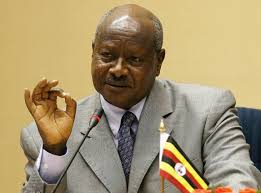
    Gen Museveni dismisses claims that the Bill seeks to restrict foreign investment, remittances, or external support to religious institutions. The version he introduced in Cabinet, he says, is focused strictly on safeguarding Uganda’s independence in decision-making, not limiting financial flows into or out of the country.

    The President traced the sovereignty struggle to Africa’s colonial past, when the continent, except Ethiopia, fell under foreign domination following centuries of slave trade and internal divisions.

    He credits Pan-African movements, including figures like Marcus Garvey and organizations such as the ANC of South Africa, alongside global allies, for securing Africa’s liberation, culminating in South Africa’s independence in 1994.

    According to Museveni, the core purpose of sovereignty is to preserve Uganda’s authority to determine its own policies across political, social, economic, and diplomatic spheres. These include decisions on governance structures, cultural values, economic strategies, and foreign relations.

    Quoting a principle, he attributed to Mwalimu Julius Nyerere, Gen Museveni underscored that true independence includes the freedom for a nation to make its own choices even mistakes without external interference. He warned against foreign influence through funding or advocacy aimed at shaping Uganda’s internal decisions.

    He reaffirms that Uganda’s Constitution provides for the exercise of sovereignty through democratic processes such as elections and referenda, and urged both domestic and international actors to respect these mechanisms.

    Museveni stresses that Uganda remains committed to a free-market economy, allowing the unrestricted movement of legally earned money, including remittances, investments, and donations. He describes this openness as a key driver of economic resilience, particularly in counterbalancing inefficiencies within public institutions.

    Drawing on a personal example, he cited efforts to revive Ankole cattle, once dismissed by colonial-era experts, which have since gained international recognition.

    He acknowledges South African President Cyril Ramaphosa for supporting their promotion. The President made it clear that government would not support any policy that interferes with private sector financial flows, noting that such freedoms are central to Uganda’s economic growth and transformation. He added that he had engaged government officials, including Hon. Denis Hamson Obua and Parliamentary Committee leaders, to ensure the Bill remains focused on protecting policy independence without encroaching on private enterprise or financial freedoms.

    The ‘Old Man’ from Rwakitura concluded by encouraging those seeking to influence others to do so through positive example rather than coercion, referencing a teaching from the Book of Matthew — “let your light shine before others, so that they may see your good works,” Matthew 5:16, and “whoever would be great among you must be your servant,” Matthew 20:26.

    The Pulpit Answers Parliament: Archbishop Mugume On Sovereignty, Free Will, Grace.

    While the State clarifies its Bill, Archbishop Elect Professor Mugume Bagambaki Richard, the Ecclesiastical Episcopal Patriarch of Five-Fold Episcopal World Federation and Chancellor of UCCSAT University, releases a Labour Day theological treatise that has since circulated across churches, WhatsApp groups, and community radio. His message: “God’s sovereignty is ever better than man-made sovereignty bills.”

    The Archbishop teaches that the sovereignty of God refers to the fact that God is in complete control of the universe. A belief in God’s sovereignty, he writes, is distinct from fatalism, which denies human free will. Humans are able to make genuine choices that have real consequences. God does not directly cause everything to happen, yet He does allow all that happens to happen. And, ultimately, God’s will is going to be accomplished.

    At first blush these statements may seem unimportant to one’s daily life and better suited for an esoteric theological discussion. However, the sovereignty of God is quite practical and has a significant impact on our daily lives.

    The sovereignty of God impacts everyday life in that it removes all cause for worry. We can trust that what the Bible claims about God’s character is backed up by His ability. Not only does God love us, but He has the ability to care for us. Those who are part of the family of God can claim the promise in Romans 8:28, “And we know that in all things God works for the good of those who love him, who have been called according to his purpose.” We can rest in the fact that our God is actually able to work all things for our good, even when we cannot readily see how that may happen.

    The sovereignty of God impacts everyday life in that we can trust God’s sanctifying work in us. Many times, Christians feel that maturing in the faith is completely up to them, as if God saves us and then expects us to do the rest. Christians do play a role in their own maturity. We are certainly called to obedience, and what we do matters.

    However, in recognizing that God is sovereign, we also trust Him to bring us to maturity. See Galatians 3:3 and Philippians 1:6. Looking to Romans 8 again, we read, “For those God foreknew he also predestined to be conformed to the image of his Son, that he might be the firstborn among many brothers and sisters. And those he predestined, he also called; those he called, he also justified; those he justified, he also glorified.

    What, then, shall we say in response to these things? If God is for us, who can be against us? He who did not spare his own Son, but gave him up for us all: how will he not also, along with him, graciously give us all things? Who will bring any charge against those whom God has chosen? It is God who justifies.

    Who then is the one who condemns? No one. Christ Jesus who died, more than that, who was raised to life, is at the right hand of God and is also interceding for us.” Romans 8:29–34. Our salvation has been God’s sovereign plan from eternity past. Rather than focus on our own performance, we can rest in the character of God and focus instead on actually getting to know Him.

    The sovereignty of God also affects how we make decisions, we recognize that God is in control, so we need not be paralyzed by decision-making. If we make the wrong decision, all is not lost. We can trust in God’s faithfulness and His ability to set us back on the right course.

    On a related note, we can and should make decisions. God’s sovereign control does not mean that we sit idly by and allow life to happen. It means that we can go bravely into life, trusting that our loving Father sees the larger picture and is faithfully working everything for His glory.

    That God is sovereign impacts our sense of identity. When we understand how powerful God is and how much He loves us, we can know we are secure in Him. As the objects of God’s sovereign love, we allow God to define us and give us our worth rather than look to the changing ideals of the world to do so. When we understand that God is in complete control, we are freed to live our lives. We need not fear ultimate failure or final destruction. Romans 8:1. We need not fear worthlessness. We can be confident that God will have His way and that it will be good. We can trust that the One who says He loves us is fully able to act on that love in all ways. We can trust that, even when the world seems completely out of control, God is in control. We know He has the big picture covered, so we can trust Him with our daily details.

    God’s sovereignty works together with free will. It is impossible for us to fully understand the dynamics of a holy God molding and shaping the will of man. Scripture is clear that God knows the future, Matthew 6:8; Psalm 139:1-4, and has total sovereign control over all things, Colossians 1:16-17; Daniel 4:35. The Bible also says that we must choose God or be eternally separated from Him. We are held responsible for our actions, Romans 3:19; 6:23; 9:19-21. How these facts work together is impossible for a finite mind to comprehend, Romans 11:33-36.

    People can take one of two extremes in regard to this question. Some emphasize the sovereignty of God to the point that human beings are little more than robots simply doing what they have been sovereignly programmed to do. Others emphasize free will to the point of God not having complete control and/or knowledge of all things.

    Neither of these positions is biblical. The truth is that God does not violate our wills by choosing us and redeeming us. Rather, He changes our hearts so that our wills choose Him. “We love Him because He first loved us,” 1 John 4:19, and “You did not choose me, but I chose you,” John 15:16.

    What are we to do then? First, we are to trust in the Lord, knowing that He is in control, Proverbs 3:5-6. God’s sovereignty is supposed to be a comfort to us, not an issue to be concerned about or debate over. Second, we are to live our lives making wise decisions in accordance with God’s Word, 2 Timothy 3:16-17; James 1:5.

    There will be no excuses before God for why we chose to disobey Him. We will have no one to blame but ourselves for our sin. Last but not least, we are to worship the Lord, praising Him that He is so wonderful, infinite, powerful, full of grace and mercy, and sovereign.

    Now about sovereign grace. Sovereign grace combines two of God’s attributes, His sovereignty and His graciousness. Both of these characteristics of God are so vast that many volumes have been written about each. Briefly though, the doctrine of sovereign grace is the melding of the two into a thrilling truth that gives us a glimpse into the mind and heart of our great God.

    The sovereignty of God is His total control of all things past, present, and future. Nothing happens beyond His knowledge and control. All things are either caused by Him or allowed by Him for His own purposes and in accordance with His perfect will and timing, Romans 11:36; 1 Corinthians 8:6. He is the only absolute and omnipotent ruler of the universe and is sovereign in creation, providence, and redemption.

    The other half of sovereign grace is grace. The grace of God is His unmerited favor toward those who have not earned it. It is undeserved favor. There are numerous examples of God’s grace in the Bible, both to His people and to those who reject Him.

    Mary found grace in the eyes of the Lord who bestowed upon her the privilege of bearing the Savior of mankind, Luke 1:28. She may have been a godly young woman, but nothing she could have done would have made her worthy of such a blessing. She was the recipient of God’s grace, and He sovereignly chose her for the task, sovereign grace.

    The apostle Paul admits that he was a servant of God only by grace and it was by grace that he labored effectively for the cause of Christ, 1 Corinthians 15:10. Sovereign grace chose to save Paul on the Damascus Road, and sovereign grace showered him with untold blessings.

    As Christians we, too, benefit from God’s sovereign grace. “For by grace are you saved through faith,” Ephesians 2:8. Our very salvation and position in Christ is due to His grace through the faith that He gives us, Hebrews 12:2. Even those who hate God receive His grace.

    Every breath God allows them to take is a product of His common grace to all creation: “He makes His sun to rise on the evil and on the good, and sends rain on the just and on the unjust,” Matthew 5:45. Even the atheist enjoys the effects of God’s sovereign grace through God’s beautiful creation and His provision of the resources necessary for food, clothing, and housing. God doesn’t owe these things to us, but He sovereignly provides them to exhibit His grace.

    The sovereign grace of God is noted most often by theologians in the matter of election. We see it best explained in Ephesians 1:5–6: “He predestined us to be adopted as his sons through Jesus Christ, in accordance with his pleasure and will to the praise of his glorious grace, which he has freely given us in the One he loves.” Here, in the same sentence, we have a reference to predestination, God’s sovereignty, and God’s glorious grace, sovereign grace.

    God sovereignly chose those He would save through His gracious act of sending His Son to die on the cross for their salvation. Sinners were unable to save themselves or, like Mary, to merit God’s favor because of their transgression of His Law. “But where sin abounded, grace did much more abound,” Romans 5:20. Therefore, Christians are “justified freely by His grace through the redemption that is in Christ Jesus,” Romans 3:24.

    Contact Archbishop Mugume: +256775050183 mugumebagambakirichard@gmail.com


  • State House’s Hajji Farouk Kirunda Rolls Out Luuka District Leadership Symposium Ahead of Budget Cycle, RDC Kibwika Says Symposium, Not induction But Strategic Leadership Clinic

    State House’s Hajji Farouk Kirunda Rolls Out Luuka District Leadership Symposium Ahead of Budget Cycle, RDC Kibwika Says Symposium, Not induction But Strategic Leadership Clinic

    In a move aimed at fast-tracking service delivery and cohesion in one of Busoga’s newest political generations, Luuka Resident District Commissioner Michael Kibwika has summoned all newly elected leaders for a high-level symposium this Saturday, May 2, 2026.

    The one-day “Leadership Symposium” will be held at the Parish Council Hall, Kitwekyambogo from 9:00am to 4:00pm, according to an April 28th invitation letter signed by RDC Kibwika and seen by The Exposure Uganda (TEU).

    Who Is Invited?

    The RDC’s letter, addressed to “Hon MPs, LC5 Chairman newly elected, Councilors, CAO Luuka, all Heads of Department, all Chairpersons LC3 newly elected, all Parish Councilors newly elected,” says the symposium is organized by the Office of the Special Assistant to His Excellency in charge of Mobilization/Deputy Presidential Press Secretary, Hajji Farouk Kirunda.

    Copied in are the Deputy RDC, DPC Luuka, and DISO Luuka, signaling the security and governance weight attached to the meeting.

    Symposium Vs Induction: What Is the Difference?

    While the RDC’s letter does not list the “critical topical areas for service delivery” to be handled, TEU understands the symposium will tackle gaps often missed in standard inductions.

    What is a Symposium?

    A symposium is a focused, expert-led discussion where leaders interrogate specific problems and share solutions. Unlike an induction, which is a basic orientation on rules, laws, and office procedure, a symposium is strategic. It asks questions like: “Now that you are in office, how do we actually deliver?”

    Key Difference:  

    Induction: “This is your office, these are the laws, this is how council works.”

    Symposium: “These are the potholes, this is why budgets fail, this is how councilors and technical staff clash, let us fix it.

    Local government experts told TEU that symposia are increasingly used by State House to cure the “elected but clueless” syndrome that cripples service delivery in Year One of new councils.

    Expected Topics- TEU Analysis.

    Though not listed in the letter, TEU expects resource persons to handle:

    Proper planning and budgeting: Why many districts return money to Treasury amidst plenty of needs.

    Mandate of Local Government: LC5 vs CAO vs Council: Who does what? The eyes on and hands off phrase.

    Cohesion between politicians and technical staff: Ending the RDC/CAO/LC5 chronic wars.

    Role of the IGG: Accountability, not witch-hunt.

    Councilors as agents of socio-economic transformation: Beyond motions and choruses of ‘points of order’, or ‘points of information’ to markets, boreholes, schools and health centers and roads.

    Conflict-sensitive leadership: Keeping Luuka peaceful post-elections and avoid using your positions to pursuing personal vendettas.

    Spotlight: Hajji Farouk Kirunda State House Mobiliser.

    The symposium is being spearheaded by Hajji Farouk Kirunda, Special Assistant to the President in charge of Mobilization and Deputy Presidential Press Secretary.

    Known in Busoga and State House corridors as a “bridge-builder with zero drama,” Hajji Kirunda has quietly earned respect for taking presidential messages to the grassroots without the usual Kampala fanfare.

    His mobilization style: door-to-door, mosque/church-to-market, radio to bloggers and public engagements, among others has made him one of President Museveni’s most trusted link-men in Busoga sub-region.

    Sources say Kirunda’s office is rolling out similar symposia across Busoga to ensure the NRM’s 2026-2031 manifesto is, “understood in the village, not just launched in Kololo.”

    RDC Kibwika: Politician Turned Security Chief.

    The invitation bears the signature of a man who knows both politics and administration. Michael Kibwika is no stranger to local government trenches:

    Former Councilor, Busembatya Town Council for 10 years, former Vice Chairperson, Iganga District Local Government, RDC Busia, Buikwe, and Jinja before posting to Luuka.

    This rare blend, elected politician who became presidential representative, makes Kibwika uniquely placed to chair Luuka’s sensitive District Security Committee (DSC) while mentoring new leaders. His journey from council floor to security briefings means he understands both the politics of votes and the discipline of delivery.

    “RDC Kibwika does not just read intelligence briefs. He has contested, won, lost, and governed,” said a senior Luuka technocrat. “When he calls a symposium, it is not academic. It is practical.”

    Why This Matters.

    Luuka, carved from Iganga in 2010, still battles poor road network, health center stock-outs, and youth unemployment. With a fresh crop of LC3s, LC5, and parish councilors sworn in this year, the May 2nd symposium is State House’s earliest attempt to “immunize” them against the usual first-term paralysis.

    As one newly elected LC3 chairperson told TEU: “We campaigned on roads and water. But nobody told us how to write a workplan. If this symposium teaches us that, then Hajji Kirunda and RDC Kibwika will have saved us.”

    Event Details:  

    Date: Saturday, May 2, 2026  

    Time: 9:00am – 4:00pm  

    Venue: Parish Council Hall, Kitwekyambogo .

    Convenor: Office of Hajji Farouk Kirunda, State House.  


  • Labour Day 2026 Message: Won Nyaci HRH Odongo Okune Says Hard Work Key To Safeguarding Uganda’s Progress.

    As Uganda joins the world to mark International Labour Day on Friday, May 1st, the Lango Paramount Chief, His Royal Highness Eng. Dr Michael Moses Odongo Okune, has called on his subjects, especially the youth to reclaim the sub-region’s age-old trademark of hard work and honesty, warning that laziness and the lure of quick wealth are eroding Lango’s proud identity.

    The Won Nyaci me Lango, whose cultural jurisdiction covers Lira City, Lira District, Kole, Alebtong, Apac, Amolatar, Dokolo, Otuke, Kwania, and Oyam, said Labour Day is not just a public holiday but a moment for Lango to audit its work ethic against the values of their ancestors.

    Drawing from the words of Thomas Edison (1847-1931), one of the most famous inventors in history and an American businessman who said that “opportunity is missed by most people because it is dressed in overalls and looks like work”, the Won Nyaci said too many Lango youth are walking past opportunity every morning.

    “I walk through our trading centres and urban places, I see some able-bodied young men from morning to evening seated under trees and shades on betting machines/halls, on phones, playing cards waiting for miracles, meanwhile gardens are bushy and elderly parents hire labour from elsewhere, this is not the Lango I have known”, he laments.

    Our (Lango) Granaries Were Never Empty.

    He said from time immemorial, Lango people have been known across Uganda as hardworking, honest and straight forward, and that the granaries (dero kec) were never empty because the hands were never idle.

    “A Lango man, a Lango woman, or youth woke up with the sun to the garden, to the cattle, to the forge, to the market, we tilled, we herded, we traded, we were born to work, not to beg which led to the coinage of the phrase acan akwo kwo ilwete” (a living poor man is sustained by the work of his hands”), HRH Odongo Okune said in his Labour Day message released from his private palace at Senior Quarters in Lira City.

    The Won Nyaci, an acclaimed civil engineer by profession specializing in bridge-building, said this trademark industry built Lango’s resilience through wars, cattle rustling, and economic shocks. “Even when we lost everything, we did not lose our hands. We rebuilt. That is the Lango spirit.”

    Youth Urged To Shun Idleness, Betting, Quick Wealth.

    The Paramount Chief said Labour Day 2026, held under the national theme “Safeguarding Uganda’s Progress: Empowering the Workforce and Promoting Decent Work for Competitive Enterprises,”, must speak directly to Lango’s young people.

    “Empowering the workforce starts with the will to work. Decent work starts with honest work. You cannot have competitive enterprises when the owner is asleep and the worker is gambling,” he said.

    Industry Must Marry Honesty.

    HRH Odongo Okune emphasized that Lango’s industry must be paired with “apor/anyut aber”, honesty and integrity if it is to produce lasting progress.

    “Our fathers taught us: ‘Awackom camo owara’ loosely translated to mean a lazy man eats empty honeycombs, but he who toils never shames. Today some youth want wealth without sweat, offices without toil, harvest without planting. That is not Lango. That is not sustainable.”

    He urged clan leaders, elders, and parents across the nine districts to use the Labour Day week to convene youth barazas and re-teach the Lango work ethic: early rising, respect for elders’ enterprises, apprenticeship, and dignity in all honest labour, whether farming, welding, boda-boda, teaching, or vending.

    Government Jobs Not Enough, Create Your Own.

    The Won Nyaci cautioned against over-reliance on government employment. “Lango has thousands of educated sons and daughters, but government jobs will never be enough, our ancestors were not employed, they employed themselves, they employed the land and they employed their skills.”

    Quoting from the Scripture (2Thessalonians 3:10 in which St. Paul taught that “the one who is unwilling to work shall not eat,” the Won Nyaci asked parents and guardians to instill the spirit of hard work in their children irrespective of their social status in society, even in families that lack nothing.

    In the text, St Paul wrote to the Church in Thessalonica because some believers had stopped working expecting Christ’s return any day. He rebuked idleness and commanded everyone to earn their own living.

    “Hard work is not a punishment for the poor. It is Lango identity. It is dignity,” HRH Okune said and strongly condemned a lazy spirit he has observed among some young men who have formed a loose club they call “Rich Men In The Waiting.”

    These are reportedly sons of wealthy men who wake up and gather in bars or hotels from morning and begin eating and drinking, apparently waiting and wishing for the demise of their parents so that they inherit wealth which they have not worked for.

    He warned that such entitlement erodes Lango’s brand of industry and resilience that rebuilt Lira City after years of conflicts spanning decades from the time Amin took power until the Northern Insurgency.

    “Let no child in Lango grow up thinking inheritance is employment. Let every child have a skill. Let every child till, trade, or create. Even the son of a chief must know how to hold a hoe,” he said.

    He hailed Lango entrepreneurs in Lira City’s produce lines, hardworking and ethical business community in Lira City and other towns, Amolatar’s fishing enterprises, Oyam’s commercial farms, and Apac Municipality’s metal works, saying they represent the “true Labour Day heroes.”

    HRH Okune noted that Lango people rebuilt their lives, homes and towns like Lira City, now referred to as the Northern Commercial Hub attracting investors and traders from as far as South Sudan, India, Pakistan and DR Congo through hard work and resilience, with trading centres sprouting everywhere.

    “In Lira City the catchphrase is hard work and you can see boda-boda, women waking up riding bicycles as early as 5am daily and basically everyone in Lango is always in a hurry to do something productive. In Lira you see Uganda because people from all regions and languages are here,” he added.

    “To the young man with one acre of land in Otuke, or Oyam or Dokolo that is your office. To the young woman with a sewing machine in Dokolo that is your factory. Start small, grow honest, employ others tomorrow,” HRH Okune said.

    Cultural Institution To Partner With Districts On Skilling.

    The Won Nyaci disclosed that Lango will partner with district local governments, State House and the Ministry of Gender, Labour and Social Development plus other government departments and ministries to scale up skilling for out-of-school youth across the sub-region.

    He says focus will be on agriculture value addition, metal fabrication, carpentry, tailoring, and digital skills.

    “We shall use our clans and chiefdoms to identify idle youth and link them to the Lira City-based skilling hub and other partners or stakeholders. A Lango must have a skill,” he said.

    He also appealed to investors in Lira City and the Lango sub-region to prioritize local labour and uphold decent work standards timely pay, safety, and respect in line with the national Labour Day theme.

    Labour Day Is Thanksgiving For Workers.

     HRH Odongo Okune paid tribute to Lango’s farmers, teachers, health workers, boda-boda riders, market vendors, builders, and civil servants, calling them “the backbone of our sub-region.”

    “On May 1st, as President Yoweri Museveni leads national celebrations at Bishop Nkoyoyo Primary School Matale Grounds in Buikwe district, here in Lango we shall bow our heads for every hand that feeds us. We shall also kneel and pray for those whose hands are idle, that God gives them the fire to rise and work.”

    Lango’s Brand Is Industry — Let’s Not Dilute It.

    He concluded: “When Uganda thinks Lango, let them think industry. When investors come to Lango, let them find workers, not spectators. When our children ask what it means to be Lango, let the answer be: ‘We work. We work hard. We work honest.’”

    “Happy Labour Day to all Lango. Happy Labour Day to all Ugandans.”

    “Tekwaro Lango, Tic Atek Kun Icamo Ikwoki, Jojok Amalo.”


  • ‘Safeguard Mothers to Safeguard Uganda’s Progress’ — Senior Presidential Advisor Florence Mutyabule’s Labour Day Plea to Health Ministry.

    Senior Presidential Advisor (SPA) for Poverty Alleviation in Busoga, Hon. Florence Mutyabule, has appealed to the Ministry of Health and health departments at local government level to embed regular health check-ups for mothers working in market stalls, shops, supermarkets, fuel refilling stations and factories, warning that Uganda’s workforce is being broken by a triple burden of time poverty, trauma, and undiagnosed disease among women.

    Her appeal was contained in a congratulatory message to women in Busoga ahead of International Labour Day on May 1st, which the country will mark under the theme “Safeguarding Uganda’s Progress: Empowering the Workforce and Promoting Decent Work for Competitive Enterprises.”

    The national celebrations will be held at Bishop Nkoyoyo Primary School Matale Grounds in Buikwe district, where President Yoweri Museveni is expected to preside as chief guest.

    Working Hard Is Ordained but Do Not Neglect Personal Health.

    “Working hard in any sector is something ordained by God for everyone, but I also encourage women, as mothers of the nation and the world, to also set apart time for personal health assessment”, she said.

    The former Namutumba District Woman MP said the national theme cannot be achieved if the health of mothers continues to decline.

    “You cannot talk about empowering the workforce when the women who raise, feed, and nurse that workforce are collapsing from time poverty and untreated diseases,” she said.

    Speaking as a mother and grandmother, Mutyabule added “You cannot have decent work for competitive enterprises when the mother in the market stall, fuel station or factory has never checked her blood pressure, never screened for cervical cancer, and is battling depression alone.”

    The Triple Burden of Time Poverty Crushing Mothers.

    Hon Mutyabule described three pressures that are collapsing mothers and, with them, the labor force Uganda seeks to empower. The first is time poverty.

    The Uganda Time Use Survey 2017/2018, published by UBOS in June 2019, found that women spend 30 hours a week on unpaid domestic and care work, more than double the 12 hours a week spent by men.

    UN Women analysis of the same data shows that in urban areas, women spent 3.7 hours daily on unpaid care work compared to 1.0 hour for men. In rural areas, women spent 3.3 hours daily against 1.1 hours for men.

    UN Women (United Nations Entity for Gender Equality and the Empowerment of Women) is the UN agency dedicated to advancing gender equality and women’s rights globally. It was created in July 2010 by the UN General Assembly merging four previous UN bodies that focused on women.

    A 2024 study in Paliisa, Mpigi, Mbarara and Masindi found the gap persists, with women spending 5.5 hours per day on unpaid care work versus 3.5 hours for men, while men spend 7.4 hours in paid employment compared to 5.3 hours for women. 

    Trauma-Single Motherhood & Rising Depression.

    The second pressure is trauma linked to rising single motherhood. UBOS data from the Uganda National Household Survey 2023/2024 shows 30.1 percent of Ugandan households are female-headed.

    Mutyabule described the rise as traumatic. A 2025 study by Makerere University School of Public Health in Jinja and Iganga found that 43 percent of single mothers screened positive for moderate to severe depression, compared to 19 percent of married mothers.

    Only 8 percent had accessed counseling. Butabika National Referral Mental Hospital has recorded a rise in female admissions for depression and anxiety, with economic stress cited in six out of ten cases.

    Undiagnosed Disease -Mothers Dying from Preventable Causes.

    The third pressure is undiagnosed disease. WHO data shows Uganda is among 10 countries that account for about 60 percent of all maternal deaths globally, with 5,900 deaths estimated.

    Cervical cancer remains the leading cause of cancer-related mortality among women in Uganda. Despite national strategies to expand screening, uptake remains critically low.

    A UDHS 2022 analysis found significant pro-rich inequity in screening utilization, with wealthier and urban women having disproportionate advantage. In Eastern Uganda, a cross-sectional study found only 23.4 percent of postpartum mothers complied with the WHO-recommended 8+ ANC contacts schedule, and only 23.2 percent attended their first ANC within the first trimester.

    “Safeguarding Uganda’s progress starts with safeguarding the mother,” Mutyabule said. “A sick mother cannot produce a healthy worker. A traumatized mother cannot raise a competitive citizen.”

    Let Every Market Day Be a Health-Check Day.

    To address this, she appealed to the Ministry of Health, District Health Officers, and municipal health departments to embed regular check-ups for mothers working in market stalls or stores and supermarkets, fuel refilling stations and factories into district workplans and budgets.

    “Let every market day also be a health-check day. Let every factory have a health corner. Let fuel stations partner with nearby health centers for monthly BP and blood sugar camps. These are the workplaces of our mothers. Decent work must include decent health,” she said.

    RMNCHAH Sharpened Plan 2022-2026 Backs the Appeal.

    She said her call aligns with Uganda’s Reproductive, Maternal, Newborn, Child and Adolescent Health Sharpened Plan and Investment Case II 2022/23–2026/27.

    Published by the Ministry of Health in January 2022, the plan has the bold objectives of ending preventable maternal, newborn, child, and adolescent deaths and safeguarding the health and development of all children, adolescents, and women.

    It calls for collective action where all stakeholders align with national and subnational mutual accountability frameworks to deliver their commitments.

    Busoga From worst Indicators To Recovery.

    Busoga has historically recorded some of Uganda’s poorest RMNCAH indicators, often falling well below national averages. In 2016, 40 percent of women of reproductive age in the sub-region did not access healthcare. Many turned to underqualified traditional birth attendants due to distant specialized facilities and limited expertise at primary facilities.

    First-trimester antenatal care attendance was 18 percent in 2018. Regular antenatal visits of four times or more stood at 37 percent. Deliveries overseen by trained health professionals were at 47 percent. Maternal mortality for Busoga was recorded at 448 per 100,000 live births, compared to the national figure of 336 at the time. Emergency transport for obstetric complications largely depended on boda-bodas, placing mothers and newborns at significant risk.

    USD 10M WHO-KOICA Project Delivering Results In Five Districts.

    To implement the RMNCAH Sharpened Plan in Busoga, the Ministry of Health, WHO and the Korea International Cooperation Agency are implementing a USD 10 million, five-year Health System Strengthening Project in Bugiri, Buyende, Iganga, Kamuli and Mayuge districts.

    Launched in October 2021, the project is refurbishing 30 health facilities, installing solar lighting and water systems, strengthening cold chain systems, and providing medical equipment. Ambulances procured through the project now facilitate an average of 100 successful emergency referrals each month. The project has also trained 159 health workers and reached 11,700 students with sexual and reproductive health education through school health clubs.

    Measurable Gains-ANC, Skilled Births, Referrals Up.

    The interventions have already delivered measurable improvements. First-trimester antenatal care attendance increased from 18 percent in 2019 to 41 percent in 2024. The proportion of women completing at least four ANC visits rose from 37 percent to 51 percent. Skilled birth attendance increased significantly, from 47 percent to 67 percent.

    Access to postnatal care within two days of delivery improved dramatically from 73 percent to 99 percent for women and from 86 percent to 98 percent for newborns. Emergency referral services were enhanced, with 7,230 referrals conducted using project-supported ambulances.

    WHO Rep Says No Woman Should Die Giving Life.

    Despite the progress, WHO Representative in Uganda, Dr. Kasonde Gomani Mulenga Mwinga, said sustained efforts are needed. “We must now rally collective leadership, sustained investments, and robust accountability to ensure that no woman dies while giving life and no child is denied the right to survive and thrive,” she said.

    The Director General of Health Services, Dr. Charles Olaro, noted that Busoga’s strategies are being integrated into the national RMNCAH Sharpened Plan and Vision 2040. He added that districts must ensure renovated facilities are well-managed, equipment is used effectively, and health workers communicate better to boost service uptake.

    Decent Work Begins At Home-Mothers Union Lessons.

     Mutyabule said the Labour Day theme of safeguarding progress must begin with the mother. She urged families and communities to ensure girls and women are safe from early pregnancy, gender-based violence, and economic desperation. “Decent work begins at home. Safety begins at home,” she said. She has previously urged men to support pregnant wives and daughters to attend antenatal sessions and to ensure women access protein-rich foods, warning that malnutrition is a silent killer.

    Women:51% of Uganda, 53% of Voters, 75% of Farm Labour.

    UBOS National Population and Housing Census 2024 puts Uganda’s total population at 45,905,417. Women and girls are 51 percent of the population. The Electoral Commission says out of 21,681,491 registered voters in 2025, women make up 53 percent. Women provide over 75 percent of the labor in agriculture, the bulk of the labor downtown, roadside markets and lower-level jobs in public service.

    Scripture Meets Statistics-Honor God With Your Bodies.

    Mutyabule, the former Mothers Union in Busoga Diocese for 10 years anchored her appeal in scripture and public health. “Genesis 2:15 says God put man in the garden to work it. Proverbs 31 praises the woman who works with her hands. But Exodus 20:8 also says, ‘Remember the Sabbath.’ Even God rested,” she said. She quoted 1 Corinthians 6:19-20: “Do you not know that your bodies are temples of the Holy Spirit… You were bought at a price. Therefore, honor God with your bodies.”

    “If a mother collapses, the nation collapses. If her mind breaks, the children break. We cannot fight poverty by killing the poor. We cannot safeguard progress by burying producers,” Hon Mutyabule said.

    A Mother’s Health Is The Nation’s Insurance.

    As Uganda celebrates Labour Day under the theme, “Safeguarding Uganda’s Progress”, she said the country must answer who safeguards the mother of the worker and who ensures the girl-child grows up safe to join the workforce. “A mother’s health is not her luxury, it is the nation’s insurance, break the triple burden, and you safeguard Uganda’s progress”, she concludes.

    TEU Editorial: As Uganda marks Labour Day, the nation must confront a hard truth: progress has no insurance if the mother is uninsured.

    The factory floor, the market stall, the fuel pump, supermarket, among others are not just workplaces. They are the frontline of Uganda’s economy, staffed by women carrying the triple burden of time poverty, untreated trauma, and undiagnosed disease.

    Hon. Florence Mutyabule’s call is not sentiment; it is strategy. The RMNCAH Sharpened Plan 2022–2026 already provides the policy, and Busoga’s USD 10M recovery shows results are possible.

    What remains is political will: to take the clinic to the mother, not wait for the mother to collapse on the way to the clinic. Break the triple burden, and you do more than empower a workforce. You safeguard Uganda’s progress for a generation.


  • “You Circled the Moon, Built Skyscrapers But Can Not Command A Swallow”, Nabbi Daudi Warns Uganda, West to Stop Thumping Chests-God Controls Your Breath

    A thanksgiving meeting called to appreciate Christians for organizing a successful Passover Service turned into a stern rebuke Saturday evening (25th April, 2026), as the supreme spiritual leader of Universal Apostles Fellowship Church of Righteousness (UAFCR) expressed deep disappointment with believers from Jinja Zone over what he termed “brother-in-law familiarity” with God.

    Prophet David Isanga popularly known as Nabbi Daudi, who convened the gathering to thank organizers, said he was grieved that Christians from Kirama Zone in Kaliro District and others from Luwero, more than 200 km away in Buganda, arrived at the venue very early in the morning, yet believers from Jinja, a walkable distance of between 10 to 15 minutes trickled in late evening, while others did not attend at all.

    Like the Biblical Israelites who would see God’s wonders and favors in the morning but by evening they had already forgotten, Nabbi Daudi says some Christians now treat God as their brother-in-law or sister-in-law.

    He says many have familiarized(okumanyira) God and take everything He does for granted.

    To him, the Christians of Jinja Zone were behaving like the children of Israel, who would boast after an achievement the way Jinja was acting after the Passover as if it was by their own might, knowledge and wisdom.

    “We Have Familiarized Him”-Nabbi Daudi.

    In his address, Nabbi Daudi drew a direct parallel between modern believers and the Israelites of Exodus.

    “Like the Biblical Israelites who would see God’s wonders in the morning but by evening had already forgotten, some Christians now treat God as their brother-in-law or sister-in-law, we have familiarized Him. We take everything He does for granted”, he said.

    Prophet David explained the cultural weight of the phrase to the congregation. In many Ugandan clans, a sister-in-law is referred to as “muka mwana waffe”, “our wife.” She is joked with, sent on errands, borrowed from, and often reminded she can be returned to her family. The relationship, known as omuko/mulamo is one of “licensed familiarity without holy fear.”

    “That is how we now handle God, we call Him ‘Daddy’ on Sunday, then ignore Him like a boring uncle that very day or the next Monday. We want His blessings but not His lordship.”

    Deuteronomy 8:7ff — The Land of Plenty Forgets the Giver.

    Nabbi Daudi took the congregation to Deuteronomy 8:7-18.

    “For the Lord your God is bringing you into a good land… a land in which you will eat bread without scarcity… Beware lest you say in your heart, ‘My power and the might of my hand have gotten me this wealth.’ You shall remember the Lord your God, for it is he who gives you power to get wealth.”

    “Israel entered a land flowing with milk and honey,” he preached. “God warned them: when you are full, when your houses are built, when your herds multiply, do not forget. But they forgot. We forget. Jinja organized Passover. People came. Money came. Then we acted like it was our wisdom. Deuteronomy 8 is Jinja Zone. God gave the increase. We took the credit.”

    He said the 10-minute walk to the thanksgiving service exposed the same amnesia: “You are in the land of plenty, the church is near, the freedom is here, yet you came at dusk. Kirama walked from famine to be here at dawn. Who remembered the Lord?”

    Ezekiel 33:30ff: Entertainment, Not Obedience.

    The prophet then turned to Ezekiel 33:30-32:

    “As for you… they hear what you say, but they will not do it… for with their lips they show much love, but their heart is set on their gain… And behold, you are to them like one who sings lustful songs… for they hear your words, but they do not do them.”

    Shrine (Essabo/Eisabo)Obedience vs. Sanctuary Stubbornness.

    Then came the comparison that silenced the hall. “abantu bagondera amateeka g’essabo ne batatya Katonda…”

    “Devil or demon worshippers who go to consult in shrines are so obedient and loyal that they obey orders or instructions without defaulting,” Nabbi Daudi said. “The witch doctor says: ‘Enter the shrine barefoot.’ They remove shoes. ‘Return without looking behind.’ They walk straight. ‘Do not eat pork or drink alcohol for 7 days.’ They fast.”

    The charismatic man of God paused. “Why? Because they fear the shrine. They fear the demon. They believe if they disobey, calamity strikes.”

    “Then why should Christians who have been saved by God through His Son Jesus Christ be stubborn and want always to familiarize the true Living God?” he asked. “The demon gets obedience. The Creator gets excuses. The shrine gets bare feet. The altar gets late feet. The witch doctor gets ‘Yes, sir.’ God gets ‘I am busy.’”

    “Are demons more worthy of fear than the God who gives you breath? Are shrine rules more serious than ‘If you love me, keep my commandments,’ John 14:15? We obey darkness without question, but argue with Light.”

    Red Sea at Dawn, Grumbling by Dusk.

    Nabbi Daudi traced Israel’s journey from the Red Sea to the Promised Land. “God split the sea. He rained manna. He brought water from the rock. Cloud by day, fire by night,” he preached. “Yet Exodus 16:3 shows them saying, ‘You brought us out to kill us with hunger.’ Psalm 106:13 says, ‘They soon forgot his works.’ Morning miracles, evening amnesia.”

    He likened Jinja Zone’s late arrival to that pattern. “Kirama came from Kaliro. Luwero came over 200 km. They set affection on the house of God. Jinja is 10 minutes away and came at dusk, after the work, after the sacrifice. That is Cain’s religion. Crops, not special treasure.”

    He contrasted Israel’s grumbling with King David’s posture in 1 Chronicles 29:3: “Moreover, because I have set my affection on the house of my God, I have given… my own special treasure of gold and silver.”

    You Cannot Even Swallow Without God — The Medical Doctor cum Prophet Speaks.

    At this point, Nabbi Daudi’s tone shifted. Speaking authoritatively as a trained medical doctor, he delivered the line that broke the congregation:

    “You can put food in your mouth, but collapse and die, or be rushed to hospital in critical condition with food trapped in the throat. It’s God who controls every aspect, including the human body and organs.”

    He explained the medical terms. The vagus nerve, cranial nerve X, which is the longest cranial nerve in the body. It governs involuntary actions: it tells your epiglottis to cover the trachea so food does not enter your lungs. It drives peristalsis, the wave-like muscle contractions that move food down the esophagus. It regulates heart rate. You do not command it. You do not negotiate with it.

    “If God withdraws His hand for one second, your luwombo, pork chops or chips and chicken or pizza and pilawo, among other delicacies becomes your last meal, if you cannot guarantee the next swallow, what makes you think you secured the Passover Service by your own might?”, he said in rhetoric sending the audience which included health professionals into dead silence.

    Then he anchored it in Scripture: “Nabbi Daudi’s words are also embedded in the Bible. Daniel 5:23 says to Belshazzar, ‘The God in whose hand is your breath and whose are all your ways, you have not honored.’ And Acts 17:28 says, ‘In him we live and move and have our being. Every safe swallow is a sermon. Every heartbeat is manna.”

    Bended Knees, Not Mixed Reactions.

    This rebuke prompted believers of Jinja Zone, which has more than 10 churches alongside their leaders, to go on bended knees asking God for forgiveness, promising never to be slothful or sloppy again.

    “We felt pierced, but it was the truth,” said one Christian from Walukuba who was among those who knelt. “The sisters from Kaliro slept on buses to be here. We are 10 minutes away. We have no excuse. We repent.”

    Another elder added: “We had become Israel at dusk. We had become Ezekiel’s crowd, hearing, not doing. Today we choose David’s affection. Jinja will not treat God like mulamo again.”

    Nabbi Daudi closed with Lamentations 3:22-23: “The steadfast love of the Lord never ceases… they are new every morning.”

    “Manna was daily so Israel couldn’t boast,” he said. “Your breath is daily for the same reason. You can plan the menu. You can’t guarantee the swallow. Will we remember before we choke?”

    The Point Is this: Nabbi Daudi, speaking as prophet and physician, says Jinja’s late coming exposed a heart condition: familiarity has bred contempt. Deuteronomy 8 warned us not to forget in the land of plenty. Ezekiel 33 exposed us as hearers, not doers. And the shrine comparison shamed us: demons get obedience; God gets excuses. 

    Conclusion: The Double-Edged Sword Still Cuts.

    Paul’s instruction to the young pastor Timothy is the lens through which Nabbi Daudi’s message must be read. “All Scripture is breathed out by God and profitable for teaching, for reproof, for correction, and for training in righteousness, that the man of God may be complete, equipped for every good work,”2 Timothy 3:16-17. Then the charge: “Preach the word; be ready in season and out of season; reprove, rebuke, and exhort, with complete patience and teaching,” 2 Timothy 4:2.

    The Word is a double-edged sword, Hebrews 4:12. It cuts to heal, it wounds to restore. That is what Nabbi Daudi did on Acacia Road. Like Nathan before David in 2 Samuel 12, like Elijah before Ahab in 1 Kings 18, like John the Baptist before Herod in Mark 6, he refused to trim the blade. Israel grumbled at dusk. Jinja came at dusk. He rebuked. The zone knelt. That is 2 Timothy 4:2 in Jinja City.

    Righteousness: The Trademark No Money Can Buy.

    Unlike other churches or denominations where the wealthy and powerful are pampered because of fear of annoying them and losing tithes and offertory or any financial and material support, at Universal Apostles Fellowship Church of Righteousness the catchword phrase is Righteousness.

    The prophet is not shy to say: “Take your money, wealth or power elsewhere once the Christian in question has strayed off the path of righteousness.” That is Amos before Amaziah: “Do not prophesy against Israel,” Amos 7:16. Amos answered: “I was no prophet… but the Lord took me… and said, ‘Go, prophesy.’”.

    Micah 3:11 indicts leaders who “judge for a bribe… yet they lean on the Lord and say, ‘Is not the Lord in the midst of us? ’Nabbi Daudi reverses it. The tithe is not the Lord. Righteousness is. Cain brought crops. God wanted blood. Simon Magus brought money. Peter said, “May your silver perish with you,” Acts 8:20.

    Universal’s pulpit says the same: “We will not trade the sword for silver.”

    From Jinja To The Moon: The Sword Points Everywhere.

    And the message that started at Universal Church along Acacia Road now goes to Uganda, to Africa, to the Western world that circled the moon. Nabbi Daudi says: “You split the atom, you mapped the genome, you cannot command the vagus nerve. You cannot guarantee the next swallow”.

    Daniel 5:23 hangs over every parliament and space agency: “The God in whose hand is your breath… you have not honored.”

    To the Ugandan who built an empire: thank God, do not thump your chest. You are not the Alpha and the Omega. Revelation 1:8 says only God is. To the nation that lands rovers on Mars: be humble, be thankful, not boastful. Psalms 24:1: “The earth is the Lord’s and the fullness thereof.”, including the moon.

    In a nutshell, Paul told Timothy the Word must correct and rebuke. Nabbi Daudi did. Other pulpits fear the rich and protect the offertory. Universal protects righteousness and lets the money walk. Because the double-edged sword cuts both ways, it cuts pride in Jinja, and it cuts arrogance in any part of the world.

    The church’s trademark is not prosperity. It is not influence. It is Righteousness. And the prophet, like Paul, like Nathan, like Elijah, will wield the sword in season and out of season.


  • Thousands Turn Out as Deputy Speaker Flags Off CDF Gen Muhoozi Kainerugaba’s 52nd Birthday Charity Run at Kololo.

    Thousands of Ugandans Sunday 26th April,2026 turned out in force at Kololo Independence Grounds for the national charity run marking the 52nd birthday of the Chief of Defense Forces, Gen Muhoozi Kainerugaba.

    This year’s event ran under the theme: “Run for Charity, Run for Hope.”

    The run drew participants from every region of the country, bringing together political leaders, religious figures, members of the security forces and civilians in a collective effort to support orphans and persons with disabilities.

    The Deputy Speaker of Parliament, Rt Hon Thomas Tayebwa, officiated as Chief Runner and Chief Guest.

    He flagged off the Gen MK 52 Birthday Run on behalf of the Chief of Defence Forces, Gen Muhoozi Kainerugaba, and delivered a message on the CDF’s behalf.

    In the message, the CDF expressed appreciation to all Ugandans, organisers and participants for supporting this year’s cause, emphasising that the initiative reflects the spirit of solidarity and national responsibility.

    He commended the widespread participation from districts and regions across the country, noting that the run had evolved into a truly national exercise that showcases the unity Uganda aspires to uphold.

    He further extended gratitude to security agencies, volunteers and service providers for ensuring the smooth and secure conduct of the event.

    Representing the Ministry of Defence and Veteran Affairs, the Minister of State for Defence in charge of Veteran Affairs, Hon Huda Oleru, highlighted the significance of the run in promoting discipline, teamwork and resilience, core values upheld by the Uganda Peoples’ Defence Forces.

    She noted that sport continues to serve as a unifying factor that transcends social and cultural differences while contributing to national transformation.

    The Minister further commended the UPDF for its continued role in safeguarding the country, emphasizing that the prevailing peace and stability enable Ugandans to participate in development-oriented activities such as the charity run.

    More than just a celebration, the birthday run stood as a national movement of generosity and hope.

    Funds raised are set to support orphans and persons with disabilities, reflecting a deliberate commitment to uplifting the most vulnerable in society.

    The event was attended by several senior government and military officials, including the Minister of State for Foreign Affairs, Hon Okello Oryem; the Minister of Security, Hon Maj Gen (Rtd) Jim Muhwezi; the State Minister for Micro Finance, Hon Haruna Kasolo; the Under Secretary of Finance and Administration, Mrs Edith Buturo; the Deputy Chief of Defence Forces, Lt Gen Sam Okiding; the Commander Land Force, Lt Gen Kayanja Muhanga; and the Commander Reserve Force, Lt Gen Charles Otema.

    Also present were senior Generals of the UPDF, including former Inspector General of Police Gen (Rtd) Kale Kayihura, Chiefs of Staff of the UPDF, Senior and Junior officers of the UPDF, representatives from other sister security agencies, and leaders from religious, cultural and political institutions, among others

  • Jesus Barabbas Or Jesus the Son of God-We Still Release the Killer &Crucify Truth-Prof Mugume Bagambaki Says the Choices Available to Barabbas Are Available To Us All.


    Two men stood before the crowd. Both were called Jesus. One was an insurrectionist and a murderer. The other was the Son of God. Pilate asked the people to choose. They chose the killer.

    “Barabbas is mentioned in all four gospels of the New Testament, his life intersects that of Christ at the trial of Jesus,” says Archbishop Elect Professor Mugume Bagambaki Richard of the Five-Fold Episcopal World Federation.

    That was Jerusalem, AD 33. This is Uganda, 2026. The names change. The choice does not. From Buganda Road Court to the ballot box, from pulpits in Kampala to prayer palaces in Jinja, we keep opening the gate for Barabbas. We still nail Truth to a cross.

    It was the most loaded choice in human history. One gate of the Antonia Fortress swings open. Two men stand there. Both named Jesus. One walks to freedom. The other walks to a cross. And what an intersection.

    The Crime That Deserved A Cross.

    If Barabbas stood in the dock at Buganda Road Court, Makindye Court, Nakawa Court or Jinja Chief Magistrates Court today, the Director of Public Prosecutions would not be spoilt for choice.

    Mark called him a stasiastēs, an insurrectionist. Luke added phonos, murder. John used lēstēs, an armed bandit.

    In modern Uganda that file translates to treason under Section 23 of the Penal Code Act, terrorism under Section 7 of the Anti-Terrorism Act, murder under Section 188, and aggravated robbery under Sections 285 and 286. All four carry the death penalty.

    He would be arrested by JATT or DIS, not by a regular detective. Bail would be out of the question. Capital offences are not bailable. There is no Passover custom in Uganda’s Criminal Procedure Code and no mob vote to set a man free. The only way out after conviction would be the Presidential Prerogative of Mercy under Article 121, and that comes after the hangman is already booked.

    “Pilate offered the mob a choice. The release of Jesus or the release of Barabbas, a well-known criminal who had been imprisoned for an insurrection in the city and for murder,” Archbishop Mugume recounts.

    Under Roman law, Lex Julia de vi publica, the sentence for armed rebellion was one thing. Crucifixion. Barabbas’ cross was already waiting. The nails were cut. The title Enemy of Caesar was ready.

    Yet Pilate, the Roman governor, knew something was off. “Pilate had already declared Jesus innocent of anything worthy of death, he knew that Jesus was being railroaded and it was out of self-interest that the chief priests had handed Jesus over to him,” the archbishop notes.

    Pontius Pilate tried the Passover custom. Release one prisoner as goodwill. He thought the contrast would be obvious. A killer versus a healer. Guilty versus innocent. Mob leader versus miracle worker. He was wrong.

    Hosanna to Crucify Him in Five Days.

    Sunday morning, the same Jerusalem crowd that shouted, “Hosanna to the Son of David,” with cloaks on the road and palm branches waving, wanted a king. But their kind of king. A Barabbas in sandals who would drive Rome into the sea.

    By Friday morning, the chant changed. “But with loud shouts they insistently demanded that he be crucified, and their shouts prevailed,” Archbishop Mugume reads from Luke 23 verse 23.

    What happened?

    “Pilate seems to have been surprised at the crowd’s insistence that Barabbas be set free instead of Jesus. The governor stated that the charges against Jesus were baseless and appealed to the crowd three times to choose sensibly,” he says.

    But crowds do not do sensible things. Crowds do self-interest.

    “They expected a political messiah to overthrow Rome. When Jesus did not storm the Antonia Fortress but talked of _my kingdom is not of this world_, He became useless to their agenda,” the archbishop explains.

    Then the priests worked the room. “If you release this man, you are not Caesar’s friend,” John 19 verse 12. “The chief priests stirred up the crowd,” Mark 15 verse 11. Suddenly loyalty to Jesus costs you. Shockingly, Barabbas looks safer.

    That is the human story, from Jerusalem to Kampala, Nairobi or Johannesburg or Lagos and Kinshasa or Kigali. We are with you in the morning when you are multiplying fish. We are against you by evening when standing with you might cost us a tender, a job, a reputation.

    We are also with you only when your bank account is fat or the fleet of SUVs are still running, or when you are still holding that juicy office and winning elections, or not bogged down with sickness, or we can still get free beers and gifts from you. The moment the money dries, the convoy stalls, the title is lost, or the hospital bed calls, the crowd thins. Hosanna becomes silence. Silence becomes crucify him.

    The Exchange That Still Happens.

    “In some manuscripts of Matthew 27 verses 16 to 17, Barabbas is referred to as Jesus Barabbas, meaning Jesus, son of Abba,” Archbishop Mugume points out. “If Barabbas was also called Jesus, that would make Pilate’s offer to the crowd even more spiritually loaded. The choice was between Jesus, the Son of the Father, and Jesus, the Son of God.”

    The crowd chose the son of the earthly father. The murderer walked. The Son of God took his cross.

    “The story of Barabbas and his release from condemnation is a remarkable parallel to the story of every believer,” the archbishop says. “We stood guilty before God and deserving of death. But then, due to no influence of our own, Jesus was chosen to die in our stead. He, the Innocent One, bore the punishment we rightly deserved. We, like Barabbas, were allowed to go free with no condemnation.”

    So, what happened to Barabbas? “The Bible gives no clue, and secular history does not help,” he admits. “Did he go back to his life of crime. Was he grateful? Did he eventually become a Christian? No one knows.”

    But we know this. “The choices available to Barabbas are available to us all. Surrender to God in grateful acknowledgment of what Christ has done for us, or spurn the gift and continue living apart from the Lord.”

     Pilate, Power, and the Price of Peace.

    Pilate washed his hands. “Wanting to satisfy the crowd, Pilate released Barabbas to them. He had Jesus flogged, and handed him over to be crucified,” Archbishop Mugume quotes Mark 15 verse 15.

    “Pontius Pilate’s brief appearance in Scripture is full of tragedy,” he reflects. “He ignored his conscience, he disregarded the good advice of his wife, he chose political expediency over public rectitude, and he failed to recognize the truth even when Truth was standing right in front of him.”

    That is the warning for every parliament, every boardroom, every newsroom in 2026. When given an opportunity to evaluate the claims of Jesus, what will we decide. Will we accept His claim to be the King, or will we follow the voice of the crowd.

    We Choose Barabbas: Africa’s Habit of Crucifying Truth and Electing Thieves.

    It is not uncommon in our Ugandan context. We glorify the corrupt embezzlers. The LC1 who eats the Emyooga money but buys sodas at the burial is called generous in Butagaya, Buwenge, Bwondha or Imanyiro.

    We elect jokers to positions of leadership because they say what we want to hear. They promise tarmac in 90 days while throwing waragi at campaign rallies to numb the mind. They dance on TikTok instead of reading policy. They share millions in posh hotels during campaigns. They post empty flowery slogans everywhere. We know they are unserious, but they flatter our bitterness, so we vote. Pilate called it satisfying the crowd, Mark 15 verse 15. We call it populism. Same cross.

    We ignore truth tellers. The auditor who flags the missing public funds is transferred. The journalist who exposes wetland degradation in Jinja City is arrested and dumped for months in Kirinya Prison. Truth is innocent but inconvenient. So, we crucify it, quietly, legally, by acclamation.

    Look at our elective politics where positions like MP or LC5 seats are bought like cows in many constituencies. Some use their connections and influence to rig with impunity. Why. Because they are sons and daughters of the father, Bar Abbas, connected, feared, or just loud and dangerous.

    Look at our cathedrals and prayer palaces, where some prophet who predicts visas gets a convoy in Kampala and other cities. The ones who question church land grabs get called rebellious or opposition-leaned, or are transferred on an annual basis.

    The pastor who sells miracle oil, rice, handkerchief or holy water gets a Mercedes. The general overseer who runs dozens of media houses with tithes but pays workers peanuts gets celebrated.

    We will release the preacher who slept with three choir girls if his altar call is strong. But the one who says _sell what you have and give to the poor_, we say he is not deep. We want Jesus Barabbas in a collar. Powerful, rich, never confronts us.

    Archbishop Elect Professor Mugume Bagambaki Richard put it bluntly. “The choice Pilate set before them could not have been clearer cut. A high-profile killer and rabble rouser who was unquestionably guilty, or a teacher and miracle worker who was demonstrably innocent. The crowd chose Barabbas to be released.”

    And who have we been crucifying. The whistleblower. The doctor who will not steal. The engineer who refuses to sign off on fake culverts and pavers. The judge who will not take kitu kidogo or chai The Son of God type. Truthful, costly, will not join our stasis.

    Why We Keep Choosing Barabbas in Uganda.

    The psychology is simple. Barabbas fits our wounds. Poverty trauma means a thief who shares looks like a savior. At least he eats with us. Ethnic fear means we prefer our Barabbas over their Jesus. Tribe over truth. Cynicism means _they are all corrupt_ becomes license to pick the entertaining one.

    The system rewards Barabbas. Electoral laws monetize politics and lock out poor truth tellers. Nomination fees cost millions. Barabbas has stolen it already. Church economics fills cathedrals with prosperity preaching.

    The Church’s role has shifted from prophetic to profitable. Many prayer palaces now run on _touch not my anointed_, 1 Chronicles 16 verse 22, twisted to shield guilty men.

    That verse is part of David’s song when the Ark came to Jerusalem. It is about giving God glory, not men. _“Touch not my anointed, and do my prophets no harm”_ which some twist to shield guilty men of God like bishops, priests, or fathers.

    In context, God was warning pagan kings not to harm Abraham, Isaac and Jacob as they moved through foreign nations. It was protection for vulnerable people under God’s covenant. It was not a press pass for church leaders to dodge audits.

    How ‘Touch Not My Anointed’ Is Twisted in Uganda.

    “You endiga, or romo, meaning church member, the media, police or any other authority cannot question me. I am anointed.” It has become a gag order. A pastor accused of selling church land quotes it. A bishop who took donor money meant for orphans and widows quotes it.

    In Scripture, anointed meant set apart for God’s task, often with suffering. David was anointed, yet submitted to Nathan’s rebuke after Bathsheba, 2 Samuel 12. He did not say “touch not my anointed”.

    Anointed now means “I am above board resolutions, financial reports and the Penal Code”. Try to ask for books of accounts and you hear, “The Bible says touch not my anointed. You are fighting the church and God will punish you.”

    Nathan cannot rebuke David if David pays the rent. Cathedrals that once buried martyrs now bury audits. The same crowd that sang Tukutendereza in Kampala, Jinja, Mbarara, Masindi and Fort Portal or Apwoyo Twal in Lango, Acholi and West Nile or Karamoja nowadays spend more time on revenue collection.

    So, What Now.

    Prof Mugume Bagambaki is now saying stop clapping for thieves. If they cannot explain the source of their wealth, do not dance at their events. Do not offer them seats in front rows. Do not hand over the microphone to them during service.

    Vote for boredom over jokes. The guy with spreadsheets, not slogans. Nations are not built by comedians, from Uganda to South Africa to Nigeria to DRC to Rwanda.

    Remember you are Barabbas. You were guilty. You got grace. Do not use your freedom to elect more murderers.

    Because the next time Pilate asks, _which one do you want me to release to you_, Africa will answer with its votes, its offertory, its silence, and its applause.

    The Point Is: A Nation Gets the Barabbas It Tolerates.

     Pontius Pilate gave the crowd a choice between two men called Jesus. They picked the insurrectionist and sent the Innocent One to a cross. Archbishop Elect Professor Mugume Bagambaki Richard put it plainly: “The choices available to Barabbas are available to us all.”

    Uganda in 2026 stands at the same Antonia Fortress gate. The names are different. The choice is not. Every election, every church appointment, every court file asks us again: Jesus Barabbas or Jesus the Son of God?

    We were Barabbas. Guilty. Sentenced. Then Grace walked to our cross. The reality is: if we use that freedom to keep releasing thieves because the SUVs are still running and the beers are still free, God will stop sending the Innocent.

    And we will be left with the Barabbas we chose. From Buganda Road Court to the ballot box, from Kampala pulpits to prayer palaces in Jinja or other cities and towns. The gate is still open. Who walks free this time?

    Contact Archbishop Elect Prof. Mugume Bagambaki Richard

    WhatsApp: +256 774 459 971

    Email: mugumebagambakirichard@gmail.com
    UCCSAT University, Five-Fold Episcopal World Federation, Upper City Covenant Churches.