Blog

  • When Merit Becomes Invisible, Prof Lubogo Says Uganda Is Making Its Serious People Feel Useless.

    When Merit Becomes Invisible, Prof Lubogo Says Uganda Is Making Its Serious People Feel Useless.

     The Exposure Uganda (TEU) Editorial Preamble.

    Mr. President, Fellow Ugandans,

    Some songs ask us: “Look at yourself in the mirror”. Michael Jackson sang it clearest: “I’m starting with the man in the mirror / I’m asking him to change his ways.”

    Today, TEU places that mirror before the nation.

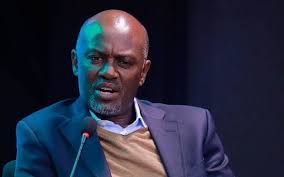
    Aboard the TEU Plane, we have mounted a big, clear mirror. And aboard with us is Prof Isaac Christopher Lubogo, philosopher and political scientist. He is not shouting, not cursing. He is holding up the mirror and inviting all Ugandans: leaders and experts, professors and peasants, ministers and market vendors , to look.

    What is a mirror?

    A mirror is a surface that reflects reality without flattery and without distortion. It does not lie. It does not cheer. It only shows you what you are, not what you wish to be.

    Who invented it, and for what purpose?

    The first true glass mirrors were perfected in 13th century Venice by Venetian craftsmen who coated glass with tin and mercury. But the purpose is older than Venice. From the bronze mirrors of ancient Egypt to the polished shields of African warriors, humanity created mirrors for one reason: self-examination.

    To check for dirt before you meet your king. To adjust your crown before you face your people. To see the wound before it kills you.

    A mirror was never invented for vanity. It was invented for correction. This is why we hold it up now.

    Mr. President, we invite you to look.

    Leaders, look. Experts, look.  The generation that believes, look.

    Because Uganda is becoming The Republic of the Unseen a state where serious minds are ghosts, and sycophancy is crowned. Plato warned of the Ship of State where the captain ignores the navigator. Socrates died because Athens chose the comfortable lie. Nicolo Machiavelli said a prince lives through institutions, not courtiers. Fanon said a revolution betrays itself when it makes its children spectators.

    The mirror does not accuse. It reveals. And what it reveals, Mr. President, is the peculiar pain of being governed but never seen. Of building intellectually, morally, professionally, yet watching leadership handed not to the best, but to the loudest loyalist.

    This letter is not an attack. It is the reflection in the mirror.  So, we ask all Ugandans: Look.

    What do you see?  TEU invites you, the reader, to look into this mirror with us. Below is Isaac Christopher Lubogo’s piece, published verbatim, as a mirror for the nation.

    The Republic Of The Unseen.

    An Open Letter to President Museveni from the Generation Watching Itself Be Replaced by Sycophancy.

    By: Isaac Christopher Lubogo.

    Mr. President,

    There is a peculiar kind of pain that does not scream.

    It sits quietly in the hearts of educated citizens, experienced citizens, patriotic citizens — citizens who once believed. It is the pain of being governed, but never seen.

    The pain of contributing to a nation intellectually, morally, professionally, spiritually — and yet perpetually watching leadership handed not to the best among us, but often to the loudest loyalists, the safest flatterers, the most convenient praise singers. And that pain, Mr. President, is becoming unbearable.

    Many of us were not born yesterday. We remember your words. We remember the fire with which you condemned African leaders who overstayed in power. We remember your warning that “the problem of Africa is leaders who overstay.” We remember the Ten-Point Programme. We remember the promise of “a fundamental change, not a mere change of guards.”

    We believed you. And perhaps that is why the disappointment is so deep — because betrayal by an enemy wounds the skin, but betrayal by hope wounds the soul.

    You removed term limits.  Many swallowed the pain.You removed the age limit.  Many protested, but eventually resigned themselves to political reality.

    You retained historical figures around you for decades.

    Many tolerated it because, at the very least, some possessed institutional memory, revolutionary credentials, or demonstrable competence.

    But now, something more dangerous is emerging.

    Ugandans are increasingly watching strategic national offices handed to individuals whom society itself struggles to intellectually or morally reconcile with the weight of the offices they occupy. And this is where the wound deepens.

    Because now it no longer feels merely political.

    It feels civilizational.A nation can survive ideological disagreement.  A nation can survive political dominance.

    But a nation begins to decay when merit itself becomes invisible. That is the crisis now haunting Uganda.

    We are becoming a republic where serious minds retreat into silence while theatrical loyalty ascends to power. A republic where substance is drowned by noise. A republic where wisdom is no longer rewarded unless it kneels.

    And perhaps what hurts most is this: Many capable Ugandans no longer even attempt to enter leadership spaces, not because they lack vision, but because the route to power increasingly appears humiliating.

    To seek elective office today often demands not statesmanship, but performance. Not integrity, but populist theatrics. Not intellect, but survivalism. Many thoughtful citizens look at the political terrain and quietly step away, unwilling to descend into the mud simply to be noticed.

    So they remain invisible. Professors remain unseen.  Thinkers remain unheard.

    Builders remain ignored.  Patriots remain unelevated.

    Meanwhile, opportunists thrive.

    Mr. President, leadership is not merely about maintaining control.  It is about preparing a nation to survive your absence.

    History does not only ask whether a leader built roads, maintained security, or stabilized a country. History also asks: “What kind of political culture did he leave behind?”

    Did he build institutions or dependency?  Did he mentor statesmen or manufacture loyalists?  Did he raise a generation capable of leading, or a generation trained only to praise?

    These are uncomfortable questions, but nations collapse when such questions are never asked. You are now an elder statesman by age, by experience, and by historical placement. At that stage, a leader’s greatest hunger should no longer be accumulation of power, but preservation of legacy.

    There comes a point in life when a man must stop asking:

    “How long can I rule?” And begin asking: “What will remain after me?”

    That is the question now confronting Uganda. Because many citizens no longer fear only political stagnation. They fear national exhaustion. They fear a slow erosion of dignity where excellence is mocked, mediocrity rewarded, and sycophancy normalized as a pathway to national leadership.

    And yet, Mr. President, we are here. That is what perhaps pains us most. We are here. There are still Ugandans with ideas.  Ugandans with integrity. Ugandans with intellectual depth.

    Ugandans capable of carrying this nation forward with dignity. But increasingly, it feels as though the system does not see them. Or perhaps worse — it sees them and does not need them.

    That realization is devastating. Because no citizen should feel like a stranger in the destiny of his own country. No generation should feel politically orphaned while still alive.

    No nation should make its serious people feel useless.

    Mr. President,

    The tragedy of Uganda may not ultimately be dictatorship, corruption, or even constitutional manipulation. The deeper tragedy may be this:

    That an entire generation of capable citizens slowly lost faith that merit still mattered. And once a nation loses faith in merit, it begins to consume itself from within.

    History will remember your victories. But history will also remember who was ignored while you ruled. And perhaps one day, long after the slogans fade and the convoys disappear, Uganda will ask the simplest and most painful question of all:

    “How many great Ugandans died unheard because power stopped listening?”

    Isaac Christopher Lubogo.

    For The Republic of the Unseen.
  • Oliver Twist in Lira: Lango Paramount Chief Welcomes Museveni’s 4 Appointments, Asks For More Sons/Daughters In Juicy Positions.

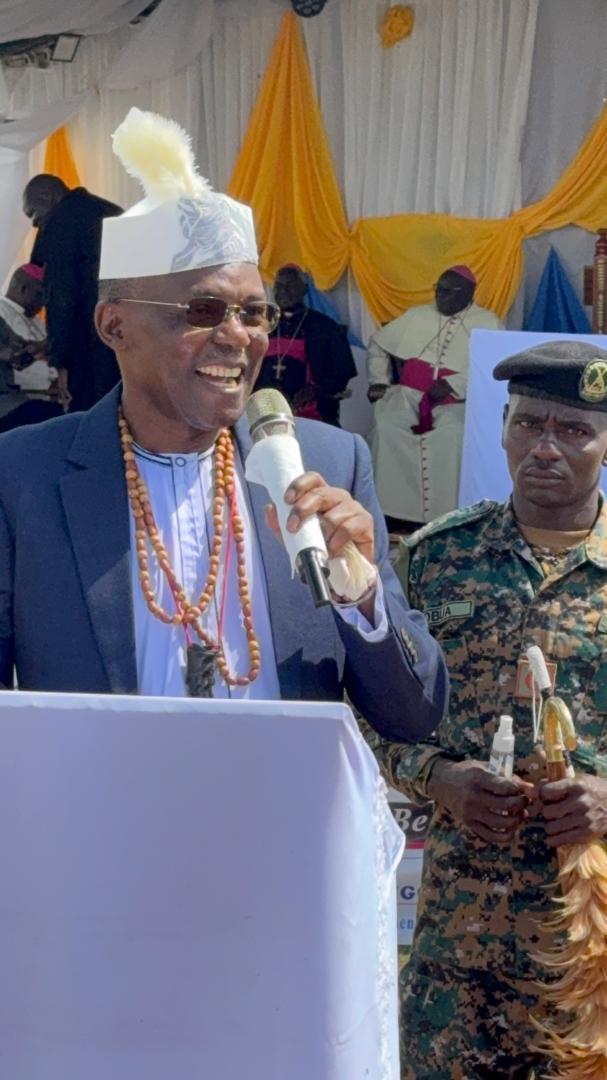
    Oliver Twist in Lira: Lango Paramount Chief Welcomes Museveni’s 4 Appointments, Asks For More Sons/Daughters In Juicy Positions.

    The Lango Paramount Chief, also known as Won Nyaci Me Lango Eng. Dr Michael Moses Odongo Okune, has welcomed President Gen. Yoweri Kaguta Museveni’s appointment of 4 sons and daughters of Lango to Cabinet and State Ministerial positions in the new government 2026-2031.

    In a statement issued from the Lango Cultural Institution in Lira City, the Paramount Chief used Medieval English wisdom “a bird in hand is worth two in the bush,” noting that Lango is happy with the appointments while still looking forward to more representation.

    He stressed that the appointments are a sure gain and Lango should first appreciate what has been given before asking for additional positions in statutory bodies and commissions.

    The four Lango Appointees: Portfolio, Constituency and Mandate.

    According to the new list released by President Museveni:

    Hon. Sam Engola (Erute South constituency) is now Minister, Office of the Prime Minister in charge of Relief, Disaster Preparedness and Refugees.

    His mandate is drawn from Article 110 of the Constitution which places the Office of the Prime Minister at the center of coordinating government business, disaster response, refugee management and relief operations. He will oversee OPM’s response to climate shocks, floods, drought and refugee influx from neighboring countries.

    Hon. Dr. Jane Ruth Aceng Ocero is now Minister of Information, Communications Technology and National Guidance. She is the Lira City Woman MP. Her mandate comes from the Constitution and the ICT Ministry Act, covering national communication policy, digital transformation, government messaging and public guidance. Her former Health docket has been handed to Hon. Dr. Chris Baryomunsi.

    Hon. Sandra Santa Alum is now Minister of State, Office of the President in charge of Economic Monitoring. She is the UPC Woman MP for Oyam District.

    Her role is anchored in the Office of the President and derives authority from the President’s directive to track implementation of government programs and ensure value for money across all sectors.

    This is being seen as a kind of compensation in place of veteran politician Hon. Betty Amongi Akena. Amongi, former Minister of Gender, Labour and Social Development and MP for Oyam South, crossed to Lira City in the last elections but lost to Hon. Dr. Jane Ruth Aceng Ocero. The Gender docket has now been given to Lt. Gen. Henry Tumukunde.

    Hon. Dr. Faith Mercy Lakisa is now Minister of State for Gender, Labour and Social Development, holding the Youth and Children Affairs portfolio. She is the Alebtong District Woman MP.

    Her mandate is provided for under the Ministry of Gender, Labour and Social Development Act, focusing on youth empowerment, skilling, child protection, labour rights and social protection. She replaces Hon. Balam Barugahara, who now goes to politically guide the Ministry of Local Government as its minister.

    In a Parliament of over 500 MPs, the 4 slots are being hailed in Lango as significant recognition of the sub-region’s contribution to national leadership. Lango gave Museveni 84% votes in the January 15 polls, rated as one of the best in the country.

    Paramount Chief’s Message: Serve with Diligence and Prudence.

    HRH Dr. Odongo Okune congratulated the ministers and urged them to live up to Lango’s reputation for honesty, hard work, and integrity.

    “On behalf of the Lango people, I welcome and congratulate our sons and daughters appointed by His Excellency the President. Lango has been known for honesty and hard work. I challenge you to serve diligently and prudently, with integrity and accountability, so that you bring development and honor to the people you represent and to Uganda at large,” the Paramount Chief said.

    He added that the ministers should prioritize disaster preparedness, ICT and national guidance, economic monitoring, youth employment, and protection of human rights in their respective dockets.

    Hon Dr Jane Ruth Aceng’s Choice Not Coincidental.

    The Paramount Chief noted that Dr. Aceng’s move to ICT and National Guidance is not coincidental. She has been shining at critical times whenever epidemics or pandemics like Ebola, Marburg, and COVID-19 broke out.

    She spoke not only eloquently but with clarity and technical knowledge which has always been praised nationally and internationally. It is hoped she will transfer the same to speak for the government, to explain policy with precision and to guide the public with confidence in times of crisis.

    Hon Sam Engola’s Long, Rough Road in NRM.

    The Paramount Chief particularly noted Hon. Sam Engola’s political journey. Engola has fought for decades to popularize the NRM and President Museveni, beginning from the early years when more than 90 percent of people in Lango and Northern Uganda were hostile to the Museveni administration.

    During the height of political campaigns in Lira Municipality, now City, a mocking Lango phrase emerged: “Cam Engola.” It sounds like “Sam Engola” but literally means “Eat Engola,” with cam meaning food or to eat in Lango dialect.

    Critics and NRM opponents then known as “Lira Boys” would tell residents to feign loyalty to Sam Engola so that they could benefit from or ‘eat’ whatever gifts he offered at political rallies. Nonetheless, Sam Engola’s resilience and political mobilization with practical gestures earned him recognition.

    At that time the region held strong political nostalgia for the ousted UPC President Dr. Apollo Milton Obote and his UPC government. Obote was a son of the soil, hailing from Akokoro sub county in Apac district where his tomb lies. UPC remains strong in Lango and has posted 12 MPs in the current parliament emanating from the last elections.


    Despite that hostile terrain, Hon Engola stayed the course and built NRM structures in Lango. His elevation to full Minister in OPM is being read in Lango as recognition of that loyalty and endurance.

    Hon. Denis Hamson Obua: From Government Chief Whip to Presidential Advisor.

    The Paramount Chief also acknowledged Hon. Denis Hamson Obua, former Ajuri MP who did not return to Parliament in the last elections. Obua served as Government Chief Whip, a position that derives its mandate from the Rules of Procedure of Parliament to mobilize NRM MPs and ensure party discipline on the floor. That docket has now been given to Hon. Justine Kasule Lumumba who once held it before being elevated as Secretary General of NRM.

    President Museveni has listed Hon. Denis Hamson Obua among presidential advisors although the portfolio has not yet been announced. The Paramount Chief said Obua’s service as Chief Whip and MP should be remembered as part of Lango’s contribution to national leadership.

    Appreciation to President Museveni.

    HRH Dr. Odongo Okune also expressed gratitude to President Museveni for what he termed a careful and deliberate selection. “We appreciate His Excellency for remembering Lango and for recognizing our leaders. This gesture strengthens unity and inclusion in national governance,” he stated.

    Like Oliver Twist: Lango Asks for More in Statutory Bodies.

    As Charles Dickens wrote in Oliver Twist; or, The Parish Boy’s Progress (1837–1839), “Please, sir, I want some more.” The line is spoken by Oliver in Chapter 2 when he asks the workhouse beadle for a second helping of gruel, and it has become iconic for humbly asking for more despite hardship.

    Borrowing from this, the Paramount Chief said Lango is an Oliver Twist of service, not of greed. “More, please. Lango requests His Excellency to consider more sons and daughters of Lango for appointment to other statutory bodies, commissions, and agencies. We have competent professionals ready to serve Uganda,” HRH Dr. Okune noted.

    He cited Lango’s pool of doctors, engineers, teachers, and administrators who can contribute to bodies like the Public Service Commission, Electoral Commission, Equal Opportunities Commission, and UHRC.

    Context: Why the Appointments Matter.

    With over 500 MPs, securing 4 cabinet slots gives Lango direct voice in policy and budget decisions for the 2026-2031 term. Engola takes on disaster response and refugee management at a time when climate shocks and regional conflicts test OPM’s capacity.

    Dr. Aceng shifts from Health to ICT and National Guidance, bringing executive experience to communication and digital transformation. Santa Alum steps into economic monitoring, a role critical to tracking government programs and value for money. Dr. Lakisa enters national politics with the Youth and Children Affairs portfolio, tasked with skilling and child protection.

    Stakeholders in Lira, Alebtong, Erute South,Oyam  and the whole of Lango say the appointments raise expectations for tangible delivery on feeder roads, health facility staffing, youth skilling, and disaster response.

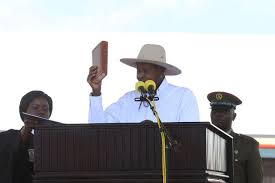
    Next Steps. The appointees are expected to take oath before Parliament under Article 114 of the Constitution before assuming office. The Lango Cultural Institution says it will organize a thanksgiving prayer for the new ministers once they are sworn in.

    The Exposure Uganda Editorial.

      “Carry the Amuka: Lango’s Four Must Be Rhinos, Not Hyenas”

    Lango has been granted a seat at the high table with four of our own: Hon. Engola, Hon Dr. Aceng, Hon. Alum, and Hon Dr. Lakisa now hold Cabinet and State Ministerial dockets. This is not luck, it is the dividend of loyalty paid when the NRM was unpopular in Lango, and of resilience when the political terrain was hostile.

    But take note that elevation is a test, power reveals character. And Lango has a character it must carry to Kampala: Amuka.

    In Lango, the rhinoceros is Amuka our totem. The elders call it the Chief Magistrate of the Jungle. Why? Because Amuka is clean, orderly, and deliberate. It does not start wars. It does not chase conflict. It forgives easily, walks its path with dignity, and minds its territory.

    But provoke Amuka at your own risk, and you meet a force that does not retreat. Its charge is final, its defense absolute.

    This is the philosophy Lango must export to Cabinet.

    Stoic philosopher Marcus Aurelius(121-180AD) wrote: “You have power over your mind, not outside events.” A minister cannot control every slight, every whisper, every political trap. But a minister control whether he responds like Amuka or like a hyena.

    The hyena has been the downfall of many leaders. It laughs at its own, fights in the shadows, and uses office as a launch pad to bite fellow leaders. The graveyard of Ugandan politics is full of hyenas who died with a thud loud, sudden, and forgotten. They won battles in the press, but lost the war of legacy. They mistook the ministry for a throne and colleagues for enemies. They ended with titles, but no honor.

    To the four, and to all Lango sons and daughters in public or private portfolios: Carry the Amuka.

    Be clean and organized like Amuka. The Chief Magistrate does not rule with chaos. Deliver in OPM, ICT, Economic Monitoring, and Gender with prudence, transparency, and results. Let your work be the verdict.

    Be forgiving, not combative. Amuka does not trigger war. Do not turn ministerial office into a boxing ring against fellow Lango leaders. When elephants fight, the grass dies. When Lango ministers fight, it is the farmer in Alebtong, the trader in Lira City, and the youth in Oyam who bleed.

    Be fierce in defense, not offense. Amuka only charges when provoked. Defend Lango’s interests, defend Uganda’s policies, defend the people’s money. But do not attack your own to look strong. A rhino that charges its herd is a rhino that dies alone.

    The philosopher Lao Tzu said: “A leader is best when people barely know he exists. When his work is done, they will say: we did it ourselves.”. That is Amuka. No noise, no petty fights, just impact.

    Lango has asked for “more, please” like Oliver Twist. If you carry the Amuka with pride and integrity, the answer will be “yes.” If you carry the hyena, the answer will be silence.

    So let the nation say it:“Surely Lango people are great. The Amuka people are wonderful people of integrity.”

    Leave your ego at the door of Cabinet. Wear the Amuka on your chest. Serve with humility, defend with courage, and build with unity.

    Because history does not remember who won the argument. History remembers who left the road paved, the hospital stocked, and the youth skilled.

    Be Amuka. Lango is watching.

    We Expose, You Decide.

  • UHRC Petitions Jinja City Council For Land To Build Permanent Regional Office To Serve Busoga, Bukedi Sub Regions.

    The Uganda Human Rights Commission (UHRC) has formally petitioned Jinja City Council for land to build a permanent regional office that will serve 18 districts across Busoga and Bukedi sub-regions.

    The request was revealed during a stakeholder engagement held at the UHRC Jinja Regional Office on Bell Avenue West. The meeting was led by the Commission’s acting chairperson, Hon. Lamex Omara Apitta, while Chairperson Hon. Mariam Wangadya is on leave.

    “Rent money to be used for programmes” – UHRC

    The Principal Human Rights Officer for Jinja, Farouk Nyende, told stakeholders that a permanent home would strengthen the Commission’s work in the region.

    “If the plan eventually works out, it will go a long way in consolidating the work of the Commission in the region. Funds currently spent on rent will be redirected, especially to programme implementation to expand the breadth of Commission interventions in the region,” Nyende said.

    The Assistant RCC Michael Kasede, who represented RCC Jinja City Salim Komakech, pledged to escalate the matter to both the political and technical leadership of the City Council.

    UHRC urged to join City Security Committee.

    Kasede also raised a separate concern, questioning why UHRC does not have a representative on the City Security Committee, a forum that brings together key stakeholders and is chaired by the RCC.

    He noted that human rights issues regularly feature in those meetings and promised to report back to his boss so that UHRC is brought on board.

    Coverage To Expand To 21 Districts.

    Nyende gave an overview of the Jinja office, which has been operational since 2002. He said the office maintains good working relations with political leaders, security agencies, the judiciary, the Directorate of Public Prosecutions (DPP), CSOs and the media.

    “The Commission is also an active member of the District and Regional Chain-Linked Committees that bring together institutions within the Justice Law and Order Sector in the region,” he noted.

    However, he flagged operational challenges. Top among them is the wide area of coverage.

    “This coverage is quite extensive and the location of the seat of the regional office further compounds the situation. Consequently, interventions end up being thinly spread, leaving a significant portion of the population unreached,” Nyende said.

    He added that the coverage area will soon increase to 21 districts following Parliament’s planned split of Tororo District into four new districts, hopefully to be approved under Speaker Rt Hon Jacob Oboth Oboth.

    Prison Congestion, Delayed Justice Flagged.

    Nyende also highlighted congestion in prisons, noting that facilities meant for a given number are overstretched almost 10-fold. He cited UN Standard Minimum Rules for the Treatment of Prisoners, Rule 13, which provides that:

    “All accommodation provided for the use of prisoners and in particular all sleeping accommodation shall meet all requirements of health, due regard being paid to climatic conditions and particularly to cubic content of air, minimum floor space, lighting, heating and ventilation”.

    This is part of the Nelson Mandela Rules which the UN’s 2015 revised minimum standards for prisons. They replaced the 1955 version and Uganda uses them as the benchmark when UHRC inspects places like Kirinya Prison.

    While other parameters may be met, he said minimum floor space is “glaringly lacking” in Uganda’s prisons. Female wards are comparatively better, with some inmates sleeping on beds.

    He attributed the congestion to slow court processes, citing cases of inmates who filed appeals more than 10 years ago with no mention of their fate, others detained for years without police or court files, and capital cases where state witnesses have already recorded additional statements yet the DPP has not withdrawn charges.

    Some have been on remand for over 5 years.

    “UHRC Jinja received a compilation of some of these concerns and the Commission has since written to the DPP and Court Registrar. As we meet here today, there is an ongoing Court of Appeal Pre-Session meeting at Jinja High Court Circuit. We hope some of these concerns will be addressed,” Nyende appealed.

    Other human rights concerns.

    Nyende also raised child labour in sugarcane plantations and gold mines leading to high school dropout rates, and over-dependence on sugarcane farming by smallholders causing food insecurity and high malnutrition levels in Busoga.

    On Gender-Based Violence(GBV), he said Kamuli District has reported three cases of women cutting off their spouses’ genitals over alleged infidelity. UHRC has used radio programmes to urge communities to resolve family disputes through “curtain lectures” or legal channels.

    Kiira Police report improved compliance with 48-hour rule.

    The Kiira Region Police Command was also represented at the engagement by Deputy RPC SSP Christopher Katumba and D/SSP Daniel Batte. The duo presented a positive assessment of police performance in the region, highlighting strict adherence to the constitutional 48-hour rule for holding suspects at police stations.

    On equipment and operational tools, they said significant improvements have been made to enhance the force’s capacity to handle its mandate.

    “Arrest only after thorough investigations” – Batte.

    The newly transferred D/SSP Batte told stakeholders that detectives have been instructed to effect arrests only after thorough investigations, to avoid detaining suspects beyond the 48-hour constitutional requirement.

    This statement, however, sparked heated debate among participants who questioned why police still seek court adjournments citing “investigations still underway” or “investigations incomplete”.

    D/SSP Batte, who sought to defend the image of the Uganda Police Force, said such cases are limited to capital offences like murder, aggravated robbery and rape. He explained that these require forensic tests conducted at Kampala laboratories, which take time to release results.

    He added that consultations have been held with relevant agencies to expedite the process and reduce delays.

    Commission cites constitutional mandate.

    Addressing stakeholders, Acting Chairperson Hon. Lamex Omara Apitta said the prison and office visits are part of UHRC’s constitutional mandate to take services closer to the people.

    He cited Article 52 of the 1995 Constitution, which gives UHRC the following functions: to investigate, at its own initiative or on a complaint made by any person or group of persons, against the violation of any human right; to visit jails, prisons, and places of detention or related facilities with a view to assessing and inspecting conditions therein and make recommendations.

    It is also to establish a continuing programme of research, education and information to enhance respect for human rights.

    Apita was accompanied by Commissioners: Hon. Shifra Lukwago, Advocate of the High Court and Commissioner for Oaths; Hon. Jacklet Atuhaire Rwabukurukuru, former Sheema Woman MP; Hon. Simeon Muwanga Nsubuga, former UPF Spokesperson; and Hon. Crispin Kaheru, human rights defender and former head of CCEDU.

    Also in attendance was the director Regional Services Ms. Sarah Nakumitsha who coordinates the regional offices handling complaints, human rights education and channeling regional requests to the headquarters.

    On arrival, the team visited Kirinya Government Prison where they interfaced with prison authorities and inmates at both the Remand and Main prisons located in the waters of Lake Victoria.

    The Exposure Uganda (TEU) Explainer: UHRC’s origins and its place in international law.

    The concerns raised in Jinja, from prison congestion to child labour and GBV, sit within a larger framework that predates the current engagement by nearly three decades.

    The Uganda Human Rights Commission was established in 1995 under Article 51 of the Constitution of Uganda, and began operations in 1996 after Commissioners were appointed.

    The UHRC Act followed in 1997 to operationalize its mandate. The Jinja Regional Office, which hosted this week’s meeting, was set up in 200 to decentralize services to Busoga and Bukedi.

    UHRC was created to align Uganda with global human rights standards. It is designed to meet the UN Paris Principles of 1993, which require National Human Rights Institutions to be independent, broad-mandated, and adequately resourced. Because of this, UHRC holds “A-status” accreditation from the Global Alliance of NHRIs, the highest level of compliance.

    Article 52 of the Constitution directly tasks UHRC to “monitor the Government’s compliance with international treaties and conventions to which Uganda is a party.”

    This is why Nyende could cite UN Standard Minimum Rules for the Treatment of Prisoners, Rule 13, during the engagement. UHRC uses these “Nelson Mandela Rules” as a benchmark when inspecting facilities like Kirinya Prison.

    Through this mandate, UHRC tracks Uganda’s obligations under treaties such as the International Covenant on Civil and Political Rights, the Convention Against Torture, Convention on Elimination of Discrimination Against Women (CEDAW), and the Convention on the Rights of the Child.

    The child labour in sugarcane plantations and the GBV cases in Kamuli flagged by Nyende are examples of issues UHRC documents for Uganda’s reports to the UN Human Rights Committee and the African Commission on Human and Peoples’ Rights.

    In effect, the Commission serves as Uganda’s bridge between local human rights practice and international law. Its push for a permanent home in Jinja is not only about reducing rent costs. It is about consolidating capacity to meet constitutional and treaty obligations across a region that will soon cover 21 districts.

    As UHRC, the RCC’s office, and Kiira Police commit to deeper coordination, the Jinja engagement underscores how domestic human rights work in Busoga and Bukedi is directly tied to Uganda’s standing under international law.


  • “I Will Govern Dokolo With Chalk, A Lesson Plan, A Microphone, And A Ledger”- New LC5 Chairman Peter Ogwang ‘Petero’ Vows to Turn Dokolo into a Gateway on the Trans-Africa Highway.

    “If you give me chalk, I will teach discipline and impart knowledge, if you give me a lesson scheme, I will plan for development. If you give me a microphone, I will speak truth to the people and sensitize the wanainchi if you give me a ledger, I will account for every shilling. That is how I will run Dokolo.”

    With those words, Peter Ogwang “Petero”, newly sworn in as LC5 Chairman of Dokolo District, opened a new chapter for a district sitting on one of Africa’s most vital arteries: the Jinja-Mbale-Soroti-Lira-Gulu corridor that stretches north to Juba and forms part of the Trans-Africa Highway.

    For Petero, that geography is not a footnote, it is a mandate.  

    “Dokolo is not on the sidelines of history, we are on the highway that connects East Africa to South Sudan, that carries trade, culture, and ideas across borders. A district on the Trans-Africa Highway cannot afford to think like a village. We must think like a gateway”, he said.

    There is already an aura of excitement among stakeholders, especially the technical staff, who are eager to see and work with the mid-age man with three trades.

    They expect him to employ his skills and experience to govern a district whose name excites Ugandans from Kisoro to Kyenjo, Bushenyi and Ibanda to Masaka and Nakasongola, Hoima up to West Nile, Acholi and Karamoja alike.

    “Dokolo is not an obscure name, it sits on the map of Uganda’s imagination” Petero said and quickly added: “When a district is known from the mountains of Kisoro to the cattle corridors of Karamoja, failure is not an option. The country is watching.”


    From Classroom to Council: The Tools of a Teacher.

    Petero, a secondary school teacher by training, abandoned blackboard chalk for the microphone and became a household name as “Petero” on Rhino FM 96.1 Lira and Kiira FM 88.6 Jinja. He later moved into business consultancy; he now says those three trades are the instruments of his governance.

    “In the classroom, I learned that nothing works without a plan, the lesson scheme is sacred because it respects the time and mind of the learner.

    In Dokolo, our budget will be our lesson scheme. Every project will have an objective, a method, and a measurable outcome. No more teaching chaos and calling it development”, Peter Ogwang declared.

    He pledged the same discipline he used behind the microphone to public communication: “A leader who cannot explain policy to a farmer in Adok or Alapata cannot lead that farmer. The microphone is not for slogans, it is for clarity, for accountability, and for listening., so I will speak often, but I will listen more”, the former radio presenter cum political leader said.

    From the studio, he brings a rule no presenter can ignore:  “No presenter goes live without a script, without research, without prior preparation. You do not guess on air. In Dokolo, we will not govern by guesswork either. Every decision will be researched, prepared, and defended with facts. That is how you respect the people.”

    And the ledger?  “Every shilling that enters Dokolo is not ours, it belongs to the mother in Amuda who walks 5km for medicine, to the youth in Agwata who need skills, to the trader on the highway who needs security. I will govern with an open ledger because a leader who fears scrutiny has something to hide.”

    “Corruption Must Not Be Lip Service”

    Administered by Lira Chief Magistrate His Worship Humphrey Joe Adoko, Petero Ogwang’s maiden ceremony at the District Headquarters was blunt. He said the fight against corruption must not be a slogan to numb the population. Key stakeholders must be seen doing the right thing.

    He reminded civil servants, who prefer the title ‘technical staff’, that they are the implementors of government programs from the center to the village.

    “Do not sleep on the job, this will be a term of no sleep and zero corruption, just as the President promised. I will offer you maximum cooperation and a harmonious working relationship. My style is leadership by and through consultation”, he told CAO Oryomo Grangfil Omonda and his team.

    He called for value for money and an end to procurement scandals. He also warned against the sale of jobs through the District Service Commission, which he described as an “eye sore for years.”

    “Service delivery also means sons and daughters of the district whose poor parents sold land to educate them get jobs, instead of those jobs being sold to children of the wealthy who are already empowered”, the LC5 boss said.

    Challenges on the Ground.

    Petero Ogwang, who hails from a humble background in Bar-dege, Bata Sub- County, cited Dokolo’s urgent needs: poor roads, ill-equipped health facilities that force mothers to use unsafe Traditional Birth Attendants, a laughable standard of education, dysfunctional water sources including dead boreholes, and inadequate funding.

    He noted the irony of his village name: “Bar-dege means a place of many aero planes, yet not even a single scrap or spare part of a plane has ever been seen in the entire sub-county. We will change that symbolism; we will build a district that flies.”

    Politics Ends at the Ballot. Service Begins After.

    Though he is “100 percent UPC” and won under the Uganda People’s Congress banner, Petero said campaigns are over.

    “I will religiously ensure that the NRM manifesto under President Yoweri Museveni, who won with 71% on January 15 and was sworn in on May 12, is implemented to the dot, together with our district programs. Both target the ordinary citizen.”

    “When health centers have no drugs, when roads are bad, when education fails, when waterborne diseases spread, everyone is affected irrespective of party. So let us work together”, he appealed.

    He urged households to embrace Parish Development Model (PDM), Emyooga, and Operation Wealth Creation.

    “Poverty knows no boundary, color, or faith. Every home in Dokolo must join the money economy.”

    Dokolo on the Highway of Opportunity.

    Petero Ogwang’s first act will be to convene technical staff, security, religious, and cultural leaders.

    “My approach is leadership by consultation. The highway that runs through us carries many voices: Acholi, Busoga, Bukedi, Teso, including traders from Juba, truck drivers from Mombasa. If we listen, Dokolo can become the rest stop of ideas, investment, and integrity”, he said.

    Running under UPC, he says the party’s founding ideals of national unity and service are not nostalgia but a blueprint for healing.

    “The UPC taught us that Uganda is bigger than tribe and bigger than fear. Dokolo, sitting on the Trans-Africa Highway, must live that truth. We will not be a district that begs for attention. We will be a district that earns it through discipline, production, and peace.”

    Like President Museveni has repeatedly told Ugandans, being along the tarmac alone does not automatically translate to wealth. This follows years of persistent demands by locals and their leaders for paved roads.

    Building on that warning, Petero Ogwang urged Dokolo residents, especially the youth to stop merely sitting by the highway to count and admire the numerous vehicles that ply the route.

    “You must be strategic, produce goods and services that passengers and travelers can buy, turn this highway from a spectacle into a marketplace. That is how you get daily income and improve your living standards”.

    For Petero Ogwang, the Jinja-Mbale-Soroti-Dokolo-Lira-Gulu-Juba corridor is not a mere roadside attraction but Dokolo must trade on it not just live beside it.

    Restoring Dokolo’s Image.

    Carved from Lira in 2005 and operational since July 2006, Dokolo has been selected for the national malaria vaccination program alongside Oyam, Kole, Alebtong, and Lira City.

    “When investors look at the map, they see the Jinja-Mbale-Soroti-Lira-Gulu-Juba corridor. When they look at Dokolo, I want them to see opportunity. We will clean our image, secure our routes, educate our children, and protect our people. The world passes through us. Let them say Dokolo works.”

    Conclusion.

    With an MBA from UMI, a Bachelor’s in Development Studies, and a Diploma in Education from Kyambogo, Petero blends academic rigor with street-level business and communication.

    He closed with a promise: the speech on Friday is not a performance, it is a contract. Dokolo’s time on the margins is over. Our time on the highway of progress has begun.

    About Peter Ogwang ‘Petero’.

    Peter Ogwang is a business consultant, entrepreneur, former radio presenter, and educator. He holds a Master’s in Business Administration from UMI, a Bachelor’s in Development Studies, and a Diploma in Education from Kyambogo University.

    He is now the LC5 Chairman of Dokolo District under the Uganda People’s Congress, running on a platform of servant leadership, unity, and inclusive development.

    The Exposure Uganda Conclusion / Position:

    TEU therefore advises both the political and technical leadership in Dokolo and across all districts to abandon the politics of supremacy and embrace the discipline of service.

    The LC5 Chairman must lead with humility and consultation, not confrontation. The CAO must execute with integrity and transparency, not defiance or delay.

    Corruption, ego, and arrogance are not tools of governance; they are the very reasons districts fail. Ugandans did not vote for noise, and they did not recruit technocrats for sabotage.

    They entrusted both offices with one mandate: to deliver. Let the chairman hold the chalk, let the CAO hold the ledger, but let both write on the same blackboard: the welfare of the wanainchi.

    There is no prize for winning internal fights. There is only shame in losing the public trust. Dokolo is on the Trans-Africa Highway. Let it be known as the district where politics and technocracy worked together, not where they worked against each other.

    We Expose, You Decide.


  • From Hosana to Calvary: Archbishop Muwanga Says Uganda Is Nailing AAA To a Cross On Kigo, Nakasero, Naguru and Bukedea Hills.

    TEU Preamble.

    “Jerusalem had Golgotha, the Place of the Skull. Uganda now has its own hills: Kigo, Nakasero, Naguru, and Bukedea. And a nation that erects a cross for its own daughter will discover that the nails were forged in its own house.

    On Palm Sunday the crowd roared “Hosanna to the Son of David,” and by Good Friday it howled “Crucify him, crucify him” (Matthew 21:9; 27:22-23).

    Five days were enough for adoration to curdle into execution. Pilate asked, “Why, what evil has he done?”, but the mob did not answer (Mark 15:14).

    Today Rt. Hon. Annette Anita Among (AAA), described in the media as the embattled former Speaker from Bukedea, is being marched toward a Ugandan Calvary.

    On Kigo, Nakasero and Naguru Hills, where she has established luxurious residential buildings, armed security operatives, the Uganda Police Force (UPF) personnel and UPDF soldiers backed by detectives and intelligence personnel are scanning and scavenging for evidence of alleged crime.

    On Bukedea Hills, her ancestral home, she built the residential structures now under scrutiny. The stones have moved, but the ritual has not.

    At Calvary, two thieves were crucified beside Christ. One joined the mockers, the other rebuked them and asked for mercy (Luke 23:39-42).

    Using that biblical reference, Archbishop Dr. Daniel Muwanga of Kimaka Faith Fellowship Ministries International stands in the gap like the penitent thief who spoke for mercy. He refuses to join the chorus and instead repeats Christ’s words: “Let him who is without sin cast the first stone” (John 8:7).

    This is not an absolution. It is an indictment of hypocrisy, because Paul’s message as recorded in his letter to the Romans 3:23 is clear: “All have sinned and fall short of the glory of God”. When a family hangs its children in the public square, it is not cleansing itself. It is setting itself ablaze.

    From Hosanna to Calvary: Archbishop Muwanga Says Uganda Is Nailing Anita Among to A Cross on Kigo, Nakasero, Naguru and Bukedea Hills.

    The chant “Jail her, jail her” is the same cadence that turned Jerusalem’s Hosanna on Palm Sunday into “Crucify him” on Good Friday Matthew 21:9; 27:23.

    Archbishop Muwanga, whose admiration for Rt. Hon. Among’s mobilization acumen is undisguised, says Uganda has reached its Friday, and the cross is being built on home soil. In an exclusive interview with The Exposure Uganda, he described Among as being marched to a modern Golgotha, not on Judean rock but on the hills where she built and now lives.

    He recalls the Luganda proverb “Omuti ogukutudde tegukusala”, the tree that gives you shade does not cut you down ,yet here the country is sharpening axes at the roots.

    Drawing from the Gospel account, Muwanga likens himself to the penitent thief who rebuked the mockers at Calvary and spoke for mercy Luke 23:40-41. While others condemn, he intercedes. He hurls Christ’s words at the Pharisees of our time: “Let any one of you who is without sin be the first to throw a stone” (John 8:7), and he cites Romans 3: 23: “All have sinned and all are corrupt in one way or the other”, to argue that no Ugandan stands clean enough to be the executioner.

    He takes a jibe at Ugandans who steal even mere picktooths, spoons, or table salt, and pack drinks and food from parties.

    Others dump garbage, including used pampers and pads, onto streets and backstreets. Others turn drainage systems into washrooms. Others vandalize road furniture, roads, and signposts for schools, hospitals and local government offices simply to sell scraps for quick and dirty money.  “Are these the type of people to condemn Among or others? Woe unto Ugandans”, he laments.

    “Mr. President, Do You See the Log in Your Own Eye?”

    The Pentecostal archbishop asks whether President Museveni is unaware that many officials in his government have amassed mountains of wealth, stashed cash in homes, yet parade in public as angels.

    He recalls Museveni’s caution to former IGG Beti Olive Namisango Kamya, (BONK), when she proposed a lifestyle audit. The President told her to go slow, reasoning that such an audit would panic thieves and drive them to invest stolen money abroad.

    The implied position was that a person who steals and builds in Uganda is a better devil than one who bleeds the country and banks overseas.

    As they say, you cannot sweep your neighbor’s compound when your own is drowning in rubbish. If that was wisdom then, Muwanga asks, why is it an issue now?

    This, he says, is why Among can wail like Shakespeare’s broken king. In King Lear, Act 3, Scene 2, King Lear is driven into a storm by his own daughters after he gave them his kingdom. Homeless and betrayed, he cries: “I am a man more sinned against than sinning”.

    Lear (described by his readers as an old daf) admitted his folly, but argued that the cruelty of his children far exceeded his mistakes.

    Muwanga adds another layer from the same tragedy. In King Lear, Act 4, Scene 1, Gloucester, after his eyes are gouged, declares: “I stumbled when I saw.”.

    He means he only gained true sight after blindness. Lear himself finds clarity in the storm.

    “So, it is with Among, she is now seeing properly after the dust of betrayal has filled her eyes. She stumbled when she trusted. She sees now that the same hands she fed are the ones throwing stones”, Muwanga noted.

    Muwanga says Among stands in the same storm. She mobilized votes, spent openly, and raised Uganda’s profile with assets like the gifted Rolls Royce. Others hid and banked abroad, yet she alone is being nailed to the cross on the very hills where her houses stand.

    The punishment, he argues, far exceeds the alleged crime, and the betrayal comes from those who once knelt and clapped for her favors.

    The Rolls Royce Gift and the “Mulamo”

     Muwanga adds that the Rolls Royce, which Ugandans should have been proud of for adding to our inventory of great rides, has become another weapon. He states that the vehicle is a gift, not a purchase. Instead of celebrating that a Ugandan has been honored with such a machine, the public is bashing the woman who received it.

    He notes that Among is being referred to as “Mulamo,”a local Kisoga word for in-law, because she is married to FUFA President Eng. Moses Magogo, a Musoga from Buyende and MP for Budiope East.

    As they say, you do not stone the person who brings a new dish to the village feast. Yet Ugandans, Muwanga argues, have turned pride into ridicule.

    Rather than ask how we can expand our automotive and business inventory, we choose to crucify the woman who was gifted the car. The crime, he suggests, is not the Rolls Royce. The crime is that she is visible, powerful, and a woman, and that she accepted honor openly while others hide their wealth in darkness.

    “I Am Not Defending Corruption; I Am Defending Dignity”

    Muwanga defends his argument and warns it must not be misconstrued as promoting corruption or impunity. He insists that top leaders who have contributed to the nation should not be dumped and humiliated in the public square. There are lawful avenues of rehabilitation, restitution, and due process.

    He then poses the question that will shape the next generation of leaders: What will others think once they assume office? If contribution and receiving a gift earn you a cross and humiliation, the lesson is clear. Steal and hide, because if you are exposed you will be dumped and shamed. If you hide well, you survive. As they say, when you kill the messenger who came in the open, you teach the next messenger to come in the dark.

    Therefore, Muwanga argues, Uganda must choose between a system that corrects and a culture that crucifies. One builds the nation, the other teaches its best minds to bury their work in darkness.

    The Kangaroo Court of Social Media.

    Muwanga demands evidence: has any Auditor General’s Report, CID dossier, IGG indictment, State House Anti-Corruption Unit finding, or court order been produced, or is this a political exorcism masquerading as accountability? Or does the President not have faith and confidence in the very institutions his government created to combat graft? He warns that Uganda is convicting a citizen on radio waves and TikTok, not in a courtroom.

    He says at Golgotha Rome held a trial, here the jury is a hashtag and the sentence is a meme. As they say, when you beat the drum in the village, the whole world hears your family’s quarrel.

    Muwanga adds: “Ugandans have become super mockers who dance at the graveyards of others on social media platforms without fear or shame. But when the same cruel hands of death strike right in their heartbeat, they are quick to cry foul looking for political scapegoats to comfort them.”

    He notes that the same MPs who knelt and worshipped Among while seeking freebies have now sprinted to bow before Hon. Jacob Oboth Oboth, the Gen. Muhoozi Kainerugaba-annointed successor. As they say, when the wind shifts even the banana leaves pretend, they always faced that way.

    Muwanga likens the NRM to a large family. A stubborn child is counselled, not executed in the marketplace, and any parent who parades the family’s filth to the village is not brave but suicidal.

    He argues that NRM thinks it is exposing Among, but it is confessing to the world that it has presided over abuse, plunder and extravagance while millions of Ugandans cannot afford a single meal.

    Some believe this will draw applause as anti-corruption, but the world will remember that the same hands that politically butchered Kadaga now cry crocodile tears over Among. You cannot eat your cake and then demand a refund.

    He invokes the ten lepers Luke 17:11-19, arguing that Rt. Hon. Among traversed the country ahead of the 2026 elections mobilizing votes for Museveni and NRM flagbearers, and she delivered.

    It is the ingratitude of the nine lepers, he says. Only one returned to thank Jesus. Instead of gratitude, Among is getting a cross. His counsel is to tap her capacity to manage political warfare, flip the opposition, mobilize, and bankroll causes that matter.

    His plea is direct: if there is one leader President Museveni and Gen. Muhoozi Kainerugaba better known as MK need now, it is Annette Anita Among. Not a saint, but a strategist, not perfect, but indispensable.

    From Calvary to Kampala: The Reckoning.  

    At Golgotha the crowd thought it was killing a threat but it was killing a mirror. The Pharisees thought they were defending the law; they were murdering mercy. Rome exiled Cicero and later begged for his tongue.

    Who Was Cicero?

    Marcus Tullius Cicero(106-43BC) was Rome’s greatest orator and statesman. He was not a general like Caesar or Pompey. His weapon was his tongue (like Uganda’s Hon Ibrahim Semujju Nganda, Hon Nobert Mao, Hon Jonathan Odur and, Hon Theodore Ssekikubo and Hon Samuel Odonga Otto), speeches that could make or break the audience and government. He defended the Republic, exposed conspiracies, and spoke truth to power.

    Why Was He Exiled? 58 BC.

    Cicero’s “crime” was that he executed 5 conspirators of the Catiline Plot without a formal trial. He acted to save Rome from a coup.

    But his political enemies, led by the tribune Publius Clodius Pulcher, passed a law: “Anyone who executed a Roman citizen without trial shall be exiled”. The law was written specifically to target Cicero.

    So, Cicero fled Rome voluntarily to avoid arrest and spent 16 months in Greece and Macedonia, 58-57 BC. He called it the worst period of his life. In letters he wrote: “I have lost the fatherland, my dignity, and my reputation.”

    This is the key parallel to Uganda’s Rt Hon Annette Anita Among: He was punished for an act done in service of the state, by the same people who later needed him.

    Why Was He Recalled? 57 BC.

    Rome realized it had made a mistake, because without Cicero, the Republic was drifting into chaos. The Senate, the people, and even political rivals passed a law to recall him. When he returned, Rome welcomed him like a hero. Crowds lined the streets.

    Later, when Caesar was assassinated in 44 BC, Rome needed Cicero’s voice again. He delivered the Philippics 14 speeches attacking Mark Antony. That’s the “they later begged for his tongue” part. Antony eventually had Cicero killed and displayed his head and hands in the Forum as a warning: “This is what happens to those who speak.”

    The Lesson for Uganda/NRM.

    Rome with Cicero  NRM with Among. Exiled him for acting in the Republic’s interest- “Crucifying” her after successfully mobilizing votes openly in 2026.

    The lesson is that when a movement starts devouring its own, it is not reforming but panicking, and when a party launders its shame in the market square, it is not transparent but naked.

    We Expose. You Decide.


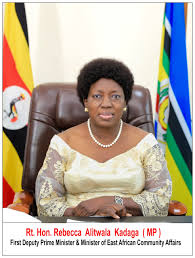
  • Kadaga Or Oblivion: The Speaker Vote That Will Define How Uganda Is Remembered. YBO Foundation to Museveni and NRM Caucus: Restore Dignity to Parliament. Bring back Rt. Hon. Rebecca Kadaga.

    TEU Preamble:

    “There is a tide in the affairs of men, which, taken at the flood, leads on to fortune; omitted, all the voyage of their life is bound in shallows and in miseries”.- William Shakespeare, Julius Caesar.

    You do not need to have read Shakespeare to understand this. In plain language, Shakespeare was saying that life gives you moments when the tide is high. If you sail when the water is up, you move fast and reach your destination. If you wait too long and miss it, your boat gets stuck in shallow water and you suffer.

    He wrote it about generals before a battle, but the rule applies everywhere. A trader who buys maize or amaido and simsim from Lango or Acholi when it’s cheap and sells when it’s scarce makes money. A father who corrects his child early raises a good person. A country that fixes its Parliament now has a strong legislature for five years.

    Scripture says the same thing differently: “The memory of the righteous is a blessing, but the name of the wicked will rot,” Proverbs 10:7.

    Philosophy agrees that leaders are weighed not by the length of their tenure but by the weight of their legacy. And so, as Uganda’s 12th Parliament prepares to elect a Speaker on Monday 25th May,2026, the country stands at that flood tide Shakespeare warned of.

    One path leads to restoration while the other leads to a name that will echo in taxis, bodaboda stages, market gossip, and radio/tiktok comedy for generations, but for the wrong reasons.

    On Wednesday May 21, 2026, Hon. Ishaa Otto Amiza, the most stubborn and cheeky UPC boy from Oyam district in Lango who surprisingly does not honor or subscribe to UPC President Hon. Jimmy Akena Obote, addressed himself to His Excellency General(Rtd) Yoweri Kaguta T. Museveni and to the NRM Parliamentary Caucus with a plea that was equal parts constitutional, moral and practical. Uganda must restore the dignity of its Parliament, he argued, by returning Rt. Hon. Rebecca Alitwala Kadaga, the woman from Mbulamuti in Kamuli, to the Speaker’s chair.

    YBO FOUNDATION SPEAKERSHIP

    The timing is deliberate because Monday is the flood tide. In 48 hours, 529 Members of Parliament will file into the chamber and cast a secret ballot that will choose the person who will preside over the 12th Parliament until 2031.

    In Uganda’s unicameral system there is no second chamber to correct mistakes, no upper house to act as a safety net. The Speaker will chair the Parliamentary Commission, certify Money Bills, interpret the Rules of Procedure with finality, and, if both the President and Vice President are unavailable, will hold the office of President for up to fourteen days.

    That is the office at stake and that is why Hon Otto Amiza calls this a question of national interest and why Shakespeare’s tide matters right now.

    If Parliament sails with the tide on Monday, it reaches fortune. If it waits and misses the moment, it gets stuck in the shallows for a full term. Hon Otto Amiza believes the only vessel that can catch this tide is Kadaga.


    He grounds his appeal in what he calls Uganda’s present condition. Parliament, he writes, is the cornerstone of democracy, the institution that amplifies the people’s voice, forges laws, and holds executive power to account.

    Yet today, he says, that sacred institution carries the scars of reputational erosion. The public has watched recurring scandals, heard the language of hyper-partisanship, and felt public trust thinning.

    If President Museveni and the NRM leadership are genuinely committed to reversing that trajectory, Hon Otto Amiza contends, there is one leader whose record, institutional memory, moral authority and independent stature can begin that restoration. Her name is Rt. Hon. Rebecca Alitwala Kadaga.

    Hon Otto Amiza speaks as a former Opposition MP(Oyam South) who served in the 8th Parliament. He says he saw Mama Kadaga preside with impartiality, firmness and a deep respect for procedure. Under her gavel, debates were substantive rather than theatrical, legislation moved efficiently, and the dignity of the House was visible to anyone watching from the gallery or from home. That experience shapes his judgment that she is not merely a candidate but the indispensable choice for this moment.


    The vocal former legislator builds his case on grounds that flow into one another like chapters of the same book. He points first to her loyalty to the Movement, which he describes as steadfast through seasons of triumph and trial, never transactional, always principled even when she faced internal marginalization.

    Then he cites her integrity and institutional competence, recalling ten years in which she steered the House with consistency and fairness and preserved the dignity of proceedings. He speaks next of her legislative mastery.

    As Uganda’s longest-serving female Member of Parliament, the woman from Mbulamuti in Kamuli commands an unmatched understanding of precedent, constitutional balance and the delicate equilibrium between Executive authority and Legislative independence.

    He then draws a sharp contrast that Ugandans know by experience. Unlike the outgoing Speaker, Rt Hon Anette Anita Among, Kadaga flies freely to any part of the world because not even the birds have any fear that Kadaga can remove a single feather from them.

    She faces no internal and global sanctions, no visa bans, no frozen assets. Her name opens doors in the East African Legislative Assembly, the Commonwealth Parliamentary Association and the Inter-Parliamentary Union because her reputation has never been dragged through scandal.

    That, Otto Amiza argues, is what restores Uganda’s parliamentary diplomacy overnight.

    He adds another quality that sets her apart. Kadaga is a straight talker who can confront even the Big Man from Rwakitura with the painful truth that no one else dares to speak, yet she does it with respect. She does not know the spelling of flattery.

    Where others prefer to polish words and chase approval, she chooses candor tempered with courtesy. In a House that has drifted toward sycophancy, that kind of honesty is the oxygen Parliament needs to function as a co-equal branch of government.

    He addresses the question of age directly. At seventy, Kadaga is fifteen years younger than President Museveni, who was sworn in for another term at eighty-five. If age does not disqualify the highest office in the land, Amiza argues, it cannot logically preclude qualified leadership of Parliament. He calls her a beacon for women’s political emancipation.

    She shattered glass ceilings, inspired a generation of Ugandan women to seek public office, and restoring her to the Speaker’s chair would affirm that women’s leadership is substantive, strategic and indispensable.

    He returns to the electorate. Kadaga commands Kamuli District with overwhelming popular support, and that grassroots legitimacy translates into political courage and principled representation inside the House.

    He recalls her independent judgment under pressure. Even during the highly contentious constitutional amendment on age limits, a moment that placed her personal safety at risk, she navigated immense pressure with resilience. Ugandans, he says, recognize that her decisions were made under duress, not deference, and that is the caliber of independence Parliament requires to serve as an effective check on executive overreach.

    He describes her as a unifying national figure. As Speaker she created space for robust debate across party lines and ensured Parliament functioned as a national institution rather than an extension of the ruling party’s caucus.

    Finally Otto Amiza speaks of intellectual rigor and strategic foresight. By many accounts the 11th Parliament was hampered by gaps in knowledge and strategic direction.

    Kadaga, he says, offers the opposite: analytical depth, procedural mastery and a commitment to evidence-based lawmaking.

    The conclusion Amiza draws is simple. If President Museveni desires a Parliament that transcends embarrassment and functions as a genuine, co-equal branch of government, the path is clear. Reinstate Rt. Hon. Rebecca Kadaga as Speaker. In his view she alone embodies the rare convergence of loyalty, experience, competence, independence and unifying character required to restore sanity to the House and reclaim Uganda’s parliamentary heritage. This is what it looks like to take the tide at the flood.

    But Otto Amiza does not stop at praise. Without mincing words,Otto Amiza issues a sober caution that reads like a warning from history. Any attempt by President Museveni, in his capacity as Chairman and Supreme Leader of the NRM, to impose Hon. Jacob Oboth Oboth or any other candidate primarily to advance what Amiza calls a narrow, family-centered succession agenda linked to Gen. Muhoozi Kainerugaba through informal structures such as the so-called PLU carries profound political risk.

    He says such a move could fracture the NRM’s internal cohesion and destabilize the unity of Parliament. To steer the nation toward a governance model reminiscent of the Idi Amin era, where military influence supersedes constitutional order, would not only be regrettable, he writes, but deeply ungrateful to the Ugandan people who have exercised remarkable patience over four decades in pursuit of peace, security and inclusive development. That is the shallows Shakespeare warned about, and that is how a leader’s name rots.

    Here the language of literature, scripture and philosophy converge. Shakespeare reminds us that omitted opportunities bind a life in shallows. The Bible distinguishes between a name that blesses and a name that rots. Theology teaches that power is stewardship, not inheritance.

    Philosophy insists that leaders are judged by what they leave behind. Applied to Monday’s vote, the meaning is direct. Some leaders are remembered for the good they did because they served the institution rather than the other way around.

    Others become the subject of social media comedy, radio skits and gossip in saloons, taxis and bodaboda stages because they chose patronage over principle. Uganda will choose which story it wants told about the 12th Parliament.

    Hon Otto Amiza closes with a line that echoes the preamble. Uganda deserves a Legislature that serves the people, not patronage networks. The moment for decisive, statesmanlike action is now. He signs off, “For God and My Country,” and under his name adds the YBO Foundation’s creed: Promoting Integrity, Accountability and Effective Representation.

    TEU Note to Readers: The Constitution’s Article 82 is clear. The Clerk to Parliament presides until a speaker is elected, and the Speaker needs more than half of all votes cast. If no candidate reaches that threshold, the top two proceed to a run-off. The 12th Parliament will sit for five years. In a unicameral system, that choice is final. History will record who understood the tide and who missed it.

    We Expose. You Decide.


  • Mwiru Opens Speaker Race As Sun Tzu’s Last Two Chapters Play Out In A Unicameral House.

    Mwiru Opens Speaker Race As Sun Tzu’s Last Two Chapters Play Out In A Unicameral House.

    On Monday 25th May,2026 529 Members of Parliament will enter the chamber to elect a Speaker for the 12th Parliament in what has become a contest shaped by Sun Tzu’s final chapters, where Chapter 12, Attack by Fire, collides with Chapter 13, The Use of Spies, and the Constitution’s secret ballot ensures that the real war remains invisible to the public eye.

    The National Resistance Movement (NRM) Central Executive Committee (CEC) met on Friday 22 May 2026 at State House Entebbe and attempted to subdue the enemy without fighting by endorsing a candidate and presenting the outcome as settled, yet the law vests the election in the MPs themselves and the ballot they will cast in private allows an individual to applaud on Friday and vote differently on Monday without ever being known.

    That tension between public display and private choice has turned what appeared to be a walkover into a three-way contest in which establishment force, opposition strategy, and cross-party patience will be tested against one another under Uganda’s unicameral system, where there is no second chamber to review or dilute the decision.

    The race opened early in the week then climaxed on Friday when veteran politician Hon. Paul Mwiru of Jinja South East constituency fired the first shot by declaring his candidature with a 1,252-word manifesto and the official endorsement of the National Unity Platform, a move that recast the Speaker’s election from coronation to contest and forced the House to confront questions of transparency, budget discipline, and institutional independence that had been muted under previous leadership.

    Hon Mwiru, a lawyer by profession, told MPs and the country that Parliament must be rediscovered after a period defined by lavish spending, secret budgets, and corruption allegations against an institution constitutionally mandated to guard public funds, and he promised a public disclosure policy that would publish Parliament’s outputs and costs while shifting resources from CSR and donations to committees and substantive social investments.

    He has asked whether Ugandans want billions spent on luxury vehicles like Rolls Royce while hospitals lack medicine, insisted that the Ten-Fold Growth Strategy must be matched with funding for health, schools, and the Parish Development Model, and said that under his watch corruption would attract severe sanctions and the Rules of Procedure would be adapted to entrench transparency.

    NUP, whose leader/former presidential candidate Hon. Robert Kyagulanyi alias Bobi Wine remains outside the country, endorsed Hon Mwiru and enters the 12th Parliament with 50 MPs, down from the 57 it held in 2021. This still makes it the largest opposition bloc but also means Mwiru must look beyond his caucus to reach the 265 votes needed to win in a House of 529 members.

    Into the same contest has stepped former Defense Minister/West Budama Central constituency in Tororo district Hon Jacob Oboth Oboth, who is being rallied by Uganda’s Chief of defense Forces(CDF) Gen. Muhoozi Kainerugaba, founder of the Patriotic League of Uganda, after the fall of Rt. Hon. Anette Anita Among, who was forced out by a corruption and abuse-of-office probe after serving a single term and thereby broke the unwritten formula that had carried Rt Hon Edward Ssekandi and Rt Hon Rebecca Alitwala Kadaga through ten-year tenures.

    Hon Oboth is now positioned as the establishment choice with backing from PLU and elements inside NRM, and he is waging Sun Tzu’s Attack by Fire by showing overwhelming strength early, using CEC’s Friday endorsement at Entebbe, military visibility, and the memory of party discipline to burn momentum and signal that resistance will carry the cost of lost committees, funding, and future tickets.

    That strategy seeks to win without a fight, yet it risks provoking the very rebellion it aims to prevent, as happened in 2011 when Rebecca Kadaga defied NRM CEC and won the speakership with 302 votes against FDC’s Nathan Nandala Mafabi’s 72 after the party’s endorsed candidate Edward Kiwanuka Ssekandi withdrew.

    The secret ballot freed MPs to act on private judgment rather than public instruction.

    Hon. Nobert Mao, the former Justice Minister and DP president, is also in the contest and is not written off, because in a secret ballot a candidate who appears marginal on Friday can become decisive on Monday and Mao’s two decades of cross-party relationships give him access to the quiet networks that Sun Tzu describes in Chapter 13.

    Hon Mao is running the Empty Fort Strategy, appearing weak with a small DP presence while his alliances work beneath the surface, and he does not need to win the noise but rather a split between Hon Oboth and Hon Mwiru that forces a run-off where his bridge-building and appeal to independents and disillusioned NRM MPs can become decisive.

    Sun Tzu’s advice to wait at ease while the enemy is toiling and struggling fits Hon Mao’s posture, since he benefits if the two larger forces exhaust each other and the vote proceeds to a second round.

    Uganda’s unicameral system intensifies the stakes because there is no Senate or Upper House to check or balance the Speaker’s authority, and the 1995 Constitution entrenched a single Parliament of 529 MPs built on the British common law tradition mixed with statute, so that a Bill is introduced, debated, and passed in the same House.

    Under Article 82 of the Constitution the Speaker presides over all sittings, interprets the Rules of Procedure with finality, certifies Money Bills, chairs the Parliamentary Commission which controls Parliament’s budget and staff, represents Parliament to the President, Chief Justice, and foreign parliaments, sits on the National Security Council, and can act as President for up to fourteen days if the President and Vice President are unavailable, which places the Speaker third in the Order of Precedence of 1999 after the President and Vice President and ahead of the Chief Justice and Prime Minister.

    In bicameral systems those powers are divided, but in Uganda they are fused in one office, which is why Monday’s vote is the single most consequential act of the new Parliament and why the Speaker elected will preside over all legislation, committee appointments, and disciplinary matters for five years without a second chance.

    The law governing the election is straightforward yet decisive, requiring that a candidate be a Ugandan citizen qualified to be an MP, allowing a non-MP to stand but forcing them to vacate their seat if elected from within the House, and mandating that nominations be submitted to the Clerk to Parliament and seconded, after which the Clerk presides until a speaker is sworn in.

    Voting is by secret ballot of MPs present and voting, and a candidate needs more than half of all votes cast, which means 265 if all 529 members vote, and if no one reaches that mark the top two proceed to a run-off, with the term set at five years and renewable and no constitutional limit on the number of terms.

    For more than twenty years NRM operated on the expectation of ten-year tenures for Speaker and Deputy, a formula that ended with Among’s single term and the corruption probe that removed her, leaving behind a precedent that automatic succession is no longer assured and that the secret ballot can override party instruction.

    The vote arithmetic reflects the House’s composition, with NRM holding about 372 seats including constituency MPs, district woman MPs, and NRM-aligned independents, which means that CEC’s endorsement at Entebbe on Friday should give its candidate an advantage if the whip holds, while NUP’s 50 MPs back Mwiru, independents make up about 68 seats, and UPDF and special interest MPs hold the remainder and are traditionally aligned with the establishment but are not legally bound.

    Mwiru therefore needs all 50 of NUP, a majority of independents, and at least 130 NRM defectors to reach 265, Oboth needs to keep NRM intact and pick up a handful of independents, and Mao needs a coalition of opposition, independents, and NRM MPs disillusioned by the Among probe and tired of the old formula, and because the ballot is secret none of those calculations can be verified until the Clerk announces the result.

    CEC’s decision on Friday, which endorsed Hon Oboth Oboth and Hon Thomas Tayebwa was political rather than legal, and an MP who attended and publicly supported the party’s choice at State House Entebbe may still vote differently on Monday, a reality that explains why “it is not over until it is over” and “never say never” circulate among members who understand that defying CEC carries internal cost but remains constitutionally protected.

    Because Uganda has no Upper House, the Speaker elected on Monday will control the entire legislative agenda for five years, and the three strategies on display map directly onto Sun Tzu’s last two chapters.

    Hon Oboth is using fire to prevent a fight, Hon Mwiru is using spies to turn the enemy’s discontent into votes, and Mao is using patience and the empty fort to profit from a split.

    The old ten-year formula is dead, the one-term precedent is fresh, and the secret ballot erases certainty. Parliament meets on Monday to elect the Speaker of the 12th Parliament for 2026 to 2031, CEC spoke on Friday at Entebbe, the manifestos have circulated, and the whips have done their work, but only the 529 MPs in the chamber will decide, and in a unicameral system, as in Sun Tzu’s final chapters, that decision is the beginning and the end of the matter.

    TEU Explainer: Who is Sun Tzu?  

    If you have seen “Sun Tzu” or “Tsu Sun” quoted in our Speaker race story, here’s who he is and why he matters to Monday’s vote.

    The Person. Sun Tzu was a Chinese military general, strategist, and philosopher who lived around 500 BC during the Spring and Autumn period.

    Tsu Sun is the same name, just an older way of writing it in English.

    He was not a king or emperor, but was an advisor. His job was to teach leaders how to win wars without destroying their own army.

    The Book: The Art of War.

    Around 2,500 years ago he wrote The Art of War. It’s 13 short chapters.

    It’s not about swords. It’s about strategy: how to read your opponent, how to use information, when to attack, when to wait.

    It’s now used by armies, CEOs, lawyers, politicians and journalists because the rules do not change whether the battlefield is China in 500 BC or Parliament in Kampala in 2026.

    Why TEU is Using Him for the Speaker Race.

    Uganda’s Speaker election on Monday is not just about who has more MPs. It’s about strategy under a secret ballot. Sun Tzu’s last 2 chapters explain it best:

    Chapter 12: Attack by Fire.

    Idea: Show overwhelming force so the enemy gives up before you fight.

    In Parliament: That’s CEC meeting Friday 22 May at State House Entebbe, endorsing a candidate, and using party discipline.

    The message: “Don’t fight, you’ll lose committees and funding.” Goal  win without a vote.

    Chapter 13: The Use of Spies.

    Idea: Real victory comes from secret information. What people say in public is not what they’ll do in private.

    In Parliament: That’s the secret ballot. An MP can stand with CEC on Friday and vote differently on Monday. Nobody knows until the Clerk announces the result. The “spy” is the private vote.

    The 2 Quotes We Used. All warfare is based on deception in Ch. 13

    For TEU readers: CEC’s Friday endorsement is public. The real decision is hidden until Monday. Don’t trust the noise.

    “The supreme art of war is to subdue the enemy without fighting.” in Ch. 3

    For our readers: If Oboth/CEC can scare enough MPs into line, they win without counting 265 votes. If they fail, there’s a rebellion like 2011.

    Monday decides who understood Sun Tzu better.

    We Expose. You Decide.

  • The Weight Of the Gavel: How Annette Anita Among Became Uganda’s Modern Tragedy Of Hubris–A Global Feature on Power, Arrivalism, and the Ancient Law of Gravity.

    The Weight Of the Gavel: How Annette Anita Among Became Uganda’s Modern Tragedy Of Hubris–A Global Feature on Power, Arrivalism, and the Ancient Law of Gravity.

    There is a word the ancient Greeks carved into their tragedies with fear and reverence, and that word is hubris, a form of arrogant pride that convinces a mortal that he has outgrown the human condition, that the laws which bind lesser men no longer apply to him, and that the gods themselves must make room for his ascent.

    According to Oxford English dictionary, hubris is defined as excessive pride or self-confidence.

    Merriam-Webster defines it as exaggerated pride or self-confidence, but also as a great or foolish amount of pride or confidence that leads to disaster. Then Cambridge dictionary puts hubris as pride or confidence that is unreasonable or extreme.

    The key thread in all the three definitions is that hubris is not normal pride, it is excessive, unreasonable and destructive pride that makes you ignore limits.

    Hubris is not confidence, which is the quiet knowledge that you can do a job, and it is not ambition, which is the healthy desire to rise, but it is the intoxicating delusion that you have arrived, that you are untouchable, and that history will make an exception for you.

    Every civilization that has survived long enough to write its own story has also written the epitaph of those who succumbed to hubris, because the Greeks understood that hubris always summons its twin, nemesis, the inevitable, crushing downfall that follows when a mortal dares to equate himself with the divine.

    From the roof of Babylon where King Nebuchadnezzar declared that he had built the great city by his own mighty power and was driven to eat grass like cattle for seven years, to the podium in Caesarea where King Herod Agrippa accepted the crowd’s shout of “the voice of a god” and was eaten by worms in the same hour, to the cliffs of Crete where Icarus flew too close to the sun and drowned in the Aegean Sea, the script has never changed, and it is a script that Uganda is now reading aloud with Rt Hon Annette Anita Among as its most visible protagonist.

    The on-going Anita Among’s story cannot be understood as a mere political scandal, nor can it be reduced to the language of sanctions, investigations, or parliamentary revolts, because beneath those headlines lies a universal archetype that has haunted power since the first king claimed the sky, and that archetype is the moment when power stops being a responsibility and becomes a possession, when the Speaker’s gavel stops being a tool of order and becomes a weapon of silence, when the House of Speaking ceases to be a forum for debate and becomes a private chamber where only one voice is permitted to echo.

    Her ascent was swift and intoxicating, a trajectory that carried her from Bukedea District Woman MP to the Chair of Uganda’s 11th Parliament at the age of forty-eight, a rise that would test the humility of any mortal because when foreign delegations bow, when bills move at your nod, when your name alone can stall or accelerate the machinery of government, the whisper of hubris begins to speak in the language of Nebuchadnezzar: “I built this.”

    The danger of that whisper is not that it is loud, but that it is seductive, and it tells you that the rules written for those still climbing no longer apply to you, that the institutions designed to check power are now inconveniences to be managed, and that the people who once carried you to the chair are now subjects to be corrected.

    The clearest moment of that intoxication came when Anita Among publicly shouted down Hon Jackson Karugaba Kafuuzi, the Deputy Attorney General, a lawyer born in 1977 with years of litigation and legislation behind him and appointed by President Yoweri Museveni, the man Ugandans refer to as the “Fountain of Honor,” and in that moment she did not merely disagree with his legal opinion, she vowed that he would never be permitted to speak in Parliament so long as she held the gavel, a statement that should have frozen the blood of every Ugandan who understands that Parliament is, by constitutional design, the House of Speaking, the one place where government and opposition, attorney and backbencher, must argue, correct, and deliberate on laws that affect forty-eight million citizens.

    To declare that the government’s chief legal adviser would not be allowed to utter a word was to declare that this was not a house of speaking but her house, and that is the precise moment when hubris stops being a private sin and becomes a public assault on the republic itself, because Caligula mocked the Roman Senate, but Anita Among attempted to silence it, and Macbeth murdered Duncan to secure the crown, but Anita Among attempted to murder debate to secure the chair.

    The insults did not end with the Deputy Attorney General, for on multiple occasions she referred to elected Members of Parliament as being “without sense,” dismissing men and women who had survived campaigns, police teargas, and rural mobilization as children who needed to be scolded, and in that language we hear the echo of Herod Agrippa who accepted worship and did not rebuke it, and we hear the echo of every leader who believes that the people who elected them are now beneath them, because hubris always ends with the leader looking down from a height that exists only in his own imagination.

    But the intimidation did not end at the floor of Parliament, because hubris, once intoxicated with the gavel, extends its shadow into the electoral arena, where aspirants who dared to contest against preferred candidates were systematically intimidated and threatened into quitting the races, while a few others were lucky enough to be bribed or bought off with money, favors, or promises, until only the chosen favorites sailed through unopposed or walked over weak, demoralized opponents who had been hollowed out before the first vote was cast.

    Reports that have since circulated suggest that this machinery of control was not a solo act, but a coordinated operation in which some officials from the Judiciary, the Electoral Commission, and the Police were handy in ensuring that the shoddy projects tied to Anita Among’s name moved through the system without scrutiny, approval, or resistance, turning institutions that should have been referees into accomplices.

    The most glaring and heartbreaking example of this power without restraint unfolded in Jinja City, where within a few days a piece of land belonging to the Jinja Nile Resort Hotel mysteriously bore titles in the names of Anita Among’s twin children, who are minors and could not have legally transacted, negotiated, or earned such property, leaving the original investors in tears and in shock as they watched years of capital, sweat, and legitimate business evaporate in the face of a signature and a stamp.

    This is not merely an abuse of office; it is the textbook definition of hubris in action, because it reveals a belief that laws, land registries, children’s rights, and investors’ livelihoods are all negotiable once you have arrived, and it proves that when a leader believes herself untouchable, she will reach not only for the microphone but for other people’s land, other people’s children’s futures, and other people’s tears.

    What makes the Anita Among saga particularly Ugandan, and particularly dangerous, is that she is not an isolated case but the most visible manifestation of a silent epidemic that runs through the big shots who keep billions in manholes that carry no water, through the Chief Accountants who preside over garages that house no cars, through the commissioners and contractors who believe that invisibility is immunity and that because they do not drive a Rolls Royce they cannot be seen, when in fact their invisibility is their greatest vulnerability because it is born of the same arrivalism that convinced Nebuchadnezzar he was a god and convinced Icarus that the sun was his friend.

    This is the spirit Ugandans call “I have arrived,” and it is the spirit that tells a technocrat that he is above the Auditor General, that tells a political broker that he is above the Inspectorate, and that tells a citizen to say “Uganda, you are serious alone,” which is our national lullaby for impunity, the belief that if you steal quietly and do not flash your wealth, the tears of the mother who buried her child because the hospital had no medicine will never find you.

    But tears do not evaporate, they accumulate, and they bounce back, and the physics of hubris is as reliable as the physics of gravity, which is why we now see the nemesis arriving in the form of international sanctions from the United States and the United Kingdom, in the form of domestic investigations and parliamentary revolts, in the form of a public repudiation that no amount of wealth or political capital can silence, because the doctor who survived COVID-19 but cannot pay school fees, the soldier who faced bombs in Somalia but was shouted down by a civilian, and the citizen who was sent home from a government hospital to “go buy medicines” while money was being used as tissue in sealed rooms, all of them have contributed their tears to a reservoir that does not forget and does not forgive.

    The Bible did not hide King David’s adultery nor the planned murder of his army commander Uriah the Hittite, and it did not hide Peter’s denial, because scripture is not interested in public relations but in pedagogy, and history did not hide Napoleon’s exile or Idi Amin’s flight to Saudi Arabia, because the past is not a biography but a manual, and Anita Among’s name will become coursework for students of Literature who will study her as a modern tragic heroine, for students of Political Science who will dissect her as a case study in institutional overreach, and for students of Law who will parse her for attempting to silence the Deputy Attorney General in the House of Speaking, and this is not cruelty but necessity, because a nation that refuses to study its fallen cannot avoid falling in the same way.

    Among the Lango where I come from, there is a proverb that says Pe Ikun Wang Bur Ilwangi, which means do not surrender the wound to the fly, because when a wound is left open the fly comes, lays eggs, and creates maggots, and Uganda’s wound is corruption, arrivalism is the fly, and the silent Anitas in their garages are the maggots, and if we surrender the wound to the fly, we will all rot together, but if we join hands and do something we may yet heal.

    So, the question is not whether power corrupts, because Lord Acton(1834-1902) settled that in 1887, and the question is not whether Anita Among is the first to fall, because Nebuchadnezzar, Herod, Caligula, and Macbeth fell before her, but the question is whether Ugandans and Africans are finally literate enough to read the manual that history has written in blood and worms and melted wax, and whether we are brave enough to be serious together instead of serious alone, because you can silence journalists, you can shout at generals, you can shut down a Deputy Attorney General, you can buy off investigators, but you cannot outrun tears, you cannot outrun history, and you cannot outrun gravity.

    Every Nebuchadnezzar meets the grass, every Herod meets the worms, every Icarus meets the sea, every Caligula meets the Guard, every Macbeth meets the sword, and every Speaker who silences the House meets the gavel of history, and every silent Anita meets the day the manhole is opened, and on that day the world will see that hubris was never a private affair but a public crime, and that the law of gravity applies to Speakers and to clerks, to the visible and to the hidden, to the ones on television and to the ones counting cash in sealed rooms.

    Uganda must follow this saga with keen interest, not as gossip but as a case study, because if we do not learn from Anette Anita Among, we will become her, and most of us will not even get a headline when we fall, we will simply rot in our garages, and that is why Pe Ikun Wang Bur Ilwangi, that is why we must be serious together, and that is why the weight of the gavel is heavier than the weight of gold.

    TEU Editorial Position.

    Why Journalism Is the Third Arm of State Integrity

    Professional media houses do not follow individuals, they follow impact and they follow it for the same reason other state institutions do their work: because the country cannot survive if any one arm abandons its post.

    The Daily Monitor, The New Vision, NTV, NBS, and TEU, among others, are doing the same because it is right. Not because it is popular. Not because it is safe. Because it is right.

    The UPDF does not apologize for protecting territorial integrity.  You cannot tell the Uganda People’s Defense Forces to “stop guarding the border” because a neighbor is offended.

    Their duty is the map of Uganda because when the border is breached, they respond and that is their oath.

    The Uganda Police does not apologize for maintaining internal security hygiene and you cannot tell the Uganda Police to “stop checking counterfeit goods” because a trader is powerful.

    Their duty is the hygiene of the republic. When crime is reported, they investigate. That is their oath.

    Journalism does not apologize for maintaining constitutional hygiene, you cannot tell The Daily Monitor, The New Vision, NTV, NBS, or TEU to “stop reporting on Parliament” because an office holder is offended. Our duty is the hygiene of the Constitution.

    When the House of Speaking is declared closed to the Deputy Attorney General, when aspirants are intimidated, when strategic land is titled to minors, when the Judiciary, EC, and Police are alleged to facilitate irregularities we report because that is our oath.

    The parallel is exact:  UPDF protects the land the Police protect the law.

    Journalism protects the record.

    If one arm fails, the other two are exposed. If the border is porous, crime increases. If crime is unchecked, the border is meaningless. If the record is falsified, both the border and the law are meaningless because the public cannot know what is real.

    This is why “public interest” is not a slogan, it is a doctrine.

    The Guardian newspaper exposed the Panama Papers. The New York Times exposed Watergate. The Daily Monitor and state-owned New Vision, among others have exposed CHOGM money, pension scandals, and OPM scandals.

    NTV and NBS have broadcast investigations that forced resignations, investigations and prosecutions.

    They did not do it because they were “after” a person, they did it because they were “for” the Republic. TEU does the same. The case of the 11th Parliament meets every global test of public interest: governance, public funds, fair elections, and institutional integrity.

    Therefore, TEU’s position is non-negotiable:  We are not pursuing Anita Among. We are pursuing impunity. We are not attacking a person. We are defending an institution. We are not practicing vendetta journalism. We are practicing constitutional journalism.

    Our acclaimed slogan stands: We Expose. You Decide.


  • From Fake CID Summons To Digital Grave-Dancing: How Uganda’s Online Space Has Become A Moral Wasteland.

    From Fake CID Summons To Digital Grave-Dancing: How Uganda’s Online Space Has Become A Moral Wasteland.

    A flyer is making rounds again on WhatsApp and Facebook, the same one that surfaced in 2024 claiming that 30 Members of Parliament would be summoned to CID Kibuli on Monday, 17th June 2024 at 10:30 am and thereafter arrested for corruption in the 11th Parliament.

    The names are listed in full: Hon Joel Ssenyonyi (former LOP), Hon Ibrahim Ssemujju Nganda, Hon Fox Odoi-Oywelowo, Hon Florence Asiimwe, and at number 5, Hon. Iddi Isabirye, former MP for Bunya South. The document looks urgent, but it has no letterhead, no signature, no case reference number, and no stamp of the Uganda Police Force.

    Only one problem with this urgency: 17th June 2024 came and went, no summons was issued, no arrests were made, and CID Kibuli did not publish any statement on the matter.

    The Uganda Police dismissed the document in 2024 as fake and misleading, reminding the public that criminal investigations are communicated through official channels and not through graphics designed for viral sharing.

    Hon. Iddi Isabirye has since scoffed at his inclusion on the list, describing it as a product of idle haters. He noted that he served Parliament for two terms of five years each, acted as Vice Chairperson of the ICT Committee for five years, and walked those years without a shred of scandal, because real accountability has records, not rumors.

    His reaction points to something deeper that is being lost in the digital age: in African society, and in scripture, it was taboo to spread rumors or propaganda about others, especially elders and leaders.

    African Custom, Scripture, and the Sanctity of the Dead.

    While the fake list circulates, another ugliness is unfolding. In sections of Kayunga and Jinja, some users are celebrating the death of Presidential Advisor Moses Kalisa Karangwa, who died on May 18 in a road accident.

    Instead of condolences, they posted videos mocking the accident. Instead of silence, they turned the funeral into content.

    For centuries across African societies, death was handled with deep sensitivity, collective mourning, and restraint. Among the Baganda, Basoga, Lango, Acholi and many other communities, the dead were not ridiculed because death was understood as a sacred passage, not a political weapon.

    Elders taught that to mock the dead was to invite misfortune upon the living, and to spread falsehood about a person, living or dead, was to break the moral fabric that held the clan together.

    The Bible reinforces this ethic in several places. Proverbs 11:13 warns that: “A gossip betrays a confidence, but a trustworthy person keeps a secret”, while Ephesians 4:29 instructs believers to “Let no corrupting talk come out of your mouths, but only such as is good for building up.”

    Ecclesiastes 7:1 says, “A good name is better than precious ointment, and the day of death than the day of birth”, reminding us that dignity in death outweighs the noise of life. To celebrate a man’s death or to circulate a lie about his colleagues is to violate both custom and scripture.

    What Scholars and Researchers Say About Death, Leaders, and Elders.

    Anthropologists and social researchers have documented how African societies treated death and leadership with reverence because leaders embodied collective memory.

    In his study African Religions and Philosophy, John S. Mbiti (Kenyan theologian and author) observed that among Africans, “Death is not the end of life, but a transition to the community of the living-dead, and therefore it demands respect, not mockery.”

    To dance on a grave was not just cruel; it was cosmological disorder.

    Political scientist Prof Mahmood Mamdani, writing on the post-colonial state in Africa, noted that when institutions weaken, “public discourse is replaced by rumor, and rumor becomes the currency of political struggle.”

    The fake 30-MP list is exactly that: rumor weaponized to destroy reputations without trial, evidence, or due process.

    Nigerian Communications scholar and media researcher Prof Nnamdi Ekeanyanwu, in research on social media and African values, found that: “the erosion of communal ethics on digital platforms has led to the normalization of grave-dancing, where the death of public figures is celebrated as victory.”

    He warned that this culture will eventually turn on the celebrants themselves, because a society that does not bury its dead with dignity cannot protect its living with justice.

     The Link Between the Lie and the Grave.

    The recycled list and the celebration of Karangwa’s death are not separate issues. They are two expressions of the same collapse. One destroys the living through falsehood, the other disrespects the dead through mockery. Both are fueled by cheap data and a culture where people sacrifice money for supper to buy bundles, not to build up others, but to pull them down.

    When custom breaks, law is next. Under the Computer Misuse Act, spreading false information about criminal proceedings is an offense, and content intended to ridicule the dead violates both the law and the communal values that the Constitution seeks to protect. More importantly, when a society loses the ability to mourn together, it loses the ability to govern together.

    The Key Takeaway.

    The 30-MP list is false. Police said so in 2024, the date has passed, and nothing in it happened. Do not forward it.

    Moses Kalisa Karangwa is dead. He deserves respect, his family deserves privacy, and Ugandans deserve to remember him without the noise of digital grave-dancers.

    Uganda has real corruption to fight. It has IGG files, DPP charges, and SH-ACU operations that move with evidence, not flyers. It also has a cultural and biblical tradition that says you do not spread rumors about others, you do not dance on graves, and you do not sacrifice your name for a moment of online applause.

    Rest in peace, Moses Kalisa Karangwa. Our condolences to the family. 

    To the authors and forwarders of fake lists and death memes: custom is watching, scripture is clear, and the law is awake.

    The TEU Position Statement. On Digital Grave-Dancing, Recycled Hoaxes, and the Erosion of Civic Decency.  

    At TEU, we do not flinch from hard truths, and we do not mince words when the public square is desecrated.

    The dual spectacles unfolding on our timelines, a recycled 2024 hoax listing 30 MPs for phantom arrests, and the grotesque celebration of Presidential Advisor Moses Kalisa Karangwa’s death in Kayunga and Jinja are not mere “online banter.” They are symptoms of a civic pathology that must be named, condemned, and excised.

    We Condemn the Manufacture and Circulation of Fake Lists.

    The document purporting to summon and arrest 30 MPs on 17th June 2024 was debunked by Uganda Police in 2024. It has no letterhead, no case reference, no legal standing. Its resurrection is deliberate disinformation: a counterfeit brief designed to assassinate character, stoke panic, and pollute the discourse on real anti-corruption work by IGG, SH-ACU, and DPP.

    To propagate it is to become a co-conspirator in a smear campaign. It is libel by retweet, defamation by forward. TEU considers this a direct assault on due process and the presumption of innocence.

    We Condemn Digital Grave-Dancing as Moral Bankruptcy.

    The mockery of Moses Kalisa Karangwa’s death is not political critique. It is negrophilic glee. It is the digital equivalent of dancing on a freshly dug grave.

    For centuries, African cosmology treated death as a sacred threshold, not a spectator sport. Elders taught that to ridicule the departed was to invoke collective misfortune. Scripture concurs: “A good name is better than precious ointment, and the day of death than the day of birth” (Ecclesiastes 7:1).

    What we are witnessing is the inversion of this ethic: a culture where data bundles are used to weaponize grief and monetize malice.

    The Connecting Thread: Ethics Collapse, Institutions Bleed.

    Both acts the hoax and the mockery are cut from the same cloth. They replace evidence with innuendo, and condolence with content. They treat reputations as disposable and mortality as a meme. Scholars like Mbiti and Mamdani have warned that when rumor replaces record, and when elders are not accorded reverence, the social contract frays.

    A society that cannot mourn cannot govern. A citizenry that cannot verify cannot self-rule.TEU’s Call: Digital Self-Restraint and the Law of the Leveler.

    We urge all digital users to exercise radical self-restraint. Verify before you virilize. Pause before you post. Remember that sickness and death are the ultimate social levelers. No title, no tribe, no political card immunizes anyone from the hospital bed or the hearse.

    Today you celebrate another man’s funeral. Tomorrow, your own family may be the trending topic. The algorithm has no loyalty, and the internet has no memory for apologies.

    TEU Verdict: The 30-MP list is FALSE-cycled hoax, dismissed by Police in 2024, void ab initio.

    Celebrating Karangwa’s death is INHUMANE. It violates Ugandan custom, constitutional dignity, and basic humanity.

    Final Word.

    TEU stands for forensic truth, not frenzied fiction. For institutional accountability, not individual humiliation. For journalism that illuminates, not platforms that incinerate.

    To those trading in fake lists: Cease. To those dancing on graves: Desist.

    Because in the end, the smartphone is not a sword, data is not a license for cruelty, and no one is beyond the reach of mortality.

    Rest in peace, Moses Kalisa Karangwa. Condolences to the bereaved.

    To purveyors of hoaxes: The law is awake. History is recording.

    We Expose. You Decide.

  • Kiyingi To Mwenda: What Happens When A CDF Who Is Not A First Son Takes Over Command?

    Kiyingi To Mwenda: What Happens When A CDF Who Is Not A First Son Takes Over Command?

    The Exposure Uganda Preamble.

    Andrew Mwenda the CEO of The Independent Magazine/PLU promoter has already put his product on the public shelf. His label reads: “The Military Strongman.” Ingredients: Less democracy, executive command, military discipline to defeat corruption. Best before: Now. Warning: Do not debate.

    On the other hand, Hon. Asuman Kiyingi is now the counter-salesman. He is not launching a new product.

    He is holding Mwenda’s up to the light, checking the batch number, the expiry date, and Uganda’s medical history with this exact formula.

    Hon. Asuman Kiyingi’s Inspection Report:

    According to Asuman Kiyingi, Mwenda’s assertion that “Gen. Muhoozi Kainerugaba is very powerful”, is not only flawed but misleading and exaggerated. Kiyingi argues that individuals should not be above institutions — that is the rule in a democratic nation. The moment individuals sit above institutions, you are no longer in a democracy. You are in a different system altogether.

    Kiyingi’s Deeper Audit finds:

    Uganda’s medical history is clear: the 1966 crisis, 1971 Amin coup, 1985 Tito Okello-short-lived military junta. Each arrived promising discipline and anti-corruption. Each left with constitutional collapse and institutional death. When the gun is above the Constitution, institutions decay.

    Mwenda contradicts himself: He once wrote with Roger Tangri that “military corruption was the result of government and army leaders not being subject to public accountability.” Secrecy and impunity caused ghost soldiers and junk helicopters, not democracy.

    The African shelf is full of this brand: Sudan’s cycles of coups. Nigeria’s military-era mega-scandals. Burkina Faso’s Traoré praised online, but flagged by observers for secrecy, detentions, and shrinking freedoms.

    Military populism reorganizes corruption, it doesn’t end it.

    The PLU contradiction: A movement claiming moral renewal cannot use mobilizers like Hon Michael Mawanda who carry public controversy over cooperative funds. Moving from civilian patronage to military patronage only changes who benefits.

    Singapore is not a barracks: East Asia’s success was civilian bureaucracies, rules, and merit — not social media decrees or public humiliation of Parliament.

    TEU Supermarket Rules remain the same:

    Fit Uganda’s diet: Democratic governance, socio-economic, cultural, and spiritual nourishment within the constitutional framework. That’s our nutrition label.

    No expired goods: 1966, 1971, 1985 already tested. Side effects: coups, collapse, institutional death.

    No dumped goods: Foreign recipes for “hard men” never calibrated for our laws.

    No poison labeled as medicine: Secrecy, impunity, and rule by force cause lawlessness. That’s a health upset.

    No personal brands above institutional shelves: In a democracy, the Constitution is the manager, not any general.

    And TEU recognizes the customer’s fatigue:

    Ugandans are tired of “democracy” laced with populism. The moment government touches an official for abuse of office, the kith and kin scream! “Leave Our Son! Leave Our Daughter! He’s being witch-hunted!”.  

    Tired of road, school, and hospital money swallowed by the “untouchables” who hide behind legal technicalities while citizens go hungry and angry.

    So, if Mwenda’s claim is that only the military can bring sanity where civilian systems have failed, then let that be clear on the packaging. Let the customer see it, test it, and weigh the cost.

    At TEU, we do not shout. We do not force. We Expose.

    Mwenda has marketed and Hon. Kiyingi is countering. The ingredients are now on the counter: history, evidence, the Constitution, ghost soldiers, junk helicopters, Sudan/Nigeria/Burkina case studies, the PLU contradiction, and the principle that no individual should tower over institutions in a democracy.

    We Expose, You Decide.

    Inspect before you ingest. Uganda has survived food poisoning before. It cannot afford another, but it also cannot keep eating rot and calling it democracy.

    Hon Kiyingi puts this question directly to Mwenda:

    The CDF office should be configured so that the next generals to occupy it can freely execute their duties unfettered-because there is a well-laid-out system, not because of who sits in it’s Mwenda answer this:

    What happens if another CDF who is not a First Son takes office?

    He argues that if the system only works when a specific individual is in command, then it is not a system, it is a personality cult wearing military uniform.

    Kiyingi’s point is that corruption and indiscipline are not cured by hoping the ‘right man’ gets the chair. They are cured by building a chair so strong, so rule-bound that even the wrong man cannot sit crooked.

    Mwenda’s military Strongman model fails this test, it bets Uganda’s security on individuals, not institutions.

    Editorial Note At TEU:

    At TEU, we have no shortage of adjectives, analogies, or metaphors. We are a revolutionary digital platform, not a boring, recycled news stall.

    We use language as a flashlight, to expose, to clarify, to make you see the ingredients clearly. If the truth sounds sharp, it’s because expired goods sting.

    Invitation To Customers:

    Dear Reader, come armed with your shopping list. Bring your Constitution, your memory of 1966/1971/1985.

    TEU is not a sermon, it’s a self-service counter, touch the product, read the label. Compare the expiry dates.

    We have exposed the ingredients. You do the shopping. If the “Military Strongman” fits your diet, buy it. If it doesn’t, leave it on the shelf. But do not buy blind.

    The Illusion of the Military Strongman: Why Uganda Cannot Fight Corruption Through Martial Politics.

     A Rebuttal to Andrew Mwenda

    By Asuman Kiyingi

    In a recent essay, Andrew Mwenda attempted to justify what is becoming an increasingly dangerous trend in Uganda’s politics: the growing dominance of military influence over civilian institutions.

    His argument is simple but deeply flawed. He claims Uganda has outgrown President Yoweri Museveni’s old politics of compromise and now needs a harder, more forceful system under General Muhoozi Kainerugaba — one driven by military discipline, executive command, and less regard for democratic procedures.

    According to Mwenda, military-style decisiveness is necessary to defeat corruption and push Uganda toward economic transformation. He presents reported security operations against Speaker Anita Among, public threats against parliamentary leaders, and direct military involvement in political questions as signs of a new and necessary order.

    But history — especially Uganda’s history — tells us the exact opposite.

    The idea that corruption can be defeated by concentrating more power in the hands of soldiers or politically connected military elites is one of the oldest and most dangerous myths in African politics.

    Almost every military intervention on the continent has come wrapped in the language of discipline, patriotism, anti-corruption, and national salvation. Yet the result has almost always been the same: weaker institutions, greater fear, deeper corruption, and eventual instability.

    Uganda itself is a painful example.

    The 1966 Ugandan constitutional crisis was justified as necessary to overcome political paralysis and strengthen national unity. Instead, it destroyed constitutional order and elevated military power above civilian institutions. That collapse opened the road to the 1971 Ugandan coup d’état by Idi Amin, who also arrived promising discipline, efficiency, and an end to corruption. What followed was economic collapse, mass repression, and the destruction of state institutions.

    The 1985 military junta claimed it was rescuing Uganda from misrule. It instead deepened instability and fragmentation. Even the 1986 NRM takeover, which promised a “fundamental change” built on rule-based governance and accountability, with the Constitution of Uganda as the supreme law, increasingly struggles today with the very problems it once pledged to eliminate.

    The lesson from Uganda’s history is therefore very clear: whenever the gun becomes more powerful than the Constitution, institutions decay and personal rule expands.

    Mwenda’s argument is also contradicted by his own earlier work. Long before becoming a defender of militarized politics, he built his reputation as an investigative journalist exposing corruption within Uganda’s political and military systems. Together with scholar Roger Tangri, Mwenda documented how lack of public accountability within the military created conditions for corruption to thrive. And Uganda’s own experience proves the point.

    The UPDF has over the years faced repeated allegations and scandals involving ghost soldiers, classified expenditure abuses, procurement controversies, and the infamous junk military helicopter scandal of the late 1990s. These were not failures caused by “too much democracy.” They were failures made possible by secrecy, impunity, and lack of oversight.

    As Roger Tangri and Andrew M. Mwenda wrote in their 2003 study Military Corruption & Ugandan Politics since the Late 1990s:

    “We argue that the prevalence of military corruption was the result of government and army leaders not being subject to public accountability.”

    That earlier analysis was correct — and it completely discredits Mwenda’s current position.

    A system dominated by military power cannot easily fight corruption because unchecked power itself becomes the source of corruption. When institutions are weakened and decisions depend on loyalty to individuals rather than transparent rules, accountability disappears. The people enforcing the law become insulated from the law.

    This is why the claim that Uganda needs “less democracy” to fight corruption is so dangerous. Corruption does not grow because Parliament debates too much or because courts exist. Corruption grows where there is secrecy, fear, impunity, and concentration of power without oversight.

    The experience of other African countries confirms this.

    In Sudan, military interventions repeatedly claimed to be correcting civilian failure, yet they produced cycles of dictatorship and civil conflict. In Nigeria, successive military governments promised discipline while overseeing some of the largest corruption scandals in Africa’s history.

    Today in Burkina Faso, Captain Ibrahim Traoré is praised by many online supporters as a revolutionary anti-corruption leader. Yet independent observers and rights organizations continue to raise concerns about shrinking civic freedoms, lack of transparency, arbitrary detentions, and growing secrecy around security expenditures.

    Military populism often looks attractive in moments of public frustration like we are experiencing in Uganda today. But once accountability is weakened in the name of patriotism or discipline, corruption simply reorganizes itself around the new centers of power.

    The PLU Contradiction.

    The contradiction at the heart of the Patriotic League of Uganda (PLU) is impossible to ignore. Mwenda presents the movement as a clean break from the old politics of patronage and corruption. Yet many of the figures surrounding the project are themselves products of the same political system they claim to oppose.

    One prominent example is Hon Michael Mawanda, an important mobilizer within PLU circles, who has faced serious public controversy and legal proceedings linked to allegations surrounding cooperative compensation funds. Whether courts ultimately convict or acquit him is beside the point. The deeper issue is political credibility.

    A movement claiming to represent moral renewal cannot convincingly present itself as an anti-corruption vanguard while relying on networks already associated in the public mind with patronage politics, wealth accumulation, and political deal-making.

    The same public skepticism extends to several vocal figures orbiting the PLU project whose public profiles have long attracted controversy regarding influence, patronage, and proximity to power. This is why many Ugandans increasingly suspect that the struggle is not really against corruption itself, but over who controls the state, the security apparatus, and Uganda’s future oil and mineral wealth.

    Moving from civilian patronage to military-centered patronage does not end corruption. It simply changes who benefits from it.

    Supporters of authoritarian politics often point to countries like Singapore or South Korea to argue that strong states require hard leadership. But this comparison is misleading.

    The East Asian success stories were built on disciplined civilian bureaucracies, predictable rules, merit-based institutions, and long-term state planning — not social media decrees, military intimidation, or the public humiliation of civilian institutions.

    Economic transformation requires strong institutions, not rule by fear.

    Uganda’s future cannot be secured by weakening constitutional governance in favor of military-centered politics. Once soldiers begin openly shaping parliamentary leadership, public contract awards, budget priorities, and succession politics, civilian authority becomes symbolic rather than real. And once power becomes dependent on force rather than law, no citizen or institution remains secure.

    The answer to corruption is not unchecked military influence. It is stronger courts, independent oversight bodies, transparent public finance systems, professional civil service institutions, and equal application of the law.

    Uganda has already travelled the road of militarized politics before. The country knows where it leads. The challenge now is not to romanticize strongmen, but to build institutions strong enough that no individual — civilian or military — stands above the Constitution.

    The writer is a Senior Advocate and former MP/ Minister.