Category: Uncategorized

  • Post Resurrection Period Alive As Busoga Diocesan Bishop Lubaale Cooks Peter’s Sermon: Says Jesus Can Still Reinstate Collapsing Marriages, Businesses, Health and Busoga’s Idle Land.

    Post Resurrection Period Alive As Busoga Diocesan Bishop Lubaale Cooks Peter’s Sermon: Says Jesus Can Still Reinstate Collapsing Marriages, Businesses, Health and Busoga’s Idle Land.

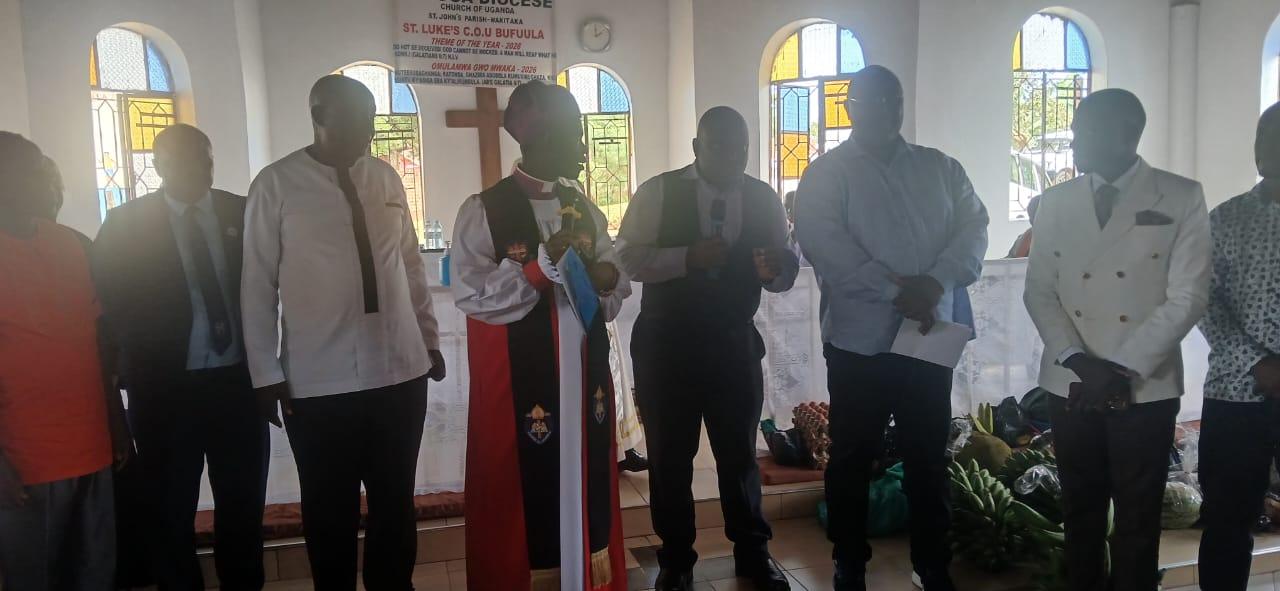
    The Bishop of Busoga Diocese Rt Rev Prof Dr Grace Lubaale has implored christians to conduct soul searching and repent so that their lost relationship with God, lost faith and hope can be restored to Jesus Christ.

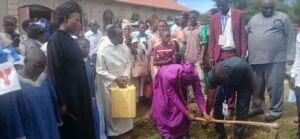
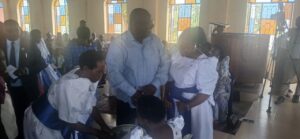
    He was on Sunday 3rd May,2026 preaching during a thanksgiving ceremony held at St Luke’s Church of Uganda Bufuula Parish under Wakitaka Archdeaconry in Jinja City.

    Anchoring his sermon under the theme Jesus Reinstates levareging The Post Resurrection Period, Bishop Lubaale exposited on an encounter between Peter and Jesus Christ as recorded in the Gospel of John 21:15-17 in which Peter was reinstated.

    For context, Post Resurrection Period is the 40 days between Jesus’ resurrection and His ascension into heaven when Jesus did three things, firstly proving he was alive, taught about the kingdom and commissioned the church.

    The text used by Bishop Lubaale presents one of the most tender leadership moments recorded in the Bible. Hours before Jesus was crucified, Peter disowned Him three times, yet Peter had boasted “even if all fall away, I will not” Mark 14:29.

    Jesus had warned him that “before the rooster crows twice you will disown me three times” Mark 14:30. Note that Peter was the ‘rock’ the inner circle guy so his failure was public and crushing.

    In that culture, denying you knew someone three times meant the relationship was legally dead and Peter had quit.

    The bishop explained to the Bufuula congregation the reason Jesus asked Peter three times was to heal three denials. Peter was reinstated not by promising to do better, but by being loved, fed and given work to do.

    He said it is the reason the Church of Christ here on earth cannot just preach, it must shepherd and that shepherds do not devour the sheep, they feed them.

    Standing before a packed congregation, that included the crème de la crème of Busoga MPs, academics, bankers, and elders, Bishop Rt. Rev. Prof. Dr. Grace Lubaale opened John 21 and made it personal.

    The Text That Became the Theme.

    “The same Jesus who met Peter on the beach at dawn is present here today,” Bishop Lubaale declared. “And He still reinstates.”

    He walked the church through Peter’s story: bold in the boat, broken in the courtyard, weeping after the rooster crowed. “Peter had denied the Lord three times. In the eyes of men, his ministry was over. But Jesus did not cancel him. Jesus cooked him breakfast.”

     Why Three Questions.

     “Jesus asked, ‘Do you love me?’ three times because Peter had denied Him three times,”, the bishop explained. “One affirmation for every denial. One ‘Feed my sheep’ for every ‘I don’t know Him.’

    This is how God heals: publicly, specifically, completely, he does not rub your nose in failure, he gives you work to do.”

    Application: Beyond Peter to Bufuula.

    Then Bishop Lubaale turned the mirror to the congregation:” Some of you came here with marriages that have slipped, you denied each other with harsh words. Some have education dreams that fractured when fees ran out. Some have businesses that collapsed like Peter’s net that night, you toiled all night and caught nothing, John 21:3. Some have health that is broken, and you are weeping bitterly like Peter did.

     “Come Back to the Fire” — A Word to Those Who Walked Away.

    Bishop Lubaale did not shy away from the empty pews in some church buildings. He brought the message right inside the Church, speaking directly to those who have slipped away from St. Luke’s and churches across Busoga.

    “Some of you left not because you stopped loving Jesus,” he said, his voice softening. “You left over what I will call petty issues: hymns you feel are boring, a sermon that ran too long, a choir robe you did not like, or clergy whose personalities irritate you. The fire did not go out. You just walked away from it.”

    Then he drew the line to Peter.

    “Peter did not deny Jesus because the Romans threatened him. He denied Him at a charcoal fire because a servant girl irritated him with a question, John 18:17. Sometimes we disown the Lord over small, human things. We let preferences become departures. We let irritation become exodus.”

    The Passionate Appeal.

    The bishop stepped from the pulpit and stood at the aisle.  “But hear me: the same Jesus who made breakfast for Peter is setting the table again. He is not asking you to defend the hymn book. He is not asking you to agree with every committee. He’s asking, ‘Do you love me?’

    If your answer is still ‘Yes, Lord,’ then come back the way Peter did: hurt, honest, but available, we need you to ‘feed my sheep, the Church is not a club for the perfect, it is a hospital for the willing, it is a fire for the cold.”

    He paused, then added with a smile that drew laughter and nods:

    “We can change the hymns. We can shorten the notices. We can even train the clergy to irritate you less. But we cannot do Church without you. Peter’s restoration meant the Church was born at Pentecost. Your return means Bufuula becomes that ‘mini city like Nazareth.’ Do not get a petty issue abort a resurrection story.”

    The Invitation.

    Closing, Bishop Lubaale stood by the Communion table and said:

    “Peter’s restoration started with breakfast. Yours starts here. Come back to the fire. Let Jesus ask you the question. Your failure is not final. Your denial is not the end of your story. ‘Do you love me?’ If you can say ‘Yes, Lord,’ then hear His voice: ‘Feed my sheep.’ Start with your family. Start with this church. Start with this acre. Jesus reinstates and He sends.”

    The altar filled. Tears, prayer, and fresh commitments followed. Outside, as the congregation broke bread, MP-Elect Wanzala and Prof. Muranga were seen sketching next steps for the Master Plan: “feeding sheep” in concrete, bricks, and audited accounts.

    From the Pulpit: “What Do We Mean by ‘Church’?

    Like any word in theology, the word “Church” must be interpreted by context. Bishop Lubaale paused the thanksgiving to teach what he called “the standard principle in all kinds of interpretation: meaning flows from context.”

    He reached for the late Swiss theologian Hans Küng, who argued in his 1967 work The Church that the “Church” is not, in the first place, a building, nor an institution, nor a hierarchy. The “Church” is, in the first place, the community of those who believe in Jesus Christ and are gathered by Him. It is the People of God, the Body of Christ, the Temple of the Holy Spirit.”

    The bishop unpacked it for Bufuula. “People of God means you, farmers, teachers, traders, MPs or politicians, students, mothers, not the bricks,” he said, gesturing to the congregation.

    “Body of Christ means we are one organism, a body does not grow one leg and leave the other idle, and that is why we need the Master Plan. The 13 acres and the pews are one body”.

    Then came the pointed line: “Temple of the Holy Spirit means this is God’s house. So, transparency, Bills of Quantities, and audits are not ‘corporate’ ideas. They are temple maintenance. We do not steal in God’s house.”

    That definition matters, he warned, because we use the word “Church” wrongly and it wounds us. When we say “we are going to church, or I have left their church”, we reduce the Church to real estate and then when the roof leaks, we say “the Church is failing, or so and so has spoiled our church”.

    Küng, whose words still shape both Catholic and Protestant thought, reminds us: you can burn the building and not destroy the Church. Persecution in Acts 8 scattered the Church; it didn’t end it.

    The second misuse is worse: “Church” meaning “clergy only.” When people say “let the Church speak on corruption, or human rights injustices or abuse of power” they usually mean “let the bishops or archbishop issue a statement.” That turns 99% of believers into spectators.

    “Prof. Muranga in the lab, Wanzala in Parliament, Kigenyi at KCCA, Moses Semwanga at Kiira College Butiiki, Dr Ephraim Batambuze in the wards, they are the Church doing economics, law, and policy,” Bishop Lubaale said. “‘Feed my sheep’ isn’t just pulpit work.”

    He also tackled the denominational trap. “Our church does not do that, we are not like the other churches, we are better”, often meaning: “Anglicans do not, Catholics do not, Pentecostals do not, Seventh Day Adventists do not.”

    But Jesus’ Body is not sectarian., Bishop Lubaale said adding “When we build the rental, it will not house Anglican Christians only, when we connect piped water, it will be used by all people of God, when we grow groundnuts, everyone will enjoy binyewa, amaido ocelo and odii. Money has no denomination. Neither does poverty’.

    Finally, the Sunday-only error: “I was in church 2 hours this week.” That makes Monday to Saturday secular, and excuses fraud in business and neglect at home. Yet Jesus restored Peter on a weekday, at breakfast, by the lake. The Church feeds sheep at the office, in the lab, and on the 13 acres.

    “So, when I say ‘Jesus Reinstates the Church,’ I am not talking about plaster and paint,”, the bishop concluded. “I am talking about you. Peter was the Church, broken, forgiven, sent. Bufuula is the Church, probably hurt by ‘basket fatigue,’ but now called to feed, tend, and govern. The building will follow the Body. The Body must follow the Head.”

    The teaching landed, minutes later, when Kirya Wanzala pledged to work on a “realistic and workable Master Plan, “and Benon Kigenyi pledged $2,500, Hussein Muyonjo aka Swengere pledged some reasonable amount after swearing in on 12th May while others gave it what they could, it was not just fundraising.

    It was Hans Küng’s People of God, learning to act as the Body of Christ and steward the Temple of the Holy Spirit.

    From Altar Call to Action: Bishop Lubaale Commissions the Master Plan.

    Before the final benediction, Bishop Lubaale did what Peter did after breakfast, he moved from restoration to assignment. “Jesus did not just forgive Peter. He gave him work: ‘Feed my sheep”, the bishop said.

    “So today, restoration must have an address. For St. Luke’s Bufuula, the address is 13 acres.”

    With that, he formally launched the St. Luke’s Church of Uganda Bufuula Parish Integrated Development Plan, placing it under the theme ‘Jesus Reinstates’. He laid hands on the architectural concept booklet, praying for the congregants.

    Then he charged the laity and the ordained by name: “Prof. Muranga, you are the Church in the lab, bring science to this soil. Hon. Wanzala and Hussein Muyonjo, you are the Church in Parliament — give us a ‘realistic and workable Master Plan.’

    Benon Kigenyi, and Moses Semwanga and all the professionals you are the Church in finance, let your dollars and shillings and skills disciple this village. This is what ‘Feed my sheep’ looks like in 2026”.

     

  • Busoga Diocesan Bishop Launches UGX 600M St. Luke’s Bufuula Rental Project as “Basket Fatigue” Hits Churches Nationwide -Prof. Muranga Vows to Turn Village into “Mini City”.

    Busoga Diocesan Bishop Launches UGX 600M St. Luke’s Bufuula Rental Project as “Basket Fatigue” Hits Churches Nationwide -Prof. Muranga Vows to Turn Village into “Mini City”.

    The Bishop of Busoga Diocese, Rt. Rev. Prof. Dr. Grace Lubaale on Sunday launched a UGX 600 million strategic development plan for St. Luke’s Church of Uganda, Bufuula Parish under Wakitaka Archdeaconry pitching it as an antidote to what Christians countrywide now call “basket fatigue.”

    The launch, held during a thanksgiving service at the parish in Wakitaka Archdeaconry, comes as believers across Uganda openly decry relentless financial demands in worship.

    Congregants say a single Sunday service can see as many as ten different offertory baskets passed around for church teacher welfare, parish priest welfare, archdeacon welfare, bishop welfare, and building contributions, and tithes, among others.

    The pressure has pushed some churches to adopt Mobile Money and church bank accounts to widen collection nets.

    Yet reports from several regions allege that some church leaders now employ manipulative and coercive tactics to extract giving.

    Disillusioned Christians have started nicknaming pastors and reverends as “revenue collectors,” saying they have abandoned the biblical calling to be spiritual correctors and shepherds.

    With the Middle East conflict (the US/Israel-Iran War) pushing fuel prices to 10,000 shillings per litre at some upcountry stations, household budgets are buckling under school fees, medical bills, and transport costs.

    “We love God, but we fear Sunday services, people are staying home not because they do not believe, but because they cannot afford to believe in public,” some believers complain.

     The Theology of Giving-Between Basket Fatigue and Biblical Mandate.

    Although some Christians today have a negative attitude towards giving calling pastors and reverends revenue collectors and skipping Sunday to avoid multiple offertory baskets, the Bible (both OT and NT) is clear that supporting Church activities and programmes is both correct and Biblical.

    Thanksgiving: Muranga Honors God, Mother, and Community.

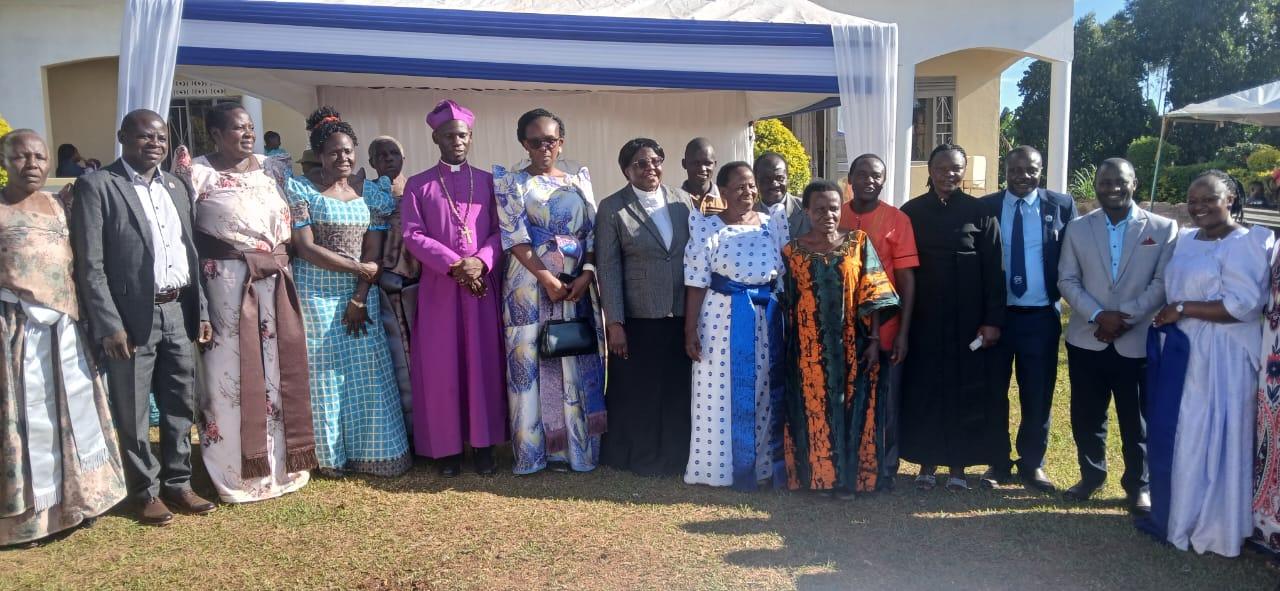
    In an emotional moment during the service, the vision bearer Rev. Canon Prof. Florence Isabirye Muranga stood alongside her mother Mama Christine Isabirye smartly dressed in a white spotted Mothers Union gomesi and looking strong because of the good care she receives.

    They were joined by Rev. Canon (rtd) Grace Kaiso, former Secretary General of the Uganda Joint Christian Council; Ordinand Sarah Mwegombi and her husband Joseph George Mwegombi, an education consultant; George Takakaisa, a retired teacher; Eva Miyongabo, Human Resource personnel with Iganga District Local Government; Edward Kamaga, District Education Officer for Kaliro; and Richard Waiswa, to thank God for His faithfulness and love. The other family brother who also graced the ceremony was  Dr  Ephraim Batambuze, a consultant physician at Nakasero Hospital in Kampala.

    “We cannot take it for granted, the Lord has been faithful to us, we have achieved a lot in life, and it is only by His grace”, Prof. Muranga told the congregation.

    The testimony drew nods and amens from the packed church, with overflow crowds on the veranda and under mango trees.

    From Baskets to Buildings: The Bufulubi Answer.

    According to the Concept Note, St. Luke’s Church Bufuula sits on 13 acres of Diocese-owned land, much of it unused. Church leadership now plans to construct a two-storied block on the premises. The structure will house five independent units, with two units on the ground floor and three units on the upper floor.

    Each unit is designed as a self-contained 2-bedroom house for dignified residential living, with a living area, kitchen space with provision for cooking equipment, a private bathroom with shower facility and toilet, and bedrooms sized for natural light and wardrobe space.

    The block will be permanent masonry with durable finishes suitable for rental use. Every unit will have water, sanitation, and electricity connections. Access to the upper floor will be through a common staircase while ground-floor units will have direct entry, and the compound will have secure external doors and boundary provisions.

    The total project cost is estimated between 500 million and 600 million shillings, with the first phase of construction envisaged to cost slightly above 100 million shillings. A detailed Bill of Quantities will be developed to confirm final costs for funders and the Diocese.

    Rental income will be transparently managed under Diocesan oversight and channeled to routine church operations and maintenance, pastoral and lay staff welfare, community health, education and social outreach, premises improvement, a reserve fund for future capital needs, and servicing any construction financing.

    A Property Oversight Sub-Committee will handle supervision, tenancy, and income accountability, with formal tenancy agreements executed under Ugandan law and quarterly financial reports submitted to the Church and Diocese.

    Prof. Muranga’s Three-Phase Roadmap and “Mini City” Vision.

    Prof. Muranga, a highly decorated Ugandan biochemist, food scientist, academic, and corporate executive who serves as Director General of the Banana Industrial Research and Development Centre, said implementation will move in three connected phases.

    First, the church will launch the plan and generate a comprehensive master plan for productive land use. Second, it will engage and contract a qualified builder to deliver the ground and upper floor structure, complete roofing, finishes, doors, windows, and painting, and install water, sanitation and electrical systems for each unit.

    Third, the project will undergo inspection and snagging, formalization of tenancy agreements and rental policy, community announcement, and commencement of first tenancy. She added that the third phase will include a mega fundraising drive to be attended by the crème de la crème in the country.

    A daughter of Bufuula years ago married in Ankole, Prof. Muranga spoke softly as the church erupted in deafening applause and ululations. She declared that the “small, little-known Bufuula village which peeps River Nile from a distance will become a mini city where people from all over the world will visit the way they do to Nazareth.”

    Butembe Constituency MP Elect Kirya Wanzala On Master Plan.

    Grace Paddy Kirya Wanzala who attended the thanksgiving service with his wife Jennifer Kirya pledged to work closely with Rev Can Prof Florence Isabirye Muranga and Busoga Diocese leadership to develop a realistic and workable Master Plan for St Luke’s Church of Uganda, Bufuula.

    “We can not build in pieces and pray it holds, if this church is to become self-sustaining and Bufuula is to grow into the mini city Prof Muranga envisions, we need one clear roadmap. I commit my office to walk with the Professor and the Church to design a Master Plan that is practical, bankable and God-honoring”, said the FDC politician.

    The pledge was welcomed by Bishop Lubaale, (who also had his wife Claire) and drew applause from congregants who have long complained that church projects usually start with excitement but stall for lack of planning.

     What Is A Master Plan?

    It is a comprehensive, long-term blueprint that shows how land, buildings and resources will be used over time. Think of it as the big picture map before you lay a single brick or block.

    KCCA’s Kigenyi Pledges $2,500, Hails Bishop’s Leadership.

    Deputy Executive Director of Kampala Capital City Authority Benon Kigenyi, whose ancestral home is a stone’s throw from the church, pledged 2,500 US dollars over five years, giving 500 dollars annually toward the project.

    Given the microphone, Kigenyi praised Bishop Lubaale as part of “the latest crops of spiritual leaders that have come to the leadership arena of Busoga,” as opposed to what were there in the past.

    He said the project is happening now because “the people of Busoga now have hope in the leadership of Busoga Diocese,” describing Bishop Lubaale as visionary and dynamic.

    Kigenyi, whose brother Amos Kigenyi is popularly known by his stage name Gen Mega Dee and lives in the U.S., said “there are many Murangas who will soon join hands or come out with great projects to make Busoga Great Again,” borrowing from Donald Trump’s trademark slogan.

    Bishop Lubaale: “This Is Obedience, Not Business.

    Bishop Lubaale lauded Prof. Muranga as innovative and foresighted. “Once actualized, the Bufuula Church project will become a role model in the diocese and the whole of Busoga for posterity,” he said.

    Quoting Psalm 24:1, “The earth is the Lord’s, and everything in it,” the bishop told congregants the Church cannot keep 13 acres idle while the work of God needs resources. “This is obedience, not business,” he stressed.

    The service was attended by Archdeacon Ven. Rev. Canon Capt. Alfred Kasaya, priests, lay readers, and dignitaries including Jinja North MP-elect Hussein Muyonjo aka Swengere, Butembe MP-Elect Grace Paddy Kirya Wanzala and headteacher Kiira College Butiiki Moses Semwanga among others.

    A National Conversation.

    The Bufuula plan is landing at a moment when the conversation about church financing has gone national. The shift to Mobile Money and bank accounts has made giving easier, but also more relentless, according to critics. The rise of “revenue collector” jibes signal a deeper crisis of trust between pulpit and pew.

    The strategic plan is promoted by the family of the late Zedekia and Mama Christine Isabirye, and the family of the late Rev. Kamira. Next steps include formal Diocesan endorsement, confirmation of site boundaries, commissioning architectural drawings and a detailed Bill of Quantities, engagement with funders, and constitution of the Property Oversight Sub-Committee.

    As the congregation dispersed, one elder said: “We don’t want to run from church. We want to run to it. If these houses can quiet the baskets, then build them quickly. Let our Amen be free again.”

    TEU Explainer: Who Is Rev Canon Prof Florence Isabirye Muranga?

    Nutrition & Sports Diplomacy. Nutrition Ambassador, Uganda Olympic Committee & Commonwealth Games Association of Uganda. She was appointed to drive athlete nutrition, food security, and healthy diets using Uganda’s indigenous crops.

    She designs high-energy tooke banana products for Team Uganda athletes and promotes nutrition education ahead of the Olympics, Commonwealth, and All Africa Games.

    Her mandate: “Fuel champions with Ugandan science.”

    Impact: Pushed for banana flour porridge and energy bars in national team camps. Links BIRDC’s research to sports performance and youth health.

    Global Advocacy for Women.

    Rev Can Muranga is also the ambassador, UN Women Global: Represents Uganda in UN Women’s advocacy on women’s economic empowerment, STEM, and rural industrialization. She champions agro-processing as a pathway for women to move from subsistence farming to factory ownership.

    Focus areas: Women in science, land rights, and climate-smart agriculture. Regular speaker at UN Women forums on “From Garden to GDP.”

    Busoga link: Uses her platform to spotlight rural women in Busoga as industrial producers, not just food providers.

    FULL BIO: Rev. Canon Prof. Florence Isabirye Muranga.

    Education & Scientific Career.

    PhD in Biochemistry, Makerere University; advanced training at University of Reading, UK.

    Professor of Food Science & Technology, Makerere University — 20+ years, supervised dozens of MSc/PhD students.

    Pioneer of banana industrialization: Proved matooke could be milled into flour, starch, biscuits, bread, and biofuel. Her research turned a perishable staple into Uganda’s industrial crop.

    Director General, BIRDC: Heads the Banana Industrial Research & Development Centre, a State House Presidential Initiative in Bushenyi. Runs factory, R&D, and farmer outreach.

    National & Corporate Leadership.

    PIBID Architect: Core team of Presidential Initiative on Banana Industrial Development since 2005. Boards: NARO Council, Uganda National Council for Science & Technology, UIRI, and private agro-firms.

    Awards: National honors for science & innovation. Recognized by FAO, AU, and World Bank for rural industrialization.

    Church & Ministry.

    Ordained: Reverend Canon, Church of Uganda, Busoga Diocese.

    Stewardship Theology: Preaches that “land is liturgy” — assets must work for the Gospel.

    Bufulubi Project: Vision bearer of UGX 600M rental housing block at St. Luke’s C.O.U. Designed 3-phase rollout to make the church self-supporting and turn Bufuula into a “mini city.”

    Diplomacy & Advocacy.

    UOC & Commonwealth Games: Nutrition Ambassador — links food science to medal counts.

    UN Women Global Ambassador: Voice for women in STEM, agro-industry, and Church-based development.

    Public Intellectual: TEDx speaker on “Science as Worship.” Frames labs and land as altars.

    Personal.

    Roots: Daughter of the late Zedekia Isabirye and Mama Christine Isabirye of Bufulubi, Wakitaka Parish.

    Family: Married in Ankole, Western Uganda. Mother, mentor, scientist-priest.

    Reputation: Bishop Lubaale calls her “innovative and foresighted.” KCCA’s Benon Kigenyi says Busoga needs “many Murangas” to become “Great Again.”

    Key Publications & Patents.

    Muranga, F.I. et al. Composition and physicochemical properties of banana starch. Food Chemistry, 2000.

    Muranga, F.I. Banana fruit flour: A potential raw material for the baking industry. African Journal of Food Science, 2008.

    Patents: Co-holder of Ugandan patents on banana flour processing, tooke biscuits, and composite flours via BIRDC.

    Policy Papers: Lead author on PIBID industrialization blueprints and UN Women reports on rural women & value chains.

    Book Chapter: Value Addition to Bananas in East Africa, 2016.

    Why She Matters A Lot More Now.

    Prof. Muranga sits at the intersection of lab, pulpit, Olympics, and UN. She is using banana starch for athletes, church land for rentals, and global platforms for Busoga and Uganda’s women.

    At a time when Christians nickname pastors “revenue collectors” and decry “basket fatigue,” her model says: Do Not tax the sheep, industrialize the field.

    Described as innovative and foresighted by Busoga Diocesan Bishop Rt Rev Prof Dr Grace Lubaale, KCCA Deputy ED Benon Kigenyi says Busoga now needs just 10 Murangas to become Great Again.


  • No Will, No Peace: Alex Kiwanuka’s Case Shows How ‘Caring Relatives’ Usually Emerge After Burial As Kin Now Fight Over Estate While He Cannot Rest in Peace.

    A bitter succession and property feud has erupted among family and clan members of former Jinja City Council Principal Revenue Officer Alex Kiwanuka, who died on April 5, 2026, just minutes to 5pm, as he was being rushed to Nile International Hospital.

    Kiwanuka, 50, died intestate, without leaving behind a will, now setting the stage for a court battle over a vast estate. Many who knew him believed he had “a big future to serve humanity and bring up a very successful family.”

    Ordinarily, Kiwanuka lacked nothing. He could afford meals of his choice at any high-end hotel. But death, “being something beyond human powers and understanding,” cut short his life before he could celebrate Easter 2026.

    Approved Asset Inventory Reveals Vast Holdings.According to a document marked _Approved Asset Inventory of the Estate of Alex Kiwanuka as at 5th April 2026_, the deceased’s holdings include:

    Jinja City: Land approximately 0.2280 hectares with residential permanent housing and structures situated on Plot 7, Chandual Patel Road, Masese.

    Njeru Municipality: Land with residential structures in Bukaya East; a second parcel of land with 3 residential structures also in Bukaya East

    Wakiso District: Land approximately 100ft by 100ft, Block 413, in Bwerenge Cell, Kisubi Ward, Katabi Town Council, Mukono: Land near Mpoma Satellite Station

    Jinja: Business lockups in Rubaga.

    Other Land: Parcels in Kaitabawala and Budondo on the shores of Lake Victoria

    Bugiri: 50 acres of sugar cane plantation.

    Vehicles: Brand new vehicle UA 285CQ and an old Toyota RAV4 UAT 488L

    Liquid Assets: Unspecified amount of mobile money on MoMo accounts, and bank accounts with “millions of money” at Equity and Tropical banks, Jinja Branch

    The inventory further lists a hotel among the assets, confirming Kiwanuka’s substantial footprint in business and real estate.

    Widow Alleges Phone Grab on Death Day.

    The legally wedded widow, Madam Diana Kiwanuka Amara, now claims that phones with numbers 0703580518 and 0772430001 were “grabbed on the very day the husband died” by a one Muwanika Zainab Kasule and have never been handed over to her.

    The alleged seizure of the phones has become a flashpoint in the dispute, with the widow’s camp arguing that access to the devices is critical to securing mobile money, bank notifications, and other digital records tied to the estate.

    Court Battle and Calls for Mediation.

    The matter is now before court. The widow and Kiwanuka’s eldest son, Elisha Owen Kiwanuka, are jointly represented by Juma Munulo of M/s Munulo & Co. Advocates.

    While colleagues at Jinja Town Hall mourned, an all-too-common but unexpected occurrence emerged: a deep family rift before Kiwanuka’s body was fully decomposed.

    With tensions escalating, voices within Jinja and the legal fraternity are urging the parties to abandon courtroom battles in favor of mediation.

    “These are children already stressed by sudden loss. Dragging this through court will only destroy Alex Kiwanuka’s legacy and deplete the very estate they are fighting over,” said a senior clan elder who requested anonymity due to the sensitivity of the matter.

    Legal experts note that because Kiwanuka died without a will, the Succession Act and customary law will guide distribution. But without consensus, litigation often consumes estates in legal fees and fractures families irreparably.

    “An amiable position reached through mediation protects the children, preserves the estate, and honors the deceased,” said a Jinja-based advocate not involved in the case. “Court should be the last resort, not the first weapon.”

     A Legacy at Stake.

    Alex Kiwanuka was a familiar face at Jinja Town Hall, where colleagues described him as ambitious and diligent. His sudden death shocked the city council fraternity and the wider business community where he had investments.

    At both St. Andrew’s Church in Jinja City, where he wedded years earlier, and at his ancestral home during burial, Anglican clerics including Busoga Diocese Bishop Rt. Rev. Prof. Dr. Grace Lubaale eulogized him solemnly. The tributes were warm. No one anticipated that a vicious fight over his estate would follow so soon.

    For now, the hotel stands, the vehicles are parked, and the land remains. But the question tearing the family apart is not what he left behind, it ia who controls it, and at what cost to his name.

    TEU could not independently verify the phone-grabbing allegation by press time. Efforts to reach Muwanika Zainab Kasule for comment were unsuccessful.

    This is a developing story. The case continues.

    TEU Editorial: In Kiwanuka’s Name, Choose To Be Good, Not Just Right.

    The sermons at St. Andrew’s Church and Magamaga Town Council were solemn. Clerics including Bishop Grace Lubaale of Busoga Diocese preached dignity. Mourners at the ancestral home wept, prayed, and chorused: May His Soul Rest In Peace.

    Yet before the red soil settled on Alex Kiwanuka’s grave, the war began. Phones grabbed, vehicles hidden and stage-managed clan meetings held. Lawyers briefed. Kin in court. A hotel, land, sugarcane, millions, all now hostage to greed dressed as justice. 

    This is not who we are. This cannot be his Legacy.

    Ugandans fear wills, as if ink on paper summons death. But death needs no invitation. It came for Kiwanuka at 50, minutes to 5pm, on the road to Nile International Hospital. He left behind everything except instructions. And now, the “caring” kin have emerged, not to mourn, but to claim.

    To Madam Diana Kiwanuka Amara, to Elisha Owen Kiwanuka, to Muwanika Zainab Kasule and others, to every brother, uncle, auntie, and clan elder now circling the estate: Pause.

    The law will tell you who can inherit and who to get what percentage. But culture, faith, and obuntu bulamo must tell you who should lead. The question is not “What am I entitled to?” but “What would honor him?”

    Scripture itself points us away from the courts and toward peace. “If it is possible, as far as it depends on you, live at peace with everyone”. Romans 12:18ff. “Blessed are the peacemakers, for they will be called children of God”. Matthew 5:9f. The Qur’an commands, “And reconciliation is better”. Qur’an 4:128. Mediation is not weakness. It is wisdom. It is faith in action.

    And what does true faith demand of us now? “Religion that God our Father accepts as pure and faultless is this: to look after orphans and widows in their distress” James 1:27. “You shall not mistreat any widow or fatherless child” Exodus 22:22ff.

    The Prophet Muhammad, peace be upon him, said: “The one who looks after a widow or a poor person is like a warrior who fights for Allah’s cause”. Sahih al-Bukhari.

    Choose fairness over technicalities. Choose family over filings. Choose to be good, not merely right.

    Because you can win in court and still lose in culture. You can secure a title deed and forfeit your name. You can drain the bank accounts and bankrupt the children’s future. Is that the victory you want?

    The Bible teaches us about ekisa kya mukama Yesu Kristo(the grace of our Lord Jesus Christ(. Anglicanism teaches us reconciliation. Islam teaches adl justice with mercy. Our traditions teach us that a man’s wealth is not measured at death by his acres, but by the peace he leaves behind.

    Kiwanuka worked for Jinja City and Busoga. He built a hotel. He planted cane in Bugiri. He fed his family and educated his children with diligence and prudence. Will his last act be to feed lawyers and tear his bloodline apart?

    We urge mediation. Sit under the same tree where you buried him. Put the phone numbers, the logbooks, the land titles on the table. Let clan elders, religious leaders, and Juma Munulo of M/s Munulo & Co. Advocates and other attorneys, guide not inflame. Let Bishop Lubaale pray over the settlement, not just the casket.

    To die intestate was Kiwanuka’s unforeseen matter. To remain intransigent would be yours.

    History will not remember who got Plot 7 on Chandual Patel Road. It will remember who turned a funeral into a feud. It will remember whether Kiwanuka’s children grew up as orphans twice once by death, again by greed.

    The crowd /mourner said May His Soul Rest In Peace. Make it true.

    Let the first act of the Kiwanuka estate be an act of peace.

    We Expose, You Decide. But today, we also implore.

    We are The Exposure Uganda we do not fear to tackle any topic. When we do it, we are not only professional, fair and objective, we are not for anybody nor against anybody. We simply do our work. Hence our slogan: We Expose, You Decide.

  • The Tweeting General Vs The State: Former Museveni Minister Kiyingi Exposes Uganda’s Parallel Voices.

    TEU Context.

    Who speaks for Uganda when the army tweets one thing and diplomacy says another?

    Uganda’s CDF, who is also the First Son, Gen Muhoozi Kainerugaba is not only an interesting person but holds a very sensitive and strategic position in the country’s military.

    He is being seen by people using different lenses or perspectives depending on which side of the platform one is. From cheekily threatening to capture neighboring Kenya in a matter of days, to wanting to marry Beyoncé, to threats like beheading Col Dr Kizza Besigye and NUP leader and two-time presidential candidate Robert Kyagulanyi Ssentamu popularly known as Bobi Wine, whom he calls Kabobi, to now referring to Turkey, a country seen as one of Uganda’s trading partners, as ‘pigs’, among others.

    He has been named the “Tweeting General” with a million plus followers on his X handle, formerly Twitter.

    Even President Yoweri Museveni, who is his father and Commander-in-Chief, notices that MK is not an angel but quickly adds that people should not close their eyes to Muhoozi’s great contributions to Uganda’s defense and security.

    While some argue that MK is just a stubborn chap who is referred to as Genzi General by his uncle Gen Salim Saleh, others look at him as a stubborn man who enjoys seeing others get irritated the way onion does to the eyes yet in itself the onion does no harm.

    But some think MK is just reckless while others think he uses humour to answer back or hit back at some of his equally stubborn targets.

    Former Minister Hon Asuman Kiyingi picks an angle in a hard-hitting rhetorical approach.

    We are The Exposure Uganda; we do not fear to tackle any topic. When we do it, we are not only professional, fair and objective, we are not for anybody nor against anybody. We simply do our work. Hence our slogan: We Expose, You Decide.

    We reproduce Hon. Kiyingi’s piece verbatim for TEU readers.

    Read it, weigh it, and judge for yourself: Is this the “apology state” or a new doctrine of power?

    TEU Audience, Enjoy the Read Verbatim:

    From “Turkey Pigs” to Sovereignty Farce: Who Is in Charge of the Ugandan State?

    By Asuman Kiyingi.

    Uganda today faces a question that can no longer be avoided: Who is actually in charge of the state?

    To the outside world, we project coherence—a reliable trade partner, a pillar of regional security, and a predictable diplomatic actor. Yet, domestic reality tells a different story: a state speaking in competing voices, perpetually correcting itself after the fact, and struggling to maintain a single, authoritative line.

    The widely reported “Turkey pigs” remarks by Muhoozi Kainerugaba are merely the latest episode in a pattern that has become impossible to ignore. They follow earlier, provocative statements directed at Kenya—remarks that necessitated a formal diplomatic apology from President Yoweri Museveni. They also mirror commentary suggesting Ugandan involvement in conflicts far beyond our borders, at times misaligned with established official positions on Middle Eastern tensions.

    Taken together, these are not isolated incidents. They point to a deeper structural failure: the emergence of parallel, uncoordinated centers of authority.

    When the State Speaks in Two Voices.  

    A functioning state is defined by the clarity of its command. Foreign policy must be conducted through established civilian channels; military authority must remain firmly within a structured chain of command, subordinate to civilian authority; public communication must reflect settled policy, not personal impulse. When those lines are blurred, institutional coherence collapses.

    We have now slipped into a recurring cycle of provocation, clarification, and apology. This has effectively created a dual-track diplomacy: an official posture on one hand, and an unsynchronized, militarized narrative on the other. This can not be strategic signaling. It is an institutional contradiction. Such conduct raises serious questions under the Constitution, the UPDF Act, and the Leadership Code Act—all of which require public officers to uphold discipline and the dignity of their offices. A state that tolerates parallel messaging in high-stakes diplomacy risks eroding the very sovereignty it claims to defend.

    The Sovereignty Bill: A Mirror of the Same Disorder. 

    If the diplomatic sphere reveals the problem, the legislative process confirms it. The handling of the Protection of Sovereignty Bill, 2026, serves as a classic case study in governance by improvisation.

    A bill with glaring defects, criticized for its extreme overbreadth and constitutional risk moved through Cabinet, the NRM caucus, and formal parliamentary processes with virtually no substantive scrutiny. It was defended as sound law by the Attorney General and the NRM’s Director of Legal Affairs. Then, only after public backlash, came a decisive intervention.

    President Museveni issued a formal communication indicating that the draft did not reflect Cabinet’s intent. He subsequently met with joint parliamentary committees, agreeing to significant exemptions—including for institutions regulated by the central bank, religious organizations, and foreign direct investment.

    Earlier, the Governor Bank of Uganda Michael Atingi-Ego, who had appeared before Parliament, warned of the dire economic consequences of the bill regarding financial flows and investor confidence.

    The resulting exemptions indicated in a hurried amended bill are revealing. They remove precisely those sectors where the bill’s impact would have been most catastrophic. But exemptions do not cure overreach; they expose it. A law that must carve out its most critical sectors to remain functional is not a finely calibrated instrument—it is fundamentally flawed legislation. Furthermore, instead of the bill’s withdrawal, these changes are being fast-tracked without renewed, meaningful public participation. This is more of legislative damage control than constitutional lawmaking.

    The Cost of Governing by Afterthought.

    What is emerging is a pattern of “action first, correction later”—the hallmarks of an “apology state.” Statements are made, then walked back. Laws are drafted, then hastily revised.

    Positions are taken, then adjusted as the political winds shift.

    The cost of this drift is tangible and immediate. In the arena of international relations, this behavior is catastrophically expensive. It breeds a perception that official state channels—the Foreign Ministry, the diplomatic corps, and official press releases—are merely “diplomatic niceties” devoid of substance. Conversely, the erratic, bellicose social media posts of General Muhoozi may increasingly be viewed by foreign capitals as the “real” voice of the Ugandan state.

    This dangerous duality projects Uganda as a duplicitous and dishonest actor. When the world stops believing that a country’s official word holds weight, it loses the currency of trust, which is the bedrock of foreign investment, aid, and security partnerships. Domestically, it leaves citizens—and even the bureaucracy—in a state of perpetual confusion, unsure of which directives represent the correct policy position and law of the land.

    Conclusion: One State, One Authority.

    If this drift is to be arrested, we must restore institutional clarity. Foreign policy must speak through a single, accountable channel. Legislative processes must be disciplined at their inception, rather than repaired at their conclusion.

    Ultimately, we must confront a fundamental paradox: A state cannot credibly claim to be legislating for sovereignty “against” the external world when it lacks the internal discipline to exercise sovereignty over its own military officers and actors, regardless of their rank or influence. True sovereignty is not merely a defensive posture against outsiders; it is the capacity to ensure that all domestic power centers remain strictly subordinate to the rule of law. When individual impulse replaces the law and institutional process, the rule of law is effectively suspended.

    Uganda cannot function indefinitely as a state of parallel voices. The question of who is in charge is no longer merely rhetorical; it is a matter of national stability. Sovereignty is not a concept to be decreed in legislation; it is a reality to be demonstrated through coherent, disciplined institutions that speak with one voice.

    The writer is a Senior Advocate and former Minister.


  • “The Problem Is Some Ugandans Still Sleeping”, M7 Tells Labour Day Crowd To Wake Up, Invest & Use Wetlands Wisely.

    “The Problem Is Some Ugandans Still Sleeping”, M7 Tells Labour Day Crowd To Wake Up, Invest & Use Wetlands Wisely.

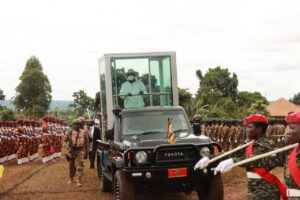
    The President of the Republic of Uganda and Commander-in-Chief of the UPDF, H.E. Gen (Rtd) Yoweri Kaguta Museveni, on Friday presided over celebrations to mark International Labour Day at Nkoyoyo Boarding Primary School Grounds in Matale, Buikwe District.

    The function was held under the theme: “Safeguarding Uganda’s Progress: Empowering the Workforce and Promoting a Decent Workforce for Competitive Enterprises.”

    President Museveni commended Ugandans for marking the day and advised them to continue working hard to eliminate poverty by taking full advantage of the Four Acre Model and prioritizing investment.

    He said: “The problem is not jobs. The problem is people sleeping.”

    He noted that Uganda still has many investment opportunities, especially in agriculture, fishing and the proper utilization of wetlands.

    He advised the public to become beneficiaries of Parish Development Model (PDM) funds and to avoid borrowing from commercial banks that charge high interest rates, urging them instead to borrow from the Uganda Development Bank, which offers lower rates. He questioned why people borrow at such exorbitant interest rates.

    “PDM will soon phase out money lenders and commercial banks,” he said. He promised to inject more money into PDM to the tune of Shs 200 million per parish and cautioned village chiefs to ensure that everyone is involved, since the money is a revolving fund.

    He added that proper planning is required before one engages in any income-generating activity.

    On the issue of accommodation for workers in industrial parks to improve their safety, given that most leave work late, the President promised to make it a policy that every industrial park be allocated nearby land for housing.

    “We shall get investors to build low-cost houses nearby on land provided by Government,” he stressed, further advising the National Housing Corporation to become the lead agency to that effect.

    On the issue of students pursuing courses that are not aligned with available jobs, the President directed the Ministry of Education to issue guidelines on what to study. “Carefully select courses,” he advised.

    On the mushrooming factories across the country, the President explained that this is a result of existing peace and security, an improved road network and electricity. “Once power and transport are fine, then jobs will be created,” he observed.

    On fishing, the President advised fishing communities to practice good fishing methods to ensure sustainability, urging them to stop overloading water bodies.

    “We should all know that water bodies should not be overwhelmed by numbers,” he warned, adding that wetlands should be used appropriately.

    He further implored communities to establish fishponds alongside wetlands, so that they can access water for irrigation and fish for both food and income. He cited the example of Limoto wetland in Pallisa. He said fish farming would be a priority for Government in 2027.

    “I want both wetlands and upland areas to maximally benefit communities,” he noted, promising a campaign against wetland degradation.

    He concluded by advising organizations with substantial funds, such as NSSF, to invest in building toll roads where they can collect fees from road users, rather than investing in shares or bonds which yield smaller returns.

    “You should invest that NSSF money in toll roads, although Government will continue building roads,” he promised.

    He, however, noted that prioritization is required for an economy to grow.

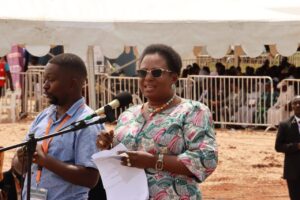
    In her remarks, the Minister for Gender, Labour and Social Development, Hon. Betty Amongi Ongom, commended the existing macro and micro economic policies, saying they have created jobs in Uganda.

    She noted that labour remains Uganda’s biggest factor of production. “Without labour there is no progress,” she emphasized. She said skilling centres, the Occupational Safety Act, Presidential hubs, the NSSF Amendment Act, apprenticeship programmes and the externalization of labour have raised opportunities for improving workers’ welfare and strategies that enhance workforce productivity and competitiveness.

    She noted that requiring Shs 100 million as a mandatory capital base for any company before it engages in labour export has helped curb problems associated with labour externalization.

    She called for dialogue between workers and employers to curb the casualization of labour, and decried the high interest rates charged by commercial banks.

    Hon. Amongi thanked partners such as the National Organization of Trade Unions (NOTU) and the Federation of Uganda Employers, among others, for creating employment and fighting for workers’ rights.

    Hon. Diana Mutasingwa, Woman MP for Buikwe, praised the President for the existing Government welfare programmes in the district and requested the building of a vocational school in Kitaka to create more skilling opportunities.

    The workers’ representative commended the proposed Public Service Pension Scheme, saying it would place retirees in a better position. He thanked the President for the vision of introducing industrial parks, although he told the President that the externalisation of labour, a mismatch between education and available jobs, and the need for accommodation for workers in the parks were some of the problems still facing workers.

    The Master of Ceremonies, representing the Chancellery and Chief of Formal Education, Sports and Culture, Brig Gen Richard Karemire, on behalf of the President, awarded 50 medals — 11 of which went to women — to security officers and civilians in recognition of their outstanding contribution to the growth and safety of Uganda.

    Brig Gen Paul Namawa and Brig Gen Ernest Nuwagaba were among the medalists.

    The function was also attended by the Vice President, Hon. Maj (Rtd) Jessica Alupo; Chief Justice Dr Flavian Zeija; 3rd Deputy Prime Minister Hon Lukia Nakadama; UPDF General Officers including the Deputy Chief of Defence Forces, Lt Gen Samuel Okiding; Inspector General of Police Abbas Byakagaba; Service Chiefs; Senior and Junior Officers; and cultural and religious leaders. Others present were diplomats, ministers, Members of Parliament and local residents.

  • Jinja Nile Resort Land Fight Exposes Leadership-Character Rift As Mada Holdings Vows To Petition M7

    Jinja Nile Resort Land Fight Exposes Leadership-Character Rift As Mada Holdings Vows To Petition M7

    Leadership without character is like a river without banks—a force that destroys what it should sustain.” That warning echoes across Kimaka Cell, Jinja, where outgoing Butembe MP David Livingstone Zijjan’s contested sale of three acres claimed by Jinja Nile Resort has residents questioning whose interests power really serves.

    “The truth of the matter is that we know the land belongs to Jinja Nile Resort and to the best of our knowledge anybody else purporting to have bought the land is a joker and liar,” LC1 chairperson Vincent Makanga Mayega says.


    Councilor-elect for the elderly to Southern Division Patrick Musinguzi, a 50‑year resident, adds: “This is not a small company that should be tampered with, considering its strategic importance in the promotion of tourism and trade in Jinja City and Uganda as a whole.”

    The Southern Division Mayor-elect Simon Kasirye who visited the site was equally perturbed that those meant to promote and encourage foreign investors are the very ones frustrating.

    “Why on earth should a leader engage in such fraudulent activity, now who should the investors run to, it is unacceptable and we shall do everything to ensure this is reversed…”, Kasirye who takes over in May said.

    A visit by The Exposure Uganda (TEU)reporter found private security guards hired by Mada Holdings Uganda Ltd literally in charge. There is a functional guard house and sanitary facilities to ensure no criminal trespass or encroachment by anyone.

    Long-serving Mada Holdings Director Rakesh Pant says the company bought the plot on 30 April 2007 from late James Kiili, witnessed by Martha Apolot of Okalang Law Chambers, LC1 chief Emmanuel Bangaya and Kiili’s widow Regina Chandiru.

    It was reported that Hon Zijjan sold the land in question on 19 June 2025 (the same day that Mada holdings Ltd had reported a case of criminal trespass by some unknown youth), to the twin sons (names withheld) of the Speaker of Parliament Rt Hon Anette Anita Among and was witnessed by Musongola Advocates and Solicitors.

    “…we understand that the same certificate of title under LAF JJ/4387 freehold register Volume JJA1169 Folio 4 has been transferred to the names of the twin children who are minors” Rakesh said while on site.

    He says they have injected money and will not allow anyone, regardless of the status to intimidate them into surrender but quickly wonders why police files (CRB 455/2025, CRB 456/2025) opened after youth raids in June have not escalated to the courts of law.

    However, Hon Zijjan counters by phone: “I buy and sell land with credible and genuine documents and people, so whoever is linking my name to such allegation does not know that I am an honest and transparent person.”

    He claims he purchased from Pande Sosupateli and Jessica Nakiwala on 13 May 2025; sources say the pair admitted being paid UGX 4 million each to sign papers they did not understand.

    Background.

    According to Sale Agreement whose copy was obtained by this publication, the now deceased Kili James of P.O.Box 2070 Jinja sold the land to Mada Holdings Uganda Ltd represented by Rakesh Pant  at 8 Million Uganda shillings.

    The transaction that featured Ms. Jimia, Evaristo and Juma as immediate neighbors was done in the presence of M/s Okalang Law Chambers.

    In the Agreement, Kili James as ‘Vendor’ warranted that he had the lawful title to the said land and undertook to refund 8 million Ugandan shillings plus additional penalty of 10 million Uganda shillings and indemnify the ‘purchaser’ for any loss that may occasion and result due to any defect in the ‘vendors’ title to the said land.

    The Allegations.

    According to Rakesh Pant who executed the deal on behalf of Mada Holdings Uganda Ltd, the company bought the land on 30 April, 2007 and has been in possession of it since then.

    Rakesh says the transaction was witnessed by Martha Apolot of M/S Okalang Law Chambers and Legal Consultants, the area LC1 chairperson the late Emmanuel Bangaya and Regina Chandiru wife to the late Kiili, among others.

    However, on 19th June 2025, its reported that a group of irate youth stormed the property, claiming ownership and ordering the guards to leave.

    The Company through Rakesh reported the incident to the police and a case was opened up Vide ref:144/19/06/2025, later CRB 455/2025 after recording a statement from the reporter Ambrose Okori one of the guards affected in the night raid.

    A few days later on 23 June 2025 a case file of Criminal Trespass (CT) Vide SD ref: 127/23/6/2025 later CRB 456/2025 was reported by Joseph Igodobe said to be a brother to Hon Zijjan and a resident of Wanyange, Northern Division in Jinja City

    Detectives led by the Officer in Charge (OC)Criminal Investigation Department (CID)Detective Superintendent of Police(D/SP) Loy Gift Namono visited the scene of crime and recorded statements from witnesses with relevant accompanying documents.

    Local leaders and neighboring residents who were interviewed confirmed to detectives that for more than 15 years they knew the land in dispute belonged to the hotel and were shocked another person is also claiming ownership.

    The survivors of the late James Kiili who sold the land to Mada Holdings Ltd also confirmed that he had earlier in 1991 bought the land from a one Benjamin Joseph.

    Reports say Hon Zijjan was also invited through his brother Joseph Igodobe by the police at CPS Jinja to furnish them with information and he accordingly recorded a statement.

    Hon Zijjan told detectives he bought the same land from a one Pande Sosupateli and Jessica Nakiwala on 13 May,2025 which was witnessed by Rwabugaire Dan Advocates.

    The certificate of title bears the name of Pande Sosupateli and Jessica Nakiwala as first re registered proprietor who allegedly sold it to Hon Zijjan.

    Upon interrogation, reports say the two were actually induced with 4 million shillings each to sign documents which they did not understand the content and implications.

     Hon Zijjan’s Response:

    In a phone interview, Hon Zijjan said “…I buy and sell land with credible and genuine documents and people, so whoever is linking my name to such allegation does not know that I am an honest and transparent person…”.

    Hon Zijjan who will cease to be the Butembe MP in a few days’ time claimed that he bought the land from Pande Sosupateli and Jessica Nakiwala who sold it to him without any encumbrance.

    Investigation Stalled:

    The police acted swiftly by launching an investigation into the matter unearthing glaring anomalies and Hon Zijjan has recorded a statement. Local leaders

    Rakesh Pant says in spite of the hullabaloo, Mada Holdings Uganda is in possession and that they are ready and prepared to defend their rights as investors who are in good books with the government of Uganda led by President Yoweri Museveni.

    According to Mada Holdings Uganda Ltd Director, this was a calculated maneuver by Hon Zijjan to undermine relevant authorities since the matter was still under investigations.

    Further Frustrations:

    Attempts by Mada Holdings for a Public hearing with the Commissioner Land Registrations did not yield any tangible results as on two occasions no representative from Hon Zijjan surfaced and instead was making moves behind the scene to move ahead with his land transactions.

    The directors and management of Mada Holdings Uganda say they are disappointed that despite a very clear and loud message by President Yoweri Museveni to woo foreign investors to Uganda, a handful of unpatriotic people are using their positions to frustrate the same.

    “…we are shocked and disturbed that some individuals are so powerful and connected that they can easily circumvent all systems to get what they want at all costs and even officials in government offices cow down for fear of reprisals…”, Rakesh laments.

    But Hon Zijjan is not bothered saying he does not know anything that Mada leaders are saying since he has never handled any land matter or transactions linked or connected to the company and hotel.

    Escalation To President Museveni.

    Management of Mada Holdings Uganda Ltd have vowed to escalate the matter to the highest office in the land by petitioning President Yoweri Museveni to intervene.

    They are just waiting for the Big Man to be sworn in on 12th May,2026 and find ways of submitting their petition to State House since it appears the police and court officials fear the matter.

    “…we badly need this land for expansion because we have innovations that require more space and the fact that we injected money is a good enough factor that will not allow us to surrender…” Rakesh vowed.

    Jinja City’s land Controversy Hotspot:

    The case is just one of the many chronic land-related conflicts that have plagued Jinja city, earning it a reputation as one of the most contentious land dispute hubs in Uganda, second only to Wakiso and Kampala.

    Insiders reveal that top public and civil servants are often embroiled in these disputes driven by the lure of easy money or pressure from powerful government officials.

    The plot has now thickened with the revelation that Hon Zijjan has allegedly involved the Speaker of Parliament Rt Hon Anita Among in this land dispute.

    The speaker being the third-highest official and now a senior member of the NRM who sits in the party’s Central Executive Committee (CEC)in Uganda has significant influence and her involvement has just added fuel to the fire.

    As to whether investigation will continue or not, Jinja city residents and investors, particularly Mada Holdings Uganda Ltd are watching with bated breath wondering if justice will really prevail.


  • The New Gold Is Grease: Why Berlin Is Paying Lango Youth To Learn, Not Wait-FIMAT Opens 5-Week Energy Bootcamp.

    The New Gold Is Grease: Why Berlin Is Paying Lango Youth To Learn, Not Wait-FIMAT Opens 5-Week Energy Bootcamp.

    A rare golden window has opened for youth in Lango and Northern Uganda as the Fountainhead Institute of Management and Technology (FIMAT) announces a fully residential five-week technical course in Productive Use of Energy and Operations & Maintenance.

    The programme, which runs from 18th May to 23rd June 2026 at FIMAT’s campus in Awita Cell, Lira City West, is funded by the Government of Germany and implemented through GIZ, the German Agency for International Cooperation.

    GIZ (Deutsche Gesellschaft fur Internationale Zusammenarbeit) or German Society for International Cooperation is a federal enterprise owned by the German government that manages development projects worldwide on behalf of German ministries.

    In Uganda, GIZ works on skills development, renewable energy, agriculture, and private sector growth, with a strong presence in Northern Uganda. When GIZ backs a training, it means the curriculum and certification meet international standards that are recognized beyond Uganda’s borders.

    This is not another classroom workshop. The FIMAT-GIZ course is designed as a bootcamp for problem-solvers. Over five weeks, participants will learn how to size productive use of energy equipment so that a farmer or shop owner buys the right solar pump, fridge, or miller for their needs.

    They will be trained in preventive maintenance to keep machines running through harvest seasons, and in troubleshooting energy-efficient machinery so that breakdowns no longer cripple small businesses.

    In a job market that now demands skills rather than papers, the course aims to turn unemployed youth into employable, billable, and bankable technicians in just 35 days.

    FIMAT, founded and directed by a Lango-born industrious educationist Tom Okao, is one of the very few such institutions that have stood the test of time. Even during the once unpredictable COVID-19 period when Uganda and the entire world went into lockdown, the institute weathered the storm.

    FIMAT says the training targets practicing technicians who want to upgrade from trial-and-error to certified skill, small and medium enterprise owners who are losing money to broken equipment and young people who are tired of betting and the so called “Rich Men in The Waiting” culture that has trapped a generation.

    According to Okao, women and persons with disabilities are especially encouraged to apply, with accommodation and meals fully provided for all successful applicants to remove financial barriers.

    Why Vocational Skills Are Global Currency.

    Globally, the tide has turned. According to The World Economic Forum’s Future of Jobs Report 2025,60% of employers worldwide now prioritize hands-on skills over degrees. Germany, Japan and Switzerland, among others of the world’s industrial engines, run on apprenticeships not just universities.

    In Germany,50% of school leavers choose dual vocational training with amazing results.

    Youth unemployment sits below 6% while in the U.S, PUE technicians earn 28-45USD per hour, often out-earning degree holders. The message from Tom Okao and the country is brutal clear that the world no longer hires what you studied, it hires what you can fix.

    FIMAT has for decades opened its gates to youth from even the most unprivileged backgrounds and has become a household name in Lango and Northern Uganda for practical, hands-on training that leads directly to work.

    For decades, families in Lango sold cattle and land to buy university degrees that produced talkers rather than solvers. Tom Okao says the economy of the time is now different.

    Uganda now needs welders who can fix solar dryers, electricians who can wire agro-processors, and technicians who keep village health centers running.

    Germany understands this shift and it is the reason Berlin is paying for board and meals in Lira, not Kampala. GIZ is betting that Northern Uganda can power agro-industrialisation, but only if young people arrive with grease on their overalls instead of CVs in their pockets.

    Thomas Edison once warned that opportunity is missed by most people because it is dressed in overalls and looks like work. This FIMAT course is the overall. The residential model is deliberate. For five weeks, trainees will live on campus with zero distractions from boda-boda side hustles or village meetings.

    They will eat the same meals, use the same labs, and leave with the same German-standard certificate whether they come from Amolatar, Kwania, Oyam or Lira City. And the market is waiting.

    Parents, guardians, and clan leaders across Lango are being urged to treat this as the new inheritance. One child with PUE skills can feed ten homes.

    According to experts, one technician per parish can end post-harvest losses, one certified youth can employ five others. The world is no longer hiring office assistants, it is hiring energy solutions technicians. Employers are no longer asking what you studied. They are asking what you can fix.

    Uganda’s Painful Paradox: Glamourous Grads, Jobless Homes.

    Uganda, unfortunately is living the opposite. Every February and October assembly squares and graduation tents fill with ululation and all sorts of entertainment including cultural melodies and dance strokes. Gowns fly, parents weep in joy.

    Makerere, Kyambogo, Mbarara, Gulu, Lira and dozens of private campuses release over 400,000 graduates annually, yet UBOS data shows 83% of youth aged 18-30 remain unemployed or underemployed.

    The National Planning Authority (NPA)headed by Dr Joseph Muvawala who doubles as the Busoga Kingdom Prime Minister (Katukiro) warns that 700,000 young Ugandans enter the job market yearly for only 90,000 formal jobs.

    The human cost is hidden behind the graduation photos.

    In Lango or Acholi or West Nile single mothers or widows have sold goats, hired out huge chunks of land or toiled the cold night to brew waragi or sell charcoal, among others to pay tuition. Some young men hustled as house boys or maids while other became boda-boda riders or night watch guards to make ends meet.

    They endured three years of just one more semester hoping the gown would become salary, but wapi, instead, the graduate returns home with a framed certificate and an MTN loan. The mother who skipped meals now skips hope and does not want to skip taking her medicine to stabilize and manage ulcers or hypertension.

    The so-called Rich Men In The Waiting, and The Best Betters Club-trap-that painful culture where graduates return home with gowns but no tools, spending months or years in trading centers and cities well-dressed and hopeful but with nothing to offer the market except waiting is what happens when colleges and universities produce job-seekers instead of problem-solvers, leaving sons and daughters under trees not by choice but because the system gave them certificates without competence.

    Application forms are available at the FIMAT campus in Awita Cell, Lira City West, at a fee of 50,000 shillings only. The fee covers administration, while accommodation and meals for the entire five weeks are fully funded by the German Government through GIZ.

    Residential slots are limited, and interested applicants can contact the Principal on 0774181007 for details.

    As Uganda pushes to safeguard progress through competitive enterprise, the message from Lira is clear. Tom Okao says “the certificate of 2026 is in your hands, your CV is what you can repair, and for once, of course, the overalls are free”.

    Editorial: The New Inheritance-Why TEU Backs Tom Okao and FIMAT.

    As The Exposure Uganda, we stand with skills, not slogans. We support and urge parents, clan leaders, cultural institutions, religious bodies, and all stakeholders in Lango and Northern Uganda to join hands with Tom Okao, whose FIMAT has become a household name for practical training that puts food on the table.

    For years, families have buried wealth in gowns that produced “Rich Men In The Waiting.” Today, the German Government through GIZ has placed a better bargain before us: five weeks, free board, free meals, and a German-standard certificate that turns a youth into a billable technician.

    Tom Okao kept FIMAT alive through COVID-19 when schools collapsed. He is keeping dreams alive now when degrees fail. This is the new inheritance. Let no child be left in the trading center with a CV and no competence. Let no single mother sell another goat for a paper that will not employ. The hoe of 2026 is a multimeter. The granary of 2026 is a solar-powered workshop. TEU calls on Lango: send your sons and daughters to FIMAT. The overalls are free. The dignity of work is priceless. At TEU, We Expose, You Decide.


  • Labour Day 2026 Message: Won Nyaci HRH Odongo Okune Says Hard Work Key To Safeguarding Uganda’s Progress.

    As Uganda joins the world to mark International Labour Day on Friday, May 1st, the Lango Paramount Chief, His Royal Highness Eng. Dr Michael Moses Odongo Okune, has called on his subjects, especially the youth to reclaim the sub-region’s age-old trademark of hard work and honesty, warning that laziness and the lure of quick wealth are eroding Lango’s proud identity.

    The Won Nyaci me Lango, whose cultural jurisdiction covers Lira City, Lira District, Kole, Alebtong, Apac, Amolatar, Dokolo, Otuke, Kwania, and Oyam, said Labour Day is not just a public holiday but a moment for Lango to audit its work ethic against the values of their ancestors.

    Drawing from the words of Thomas Edison (1847-1931), one of the most famous inventors in history and an American businessman who said that “opportunity is missed by most people because it is dressed in overalls and looks like work”, the Won Nyaci said too many Lango youth are walking past opportunity every morning.

    “I walk through our trading centres and urban places, I see some able-bodied young men from morning to evening seated under trees and shades on betting machines/halls, on phones, playing cards waiting for miracles, meanwhile gardens are bushy and elderly parents hire labour from elsewhere, this is not the Lango I have known”, he laments.

    Our (Lango) Granaries Were Never Empty.

    He said from time immemorial, Lango people have been known across Uganda as hardworking, honest and straight forward, and that the granaries (dero kec) were never empty because the hands were never idle.

    “A Lango man, a Lango woman, or youth woke up with the sun to the garden, to the cattle, to the forge, to the market, we tilled, we herded, we traded, we were born to work, not to beg which led to the coinage of the phrase acan akwo kwo ilwete” (a living poor man is sustained by the work of his hands”), HRH Odongo Okune said in his Labour Day message released from his private palace at Senior Quarters in Lira City.

    The Won Nyaci, an acclaimed civil engineer by profession specializing in bridge-building, said this trademark industry built Lango’s resilience through wars, cattle rustling, and economic shocks. “Even when we lost everything, we did not lose our hands. We rebuilt. That is the Lango spirit.”

    Youth Urged To Shun Idleness, Betting, Quick Wealth.

    The Paramount Chief said Labour Day 2026, held under the national theme “Safeguarding Uganda’s Progress: Empowering the Workforce and Promoting Decent Work for Competitive Enterprises,”, must speak directly to Lango’s young people.

    “Empowering the workforce starts with the will to work. Decent work starts with honest work. You cannot have competitive enterprises when the owner is asleep and the worker is gambling,” he said.

    Industry Must Marry Honesty.

    HRH Odongo Okune emphasized that Lango’s industry must be paired with “apor/anyut aber”, honesty and integrity if it is to produce lasting progress.

    “Our fathers taught us: ‘Awackom camo owara’ loosely translated to mean a lazy man eats empty honeycombs, but he who toils never shames. Today some youth want wealth without sweat, offices without toil, harvest without planting. That is not Lango. That is not sustainable.”

    He urged clan leaders, elders, and parents across the nine districts to use the Labour Day week to convene youth barazas and re-teach the Lango work ethic: early rising, respect for elders’ enterprises, apprenticeship, and dignity in all honest labour, whether farming, welding, boda-boda, teaching, or vending.

    Government Jobs Not Enough, Create Your Own.

    The Won Nyaci cautioned against over-reliance on government employment. “Lango has thousands of educated sons and daughters, but government jobs will never be enough, our ancestors were not employed, they employed themselves, they employed the land and they employed their skills.”

    Quoting from the Scripture (2Thessalonians 3:10 in which St. Paul taught that “the one who is unwilling to work shall not eat,” the Won Nyaci asked parents and guardians to instill the spirit of hard work in their children irrespective of their social status in society, even in families that lack nothing.

    In the text, St Paul wrote to the Church in Thessalonica because some believers had stopped working expecting Christ’s return any day. He rebuked idleness and commanded everyone to earn their own living.

    “Hard work is not a punishment for the poor. It is Lango identity. It is dignity,” HRH Okune said and strongly condemned a lazy spirit he has observed among some young men who have formed a loose club they call “Rich Men In The Waiting.”

    These are reportedly sons of wealthy men who wake up and gather in bars or hotels from morning and begin eating and drinking, apparently waiting and wishing for the demise of their parents so that they inherit wealth which they have not worked for.

    He warned that such entitlement erodes Lango’s brand of industry and resilience that rebuilt Lira City after years of conflicts spanning decades from the time Amin took power until the Northern Insurgency.

    “Let no child in Lango grow up thinking inheritance is employment. Let every child have a skill. Let every child till, trade, or create. Even the son of a chief must know how to hold a hoe,” he said.

    He hailed Lango entrepreneurs in Lira City’s produce lines, hardworking and ethical business community in Lira City and other towns, Amolatar’s fishing enterprises, Oyam’s commercial farms, and Apac Municipality’s metal works, saying they represent the “true Labour Day heroes.”

    HRH Okune noted that Lango people rebuilt their lives, homes and towns like Lira City, now referred to as the Northern Commercial Hub attracting investors and traders from as far as South Sudan, India, Pakistan and DR Congo through hard work and resilience, with trading centres sprouting everywhere.

    “In Lira City the catchphrase is hard work and you can see boda-boda, women waking up riding bicycles as early as 5am daily and basically everyone in Lango is always in a hurry to do something productive. In Lira you see Uganda because people from all regions and languages are here,” he added.

    “To the young man with one acre of land in Otuke, or Oyam or Dokolo that is your office. To the young woman with a sewing machine in Dokolo that is your factory. Start small, grow honest, employ others tomorrow,” HRH Okune said.

    Cultural Institution To Partner With Districts On Skilling.

    The Won Nyaci disclosed that Lango will partner with district local governments, State House and the Ministry of Gender, Labour and Social Development plus other government departments and ministries to scale up skilling for out-of-school youth across the sub-region.

    He says focus will be on agriculture value addition, metal fabrication, carpentry, tailoring, and digital skills.

    “We shall use our clans and chiefdoms to identify idle youth and link them to the Lira City-based skilling hub and other partners or stakeholders. A Lango must have a skill,” he said.

    He also appealed to investors in Lira City and the Lango sub-region to prioritize local labour and uphold decent work standards timely pay, safety, and respect in line with the national Labour Day theme.

    Labour Day Is Thanksgiving For Workers.

     HRH Odongo Okune paid tribute to Lango’s farmers, teachers, health workers, boda-boda riders, market vendors, builders, and civil servants, calling them “the backbone of our sub-region.”

    “On May 1st, as President Yoweri Museveni leads national celebrations at Bishop Nkoyoyo Primary School Matale Grounds in Buikwe district, here in Lango we shall bow our heads for every hand that feeds us. We shall also kneel and pray for those whose hands are idle, that God gives them the fire to rise and work.”

    Lango’s Brand Is Industry — Let’s Not Dilute It.

    He concluded: “When Uganda thinks Lango, let them think industry. When investors come to Lango, let them find workers, not spectators. When our children ask what it means to be Lango, let the answer be: ‘We work. We work hard. We work honest.’”

    “Happy Labour Day to all Lango. Happy Labour Day to all Ugandans.”

    “Tekwaro Lango, Tic Atek Kun Icamo Ikwoki, Jojok Amalo.”


  • “You Circled the Moon, Built Skyscrapers But Can Not Command A Swallow”, Nabbi Daudi Warns Uganda, West to Stop Thumping Chests-God Controls Your Breath

    A thanksgiving meeting called to appreciate Christians for organizing a successful Passover Service turned into a stern rebuke Saturday evening (25th April, 2026), as the supreme spiritual leader of Universal Apostles Fellowship Church of Righteousness (UAFCR) expressed deep disappointment with believers from Jinja Zone over what he termed “brother-in-law familiarity” with God.

    Prophet David Isanga popularly known as Nabbi Daudi, who convened the gathering to thank organizers, said he was grieved that Christians from Kirama Zone in Kaliro District and others from Luwero, more than 200 km away in Buganda, arrived at the venue very early in the morning, yet believers from Jinja, a walkable distance of between 10 to 15 minutes trickled in late evening, while others did not attend at all.

    Like the Biblical Israelites who would see God’s wonders and favors in the morning but by evening they had already forgotten, Nabbi Daudi says some Christians now treat God as their brother-in-law or sister-in-law.

    He says many have familiarized(okumanyira) God and take everything He does for granted.

    To him, the Christians of Jinja Zone were behaving like the children of Israel, who would boast after an achievement the way Jinja was acting after the Passover as if it was by their own might, knowledge and wisdom.

    “We Have Familiarized Him”-Nabbi Daudi.

    In his address, Nabbi Daudi drew a direct parallel between modern believers and the Israelites of Exodus.

    “Like the Biblical Israelites who would see God’s wonders in the morning but by evening had already forgotten, some Christians now treat God as their brother-in-law or sister-in-law, we have familiarized Him. We take everything He does for granted”, he said.

    Prophet David explained the cultural weight of the phrase to the congregation. In many Ugandan clans, a sister-in-law is referred to as “muka mwana waffe”, “our wife.” She is joked with, sent on errands, borrowed from, and often reminded she can be returned to her family. The relationship, known as omuko/mulamo is one of “licensed familiarity without holy fear.”

    “That is how we now handle God, we call Him ‘Daddy’ on Sunday, then ignore Him like a boring uncle that very day or the next Monday. We want His blessings but not His lordship.”

    Deuteronomy 8:7ff — The Land of Plenty Forgets the Giver.

    Nabbi Daudi took the congregation to Deuteronomy 8:7-18.

    “For the Lord your God is bringing you into a good land… a land in which you will eat bread without scarcity… Beware lest you say in your heart, ‘My power and the might of my hand have gotten me this wealth.’ You shall remember the Lord your God, for it is he who gives you power to get wealth.”

    “Israel entered a land flowing with milk and honey,” he preached. “God warned them: when you are full, when your houses are built, when your herds multiply, do not forget. But they forgot. We forget. Jinja organized Passover. People came. Money came. Then we acted like it was our wisdom. Deuteronomy 8 is Jinja Zone. God gave the increase. We took the credit.”

    He said the 10-minute walk to the thanksgiving service exposed the same amnesia: “You are in the land of plenty, the church is near, the freedom is here, yet you came at dusk. Kirama walked from famine to be here at dawn. Who remembered the Lord?”

    Ezekiel 33:30ff: Entertainment, Not Obedience.

    The prophet then turned to Ezekiel 33:30-32:

    “As for you… they hear what you say, but they will not do it… for with their lips they show much love, but their heart is set on their gain… And behold, you are to them like one who sings lustful songs… for they hear your words, but they do not do them.”

    Shrine (Essabo/Eisabo)Obedience vs. Sanctuary Stubbornness.

    Then came the comparison that silenced the hall. “abantu bagondera amateeka g’essabo ne batatya Katonda…”

    “Devil or demon worshippers who go to consult in shrines are so obedient and loyal that they obey orders or instructions without defaulting,” Nabbi Daudi said. “The witch doctor says: ‘Enter the shrine barefoot.’ They remove shoes. ‘Return without looking behind.’ They walk straight. ‘Do not eat pork or drink alcohol for 7 days.’ They fast.”

    The charismatic man of God paused. “Why? Because they fear the shrine. They fear the demon. They believe if they disobey, calamity strikes.”

    “Then why should Christians who have been saved by God through His Son Jesus Christ be stubborn and want always to familiarize the true Living God?” he asked. “The demon gets obedience. The Creator gets excuses. The shrine gets bare feet. The altar gets late feet. The witch doctor gets ‘Yes, sir.’ God gets ‘I am busy.’”

    “Are demons more worthy of fear than the God who gives you breath? Are shrine rules more serious than ‘If you love me, keep my commandments,’ John 14:15? We obey darkness without question, but argue with Light.”

    Red Sea at Dawn, Grumbling by Dusk.

    Nabbi Daudi traced Israel’s journey from the Red Sea to the Promised Land. “God split the sea. He rained manna. He brought water from the rock. Cloud by day, fire by night,” he preached. “Yet Exodus 16:3 shows them saying, ‘You brought us out to kill us with hunger.’ Psalm 106:13 says, ‘They soon forgot his works.’ Morning miracles, evening amnesia.”

    He likened Jinja Zone’s late arrival to that pattern. “Kirama came from Kaliro. Luwero came over 200 km. They set affection on the house of God. Jinja is 10 minutes away and came at dusk, after the work, after the sacrifice. That is Cain’s religion. Crops, not special treasure.”

    He contrasted Israel’s grumbling with King David’s posture in 1 Chronicles 29:3: “Moreover, because I have set my affection on the house of my God, I have given… my own special treasure of gold and silver.”

    You Cannot Even Swallow Without God — The Medical Doctor cum Prophet Speaks.

    At this point, Nabbi Daudi’s tone shifted. Speaking authoritatively as a trained medical doctor, he delivered the line that broke the congregation:

    “You can put food in your mouth, but collapse and die, or be rushed to hospital in critical condition with food trapped in the throat. It’s God who controls every aspect, including the human body and organs.”

    He explained the medical terms. The vagus nerve, cranial nerve X, which is the longest cranial nerve in the body. It governs involuntary actions: it tells your epiglottis to cover the trachea so food does not enter your lungs. It drives peristalsis, the wave-like muscle contractions that move food down the esophagus. It regulates heart rate. You do not command it. You do not negotiate with it.

    “If God withdraws His hand for one second, your luwombo, pork chops or chips and chicken or pizza and pilawo, among other delicacies becomes your last meal, if you cannot guarantee the next swallow, what makes you think you secured the Passover Service by your own might?”, he said in rhetoric sending the audience which included health professionals into dead silence.

    Then he anchored it in Scripture: “Nabbi Daudi’s words are also embedded in the Bible. Daniel 5:23 says to Belshazzar, ‘The God in whose hand is your breath and whose are all your ways, you have not honored.’ And Acts 17:28 says, ‘In him we live and move and have our being. Every safe swallow is a sermon. Every heartbeat is manna.”

    Bended Knees, Not Mixed Reactions.

    This rebuke prompted believers of Jinja Zone, which has more than 10 churches alongside their leaders, to go on bended knees asking God for forgiveness, promising never to be slothful or sloppy again.

    “We felt pierced, but it was the truth,” said one Christian from Walukuba who was among those who knelt. “The sisters from Kaliro slept on buses to be here. We are 10 minutes away. We have no excuse. We repent.”

    Another elder added: “We had become Israel at dusk. We had become Ezekiel’s crowd, hearing, not doing. Today we choose David’s affection. Jinja will not treat God like mulamo again.”

    Nabbi Daudi closed with Lamentations 3:22-23: “The steadfast love of the Lord never ceases… they are new every morning.”

    “Manna was daily so Israel couldn’t boast,” he said. “Your breath is daily for the same reason. You can plan the menu. You can’t guarantee the swallow. Will we remember before we choke?”

    The Point Is this: Nabbi Daudi, speaking as prophet and physician, says Jinja’s late coming exposed a heart condition: familiarity has bred contempt. Deuteronomy 8 warned us not to forget in the land of plenty. Ezekiel 33 exposed us as hearers, not doers. And the shrine comparison shamed us: demons get obedience; God gets excuses. 

    Conclusion: The Double-Edged Sword Still Cuts.

    Paul’s instruction to the young pastor Timothy is the lens through which Nabbi Daudi’s message must be read. “All Scripture is breathed out by God and profitable for teaching, for reproof, for correction, and for training in righteousness, that the man of God may be complete, equipped for every good work,”2 Timothy 3:16-17. Then the charge: “Preach the word; be ready in season and out of season; reprove, rebuke, and exhort, with complete patience and teaching,” 2 Timothy 4:2.

    The Word is a double-edged sword, Hebrews 4:12. It cuts to heal, it wounds to restore. That is what Nabbi Daudi did on Acacia Road. Like Nathan before David in 2 Samuel 12, like Elijah before Ahab in 1 Kings 18, like John the Baptist before Herod in Mark 6, he refused to trim the blade. Israel grumbled at dusk. Jinja came at dusk. He rebuked. The zone knelt. That is 2 Timothy 4:2 in Jinja City.

    Righteousness: The Trademark No Money Can Buy.

    Unlike other churches or denominations where the wealthy and powerful are pampered because of fear of annoying them and losing tithes and offertory or any financial and material support, at Universal Apostles Fellowship Church of Righteousness the catchword phrase is Righteousness.

    The prophet is not shy to say: “Take your money, wealth or power elsewhere once the Christian in question has strayed off the path of righteousness.” That is Amos before Amaziah: “Do not prophesy against Israel,” Amos 7:16. Amos answered: “I was no prophet… but the Lord took me… and said, ‘Go, prophesy.’”.

    Micah 3:11 indicts leaders who “judge for a bribe… yet they lean on the Lord and say, ‘Is not the Lord in the midst of us? ’Nabbi Daudi reverses it. The tithe is not the Lord. Righteousness is. Cain brought crops. God wanted blood. Simon Magus brought money. Peter said, “May your silver perish with you,” Acts 8:20.

    Universal’s pulpit says the same: “We will not trade the sword for silver.”

    From Jinja To The Moon: The Sword Points Everywhere.

    And the message that started at Universal Church along Acacia Road now goes to Uganda, to Africa, to the Western world that circled the moon. Nabbi Daudi says: “You split the atom, you mapped the genome, you cannot command the vagus nerve. You cannot guarantee the next swallow”.

    Daniel 5:23 hangs over every parliament and space agency: “The God in whose hand is your breath… you have not honored.”

    To the Ugandan who built an empire: thank God, do not thump your chest. You are not the Alpha and the Omega. Revelation 1:8 says only God is. To the nation that lands rovers on Mars: be humble, be thankful, not boastful. Psalms 24:1: “The earth is the Lord’s and the fullness thereof.”, including the moon.

    In a nutshell, Paul told Timothy the Word must correct and rebuke. Nabbi Daudi did. Other pulpits fear the rich and protect the offertory. Universal protects righteousness and lets the money walk. Because the double-edged sword cuts both ways, it cuts pride in Jinja, and it cuts arrogance in any part of the world.

    The church’s trademark is not prosperity. It is not influence. It is Righteousness. And the prophet, like Paul, like Nathan, like Elijah, will wield the sword in season and out of season.


  • Thousands Turn Out as Deputy Speaker Flags Off CDF Gen Muhoozi Kainerugaba’s 52nd Birthday Charity Run at Kololo.

    Thousands of Ugandans Sunday 26th April,2026 turned out in force at Kololo Independence Grounds for the national charity run marking the 52nd birthday of the Chief of Defense Forces, Gen Muhoozi Kainerugaba.

    This year’s event ran under the theme: “Run for Charity, Run for Hope.”

    The run drew participants from every region of the country, bringing together political leaders, religious figures, members of the security forces and civilians in a collective effort to support orphans and persons with disabilities.

    The Deputy Speaker of Parliament, Rt Hon Thomas Tayebwa, officiated as Chief Runner and Chief Guest.

    He flagged off the Gen MK 52 Birthday Run on behalf of the Chief of Defence Forces, Gen Muhoozi Kainerugaba, and delivered a message on the CDF’s behalf.

    In the message, the CDF expressed appreciation to all Ugandans, organisers and participants for supporting this year’s cause, emphasising that the initiative reflects the spirit of solidarity and national responsibility.

    He commended the widespread participation from districts and regions across the country, noting that the run had evolved into a truly national exercise that showcases the unity Uganda aspires to uphold.

    He further extended gratitude to security agencies, volunteers and service providers for ensuring the smooth and secure conduct of the event.

    Representing the Ministry of Defence and Veteran Affairs, the Minister of State for Defence in charge of Veteran Affairs, Hon Huda Oleru, highlighted the significance of the run in promoting discipline, teamwork and resilience, core values upheld by the Uganda Peoples’ Defence Forces.

    She noted that sport continues to serve as a unifying factor that transcends social and cultural differences while contributing to national transformation.

    The Minister further commended the UPDF for its continued role in safeguarding the country, emphasizing that the prevailing peace and stability enable Ugandans to participate in development-oriented activities such as the charity run.

    More than just a celebration, the birthday run stood as a national movement of generosity and hope.

    Funds raised are set to support orphans and persons with disabilities, reflecting a deliberate commitment to uplifting the most vulnerable in society.

    The event was attended by several senior government and military officials, including the Minister of State for Foreign Affairs, Hon Okello Oryem; the Minister of Security, Hon Maj Gen (Rtd) Jim Muhwezi; the State Minister for Micro Finance, Hon Haruna Kasolo; the Under Secretary of Finance and Administration, Mrs Edith Buturo; the Deputy Chief of Defence Forces, Lt Gen Sam Okiding; the Commander Land Force, Lt Gen Kayanja Muhanga; and the Commander Reserve Force, Lt Gen Charles Otema.

    Also present were senior Generals of the UPDF, including former Inspector General of Police Gen (Rtd) Kale Kayihura, Chiefs of Staff of the UPDF, Senior and Junior officers of the UPDF, representatives from other sister security agencies, and leaders from religious, cultural and political institutions, among others