Category: Uncategorized

  • Great Minds Shape the World: Inside Viva College Where Students Are Taught to Lead, Not Just to Pass. How Viva College’s “Hub of Holistic Excellence” is turning Jinja’s Lake Victoria breeze into debaters, scientists and leaders who can stand on global stages.

    You know you have arrived at something different the moment you pass through the gate of Viva College School Wairaka in Jinja because instead of dust and the usual boarding-school commotion, you are met by a wide, well-paved parking lot that already tells you this place values order long before you set eyes on a classroom.

    And beyond it the green areas unfold with manicured lawns and shade trees while that cool, steady breeze off Lake Victoria moves through the compound like it owns the place. This is Victoria View Academy (VIVA), and the view is only the beginning of what makes it different.

    Mwiri is more than a hill, it is a landmark of legacy where for generations the slopes have shaped leaders, scholars and men and women of character.

    And now, at its foot, Viva College rises as the next chapter in that story.

    The breeze seems to know where it is going, guiding you past the administration block where decisions are handled quietly and deliberately rather than with shouting, and then on toward the dormitories that stand firmly set apart, boys on one side and girls on the other, with every stream from Senior One through Senior Six sleeping in its own space so that age-mix issues and the bullying that often comes with it have no room to grow.

    Near them the kitchen operates with a calm you rarely find in boarding schools, serving balanced meals without the rush and scramble that defines so many other schools across Uganda, because here no child is forced to fight for food or struggle for basic dignity.

    Socrates, the 5th century BC Greek philosopher whom history remembers as the Father of Western Philosophy, used to stop young men in the streets of Athens and remind them that “Education is the kindling of a flame, not the filling of a vessel,” a statement he made while challenging his students to think, question, and reason rather than simply memorize the speeches of their elders, and more than two thousand years later that line still echoes in buses, boardrooms, parliaments and cabinet meetings across the world.

    At Viva, the flame is protected by removing the chaos, because a mind cannot burn brightly when it is constantly distracted by struggle.

    A little further along, the science laboratory opens up in a way that commands respect, spacious, bright, and laid out with the kind of care that makes you understand why one leader stood here during the opening of this new block and told students that “Ideas that transform Uganda come from leaders who understand people’s thoughts and turn them into action,” words he spoke in the context of urging schools to stop producing only theory and start producing practical innovators who can actually build the nation.

    That speech has since been replayed in conference halls and government meetings across the country, and the lab itself answers his challenge daily as students make soap, test circuits, and analyze water, turning Chemistry and Mathematics from subjects in a syllabus into tools that solve real problems.

    It makes perfect sense, then, that the man guiding the school, Principal Denis Alfred Anguyo, trained as a teacher of Chemistry and Mathematics but now spends most of his time immersed in administration, deliberately building and strengthening systems that strip away distractions so that learners can focus on thinking deeply instead of surviving daily inconveniences.

    The motto that watches over all of this remains unchanged and powerful: Great Minds Shape the World, and for 2026 the theme gives it fresh meaning — The Hub, the center where mind, body, character and innovation are brought together without the noise that usually breaks them apart.

    Beyond the academic buildings lie the sports grounds, and these are not the token patches of grass many schools settle for, but proper, well-kept facilities that include basketball courts where the sound of shoes on concrete tells you discipline is being learned, netball courts that hum with teamwork, and football pitches where both girls and boys play with equal seriousness and respect.

    Plato, who was Socrates’ most famous student and went on to found the Academy in Athens around 387 BC, the very first institution of higher learning in the Western tradition, wrote in his work The Republic that “The direction in which education starts a man will determine his future life,” a line he wrote while debating the design of an ideal society and arguing that the training a child receives early will shape their character for the rest of their days, which is why you still see that quote painted on taxi bumpers, printed on Senate walls, and quoted in corporate training rooms today.

    At Victoria View Academy the heart is trained on the pitch with the same seriousness as the mind is trained in class, because Plato understood that direction is everything.

    Beyond Academics: Citizens Built for Global Stages.

    When Principal Anguyo talks about education, he does not stop at grades or pass rates, because in his view a school that only chases exam numbers is like a farmer who plants seeds but never prepares the soil for seasons to come.

    Beyond academics, he insists, boys and girls at Victoria View Academy are being brought up in a holistic manner so that they grow up not just as certificate holders but as useful and responsible citizens who can take charge of national affairs and also represent Uganda confidently on global platforms where decisions about Africa’s future are made.

    That philosophy is already showing results far beyond Wairaka. Last term, a team of Viva students represented Uganda at a regional debating competition in neighboring Kenya, and according to the principal they did more than just participate — they raised Uganda’s flag with a show of mastery, logic and composure that reminded older teachers of the debates that once took place among Athenian youth and their philosophers.

    The students did not shout or insult, they listened, reasoned, countered, and persuaded, the way Socrates taught young men in the Agora of Athens by asking questions instead of declaring answers, the way Plato believed citizens should be trained to think before they speak, and the way Aristotle, Plato’s student who taught Alexander the Great, added the discipline of structure, evidence and ethics to argument. Viva’s debaters carried all three qualities into the Kenyan hall.

    But the principal says this is only the beginning of the year’s global calendar. In August 2026, one group of Viva science students will travel to Georgia, United States for the International Science Olympiads, a competition that began in Czechoslovakia in 1967 and now brings together the brightest young minds from over 80 countries to solve real-world problems in Physics, Chemistry, Biology and Mathematics.

    The Olympiads are not classroom tests — students spend days in laboratories, design experiments, and defend their methods before panels of university professors. For a school on the shores of Lake Victoria to stand shoulder to shoulder with students from Tokyo, Berlin and Boston is exactly the kind of “Hub of Holistic Excellence” that the school’s 2026 theme promises.

    At the same time, another group of Viva debaters will travel to Greece, the home of debate, to compete and train where democracy and argument were born more than 2,500 years ago. They will walk the same paths Socrates walked while questioning Athenian leaders, sit in spaces that once hosted Plato’s Academy, and study the rhetorical techniques Aristotle wrote down in his work Rhetoric, which is still used in parliaments, courtrooms and United Nations chambers today.

    The point, Anguyo explains, is not tourism — it is to show students that greatness is not foreign, it is a skill that can be learned, practiced, and brought back home to serve Uganda.

    Additional Learning & Character Angle.


    At Viva College, the Green House is more than a garden, it is the school’s living pantry and outdoor classroom. The kitchen is stocked daily with fresh tomatoes, spinach, cabbages, onions, and other seasonal vegetables grown on site, moving straight from soil to plate.

    Students are involved in planting, weeding, and harvesting, learning that discipline, patience, and responsibility produce real results. While the meals nourish their bodies, the process nourishes their character. In a world of processed food and shortcuts, Viva chooses to grow excellence from the ground up, teaching children that what you care for will eventually care for you.

    Four Houses, Four Legacies.

    All of this is possible, he says, because Viva College is structured as a place where talents and potential are deliberately identified, tapped and exploited instead of being left to chance.

    The school is divided into four houses, and each house is named after a global figure whose life left footprints too deep for any generation to ignore. The names were not chosen for decoration. They were chosen to give students daily role models.

    Nelson Mandela House — Madiba.

    Named after Nelson Rolihlahla Mandela, South Africa’s first democratically elected president and a Nobel Peace Prize laureate who spent 27 years in prison and still came out preaching reconciliation instead of revenge.

    Students in Mandela House are taught that leadership is not about domination but about service, forgiveness and building bridges across differences, values Uganda desperately needs.

    Albert Einstein House.

    Named after Albert Einstein, the German-born physicist who changed how humanity understands time, space and energy with his theory of relativity while working as a clerk in a patent office. Einstein House reminds students that curiosity is more powerful than background, that asking “why” repeatedly can change the world, and that science belongs to anyone bold enough to think differently.

    Martin Luther King Jr. House.
    Named after Dr. Martin Luther King Jr., the American Baptist minister and civil rights leader who used nonviolent protest and powerful speech to dismantle racial segregation in the United States. King House trains students in moral courage and oratory, because King proved that one voice, rooted in justice, can move nations without lifting a stone.

    Mother Teresa House.
    Named after Mother Teresa of Calcutta, the Albanian-Indian nun who gave up comfort to serve the poorest of the poor in the slums of India and won the Nobel Peace Prize in 1979. Mother Teresa House instills compassion as a leadership skill, teaching students that the measure of a great mind is not only what it achieves, but who it lifts up along the way.

    An Alumni That Proves the Promise.

    Since the day Viva College School Wairaka opened its doors and gates in 2016, it has quietly been doing what great schools are meant to do: plant seeds that grow far beyond the compound.

    In less than a decade, Viva has produced hundreds of great minds now scattered everywhere, in universities across Uganda, Kenya, Rwanda and the UK, in medical schools, engineering labs, law chambers, tech startups in Kampala, and even in government offices where policy is written or implemented.

    Those students did not leave Wairaka with just certificates, they left with habits: to think before they speak, to solve before they complain, to serve before they demand. Today they have formed a very powerful alumni network, and that network is already Viva’s loudest advertisement.

    An alumnus is important because it is the bridge between a school’s promise and the world’s proof. When a Senior One student step through the gate in 2026, they are not just joining classes they are joining a family of older brothers and sisters who walked the same lawns, breathed the same Lake Victoria breeze, and went ahead to show what is possible.

    That alumni mentor them, fund scholarships, open internship doors, and return to the science lab to say, “I sat where you are sitting, and here’s how I used what I learned.” Plato founded his Academy not just for students, but for a community of thinkers who would keep teaching each other for life. Viva’s alumni do exactly that: they prove that the motto Great Minds Shape the World is not a slogan on a wall, but a lived reality. For parents, a strong alumnus means your child’s education does not end at Senior Six — it extends into a network of opportunity, guidance and protection for years to come.

    The Moment That Explains Viva.

    Yet the moment that explained Viva better than any prospectus or speech happened near the girls’ dormitory, when it was not yet 5 o’clock and the soft-spoken principal, a committed Catholic, teetotaler and Manchester United fan, asked the girls to return to the school library where books for every subject wait in orderly rows.

    The girls paused, turned, and answered him with a respect that did not hide their conviction, telling him plainly but firmly that they did not want the library at that moment, they wanted their dormitories, not to play or waste time but to sit with their exercise books and read the notes their teachers had marked, because as one of them said, “That is why teachers mark our notes from exercise but not the textbooks in the library. We understand our exercise books best.”

    The Principal Denis Alfred Anguyo listened, smiled, and called the matron to open the dorms, refusing to reach for the shouting or the long sticks used for grazing cattle that still define discipline in too many schools, and refusing to punish them for being what others might call “big headed.” In that single exchange you saw the academic democracy Viva is trying to build — a school where students are heard before they are corrected.

    That kind of freedom is what Dr. Maria Montessori, the Italian physician and pioneering educator who opened her first “Casa dei Bambini” in the slums of Rome in 1907, was talking about when she observed children learning through self-correcting materials and declared that “The greatest sign of success for a teacher is to be able to say, ‘The children are now working as if I did not exist,’” a statement she made after watching students develop discipline not from fear but from liberty, and today her words are repeated in teacher training colleges, school board meetings, and education ministries around the globe.

    At Viva the system has been built so that the learner can take the lead, which is why students do not waste time washing uniforms since laundry specialists handle that work and students only take care of their undergarments.

    The students here also do not carry cash because each child is given a hand band with Airtel and MTN mobile money configured and every purchase at the well-spaced canteen generates a receipt, and why they never have to beg a teacher for a phone because the school maintains a telephone booth with officially registered parent numbers for communication.

    Corporal punishment at Viva exists only in stories students read from newspapers or on social media, not in the daily life of the school.

    If Viva Was a Politician, It Would Win Every Election.

    There is a reason parents across Uganda, East Africa and now wider Africa are beginning to speak about Viva College like it is a household name, and it is because if Viva was a politician, it would win elections every year among all age brackets and in every corner of the country.

    Why? Because politicians win when they solve real problems without making noise, and that is exactly what Viva has done for education. It has removed the struggles that make parents lose sleep — no queues for food, no lost uniforms, no cash for children to mismanage, no fear of caning, no chaos at 5 o’clock.

    It has built systems that listen, like the principal who heard the girls’ argument instead of shouting them down. It has delivered dignity, safety and results with the same calm consistency that voters reward at the ballot.

    From Jinja to Kampala, from oil-rich Hoima City in Bunyoro, Lira in Lango and Gulu in Acholi to Arua in West Nile to Mbarara in Ankole, from Nairobi to Dar es Salaam, parents are tired of schools that promise and fail.

    Viva promises peace of mind and delivers it daily, and that is why its name travels faster than any campaign poster. A school that respects the child, respects the parent, and respects the future is a school that would win trust anywhere, anytime.

    Viva: A Double Blessing In A Name

    And then there is the name itself “VIVA”, which turns out to be a double blessing for the school. In Latin and Spanish, “Viva!” is a shout of life, celebration and victory, the word crowds use when they want to say “Long live!” or “Hurray for life!”

    It is the word printed on banners when teams win, when nations celebrate independence, when people refuse to be defeated. In everyday English, “viva” also carries the sense of being vivid, alive, full of energy and color.

    So, when parents say “Viva College,” they are not just naming a school, they are speaking a blessing over their children — may you live, may you thrive, may you win. The name itself preaches the motto: Great Minds Shape the World, because only minds that are truly alive, vivid and celebrated can go out and shape anything at all.

    From the moment you enter the gate, past the parking lot and green spaces, through dormitories and science labs, all the way to the sports grounds and global podiums, everything at Viva College moves in the same direction, not to produce students who merely survive school, but to shape great minds that will go out and shape the world.

    The cool breeze off Lake Victoria keeps running through it all, soothing minds and reminding students that Uganda’s future will not be built only by politicians, but by thinkers, scientists, debaters and compassionate leaders who learned early that greatness is a habit.

    A Voice the Nation Trusts Stood at Our Gate.

    On 28th March,2026, Viva College marked 10 years of shaping minds at the very gate where every student’s journey begins. The celebration took on national weight when Buganda Kingdom Prime Minister (Katikiro) Charles Peter Mayiga arrived and stood with parents, students and staff.

    His message was simple and direct:” Viva is doing the hard work of building character, not just grades”. He praised the school for ‘raising minds that think and hearts that serve’.

    The Choice Before You Now.

    Not all schools are schools, some are holding grounds where children mark time until exams. Others are marketplaces where parents buy grades and children sell their curiosity. But a true school is something rarer: it is a workshop for human beings, a place where minds are lit, character is forged, and citizens are built before certificates are printed.

    Viva College School Wairaka is that rare school: from the gate that teaches order, to the breeze that teaches calm, to the dormitories that teach respect, to the labs that teach solutions, to the houses of Nelson Mandela, Albert Einstein, Martin Luther King and Mother Teresa that teach legacy -everything here is designed for one outcome: to send into the world young men and women who can think, serve, lead, and shape it for the better.

    So, to every parent reading this in Jinja, Kampala, Busia, Lira, Dokolo, Gulu, Hoima, Moroto, Mbarara, Arua, Kisoro and every home where a child’s future is prayed over at night: do not just enroll your child in a school.

    Enroll them in a philosophy. Enroll them where the flame Socrates talked about is protected, where the direction Plato warned about is set right, where the liberty Montessori proved is practiced daily.

    Bring your son, bring your daughter, bring them to Viva. Give them the gift that outlives land, cars, and bank balances, a mind that can build, a heart that can serve, and a voice that can lead.

    Because when you choose Viva, you are not choosing classrooms, you are choosing the kind of adult your child will become ten years from today. And in a world that will be run by the thinkers, the solvers, and the compassionate leaders, that choice is everything.
     

  • Polygamy is Lango, Not Devilish”: Won Nyaci Okune Challenges Clerics Over Marriage, Language, Names and Cultural Identity.

    Polygamy is Lango, Not Devilish”: Won Nyaci Okune Challenges Clerics Over Marriage, Language, Names and Cultural Identity.

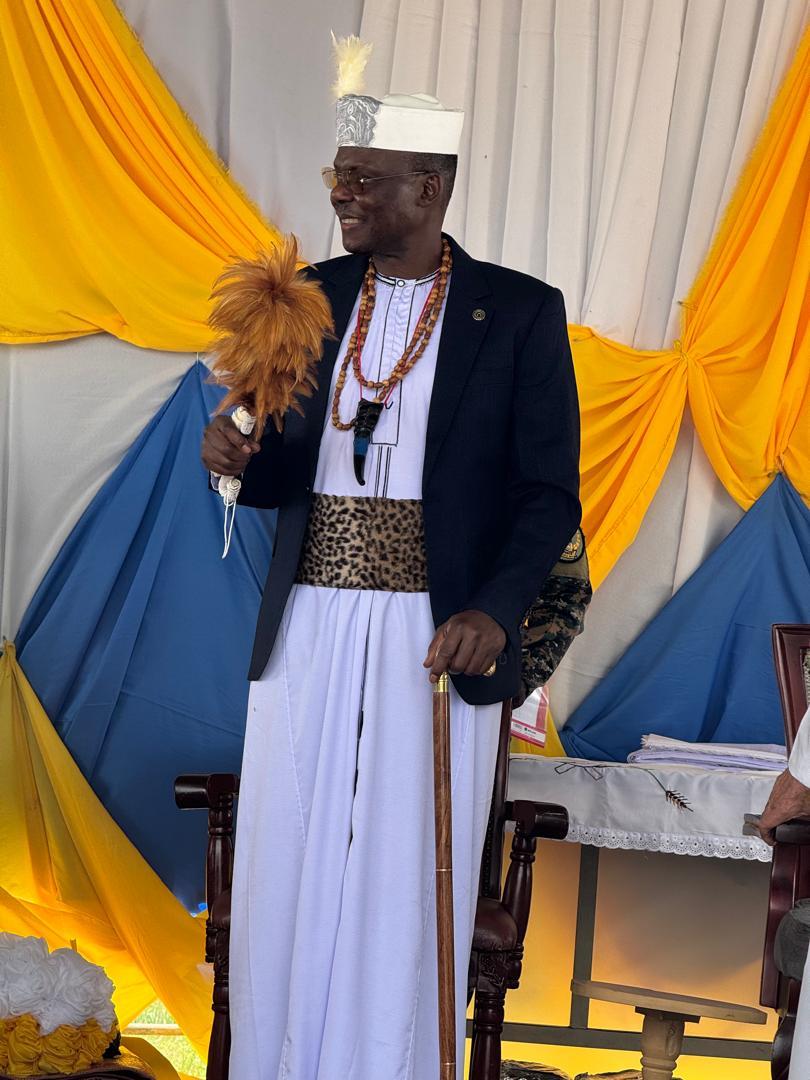
    The Lango Paramount Chief HRH Eng. Dr. Michael Moses Odongo Okune has launched a sweeping critique of cultural erosion in Lango sub-region, accusing some Christian clerics of demonizing polygamy, betraying Leblango, and misusing scripture to silence accountability.

    Speaking at a cultural sensitization meeting at his Senior Quarters-based private palace in Lira City West division, the Won Nyaci Me Lango said the recurrent attack on polygamy orchestrated by certain clergy was hypocritical and part of a wider assault on Lango identity through language, food, dress, names and marriage customs.

    For context, during a recent installation of a clan chief, one of the clergymen who attended used the occasion as a direct launchpad targeting owitong in Lango and the cultural entity as being recklessly and intentionally promoting one very sinful practice of polygamy.

    The cleric’s stance represents a wider position held by the Christian Church in Uganda and sub-Saharan Africa where monogamy is taken as an ideal form of marriage and is labelled not only as holy but Biblical and Godly.

    Anyone who deviates from this is treated as an outcast and an agent of Satan who does not partake of the Holy Eucharist nor any leadership position.

    More often such men become the targets of weekly Sunday sermons or in public events like funerals, marriages or parties wherever the clergies are given opportunity to either greet or deliver sermons.

    “Polygamy is Lango. Monogamy is Western”

    Okune rejected the labelling of polygamy as “devilish”, insisting it was central to Lango and African social organization for centuries.

    “For centuries, Lango people and Africans as a whole had many wives and lived in peace with hardly any cases of separation and divorce as we see today,” Okune said. “Was that brought by clan chiefs or owitong? Who is responsible for the broken homes we now witness? Monogamy as enforced today is a Western practice. It has nothing to do with Lango or African cultural beliefs and practices.”

    He said any man capable of competently maintaining more than one wife should be allowed to do so. “I cannot be head of a cultural institution and begin fighting positive norms, values and practices that sustained our society,” he said. “Our ancestors managed large households responsibly. They provided, protected and raised children together. That is Lango polygamy.”

    His position echoes recent scholarship. In Polygamy among Christian Couples: Challenges and Prospects 2021, Esther Olukemi Aningor and Gloria Ndigeka Ayantayo argue that polygamy in Africa was historically tied to social security, lineage continuity, labour and communal support. Colonial Christianity, they note, imported European monogamous ideals without contextualizing them to African family systems, creating tension between doctrine and lived reality.

    Clergy Accused of Language Betrayal and Biblical Misquotes.

    Okune said the erosion of culture goes beyond marriage into language and worship. He accused some clergy of failing to preach fluently in Leblango while using English jargon to appear superior.

    “Even the clergy themselves cannot preach fluently in Leblango but pretend to know more English which is part of English culture,” Okune said. “They use theological jargon apparently to show their mastery of the Bible and sound pompous to the amusement of the usually quiet Christian believers who fear being labelled as big-headed and rebels by the clergy.”

    He criticized the frequent use of Psalm 105:15 and 1 Chronicles 16:22 — “Touch not my anointed and do my prophet no harm” — to silence criticism.

    Biblical scholars explain the context: both verses appear in a song recounting God’s protection of Israel’s patriarchs — Abraham, Isaac and Jacob — as they wandered as foreigners. “Anointed” refers to these covenant patriarchs, not modern church office-holders. The warning was to foreign kings like Pharaoh and Abimelech not to harm God’s chosen people.

    “The verse was a protection promise to Abraham, Isaac and Jacob while God fulfilled His covenant,” Okune said. “It was not a shield for modern clergy against accountability. The Bible itself is full of prophets who corrected kings and priests. Using that verse to silence questions is not biblical.”

    “If a clergyman cannot preach the gospel in Leblango to his own people, how can he claim to be their shepherd? If he hides behind English jargon and misquoted scriptures, then he is serving culture, not God,” he added.

    “Why baptize me Michael Moses?”: The Battle Over Names.

    Okune also challenged the practice of renaming converts during baptism with names whose meanings neither clergy nor converts understand.

    Like the bearer of this bye line, Nelly Nelsons, a name that literally means ‘daughter of the champion’ or son of Neil’ in English.

    Odongo Okune Praises Museveni’s Naming of Muhoozi.

    The won Nyaci praised President Yoweri Museveni for naming his son now the Chief of Defense Forces (CDF)Gen Muhoozi Kainerugaba, fondly known as MK without any European connotation.

    Unlike some who carry long, ornate Western names that have no bearing on Ugandan or African identity, Museveni chose Muhoozi, a Runyakore name which means My Avenger, that is identity with purpose.

    He faulted the tendency among some clergy in Lango to equate European names with piety while condemning those who are passionate about their culture and who live upright, purposeful lives of service to humanity.

    “it is illogical and misleading to tag holiness to foreign names and tag as unchristian to our own names, a man’s righteousness is not Moses, Calvin, Mary or Rosemary or Cecilia, it is his fear of God, care of his family and service to his people while here on earth”, Okune said.

    Yet Okune is also asking: “Why baptize me Michael Moses? Beautiful sounding names with bad meanings. Why not give me names like Odongo Okune Akome Gum, or Odongo Okune Atin Acwec?” he asked. “Why give us names like, Cecilia(blindness), Calvin(bald), Edward (big head), Claudia(lame), Leah(weary)and Kennedy (misshapen head), and others which we do not know or understand, yet we have plenty of names with rich theological and sociological relevance and meaning?”

    He accused the majority of Christian clerics of being “misled and blinded by Western or European cultural practices, beliefs, norms and values”.

    Leblango Names carry lived Meaning.

    Okune’s examples with cultural accuracy:
    Akome Gum: The Lucky One – given to a child born after hardship, survival, or good fortune.
    Atin Acwec: Child of the Creator – marks divine origin and blessing.
    Akec / Okec: Born during famine – girl/boy respectively, memorializing survival through hunger.
    Ayo / Oyo: Born by the roadside – girl/boy, marking birth circumstances.
    Akot / Okot: Born during rain/rainy season – girl/boy, tying identity to weather and time.
    Opio / Ocen: Twin boys
    Apio / Acen: Twin girls.

    Contrast with Western names cited:  Mary = “bitter sea” Hebrew; Cecilia = “blind” Latin; Claudia = “lame” Latin; Calvin = “bald” Latin; Livingstone = “farm by the stone” English; Rosemary = “dew of the sea” Latin; Robert = “bright fame” Germanic; Rogers = “son of Roger”.

    Okune’s point: Lango names already carry theology and sociology. They record history, circumstance and blessing in Leblango. Foreign names teach nothing unless you study Latin, Hebrew or English history.

    What African Christian scholars and clerics say

    The debate over polygamy, language and names is not new. Africa’s most respected Christian scholar, the late Prof. John Samuel Mbiti 1931-2019, spent his life arguing that culture and Christianity must speak to each other, not fight each other.

    Mbiti, a Kamba Anglican priest and “father of modern African theology”, rejected the idea that Africa was a spiritual vacuum before missionaries arrived. In African Religions and Philosophy 1969 he wrote that African religion was holistic: “There is no formal distinction between the sacred and the secular… Wherever the African is, there is his religion”. For Mbiti, marriage, naming, food and proverbs were all theology.

    On Polygamy.

    Mbiti described polygamy factually, not polemically. He noted: “Marriage and procreation amongst the African communities are a unity; without procreation, such marriage is incomplete”. He explained that polygyny — one husband, multiple wives — “fits well into the social structure of traditional life and serves many useful purposes”, including lineage continuity, social security and care for widows through levirate marriage.

    Mbiti did not argue for polygamy as Christian doctrine. But he refused to dismiss it as “devilish” or “primitive”. He called African Traditional Religion a praeparatio evangelica , God’s preparation for the gospel.

    His position: understand the cultural logic first, then engage it with pastoral care and dialogue, not blanket condemnation. That mirrors Won Nyaci Okune’s call for “loving care and counselling, not confrontation”.

    On Naming and Language.

    For Mbiti, names were proof that Africans already knew God. “When Africans bring children into the world, the children are given names that reflect belief in divinity”.

    He cited Yorùbá Olúwaṣẹgun = “God has brought the battle to an end” and Igbo Chidinma = “God is good”. His own name Mbiti means “child dedicated to God”, given to stave off infant death — the same logic as Lango names like Akome Gum “The Lucky One” and Atin Acwec “Child of the Creator”.

    Mbiti put his belief into action by becoming the first African scholar to translate the entire New Testament from Greek into his mother tongue Kikamba: Utianiyo Mweu Wa Mwiyai Yesu Kilisto 2014. He did it because “Bibles were mostly translated by foreigners… mainly starting from colonial European languages”. His message to clergy: preaches the gospel in the language of the people’s heart, not only in English.

    That directly supports Okune’s complaint that some clergy “cannot preach fluently in Leblango but pretend to know more English” and use theological jargon to sound “pompous”.

    On culture vs Christianity.
    Mbiti’s method was inculturation letting the gospel grow from African soil. He argued Christianity should “build on a foundation that already existed in traditional African religions”. He stressed ubuntu and communalism: “people belong to a community first”. That is why extended families, clan responsibility and polygamous households made sense in Africa, while Western individualism felt foreign.

    His conclusion is that an “indigenous, traditional, and African” form of Christianity “holds the greatest potentialities of meeting the dilemmas and challenges of modern Africa”.

    In practice, that means the Church must do the hard work Mbiti called for: sift which cultural practices align with gospel values and which need transformation, instead of erasing everything African in the name of “piety”.

    How Africa names: Names as Archives.

    Scholars across Africa agree naming is not random labelling. “Naming practices across African societies constitute vital mechanisms for the preservation of genealogical knowledge, settlement histories, and sociopolitical as well as spiritual affiliations”.

    Names encode kinship structures, birth circumstances, reincarnation beliefs, social roles, and ancestral connections, functioning as “oral genealogical records transmitted across generations”.

    Among the Yorùbá, names encode lineage and migration history. Among the Meru of Tanzania, “every traditional name has a unique story and connotations” and naming rituals celebrate new life. Among the Akan, the maxim is nsɛmmɔne nti na yɛkyɛ din – “it is because of criminal acts that names were shared”, meaning every person has a name that solely identifies and marks them.

    Scholars warn that “death of native names implies the death of important identity markers”. When missionaries prohibited indigenous names and encouraged only saints’ names, they contributed to “a change in identity as Africans”.

    Clerics Accused of Hypocrisy.

    Okune turned his criticism on what he called double standards among some clergy. Without mentioning names, he cited an unnamed highly placed cleric who allegedly had an affair with the wife of a junior clergy and sired a child.

    “It is hypocrisy for purportedly happily and holily married and wedded clergy to secretly have affairs with concubines or even people’s wives, yet appear as angels in pulpits and public functions,” he said. “Many things need loving care and counselling, not confrontation.”

    He insisted culture is not at war with religion: “The two must work for both the spiritual and material welfare of the people who are called Christians by the Church or subjects by the cultural body.”

    Call for Dialogue, not War.

    Okune said the Lango Cultural Institution supports marriages that uphold responsibility, respect for women, and care for children, whether monogamous or polygamous.

    “What we oppose is abandoning our values for imported norms that are now producing divorce, single mothers, street kids and land conflicts,” he said. “The Church must stop the confrontational approach. If a man can maintain his household justly, who is the Church to destroy that home in the name of Western culture?”

    Call for Dialogue, Not War.

    Okune said the Lango Cultural Institution supports marriages that uphold responsibility, respect for women, and care for children, whether monogamous or polygamous.

    “What we oppose is abandoning our values for imported norms that are now producing divorce, single mothers, street kids and land conflicts,” he said. “The Church must stop the confrontational approach. If a man can maintain his household justly, who is the Church to destroy that home in the name of Western culture?”

    Returning to his central plea, Okune said the real issues of the day — prostitution, divorce, domestic violence, alcoholism — will not be solved by public blame. “We must hold hands and guide the people God has given us,” he concluded. “A Lango who is ashamed of Leblango is a Lango without roots. Let us teach our children to be proud Langi first, and global citizens second.”

    Time For Unity, Not Division.

    Okune said the Lango Cultural Institution supports marriages that uphold responsibility, respect for women, and care for children, whether monogamous or polygamous.

    “What we oppose is abandoning our values for imported norms that are now producing divorce, single mothers, street kids and land conflicts,” he said. “The Church must stop the confrontational approach. If a man can maintain his household justly, who is the Church to destroy that home in the name of Western culture?”

    Returning to his central plea, Okune said the real issues of the day — prostitution, divorce, domestic violence, alcoholism, will not be solved by public blame. “We must hold hands and guide the people God has given us,” he concluded. “A Lango who is ashamed of Leblango is a Lango without roots. Let us teach our children to be proud Langi first, and global citizens second.”

    For Okune, revival starts with language, the kitchen table and the naming stool: “Let us teach Leblango in our homes, let us cook kwon kal again, let us give our children names that preach our values. A Lango who is ashamed of Leblango is a Lango without roots, so let us teach our children to be proud Langi first, and global citizens second.”

    HRH Okune clarified that he is not waging war on the Christian Church or its leadership but that “this is a push back, not an attack”.

    He described what he sees as a sustained, one-sided smear campaign that demonizes culture and its leaders, creating the impression that every socio-economic problem like poverty, prostitution, divorce and alcoholism, among others is the fault of tradition.

    “The message is a loud call for introspection, the Church must also acknowledge its share f historical wounds that still haunt us today. We cannot heal by trading bar bs and tantrums, what we need now is constant, serious and honest engagement between culture and the church seated at the same table, not shouting sweeping condemnation from opposite podiums”, he appealed.

  • President Museveni Calls for Political Integration to Deal With Future Security Threats.

    President Gen (Rtd) Yoweri Kaguta Museveni also Commander-in-Chief (C-i-C) of the Uganda People’s Defence Forces (UPDF) has today delivered a lecture of opportunity to army officers at the Senior Command and Staff College-Kimaka, Jinja City.

    During the lecture, President Museveni criticised the past African leaders in the colonial era who just looked on when the continent was being taken over by colonialists and attributed part of Africa’s problems to their selfishness.


    “The chiefs and kings were here glorifying themselves when their building was falling down. This strategic danger was known but neglected by kings and chiefs,” he said.

    Gen. Museveni informed the officers that for the last 60 years, the National Resistance Movement (NRM) has been reminding the citizens of the historical missions needed by Uganda, East Africa and Africa at large to develop and be at par with the western countries.

    “The first historical mission is how to ensure prosperity of our people. We have told you that one of the factors to help you prosper is economic integration of the African market. We have been struggling with it so you the young people should continue with it instead of dancing pakachini and watching European football. If we don’t integrate we shall be in problems you people,” he said.

    According to President Museveni, in order for East Africa or Africa at large to safeguard itself from future threats, it needs to politically integrate.

    “Security is the second historical mission. How can we go to the moon? We must go to the moon and find the Americans there, find the Chinese, Russians and Indians, we tell them that this also belongs to us. If you’re not going to be just a boy scout movement and be able to defend Africa, we must be able to operate on land, air, navy and in space but can Uganda have a space program? Or can we go to ocean? No, we are cut off by the irrational colonial borders. That’s why the answer there is political integration. We have been talking about the East African Integration but if Presidents want to remain big fish in the small ponds, then that issue will not be addressed.”

    President Museveni also noted that some African countries are facing land shortage due to the growing population. He said this challenge is majorly caused by underdevelopment whereby majority of the population relies on manual labour and agriculture.

    “Land is only crucial for agriculture but in money economy, many people are in manufacturing and services, a few are in agriculture.”

    On the conflicts in the Middle East and global implication on East Africa, President Museveni said the conflicts have less impact because Africa as a continent has everything and it’s upon the Africans to put the resources into good use.

    The issue of sectarianism of tribes and religion, President Museveni described the narrative as ideological bankruptcy.

    “The politics of identity is politics of parasites.”

    The President also underscored the critical role of Patriotism and Pan-Africanism in promoting markets for the country’s products.

    On job creation, President Museveni informed the officers that Uganda has four sectors of the economy which are helping its citizens to create wealth and jobs which include commercial agriculture, manufacturing, services and ICT.

    The Commandant of the Senior Staff College-Kimaka, Brig Gen. Kabango Michael hailed President Museveni for his visionary and strategic leadership which has guided Uganda on the path of peace, stability and prosperity.

    “Your presence today is a great inspiration to both the faculty and the students who are gathered here,” he said.

    “The course before you sir, is intake 21-2025/2026 which commenced on 8th July 2025, and they are due to graduate on the 2nd July, 2026.”

    The course comprises 52 students; 38 of these are Ugandans while the 14 are from other friendly countries including Burundi, Egypt, Kenya, Malawi, Rwanda, South Africa, South Sudan and Tanzania.


  • “Start Small, Build Right, Wait on The Lord”: Archbishop Elect Bagambaki Warns Young Ministers Against ‘Fast Food Faith’

    In an age of fast food, fast trains, fast internet, fast jets, intercontinental ballistic missiles, and “kill me quick” liquor promising instant riches, Archbishop Elect Professor Mugume Bagambaki Richard has delivered a counter-cultural charge to Uganda’s emerging church leaders: Go slow, but sure in the Lord.

    Teaching under the theme “Start Small, Build Right, Wait on the Lord”, the Ecclesiastical Patriarch of the Five-Fold Episcopal World Federation did not mince words. Speaking as a father to sons and daughters in ministry, he said the ministry graveyard is full of “future giants” who died from “rushing and crushing” ,not from the devil, but from impatience.

    Despise Not Small Beginnings.

    Quoting Zechariah 4:10, the Archbishop Elect dismantled the cathedral-or-bust mentality crippling young pastors. “Big farms start with one seed. Big forests start with one seed. Generals started as civilians,” he said. “Jesus Christ builds His Church at His stage and His timing, not yours.”

    His discipline is blunt: Start in your sitting room, then the veranda you planned, then the compound. Citing Luke 16:10, he warned against rushing to rent houses or “swampy NEMA-gazzetted wetland” that drains money and derails timing. “Unless you are on personal church business, not divine calling,” he added.

    Honor Your Priest Eli Before You Claim Samuel’s Mic.  

    Drawing from 1 Samuel 3:9, Bagambaki called for order in the house of God. Young ministers must submit to spiritual fathers while the vision is “still burning in your spiritual father’s house” and not run away as prodigal sons. “Outside there the world may not welcome you as you think.”

    He reminded leaders that Jesus trained the Apostles for 3½ years before Pentecost. “Join a Seminary like Upper City Covenant Seminary (UCCSAT). Knowledge plus maturity saves you from rushing and crushing,” he said, citing 2 Timothy 2:15.

    Training In The Tools Of Truth: Why The Pulpit Needs The Classroom.

    Contrary to the widely mistaken belief that ministry training ignores disciplines like philosophy, economics, literature, theology, sociology, psychology, health, accountancy, statistics, and community development, Archbishop Bagambaki stressed the opposite: training is non-negotiable.

    “Jesus guided His disciples for 3 years,” he said. “These tools help men and women called by God to interpret the Bible correctly and in context, and to apply it relevantly.” Pastors called by God should not embarrass themselves before professionals like lawyers, doctors, health workers, or university dons because they are ill-equipped. “The pulpit must be able to speak to the parliament, the hospital, the lecture room, and the marketplace without ignorance.”

    He told the audience that seminary is not cemetery, it is the armoury where revelation meets research, and anointing meets understanding.

    The Role Of The Holy Spirit: Power And Wisdom.  

    Yet Bagambaki was quick to balance the scales. Training without the Holy Spirit produces “dry intellectuals.” Anointing without training produces “noisy amateurs.” The Church needs both.

    “The Holy Spirit is our teacher,” he said, referencing John 14:26. “He gives power to witness, wisdom to govern, and revelation to build. But He does not anoint laziness. He partners with preparation.” He pointed to Acts 2: after 3½ years of teaching, the Upper Room ordination came by fire. “The Spirit falls on order. The Spirit fills vessels that have been shaped. Wait for Him, but train while you wait.”

    Build Your House Before The Church.

    With Psalm 127:1 as anchor, the Archbishop Elect gave counsel that shocked some: Ask God first for a home land. “Build a house within your means. Have rooms for privacy: your boys, girls, store, maid’s room, with a good planned veranda.”

    He cautioned against being deceived by “low brain manipulators” who praise a young minister for casting out one demon. “Pride says ‘I can’t sleep in church while you are renting in slums.’ Wisdom says ‘I won’t build on sand while God is still laying my foundation’,” referencing Matthew 7:26-27.

    Process Before Prominence.  

    Cathedrals, crowds, anointing, financial breakthrough, fame, among others, all are process, Bagambaki insisted, quoting James 1:4 and Ecclesiastes 3:1. “Before you start a church, first plant food that will sustain your family. Plant coffee and cocoa, cassava and beans, sweet potatoes or simsim and banana. They are long-term investments. Food is security,” he said, citing Proverbs 27:27.

    Only after the home is stable should leaders mobilize for buying church land, not renting. “Get an official government plan from your respective urban councils, approval, then mobilize materials and build within your means as the Lord provides.” He warned against “copy and paste” from senior leaders with 20, 40, 60 years in ministry. “Who deceived you every called minister is for a cathedral and crowds?”

    Teamwork: Share the Burden

    Quoting Galatians 6:2, he urged leaders to ask God for wisdom to appoint a church government. “Now the burden is shared with Christ and His body, not just you, your wife, and children. That is how Upper City Covenant Churches and FFEWF are built  ‘Built Together’ Ephesians 2:20.”

    Father’s Warning In A Fast World.

    Closing with Hosea 4:6, the Archbishop Elect said: “We have lost many future giants through lack of knowledge, maturity, poor grooming, rushing and crushing in ministry. It is my prayer you will not crush, my daughter or son in the Lord.”

    In a world obsessed with speed, Bagambaki reminded the Church that even in fables, the slow creatures win races. “The chameleon and tortoise have always won,” he said. “Wait on the Lord. Start in your house. Honor your spiritual father. Build by wisdom. Train. Be filled with the Holy Spirit. The God who calls you is faithful to build His Church through you at the right time.”

    Shalom. 

    For mentorship, training, or ordination inquiries under the Five-Fold Episcopal World Federation and UCCSAT University, contact:

    WhatsApp: +256775050183*

    Email: fivefoldepiscopalworldfederati@gmail.com

    Archbishop Elect Professor Mugume Bagambaki Richard_ Ecclesiastical Patriarch, FFEWF | Archbishop, Upper City Covenant Churches | President & Chancellor, UCCSAT University.


  • Archbishop-Elect Mugume Preaches “Gospel of Reconciliation” Ahead of FFEWF Uganda 2026 Launch: “No Longer Slave, But Brother”

    Philemon 1:1-25 Becomes Founding Text for Five-Fold Episcopal World Federation Uganda as Leaders Called to Trade Command for Appeal, Law for Love.

    Ahead of the Launching & Consecration of Five-Fold Episcopal World Federation FFEWF Uganda set for 14 December 2026, Archbishop Elect Professor Mugume Bagambaki Richard delivered a message titled: “Gospel of Reconciliation: From Slave to Brother” from Philemon 1:1-25, positioning reconciliation as the legal and spiritual infrastructure of the new federation.

    The archbishop-Elect, who serves as Ecclesiastical Patriarch of Five-Fold Episcopal World Federation, Archbishop of Upper City Covenant Churches, and President & Chancellor of UCCSAT University, told clergy and faithful that “the church is not built by titles alone. It is built by transformed relationships.”

    The Text: One Page That Carries the Whole Gospel.

    Calling Philemon, the “shortest letter of Paul, yet it carries the weight of the entire Gospel,” Mugume noted its context: written from prison, with no doctrinal debates, only “a plea for love to overcome law, for grace to overcome offense.”

    The FFEWF Uganda 2026 Sub-Theme “Built Together Faith, Service & Transformation” Eph 2:20 frames the December launch. “If possible, so far as it depends on you, live peaceably with all,” he quoted from Romans 12:18_.

    The Big Idea: “The Gospel does not just save souls. It restores broken relationships.”

    Profiling The Characters: Paul, Philemon, Titus A Triangle of Gospel Leadership.  

    To grasp Philemon’s weight, one must understand the men who form the relational architecture of Paul’s strategy. They represent three dimensions of church life: apostolic vision, pastoral governance, and lay partnership.

    Paul: The Apostolic Architect.

    Paul was an apostle by divine appointment, as recorded in his letter to the Gal 1:1, a Roman citizen and former Pharisee who authored 13 New Testament epistles.

    By the time he wrote Philemon, he was an aging prisoner in Rome, Philemon 1:9, yet he continued to direct churches and adjudicate disputes from his chains.

    To Philemon he was the spiritual father who led him to Christ and could have commanded obedience, but chose instead to appeal on the basis of love.

    Philemon 1:8-9 To Titus, he was mentor and delegator, entrusting him with organizing the volatile churches in Crete.

    Titus 1:5 Paul wrote to Philemon because a personal crisis with the runaway slave Onesimus became a doctrinal test case: could the Gospel reconcile master and slave?

    He wrote to Titus because the Gospel needed public order elders, sound doctrine, and credible witness in corrupt cities. Together, they reveal Paul’s method: private reconciliation must accompany public reformation.

     Philemon: The Lay Patriarch of Colossae.

    Philemon was a wealthy Christian in Colossae, likely converted during Paul’s Ephesian mission. Acts 19:10 Though not a cleric, he was a man of influence who hosted the Colossian church in his home, Philemon 1:2, owned slaves including Onesimus, and had a reputation for love and faith toward all the saints.

    Philemon 1:5 Paul called him “fellow worker,” v.1, meaning he financed missions and refreshed the hearts of believers. v.7 Their relationship was covenantal.

    Philemon owed Paul his very soul, Philemon 1:19, yet Paul waived that debt to test whether Philemon’s faith would produce voluntary love.

    While Philemon and Titus likely never met, they represent two arms of Paul’s strategy. Titus secured the macro: church structure and city-wide order. Philemon secured the micro: proving the Gospel could transform households and personal offenses.

    Paul wrote to Philemon to make theology domestic. If Philemon could receive Onesimus “no longer as a slave, but as a beloved brother,” Philemon 1:16, then Gal 3:28 was not theory but practice.

    Titus: The Apostolic Delegate and Governor.

    Titus was a Greek Gentile convert, Gal 2:3, and Paul’s most trusted trouble-shooter. He was living proof that circumcision was not required for salvation.

    Gal 2:1-5 Paul deployed him to the hardest assignments: the collection for Jerusalem, 2 Cor 8:6, the Corinthian crisis, 2 Cor 7:6-7, and the disorder in Crete.

    Titus 1:5 Paul called him “my true child in a common faith,” Titus 1:4, and “my partner and fellow worker.” 2 Cor 8:23 He left Titus in Crete to “set in order what remains and appoint elders in every town,” Titus 1:5, giving him jurisdiction to establish governance where none existed.

    Titus and Philemon are parallel portraits. Titus represents the Gospel’s outward structure doctrine, order, and public ethics. Philemon represents the Gospel’s inward proof forgiveness, restitution, and household transformation.

    Paul wrote to Titus to codify church order for the next generation. If the Gospel could produce godly elders in Crete, a place infamous for being “always liars, evil beasts, lazy gluttons,” Titus 1:12, it could work anywhere.

    How The Three Interlock.

    Paul’s mention of both men reveals his theology of relationships. He had apostolic rank yet waived command with Philemon and delegated real authority to Titus, modeling Five-Fold leadership that distributes power to produce maturity.

    Eph 4:11-13 He refused to let doctrine stay abstract: Titus carried it to the city, Philemon carried it to the home. The letters together declare that the church must be both well-governed and well-loved. Without Titus, you have sentiment with no structure. Without Philemon, you have structure with no heart.

    The Relationship of Grace: Leadership Seasoned with Gratitude. vv.1-7.

    From “Grace to you and peace from God our Father and the Lord Jesus Christ” Philemon 1:3, Archbishop Mugume taught that gratitude builds bridges. Paul starts with thanksgiving because leaders must appreciate before they correct and connect before they confront.

    He stressed that love is the evidence of faith, for doctrine without love is noise, 1 Cor 13:1, which is why UCCSAT must train heads and hearts.

    He described Philemon’s home church as a place of refreshment, not rejection, and asked pointedly whether modern churches function as hospitals for sinners or museums for saints.

    The application for bishops and pastors was clear: authority is most powerful when seasoned with gratitude and love, because people do not care what you know until they know that you care.

    The Request of Love: The Jurisprudence of Appeal vv.8-16.

    The archbishop-Elect called Philemon 1:10, 16 “the heart of the Gospel in one verse” “I appeal to you for my child, Onesimus… no longer as a slave but more than a slave, as a beloved brother.”

    He explained that love appeals while pride commands, and true Five-Fold leadership persuades rather than pressures. Redemption change identity, because Onesimus means “useful,” and in Christ a person’s past does not define their purpose.

    2 Cor 5:17-Reconciliation costs something, as Paul modeled Christ by saying, “If he has wronged you at all, or owes you anything, charge that to my account.”

    Philemon 1:18 That is substitution: “He made him who knew no sin to be sin for us” 2 Cor 5:21.

    Finally, status shifts in Christ. In the Kingdom, titles do not divide us because the cross unites us. Gal 3:28 For Uganda and Africa, the message was unflinching: tribalism, classism, nepotism, corruption, theft of public funds and denominationalism, among others must all bow at the cross. The Gospel turns “masters and slaves” into “brothers and sisters.”

    The Response of Faith: Obedience Beyond Command-vv.17-25_

    Citing “confident of your obedience, I write to you, knowing that you will do even more than I say” Philemon 1:21, Mugume said mature faith trusts in the Spirit rather than manipulating people. Leaders present Christ and trust God for results. Mature faith also holds hope for restoration, seeing beyond the prison to God’s plan, Rom 8:28, and it embraces partnership in ministry. Ministry is not a solo race, which is the vision of FFEWF: Apostles, Prophets, Evangelists, Pastors, and Teachers working together. Eph 4:11-12

    Altar Call & Prophetic Declaration.

    The message closed with three heart-searching questions before 14 Dec 2026: Who is your “Onesimus”? Who has wronged you? Will you let the Gospel pay their debt? Will your church be known for reconciliation, not retaliation?

    As Ecclesiastical Patriarch, Mugume declared: “Five-Fold Episcopal World Federation FFEWF Uganda will be a house of reconciliation. Where broken pastors are restored, where offended members are embraced, where enemies become family.

    That is the power of the Gospel.” He anchored the declaration in Matt 5:9: “Blessed are the peacemakers, for they shall be called sons of God.”

    Closing Prayer.

    The charge ended in intercession: “Father of Mercy, teach us to live Philemon in our homes, churches, schools, and nation. Remove bitterness. Heal old wounds.

    Make Upper City Covenant Churches and Uganda in particular, a place where every Onesimus is welcomed as a brother and every Philemon releases forgiveness. Let the world see that we are Your disciples by our love John 13:35.

    Archbishop Elect Professor Mugume Bagambaki Richard. Ecclesiastical Patriarch, Five-Fold Episcopal World Federation

    Archbishop, Upper City Covenant Churches

    President & Chancellor, UCCSAT University

    WhatsApp: +256775050183

    Email: fivefoldepiscopalworldfederati@gmail.com.

    The Exposure Uganda (TEU): Why We Do Not Flinch.

    The Exposure Uganda is not just another outlet, it is a reckoning. In a media landscape where most platforms genuflect before commercial interest, where editorial lines are drawn by advertising invoices, and where the hard questions are strangled by public relations retainers, we step into the arena unleased and unpurchased.

    We do not flinch because we are not for sale.

    The topics others dread: ecclesiastical corruption cloaked in liturgy, judicial U-turns dressed as jurisprudence, tribal wounds festering beneath political communiqués are precisely the terrain we were commissioned to cover.

    PR firms can buy columns, but they cannot buy conviction. Advertisers can pull budgets, but they cannot pull truth. Our ledger carries no debts to the powerful, and therefore our pen owes no deference to the powerful.

    We come out boldly and authoritatively because capacity without courage is complicity. We have assembled forensic legal minds, theological scholars, and investigative craftsmen who read statutes as scripture and doctrine as law.

    We possess the archival memory to trace a lie to its origin, the jurisprudential literacy to dismantle a false ruling clause by clause, and the theological depth to test every spirit.

    When others publish press releases, we publish evidence. When others repeat rumors, we cite the record. Authority is not claimed; it is demonstrated, paragraph by paragraph, footnote by footnote.

    We are prepared because passion without discipline is noise. Our resolve is not mood-driven. It is structured. Every Philemon we cover is exegeted before it is editorialized.

    Every Onesimus we defend is investigated before he is platformed. We carry the burden of the Pearl of Africa because we understand the physics of pearls: beauty is formed under pressure, and pressure reveals what a thing is made of.

    So, when the nation’s wounds are exposed whether in State House, in the sanctuary, or in the Parliament or Council we do not look away. We lean in, with law in one hand and mercy in the other.

    We will always come out boldly because timidity is not a journalistic virtue.

    The revolutionary mandate of The Exposure Uganda is simple: to make hidden things visible and to make visible things just. If a sect multiplies because the church failed to be a home, we say it.

    If a judge abandons the canons of interpretation for the convenience of a ruling, we name it. If a father in the faith treats Onesimus as chattel rather than brother, we publish the letter.

    Not out of malice, but out of a covenant with the people of Uganda: that they deserve a press that fears God more than it fears men.

    The Exposure Uganda.

    We possess the capacity, the passion, and the resolve not borrowed, not brokered, not for hire. We report where law meets faith, where power meets accountability, where scandal meets scripture.

    We Do Not Flinch. We Expose. You Decide. We Are The Exposure Uganda(TEU).


  • UCU Cannot Eat Its Own Words: Court Slams University’s Irrational U-Turn, Upholds Samantha Mwesigye’s Legitimate Expectation.

    UCU Cannot Eat Its Own Words: Court Slams University’s Irrational U-Turn, Upholds Samantha Mwesigye’s Legitimate Expectation.

    The Exposure Uganda (TEU)Preamble.

    Judgments are often far more than the orders they pronounce; they are repositories of legal reasoning, constitutional values, and evolving jurisprudential principles that shape the future trajectory of the law. Some decisions resolve disputes. Others redefine the standards by which public and private power are exercised.

    Samantha Mwesigye v Uganda Christian University (2026) UGHCCD 186 belongs to the latter category.

    In this carefully crafted executive summary, Isaac Christopher Lubogo examines the judgment through a jurisprudential lens, distilling its most significant legal principles, administrative law implications, and broader impact on higher education governance in Uganda.

    With what may aptly be described as the keen eagle eyes of a legal scholar, Lubogo brings to bear a rare forensic clarity and intellectual dexterity. He views the law not through a single aperture, but through many lenses: constitutional, administrative, philosophical, and pedagogical — each revealing a different facet of the decision.

    It is this multi-angled vision, this refusal to accept surface answers, that marks his legal prowess and allows him to dissect complex judgments into principles that both practitioners and laymen can grasp.

    Whether you are a student, academic, legal practitioner, judicial officer, university administrator, or simply an observer of the development of Ugandan jurisprudence, this judgment deserves careful reading. It raises profound questions about fairness in administrative decision-making and demonstrates how the rule of law operates to protect individuals against arbitrary institutional action.

    The executive summary that follows is not a substitute for the judgment itself. Rather, it serves as a compass, highlighting the major jurisprudential landmarks and inviting readers to engage directly with the full decision, appreciate its reasoning, and draw their own conclusions about its significance within Uganda’s evolving legal landscape. As you prepare to read what has been so meticulously dissected, do so with Lubogo’s eagle eye as your guide — alert to complexity, alive to principle, and attuned to the quiet revolutions that a single case can set in motion.

    Read on, and discover why this decision may well be remembered as one of the most consequential administrative law judgments in Uganda’s higher education sector in recent years.

    Executive Summary Of Samantha Mwesigye V Uganda Christian University (UCU) (2026) UGHCCD 186.  

    By: Isaac Christopher Lubogo.

    This case is a landmark victory for administrative justice in Uganda’s higher education sector. The High Court, presided over by Hon. Justice Bernard Namanya, held that Uganda Christian University (UCU) acted irrationally and unfairly when it attempted to revoke or question Samantha Mwesigye’s transferred credits from King’s College London after allowing her to study for four years, serve as Guild President, maintain a First Class CGPA, and approach graduation.

    The court found that UCU had expressly admitted Samantha on the basis of “Transfer of Credits” and could not later contradict its own admission letter through affidavit evidence. Applying the parole  evidence rule, the court held that a written admission decision must mean what it says.

    The judgment reaffirmed that private universities are subject to judicial review when they perform public functions under statutory regulation. Therefore, UCU could not escape scrutiny merely because it is a private institution.

    The court further held that Samantha had acquired a legitimate expectation that her credits had been accepted and that she would graduate. This expectation arose from the university’s own conduct over four years, including her admission, progression through the programme, clearance to contest for Guild President, and official introduction as a student awaiting graduation.

    Justice Namanya found UCU’s conduct irrational because it was inconsistent and self-contradictory. The university could not simultaneously treat Samantha as academically qualified for leadership and graduation while claiming she had unresolved first-year deficiencies. The court also condemned the university’s procedural failures, particularly its reliance on informal WhatsApp communications rather than formal written decisions.

    Although the court quashed the university’s impugned decision and awarded Samantha UGX 100 million in general damages, it deliberately refrained from ordering her immediate graduation or compelling transfer of credits. The judge respected the statutory mandates of the University Senate and the National Council for Higher Education, demonstrating judicial restraint.

    The Most Important Jurisprudential Contributions.


    1. Private universities performing public functions are amenable to judicial review.
    2. Administrative bodies cannot contradict their own written decisions through later affidavit evidence.
    3. Legitimate expectation is now firmly recognized as a substantive right in Ugandan administrative law.
    4. Universities must act fairly, consistently, and in accordance with their own procedures.
    5. Courts will supervise academic decision-making without usurping academic autonomy.

    Overall Assessment.

    From a jurisprudential perspective, the decision is overwhelmingly pro-rule of law, pro-fairness, and pro-administrative accountability. It sends a strong message that educational institutions cannot wait until a student reaches the verge of graduation before raising issues that should have been addressed at admission.

    In one sentence:  

    Justice Namanya held that a university cannot spend four years telling a student “You are on track to graduate” and then, at the eleventh hour, reverse itself without lawful justification, procedural fairness, and respect for the student’s legitimate expectations.

    Conclusion.

    At The Exposure Uganda (TEU), no topic hides from scrutiny. No issue escapes interrogation. No principle is too settled to be tested, and no precedent too formidable to be examined afresh.

    At the intersection of law, policy, and lived experience, we commit to a simple standard: if it affects the academy, the courts, or the citizen, it deserves the light. With the rigor of scholarship and the clarity of conviction, we dissect, we distill, and we deliver. Isaac Christopher Lubogo’s analysis of Samantha Mwesigye v Uganda Christian University exemplifies this ethos. Through constitutional, administrative, and philosophical lenses, he exposes not just what the court decided, but why it matters, to the student awaiting a transcript, to the administrator drafting policy, to the judge shaping jurisprudence, and to a nation insisting that power be exercised within reason.

    So, to our readers: students, scholars, practitioners, and custodians of institutions: Bring us the complex, the controversial, and the consequential. We do not flinch from hard questions. We do not worship at the altar of convenience. We read the fine print, we trace the doctrine, and we name the injustice when we see it.

    Because the rule of law is not a spectator sport. And accountability does not negotiate with silence. This is the work; this is the watch and we are here for it.

    At The Exposure Uganda, a revolutionary digital news platform committed to law, accountability, and fearless public-interest journalism, we know there is no case too technical, no doctrine too dense, no administrative act too insulated to be held to the standards of fairness, legality, and reason.

    We Expose, You Decide.  

    About the Author:

    Prof Isaac Christopher Lubogo is The Five-Star General of Administrative Justice, decorated with the Order of Forensic Clarity and the Legion of Many Lenses, he wages campaigns of reason against irrational power, and no administrative act escapes his eagle-eyed reconnaissance.

    A legal scholar, policy analyst, and public intellectual, Lubogo views the law not through a single aperture, but through many lenses: constitutional, administrative, philosophical, and pedagogical. His forensic clarity and intellectual dexterity allow him to dissect complex judgments into principles that judges, practitioners, students, and citizens can grasp and apply.

    He is a relentless advocate for administrative justice, the rule of law, and institutional accountability. His work refuses convenience, traces doctrine, and names injustice when he sees it.

    Decorations include:

    The Distinguished Service Cross of Judicial Review,Parole Evidence Valor Ribbon, and the Legitimate Expectation Campaign Medal, for his analysis of Samantha Mwesigye v Uganda Christian University.

    TEU Explainer:

    Readers should take note that the titles are editorial honors, not military claims. They are metaphorical, earned and serve public interest.

    The Exposure Uganda is a digital news platform, not a military body. Our awards are literary devices that capture the scale, strategy and impact of Lubogo’s legal scholarship. No reasonable reader would infer Lubogo holds a UPDF rank.

    The Field Marshal and Five Star General describe jurisprudential command, not combat command. Military ranks measure scope of responsibility and strategic influence. In Law, Lubogo commands doctrine, not platoons.

    His analysis above makes readers now understand how the Samantha vs UCU will now reshape how private universities are going to be held accountable under judicial review.


  • Busoga’s Bitter Harvest: In Nile Village’s Luxurious Hall, A Region Confronts the Sugarcane Paradox.

    With MoSTI now under Eng. Jonard Asiimwe and Dr. Musenero moved to Energy, Busoga’s leaders ask two uncomfortable questions: How did we fall from second-best to near last, and who must now carry the weight of redevelopment?

    The hum of air conditioners mixes with the steady flow of the River Nile outside floor-to-ceiling glass at the Kiira Road-based Nile Village Hotel & Spa, owned by former Jinja West MP Hon Harry Kasigwa.

    Inside, Busoga is doing something it has delayed for decades: holding a mirror to itself.

    For one week, the air-conditioned conference hall is hosting STI-OP officials, State House representatives, Busoga Kingdom reps, all eleven District Resident District Commissioners, Chief Administrative Officers, district planners, district production officers, media, and more than a dozen think tankers drawn from Busoga, State House and STI.

    The mandate is heavy: enrich the draft Busoga Sub-Region Strategic Plan for Wealth Creation before President Yoweri Museveni finalizes it for launch in his new term under Kisanja No Sleep, Zero Tolerance to Corruption.

    Facilitation is being led by Dr Eric Mwima, Principal Programme Officer at STI-OP, working with a technical team whose task is to move the conversation from lamentations to calculations.

    The Numbers that Do not Lie. Just as Colombian singer-song writer, dancer and global pop star Shakira Isabel Mebarak Ripoll’s global anthem insists hips do not lie, statistics about Busoga do not lie either.

    Year after year, Uganda Bureau of Statistics surveys and independent research place Busoga near the bottom of household wealth rankings. The charts have puzzled elders and frustrated youth because Busoga appears to have every natural advantage.

    The region commands Lake Victoria, the Nalubaale and Kiira dams, vast fertile volcanic soils, and a population of over four million people. Yet poverty has remained stubborn and almost the catchword.

    That contradiction is why Nile Village is full this June because the data has forced a reckoning, and it has forced two questions that now hang over every session in the Victorian Hall.

    First, why has Busoga, which sixty-five years ago ranked as the third most prosperous region in Uganda after Buganda and Bunyoro, now slid to a position where it threatens to become the tail, only above Karamoja?

    Second, who exactly is responsible for Busoga’s redevelopment, and will they carry that responsibility with the discipline the moment demands?

    The answers, leaders say, will determine whether this consultation becomes a turning point or another entry in Busoga’s archive of good intentions.

    Flashback with proper citation: Prosperity in 1959.

    To answer the first question, participants have been forced to look back to the East African Geographical Review, Volume 1, published in 1959. In that study, Uganda’s regions were ranked by prosperity using income, crop diversity and market activity as proxies.

    The authors concluded: “Buganda is the most prosperous region, followed by Bunyoro and the Eastern Province. The Western and Northern Provinces lag behind.”

    The Eastern Province then included Busoga, Teso and Bukedi. Within that bloc, Busoga was the dominant economic engine because of Jinja’s industries, mixed farming, and proximity to Lake Victoria.

    The 1959 Review warned that market prices undervalue subsistence crops rarely sold, but even with that caveat it placed Busoga’s bloc firmly at number two nationally.

    Jinja was Uganda’s and East Africa’s industrial heartbeat, and household incomes in Busoga were above the national average.

    Current data: Busoga at the bottom.

    Fast forward to the Uganda National Household Survey 2023/24, released by the Uganda Bureau of Statistics. The survey ranks sub-regions by the share of people living below the international poverty line of one dollar per day. The results place Busoga in stark contrast to 1959:

    “Busoga Sub-region has 840,700 people living below $1 a day, making it the second-poorest sub-region in the country, only above the once volatile and semi-arid Karamoja.”

    The same UNHS 2023/24 data shows Busoga’s per capita income remains among the lowest, despite hosting major national assets. Earlier STI-OP analysis presented at Nile Village places Busoga at 10th nationally in household wealth in UBOS 2022, and currently only above Karamoja in overall welfare indices.

    That is the statistical fall the consultation is trying to reverse. The transmission belt between natural resources and household welfare appears to have broken. That is the puzzle the Nile Village consultation is trying to solve.

    The Sugarcane Trap.

    In many meetings and barazas, conservatives have always protested loudly and fiercely whenever anyone questioned sugarcane growing. Their message has been consistent: “If this meeting is to end peacefully and reach a conclusion, do not criticize or say anything negative about our sugarcane ebikadho/ebikadho.”

    That resistance is likely to soften now with the birth of Kibalo, because mathematics cannot be argued with. As the saying goes, hips don’t lie, you cannot claim a woman has a big nyash when every eye can see otherwise.

    Numbers are the same, thanks to the experts at MoSTI, farmers will now calculate real profit and loss before planting. That is the power Kibalo brings.

    Step beyond Jinja’s skyline and the landscape is a sea of cane. But the economics are brutal, millers advance seed and cash to capital-starved farmers, then lock land into contracts for nearly two years.

    When payment comes, deductions for inputs, transport and fees leave farmers with a pittance. The returns per acre are low compared to other enterprises, yet for decades Busoga planted without calculating.

    While farmers wait years for a single payout, the factories that began as modest operations have grown into industrial complexes. Owners have amassed enormous wealth while many farmers who supply the cane struggle to afford basic meals.

    The social cost is visible across villages with children who go to school hungry and barefoot; many drop out, boys end up cutting and loading cane, and girls are married off young or become single mothers after being impregnated and abandoned.

    The cane economy has delivered dozens of factories, but it has also delivered a cycle of deprivation.

    After the difficult questions: How STI-OP builds tools, and why it matters beyond Busoga.

    It is only after posing those two hard questions that the science response comes in. STI-OP does not build apps in isolation at a Kampala desk. Its model is “research first, then prototype, then field test”.

    The secretariat starts with data from Uganda Bureau of Statistics, district production offices and household surveys to diagnose the real constraint. In Busoga and Bukedi that diagnosis was not rainfall, but failure to calculate profit before planting.

    From that diagnosis, STI-OP’s research and innovation team designs indigenous concepts into digital tools. “Kibalo” from Lusoga/Luganda and “Cura” from Luo languages became the Kibalo App. The team codes the math, tests it with farmers and district production officers, then refines it until a farmer with primary education can enter acreage and get cost, revenue and profit estimates without an agronomist present. That is why the facilitation at Nile Village involves district planners and production officers directly: they are co-designers, not just trainees.

    It is hoped the Kibalo App will be a game changer not only in Uganda but across the East African Community and Africa as a whole because the government of President Museveni has put a lot of emphasis and resources on science and innovation. If poverty is a knowledge deficit, then a tool that turns ancestral wisdom into precise math can travel across borders where farmers face the same problem of planting without calculating.

    Another landmark innovation proving Uganda’s capacity is Kiira Motors Corporation at Mutai in Jinja District along the Jinja-Kamuli road. Kiira Motors is Uganda’s flagship vehicle innovation project under MoSTI.

    Its most publicized feat is the Kayoola electric bus that drove more than 13,000 kilometers from Uganda to Johannesburg and back without charging, showcasing Uganda’s engineering and energy-efficiency acumen on a continental stage.

    The trip was meant to prove that homegrown technology can survive African roads and distances. The demonstration has since translated into commercial interest: South Africa has placed orders for Kayoola buses, signaling that Uganda’s innovation can move from prototype to export.

    Together, the Kibalo App and Kiira Motors show the two ends of Uganda’s STI spectrum: one solves the farmer’s pocket calculation in the village, the other proves Ugandan engineers can compete with global automakers.

    If STI-OP can scale Kibalo the way Kiira Motors is scaling Kayoola, then Busoga’s wealth plan will not just be a document. It will be software and hardware working for ordinary people.

    The science response: MoSTI and STI-OP, with new leadership.

    The technical backbone comes from two linked government structures. The Ministry of Science, Technology and Innovation, MoSTI was created as a standalone ministry in 2019 to provide strategic leadership, formulate STI policy and law, mobilize funding for research, and coordinate all actors in the innovation ecosystem.

    In the May 26, 2026 Cabinet reshuffle, Hon Eng. Jonard Asiimwe was appointed Minister in the Office of the President in charge of Science, Technology and Innovation, taking over the docket from Dr. Monica Musenero Musanza.

    Dr. Musenero, who previously championed STI as Senior Presidential Advisor and Minister for Science, Technology and Innovation, has now been moved to Minister of Energy and Mineral Development.

    This shift is significant for Busoga because Energy and Mineral Development oversees power, petroleum and minerals, the very resources Busoga hosts through Nalubaale and Kiira dams and its proximity to oil and mineral corridors.

    If Busoga’s wealth plan is to leverage those resources, Dr. Musenero’s new docket places her at the table where decisions on power tariffs, rural electrification and local content in oil and gas will be made.

    Working with MoSTI is the Science, Technology and Innovation Secretariat, Office of the President, STI-OP. If MoSTI under Hon Eng. Asiimwe is the architect that designs policy, STI-OP is the builder that takes science to the grassroots.

    STI-OP develops practical tools, runs field research, and convenes sub-regional consultations. At Nile Village, Dr Mwima and the think tank team are doing exactly that. They are translating data into the Kibalo profitability tool and the Kibalo App, ensuring district technical teams test every assumption against ground realities.

    From Ancestral Wisdom to Digital Precision.

    At the center of the Busoga discussions is the Kibalo App, an indigenous innovation by STI-OP. Kibalo comes from Lusoga and Luganda and means calculating profit or loss before starting an enterprise.

    Among Luo speakers in Lango, Acholi, Alur and Kumam the equivalent concept is Cura, captured in the phrase Tii Kong Cura Aber Ka Twero Keli Magoba, which means calculate carefully to know if there will be profit.

    The app translates that wisdom into a simple tool. A farmer selects an enterprise, enters acreage, and the app works out costs of inputs, labor and transport, then shows expected profit per amount invested.

    It ranks enterprises and filters out those with unstable markets so farmers do not waste effort on crops no one will buy. The goal is to ensure that whether a farmer speaks Lusoga or Luo, the decision to plant is guided by math rather than habit.

    Guided by this approach, the draft plan is steering Busoga toward enterprises with strong local demand and export potential. Palm oil is being prioritized for cooking oil and soap industries with steady factory demand. Coffee remains central because Uganda earns most of its agricultural foreign exchange from it and Busoga’s altitude and soil are well suited. Cocoa is being promoted because global demand for chocolate keeps prices strong and returns per acre far exceed those of sugarcane.

    These are being supported by poultry, fish farming in approved wetland zones, bees for pollination, and vegetables for families with small pieces of land.

    A major pillar is the idea of Incorporated Family Businesses. Families are being encouraged to register as companies, pool fragmented land, buy equipment together and hold shares in cooperatives.

    The logic is that as agriculture becomes more mechanized and driven by technology, organized families will own the machines and benefit as shareholders rather than being reduced to casual labor.

    The Second Question: Who is Responsible?

    If MoSTI under Hon Eng. Jonard Asiimwe and STI-OP can supply the science, and if Dr. Musenero at Energy can align power and mineral policy with Busoga’s needs, the second question begging an answer at Nile Village is about ownership.

    Who is responsible for Busoga’s redevelopment? STI officials are candid. The model works, but only if leaders, especially elected ones, set aside divisions and work for the common good. Busoga’s chronic challenge has always been compounded by fragmentation among political leaders, cultural institutions and technical teams.

    The cultural call: “Let every Musoga embrace Kibalo and kill Bwavo”

    The question of responsibility has also been taken up by Busoga Kingdom itself.

    Owek Veronica Vennah Kagona, Youth Minister in the Busoga Kingdom headquartered at Igenge Hill, the official palace of Kyabazinga HRH William Wilberforce K.Nadiope Gabula IV is urging every Musoga to hear, internalize and embrace the Kkibalo App.

    Her message is blunt: the app is Busoga’s chance to once and for all kick poverty bwavo as the Basoga call it, out of homes and replace the embarrassing but common phrase “Ffe Abasoga Tulibwavo”, meaning “We the Basoga are poor”.

    Owek Kagona reminds the region that Busoga is not a region without icons.

    Busoga set a continental record when the Budwege-born medical doctor Hon Dr. Specioza Wandira Kazibwe became Africa’s first female Vice President. Veteran politician and celebrated lawyer Rt Hon Rebecca Alitwala Kadaga made history as Uganda’s First Female Speaker of Parliament for 20 years (10 years as Deputy Speaker, then 10 years as Speaker).

    And Dr. Joseph Muvawala (who doubles as the Katukiro), the Budondo-born Executive Director of the National Planning Authority, NPA, is proof that Busoga produces technocrats who shape national policy.

    “For a region that gave Africa its first female VP and Uganda its longest-serving female Speaker, poverty cannot be our permanent identity,” Madam Kagona argues. “If our children can code apps, build electric buses at Kiira Motors, and run NPA, then every household must also learn to calculate profit before planting. Kibalo is our bridge from bwavo to wealth.”

    That cultural push matters because wealth creation will fail if it stays in boardrooms. It must move into kisenge(bedrooms) at household levels where the phrase Tulibwavo is spoken most. The Youth Minister’s call is that Kibalo must become as common in Busoga as greeting in Lusoga.

    For Busoga, the week at Nile Village overlooking the Nile is more than another workshop. It is an attempt to break from decades of guesswork and replace it with calculation.

    With fertile land, capable people, the wisdom of Kibalo and Cura, and now a digital tool to guide decisions, Busoga is trying to rewrite its arithmetic. But the final variable is leadership.

    Until Busoga answers why it fell from third-best in 1959 to near last in 2023/24, and until it settles who will carry the responsibility for redevelopment, wealth will remain a theory discussed in air-conditioned halls while poverty persists outside the glass.

    TEU reports from Nile Village Hotel & Spa because Busoga’s story requires context, detail and debate. We present the information so readers are nourished with facts, not rumors.

    TEU, We Expose, You Decide.


  • UAFCR’s Tulituukia: “Drop The Bleach, Hold Gods Image”-Bible Warned First, Medical Facts Now Confirm the Damage.

    The leadership of Universal Apostles Fellowship Church of Righteousness UAFCR has issued a stern warning to believers to abandon skin bleaching and stop adopting Western lifestyles wholesale, saying the practice amounts to rejecting God’s design and embracing what church leaders call kaveera culture, cheap packaging with no nutrition.

    Speaking during Sunday service on 31st May 2026 at the church headquarters along Acacia Road, Jinja City, Moses Tulituuka, the preacher in charge of UAFCR’s Jinja Zone, expressed alarm at the growing number of Ugandan and African women altering their skin to look Chinese or European.

    “Why do so many of our women and even men want to change the skin God gave them?” Tulituuka asked the congregation. “When you bleach, you are telling your Creator, ‘You made a mistake.’ That is not self-care. That is inferiority complex. That is sin against your own body.”

    He said the trend extends beyond cosmetics into dress, music, language and lifestyles, including homosexuality and lesbianism, which he described as foreign practices being copied blindly while abandoning values given by God.

    Tulituuka anchored his message on Scripture to show that UAFCR’s position is not born out of ignorance, but from biblical teaching that addressed the human body long before modern hospitals existed. He referenced Genesis 1:27, where God declares that He created man in His own image, male and female. In the ancient world, Tulituuka explained, kings made statues “in their image” to show authority and ownership. By that same logic, every Ugandan, every shade of black, brown or caramel, carries God’s royal signature. To bleach that skin, he argued, is to scratch the King’s portrait.

    The preacher also drew from Matthew 5:6, where Jesus says, _“Blessed are those who hunger and thirst for righteousness, for they shall be satisfied.”In first-century Judea, hunger and thirst described a desperate, survival-level need.

    Tulituuka said Jesus was calling believers to pursue God’s standards of purity, justice and identity with that same urgency, instead of chasing trends of adultery, fornication, witchcraft, theft and embezzlement that have become normalized. He further quoted 1 Corinthians 6:19-20, reminding the church that the body is the temple of the Holy Spirit. Damaging it with chemicals, he said, is desecration, not decoration.

    After laying the biblical foundation, Tulituuka told the congregation that science is now catching up with what Scripture warned centuries ago. He explained that skin bleaching involves the use of creams, soaps, pills and injections designed to reduce melanin, with common ingredients including hydroquinone, mercury, corticosteroids, kojic acid and glutathione.

    Health workers, he said, are now seeing the damage firsthand. Prolonged use of hydroquinone and steroids thins the skin until it tears easily, burns under the sun and heals slowly. Long-term users develop ochronosis, a permanent blue-black discoloration that is often worse than the original skin tone. Hospitals such as Mulago and Jinja Regional Referral are treating increasing cases of the condition.

    Mercury, another common ingredient, is absorbed through the skin into the bloodstream and accumulates in the kidneys and brain. The Ministry of Health has linked it to kidney failure, memory loss, tremors and nerve damage. High doses of hydroquinone have also been associated with cancer and liver toxicity.

    Corticosteroids disrupt hormones, leading to high blood pressure, diabetes, weight gain, stretch marks and weakened immunity. For pregnant women, mercury crosses the placenta and endangers unborn babies.

    Beyond the physical harm, Tulituuka noted, bleached skin loses its natural protection against ultraviolet rays, making users more prone to sunburn and skin cancer.

    Researchers at Makerere University have also found a link between bleaching and mental health struggles such as anxiety, low self-esteem and body dysmorphia, with many users trapped in fear of “going back dark.”

    Dermatologists warn that prolonged use of bleaching products causes skin thinning, steroid-induced dermatitis, and irreversible ochronosis which is a permanent blue-black discoloration.

    Hospital data from Mulago National Referral Hospital in Kampala have documented severe dermatological complications among Ugandan women using skin-lightening creams.

    Source: K.R. Katumba and C. Kityo, “Severe Dermatological Complications Following Use of Skin-Lightening Creams: A Case Series from Mulago Hospital, Kampala, Uganda”, African Journal of Dermatology 2, no.1(2009):34.

    “Do you see why God warned us first?” Tulituuka asked. “When Leviticus 13 gave rules for inspecting skin diseases and Deuteronomy 23 ordered waste to be disposed of outside the camp, the Bible was giving hygiene and body-care laws three and a half thousand years before germ theory. Scripture was a health manual before science wrote its footnotes.”

    Hard Work and the Promise of the Land.

    Shifting from personal purity to community prosperity, Omubulizi Tulituuka encouraged members to be hardworking so that poverty can be fought from homesteads. He reminded the congregation that God’s promise has always been tied to obedience and righteousness.

    Citing Psalm 128:2, he declared: “You shall eat the fruit of the labor of your hands; you shall be blessed, and it shall be well with you.”. He said the verse shows God’s design that righteous living and diligent work lead to provision. “When you are obedient and you work with your hands, God says you will eat the fruit of the land. Poverty is not God’s plan for His people, laziness is, so wake up, till your garden, keep your home, and God will bless the work of your hands,” he charged.

     Mega Gospel Crusade and Ebola Precautions.  

    Tulituuka also asked followers to support the forthcoming Mega Gospel Crusade scheduled for 14th June in Luwero District. He said the church is mobilizing believers across regions to attend what is expected to be a major evangelistic outreach led by UAFCR’s Spiritual Supreme Head, Prophet David Isanga alias Nabbi Daudi.

    However, he noted that church leadership is still waiting for further guidance from the Ministry of Health following the outbreak of Ebola which has spiraled into Uganda. “We believe in the power of prayer and gathering, but we also believe in wisdom,” Tulituuka said.

    “As a church that teaches stewardship of the body, we will not ignore health guidelines. We are praying, and we are waiting for direction from the Ministry of Health so that the crusade honors both God and the safety of His people.”

    The preacher drove his point home with a parable from a posho truck accident at Mabira Forest along the Jinja-Kampala highway. According to him, a local man cut open a sack of fine first-class posho and poured it on the ground just to take the empty white sack, or kaveera, for storing maize.

    While he was not encouraging looting, Tulituuka said the man valued the sack more than the nutrition. He compared this to Christians who abandon biblical values of modesty, marriage and African identity just to carry the kaveera of bleached skin, foreign fashion and ungodly lifestyles.

    Borrowing President Yoweri Museveni’s 2026-31 campaign slogan: “Kisanja No Sleep, Zero Corruption”, Tulituuka charged believers to apply it spiritually.

    He condemned sleeping and phone addiction during church service, saying spiritual slumber is corruption of calling. Instead, he urged prayer, fellowship, fasting and evangelism, disciplines consistently preached by UAFCR’s Spiritual Supreme Head, Prophet David Isanga.

    He closed by expounding Philippians 3:8-12, where Apostle Paul says he counts everything as loss compared to knowing Christ. Paul, Tulituuka explained, was an elite scholar and Roman citizen who called his credentials skubala, Greek for dung or refuse, after meeting Jesus.

    Paul traded status for salvation and today, the preacher said, many reverse that equation by trading Jesus for bleached skin, foreign passports and social media fame.

    “Paul counted culture as loss to gain Christ. We are counting Christ as loss to gain culture,” he said. “Drop the kaveera. Hold the posho. Drop the bleach. Hold God’s image.”

    UAFCR leadership reaffirmed its mission to raise believers who are culturally confident, biblically rooted and physically healthy. “God’s laws on the body were never about control,” Tulituuka concluded. “They were about protection. When we warn you about bleaching, we are not ignorant. We are obedient.”


  • Mayuge Prayer Ground Becomes Courtroom As Eid Confronts Poverty, Power: Hajji Bongo Warns Busoga Leaders Against Using Positions & Offices As Launchpads for ‘Missiles’ At Each Other.

    While the world is counting on the rather fragile ceasefire hours and weeks in Tehran and cleared rubble in Minab, believers in Mayuge district Busoga knelt, not in surrender, but in audit.

    This year’s Eid al-Adha, the prayer ground at Masjid Markaz, Buyemba in Mayuge became more than a place of “Allahu Akbar” and sacrifice; it became a tribunal where faith confronted war, and leadership confronted poverty.

    Like they say when global bombs fall, local bills rise and when humanity bleeds abroad, Uganda cannot afford to hemorrhage at home.

    One God, One Test, Two Names.

    Eid al-Adha commemorates the ultimate test of obedience: when Prophet Ibrahim (Abraham) in the Bible   was commanded to sacrifice his son. Islam records the son as Ismail; Christianity names him Isaac. Different syllables, same surrender. Same God, same lesson: true faith is proven not in words, but in what you are willing to lay down.

    Yet today, the world lays down children instead of pride. Hence, as the moon of Dhul Hijjah was sighted, Muslims in Mayuge bowed their heads not only in worship, but in mourning.

    From Tehran To Busoga: The Chain Of Pain.

    Barely two months ago, on 28 February 2026, the US and Israel unleashed a 40-day aerial campaign code-named Operation Epic Fury against Iran’s nuclear infrastructure.

    Over 11,000 sorties. Missiles that turned hospitals into headlines. And on day one, a missile tore through Shajareh Tayyebeh Girls’ Elementary School in Minab, Hormozgan Province, burying 165-180 girls and teachers under concrete and chalk dust.

    Therefore, when the Imam raised his hands for du’a, the names of those girls echoed louder than “Allahu Akbar”. For how can we speak of sacrifice when the innocent ones are sacrificed by drones?

    Hundreds of thousands of civilians, including women and children have also been killed in Palestine and Lebanon. The toll comes from bombs, drones and bullets fired by Israeli forces who claim it is self-defense. Their argument is that Hamas and Hezbollah militants, described by Israel as Iranian proxies continue to launch strikes into Israeli territory.

    Bongo’s Sermon: Philosophy That Cuts Deeper Than A Knife.

    Addressing thousands of worshippers, Hajji Umar Abdulkadir Bongo, head of Ahlul Bait Islamic Foundation Uganda ABIFU and senior Shia cleric, fused scripture with sociology. His tone was calm; his message was surgical.

    “Eid al-Adha teaches us that submission to God must translate into submission to humanity. If Ibrahim could surrender his son, why can’t a minister surrender his ego? If Hajar could run between Safa and Marwa for water, why can’t a leader run between village and village for medicine?”

    He paused, then delivered the axiom that silenced the ground:

    “A nation that sacrifices its children on the altar of politics will one day find no children left to inherit the nation. Poverty is not God’s curse; it is man’s conspiracy.”

    And he drove it home with another maxim: “The knife of Ibrahim was stayed by God’s mercy. But the knife of corruption is not stayed by anything — unless we stay it ourselves.”

    With apparent reference to the embattled former Speaker of Parliament Rt Hon Annette Anita Among, Hajji Bongo challenged Busoga leaders including the newly appointed ministers to use their positions and offices to add value to the region,not for personal aggrandizement.

    He implied arrogance, extravagance with flashy lifestyles, suppression and disrespect and antagonism, among others cost the Bukede District Woman MP a chance to bounce back for another five years at the helm of Parliament.

    Consequently, the prayer ground did not just receive blessings; it received a blueprint.

    Busoga’s Cabinet: Power With Purpose, Or Power For Posters?

    Bongo’s words landed squarely at the feet of Busoga’s heavyweights now sitting in Cabinet. For power without purpose is mere posture.

    Rt. Hon. Rebecca Alitwala Kadaga, Kamuli District Woman MP, First Deputy Prime Minister & Minister for EAC Affairs. She held the same portfolio 2021-2026. She knows regional integration means nothing if a mother in Kamuli cannot integrate her child into a classroom.

    Rt. Hon. Hajjat Rukia Isanga Nakadama, Mayuge District Woman MP, Third Deputy Prime Minister & Minister Without Portfolio. Her office has no portfolio, but her people have every problem. Therefore, her portfolio must be the people.

    Former NRM SG Hon. Justine Kasule Lumumba, who also served as Bugiri District Woman MP, Minister of ICT and National Guidance. “Guidance” is not a slogan; it is direction. Hence, if youth are lost online, leadership must guide them offline.

    Hon. Persis Princess Namuganza, Bukono County MP, Minister of State for Lands. Land is not soil; it is security. Thus, if land is grabbed, then futures are grabbed.

    Bongo’s challenge was therefore direct, yet dignified:

    “You have been given the gavel. Do not use it to build your mansion while your constituency builds mud huts. Let your signature on policy be heavier than your signature on land titles.”

    Moreover, he reminded them: “History does not ask what title you held. History asks what burden you lifted.”

    During the same prayer, the director dawa Sheikh Mohammed Habib Bikumbe who led the service challenged believers to set aside minutes daily to worship, praise and thank Allah for the precious gifts of life, work, income and family.

    Sheikh Bikumbe then turned to the home front and his concern was sharp.

    “While smartphones and internet were meant to ease communication, the opposite is happening, couples and families sit in the same room but chat and laugh with outsiders. God communicates with us in many ways so why can’t husband speak to wife, parent to child?”, he questioned.

    He warned that this digital silence is breeding disputes, suspicion and domestic violence and his prescription was simple and prophetic that communication should be a priority and scrolling later.

    Sheikh Bikumbe closed with a call that mirrored Eid’s spirit which is sacrifice for God’s work through charity and kindness, not just demands from God arguing that if Ibrahim gave up his son so giving up 10 minutes of screen time for one’s spouse or family should not be a big issue.

    From Tehran to Your Tank: The Global Village Tax.

     Like they say, when one country coughs, even the neighbors catch flu, and because the world is now a global village, the flu hits Uganda’s wallet first. Fuel prices are already soaring, approaching UGX 7,000 or more in some up-country fuel refilling stations per litre, as markets react to the Middle East war.

    Thus, Hajji Bongo said the missile that struck Minab did not only destroy a classroom — it shook transport costs in Buyemba, inflated food prices in Kamuli, and squeezed boda-boda fares in Kaliro. Therefore, poverty is no longer “over there.” It is at our pump, at our market stall, at our dinner table.

    Consequently, Bongo’s warning becomes even sharper: “If we do not sacrifice division now, we will sacrifice our children’s future later.”

    The Global Mirror, The Local Measure.

    While Iran counts its dead, Busoga must count its hungry, unemployed youth, school drop outs and teenaged married girls. While the Strait of Hormuz is threatened, the River Nile and Lake Victoria must not be threatened by corruption, mistreatment and illegal fishing gears.

    For a country cannot lecture the world on peace if its villages are at war with poverty.

    Thus, Eid al-Adha 2026 must not end with meat in the pot or pilawo in the tray and silence in the soul. It must begin a season where Busoga’s leaders sacrifice complacency, sacrifice nepotism, and sacrifice the politics of delay.

    Eid al-Adha celebration is not fixed to one Gregorian date, it moves each year. It is always on 10th Dhul Hijjah, the 12th and final month of the Islamic lunar calendar. That is the Day of Sacrifice after pilgrims complete the main rites of Hajj at Mina.

    In Gregorian calendar it shifts 10-11 days earlier each year because the Islamic year is 354 days versus 365 days.

    How it is confirmed-the exact day depends on moon sighting, each country’s Islamic council announces it 1-2 days before, after sighting the new moon of Dhul Hijjah. It’s the reason Shia and Sunni dates sometimes differ, though this year Uganda’s councils used the same data so both prayed together.

  • When Merit Becomes Invisible, Prof Lubogo Says Uganda Is Making Its Serious People Feel Useless.

    When Merit Becomes Invisible, Prof Lubogo Says Uganda Is Making Its Serious People Feel Useless.

     The Exposure Uganda (TEU) Editorial Preamble.

    Mr. President, Fellow Ugandans,

    Some songs ask us: “Look at yourself in the mirror”. Michael Jackson sang it clearest: “I’m starting with the man in the mirror / I’m asking him to change his ways.”

    Today, TEU places that mirror before the nation.

    Aboard the TEU Plane, we have mounted a big, clear mirror. And aboard with us is Prof Isaac Christopher Lubogo, philosopher and political scientist. He is not shouting, not cursing. He is holding up the mirror and inviting all Ugandans: leaders and experts, professors and peasants, ministers and market vendors , to look.

    What is a mirror?

    A mirror is a surface that reflects reality without flattery and without distortion. It does not lie. It does not cheer. It only shows you what you are, not what you wish to be.

    Who invented it, and for what purpose?

    The first true glass mirrors were perfected in 13th century Venice by Venetian craftsmen who coated glass with tin and mercury. But the purpose is older than Venice. From the bronze mirrors of ancient Egypt to the polished shields of African warriors, humanity created mirrors for one reason: self-examination.

    To check for dirt before you meet your king. To adjust your crown before you face your people. To see the wound before it kills you.

    A mirror was never invented for vanity. It was invented for correction. This is why we hold it up now.

    Mr. President, we invite you to look.

    Leaders, look. Experts, look.  The generation that believes, look.

    Because Uganda is becoming The Republic of the Unseen a state where serious minds are ghosts, and sycophancy is crowned. Plato warned of the Ship of State where the captain ignores the navigator. Socrates died because Athens chose the comfortable lie. Nicolo Machiavelli said a prince lives through institutions, not courtiers. Fanon said a revolution betrays itself when it makes its children spectators.

    The mirror does not accuse. It reveals. And what it reveals, Mr. President, is the peculiar pain of being governed but never seen. Of building intellectually, morally, professionally, yet watching leadership handed not to the best, but to the loudest loyalist.

    This letter is not an attack. It is the reflection in the mirror.  So, we ask all Ugandans: Look.

    What do you see?  TEU invites you, the reader, to look into this mirror with us. Below is Isaac Christopher Lubogo’s piece, published verbatim, as a mirror for the nation.

    The Republic Of The Unseen.

    An Open Letter to President Museveni from the Generation Watching Itself Be Replaced by Sycophancy.

    By: Isaac Christopher Lubogo.

    Mr. President,

    There is a peculiar kind of pain that does not scream.

    It sits quietly in the hearts of educated citizens, experienced citizens, patriotic citizens — citizens who once believed. It is the pain of being governed, but never seen.

    The pain of contributing to a nation intellectually, morally, professionally, spiritually — and yet perpetually watching leadership handed not to the best among us, but often to the loudest loyalists, the safest flatterers, the most convenient praise singers. And that pain, Mr. President, is becoming unbearable.

    Many of us were not born yesterday. We remember your words. We remember the fire with which you condemned African leaders who overstayed in power. We remember your warning that “the problem of Africa is leaders who overstay.” We remember the Ten-Point Programme. We remember the promise of “a fundamental change, not a mere change of guards.”

    We believed you. And perhaps that is why the disappointment is so deep — because betrayal by an enemy wounds the skin, but betrayal by hope wounds the soul.

    You removed term limits.  Many swallowed the pain.You removed the age limit.  Many protested, but eventually resigned themselves to political reality.

    You retained historical figures around you for decades.

    Many tolerated it because, at the very least, some possessed institutional memory, revolutionary credentials, or demonstrable competence.

    But now, something more dangerous is emerging.

    Ugandans are increasingly watching strategic national offices handed to individuals whom society itself struggles to intellectually or morally reconcile with the weight of the offices they occupy. And this is where the wound deepens.

    Because now it no longer feels merely political.

    It feels civilizational.A nation can survive ideological disagreement.  A nation can survive political dominance.

    But a nation begins to decay when merit itself becomes invisible. That is the crisis now haunting Uganda.

    We are becoming a republic where serious minds retreat into silence while theatrical loyalty ascends to power. A republic where substance is drowned by noise. A republic where wisdom is no longer rewarded unless it kneels.

    And perhaps what hurts most is this: Many capable Ugandans no longer even attempt to enter leadership spaces, not because they lack vision, but because the route to power increasingly appears humiliating.

    To seek elective office today often demands not statesmanship, but performance. Not integrity, but populist theatrics. Not intellect, but survivalism. Many thoughtful citizens look at the political terrain and quietly step away, unwilling to descend into the mud simply to be noticed.

    So they remain invisible. Professors remain unseen.  Thinkers remain unheard.

    Builders remain ignored.  Patriots remain unelevated.

    Meanwhile, opportunists thrive.

    Mr. President, leadership is not merely about maintaining control.  It is about preparing a nation to survive your absence.

    History does not only ask whether a leader built roads, maintained security, or stabilized a country. History also asks: “What kind of political culture did he leave behind?”

    Did he build institutions or dependency?  Did he mentor statesmen or manufacture loyalists?  Did he raise a generation capable of leading, or a generation trained only to praise?

    These are uncomfortable questions, but nations collapse when such questions are never asked. You are now an elder statesman by age, by experience, and by historical placement. At that stage, a leader’s greatest hunger should no longer be accumulation of power, but preservation of legacy.

    There comes a point in life when a man must stop asking:

    “How long can I rule?” And begin asking: “What will remain after me?”

    That is the question now confronting Uganda. Because many citizens no longer fear only political stagnation. They fear national exhaustion. They fear a slow erosion of dignity where excellence is mocked, mediocrity rewarded, and sycophancy normalized as a pathway to national leadership.

    And yet, Mr. President, we are here. That is what perhaps pains us most. We are here. There are still Ugandans with ideas.  Ugandans with integrity. Ugandans with intellectual depth.

    Ugandans capable of carrying this nation forward with dignity. But increasingly, it feels as though the system does not see them. Or perhaps worse — it sees them and does not need them.

    That realization is devastating. Because no citizen should feel like a stranger in the destiny of his own country. No generation should feel politically orphaned while still alive.

    No nation should make its serious people feel useless.

    Mr. President,

    The tragedy of Uganda may not ultimately be dictatorship, corruption, or even constitutional manipulation. The deeper tragedy may be this:

    That an entire generation of capable citizens slowly lost faith that merit still mattered. And once a nation loses faith in merit, it begins to consume itself from within.

    History will remember your victories. But history will also remember who was ignored while you ruled. And perhaps one day, long after the slogans fade and the convoys disappear, Uganda will ask the simplest and most painful question of all:

    “How many great Ugandans died unheard because power stopped listening?”

    Isaac Christopher Lubogo.

    For The Republic of the Unseen.