Category: Uncategorized

  • Too Much Prayer, Too Little Work? -Prof Bagambaki Reads The Manual on Laziness To Ugandan Believers.

    Too Much Prayer, Too Little Work? -Prof Bagambaki Reads The Manual on Laziness To Ugandan Believers.

    Preamble: Welcome to The TEU Workshop.

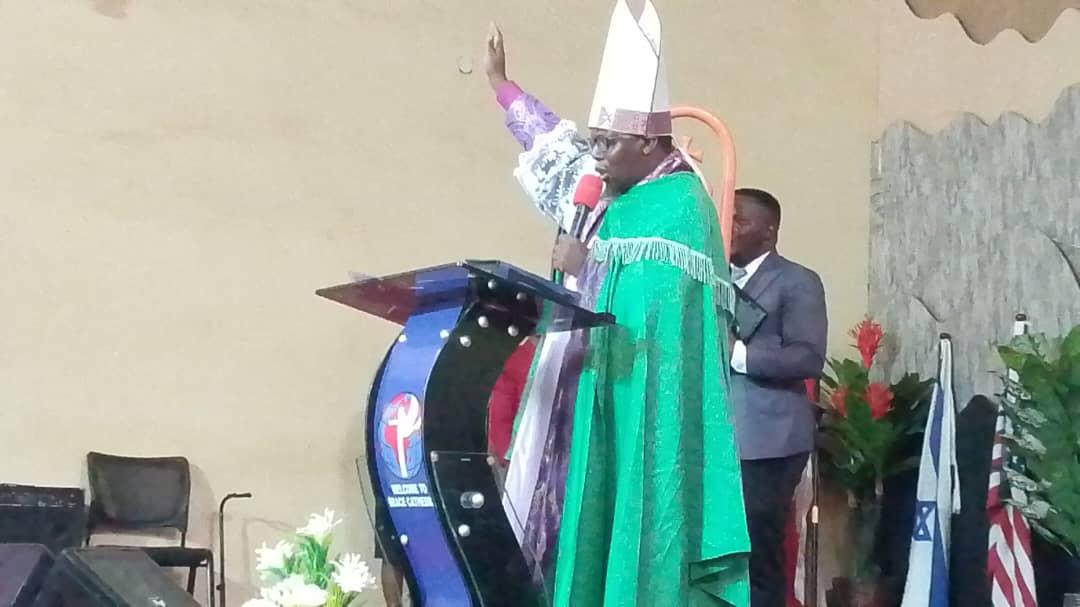
    Workshop Foreman’s Voice: “Welcome to the TEU Supersonic Workshop, Station 20260518. I’m your foreman today, Archbishop Elect Professor Mugume Bagambaki Richard, and this is not a talk shop but a place where we fix things with tools in hand.

    On the bench before you lies, The Manual, not a party manifesto or policy brief but the Bible, which we handle the way engineers handle a service manual: to check the original design specs, diagnose what has gone wrong, and restore function.

    Look around this workshop. There is grease on the floor, sawdust in the air, oil on the benches, and the sharp bite of metal from the saws. The welder stands in the corner with his mask down, the protective glass shielding his eyes from the excessive bright light that would otherwise blind him.

    The electrician moves past in heavy boots, pliers in hand, because one wrong touch here can end a life. Occasionally a spanner slips and skins a knuckle. Sometimes the dust gets in your eyes and you cough. Mechanics leave here with dirty overalls and sometimes with bandages, and people on the street call them dirty.

    The Manual is the same, it is not a clean, decorative book for display. It occasionally commands things that get under your nails, that challenge your pride, that expose your faults and leave you feeling stripped and dirty.

    It can even rebuke in ways that feel like a wound. Proverbs 27:17 says iron sharpens iron, and that process throws sparks.

    Yet if you follow The Manual carefully, it is excellent guidance. It builds what is broken, aligns what is crooked, and gets the engine running right. Above the door hangs the sign that reads, GET OUT OF LAZINESS. WHOSEVER DOES NOT WORK SHOULD NOT THINK EVEN OF EATING EITHER,’ taken from 2 Thessalonians 3:10, and the fine print on the workbench clarifies that this targets unwillingness rather than inability because the same Manual commands us to look after widows, orphans, the elderly, the sick and the disabled in James 1:27.

    Today we are stripping the engine of ‘work’ to ask what it really is, who qualifies as a worker, and why Uganda continues to act as though half the engine does not exist. Put on your overalls, your mask, and your boots. Expect some grease and some sparks. Pick up your tools. The Manual is open. Let’s work.”

    The Workshop Report: Theology, Economics And the Ugandan Who Is Already Working.

    Archbishop Elect Prof. Bagambaki begins by turning to 2 Thessalonians 3:6–15, a letter Paul wrote around 51 A.D to a church where some believers had laid down their tools.

    Convinced that Christ’s return was imminent, they stopped working, became meddlers rather than laborers, and expected others to feed them. Paul’s answer was direct: “The one who is unwilling to work shall not eat,” and he offered himself as the example by reminding them that he and his companions had worked night and day so as not to be a burden.

    The rule, Prof. Bagambaki stresses, is aimed at idleness by choice and not at poverty by circumstance.

    From The Manual, the foreman draws a wider picture of work. Genesis shows God himself as the first worker, creating for six days and resting on the seventh, and Adam placed in the garden to cultivate and maintain it before the Fall ever occurred.

    After the Fall, work became toil and the ground was cursed, yet it did not become sin, for Proverbs still calls the slack worker a brother to the destroyer and warns that laziness brings hunger. At the same time, Scripture never confuses inability with laziness, and it insists that true religion looks after orphans and widows, the disabled and the elderly.

    That distinction reshapes how the workshop defines work. Prof. Bagambaki says work is any intentional and productive activity that cultivates, maintains or improves life and community and therefore reflects God’s character.

    Economists may measure work by goods and services that carry value, while development economists insist on measurable contributions to wellbeing, but the theological lens sees work as co-creation with God in Colossians 3:23 and as fruit that reveals character in Matthew 7:16. When these two perspectives collide in Uganda, they expose a blind spot where large sections of the population are laboring without being named as workers.

    Through the workshop window the foreman points to the streets of Kampala, Jinja, Lira and Arua, where the economy is being built by hands that national budgets rarely count. There is the woman from Anyomolyec in Otwal who rises before dawn to sweep a grass-thatched kitchen and light firewood, producing meals, health and childcare that economists call unpaid care work and that Uganda’s GDP does not capture even though the United Nations estimates such labor equals roughly nine percent of global output.

    There is the old man trimming a hedge for cash, the youth washing cars in Wabigalo, Namuwongo, Kazimingi and Mafubira, and the disabled man on Lira Main Street or Obote Avenue who sits on a verandah to shine shoes.

    None of them carry contracts or pay NSSF, yet the transport touts shouting “Kampala Kampala! Mbarara! Arua Pakwach or West Nile!” are the reason buses and taxis move at all.

    The Uganda Bureau of Statistics (UBOS)headed by Dr Chris Ndatira Mukia as ED estimates that the informal sector accounts for about fifty-one percent of GDP and employs more than eighty percent of the workforce, which means policy continues to be designed for the minority and expected to serve the majority.

    It is at this point that the foreman addresses a tension common in many church buildings across Uganda, where believers spend the whole week praying, shouting “Hallelujah!” and “I receive it in Jesus’ name!” while following pastors who teach them to PUSH, which means Pray Until Something Happens, and yet they must still eat.

    Paul, Prof. Bagambaki notes, never opposed prayer because he himself wrote “pray without ceasing” in 1 Thessalonians 5:17, but he confronted the Thessalonians because they had turned prayer into an excuse for idleness.

    The apostle called them busybodies, not busy people, and set himself as a model by working night and day before delivering the rule that the unwilling should not eat.

    In the workshop’s reading, prayer and work are the two hands of the believer, one lifted to God and the other holding the hoe, the spanner or the shoe-shine brush, and if both hands remain in the air, then no door is opened and no food is earned.

    The Manual insists on balance: Psalm 127:1 says that unless the Lord builds the house the builders labor in vain, yet James 2:17 reminds us that faith without works is dead. To those who PUSH all week, the foreman’s message is that they should also PRODUCE, because God may send ravens to Elijah but He tells the disciples, “You give them something to eat.”

    The church therefore has a duty to teach both altars and anointing oil and hoes and hammers, lest it produce believers who are loudest on Sunday and hungriest on Monday.

    From theology the workshop moves to policy. Prof. Bagambaki argues that Uganda must first correct a distorted theology that either treats work as a curse, as in Bob Black’s 1985 essay “The Abolition of Work,” or preaches that blessing means not working at all, for The Manual treats work as worship and laziness as sin while still demanding that work be dignified.

    (For context: Bob Black whose real name was Robert Charles Black born in 1951 was an American anarchist, essayist and lawyer known for critiquing the modern work ethic from an anarchist/post-left perspective.

    He argues that compulsory wage labor or work is the main source of human misery and should be abolished, replaced by voluntary, playful, self-directed activity).

    Second, the country must redefine who counts as a worker, because if budgets and statistics only reward the salaried then they will keep missing the woman at the firewood, the car-washer and the shoe-shiner, and social protection, SACCOs and market infrastructure will continue to be built from the boardroom instead of the workshop floor.

    Third, the workshop must address habits of lateness and laziness, which The Manual does not legislate as a commandment but treats as matters of love and reputation, for 1 Corinthians 13:5 says love is not rude and Ecclesiastes 7:1 says a good name is better than precious ointment, meaning that chronic tardiness damages Christ’s reputation and must be corrected through awareness, planning and prayer for wisdom in James 1:5.

    On welfare, the foreman recalls that the Bible’s system was/is work-based, as seen in Leviticus where the poor were allowed to glean fields, and that 1 Timothy 5:8 is severe in declaring that anyone who does not provide for his household has denied the faith and is worse than an unbeliever. The line is therefore clear: those who can provide must do so, and those who cannot must be helped with dignity.

    The workshop concludes by recalling that while the Fall made work hard, Revelation shows a future where work is restored without thorns and thistles, and until that day Jesus’ standard remains, “My food is to do the will of him who sent me and to finish his work.”

    From that standard the TEU workshop draws its final judgments. Work is good because it reflects God and is the path of Uganda’s development. Unwillingness to work is sin, but inability is not, and the church and the state must learn to tell them apart. Prayer is fuel but never an excuse, and those who PUSH must also PRODUCE.

    Uganda’s real workers are often invisible, yet the woman at the firewood, the tout and the shoe-shiner are building the country, and national budgets must begin to see them or they will keep designing for a workshop that does not exist.

    Finally, lateness and laziness are reputation issues that tell the world Christ is unreliable, and the workshop fixes them with love, discipline and wisdom.

    Foreman’s Closing Message.

    “Tool down. The Manual is closed for today. If you can work, work. If you cannot, you will not be left to starve. If you are already working but no one sees you, The Manual sees you, and TEU sees you. That is the job.

    Archbishop Elect Professor Mugume Bagambaki Richard.

    Ecclesiastical Episcopal Conference Patriarch of Five-Fold Episcopal World Federation

    Archbishop of Upper City Covenant Churches

    President and Chancellor, UCCSAT University

    Contact: +256775050183.

    We are The Exposure Uganda (TEU) with our acclaimed slogan We Expose, You Decide.

    No topic is complicated or controversial enough for us not to tackle. We do it with a lot of fairness, objectivity and professionalism. We are also not ashamed or afraid to guide when and where necessary.
     

  • Prayerful Uganda, Broken Systems: Nabbi Daudi Takes Message Of Real Righteousness to Luwero Mega Gospel June 14.

    Prayerful Uganda, Broken Systems: Nabbi Daudi Takes Message Of Real Righteousness to Luwero Mega Gospel June 14.

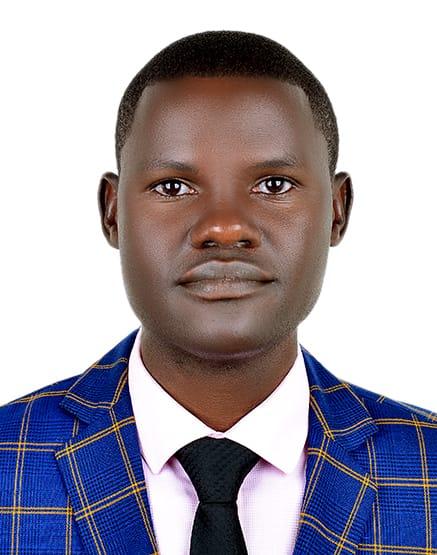
    During the 17th May, 2026 Sunday service in Jinja Zone, Assistant Overseer (Mulabirizi) Andrew Mukisa of the Universal Apostles Fellowship of Righteousness Church (UAFCR) called on Ugandans to embrace righteousness, reiterating the uncompromised message repeatedly preached by the church’s Supreme Spiritual Leader, Prophet David Isanga, known as Nabbi Daudi.

    Nabbi Daudi’s Uncompromised Stand.

    Prophet David Isanga, a medical doctor-turned cleric, has made righteousness the non-negotiable center of his ministry. His emphasis has never shifted: without righteousness in personal life and public conduct, Uganda cannot find stability, justice, or lasting progress.


    “His message is uncompromised it applies to everyone equally, whether you are a farmer in the village or a leader in Kampala. Righteousness is not optional. It is the only safe path for this life on earth”, Mukisa told the congregation at the Acacia based road in Jinja City.

    Nabbi Daudi has consistently taught that Uganda’s challenges like corruption, abuse of office, immorality, and violence,among others are ultimately moral and spiritual problems. Policies and security measures alone cannot fix a society that abandons God’s standards.

    Church Discipline Reflects the Message.

    Speaking boldly, Mukisa said UAFCR enforces that standard in practice and that anyone found in adultery, fornication, or other conduct contrary to Scripture is dismissed from fellowship, regardless of wealth or status.

    “We do not treat God like a brother-in-law, you cannot claim to be close to Him while living in open defiance of His Word. Grace does not cancel accountability”, he said.

    Righteousness Defined and Applied.

    Mukisa explained righteousness as both right-standing with God and right-living with people. He drew from Acts 2:42-47 to show what that looks like in community:

    Devotion to teaching by grounding decisions in biblical truth, not trends.

    Fellowship through sharing burdens and resources in genuine partnership.

    Breaking of bread in worship and meals that unite rich and poor and in prayer through dependence on God for strength and direction.

    He challenged members with practical application: “If God has blessed you with clothes, food, and utensils in excess, share with those who have nothing. It is meaningless to throw away leftovers when others lack one meal a day.”

    Nabbi Daudi on Legalism vs Righteousness.

    Prophet David Isanga has repeatedly warned that religious rituals alone do not make a person right before God.

    He says that praying every Sunday or Saturday, observing the five daily prayers, making pilgrimages to holy sites like Mecca, Vatican and Jerusalem, partaking of the sacraments, or wearing a rosary are outward acts.

    On their own, he says they carry no moral weight with God if the heart and conduct remain unchanged.

    His emphasis is direct: it is the pursuit of righteousness that makes a person good before God.

    Nabbi Daudi argues that many people fall into legalism, strictly observing every regulation of the church or religious community while living in contradiction to those same standards in private and public life. They are the same people who steal, embezzle, rob, commit adultery and fornication, then return to places of worship presenting themselves as humble and pious.

    He compares this to the biblical Pharisees whom Jesus rebuked them in Matthew 23 for being meticulous about external observance while neglecting justice, mercy, and faithfulness.

    To Nabbi Daudi, the danger is the same today: a faith reduced to performance, where appearance replaces substance.

    Why he makes the distinction: Righteousness addresses the heart, not just the habit. External acts can be done for show, status, or habit. Righteousness requires honesty, integrity, and a consistent life that matches what is confessed in worship.

    Legalism breeds hypocrisy is when people focus only on rules, they can maintain the appearance of holiness while violating the very principles those rules were meant to protect.

    On the other hand, righteousness has public consequences. Theft, corruption, and sexual immorality do not stay private, they erode trust, weaken institutions, and harm the vulnerable. Ritual without righteousness leaves those problems untouched.

    How he frames it for believers:  

    Nabbi Daudi does not dismiss prayer, sacraments, or pilgrimage as worthless, his point is hierarchy: those practices are meant to form a person toward righteousness, not replace it. If after years of religious activity, a person is still dishonest in business, abusive in family, or corrupt in office, then the outward observance has not achieved its purpose.

    The Ugandan Paradox and UAFCR’s Response.

    Uganda is often described as one of the most prayerful nations in the world. Every village has a church or mosque, and in towns and cities, worship places line nearly every street. Many people hold all-night prayers and attend services from Sunday to Sunday.

    Yet the country still grapples with high rates of crime, drunk driving and accidents, divorce, prostitution, infidelity, and corruption. Contracts are inflated, jobs and promotions are sold, and witchcraft remains widespread in many communities.

    This is the contradiction Nabbi Daudi confronts head-on. His church does not tolerate a split life where religious activity coexists with public misconduct. The moment a member is found in persistent sin, they are dismissed from fellowship. For UAFCR, discipline is not cruelty — it is the only way to keep the message of righteousness credible.

    Context of Gratitude and Mission.

    Mukisa also thanked God for the peaceful environment that allowed President Gen (Rtd) Yoweri Kaguta Museveni’s swearing-in on 12th May 2026 to proceed despite threats. He urged Ugandans to value that stability as the space in which righteousness can take root.

    He announced the 14th June Mega Gospel Crusade in Luwero as the next step in spreading Nabbi Daudi’s message: “The goal is liberation from the bondage of sin through the truth lived out in righteousness.”

    Why It Matters Now.

    In a climate where corruption empties public services and immorality breaks families, Nabbi Daudi’s uncompromised emphasis is clear: laws and oaths only hold if people choose righteousness when no one is watching. Without it, institutions fail. With it, grace and mercy have a foundation to build on.

    Conclusion.

    Uganda must redefine what it means to be spiritually alive, it is no longer enough to sit in pews, sing polished hymns, and nod to theologically laced sermons that sound holy but leave hearts unchanged.

    God is not pleased by performance, and neither is humanity when those same voices lead double lives. According to statistics, many of the thieves, corrupt officials, and morally bankrupt elements in public office are known as respected Christians and church leaders on Saturday and Sunday.

    That contradiction is the hollow core of our religious culture, because if faith does not produce honesty in business, faithfulness in marriage, and accountability in office, then it is empty. The call now is simple: let worship break you, remake you, and send you out to live righteously on Monday. Until that happens, Uganda will remain a nation loud in prayer and weak in justice.

    This message is landing at a moment when former Speaker of Parliament Rt. Hon. Annette Anita Among and her associates are the subject of widespread public discussion.

    The conversation is playing out in towns, trading centers, bars, pork joints, taxis, buses, and among boda boda riders, after reports that large sums of cash in multiple currencies and items linked to witchcraft were recovered from her residence.

    The same Speaker has previously appeared in public photographs beaming alongside the Pope, presenting a picture of piety. She is currently at the center of investigations into alleged abuse of office and corruption. As of now, she has not been formally charged in any court.


  • “If Nabambula Has A Case, What Happened To His Case Against Patel” Retiring Judge Justice Egonda Ntende Farewell’s Speech Sparks Debate On Equal Justice.

    “If Nabambula Has A Case, What Happened To His Case Against Patel” Retiring Judge Justice Egonda Ntende Farewell’s Speech Sparks Debate On Equal Justice.

    As the judiciary celebrated Court of Appeal Justice Dr. Fredrick Steven Martins Egonda Ntende’s retirement recently, the jurist used his farewell speech to issue a rare public rebuke: judicial officers must resist becoming “enablers” of rights violations by the powerful.

    His remarks have now drawn fresh attention to the case of Jinja City Councilor-elect Julius Kayiira, alias Nabambula, who has spent nearly three months in Kirinya Prison on charges of criminal trespass and inciting violence.

    This article does not address the merits or demerits of any pending criminal matter. It examines the broader concern raised by Justice Egonda Ntende: whether Uganda’s lower bench and law enforcement are consistently applying the principle of equal protection before the law, particularly when political and economic interests collide.

    “Team Judiciary, which society treats its children like this?”

    Speaking at a luncheon hosted by the Judiciary at its headquarters, Dr. Egonda Ntende urged colleagues to “stand firm” and let “nothing move you” from the constitutional duty to administer justice without fear or favor.

    Without naming him directly, the judge referenced the detention of NUP deputy spokesperson Alex Waisswa Mufumbiro, whose children buried their mother (Edith Katende) while their father remained in custody.

    He described the continued detention beyond the constitutionally mandated bail threshold as a failure of judicial courage.

    “Team Judiciary, I am here to ask us to reflect on the question— which society treats its children like this?” he asked, invoking the biblical call to pursue what is “true, noble, right, pure, lovely and admirable.”

    Justice Egonda Ntende’s remarks were widely reported by the independent Daily Monitor under the Nation Media Group (NMG), Mulengera News (owned by veteran journalist John Serwaniko), and other outlets, amplifying the debate on judicial independence ahead of his retirement to his farm in Jinja.

    The Nabambula Case: Competing Complaints, Divergent Outcomes.

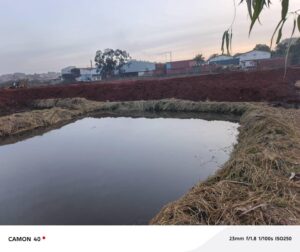
    Councilor-elect Julius Kayiira has been in detention since early this year 2026. Police charged him with criminal trespass and inciting violence, allegations arising from a wetland issue in Jinja City and a not so clear election related one.

    What has fueled public debate is the sequence of events preceding his arrest. Late last year, Kayiira filed a complaint with the National Environment Management Authority (NEMA) and petitioned the President, alleging malicious damage and wetland degradation against businessman Patel M. Magan, who owns multiple industries in Jinja and Busoga, including the former Odokomit Cotton Ginnery in Lira, now Nile Agro Industries Ltd

    Patel was arrested by armed men in military uniform and taken to Kampala following a NEMA order.

    Hours after the arrest, NEMA issued a brief statement owning the arrest of Patel: “five suspects including the investor reported to be of Asian origin were arrested during an operation conducted on Sunday 28th December, 2025 and transferred to Kampala to facilitate further investigations. In the course of the operation, five Sino trucks and two tractors suspected to have been used in the illegal activity were impounded. Two of the suspects were later released on police bond on medical grounds”, the press release read.

    Kayiira had also lodged a formal complaint at CPS Jinja on the same matter with regards to fish ponds that were allegedly damaged.

    According to sources familiar with the file, that complaint has since been “permanently closed” after the officers handling it were allegedly “well facilitated.”
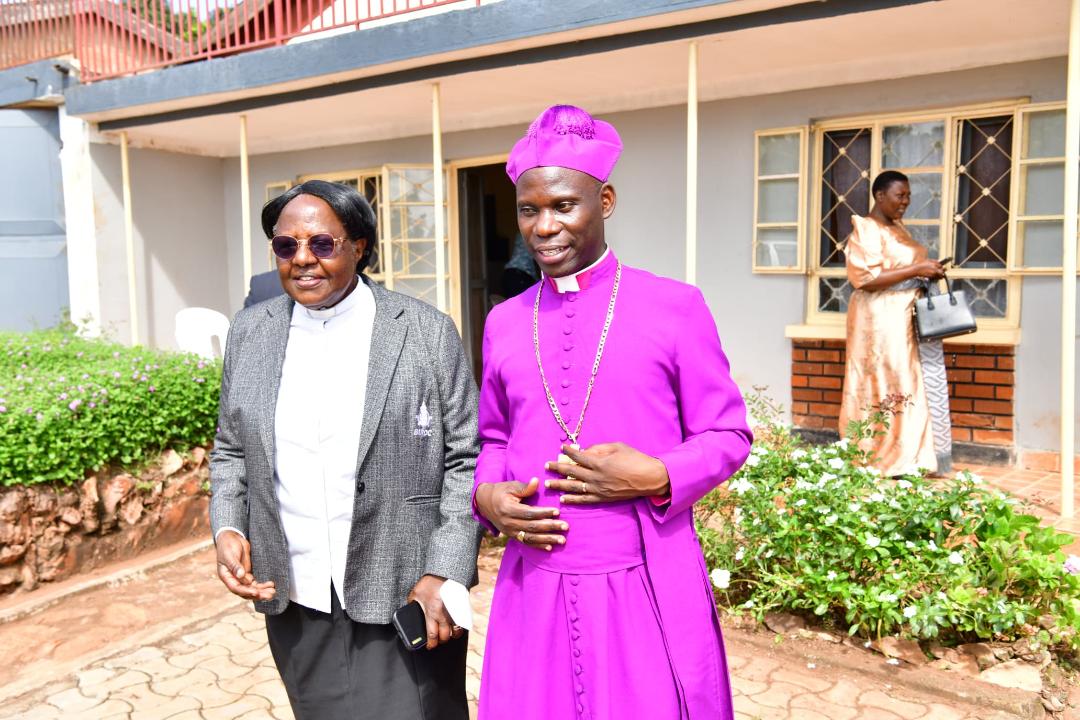
    The Exposure Uganda (TEU) has not independently verified the circumstances of the closure, and no official statement has been issued by Uganda Police Force as of press time.

    Shortly afterward, Patel’s associate, Francis Baganzi, lodged a complaint of alleged criminal trespass against Kayiira leading to his arrest by police attached to the Flying Squad.

    It is that complaint that has kept the councilor-elect in Kirinya Prison for about three months, with no clear indication of when bail or trial will proceed.

    Legally, both matters involve cognizable offenses under the Penal Code Act and NEMA Act. The question for observers is procedural consistency: if one complaint can proceed to arrest and detention, why has the counter-complaint been closed without public explanation?

    A Systemic Question Beyond One Case.

    The concern is not limited to Kayiira. Legal aid lawyers and rights groups in Busoga and beyond have long argued that many Ugandans languish on remand over petty offenses because the complainant is well-connected, or simply because the accused is poor, politically isolated, and lacks the means to secure legal representation or bail.

    When a complaint by a person of influence moves swiftly through the system while a similar complaint by a lesser-known citizen stalls or disappears, it breeds the perception of a two-tier justice system.

    Article 21 of the Constitution prohibits discrimination and guarantees equal protection of the law. Article 28 guarantees the right to a fair and speedy hearing. Where those principles are not visible in practice, public trust erodes.

    Justice Egonda Ntende invoked the precedent of Chief Justice Emeritus Benedicto Kiwanuka and Chief Magistrate Kityo’s stand against Idi Amin’s directive to jail women for wearing miniskirts.

    He reminded the bench that the doctrine of separation of powers applies even in the absence of Parliament, and that sanctioning judicial officers lies with the judiciary, not the executive.

    “The required level of courage by individual judicial officers is achievable once each one of them puts Godliness over and above all their respective fears,” he said.

    The Legal Principle at Stake.

    The doctrine of nemo judex in causa sua a Latin for “no one should be a judge in their own cause”, which underpins the expectation that state actors resist external influence. Judicial officers and police are bound by the Judicial Code of Conduct and Police Standing Orders to avoid both actual bias and the appearance of bias.

    Section 14 of the Judicature Act empowers courts to grant bail, and Article 23(6) of the Constitution makes bail mandatory after 60 days for offenses triable by the High Court and 48 hours for others, unless sufficient cause is shown.

    Where those timelines are exceeded without clear justification, the burden shifts to the state to demonstrate why continued detention serves the interests of justice.

    TEU’s Stand: Journalism Without Fear or Favor.

    At The Exposure Uganda, our mandate is clear: we do not fear to tackle any topic, however sensitive. We are not for or against any individual, political party, or business interest.

    Our role is to inform the public with facts, ask the questions that matter, and hold power to account within the bounds of the law.

    We execute this work with fairness, professionalism, and objectivity. Where allegations are made, we seek verification. Where responses are due, we give space for them. Our loyalty is to the truth and to the public’s right to know, not to personalities or patronage.

    What Next?

    Justice Egonda Ntende’s parting shot was a question, not a judgment: “Team Judiciary, what happened? Where is your Kityo and Wambuzi at this hour?”

    For Jinja, the immediate test lies with the magistracy handling Kayiira’s matter and with the Uganda Police Force’s Directorate of Professional Standards Unit(PSU).

    Will the court determine bail and trial dates in line with constitutional timelines? Will the DPP review why the complaint filed by Kayira against Patel was closed, and whether reopening it is warranted in the public interest?

    For the justice system nationally, the test is whether Justice Egonda Ntende’s call for courage translates into consistent application of the law, regardless of who the accused or complainant is, and regardless of whether the accused is known or unknown, rich or poor.

    As the saying goes, justice must not only be done, but must be seen to be done. In a democracy, the sight of justice is as important as its substance.

     TEU Editor’s Note: This article report is on public statements made by a retiring judge at a public judicial event and on allegations regarding police case files that are circulating in the public domain.

    It does not seek to adjudicate the guilt or innocence of any party. The principle under discussion is equal application of the law under Article 21 and 28 of the Constitution of Uganda.


  • “Why Worry Much, God Knows Your Condition”: Prof. Bagambaki Offers Scriptural Antidote to Uganda’s Anxiety Crisis.

    “Why Worry Much, God Knows Your Condition”: Prof. Bagambaki Offers Scriptural Antidote to Uganda’s Anxiety Crisis.

    From the crowded streets of Kampala to other cities and urban centers, down to rural trading posts and deep villages, worry and anxiety are quietly eroding the health and hope of Ugandans.

    In response, many have turned to structured routines of jogging at dawn, paying for gym memberships, and booking sessions with therapists and wellness coaches. Others, however, have resorted to heavy alcohol consumption and substance abuse in a desperate bid to numb the pressure emanating from strained homes, demanding workplaces, and debts that refuse to yield.

    Yet beneath these coping mechanisms lies a deeper question: what exactly is worry, and why does it grip so many with such tenacity?

    What Is Worry? Three Angles to Understand It.

    The Dictionary Angle.

    The Oxford English Dictionary defines worry as giving way to anxiety or unease, allowing one’s mind to dwell on difficulty or trouble. In common usage, it denotes a mental preoccupation with a problem, usually projected into the future, that generates persistent unease and saps the present of peace.

    The Clinical Angle.

    Psychology describes worry as a chain of negative, repetitive thoughts and images concerning uncertain future outcomes that feel largely uncontrollable. According to the American Psychological Association, it represents an attempt to mentally solve a problem whose resolution remains ambiguous yet potentially threatening.

    When it becomes excessive and persistent, worry evolves into a core feature of Generalized Anxiety Disorder. Clinically, it is future-focused, intrusive, out of proportion to the actual risk, and often interferes with sleep, concentration, work productivity, and interpersonal relationships.

    The Biblical and Theological Angle.

     Scripture frames worry not merely as an emotional state but as anxiety over the future that arises from misplaced trust. Jesus addressed it directly in Matthew 6:25-34, saying, “Do not worry about your life… Can any one of you by worrying add a single hour to your life?” He labeled it futile and a symptom of little faith, calling instead for a prior pursuit of God’s kingdom and trust in His provision.

    The Apostle Peter later reframed it in 1 Peter 5:7 with the instruction, “Cast all your anxiety on Him because He cares for you.” Thus, biblically understood, worry is a spiritual issue of attempting to control what belongs to God alone.

    All three perspectives agree that worry is draining and ineffective. Where they diverge is in the prescribed remedy: psychology leans toward cognitive restructuring and behavioral intervention, while Scripture calls for surrender, prayer, and a renewed trust in God’s character.

    The God Who Sees and Provides: Jehovah Jireh and Jehovah Roi.

    The God revealed in Scripture is not distant or detached from human suffering. He is personal, and He makes Himself known through names that describe how He engages with human need. For anxious Ugandans today, two names stand out with particular relevance: Jehovah Jireh and Jehovah Roi.

    Jehovah Jireh – “The Lord Will Provide”.

    This name originates in Genesis 22:14, following Abraham’s ordeal on Mount Moriah. Having been commanded to offer Isaac, Abraham walked to the very edge of obedience when God intervened and provided a ram caught in the thicket as a substitute. Abraham named the place Jehovah Jireh, meaning “The Lord will provide.”

    The context is crucial: Abraham faced a situation that was humanly impossible and emotionally devastating. Yet God saw the crisis, intervened at the decisive moment, and provided precisely what was needed. The Hebrew word jireh conveys the idea of seeing to a matter, providing, and caring for it with intention.

    Bringing this home:Many Ugandans today find themselves on their own Mount Moriah, pressed to the edge by school fees, rent arrears, medical bills, and business debts that seem insurmountable.

    Jehovah Jireh does not promise that the walk to the mountain will be avoided. He promises that He sees the ram in the thicket before His people arrive there.

    Provision may not arrive in the expected form or on the expected timeline, but it comes from the God who knows the full extent of the condition.

    Jehovah Roi – “The God Who Sees Me”.

    This name emerges in Genesis 16:13, when Hagar fled into the wilderness pregnant, rejected, and alone. An angel met her at a spring and promised her a future, prompting her to declare, “You are the God who sees me, for I have now seen the One who sees me.” Hagar was a servant, a foreigner, and socially invisible, yet God saw her distress, heard her affliction, and addressed her by name.

    For the Ugandan who feels invisible: betrayed by family, overlooked at work, forgotten in community, Hagar’s testimony is a lifeline. Jehovah Roi sees you in the wilderness. He sees the tears shed at night when no one else is aware. Your pain has not escaped His notice, and your story has not been forgotten by Him.

    The Pattern Continues Throughout Scripture.

    At Cherith and Zarephath in 1 Kings 17, when the brook dried up, God sent ravens and then a widow to sustain Elijah, demonstrating that He knew exactly where His prophet was and met him there. Psalm 23:1 declares, “The Lord is my shepherd, I shall not want,” portraying a shepherd who sees the sheep, knows their need, and provides pasture accordingly.

    In Matthew 6:26-32, Jesus points to the birds of the air and the lilies of the field to argue that if God feeds and clothes them, He will certainly provide for those of greater value.

    The theological thread running through these accounts is consistent: the Bible never promises the removal of every wilderness, but it insists that in every wilderness, God sees, He knows, and He provides. His provision is often not early by human standards, but it is never late by divine timing.

    Therefore, when Prof. Bagambaki says, “Why worry much? God knows your condition,” he is echoing these ancient names of God. Jehovah Roi sees you, and Jehovah Jireh will provide for you. The central question is not whether God sees, but whether you will trust Him when He declares, “I have overcome the world.”

    A God Who Knows and Provides.

    It is this burden of worry that Archbishop Elect Professor Mugume Bagambaki Richard says the Gospel addresses directly and authoritatively.

    Speaking from his office, Prof. Bagambaki, Patriarch of the Five-Fold Episcopal World Federation and Chancellor of UCCSAT University, anchored his counsel in 1 Corinthians 10:13:

    “No temptation has overtaken you except what is common to mankind. And God is faithful; He will not let you be tempted beyond what you can bear. But when you are tempted, He will also provide a way out so that you can endure it.”

    Historical context: Paul wrote this letter to the Corinthian church around 55 AD. Corinth was a wealthy, morally compromised port city where believers confronted sexual immorality, idolatry, and social pressure to compromise their convictions.

    Paul’s message was pastoral and reassuring: your trials are not unique, God sets a limit to what you will face, and He provides a way of endurance.

    Bringing it home: Today’s Ugandan faces analogous pressure to cut ethical corners at work, to abandon faith for financial gain, and to capitulate when a business collapses or a relationship fractures.

    “God will not allow a burden that His grace cannot carry,” Prof. Bagambaki explained. “The way out may not remove the problem instantly, but it will give you the strength to stand upright under it.”

    Trouble Is Real, But Victory Is Secured.

    Citing John 16:33, he reminded Ugandans that Jesus spoke with unflinching realism and enduring hope: “In this world you will have trouble. But take heart! I have overcome the world.”

    Historical context: Jesus spoke these words in the Upper Room on the night before His arrest. His disciples were about to face betrayal, fear, dispersion, and persecution. Yet He spoke of victory as already secured, not as a distant possibility.

    Bringing it home: Ugandans confronting job loss, familial betrayal, or devastating medical diagnoses often feel abandoned and exposed. “Your situation may look like Friday night,” Prof. Bagambaki said, “but Sunday is coming. Do not allow the present darkness to erase the promised dawn.”

    Strength Beyond Ourselves.

     Drawing on 2 Corinthians 1:8-9, he observed that even the Apostle Paul experienced pressure “far beyond our ability to endure, so that we despaired of life itself.”

    Historical context: Paul was likely recounting near-death experiences in Ephesus (now located in western Turkey in Izmir Province right next to the modern town of Selcuk-about 3km southwest of Selcuk’s center), stemming from persecution or severe illness. His conclusion reframed the purpose of such extremity: “This happened that we might not rely on ourselves but on God, who raises the dead.”

    Bringing it home: “Many Ugandans feel overwhelmed beyond their strength,” Prof. Bagambaki noted. “God permits that moment so that you cease trusting in your salary, your connections, or your own resilience, and begin to lean entirely on Him. That is precisely where genuine endurance and peace are born.”

    He reinforced this with Romans 8:37, 1 John 5:4, and Psalm 129:2 texts written to communities under Roman persecution, theological distortion, and centuries of affliction. The consistent message is that God’s people prevail not by escaping hardship, but by overcoming it in Him.

    The Exposure Uganda (TEU) Dissect: Let Scripture Interrogate Your Situation.

    We Expose: Many Ugandans are carrying burdens in isolation, and the coping methods chosen are often deepening rather than resolving the wound.

    You Decide: Ask yourself honestly and without evasion:

    Are you suffering from depression following a breakup and feel as though life has lost its meaning?

    Are you low in spirit because a doctor has delivered devastating news regarding a terminal illness?

    Has the business in which you invested heavily collapsed, leaving you uncertain where to begin again?

    Have you been betrayed, not once, not twice, not five times, but repeatedly, by friends, family, or colleagues you trusted?

    Do you consider yourself unlucky, cursed, or abandoned by both God and man?

    If your answer to any of these questions is yes, then hear this with clarity: the God of 1 Corinthians 10:13 knows the exact weight you carry. The Christ of John 16:33 has already overcome the power behind your trouble. The God of 2 Corinthians 1:9 desires that you cease relying on your own strength and begin leaning fully on Him.

    Your situation is not final, and your faith is not foolish, because the same God who delivered Paul, strengthened David, and sustained the early church is present with you in Uganda today.

    Contact: Archbishop Elect Prof. Mugume Bagambaki Richard

    Phone: +256775050183 | Email: mugumebagambakirichard@gmail.com

  • President Museveni To Join Busoga’s Daughter Prof Muranga In Olympic Day Tooke Run 2026 To Fund Athlete Nutrition.

    President Museveni To Join Busoga’s Daughter Prof Muranga In Olympic Day Tooke Run 2026 To Fund Athlete Nutrition.

    President Gen (Rtd)Yoweri Kaguta Museveni, fresh from swearing in for the 7th term, is expected as Guest of Honour and Chief Runner for the Olympic Day Tooke Marathon 2026 in the Greater Bushenyi Area on 20 June 2026. The event aims to raise funds for athlete nutrition under the theme: “Move, Learn, Discover With Nutrition-Care.”

    The run is being spearheaded by Rev. Canon Prof. Florence Isabirye Muranga, Director General of the Presidential Initiative on Banana Industrial Development (PIBID), in partnership with the Uganda Olympic Committee (UOC.

    According to Henry Mugisha, Tooke Brand Ambassador and Chief Intercessor to the Archbishop of the Church of Uganda, the choice of Prof. Muranga is strategic. She is Uganda’s first Nutrition Ambassador for the UOC and developed matooke flour and other banana-based products through the Banana Industrial Research and Development Centre BIRDC the technical arm of PIBID based in Nyaruzinga, Bushenyi District.

    Olympic Day: Where It Started and Why It Matters.

    Olympic Day is celebrated worldwide on 23 June to commemorate the founding of the modern Olympic Games in 1894 in Paris by Pierre de Coubertin. The first Olympic Day was held in 1948.

    In over 200 countries, the day is marked with mass runs and walks open to everyone regardless of age or fitness level, sports clinics and exhibitions where athletes and coaches teach basic skills, education sessions on Olympism and fair play, and cultural events that celebrate national identity through sport.

    Uganda’s 2026 edition shifts the focus to nutrition. The idea is simple: you cannot “Move, Learn, Discover” without fuel. That’s where matooke flour comes in.

    He says President Museveni who is also the Patron of the multi billion shillings project has accepted to join and flag off the hundreds of runners on the day.

    Why Athletes Need Special Diets.

    Sport at high level breaks the body down. Recovery and performance depend on what goes in. Athletes burn between 2,000 and 5,000 calories daily, and without the right diet they face fatigue, injury, and slow recovery.

    Slow-releasing carbohydrates from matooke flour give sustained energy during training and competition. BIRDC’s fortified banana products support muscle repair and recovery. Because the flour is shelf-stable, athletes get consistent nutrition year-round, unlike with perishable fresh matooke. Countries that win medals treat nutrition as part of training, and Uganda is now building that system locally.

    The Fundraising Breakfast: What Happens and Why It Matters.

    Before the 20 June run, a fundraising breakfast for the Eastern Region will be held in Jinja City. The date is yet to be announced.

    This is not just food and speeches. It is a structured engagement where project goals and budgets are presented to potential funders, partners and sponsors commit financially or in-kind, and leaders and the business community align on their role in supporting athletes. The breakfast turns private sector and political goodwill into tangible support.

    Ambassador Mugisha has called on newly sworn-in MPs, LC5 Chairpersons, Mayors, the business community, and investors to attend. The ask is clear: if you want Uganda to win, fund what feeds the winners.

    The new Butembe MP Hon Grace Paddy Kirya Wanzala has pledged UGX 1,000,000 toward the cause, becoming one of the first leaders to publicly back the initiative.


    Jinja North MP Hon Hussein Muyonjo aka Swengere says part of the cash he gets from Parliament will go towards the cause.


    Why Busoga Should Be Part of It.

    Busoga has athletes, schools, and a young population with energy to burn. But it also has banana farmers who lose income to post-harvest waste. The Tooke Run links the two.

    Participation creates markets for farmers in Iganga, Mayuge, Kamuli, and Jinja. It builds pride as Busoga athletes get direct support and the region gains visibility on a national platform. Most importantly, it builds unity.

    Busoga has every reason to rally behind this cause. Rev. Canon Prof. Florence Isabirye Muranga hails from Bufuula Village in Jinja City.

    To the Busoga sub region, she is not just a scientist and academic, she is a daughter, a sister, an aunt, a mother, and a grandmother. Supporting her work is supporting one of their own who has taken Busoga’s name and banana to the national and international stage. Sport as the Unifying Factor After Election Noise.

    Uganda has just come out of campaigns and elections, that season divides people who line up behind parties, candidates, and personalities.

    Sports does the opposite because on a track, in a stadium, or at a run, you do not see NRM, NUP, FDC, UPC, ANT, or independent. You see Ugandans. Color, race, religion, and status are stripped away and replaced by a shared goal: to move, to compete, to win for Uganda.

    That’s why the timing of the Olympic Day Tooke Run 2026 matters. It comes after the noise, when the country needs something that pulls people back together.

    TEU Explainer:

     “It is Good for Kinsmen to Dine Together”: Achebe’s Wisdom and the Call to the Jinja Breakfast.

    West African literary giant Chinua Achebe, in his seminal 1958 novel Things Fall Apart, captured a truth about African communal life that still resonates today. Through the voice of Umuofia’s elders, Achebe wrote:

    “A man who calls his kinsmen to a feast does not do so to save them from starving. They all have food in their own homes. When we gather together in the moonlit village ground it is not because of the moon. Every man can see it in his own compound. We come together because it is good for kinsmen to do so”.

    Academic Reading of the Passage.

    Achebe is making a distinction between need and purpose. The feast is not charity for the hungry, nor is the gathering a response to physical darkness that the moon alone can dispel.

    Rather, the gathering fulfills a social, cultural, and moral function: it reaffirms kinship, strengthens solidarity, and reminds people that identity is built in communion, not isolation.

    In African philosophy (including Busoga’s), this aligns with ubuntu “I am because we are.” The act of coming together is itself the value.

    Linking to the Olympic Day Tooke Run 2026 Fundraising Breakfast.  

    This is precisely the spirit behind the fundraising breakfast for the Eastern Region in Jinja City mentioned in the article ahead of the Olympic Day Tooke Marathon 2026.

    We are not calling leaders, MPs, LC5 Chairpersons, Mayors, and the business community to Jinja because they have no breakfast at home. Every man and woman of goodwill can eat in their own compound.

    We are calling them together because the cause is noble, and it is our culture to dine together when a communal purpose demands it.

    The cause is clear: to raise funds for the nutrition of Ugandan athletes, to create markets for Busoga’s banana farmers, and to cement a partnership between PIBID/BIRDC and the Uganda Olympic Committee that links agriculture to sport.

    Just as Umuofia gathered under the moon not for light but for unity, we gather in Jinja City not for a meal, but for a mission. 

    The TEU Call.

    We Expose: The breakfast is not about individual hunger. It is about collective responsibility.

    You Decide: Will you attend because it is good for kinsmen to do so, because it is good for Busoga and Uganda to move together?


    If the people of Busoga understand that supporting their daughter, sister, aunt, mother and grandmother Rev. Canon Prof. Florence Isabirye Muranga is supporting their own, then the Jinja breakfast becomes more than an event.


    It becomes a reaffirmation of culture, solidarity, and purpose after a divisive election season.

    Reference

    Achebe, C. Things Fall Apart. London: Heinemann, 1958.


  • From Bush War To Holy War: Nabbi Daudi Picks Luwero For Second Liberation of Uganda, Says Country Still In Egyptian Spiritual Captivity.

    “Truth without love is too hard; love without truth is too soft.” — John Robert Walmsley Stott (1921–2011), the British Anglican clergyman, theologian, and author widely regarded as one of the most influential evangelical voices of the 20th century.

    It is that unresolved tension between truth and love that Prophet David Isanga, known to his followers as Nabbi Daudi says Uganda can no longer afford to ignore, and it is on the historically bloodstained soil of Luwero that he intends to force the confrontation.

    Addressing thousands at the Universal Apostles Fellowship Church of Righteousness (UAFCR) headquarters on Acacia Road in Jinja City on Sunday, the Supreme Spiritual Leader reminded the nation that while Gen (Rtd)President Yoweri Kaguta Museveni’s five-year guerrilla war delivered political liberation from Luwero in 1986, a deeper form of captivity has remained unbroken for four decades.

    For that reason, UAFCR has announced a Mega Gospel Crusade in Luwero on June 14, 2026, under the uncompromising theme ‘Truth Shall Set You Free’, drawn from the Gospel of John, with the stated aim of completing the freedom that began in the bush but stalled in the heart.


    This declaration comes after Nabbi Daudi convened a full house of church elders on Saturday for an intensive teaching session that drew together leaders from every tier of UAFCOR’s structure, from babulizi(preachers) at the grassroots to pastors, priests, overseers, and zonal heads, along with youth and women leaders from across the fellowship.

    In that closed session, he charged them to shepherd God’s people with genuine love and care while refusing to dilute the Church’s stance on sin and the patterns that feed it, stressing that the Church has matured from strength to strength and must now function as a sanctuary of calm and comfort for the downtrodden, for those tormented by sin, by demonic oppression, and by the grinding challenges of daily life.

    The Church, he told them, must become a center of whole healing where anyone who walks through its doors returns happier and refreshed, not because of emotional sentiment or stage-managed excitement, as he said happens in some denominations, but because of sound biblical teaching that gives clear direction on how to avoid sin and the courage to abandon it.

    Using the analogy of a classroom, he said that just as a teacher cannot award marks to a pupil who has failed, church leaders cannot play games with the question of sin; their duty is to rebuke, to correct, and to restore with firmness anchored in Scripture.

    Nabbi Daudi also issued a pointed warning to women leaders in particular, cautioning them against murmuring, gossiping, and grumbling, which he said attract God’s wrath and corrode fellowship, and instead called them to model humility and obedience to the Word so that they remain firmly in righteousness.

    He further cautioned all leaders against indecency in dress and speech, insisting that those who stand before God’s people must lead by example in conduct, appearance, and language, because compromise at the top breeds compromise in the pews.

    Nabbi Daudi, who has never concealed his loyalty to the National Resistance Movement, opened his Sunday address by congratulating President Museveni, now 82, on his swearing-in for another five-year term following the January 15 polls, crediting the stability secured since 1986 for creating the very freedom of worship that makes a gathering of this magnitude possible.

    Because there is peace, he told congregants and the assembled press, the Church can proclaim its message openly; because there is liberty, believers can assemble in Luwero without fear of state interference; and because of that liberty, he argued, the nation now bears the responsibility to exchange spiritual duplicity for righteousness rather than continue the religious double-mindedness that he believes has been normalized across denominational and even faith lines.

    The selection of Luwero is deliberate, and Prophet Daudi was careful to spell out the symbolism for his audience. Just as Moses confronted Pharaoh and led Israel out of Egypt after four centuries of bondage, parting the Red Sea so that former slaves could walk into freedom, Uganda emerged from political tyranny when Museveni’s forces broke out of the Luwero Triangle, yet too many citizens remain, in the Prophet’s words, in “spiritual Egypt”, politically free but inwardly chained by habits and allegiances that contradict the creeds they recite every week.

    It is for this reason that UAFCR has designated Luwero as the altar where a second liberation must begin, envisioning the June crusade as the decisive moment when the nation moves from private compromise into public righteousness, with Scripture alone wielded as the weapon of choice.

    The condition that drew his sharpest rebuke was what he described as a pervasive culture of religious duplicity that erases the moral line between sanctuary and street, between believer and unbeliever, between adult and youth.

    The man of God spoke of men and women who command the front rows of churches and mosques, who bear Western names with pride and quote sacred texts with fluency, yet whose lives contradict every syllable they utter.

    They lift holy hands and post Scripture on social media by day, he said, but by night they kneel before Jaajas in ancestral shrines, bartering rituals for visas, jobs, marriages, and business contracts that the Bible condemns; they observe Ramadan and keep the five daily prayers while constructing enterprises on bribery and graft; they arrive at Sunday worship sober and solemn only after spending Friday intoxicated beyond speech, all justified under the respectable disguise of “networking with friends.”

    That, he insisted, is neither the righteousness for which Christ died nor the freedom for which Ugandans bled in the bush.

    Beyond the sexual immorality of adultery and fornication that he said has grown so commonplace that communities no longer recoil, the trained physician-turned Prophet condemned the open commercialization of faith that has converted Christianity into a marketplace of handkerchiefs, anointed rice, special water, and oil marketed as guaranteed passports to prosperity, healing, and foreign travel.

    Citing the solemn warning that closes the book of Revelation (22:18) against adding to God’s Word, he argued that such practices are not harmless culture but a modern idolatry that invites judgment rather than blessing, and he cautioned against the accelerating attempt to insert unbiblical philosophies into what some promoters are branding an “African Bible” in the name of cultural relevance.

    For UAFCR, whose Luganda motto is Mutukirivu, righteousness is not a brand that can be adjusted to flatter the wealthy, the credentialed, or the connected; it is, as he put it, the only cut-off point that matters before God, irrespective of the academic titles a person may parade.

    Contrasting his approach with President Museveni’s, Nabbi Daudi said that whereas the guerrilla war relied on stealth, surprise, and prolonged engagement with a physical adversary, the Luwero crusade represents a direct and public assault on what he identifies as the true enemy: Satan and the cluster of entrenched sins that continue to corrode Ugandan society, including witchcraft, idolatry, theft and embezzlement of public resources, and the kind of false doctrine that teaches congregants they can worship God on Sunday and ancestral spirits on Monday.

    The President fought to disarm politics of the gun, and leadership of impunity he observed; the Church must now fight to disarm the heart of sin, and both campaigns, though different in method, deserve to be called liberation because both seek to set a people free to live without fear.

    With less than five weeks to the appointed date, UAFCR confirmed that intercessory prayer chains, street evangelism units, and district mobilization teams are already active across Greater Luwero, laying the groundwork for a day-long convocation that will blend brass bands and mass choirs with public testimonies of deliverance and the free distribution of Bibles and discipleship materials in Luganda, Luo, and Lusoga.

    The June 14 event will beam live on national and regional mainstream media outlets and stream across popular social media platforms, while also being headlined in major traditional and online newspapers, The New Vision, the Daily Monitor, The Observer and The Exposure Uganda, Mulengera News and followed by Nile Post, Chimpreports, The Independent Magazine, and other leading digital outlets, as part of a deliberate strategy to carry the call to repentance beyond the crusade grounds into every Ugandan home.

    Prophet Daudi closed by placing the choice before every listener without apology: no one can serve God in church and Jaajas in the shrine, no one can wear the name of a believer while living as a habitual adulterer, and no one can claim to be led by the Holy Spirit while regularly drinking to the point of incoherence.

    Uganda has peace, he said, and the nation should be grateful; what Uganda needs now is truth, because only truth will complete the freedom that began in Luwero forty years ago.

    How Nabbi Daudi Is Using ‘Truth Shall Set You Free’ in Luwero.

    Prophet David Isanga told thousands gathered at the UAFCOR headquarters in Jinja on Sunday that he has chosen ‘Truth Shall Set You Free’ as the theme for the June 14, 2026 Mega Gospel Crusade because he believes Uganda’s liberation remains unfinished.

    Speaking at the launch, Nabbi Daudi said President Museveni’s guerrilla war broke the country’s political chains in Luwero in 1986, but a different kind of bondage still grips the nation.

    He described Uganda as being trapped in what he called “spiritual Egypt”, politically free yet inwardly enslaved by shrine worship, adultery, drunkenness, corruption, and the sale of so-called anointed items.

    “For UAFCR, truth means Scripture alone, not ancestral spirits, not cultural additions to the Bible, and not the kind of sentimental religion that blesses sin on Monday after worshipping on Sunday”, he said.

    The context of The Truth Shall Set You Free Then and Now.

    Original context when Jesus said it-John 8:31-32 Full verse”So Jesus said to the Jews who had believed him, ‘If you abide in my word, you are truly my disciples and you will know the truth and the truth will set you free”.

    What Was Happening: Jesus was teaching in the temple in Jerusalem during a heated exchange with Jewish religious leaders and crowds. Some had just begun to believe in Him.

    What “truth” meant here:

    The person of Christ-Jesus was not talking about facts or data or statistics. In John’s Gospel 14:6, He had already said “I am the way and the truth and the life”. The ‘truth’ is Himself, His teaching, His identity as Messiah, His work on the cross.

    Freedom from what: The crowd immediately objected: “we are offspring of Abraham and have never been enslaved to anyone”. Jesus answered: “Everyone who practices sin is a slave to sin”. So, the freedom He offered was not political freedom from Rome, it was spiritual freedom from the power, penalty and deception of sin.

    Condition: “If you abide in my word”, meaning remain, obey, live in what He teaches. Freedom is not automatic; it is tied to discipleship.

    In short John 8, “the truth will set you free” meant that knowing and following Jesus breaks the chains of sin, religious hypocrisy and spiritual blindness.

    Nabbi Daudi is drawing a direct parallel between Luwero 1986 and Luwero 2026: political vs spiritual-that whereas Museveni’s war freed Uganda from dictatorship, tyranny and gun violence, Nabbi Daudi argues that Uganda is still captive to secret sins and religious duplicity-serving God on Sunday and Jaajas on Monday to Friday.

    Truth As Confrontation-For UAFCR, ‘truth is the uncompromising standard of Scripture that exposes witchcraft, sexual immorality, corruption and abuse of office and fake African bible additions. It is not comfortable because it rebukes.

    Freedom as National Repentance-Nabbi Daudi is also telling Uganda that peace without righteousness is incomplete freedom. So, the Crusade is framed as the moment to ‘cross from private compromise into public righteousness’. The media beam ensures that the whole country hears and watch the choice.

    The tension he is exploiting: John R. W Stott’s quote, “truth without love is too hard, love without truth is too soft”. Nabbi Daudi argues that ‘soft’ religion-love, peace, freedom of worship since 1986 but now needs ‘hard’ truth that names sin and demands change.

    Jesus used it to call individuals from slavery to sin into discipleship, Nabbi Daudi is using it to call a nation from spiritual compromise into public righteousness, using Luwero as the altar where Uganda finishes what 1986 started.

  • Won Nyaci At GANAL: Lango Gave M7 84% For Peace, Now demand Seats In The Kitchen To Serve Hungry People.

    Won Nyaci At GANAL: Lango Gave M7 84% For Peace, Now demand Seats In The Kitchen To Serve Hungry People.

    The word ‘peace’ has been so badly abused, auctioned to the highest bidder and draped over every lie from Kampala to Lira to Gulu and Arua or Kisoro that it now means nothing to a widow who washes clothes in a borrowed basin and everything to the street kid who sleeps inside an empty box culvert along Lugogo Northern Bypass.

    Like British author, poet and journalist Rudyard Kipling(1865-1936) said in his 1923 speech to the Royal College of Surgeons: words are, of course the most powerful drug used by mankind, in Kampala it is a bungalow in Kololo or Muyenga or Munyonyo with razor wire and CCTV, a German car and a Royce Rolls car in the compound and billions of cash in the account, yet the people inside chew sleeping pills and drafts his will because court summons, land disputes and suspected or imaginary hired assassins lurk around turning his mansion into a prison.

    In the air it is a business-class seat to Dubai, Washington, New York, Paris, London, Johannesburg, Zanzibar or Santorini, resort after resort, smile after smile for the camera, yet the soul is in solitary confinement, haunted by betrayal, debt and the silence of God. That is not peace, that is a polished coffin.

    But come to Lango and Acholi, Northern Uganda, whose sons were hunted like wild game during Amin’s torturous regime from 1971 to 1979. Come and ask the mother in Patongo, Palabek, Lelalakim or Abako, Centa Otwal who still keeps her son’s primary school shirt, folded, because the soldiers took him from the classroom and he never came back.

    Ask the struggling widow in Lira City who was told her husband “disappeared” from Nile Mansions (now Serena Hotel), and forty-seven years later the state has never given her a death certificate, let alone a body. Ask the clans of Lango that watched two Paramount Chiefs, Yokosafati Engur of Ococ Puru Iwor and Otim Etura of Okarowok Malakwanga, executed by agents of the same government that called them “Your Highness.”

    Ask the Catholics of Lira Diocese who buried Fr. Anania Oryang in 1979, murdered for wearing a collar in the wrong decade. You need no lecture on how the archbishop of the province of Uganda, Rwanda, Burundi and Boga Zaire Janani Luwum met his fate.

    They will tell you what peace is not, peace is not a UN convoy, it is not necessarily only about election declaration forms and certificates or thanksgiving and victory parties. Peace is when the state stops killing its own, when the truth is exhumed with the bones, when a child can say his father’s name without whispering.

    And above all, the Church of Jesus Christ on earth knows the fraud. Christ never promised the peace of bungalows or visas and air tickets. He promised something that bungalows cannot buy. “My peace I give to you, not as the world gives”, he said quoting Jesus’s message during the last Supper, hours before His arrest as recorded by John 14:27. It is that peace, the kind that survives Amin, Kony, and ballot papers, that the Lira Catholic Diocese under Rt. Rev. Bishop Sanctus Lino Wanok is demanding.

    For seven days the Diocese, which pastors the entire traditional Lango sub-region, shut down business as usual and convened the GANAL Prayer Peace Week.

    GANAL is an acronym which stands for Gulu , Arua, Nebbi,Lira which reflects the joint Catholic effort across  Northern Uganda to heal the wounds of war.

    It was started in 2005 by Archbishop John Baptist Odama and rotates yearly between the four dioceses. The mission now is to bring all of the province’s people together and ensure they live in peace and harmony despite their cultural differences.

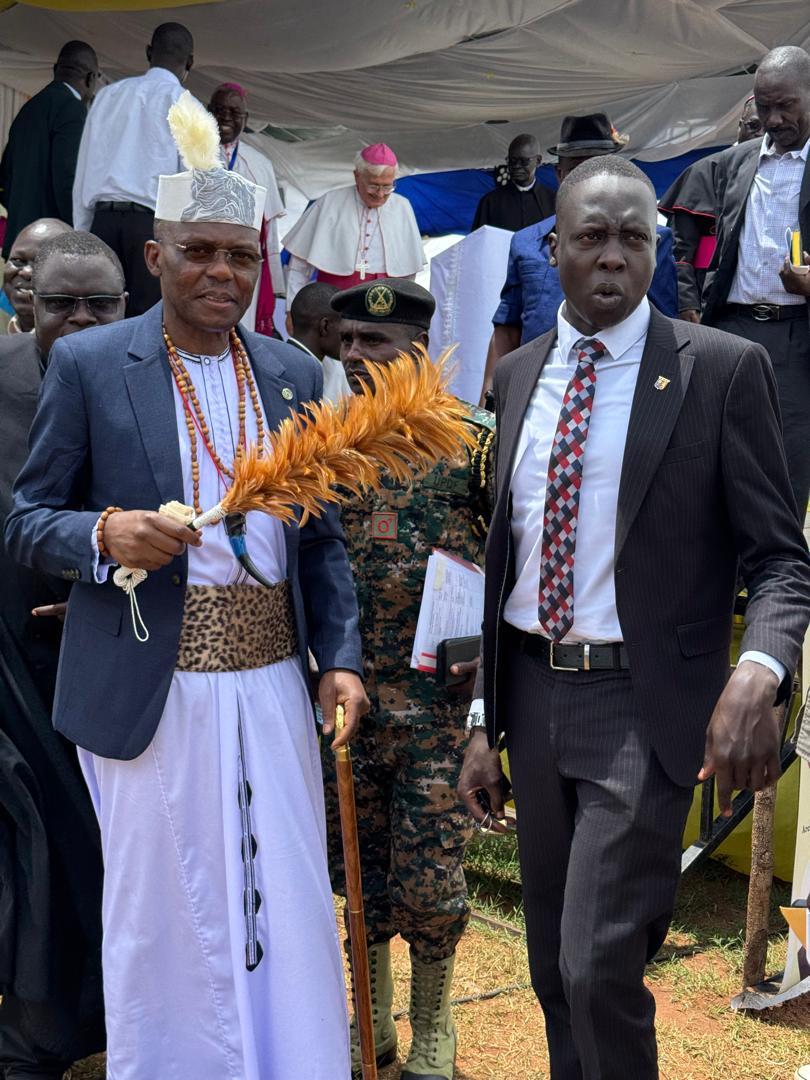
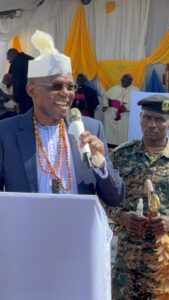
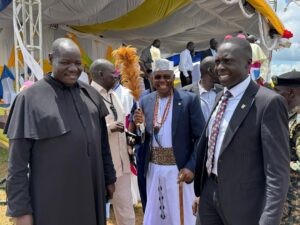
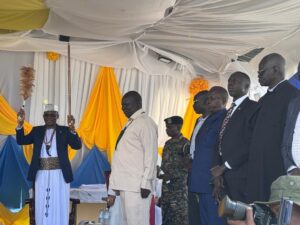
    Last week, the man who now wears the crown over Lango’s open wounds, the Won Nyaci Me Lango, HRH Eng. Dr. Michael Moses Odongo Okune, stood before a sea of bishops, ministers, senior security chiefs, cultural heads and broken families. He did not read a speech, he read the nation its charges.


    This Region Has No Peace Yet.

    “Lango of today is a community yearning for peace,” he declared, and the tent went still, the 2026 general elections, he said, did not close the wounds, they tore the stitches. Old rivalries that should have died with Amin and Kony crawled out of the grave”.

    He said new enemies were baptized in WhatsApp groups and campaign rallies and quickly indicted both sides with the same sentence: the losers believe they were robbed in broad daylight, and the winners believe they had better manifestos and strategies to sail through.

    Their supporters have drunk the same poison, that is not democracy, that is a funeral procession waiting for a trigger.

    It is also not surprising, Won Nyaci added, that WhatsApp groups of Lango are now laced with toxic conversations, insults, tribal slurs, doctored audios and character assassination passed off as “debate.”

    The poison that once flowed from guns now flows from data bundles, and the region’s radio stations, he charged, have become arsonists in the guise of journalists. They fan conflicts and dress it up as “balancing the story and objectivity.”

    They invite two antagonists and enemies, give them microphones, and sell the fire as talk shows to increase listenership and likes purportedly due to ‘contents’.

    Villages are burning with family members against one another, even Churches, the last refuge, have become battlefields, not against Satan, but clergy versus laity, pastor against choir, bishop against board, each quoting Scripture to destroy the other. When the pulpit becomes a trench and the altar a courtroom, the devil takes the day off.

    To explain why Lango and Acholi cannot clap for fake peace, Won Nyaci forced the nation to walk back through its own blood. He spoke of Lango’s warrior past, of Angulu Orenga killed deep in Acholiland and of the 1898 defeat in Buruli where British Maxim guns cut down Agoro Abwango and baptized the chieftaincy with martyrdom. He also reminded the audience of rinderpest in the 1900s that turned kraals into graveyards and proud men into beggars.

    Then rewound and dragged the microphone into the dark room Uganda locks and calls “history”, starting from the 1971 Amin coup. The decade that followed when Amin’s torturous regime that turned Lango and Acholi into hunting grounds.

    He said it plainly: the regime “wiped out most of our educated intelligentsia and the wealthy, not transferred, not retired, but wiped out in situations where men dragged from Makerere, from banks, from churches, from their beds.

    Some were dumped in Namanve forest now an Industrial Park, some were fed to crocodiles in Lake Victoria or River Nile while some were never mentioned again. He pointed the nation to the 1994 Justice Arthur Oder Commission report, not for nostalgia, but because the recommendations are still gathering dust while the killers grew old and the orphans grew bitter.

    From 1980 to 2006 the torment did not stop, it changed rag tag uniforms. Karamojong with guns looted from Moroto barracks turned east Lango into a slaughterhouse.

    The July 1985 Gen Tito Okello coup opened the door to twenty years of Lakwena, UPA and Kony. By 2006, Won Nyaci said, nearly half of Lango was living like prisoners in IDP camps, the cattle economy was ash, and children knew the sound of gunfire before they knew the alphabet. Acholi bled the same river. “It is a past we must collectively and truthfully face,” he said, quoting John 8:32. “Then you will know the truth, and the truth will set you free.”

    Museveni Restored Peace And Lango Repaid With 84


    In the same breath that he recounted the graves, Won Nyaci turned to the living and gave honor where it was due. He saluted H.E. General Yoweri Tibuhaburwa Kaguta Museveni, President of the Republic of Uganda, the UPDF, cultural, political and religious leaders, and all those who made heroic sacrifices in greater Northern Uganda for “working tirelessly and ushering peace in communities after nearly three decades of unrest.”

    He said it without apology: that peace is the reason Lango gave President Museveni 84 percent in the last polls. “It is no surprise,” the Won Nyaci declared. “A people who slept in the bush for twenty years know the value of sleeping in their houses. A people who buried chiefs and priests without justice know the value of a government that stopped the guns.”

    But gratitude, he warned, must not be mistaken for surrender. Lango did not vote for silence. Lango voted for a seat at the table. “Lango deserve some seats in the ‘Kitchen’ where food is cooked and served,” Won Nyaci said, his words deliberate and heavy. “Our sons and daughters who qualify must be considered — in Cabinet, in Commissions, in Command. Peace without equity is a ceasefire. And ceasefires expire.” The message to Kampala was unmistakable: the 84 percent was not a blank cheque. It was an invoice for inclusion.

    Micha 6:8 God’s Courtroom Summons To Uganda.


    The spine of the address was Micah 6:8, and Won Nyaci refused to let it be tamed into a pulpit cliché. He returned it to the courtroom where it was born. Seven hundred years before Christ, Israel was a nation of full temples and empty justice. Kings built altars while judges sold verdicts. The powerful grabbed land and paid tithes from the proceeds. Widows were evicted at sunrise and the offertory basket was passed at sunset.

    God put the nation on trial through Micah and the judgment was three lines long: “He has shown you, O mortal, what is good. And what does the Lord require of you? To act justly and to love mercy and to walk humbly with your God.” No more bulls. No more bribes. Just three commands, or exile.

    Won Nyaci nailed each command to Lango’s door and Uganda’s State House gate.

    To act justly today means CPS Lira or any police facility cannot become the place where the Church is humiliated by engineered complaints, where statements are forced and clergy are arraigned to please invisible sponsors.

    It means the murder of Paramount Chiefs Engur and Otim Etura is not “a matter from the past” but an open homicide file.

    It means the sons of Lango and Acholi who vanished between 1971 and 1979 are not “statistics” but citizens whose families deserve graves and answers. It means 2026 election petitions must be heard with evidence, not dismissed with arrogance. Justice is not a convoy with lead cars. Justice is a peasant in Dokolo getting her land back without selling her daughter to the surveyor.

    To love mercy is to resurrect kayo cuk from the museum and put it in the High Court. Micah’s word is chested, covenant love that forgives when it has the power to destroy. Won Nyaci reminded Uganda that Lango’s ancestors knew this law before the British came. Kayo Cuk has ended blood feuds after murder because the killer came not with money but with a broken spirit.

    In 2026, loving mercy looks like a minister who won by 50 votes walking to his opponent’s home with elders instead of mocking him on TikTok. It looks like a general who commanded in Gulu attending the memorial of a village his ordered flattened. It looks like a Karamojong elder returning one cow taken in 1983 and telling his grandson, “We will not eat theft twice.” Mercy is not weakness. It is the only thing that stops our children from inheriting our wars.

    To walk humbly with your God is the cure for the bungalow disease and the beach syndrome. Micah was speaking to kings who thought God needed their temples. Won Nyaci was speaking to presidents, bishops and CEOs who think Uganda needs their faces on calendars. “The human survival is a never-ending theatre for competition for resources,” he said. “In the process the internal peace in our hearts as advocated by Christ lacks. Because one cannot give what one lacks, we also cannot give to our neighbors peace that we do not have.” Humility in Lango 2026 means an RDC leaves the air-conditioned office, sits on a mat in Apac and listens for two hours without a phone.

    Humility in Uganda means a President-Elect, whom Won Nyaci congratulated for “winning decisively,” remembers that Pax Christi in Regno Christi, the Peace of Christ in the Kingdom of Christ is the only peace that will be remembered when the motorcade is gone.

    The Paramount Chief prayed for a peaceful swearing-in on Tuesday 12 May 2026, and for a reign that will “consolidate the achievements so far made, herald peace, unity, reconciliation and development for us all.” It was a blessing and a subpoena.

    He said Prophet Micah gave Israel three steps or exile in Uganda we have already done many exiles. IDP camps were exile. Mass graves were exile. The next exile will have no return.

    The Poison In Our Households And On Our Airwaves.

    Won Nyaci then turned the knife inward, away from State House and toward our houses and radios. Peace, he said, is not only killed by presidents and rebels. It is killed at the dining table and on the FM dial.

    “In households there are dangerous and poisonous ingredients which deprive families of peace,” he warned. Those poisons have names: domestic violence that turns husbands into jailers and wives into corpses; land disputes that make brothers draw pangas over the same acre their father sweated for; jilted lovers who buy acid and guns because she said no; sons and daughters who fight and kill one another over assets left by parents, turning funerals into succession wars.

    And the poison has gone digital and broadcast. WhatsApp groups have become slaughterhouses where character is butchered by the megabyte, where elders are insulted by children hiding behind stolen profile pictures.

    Radio stations, instead of extinguishing fires, pour petrol and call it “public debate.” They host enemies, not to reconcile them, but to watch them bleed for ratings. They call it balance. Won Nyaci called it arson. And the Church has not been spared. Sanctuaries have become courtrooms. The laity drag clergy to police, and clergy drag laity to court. The war is no longer against principalities. It is chairpersons against pastors, treasurers against reverends, and everyone quoting Matthew 18 while ignoring it. When the shepherd and the sheep sue each other, the wolves organize a feast.

    You cannot ask the government for peace when your sitting room is a battlefield and your radio is a bomb. You cannot demand justice from Kampala when you have denied it to your own blood in the will.

    The peace of Christ must start in the kitchen before it reaches the Cabinet. Kayo Cuk must begin between siblings before it is preached to tribes. A man who cannot forgive his brother over two cows should not sit on a land tribunal. A presenter who profits from hate should not read Micah on Sunday. If the home is poisoned and the airwaves are toxic, the nation will drink poison.

    Language, Ateker, And The Next Thousands Years.

    The Paramount Chief’s vision was not only backward-looking, he commanded the Luo speakers: Lango, Acholi, Alur, Kumam to defend their tongue like they would defend their children.

    A language dies every forty days on this planet, and forty to forty-four percent of the world’s seven thousand languages are endangered. “This should not be the fate of our common language,” he said. He called for Ateker unity with the Kakwa, Teso, Kumam and Karamojong to write their history before NGOs write it for them. Because a people without memory is a people without peace.

    When The Altar and The Throne Agree.

    In a moment that silenced the political class, Won Nyaci honored Bishop Sanctus Lino Wanok as “a proud member of Omolo-acol-odyek-onywal-iceng clan (headed by Awitong George Ojwang-Opota) of Lango,” initiated on 9 February 2026. The Church and the Throne, long kept apart by colonial suspicion and post-colonial pride, were now blood brothers at the same table. That, more than any communiqué, is the start of Christ’s peace.

    The Exposure Uganda (TEU)’s Final Word.

    Lango and Acholi have buried too many sons to be lied to again. From 1971 to 1979 Amin’s regime turned the north into a cemetery without walls. From 1986 to 2006 other uniforms did the same. Today the weapons are petitions, police files, toxic WhatsApp forwards and incendiary talk shows, but the goal is unchanged: to silence, to shame, to rule by fear.

    Micah 6:8 is not a devotional. It is Uganda’s final warning.

    Act justly, or CPSs and every police post will become factories for remanding the innocent and protecting the guilty. Love mercy, or kayo cuk will be replaced by revenge, and every election will be a rehearsal for civil war. Walk humbly, or your children will inherit bungalows with panic buttons and beaches where they drink to forget.

    Won Nyaci HRH Eng. Dr Michael Moses Odongo Okune has spoken, he has thanked President Museveni for restoring peace, and reminded him that Lango’s 84 percent was a vote for food, not crumbs. He has exposed the poison in our homes, in our phones, on our radios, and in our sanctuaries, and called the nation to the altar.

    The elections are over. The swearing-in is around the corner. The graves are still speaking.

    Uganda must choose, the peace of bungalows has failed, the peace of beaches has failed, the peace of WhatsApp insults and radio wars has failed. The peace of Christ is still on the table.

     Jojok Amalu.


  • TEU EXCLUSIVE / LAW & GOVERNANCE.  The “Fixed” Bill That Still Fails: A Plain-English Rebuttal to the Protection of Sovereignty Act, 2026.

    TEU EXCLUSIVE / LAW & GOVERNANCE. The “Fixed” Bill That Still Fails: A Plain-English Rebuttal to the Protection of Sovereignty Act, 2026.

    By Isaac Christopher Lubogo.

    KAMPALA

    At The Exposure Uganda (TEU), we do not flinch at complicated cases or controversial patients. Like a chief surgeon rolls a bleeding body into theatre, switches on the floodlights, and calls for the scalpel, so does TEU wheel the Protection of Sovereignty Bill, 2026 onto the slab for public dissection.

    The law arrived in emergency with arteries severed by bad drafting. Parliament applied gauze, changed the dressing, and declared the patient stable.

    Some people disagree. The vitals are weak. The internal hemorrhaging is constitutional.

    Today, the operating table is ours. The legal surgeon is Isaac Christopher Lubogo. He wears no gloves when cutting through political anesthesia. The incision starts now.

    Read him verbatim. We Expose, You Decide.


    When the Chairperson of the Legal and Parliamentary Affairs Committee, Hon. Baka Stephen Mugabi, tells the country that the amendments to the Protection of Sovereignty Act have reduced “constitutional risk to zero,” he is asking us to believe in magic.

    I have read the final text. I have studied the “trimmed” definitions and the “reduced” penalties. Here is the truth that needs no law degree to understand: The patient has been bandaged, but the internal bleeding has not stopped.

    This bill is no longer the monster it was in its first draft. But to claim it is now safe for democracy is a dangerous illusion. Let me explain, in plain language, why this law remains a threat to every journalist, academic, banker, and citizen who dares to think or speak freely.

    1. The “Clarity” That Is Not Clear.

    Hon. Mugabi says the definitions have been tightened. But ask him to answer this simple question: What exactly is a “foreign interest”?

    The law hinges on this phrase. It determines whether you go to jail or stay free. Yet after all the amendments, the term remains a floating, empty box. If I accept a research grant from a university in London, am I now a vessel for a “foreign interest”? If I interview a diplomat from Nairobi and write an article critical of the government, have I been “influenced”?

    Under settled Ugandan law (the Salvatori Abuki case), any law that forces a citizen to “guess” at its meaning is void before it starts. You cannot obey a law that the Chairperson himself cannot define in a single sentence.

    1. Today You Are Safe. Tomorrow You Are a Criminal.

    The most frightening admission came quietly from the Chair’s own guide. He assures banks and NGOs that they are exempt. But then he adds a killer phrase: “Even exempted actors can fall back into liability.”

    Read that again. Fall back.

    This is not an exemption; it is a suspended sentence. It means your constitutional rights are conditional on the mood of the Minister. Today, your bank processes a remittance—you are safe. Tomorrow, that same bank finances a legal aid clinic that writes a critical report on a policy—suddenly you have “fallen back” into being a foreign agent.

    This violates the very essence of the Rule of Law. The law must be predictable. It cannot be a game of “gotcha.” When a law tells you “You are safe, but watch your step,” it is not protecting sovereignty. It is creating terror.

    1. Ten Years for a Policy Brief?

    Let us talk about proportionality. The original bill threatened 20 years in jail. The new bill reduces that to 10 years and a UGX 1 billion fine.

    Professor, with respect, ten years is a lifetime. What crime are we talking about? We are not talking about selling state secrets. We are talking about “disruptive activities” —a phrase you kept in the law even though no one can define it.

    In the Susan Kigula case, our courts ruled that the punishment must fit the harm. What is the harm of a journalist writing a critical article? What is the harm of a professor giving a speech?

    If the answer is “embarrassment to the government,” then ten years in prison is torture, not justice. Reducing the dose of a poison does not make it medicine.


    1. The Sovereignty Trap.

    The Chair argues that this bill protects Article 1 of the Constitution—the sovereignty of the people.

    He has it exactly backwards.

    The famous CEHURD case reminded us that sovereignty resides in the people, not in the mechanisms of the State. When you criminalize “influence,” you are criminalizing democracy. A citizen writing to their MP is exerting influence.

    A civil society group submitting a report to the UN is exerting influence. A family sending money home from Dubai is exerting economic influence.

    Are these hostile acts? No. They are the lifeblood of a republic. This bill takes the noble idea of sovereignty and turns it into a bludgeon to silence dissent.

    1. The Bank of Uganda “Green Light” is a Red Herring.

    The Chair claims the Bank of Uganda has given a “green light,” so the overlap with financial regulation is fixed.

    With respect, the Bank of Uganda does not have the final word on the Constitution. The Constitutional Court does. A policy letter from a regulator can be reversed tomorrow. The law as written still allows the Minister to reclassify any financial transaction that he deems to be “influencing policy.”

    No serious investor will look at that uncertainty and say, “This is a safe bet.”

    The Verdict: Improved, but Not Constitutional.

    Here is the bottom line.

    The amendments have softened the blow. The diaspora is no longer explicitly targeted. The penalties are lower. But “better” is not the same as “good.” And “improved” is not the same as “constitutional.”

    This law still suffers from four fatal wounds:

    1. Vagueness: No one knows what “influence” means.
    2. Overreach: It captures normal democratic debate.
    3. Conditional Exemptions: Your safety depends on the Minister’s mercy.
    4. Disproportionate Punishment: Ten years for speech is barbaric.

    The Call to Action.

    Hon. Mugabi says there is “zero risk.” I say there is a 100% chance that this law will end up in the Constitutional Court. And when it gets there, the judges will strike down the vague parts, just as they have done before.

    My advice to Parliament is simple: Do not wait for the judges to embarrass you. Go back to the drawing board. Repeal the clause on “economic sabotage” entirely. Require a judicial warrant for any inspection. And define your terms so clearly that a journalist can read the law and laugh, rather than read the law and weep.

    Until then, do not tell us the risk is zero. The only thing that is zero is the public’s trust in a law that makes citizens feel like criminals for the simple act of thinking.

    Isaac Christopher Lubogo is a legal scholar and author of “The Last Supper” critique on the Protection of Sovereignty Act, 2026.

    Editor’s Note: The Protection of Sovereignty Act, 2026 awaits Presidential assent. The surgery is public. The diagnosis is Lubogo’s. We Expose, You Decide.

    Send your second opinion: editor@theexposureuganda.com/0776462509


  • “Order is the first law of victory” – Kiira Security Command Puts Region on High Alert Ahead of Museveni Swearing In.

    “Order is the first law of victory” – Kiira Security Command Puts Region on High Alert Ahead of Museveni Swearing In.

    “Order is the first law of victory,” Kiira Regional Police Commander SSP Charles Nsaba declared Wednesday, as joint security forces in Busoga announced zero tolerance for any attempt to disrupt the swearing in of President elect Gen (Rtd) Yoweri Kaguta Museveni on Tuesday, 12 May 2026.

    Sounding theological and pastor-like, Charles Nsaba quoted 1 Corinthians 14:40, “Let all things be done decently and in order,” and told commanders that the same principle that governed the early church must now govern the security of the state.

    Context:

    In Paul’s day, the church at Corinth was gifted but chaotic. Believers spoke in tongues all at once, prophesied over each other, and competed for attention. Outsiders walked in and thought they were mad. Paul rebuked them: “God is not the author of confusion, but of peace”. His remedy was simple decency and order. One by one, with interpretation, under authority, freedom, yes. But freedom without structure becomes chaos, and chaos destroys the mission.

    “That is the spirit we are invoking,” Nsaba said adding “Everything before, during and after the swearing in must take place in a proper and orderly manner to avoid any disruptive tendencies. A nation, like a church, cannot afford confusion when its future is at stake.”

    The high-level security meeting, held at the secluded Uganda’s Civil Service College in Jinja City, confirmed that Kiira Region is on full readiness to secure the presidential inauguration at Kololo Ceremonial Grounds and the subsequent swearing in of Members of Parliament and local government leaders across Busoga.

    SSP Nsaba chaired the Region JOC sitting, co-chaired by the recently-posted Jinja City RCC Salim Komakech and Busoga Sub Region Cantonment Commander Brig Gen Emmanuel Kanyesigye.

    According to SP James Mubi, the regional police loudspeaker, the meeting brought together regional and divisional heads of departments, DPCs, all OCs of main and sub stations and posts, plus sister security forces.

    “No Room for Imposters or Chaos” 

    Brig Gen Kanyesigye issued a stern warning to “individuals who masquerade as army officers in uniforms with fake IDs and documents.” Such imposters, he said, “must face the law without fear or favor to avoid destabilizing Busoga.”

    According to SP James Mubi, the Region JOC has laid out a sweeping security plan covering all phases of the transition.

    “Key measures include full protection of all VVIPs and VIPs, crowd control and access control at all venues, route security for convoys, and standby emergency response teams including fire rescue and medical services,” Mubi said.

    He added that security forces will conduct 24-hour CCTV surveillance and intelligence sweeps across the region. “The plan also includes interagency security coordination, public sensitization drives, evidence-based monitoring and evaluation, and counter terrorism operations.

    All hotels and guesthouses have been directed to profile guests ahead of the ceremonies as a preventive measure,” Mubi noted.

    Nsaba directed that “intelligence led operations, motorcycle squad patrols, and community policing must continue so as to maintain public safety and security.” He stressed that safety drills by all security forces in the region are already underway.

    Trans Africa Highway Under Watch.

    Jinja City RCC Salim Komakech assured the public that the Trans Africa Highway from Kampala to Malaba border will remain open during the swearing in period and the upcoming Uganda Martyrs Day of 3 June.

    However, the highway will be under “full time surveillance of the Integrated Highway Patrol vehicles to constantly monitor and prevent accidents and highway robberies.”

    Komakech who replaced Richard Gulume Balyainho (now in Bugiri), also appealed to the Jinja City Town Clerk Godfrey B. Kisekka to ensure all venues for the swearing in of local leaders are “in full coordination with the city or district security committees for proper and harmonious purposes.”

    He called upon all elected local government leaders to “unite and promote transformational leadership and governance.”

    Decency, Order, and Readiness.

    The Kiira Region JOC emphasized that human rights will be observed, even as security remains tight. According to SP James Mubi, profiling of guests in hotels is purely preventive. “It is about terrorism and crime prevention, not harassment of innocent citizens,” he said.

    With President Museveni set to be sworn in for the 2026 to 2031 term on Tuesday, 12 May, a public holiday, the region’s message was clear: Busoga will be secure, ceremonies will be orderly, and any attempt to interfere will be met with “zero tolerance.”

    “The spirituality of this exercise is decency and orderliness,” Nsaba said. “Just as Paul protected the church from confusion, we shall protect this nation from disruption. That is how we guarantee peace for the people of Busoga and Uganda.” 

    Why Do Leaders Swear In?

    According to SP James Mubi, these ceremonies are not just pomp and protocol. “A swearing in is the legal and moral bridge between an election and authority,” Mubi said. “Without it, there is no mandate, no office, no command.”

    It establishes legitimacy. The Constitution requires every elected leader, from President to LCIII Chairperson, to take an oath of allegiance and an oath of office before exercising powers.

    The oath transforms a candidate into a state officer. Until that moment, they are still private citizens. The ceremony tells the nation: power has changed hands lawfully, not by force.

    It binds the leader to the people and the law. The oath is a public covenant and the President swears to “preserve, protect and defend the Constitution” and to “promote the welfare of the people of Uganda.”

    MPs swear to “be faithful and bear true allegiance.” Local leaders swear to serve without fear or favor. It is a reminder that they hold power in trust, not by right.

    It guarantees continuity and order. Paul’s warning to Corinth was against confusion. A swearing in is the state’s answer to confusion. It puts dates, witnesses, and oaths around power so that no vacuum emerges. “Decency and order” are why SSP Nsaba invoked scripture. An orderly transfer deters opportunists and tells citizens, and the world, that Uganda is governed by law.

    It invites accountability. Because the oath is public, recorded, and often televised, the leader can be held to their own words. Citizens, courts, and history can measure performance against the promise made at Kololo, at Parliament, or at the district /City headquarters. Breaking the oath becomes perjury before the nation.

    “These ceremonies are the country’s immune system against anarchy,” Mubi said. “They tell the soldier, the police officer, the civil servant, and the citizen exactly who has authority, from what date, and under what law. Without that clarity, you get the chaos Paul warned about in Corinth.”

    On Tuesday 12 May, when Gen Museveni raises his right hand at Kololo, he will not be gaining power, he will be accepting responsibility, and Busoga, under zero tolerance security, intends to witness that moment in decency and in order.


  • “Uganda Cannot Be Different”, SPA Mutyabule Defends Uganda’s Sovereignty Bill 2026, Salutes AAA-Led 11th Parliament.

    “Uganda Cannot Be Different”, SPA Mutyabule Defends Uganda’s Sovereignty Bill 2026, Salutes AAA-Led 11th Parliament.

    Senior Presidential Advisor (SPA) on Poverty Alleviation in Busoga, Hon. Florence Mutyabule, has congratulated President elect Gen (Rtd) Yoweri Kaguta Museveni ahead of his inauguration on Tuesday, 12 May 2026 at Kololo Ceremonial Grounds, urging farmers across Busoga to use the current rains to secure food for their households.

    Peace Without Income Is Empty.

    Speaking ahead of the Kololo ceremony, Mrs. Mutyabule said the 15 January election, which Gen Museveni won with 71.65 percent of the vote, proved that Busoga “chose to protect the gains of peace, stability and socio-economic transformation”.

    However, she stressed that the 2026 to 2031 term will be judged on household income, not speeches.

    “Peace without income is empty, the President is giving us PDM and Emyooga. These are the best anti-poverty programs we have had. But corruption and bad politics killed Entandikwa, Bonabagagawale, NADS, and the Youth Livelihood Programme”,she lamented.

    The SPA put it bluntly that PDM will be different because the President is very tough these days. Still, it starts with us. Corruption is a deadly cancerous disease, and we must fight it right from family level.”

    Mutyabule turned the spotlight on Busoga’s leadership history. “We have had Vice Presidents, Prime Ministers, even a Speaker of Parliament, but we still host maximum poverty,” she said. “What have we done as leaders? This term, we must answer that question with results.”

    She warned against poor land decisions that trap families saying too many of the people are struggling to grow sugarcane on just an acre of land, while others have leased out family land to wealthy farmers for meager returns.

    “Food is national security, it is the economy, it is family stability, rain is falling and the land is ready, this is the first weapon we have against poverty, a secure home must have enough food to meet the physical and nutritional needs of every family member”, she counselled.

    She said it is meaningless talking about PDM and Emyooga when the children go to bed hungry and so encouraged families to grow beans, maize, vegetables. Feed the family first, then sell the surplus.”

    On climate change, she was blunt by calling it a ticking time bomb for Busoga’s women and children.

    “Heatwaves force our girls to walk long distances for water and firewood, we recklessly cut down trees and encroached on wetlands, now everyone feels the consequences, from the youngest babies to the elderly”, Mutyabule noted.

    That Culture Must End.

    The former head teacher, who is also wife to the Speaker of Busoga Kingdom Lukiiko, Owek. George William Wanume Mutyabule, did not mince words about family responsibility.

    She condemned what she called “irresponsible men” who spend days drinking and eating meat in trading centres while their wives and children survive on poor- and low-quality foods.

    “You find a man eating well in joints, yet at home the family has nothing, that is not a man, that is poverty walking, the culture of men eating the chicken while women eat soup must end. Malnutrition is a silent killer in our homes.”

    Salute to Uganda’s Visionary Women.

    Hon Mutyabule also took time to congratulate all visionary women who continue to help drive poverty out of homes, families, and the country.

    “Irrespective of socio economic and political status, I salute you,” she said. “From the First Family, where Maama Janet Kataha Museveni leads the education ministry, to Parliament which has been in the hands of women, to the Prime Minister and ministers, to MPs, ministry departments and government agencies.”

    She continued: “To the women vendors scattered everywhere in the country, to matrons in schools, to female health workers in wards and theatres, to those in the security systems, army, police, and private security firms and to those in the private sector. To the woman who tills the farm and to that one who cleans the office… I salute and congratulate you for making Uganda a warm place where everyone feels your touch. You are the reason Uganda is a home.” 

    Hails 11th Parliament on Sovereignty Bill.

     Mutyabule congratulated the outgoing 11th Parliament “under the guidance of Speaker Rt Hon Anette Anita Among (AAA) for passing the Protection of Sovereignty Bill, 2026 last Tuesday. The Bill now awaits the President’s signature to become law.

    The legislation was introduced by the Ministry of Internal Affairs to “provide for the protection of the sovereignty of the people of Uganda” by regulating foreign influence in domestic politics.

    The original draft drew heavy criticism from civil society, the private sector, and the Bank of Uganda, which warned of “economic disaster” if remittances and NGO funding were restricted.

    Parliament amended the Bill before passing it. The amended law requires licensing for individuals or entities that solicit or disburse funds “for the purpose of financing or sponsoring political activities to further foreign interests”.

    Crucially, it no longer classifies Ugandans in the diaspora as “foreigners” and it exempts remittances sent for family, commercial, or domestic use.

    Mutyabule To critics: Even Homes Have Unwritten Sovereignty ‘commandments.

     Mutyabule had strong words for critics who she said will always oppose anything brought by government even when they know the truth, just to play to the gallery.

    “Let us be honest with ourselves, there are people who will fight every programme not because it is bad but because it is government, the know PDM and Emyooga work, but they choose noise over truth”, she said.

    The former Namutumba District Woman MP used a family analogy to explain why Uganda needs the Protection of Sovereignty Bill,2026.

    “Even homes must have sovereignty, tell me which man with dignity will sit and watch while another man or some men secretly sending money to his wife, or buy food for his family in order to influence the wife’s mind and the direction of that family”, she said.

    This, she said is what the Sovereignty Bill is about, arguing it is not about stopping your daughter in Canada or Dubai from sending school fees or medical bills but about stopping outsiders from buying the soul of this nation through politics.

    “You cannot build a country when other people are paying for your decisions, so stop weaponizing poverty for politics”, she warned.

    She even put another bold message: “If you love Busoga, if you love Uganda, then help us make PDM work, come monitor the money, expose the thieves, but do not tell hungry people to reject food because you do not like the hand that brought it, that is not opposition, it is sabotage”, said Mutyabule.

    “All countries, including powerful nations like the US, Russia, the UK and others, have their own sovereignty laws that protect the security hygiene of their nations,” Mutyabule said. “Uganda cannot be different. The amended Bill makes it clear. Since when did sending money home become a crime? Your daughter in Dubai can send school fees to Iganga without you being called a foreign agent.”

    How Other Countries Do It.

    Sovereignty laws are common globally and serve to regulate external influence in politics and national security:

    United States has Foreign Agents Registration Act (FARA), 1938: Requires anyone acting in a “political or quasi-political capacity” on behalf of foreign governments to register with the Department of Justice. Purpose: Transparency. Penalty: Up to 5 years in prison.

    Russia has “Foreign Agent” Law, 2012: NGOs, media, and individuals receiving foreign funding for political activity must label themselves “foreign agents”. Purpose: Limit external political influence. Critics say it restricts civil society.

    United Kingdom has National Security Act, 2023: Criminalizes “foreign interference” in UK elections and political processes. Requires registration for “foreign influence” activities. Purpose: Protect democracy from hostile states.

    Australia has Foreign Influence Transparency Scheme, 2018: Similar to FARA. Requires registration for lobbying or political communication on behalf of foreign principals. Purpose: Expose covert foreign influence.

    Mrs. Florence Mutyabule says Uganda’s Protection of Sovereignty Bill, 2026.

    This Term Is Your Term.

    President Museveni will be sworn in for the 2026 to 2031 term on Tuesday, 12 May at Kololo Ceremonial Grounds. The ceremony starts at 8:00 a.m. and will run until 2:00 p.m. under the theme: “Protecting the Gains, Making a Qualitative Leap into High Middle-Income Status”.

    It will be a public holiday. Government has confirmed that 35 Heads of State and more than 30 international delegations will attend.

    Mrs. Mutyabule’s final message to Busoga was direct: “Time for internal party elections is over. Negative energies and lamentations will not take Busoga forward, but unity of purpose will. Government has put money in PDM. Use it. Monitor it. Demand accountability from your leaders, including me.”

    She concluded: “To the mothers in markets, the youth in trading centres, the farmers in Namutumba, Iganga or Buyende and Kaliro, this new term is your term. Come to Kololo in discipline. Come back home and work. To the 11th Parliament: Thank you for the Sovereignty Bill. To His Excellency the President: We are ready for the next 5 years.”