Author: nelly

  • Editorial: The Empty Chair That Spoke Louder Than the Oath At Kololo Independence Ceremonial Grounds.

    Editorial: The Empty Chair That Spoke Louder Than the Oath At Kololo Independence Ceremonial Grounds.

    We Expose, You Decide.


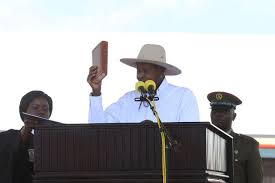
    On Tuesday 12th May 2026, Uganda witnessed what it has seen six times before: the swearing-in of Gen (Rtd)Yoweri Kaguta Museveni for a 7th term.

    The guns boomed (the 21-gun salute rang out) and immediately after, the skies over Kololo and Kampala came alive. Russian-made Sukhoi fighter jets roared across the capital in tight, precise formation, trailing the national colors. Behind them, UPDF commandoes descended in synchronized parachute jumps, landing to the amazement of the crowd below.

    The display drew applause and raised phones from the stands where foreign heads of state, government representatives and members of the diplomatic corps sat alongside Ugandan citizens. It was a moment of pageantry meant to project strength, order and continuity.

    But history will not remember this day for the oath alone. It will remember it for the empty chair.

    For 40 years, Mama Janet Kataha Museveni stood beside her husband on every defining national day. Her absence on Tuesday was a human moment that reminded 48 million Ugandans that power, age, and politics cannot shield anyone from the fragility of life.

    From Kisoro to West Nile, from Karamoja to Bunyoro, from Busoga to Lango and Acholi, anxiety and questions hung on the hearts and lips of everyone. Some whispered them in private. Others voiced them loudly. And as usual, the haters used the moment to spin toxic messages of division and cynicism.

    Yet even in that noise, another sound rose: Ugandans of good spirit bowing their heads and praying for the nation and for the First Family to remain united and strong.

    At The Exposure Uganda, we choose to report the facts without embellishment. Mama Janet was absent. The nation saw visible gaps in the First Family’s public appearance. The future feels more open than it has in a decade. But facts alone do not carry a nation. Character does.

    When Uncertainty Hits, Discern Truth From Lies.

    Scripture: “For I know the plans I have for you,” declares the Lord, “plans to prosper you and not to harm you, plans to give you hope and a future.”

    Jeremiah 29:11

    Context: In 597 BC, Judah was in Babylonian exile. False prophets were telling the people what they wanted to hear: “You’ll be back home soon, this is temporary.” Jeremiah 29:8-9 warns: “Do not let the prophets and diviners among you deceive you… they are prophesying lies to you in my name.”

    Jeremiah’s real message was harder but true: the exile would last 70 years, so settle, work, and seek the welfare of Babylon. Yet in the middle of that hard truth, he gave verse 11 God’s promise that He had not forgotten them and had a future in store.

    For Uganda: Right now, many voices are playing the role of false prophets. They are spinning what people want to hear: doom, dynasty, collapse, or quick fixes. They use Mama Janet’s absence to manufacture panic.

    But the truth is: Uganda is not collapsing because one chair was empty. The real task is what Jeremiah told the exiles , settle down, do the work, seek the welfare of the nation, and trust that God’s long-term plan is still in motion. Discernment matters more than noise.

    Courage Is Required When the Future Feels Unknown.

     Scripture: “Have I not commanded you? Be strong and courageous. Do not be afraid; do not be discouraged, for the Lord your God will be with you wherever you go.” Joshua 1:9.

    Context: Moses had just died. Joshua was taking over leadership of a restless nation heading into unknown territory. God’s command was to be courageous because His presence, not Joshua’s ability, would carry them.

    For Uganda: Transitions make people afraid. Whether it is about leadership, the economy, or security, fear can paralyze us. This verse is a call to move forward with courage, knowing that God’s presence does not leave when leaders change.

    A Nation Should Respond to a Mother’s Sickness with Prayer, Not Speculation.

    Scripture: “Elisha turned away and walked back and forth in the room and then got on the bed and stretched out on him once more. The boy sneezed seven times and opened his eyes.”2 Kings 4:35

    Context: The Shunammite woman’s son died suddenly. She went straight to the prophet Elisha. He prayed, and God restored the boy to life.

    For Uganda: Many Ugandans are praying for Mama Janet’s recovery. This story says that prayer to the God who gives life is not wasted. It also models how a nation should respond to a “mother’s” sickness with intercession, not speculation and gossip.

    God Always Has a Remnant Holding the Nation Together.

    Scripture: “Yet I reserve seven thousand in Israel all whose knees have not bowed down to Baal and whose mouths have not kissed him.” 1 Kings 19:18

    Context: Elijah was discouraged, thinking he was the only one left serving God. God showed him there were 7,000 others still faithful.

    For Uganda: In moments when leaders look isolated and the future looks shaky, this reminds us that Uganda’s future is not dependent on one family or one leader. Thousands of teachers, nurses, pastors, entrepreneurs, and ordinary citizens are holding the country together quietly.

     Even With Little, God Can Stretch It.

    Scripture: “For this is what the Lord, the God of Israel, says: ‘The jar of flour will not be used up and the jug of oil will not run dry until the day the Lord sends rain on the land.’” 1 Kings 17:14.

    Context: During famine, the widow of Zarephath had one last meal. Elijah told her to give it to him first, and God multiplied it.

    For Uganda: Many Ugandans feel like they are running on the last of their “flour and oil” economically and socially. This story reminds us that God can stretch what little we have when we act in faith and trust Him, rather than panic.

     Our Conclusion.

    The 7th term begins with a question mark, not an exclamation point. That is not weakness. That is honesty.

    In uncertain times, everyone speaks. But not everyone tells the truth. Let this be the term where Uganda rejects the false prophets of social media and politics, and holds onto the truth that God’s purpose for the nation is bigger than one ceremony.

    Let this be the term where we stop confusing noise for leadership, and start demanding truth, service, and unity. Let this be the term where the First Family, like every other Ugandan family, remembers that strength is not in hiding frailty, but in facing it together.

    We at The Exposure Uganda will continue to expose what others hide. We will hold power accountable. We will give voice to the ordinary Ugandan who cares more about medicine in the hospital than about slogans on the podium.

    And from all of us at The Exposure Uganda: Get well soon, Mama Janet Kataha Museveni. Uganda needs your prayers and we join thousands across the country in wishing you a quick and full recovery.

    Decide whether you will feed the cycle of hate, or whether you will be part of the generation that chooses prayer over provocation, truth over tribalism, and unity over uncertainty.

    But at the end of the day, We Expose, You Decide.  


  • From Bush War To Holy War: Nabbi Daudi Picks Luwero For Second Liberation of Uganda, Says Country Still In Egyptian Spiritual Captivity.

    “Truth without love is too hard; love without truth is too soft.” — John Robert Walmsley Stott (1921–2011), the British Anglican clergyman, theologian, and author widely regarded as one of the most influential evangelical voices of the 20th century.

    It is that unresolved tension between truth and love that Prophet David Isanga, known to his followers as Nabbi Daudi says Uganda can no longer afford to ignore, and it is on the historically bloodstained soil of Luwero that he intends to force the confrontation.

    Addressing thousands at the Universal Apostles Fellowship Church of Righteousness (UAFCR) headquarters on Acacia Road in Jinja City on Sunday, the Supreme Spiritual Leader reminded the nation that while Gen (Rtd)President Yoweri Kaguta Museveni’s five-year guerrilla war delivered political liberation from Luwero in 1986, a deeper form of captivity has remained unbroken for four decades.

    For that reason, UAFCR has announced a Mega Gospel Crusade in Luwero on June 14, 2026, under the uncompromising theme ‘Truth Shall Set You Free’, drawn from the Gospel of John, with the stated aim of completing the freedom that began in the bush but stalled in the heart.


    This declaration comes after Nabbi Daudi convened a full house of church elders on Saturday for an intensive teaching session that drew together leaders from every tier of UAFCOR’s structure, from babulizi(preachers) at the grassroots to pastors, priests, overseers, and zonal heads, along with youth and women leaders from across the fellowship.

    In that closed session, he charged them to shepherd God’s people with genuine love and care while refusing to dilute the Church’s stance on sin and the patterns that feed it, stressing that the Church has matured from strength to strength and must now function as a sanctuary of calm and comfort for the downtrodden, for those tormented by sin, by demonic oppression, and by the grinding challenges of daily life.

    The Church, he told them, must become a center of whole healing where anyone who walks through its doors returns happier and refreshed, not because of emotional sentiment or stage-managed excitement, as he said happens in some denominations, but because of sound biblical teaching that gives clear direction on how to avoid sin and the courage to abandon it.

    Using the analogy of a classroom, he said that just as a teacher cannot award marks to a pupil who has failed, church leaders cannot play games with the question of sin; their duty is to rebuke, to correct, and to restore with firmness anchored in Scripture.

    Nabbi Daudi also issued a pointed warning to women leaders in particular, cautioning them against murmuring, gossiping, and grumbling, which he said attract God’s wrath and corrode fellowship, and instead called them to model humility and obedience to the Word so that they remain firmly in righteousness.

    He further cautioned all leaders against indecency in dress and speech, insisting that those who stand before God’s people must lead by example in conduct, appearance, and language, because compromise at the top breeds compromise in the pews.

    Nabbi Daudi, who has never concealed his loyalty to the National Resistance Movement, opened his Sunday address by congratulating President Museveni, now 82, on his swearing-in for another five-year term following the January 15 polls, crediting the stability secured since 1986 for creating the very freedom of worship that makes a gathering of this magnitude possible.

    Because there is peace, he told congregants and the assembled press, the Church can proclaim its message openly; because there is liberty, believers can assemble in Luwero without fear of state interference; and because of that liberty, he argued, the nation now bears the responsibility to exchange spiritual duplicity for righteousness rather than continue the religious double-mindedness that he believes has been normalized across denominational and even faith lines.

    The selection of Luwero is deliberate, and Prophet Daudi was careful to spell out the symbolism for his audience. Just as Moses confronted Pharaoh and led Israel out of Egypt after four centuries of bondage, parting the Red Sea so that former slaves could walk into freedom, Uganda emerged from political tyranny when Museveni’s forces broke out of the Luwero Triangle, yet too many citizens remain, in the Prophet’s words, in “spiritual Egypt”, politically free but inwardly chained by habits and allegiances that contradict the creeds they recite every week.

    It is for this reason that UAFCR has designated Luwero as the altar where a second liberation must begin, envisioning the June crusade as the decisive moment when the nation moves from private compromise into public righteousness, with Scripture alone wielded as the weapon of choice.

    The condition that drew his sharpest rebuke was what he described as a pervasive culture of religious duplicity that erases the moral line between sanctuary and street, between believer and unbeliever, between adult and youth.

    The man of God spoke of men and women who command the front rows of churches and mosques, who bear Western names with pride and quote sacred texts with fluency, yet whose lives contradict every syllable they utter.

    They lift holy hands and post Scripture on social media by day, he said, but by night they kneel before Jaajas in ancestral shrines, bartering rituals for visas, jobs, marriages, and business contracts that the Bible condemns; they observe Ramadan and keep the five daily prayers while constructing enterprises on bribery and graft; they arrive at Sunday worship sober and solemn only after spending Friday intoxicated beyond speech, all justified under the respectable disguise of “networking with friends.”

    That, he insisted, is neither the righteousness for which Christ died nor the freedom for which Ugandans bled in the bush.

    Beyond the sexual immorality of adultery and fornication that he said has grown so commonplace that communities no longer recoil, the trained physician-turned Prophet condemned the open commercialization of faith that has converted Christianity into a marketplace of handkerchiefs, anointed rice, special water, and oil marketed as guaranteed passports to prosperity, healing, and foreign travel.

    Citing the solemn warning that closes the book of Revelation (22:18) against adding to God’s Word, he argued that such practices are not harmless culture but a modern idolatry that invites judgment rather than blessing, and he cautioned against the accelerating attempt to insert unbiblical philosophies into what some promoters are branding an “African Bible” in the name of cultural relevance.

    For UAFCR, whose Luganda motto is Mutukirivu, righteousness is not a brand that can be adjusted to flatter the wealthy, the credentialed, or the connected; it is, as he put it, the only cut-off point that matters before God, irrespective of the academic titles a person may parade.

    Contrasting his approach with President Museveni’s, Nabbi Daudi said that whereas the guerrilla war relied on stealth, surprise, and prolonged engagement with a physical adversary, the Luwero crusade represents a direct and public assault on what he identifies as the true enemy: Satan and the cluster of entrenched sins that continue to corrode Ugandan society, including witchcraft, idolatry, theft and embezzlement of public resources, and the kind of false doctrine that teaches congregants they can worship God on Sunday and ancestral spirits on Monday.

    The President fought to disarm politics of the gun, and leadership of impunity he observed; the Church must now fight to disarm the heart of sin, and both campaigns, though different in method, deserve to be called liberation because both seek to set a people free to live without fear.

    With less than five weeks to the appointed date, UAFCR confirmed that intercessory prayer chains, street evangelism units, and district mobilization teams are already active across Greater Luwero, laying the groundwork for a day-long convocation that will blend brass bands and mass choirs with public testimonies of deliverance and the free distribution of Bibles and discipleship materials in Luganda, Luo, and Lusoga.

    The June 14 event will beam live on national and regional mainstream media outlets and stream across popular social media platforms, while also being headlined in major traditional and online newspapers, The New Vision, the Daily Monitor, The Observer and The Exposure Uganda, Mulengera News and followed by Nile Post, Chimpreports, The Independent Magazine, and other leading digital outlets, as part of a deliberate strategy to carry the call to repentance beyond the crusade grounds into every Ugandan home.

    Prophet Daudi closed by placing the choice before every listener without apology: no one can serve God in church and Jaajas in the shrine, no one can wear the name of a believer while living as a habitual adulterer, and no one can claim to be led by the Holy Spirit while regularly drinking to the point of incoherence.

    Uganda has peace, he said, and the nation should be grateful; what Uganda needs now is truth, because only truth will complete the freedom that began in Luwero forty years ago.

    How Nabbi Daudi Is Using ‘Truth Shall Set You Free’ in Luwero.

    Prophet David Isanga told thousands gathered at the UAFCOR headquarters in Jinja on Sunday that he has chosen ‘Truth Shall Set You Free’ as the theme for the June 14, 2026 Mega Gospel Crusade because he believes Uganda’s liberation remains unfinished.

    Speaking at the launch, Nabbi Daudi said President Museveni’s guerrilla war broke the country’s political chains in Luwero in 1986, but a different kind of bondage still grips the nation.

    He described Uganda as being trapped in what he called “spiritual Egypt”, politically free yet inwardly enslaved by shrine worship, adultery, drunkenness, corruption, and the sale of so-called anointed items.

    “For UAFCR, truth means Scripture alone, not ancestral spirits, not cultural additions to the Bible, and not the kind of sentimental religion that blesses sin on Monday after worshipping on Sunday”, he said.

    The context of The Truth Shall Set You Free Then and Now.

    Original context when Jesus said it-John 8:31-32 Full verse”So Jesus said to the Jews who had believed him, ‘If you abide in my word, you are truly my disciples and you will know the truth and the truth will set you free”.

    What Was Happening: Jesus was teaching in the temple in Jerusalem during a heated exchange with Jewish religious leaders and crowds. Some had just begun to believe in Him.

    What “truth” meant here:

    The person of Christ-Jesus was not talking about facts or data or statistics. In John’s Gospel 14:6, He had already said “I am the way and the truth and the life”. The ‘truth’ is Himself, His teaching, His identity as Messiah, His work on the cross.

    Freedom from what: The crowd immediately objected: “we are offspring of Abraham and have never been enslaved to anyone”. Jesus answered: “Everyone who practices sin is a slave to sin”. So, the freedom He offered was not political freedom from Rome, it was spiritual freedom from the power, penalty and deception of sin.

    Condition: “If you abide in my word”, meaning remain, obey, live in what He teaches. Freedom is not automatic; it is tied to discipleship.

    In short John 8, “the truth will set you free” meant that knowing and following Jesus breaks the chains of sin, religious hypocrisy and spiritual blindness.

    Nabbi Daudi is drawing a direct parallel between Luwero 1986 and Luwero 2026: political vs spiritual-that whereas Museveni’s war freed Uganda from dictatorship, tyranny and gun violence, Nabbi Daudi argues that Uganda is still captive to secret sins and religious duplicity-serving God on Sunday and Jaajas on Monday to Friday.

    Truth As Confrontation-For UAFCR, ‘truth is the uncompromising standard of Scripture that exposes witchcraft, sexual immorality, corruption and abuse of office and fake African bible additions. It is not comfortable because it rebukes.

    Freedom as National Repentance-Nabbi Daudi is also telling Uganda that peace without righteousness is incomplete freedom. So, the Crusade is framed as the moment to ‘cross from private compromise into public righteousness’. The media beam ensures that the whole country hears and watch the choice.

    The tension he is exploiting: John R. W Stott’s quote, “truth without love is too hard, love without truth is too soft”. Nabbi Daudi argues that ‘soft’ religion-love, peace, freedom of worship since 1986 but now needs ‘hard’ truth that names sin and demands change.

    Jesus used it to call individuals from slavery to sin into discipleship, Nabbi Daudi is using it to call a nation from spiritual compromise into public righteousness, using Luwero as the altar where Uganda finishes what 1986 started.

  • Won Nyaci At GANAL: Lango Gave M7 84% For Peace, Now demand Seats In The Kitchen To Serve Hungry People.

    Won Nyaci At GANAL: Lango Gave M7 84% For Peace, Now demand Seats In The Kitchen To Serve Hungry People.

    The word ‘peace’ has been so badly abused, auctioned to the highest bidder and draped over every lie from Kampala to Lira to Gulu and Arua or Kisoro that it now means nothing to a widow who washes clothes in a borrowed basin and everything to the street kid who sleeps inside an empty box culvert along Lugogo Northern Bypass.

    Like British author, poet and journalist Rudyard Kipling(1865-1936) said in his 1923 speech to the Royal College of Surgeons: words are, of course the most powerful drug used by mankind, in Kampala it is a bungalow in Kololo or Muyenga or Munyonyo with razor wire and CCTV, a German car and a Royce Rolls car in the compound and billions of cash in the account, yet the people inside chew sleeping pills and drafts his will because court summons, land disputes and suspected or imaginary hired assassins lurk around turning his mansion into a prison.

    In the air it is a business-class seat to Dubai, Washington, New York, Paris, London, Johannesburg, Zanzibar or Santorini, resort after resort, smile after smile for the camera, yet the soul is in solitary confinement, haunted by betrayal, debt and the silence of God. That is not peace, that is a polished coffin.

    But come to Lango and Acholi, Northern Uganda, whose sons were hunted like wild game during Amin’s torturous regime from 1971 to 1979. Come and ask the mother in Patongo, Palabek, Lelalakim or Abako, Centa Otwal who still keeps her son’s primary school shirt, folded, because the soldiers took him from the classroom and he never came back.

    Ask the struggling widow in Lira City who was told her husband “disappeared” from Nile Mansions (now Serena Hotel), and forty-seven years later the state has never given her a death certificate, let alone a body. Ask the clans of Lango that watched two Paramount Chiefs, Yokosafati Engur of Ococ Puru Iwor and Otim Etura of Okarowok Malakwanga, executed by agents of the same government that called them “Your Highness.”

    Ask the Catholics of Lira Diocese who buried Fr. Anania Oryang in 1979, murdered for wearing a collar in the wrong decade. You need no lecture on how the archbishop of the province of Uganda, Rwanda, Burundi and Boga Zaire Janani Luwum met his fate.

    They will tell you what peace is not, peace is not a UN convoy, it is not necessarily only about election declaration forms and certificates or thanksgiving and victory parties. Peace is when the state stops killing its own, when the truth is exhumed with the bones, when a child can say his father’s name without whispering.

    And above all, the Church of Jesus Christ on earth knows the fraud. Christ never promised the peace of bungalows or visas and air tickets. He promised something that bungalows cannot buy. “My peace I give to you, not as the world gives”, he said quoting Jesus’s message during the last Supper, hours before His arrest as recorded by John 14:27. It is that peace, the kind that survives Amin, Kony, and ballot papers, that the Lira Catholic Diocese under Rt. Rev. Bishop Sanctus Lino Wanok is demanding.

    For seven days the Diocese, which pastors the entire traditional Lango sub-region, shut down business as usual and convened the GANAL Prayer Peace Week.

    GANAL is an acronym which stands for Gulu , Arua, Nebbi,Lira which reflects the joint Catholic effort across  Northern Uganda to heal the wounds of war.

    It was started in 2005 by Archbishop John Baptist Odama and rotates yearly between the four dioceses. The mission now is to bring all of the province’s people together and ensure they live in peace and harmony despite their cultural differences.

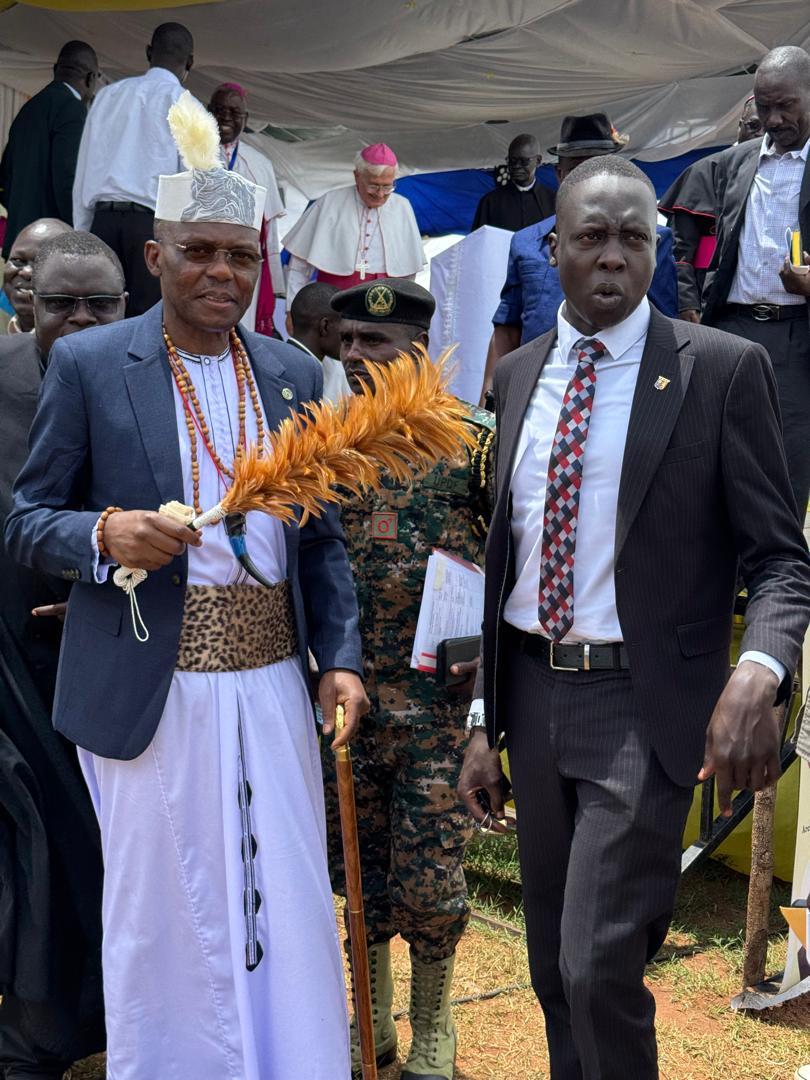
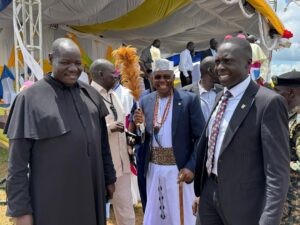
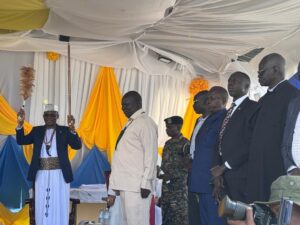
    Last week, the man who now wears the crown over Lango’s open wounds, the Won Nyaci Me Lango, HRH Eng. Dr. Michael Moses Odongo Okune, stood before a sea of bishops, ministers, senior security chiefs, cultural heads and broken families. He did not read a speech, he read the nation its charges.


    This Region Has No Peace Yet.

    “Lango of today is a community yearning for peace,” he declared, and the tent went still, the 2026 general elections, he said, did not close the wounds, they tore the stitches. Old rivalries that should have died with Amin and Kony crawled out of the grave”.

    He said new enemies were baptized in WhatsApp groups and campaign rallies and quickly indicted both sides with the same sentence: the losers believe they were robbed in broad daylight, and the winners believe they had better manifestos and strategies to sail through.

    Their supporters have drunk the same poison, that is not democracy, that is a funeral procession waiting for a trigger.

    It is also not surprising, Won Nyaci added, that WhatsApp groups of Lango are now laced with toxic conversations, insults, tribal slurs, doctored audios and character assassination passed off as “debate.”

    The poison that once flowed from guns now flows from data bundles, and the region’s radio stations, he charged, have become arsonists in the guise of journalists. They fan conflicts and dress it up as “balancing the story and objectivity.”

    They invite two antagonists and enemies, give them microphones, and sell the fire as talk shows to increase listenership and likes purportedly due to ‘contents’.

    Villages are burning with family members against one another, even Churches, the last refuge, have become battlefields, not against Satan, but clergy versus laity, pastor against choir, bishop against board, each quoting Scripture to destroy the other. When the pulpit becomes a trench and the altar a courtroom, the devil takes the day off.

    To explain why Lango and Acholi cannot clap for fake peace, Won Nyaci forced the nation to walk back through its own blood. He spoke of Lango’s warrior past, of Angulu Orenga killed deep in Acholiland and of the 1898 defeat in Buruli where British Maxim guns cut down Agoro Abwango and baptized the chieftaincy with martyrdom. He also reminded the audience of rinderpest in the 1900s that turned kraals into graveyards and proud men into beggars.

    Then rewound and dragged the microphone into the dark room Uganda locks and calls “history”, starting from the 1971 Amin coup. The decade that followed when Amin’s torturous regime that turned Lango and Acholi into hunting grounds.

    He said it plainly: the regime “wiped out most of our educated intelligentsia and the wealthy, not transferred, not retired, but wiped out in situations where men dragged from Makerere, from banks, from churches, from their beds.

    Some were dumped in Namanve forest now an Industrial Park, some were fed to crocodiles in Lake Victoria or River Nile while some were never mentioned again. He pointed the nation to the 1994 Justice Arthur Oder Commission report, not for nostalgia, but because the recommendations are still gathering dust while the killers grew old and the orphans grew bitter.

    From 1980 to 2006 the torment did not stop, it changed rag tag uniforms. Karamojong with guns looted from Moroto barracks turned east Lango into a slaughterhouse.

    The July 1985 Gen Tito Okello coup opened the door to twenty years of Lakwena, UPA and Kony. By 2006, Won Nyaci said, nearly half of Lango was living like prisoners in IDP camps, the cattle economy was ash, and children knew the sound of gunfire before they knew the alphabet. Acholi bled the same river. “It is a past we must collectively and truthfully face,” he said, quoting John 8:32. “Then you will know the truth, and the truth will set you free.”

    Museveni Restored Peace And Lango Repaid With 84


    In the same breath that he recounted the graves, Won Nyaci turned to the living and gave honor where it was due. He saluted H.E. General Yoweri Tibuhaburwa Kaguta Museveni, President of the Republic of Uganda, the UPDF, cultural, political and religious leaders, and all those who made heroic sacrifices in greater Northern Uganda for “working tirelessly and ushering peace in communities after nearly three decades of unrest.”

    He said it without apology: that peace is the reason Lango gave President Museveni 84 percent in the last polls. “It is no surprise,” the Won Nyaci declared. “A people who slept in the bush for twenty years know the value of sleeping in their houses. A people who buried chiefs and priests without justice know the value of a government that stopped the guns.”

    But gratitude, he warned, must not be mistaken for surrender. Lango did not vote for silence. Lango voted for a seat at the table. “Lango deserve some seats in the ‘Kitchen’ where food is cooked and served,” Won Nyaci said, his words deliberate and heavy. “Our sons and daughters who qualify must be considered — in Cabinet, in Commissions, in Command. Peace without equity is a ceasefire. And ceasefires expire.” The message to Kampala was unmistakable: the 84 percent was not a blank cheque. It was an invoice for inclusion.

    Micha 6:8 God’s Courtroom Summons To Uganda.


    The spine of the address was Micah 6:8, and Won Nyaci refused to let it be tamed into a pulpit cliché. He returned it to the courtroom where it was born. Seven hundred years before Christ, Israel was a nation of full temples and empty justice. Kings built altars while judges sold verdicts. The powerful grabbed land and paid tithes from the proceeds. Widows were evicted at sunrise and the offertory basket was passed at sunset.

    God put the nation on trial through Micah and the judgment was three lines long: “He has shown you, O mortal, what is good. And what does the Lord require of you? To act justly and to love mercy and to walk humbly with your God.” No more bulls. No more bribes. Just three commands, or exile.

    Won Nyaci nailed each command to Lango’s door and Uganda’s State House gate.

    To act justly today means CPS Lira or any police facility cannot become the place where the Church is humiliated by engineered complaints, where statements are forced and clergy are arraigned to please invisible sponsors.

    It means the murder of Paramount Chiefs Engur and Otim Etura is not “a matter from the past” but an open homicide file.

    It means the sons of Lango and Acholi who vanished between 1971 and 1979 are not “statistics” but citizens whose families deserve graves and answers. It means 2026 election petitions must be heard with evidence, not dismissed with arrogance. Justice is not a convoy with lead cars. Justice is a peasant in Dokolo getting her land back without selling her daughter to the surveyor.

    To love mercy is to resurrect kayo cuk from the museum and put it in the High Court. Micah’s word is chested, covenant love that forgives when it has the power to destroy. Won Nyaci reminded Uganda that Lango’s ancestors knew this law before the British came. Kayo Cuk has ended blood feuds after murder because the killer came not with money but with a broken spirit.

    In 2026, loving mercy looks like a minister who won by 50 votes walking to his opponent’s home with elders instead of mocking him on TikTok. It looks like a general who commanded in Gulu attending the memorial of a village his ordered flattened. It looks like a Karamojong elder returning one cow taken in 1983 and telling his grandson, “We will not eat theft twice.” Mercy is not weakness. It is the only thing that stops our children from inheriting our wars.

    To walk humbly with your God is the cure for the bungalow disease and the beach syndrome. Micah was speaking to kings who thought God needed their temples. Won Nyaci was speaking to presidents, bishops and CEOs who think Uganda needs their faces on calendars. “The human survival is a never-ending theatre for competition for resources,” he said. “In the process the internal peace in our hearts as advocated by Christ lacks. Because one cannot give what one lacks, we also cannot give to our neighbors peace that we do not have.” Humility in Lango 2026 means an RDC leaves the air-conditioned office, sits on a mat in Apac and listens for two hours without a phone.

    Humility in Uganda means a President-Elect, whom Won Nyaci congratulated for “winning decisively,” remembers that Pax Christi in Regno Christi, the Peace of Christ in the Kingdom of Christ is the only peace that will be remembered when the motorcade is gone.

    The Paramount Chief prayed for a peaceful swearing-in on Tuesday 12 May 2026, and for a reign that will “consolidate the achievements so far made, herald peace, unity, reconciliation and development for us all.” It was a blessing and a subpoena.

    He said Prophet Micah gave Israel three steps or exile in Uganda we have already done many exiles. IDP camps were exile. Mass graves were exile. The next exile will have no return.

    The Poison In Our Households And On Our Airwaves.

    Won Nyaci then turned the knife inward, away from State House and toward our houses and radios. Peace, he said, is not only killed by presidents and rebels. It is killed at the dining table and on the FM dial.

    “In households there are dangerous and poisonous ingredients which deprive families of peace,” he warned. Those poisons have names: domestic violence that turns husbands into jailers and wives into corpses; land disputes that make brothers draw pangas over the same acre their father sweated for; jilted lovers who buy acid and guns because she said no; sons and daughters who fight and kill one another over assets left by parents, turning funerals into succession wars.

    And the poison has gone digital and broadcast. WhatsApp groups have become slaughterhouses where character is butchered by the megabyte, where elders are insulted by children hiding behind stolen profile pictures.

    Radio stations, instead of extinguishing fires, pour petrol and call it “public debate.” They host enemies, not to reconcile them, but to watch them bleed for ratings. They call it balance. Won Nyaci called it arson. And the Church has not been spared. Sanctuaries have become courtrooms. The laity drag clergy to police, and clergy drag laity to court. The war is no longer against principalities. It is chairpersons against pastors, treasurers against reverends, and everyone quoting Matthew 18 while ignoring it. When the shepherd and the sheep sue each other, the wolves organize a feast.

    You cannot ask the government for peace when your sitting room is a battlefield and your radio is a bomb. You cannot demand justice from Kampala when you have denied it to your own blood in the will.

    The peace of Christ must start in the kitchen before it reaches the Cabinet. Kayo Cuk must begin between siblings before it is preached to tribes. A man who cannot forgive his brother over two cows should not sit on a land tribunal. A presenter who profits from hate should not read Micah on Sunday. If the home is poisoned and the airwaves are toxic, the nation will drink poison.

    Language, Ateker, And The Next Thousands Years.

    The Paramount Chief’s vision was not only backward-looking, he commanded the Luo speakers: Lango, Acholi, Alur, Kumam to defend their tongue like they would defend their children.

    A language dies every forty days on this planet, and forty to forty-four percent of the world’s seven thousand languages are endangered. “This should not be the fate of our common language,” he said. He called for Ateker unity with the Kakwa, Teso, Kumam and Karamojong to write their history before NGOs write it for them. Because a people without memory is a people without peace.

    When The Altar and The Throne Agree.

    In a moment that silenced the political class, Won Nyaci honored Bishop Sanctus Lino Wanok as “a proud member of Omolo-acol-odyek-onywal-iceng clan (headed by Awitong George Ojwang-Opota) of Lango,” initiated on 9 February 2026. The Church and the Throne, long kept apart by colonial suspicion and post-colonial pride, were now blood brothers at the same table. That, more than any communiqué, is the start of Christ’s peace.

    The Exposure Uganda (TEU)’s Final Word.

    Lango and Acholi have buried too many sons to be lied to again. From 1971 to 1979 Amin’s regime turned the north into a cemetery without walls. From 1986 to 2006 other uniforms did the same. Today the weapons are petitions, police files, toxic WhatsApp forwards and incendiary talk shows, but the goal is unchanged: to silence, to shame, to rule by fear.

    Micah 6:8 is not a devotional. It is Uganda’s final warning.

    Act justly, or CPSs and every police post will become factories for remanding the innocent and protecting the guilty. Love mercy, or kayo cuk will be replaced by revenge, and every election will be a rehearsal for civil war. Walk humbly, or your children will inherit bungalows with panic buttons and beaches where they drink to forget.

    Won Nyaci HRH Eng. Dr Michael Moses Odongo Okune has spoken, he has thanked President Museveni for restoring peace, and reminded him that Lango’s 84 percent was a vote for food, not crumbs. He has exposed the poison in our homes, in our phones, on our radios, and in our sanctuaries, and called the nation to the altar.

    The elections are over. The swearing-in is around the corner. The graves are still speaking.

    Uganda must choose, the peace of bungalows has failed, the peace of beaches has failed, the peace of WhatsApp insults and radio wars has failed. The peace of Christ is still on the table.

     Jojok Amalu.


  • TEU EXCLUSIVE / LAW & GOVERNANCE.  The “Fixed” Bill That Still Fails: A Plain-English Rebuttal to the Protection of Sovereignty Act, 2026.

    TEU EXCLUSIVE / LAW & GOVERNANCE. The “Fixed” Bill That Still Fails: A Plain-English Rebuttal to the Protection of Sovereignty Act, 2026.

    By Isaac Christopher Lubogo.

    KAMPALA

    At The Exposure Uganda (TEU), we do not flinch at complicated cases or controversial patients. Like a chief surgeon rolls a bleeding body into theatre, switches on the floodlights, and calls for the scalpel, so does TEU wheel the Protection of Sovereignty Bill, 2026 onto the slab for public dissection.

    The law arrived in emergency with arteries severed by bad drafting. Parliament applied gauze, changed the dressing, and declared the patient stable.

    Some people disagree. The vitals are weak. The internal hemorrhaging is constitutional.

    Today, the operating table is ours. The legal surgeon is Isaac Christopher Lubogo. He wears no gloves when cutting through political anesthesia. The incision starts now.

    Read him verbatim. We Expose, You Decide.


    When the Chairperson of the Legal and Parliamentary Affairs Committee, Hon. Baka Stephen Mugabi, tells the country that the amendments to the Protection of Sovereignty Act have reduced “constitutional risk to zero,” he is asking us to believe in magic.

    I have read the final text. I have studied the “trimmed” definitions and the “reduced” penalties. Here is the truth that needs no law degree to understand: The patient has been bandaged, but the internal bleeding has not stopped.

    This bill is no longer the monster it was in its first draft. But to claim it is now safe for democracy is a dangerous illusion. Let me explain, in plain language, why this law remains a threat to every journalist, academic, banker, and citizen who dares to think or speak freely.

    1. The “Clarity” That Is Not Clear.

    Hon. Mugabi says the definitions have been tightened. But ask him to answer this simple question: What exactly is a “foreign interest”?

    The law hinges on this phrase. It determines whether you go to jail or stay free. Yet after all the amendments, the term remains a floating, empty box. If I accept a research grant from a university in London, am I now a vessel for a “foreign interest”? If I interview a diplomat from Nairobi and write an article critical of the government, have I been “influenced”?

    Under settled Ugandan law (the Salvatori Abuki case), any law that forces a citizen to “guess” at its meaning is void before it starts. You cannot obey a law that the Chairperson himself cannot define in a single sentence.

    1. Today You Are Safe. Tomorrow You Are a Criminal.

    The most frightening admission came quietly from the Chair’s own guide. He assures banks and NGOs that they are exempt. But then he adds a killer phrase: “Even exempted actors can fall back into liability.”

    Read that again. Fall back.

    This is not an exemption; it is a suspended sentence. It means your constitutional rights are conditional on the mood of the Minister. Today, your bank processes a remittance—you are safe. Tomorrow, that same bank finances a legal aid clinic that writes a critical report on a policy—suddenly you have “fallen back” into being a foreign agent.

    This violates the very essence of the Rule of Law. The law must be predictable. It cannot be a game of “gotcha.” When a law tells you “You are safe, but watch your step,” it is not protecting sovereignty. It is creating terror.

    1. Ten Years for a Policy Brief?

    Let us talk about proportionality. The original bill threatened 20 years in jail. The new bill reduces that to 10 years and a UGX 1 billion fine.

    Professor, with respect, ten years is a lifetime. What crime are we talking about? We are not talking about selling state secrets. We are talking about “disruptive activities” —a phrase you kept in the law even though no one can define it.

    In the Susan Kigula case, our courts ruled that the punishment must fit the harm. What is the harm of a journalist writing a critical article? What is the harm of a professor giving a speech?

    If the answer is “embarrassment to the government,” then ten years in prison is torture, not justice. Reducing the dose of a poison does not make it medicine.


    1. The Sovereignty Trap.

    The Chair argues that this bill protects Article 1 of the Constitution—the sovereignty of the people.

    He has it exactly backwards.

    The famous CEHURD case reminded us that sovereignty resides in the people, not in the mechanisms of the State. When you criminalize “influence,” you are criminalizing democracy. A citizen writing to their MP is exerting influence.

    A civil society group submitting a report to the UN is exerting influence. A family sending money home from Dubai is exerting economic influence.

    Are these hostile acts? No. They are the lifeblood of a republic. This bill takes the noble idea of sovereignty and turns it into a bludgeon to silence dissent.

    1. The Bank of Uganda “Green Light” is a Red Herring.

    The Chair claims the Bank of Uganda has given a “green light,” so the overlap with financial regulation is fixed.

    With respect, the Bank of Uganda does not have the final word on the Constitution. The Constitutional Court does. A policy letter from a regulator can be reversed tomorrow. The law as written still allows the Minister to reclassify any financial transaction that he deems to be “influencing policy.”

    No serious investor will look at that uncertainty and say, “This is a safe bet.”

    The Verdict: Improved, but Not Constitutional.

    Here is the bottom line.

    The amendments have softened the blow. The diaspora is no longer explicitly targeted. The penalties are lower. But “better” is not the same as “good.” And “improved” is not the same as “constitutional.”

    This law still suffers from four fatal wounds:

    1. Vagueness: No one knows what “influence” means.
    2. Overreach: It captures normal democratic debate.
    3. Conditional Exemptions: Your safety depends on the Minister’s mercy.
    4. Disproportionate Punishment: Ten years for speech is barbaric.

    The Call to Action.

    Hon. Mugabi says there is “zero risk.” I say there is a 100% chance that this law will end up in the Constitutional Court. And when it gets there, the judges will strike down the vague parts, just as they have done before.

    My advice to Parliament is simple: Do not wait for the judges to embarrass you. Go back to the drawing board. Repeal the clause on “economic sabotage” entirely. Require a judicial warrant for any inspection. And define your terms so clearly that a journalist can read the law and laugh, rather than read the law and weep.

    Until then, do not tell us the risk is zero. The only thing that is zero is the public’s trust in a law that makes citizens feel like criminals for the simple act of thinking.

    Isaac Christopher Lubogo is a legal scholar and author of “The Last Supper” critique on the Protection of Sovereignty Act, 2026.

    Editor’s Note: The Protection of Sovereignty Act, 2026 awaits Presidential assent. The surgery is public. The diagnosis is Lubogo’s. We Expose, You Decide.

    Send your second opinion: editor@theexposureuganda.com/0776462509


  • “Order is the first law of victory” – Kiira Security Command Puts Region on High Alert Ahead of Museveni Swearing In.

    “Order is the first law of victory” – Kiira Security Command Puts Region on High Alert Ahead of Museveni Swearing In.

    “Order is the first law of victory,” Kiira Regional Police Commander SSP Charles Nsaba declared Wednesday, as joint security forces in Busoga announced zero tolerance for any attempt to disrupt the swearing in of President elect Gen (Rtd) Yoweri Kaguta Museveni on Tuesday, 12 May 2026.

    Sounding theological and pastor-like, Charles Nsaba quoted 1 Corinthians 14:40, “Let all things be done decently and in order,” and told commanders that the same principle that governed the early church must now govern the security of the state.

    Context:

    In Paul’s day, the church at Corinth was gifted but chaotic. Believers spoke in tongues all at once, prophesied over each other, and competed for attention. Outsiders walked in and thought they were mad. Paul rebuked them: “God is not the author of confusion, but of peace”. His remedy was simple decency and order. One by one, with interpretation, under authority, freedom, yes. But freedom without structure becomes chaos, and chaos destroys the mission.

    “That is the spirit we are invoking,” Nsaba said adding “Everything before, during and after the swearing in must take place in a proper and orderly manner to avoid any disruptive tendencies. A nation, like a church, cannot afford confusion when its future is at stake.”

    The high-level security meeting, held at the secluded Uganda’s Civil Service College in Jinja City, confirmed that Kiira Region is on full readiness to secure the presidential inauguration at Kololo Ceremonial Grounds and the subsequent swearing in of Members of Parliament and local government leaders across Busoga.

    SSP Nsaba chaired the Region JOC sitting, co-chaired by the recently-posted Jinja City RCC Salim Komakech and Busoga Sub Region Cantonment Commander Brig Gen Emmanuel Kanyesigye.

    According to SP James Mubi, the regional police loudspeaker, the meeting brought together regional and divisional heads of departments, DPCs, all OCs of main and sub stations and posts, plus sister security forces.

    “No Room for Imposters or Chaos” 

    Brig Gen Kanyesigye issued a stern warning to “individuals who masquerade as army officers in uniforms with fake IDs and documents.” Such imposters, he said, “must face the law without fear or favor to avoid destabilizing Busoga.”

    According to SP James Mubi, the Region JOC has laid out a sweeping security plan covering all phases of the transition.

    “Key measures include full protection of all VVIPs and VIPs, crowd control and access control at all venues, route security for convoys, and standby emergency response teams including fire rescue and medical services,” Mubi said.

    He added that security forces will conduct 24-hour CCTV surveillance and intelligence sweeps across the region. “The plan also includes interagency security coordination, public sensitization drives, evidence-based monitoring and evaluation, and counter terrorism operations.

    All hotels and guesthouses have been directed to profile guests ahead of the ceremonies as a preventive measure,” Mubi noted.

    Nsaba directed that “intelligence led operations, motorcycle squad patrols, and community policing must continue so as to maintain public safety and security.” He stressed that safety drills by all security forces in the region are already underway.

    Trans Africa Highway Under Watch.

    Jinja City RCC Salim Komakech assured the public that the Trans Africa Highway from Kampala to Malaba border will remain open during the swearing in period and the upcoming Uganda Martyrs Day of 3 June.

    However, the highway will be under “full time surveillance of the Integrated Highway Patrol vehicles to constantly monitor and prevent accidents and highway robberies.”

    Komakech who replaced Richard Gulume Balyainho (now in Bugiri), also appealed to the Jinja City Town Clerk Godfrey B. Kisekka to ensure all venues for the swearing in of local leaders are “in full coordination with the city or district security committees for proper and harmonious purposes.”

    He called upon all elected local government leaders to “unite and promote transformational leadership and governance.”

    Decency, Order, and Readiness.

    The Kiira Region JOC emphasized that human rights will be observed, even as security remains tight. According to SP James Mubi, profiling of guests in hotels is purely preventive. “It is about terrorism and crime prevention, not harassment of innocent citizens,” he said.

    With President Museveni set to be sworn in for the 2026 to 2031 term on Tuesday, 12 May, a public holiday, the region’s message was clear: Busoga will be secure, ceremonies will be orderly, and any attempt to interfere will be met with “zero tolerance.”

    “The spirituality of this exercise is decency and orderliness,” Nsaba said. “Just as Paul protected the church from confusion, we shall protect this nation from disruption. That is how we guarantee peace for the people of Busoga and Uganda.” 

    Why Do Leaders Swear In?

    According to SP James Mubi, these ceremonies are not just pomp and protocol. “A swearing in is the legal and moral bridge between an election and authority,” Mubi said. “Without it, there is no mandate, no office, no command.”

    It establishes legitimacy. The Constitution requires every elected leader, from President to LCIII Chairperson, to take an oath of allegiance and an oath of office before exercising powers.

    The oath transforms a candidate into a state officer. Until that moment, they are still private citizens. The ceremony tells the nation: power has changed hands lawfully, not by force.

    It binds the leader to the people and the law. The oath is a public covenant and the President swears to “preserve, protect and defend the Constitution” and to “promote the welfare of the people of Uganda.”

    MPs swear to “be faithful and bear true allegiance.” Local leaders swear to serve without fear or favor. It is a reminder that they hold power in trust, not by right.

    It guarantees continuity and order. Paul’s warning to Corinth was against confusion. A swearing in is the state’s answer to confusion. It puts dates, witnesses, and oaths around power so that no vacuum emerges. “Decency and order” are why SSP Nsaba invoked scripture. An orderly transfer deters opportunists and tells citizens, and the world, that Uganda is governed by law.

    It invites accountability. Because the oath is public, recorded, and often televised, the leader can be held to their own words. Citizens, courts, and history can measure performance against the promise made at Kololo, at Parliament, or at the district /City headquarters. Breaking the oath becomes perjury before the nation.

    “These ceremonies are the country’s immune system against anarchy,” Mubi said. “They tell the soldier, the police officer, the civil servant, and the citizen exactly who has authority, from what date, and under what law. Without that clarity, you get the chaos Paul warned about in Corinth.”

    On Tuesday 12 May, when Gen Museveni raises his right hand at Kololo, he will not be gaining power, he will be accepting responsibility, and Busoga, under zero tolerance security, intends to witness that moment in decency and in order.


  • “Uganda Cannot Be Different”, SPA Mutyabule Defends Uganda’s Sovereignty Bill 2026, Salutes AAA-Led 11th Parliament.

    “Uganda Cannot Be Different”, SPA Mutyabule Defends Uganda’s Sovereignty Bill 2026, Salutes AAA-Led 11th Parliament.

    Senior Presidential Advisor (SPA) on Poverty Alleviation in Busoga, Hon. Florence Mutyabule, has congratulated President elect Gen (Rtd) Yoweri Kaguta Museveni ahead of his inauguration on Tuesday, 12 May 2026 at Kololo Ceremonial Grounds, urging farmers across Busoga to use the current rains to secure food for their households.

    Peace Without Income Is Empty.

    Speaking ahead of the Kololo ceremony, Mrs. Mutyabule said the 15 January election, which Gen Museveni won with 71.65 percent of the vote, proved that Busoga “chose to protect the gains of peace, stability and socio-economic transformation”.

    However, she stressed that the 2026 to 2031 term will be judged on household income, not speeches.

    “Peace without income is empty, the President is giving us PDM and Emyooga. These are the best anti-poverty programs we have had. But corruption and bad politics killed Entandikwa, Bonabagagawale, NADS, and the Youth Livelihood Programme”,she lamented.

    The SPA put it bluntly that PDM will be different because the President is very tough these days. Still, it starts with us. Corruption is a deadly cancerous disease, and we must fight it right from family level.”

    Mutyabule turned the spotlight on Busoga’s leadership history. “We have had Vice Presidents, Prime Ministers, even a Speaker of Parliament, but we still host maximum poverty,” she said. “What have we done as leaders? This term, we must answer that question with results.”

    She warned against poor land decisions that trap families saying too many of the people are struggling to grow sugarcane on just an acre of land, while others have leased out family land to wealthy farmers for meager returns.

    “Food is national security, it is the economy, it is family stability, rain is falling and the land is ready, this is the first weapon we have against poverty, a secure home must have enough food to meet the physical and nutritional needs of every family member”, she counselled.

    She said it is meaningless talking about PDM and Emyooga when the children go to bed hungry and so encouraged families to grow beans, maize, vegetables. Feed the family first, then sell the surplus.”

    On climate change, she was blunt by calling it a ticking time bomb for Busoga’s women and children.

    “Heatwaves force our girls to walk long distances for water and firewood, we recklessly cut down trees and encroached on wetlands, now everyone feels the consequences, from the youngest babies to the elderly”, Mutyabule noted.

    That Culture Must End.

    The former head teacher, who is also wife to the Speaker of Busoga Kingdom Lukiiko, Owek. George William Wanume Mutyabule, did not mince words about family responsibility.

    She condemned what she called “irresponsible men” who spend days drinking and eating meat in trading centres while their wives and children survive on poor- and low-quality foods.

    “You find a man eating well in joints, yet at home the family has nothing, that is not a man, that is poverty walking, the culture of men eating the chicken while women eat soup must end. Malnutrition is a silent killer in our homes.”

    Salute to Uganda’s Visionary Women.

    Hon Mutyabule also took time to congratulate all visionary women who continue to help drive poverty out of homes, families, and the country.

    “Irrespective of socio economic and political status, I salute you,” she said. “From the First Family, where Maama Janet Kataha Museveni leads the education ministry, to Parliament which has been in the hands of women, to the Prime Minister and ministers, to MPs, ministry departments and government agencies.”

    She continued: “To the women vendors scattered everywhere in the country, to matrons in schools, to female health workers in wards and theatres, to those in the security systems, army, police, and private security firms and to those in the private sector. To the woman who tills the farm and to that one who cleans the office… I salute and congratulate you for making Uganda a warm place where everyone feels your touch. You are the reason Uganda is a home.” 

    Hails 11th Parliament on Sovereignty Bill.

     Mutyabule congratulated the outgoing 11th Parliament “under the guidance of Speaker Rt Hon Anette Anita Among (AAA) for passing the Protection of Sovereignty Bill, 2026 last Tuesday. The Bill now awaits the President’s signature to become law.

    The legislation was introduced by the Ministry of Internal Affairs to “provide for the protection of the sovereignty of the people of Uganda” by regulating foreign influence in domestic politics.

    The original draft drew heavy criticism from civil society, the private sector, and the Bank of Uganda, which warned of “economic disaster” if remittances and NGO funding were restricted.

    Parliament amended the Bill before passing it. The amended law requires licensing for individuals or entities that solicit or disburse funds “for the purpose of financing or sponsoring political activities to further foreign interests”.

    Crucially, it no longer classifies Ugandans in the diaspora as “foreigners” and it exempts remittances sent for family, commercial, or domestic use.

    Mutyabule To critics: Even Homes Have Unwritten Sovereignty ‘commandments.

     Mutyabule had strong words for critics who she said will always oppose anything brought by government even when they know the truth, just to play to the gallery.

    “Let us be honest with ourselves, there are people who will fight every programme not because it is bad but because it is government, the know PDM and Emyooga work, but they choose noise over truth”, she said.

    The former Namutumba District Woman MP used a family analogy to explain why Uganda needs the Protection of Sovereignty Bill,2026.

    “Even homes must have sovereignty, tell me which man with dignity will sit and watch while another man or some men secretly sending money to his wife, or buy food for his family in order to influence the wife’s mind and the direction of that family”, she said.

    This, she said is what the Sovereignty Bill is about, arguing it is not about stopping your daughter in Canada or Dubai from sending school fees or medical bills but about stopping outsiders from buying the soul of this nation through politics.

    “You cannot build a country when other people are paying for your decisions, so stop weaponizing poverty for politics”, she warned.

    She even put another bold message: “If you love Busoga, if you love Uganda, then help us make PDM work, come monitor the money, expose the thieves, but do not tell hungry people to reject food because you do not like the hand that brought it, that is not opposition, it is sabotage”, said Mutyabule.

    “All countries, including powerful nations like the US, Russia, the UK and others, have their own sovereignty laws that protect the security hygiene of their nations,” Mutyabule said. “Uganda cannot be different. The amended Bill makes it clear. Since when did sending money home become a crime? Your daughter in Dubai can send school fees to Iganga without you being called a foreign agent.”

    How Other Countries Do It.

    Sovereignty laws are common globally and serve to regulate external influence in politics and national security:

    United States has Foreign Agents Registration Act (FARA), 1938: Requires anyone acting in a “political or quasi-political capacity” on behalf of foreign governments to register with the Department of Justice. Purpose: Transparency. Penalty: Up to 5 years in prison.

    Russia has “Foreign Agent” Law, 2012: NGOs, media, and individuals receiving foreign funding for political activity must label themselves “foreign agents”. Purpose: Limit external political influence. Critics say it restricts civil society.

    United Kingdom has National Security Act, 2023: Criminalizes “foreign interference” in UK elections and political processes. Requires registration for “foreign influence” activities. Purpose: Protect democracy from hostile states.

    Australia has Foreign Influence Transparency Scheme, 2018: Similar to FARA. Requires registration for lobbying or political communication on behalf of foreign principals. Purpose: Expose covert foreign influence.

    Mrs. Florence Mutyabule says Uganda’s Protection of Sovereignty Bill, 2026.

    This Term Is Your Term.

    President Museveni will be sworn in for the 2026 to 2031 term on Tuesday, 12 May at Kololo Ceremonial Grounds. The ceremony starts at 8:00 a.m. and will run until 2:00 p.m. under the theme: “Protecting the Gains, Making a Qualitative Leap into High Middle-Income Status”.

    It will be a public holiday. Government has confirmed that 35 Heads of State and more than 30 international delegations will attend.

    Mrs. Mutyabule’s final message to Busoga was direct: “Time for internal party elections is over. Negative energies and lamentations will not take Busoga forward, but unity of purpose will. Government has put money in PDM. Use it. Monitor it. Demand accountability from your leaders, including me.”

    She concluded: “To the mothers in markets, the youth in trading centres, the farmers in Namutumba, Iganga or Buyende and Kaliro, this new term is your term. Come to Kololo in discipline. Come back home and work. To the 11th Parliament: Thank you for the Sovereignty Bill. To His Excellency the President: We are ready for the next 5 years.”


  • Post Resurrection Period Alive As Busoga Diocesan Bishop Lubaale Cooks Peter’s Sermon: Says Jesus Can Still Reinstate Collapsing Marriages, Businesses, Health and Busoga’s Idle Land.

    Post Resurrection Period Alive As Busoga Diocesan Bishop Lubaale Cooks Peter’s Sermon: Says Jesus Can Still Reinstate Collapsing Marriages, Businesses, Health and Busoga’s Idle Land.

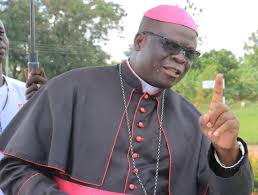
    The Bishop of Busoga Diocese Rt Rev Prof Dr Grace Lubaale has implored christians to conduct soul searching and repent so that their lost relationship with God, lost faith and hope can be restored to Jesus Christ.

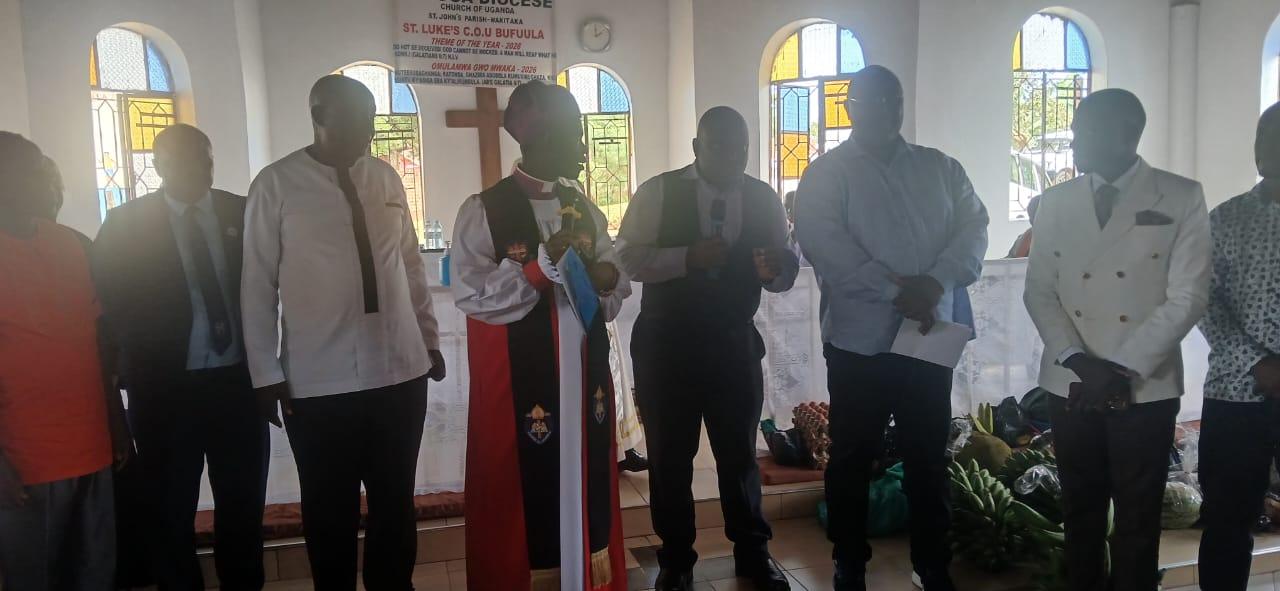
    He was on Sunday 3rd May,2026 preaching during a thanksgiving ceremony held at St Luke’s Church of Uganda Bufuula Parish under Wakitaka Archdeaconry in Jinja City.

    Anchoring his sermon under the theme Jesus Reinstates levareging The Post Resurrection Period, Bishop Lubaale exposited on an encounter between Peter and Jesus Christ as recorded in the Gospel of John 21:15-17 in which Peter was reinstated.

    For context, Post Resurrection Period is the 40 days between Jesus’ resurrection and His ascension into heaven when Jesus did three things, firstly proving he was alive, taught about the kingdom and commissioned the church.

    The text used by Bishop Lubaale presents one of the most tender leadership moments recorded in the Bible. Hours before Jesus was crucified, Peter disowned Him three times, yet Peter had boasted “even if all fall away, I will not” Mark 14:29.

    Jesus had warned him that “before the rooster crows twice you will disown me three times” Mark 14:30. Note that Peter was the ‘rock’ the inner circle guy so his failure was public and crushing.

    In that culture, denying you knew someone three times meant the relationship was legally dead and Peter had quit.

    The bishop explained to the Bufuula congregation the reason Jesus asked Peter three times was to heal three denials. Peter was reinstated not by promising to do better, but by being loved, fed and given work to do.

    He said it is the reason the Church of Christ here on earth cannot just preach, it must shepherd and that shepherds do not devour the sheep, they feed them.

    Standing before a packed congregation, that included the crème de la crème of Busoga MPs, academics, bankers, and elders, Bishop Rt. Rev. Prof. Dr. Grace Lubaale opened John 21 and made it personal.

    The Text That Became the Theme.

    “The same Jesus who met Peter on the beach at dawn is present here today,” Bishop Lubaale declared. “And He still reinstates.”

    He walked the church through Peter’s story: bold in the boat, broken in the courtyard, weeping after the rooster crowed. “Peter had denied the Lord three times. In the eyes of men, his ministry was over. But Jesus did not cancel him. Jesus cooked him breakfast.”

     Why Three Questions.

     “Jesus asked, ‘Do you love me?’ three times because Peter had denied Him three times,”, the bishop explained. “One affirmation for every denial. One ‘Feed my sheep’ for every ‘I don’t know Him.’

    This is how God heals: publicly, specifically, completely, he does not rub your nose in failure, he gives you work to do.”

    Application: Beyond Peter to Bufuula.

    Then Bishop Lubaale turned the mirror to the congregation:” Some of you came here with marriages that have slipped, you denied each other with harsh words. Some have education dreams that fractured when fees ran out. Some have businesses that collapsed like Peter’s net that night, you toiled all night and caught nothing, John 21:3. Some have health that is broken, and you are weeping bitterly like Peter did.

     “Come Back to the Fire” — A Word to Those Who Walked Away.

    Bishop Lubaale did not shy away from the empty pews in some church buildings. He brought the message right inside the Church, speaking directly to those who have slipped away from St. Luke’s and churches across Busoga.

    “Some of you left not because you stopped loving Jesus,” he said, his voice softening. “You left over what I will call petty issues: hymns you feel are boring, a sermon that ran too long, a choir robe you did not like, or clergy whose personalities irritate you. The fire did not go out. You just walked away from it.”

    Then he drew the line to Peter.

    “Peter did not deny Jesus because the Romans threatened him. He denied Him at a charcoal fire because a servant girl irritated him with a question, John 18:17. Sometimes we disown the Lord over small, human things. We let preferences become departures. We let irritation become exodus.”

    The Passionate Appeal.

    The bishop stepped from the pulpit and stood at the aisle.  “But hear me: the same Jesus who made breakfast for Peter is setting the table again. He is not asking you to defend the hymn book. He is not asking you to agree with every committee. He’s asking, ‘Do you love me?’

    If your answer is still ‘Yes, Lord,’ then come back the way Peter did: hurt, honest, but available, we need you to ‘feed my sheep, the Church is not a club for the perfect, it is a hospital for the willing, it is a fire for the cold.”

    He paused, then added with a smile that drew laughter and nods:

    “We can change the hymns. We can shorten the notices. We can even train the clergy to irritate you less. But we cannot do Church without you. Peter’s restoration meant the Church was born at Pentecost. Your return means Bufuula becomes that ‘mini city like Nazareth.’ Do not get a petty issue abort a resurrection story.”

    The Invitation.

    Closing, Bishop Lubaale stood by the Communion table and said:

    “Peter’s restoration started with breakfast. Yours starts here. Come back to the fire. Let Jesus ask you the question. Your failure is not final. Your denial is not the end of your story. ‘Do you love me?’ If you can say ‘Yes, Lord,’ then hear His voice: ‘Feed my sheep.’ Start with your family. Start with this church. Start with this acre. Jesus reinstates and He sends.”

    The altar filled. Tears, prayer, and fresh commitments followed. Outside, as the congregation broke bread, MP-Elect Wanzala and Prof. Muranga were seen sketching next steps for the Master Plan: “feeding sheep” in concrete, bricks, and audited accounts.

    From the Pulpit: “What Do We Mean by ‘Church’?

    Like any word in theology, the word “Church” must be interpreted by context. Bishop Lubaale paused the thanksgiving to teach what he called “the standard principle in all kinds of interpretation: meaning flows from context.”

    He reached for the late Swiss theologian Hans Küng, who argued in his 1967 work The Church that the “Church” is not, in the first place, a building, nor an institution, nor a hierarchy. The “Church” is, in the first place, the community of those who believe in Jesus Christ and are gathered by Him. It is the People of God, the Body of Christ, the Temple of the Holy Spirit.”

    The bishop unpacked it for Bufuula. “People of God means you, farmers, teachers, traders, MPs or politicians, students, mothers, not the bricks,” he said, gesturing to the congregation.

    “Body of Christ means we are one organism, a body does not grow one leg and leave the other idle, and that is why we need the Master Plan. The 13 acres and the pews are one body”.

    Then came the pointed line: “Temple of the Holy Spirit means this is God’s house. So, transparency, Bills of Quantities, and audits are not ‘corporate’ ideas. They are temple maintenance. We do not steal in God’s house.”

    That definition matters, he warned, because we use the word “Church” wrongly and it wounds us. When we say “we are going to church, or I have left their church”, we reduce the Church to real estate and then when the roof leaks, we say “the Church is failing, or so and so has spoiled our church”.

    Küng, whose words still shape both Catholic and Protestant thought, reminds us: you can burn the building and not destroy the Church. Persecution in Acts 8 scattered the Church; it didn’t end it.

    The second misuse is worse: “Church” meaning “clergy only.” When people say “let the Church speak on corruption, or human rights injustices or abuse of power” they usually mean “let the bishops or archbishop issue a statement.” That turns 99% of believers into spectators.

    “Prof. Muranga in the lab, Wanzala in Parliament, Kigenyi at KCCA, Moses Semwanga at Kiira College Butiiki, Dr Ephraim Batambuze in the wards, they are the Church doing economics, law, and policy,” Bishop Lubaale said. “‘Feed my sheep’ isn’t just pulpit work.”

    He also tackled the denominational trap. “Our church does not do that, we are not like the other churches, we are better”, often meaning: “Anglicans do not, Catholics do not, Pentecostals do not, Seventh Day Adventists do not.”

    But Jesus’ Body is not sectarian., Bishop Lubaale said adding “When we build the rental, it will not house Anglican Christians only, when we connect piped water, it will be used by all people of God, when we grow groundnuts, everyone will enjoy binyewa, amaido ocelo and odii. Money has no denomination. Neither does poverty’.

    Finally, the Sunday-only error: “I was in church 2 hours this week.” That makes Monday to Saturday secular, and excuses fraud in business and neglect at home. Yet Jesus restored Peter on a weekday, at breakfast, by the lake. The Church feeds sheep at the office, in the lab, and on the 13 acres.

    “So, when I say ‘Jesus Reinstates the Church,’ I am not talking about plaster and paint,”, the bishop concluded. “I am talking about you. Peter was the Church, broken, forgiven, sent. Bufuula is the Church, probably hurt by ‘basket fatigue,’ but now called to feed, tend, and govern. The building will follow the Body. The Body must follow the Head.”

    The teaching landed, minutes later, when Kirya Wanzala pledged to work on a “realistic and workable Master Plan, “and Benon Kigenyi pledged $2,500, Hussein Muyonjo aka Swengere pledged some reasonable amount after swearing in on 12th May while others gave it what they could, it was not just fundraising.

    It was Hans Küng’s People of God, learning to act as the Body of Christ and steward the Temple of the Holy Spirit.

    From Altar Call to Action: Bishop Lubaale Commissions the Master Plan.

    Before the final benediction, Bishop Lubaale did what Peter did after breakfast, he moved from restoration to assignment. “Jesus did not just forgive Peter. He gave him work: ‘Feed my sheep”, the bishop said.

    “So today, restoration must have an address. For St. Luke’s Bufuula, the address is 13 acres.”

    With that, he formally launched the St. Luke’s Church of Uganda Bufuula Parish Integrated Development Plan, placing it under the theme ‘Jesus Reinstates’. He laid hands on the architectural concept booklet, praying for the congregants.

    Then he charged the laity and the ordained by name: “Prof. Muranga, you are the Church in the lab, bring science to this soil. Hon. Wanzala and Hussein Muyonjo, you are the Church in Parliament — give us a ‘realistic and workable Master Plan.’

    Benon Kigenyi, and Moses Semwanga and all the professionals you are the Church in finance, let your dollars and shillings and skills disciple this village. This is what ‘Feed my sheep’ looks like in 2026”.


  • Busoga Diocesan Bishop Launches UGX 600M St. Luke’s Bufuula Rental Project as “Basket Fatigue” Hits Churches Nationwide -Prof. Muranga Vows to Turn Village into “Mini City”.

    Busoga Diocesan Bishop Launches UGX 600M St. Luke’s Bufuula Rental Project as “Basket Fatigue” Hits Churches Nationwide -Prof. Muranga Vows to Turn Village into “Mini City”.

    The Bishop of Busoga Diocese, Rt. Rev. Prof. Dr. Grace Lubaale on Sunday launched a UGX 600 million strategic development plan for St. Luke’s Church of Uganda, Bufuula Parish under Wakitaka Archdeaconry pitching it as an antidote to what Christians countrywide now call “basket fatigue.”

    The launch, held during a thanksgiving service at the parish in Wakitaka Archdeaconry, comes as believers across Uganda openly decry relentless financial demands in worship.

    Congregants say a single Sunday service can see as many as ten different offertory baskets passed around for church teacher welfare, parish priest welfare, archdeacon welfare, bishop welfare, and building contributions, and tithes, among others.

    The pressure has pushed some churches to adopt Mobile Money and church bank accounts to widen collection nets.

    Yet reports from several regions allege that some church leaders now employ manipulative and coercive tactics to extract giving.

    Disillusioned Christians have started nicknaming pastors and reverends as “revenue collectors,” saying they have abandoned the biblical calling to be spiritual correctors and shepherds.

    With the Middle East conflict (the US/Israel-Iran War) pushing fuel prices to 10,000 shillings per litre at some upcountry stations, household budgets are buckling under school fees, medical bills, and transport costs.

    “We love God, but we fear Sunday services, people are staying home not because they do not believe, but because they cannot afford to believe in public,” some believers complain.

     The Theology of Giving-Between Basket Fatigue and Biblical Mandate.

    Although some Christians today have a negative attitude towards giving calling pastors and reverends revenue collectors and skipping Sunday to avoid multiple offertory baskets, the Bible (both OT and NT) is clear that supporting Church activities and programmes is both correct and Biblical.

    Thanksgiving: Muranga Honors God, Mother, and Community.

    In an emotional moment during the service, the vision bearer Rev. Canon Prof. Florence Isabirye Muranga stood alongside her mother Mama Christine Isabirye smartly dressed in a white spotted Mothers Union gomesi and looking strong because of the good care she receives.

    They were joined by Rev. Canon (rtd) Grace Kaiso, former Secretary General of the Uganda Joint Christian Council; Ordinand Sarah Mwegombi and her husband Joseph George Mwegombi, an education consultant; George Takakaisa, a retired teacher; Eva Miyongabo, Human Resource personnel with Iganga District Local Government; Edward Kamaga, District Education Officer for Kaliro; and Richard Waiswa, to thank God for His faithfulness and love. The other family brother who also graced the ceremony was  Dr  Ephraim Batambuze, a consultant physician at Nakasero Hospital in Kampala.
    “We cannot take it for granted, the Lord has been faithful to us, we have achieved a lot in life, and it is only by His grace”, Prof. Muranga told the congregation.

    The testimony drew nods and amens from the packed church, with overflow crowds on the veranda and under mango trees.

    From Baskets to Buildings: The Bufulubi Answer.

    According to the Concept Note, St. Luke’s Church Bufuula sits on 13 acres of Diocese-owned land, much of it unused. Church leadership now plans to construct a two-storied block on the premises. The structure will house five independent units, with two units on the ground floor and three units on the upper floor.

    Each unit is designed as a self-contained 2-bedroom house for dignified residential living, with a living area, kitchen space with provision for cooking equipment, a private bathroom with shower facility and toilet, and bedrooms sized for natural light and wardrobe space.
    The block will be permanent masonry with durable finishes suitable for rental use. Every unit will have water, sanitation, and electricity connections. Access to the upper floor will be through a common staircase while ground-floor units will have direct entry, and the compound will have secure external doors and boundary provisions.

    The total project cost is estimated between 500 million and 600 million shillings, with the first phase of construction envisaged to cost slightly above 100 million shillings. A detailed Bill of Quantities will be developed to confirm final costs for funders and the Diocese.

    Rental income will be transparently managed under Diocesan oversight and channeled to routine church operations and maintenance, pastoral and lay staff welfare, community health, education and social outreach, premises improvement, a reserve fund for future capital needs, and servicing any construction financing.

    A Property Oversight Sub-Committee will handle supervision, tenancy, and income accountability, with formal tenancy agreements executed under Ugandan law and quarterly financial reports submitted to the Church and Diocese.

    Prof. Muranga’s Three-Phase Roadmap and “Mini City” Vision.

    Prof. Muranga, a highly decorated Ugandan biochemist, food scientist, academic, and corporate executive who serves as Director General of the Banana Industrial Research and Development Centre, said implementation will move in three connected phases.

    First, the church will launch the plan and generate a comprehensive master plan for productive land use. Second, it will engage and contract a qualified builder to deliver the ground and upper floor structure, complete roofing, finishes, doors, windows, and painting, and install water, sanitation and electrical systems for each unit.

    Third, the project will undergo inspection and snagging, formalization of tenancy agreements and rental policy, community announcement, and commencement of first tenancy. She added that the third phase will include a mega fundraising drive to be attended by the crème de la crème in the country.

    A daughter of Bufuula years ago married in Ankole, Prof. Muranga spoke softly as the church erupted in deafening applause and ululations. She declared that the “small, little-known Bufuula village which peeps River Nile from a distance will become a mini city where people from all over the world will visit the way they do to Nazareth.”

    Butembe Constituency MP Elect Kirya Wanzala On Master Plan.

    Grace Paddy Kirya Wanzala who attended the thanksgiving service with his wife Jennifer Kirya pledged to work closely with Rev Can Prof Florence Isabirye Muranga and Busoga Diocese leadership to develop a realistic and workable Master Plan for St Luke’s Church of Uganda, Bufuula.

    “We can not build in pieces and pray it holds, if this church is to become self-sustaining and Bufuula is to grow into the mini city Prof Muranga envisions, we need one clear roadmap. I commit my office to walk with the Professor and the Church to design a Master Plan that is practical, bankable and God-honoring”, said the FDC politician.

    The pledge was welcomed by Bishop Lubaale, (who also had his wife Claire) and drew applause from congregants who have long complained that church projects usually start with excitement but stall for lack of planning.
     What Is A Master Plan?

    It is a comprehensive, long-term blueprint that shows how land, buildings and resources will be used over time. Think of it as the big picture map before you lay a single brick or block.

    KCCA’s Kigenyi Pledges $2,500, Hails Bishop’s Leadership.

    Deputy Executive Director of Kampala Capital City Authority Benon Kigenyi, whose ancestral home is a stone’s throw from the church, pledged 2,500 US dollars over five years, giving 500 dollars annually toward the project.
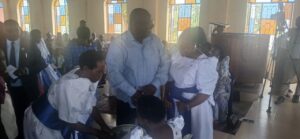
    Given the microphone, Kigenyi praised Bishop Lubaale as part of “the latest crops of spiritual leaders that have come to the leadership arena of Busoga,” as opposed to what were there in the past.

    He said the project is happening now because “the people of Busoga now have hope in the leadership of Busoga Diocese,” describing Bishop Lubaale as visionary and dynamic.

    Kigenyi, whose brother Amos Kigenyi is popularly known by his stage name Gen Mega Dee and lives in the U.S., said “there are many Murangas who will soon join hands or come out with great projects to make Busoga Great Again,” borrowing from Donald Trump’s trademark slogan.

    Bishop Lubaale: “This Is Obedience, Not Business.

    Bishop Lubaale lauded Prof. Muranga as innovative and foresighted. “Once actualized, the Bufuula Church project will become a role model in the diocese and the whole of Busoga for posterity,” he said.

    Quoting Psalm 24:1, “The earth is the Lord’s, and everything in it,” the bishop told congregants the Church cannot keep 13 acres idle while the work of God needs resources. “This is obedience, not business,” he stressed.

    The service was attended by Archdeacon Ven. Rev. Canon Capt. Alfred Kasaya, priests, lay readers, and dignitaries including Jinja North MP-elect Hussein Muyonjo aka Swengere, Butembe MP-Elect Grace Paddy Kirya Wanzala and headteacher Kiira College Butiiki Moses Semwanga among others.

    A National Conversation.

    The Bufuula plan is landing at a moment when the conversation about church financing has gone national. The shift to Mobile Money and bank accounts has made giving easier, but also more relentless, according to critics. The rise of “revenue collector” jibes signal a deeper crisis of trust between pulpit and pew.

    The strategic plan is promoted by the family of the late Zedekia and Mama Christine Isabirye, and the family of the late Rev. Kamira. Next steps include formal Diocesan endorsement, confirmation of site boundaries, commissioning architectural drawings and a detailed Bill of Quantities, engagement with funders, and constitution of the Property Oversight Sub-Committee.

    As the congregation dispersed, one elder said: “We don’t want to run from church. We want to run to it. If these houses can quiet the baskets, then build them quickly. Let our Amen be free again.”

    TEU Explainer: Who Is Rev Canon Prof Florence Isabirye Muranga?
    Nutrition & Sports Diplomacy. Nutrition Ambassador, Uganda Olympic Committee & Commonwealth Games Association of Uganda. She was appointed to drive athlete nutrition, food security, and healthy diets using Uganda’s indigenous crops.

    She designs high-energy tooke banana products for Team Uganda athletes and promotes nutrition education ahead of the Olympics, Commonwealth, and All Africa Games.

    Her mandate: “Fuel champions with Ugandan science.”

    Impact: Pushed for banana flour porridge and energy bars in national team camps. Links BIRDC’s research to sports performance and youth health.

    Global Advocacy for Women.

    Rev Can Muranga is also the ambassador, UN Women Global: Represents Uganda in UN Women’s advocacy on women’s economic empowerment, STEM, and rural industrialization. She champions agro-processing as a pathway for women to move from subsistence farming to factory ownership.

    Focus areas: Women in science, land rights, and climate-smart agriculture. Regular speaker at UN Women forums on “From Garden to GDP.”

    Busoga link: Uses her platform to spotlight rural women in Busoga as industrial producers, not just food providers.

    FULL BIO: Rev. Canon Prof. Florence Isabirye Muranga.

    Education & Scientific Career.

    PhD in Biochemistry, Makerere University; advanced training at University of Reading, UK.

    Professor of Food Science & Technology, Makerere University — 20+ years, supervised dozens of MSc/PhD students.

    Pioneer of banana industrialization: Proved matooke could be milled into flour, starch, biscuits, bread, and biofuel. Her research turned a perishable staple into Uganda’s industrial crop.

    Director General, BIRDC: Heads the Banana Industrial Research & Development Centre, a State House Presidential Initiative in Bushenyi. Runs factory, R&D, and farmer outreach.

    National & Corporate Leadership.

    PIBID Architect: Core team of Presidential Initiative on Banana Industrial Development since 2005. Boards: NARO Council, Uganda National Council for Science & Technology, UIRI, and private agro-firms.

    Awards: National honors for science & innovation. Recognized by FAO, AU, and World Bank for rural industrialization.

    Church & Ministry.

    Ordained: Reverend Canon, Church of Uganda, Busoga Diocese.

    Stewardship Theology: Preaches that “land is liturgy” — assets must work for the Gospel.

    Bufulubi Project: Vision bearer of UGX 600M rental housing block at St. Luke’s C.O.U. Designed 3-phase rollout to make the church self-supporting and turn Bufuula into a “mini city.”

    Diplomacy & Advocacy.

    UOC & Commonwealth Games: Nutrition Ambassador — links food science to medal counts.

    UN Women Global Ambassador: Voice for women in STEM, agro-industry, and Church-based development.

    Public Intellectual: TEDx speaker on “Science as Worship.” Frames labs and land as altars.

    Personal.

    Roots: Daughter of the late Zedekia Isabirye and Mama Christine Isabirye of Bufulubi, Wakitaka Parish.

    Family: Married in Ankole, Western Uganda. Mother, mentor, scientist-priest.

    Reputation: Bishop Lubaale calls her “innovative and foresighted.” KCCA’s Benon Kigenyi says Busoga needs “many Murangas” to become “Great Again.”

    Key Publications & Patents.

    Muranga, F.I. et al. Composition and physicochemical properties of banana starch. Food Chemistry, 2000.

    Muranga, F.I. Banana fruit flour: A potential raw material for the baking industry. African Journal of Food Science, 2008.

    Patents: Co-holder of Ugandan patents on banana flour processing, tooke biscuits, and composite flours via BIRDC.

    Policy Papers: Lead author on PIBID industrialization blueprints and UN Women reports on rural women & value chains.

    Book Chapter: Value Addition to Bananas in East Africa, 2016.

    Why She Matters A Lot More Now.

    Prof. Muranga sits at the intersection of lab, pulpit, Olympics, and UN. She is using banana starch for athletes, church land for rentals, and global platforms for Busoga and Uganda’s women.

    At a time when Christians nickname pastors “revenue collectors” and decry “basket fatigue,” her model says: Do Not tax the sheep, industrialize the field.

    Described as innovative and foresighted by Busoga Diocesan Bishop Rt Rev Prof Dr Grace Lubaale, KCCA Deputy ED Benon Kigenyi says Busoga now needs just 10 Murangas to become Great Again.
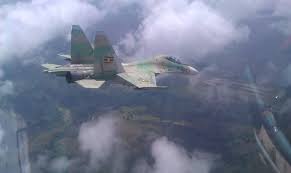
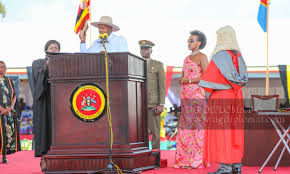


  • No Will, No Peace: Alex Kiwanuka’s Case Shows How ‘Caring Relatives’ Usually Emerge After Burial As Kin Now Fight Over Estate While He Cannot Rest in Peace.

    A bitter succession and property feud has erupted among family and clan members of former Jinja City Council Principal Revenue Officer Alex Kiwanuka, who died on April 5, 2026, just minutes to 5pm, as he was being rushed to Nile International Hospital.

    Kiwanuka, 50, died intestate, without leaving behind a will, now setting the stage for a court battle over a vast estate. Many who knew him believed he had “a big future to serve humanity and bring up a very successful family.”

    Ordinarily, Kiwanuka lacked nothing. He could afford meals of his choice at any high-end hotel. But death, “being something beyond human powers and understanding,” cut short his life before he could celebrate Easter 2026.

    Approved Asset Inventory Reveals Vast Holdings.According to a document marked _Approved Asset Inventory of the Estate of Alex Kiwanuka as at 5th April 2026_, the deceased’s holdings include:

    Jinja City: Land approximately 0.2280 hectares with residential permanent housing and structures situated on Plot 7, Chandual Patel Road, Masese.

    Njeru Municipality: Land with residential structures in Bukaya East; a second parcel of land with 3 residential structures also in Bukaya East

    Wakiso District: Land approximately 100ft by 100ft, Block 413, in Bwerenge Cell, Kisubi Ward, Katabi Town Council, Mukono: Land near Mpoma Satellite Station

    Jinja: Business lockups in Rubaga.

    Other Land: Parcels in Kaitabawala and Budondo on the shores of Lake Victoria

    Bugiri: 50 acres of sugar cane plantation.

    Vehicles: Brand new vehicle UA 285CQ and an old Toyota RAV4 UAT 488L

    Liquid Assets: Unspecified amount of mobile money on MoMo accounts, and bank accounts with “millions of money” at Equity and Tropical banks, Jinja Branch

    The inventory further lists a hotel among the assets, confirming Kiwanuka’s substantial footprint in business and real estate.

    Widow Alleges Phone Grab on Death Day.

    The legally wedded widow, Madam Diana Kiwanuka Amara, now claims that phones with numbers 0703580518 and 0772430001 were “grabbed on the very day the husband died” by a one Muwanika Zainab Kasule and have never been handed over to her.

    The alleged seizure of the phones has become a flashpoint in the dispute, with the widow’s camp arguing that access to the devices is critical to securing mobile money, bank notifications, and other digital records tied to the estate.

    Court Battle and Calls for Mediation.

    The matter is now before court. The widow and Kiwanuka’s eldest son, Elisha Owen Kiwanuka, are jointly represented by Juma Munulo of M/s Munulo & Co. Advocates.

    While colleagues at Jinja Town Hall mourned, an all-too-common but unexpected occurrence emerged: a deep family rift before Kiwanuka’s body was fully decomposed.

    With tensions escalating, voices within Jinja and the legal fraternity are urging the parties to abandon courtroom battles in favor of mediation.

    “These are children already stressed by sudden loss. Dragging this through court will only destroy Alex Kiwanuka’s legacy and deplete the very estate they are fighting over,” said a senior clan elder who requested anonymity due to the sensitivity of the matter.

    Legal experts note that because Kiwanuka died without a will, the Succession Act and customary law will guide distribution. But without consensus, litigation often consumes estates in legal fees and fractures families irreparably.

    “An amiable position reached through mediation protects the children, preserves the estate, and honors the deceased,” said a Jinja-based advocate not involved in the case. “Court should be the last resort, not the first weapon.”

     A Legacy at Stake.

    Alex Kiwanuka was a familiar face at Jinja Town Hall, where colleagues described him as ambitious and diligent. His sudden death shocked the city council fraternity and the wider business community where he had investments.

    At both St. Andrew’s Church in Jinja City, where he wedded years earlier, and at his ancestral home during burial, Anglican clerics including Busoga Diocese Bishop Rt. Rev. Prof. Dr. Grace Lubaale eulogized him solemnly. The tributes were warm. No one anticipated that a vicious fight over his estate would follow so soon.

    For now, the hotel stands, the vehicles are parked, and the land remains. But the question tearing the family apart is not what he left behind, it ia who controls it, and at what cost to his name.

    TEU could not independently verify the phone-grabbing allegation by press time. Efforts to reach Muwanika Zainab Kasule for comment were unsuccessful.

    This is a developing story. The case continues.

    TEU Editorial: In Kiwanuka’s Name, Choose To Be Good, Not Just Right.

    The sermons at St. Andrew’s Church and Magamaga Town Council were solemn. Clerics including Bishop Grace Lubaale of Busoga Diocese preached dignity. Mourners at the ancestral home wept, prayed, and chorused: May His Soul Rest In Peace.

    Yet before the red soil settled on Alex Kiwanuka’s grave, the war began. Phones grabbed, vehicles hidden and stage-managed clan meetings held. Lawyers briefed. Kin in court. A hotel, land, sugarcane, millions, all now hostage to greed dressed as justice. 

    This is not who we are. This cannot be his Legacy.

    Ugandans fear wills, as if ink on paper summons death. But death needs no invitation. It came for Kiwanuka at 50, minutes to 5pm, on the road to Nile International Hospital. He left behind everything except instructions. And now, the “caring” kin have emerged, not to mourn, but to claim.

    To Madam Diana Kiwanuka Amara, to Elisha Owen Kiwanuka, to Muwanika Zainab Kasule and others, to every brother, uncle, auntie, and clan elder now circling the estate: Pause.

    The law will tell you who can inherit and who to get what percentage. But culture, faith, and obuntu bulamo must tell you who should lead. The question is not “What am I entitled to?” but “What would honor him?”

    Scripture itself points us away from the courts and toward peace. “If it is possible, as far as it depends on you, live at peace with everyone”. Romans 12:18ff. “Blessed are the peacemakers, for they will be called children of God”. Matthew 5:9f. The Qur’an commands, “And reconciliation is better”. Qur’an 4:128. Mediation is not weakness. It is wisdom. It is faith in action.

    And what does true faith demand of us now? “Religion that God our Father accepts as pure and faultless is this: to look after orphans and widows in their distress” James 1:27. “You shall not mistreat any widow or fatherless child” Exodus 22:22ff.

    The Prophet Muhammad, peace be upon him, said: “The one who looks after a widow or a poor person is like a warrior who fights for Allah’s cause”. Sahih al-Bukhari.

    Choose fairness over technicalities. Choose family over filings. Choose to be good, not merely right.

    Because you can win in court and still lose in culture. You can secure a title deed and forfeit your name. You can drain the bank accounts and bankrupt the children’s future. Is that the victory you want?

    The Bible teaches us about ekisa kya mukama Yesu Kristo(the grace of our Lord Jesus Christ(. Anglicanism teaches us reconciliation. Islam teaches adl justice with mercy. Our traditions teach us that a man’s wealth is not measured at death by his acres, but by the peace he leaves behind.

    Kiwanuka worked for Jinja City and Busoga. He built a hotel. He planted cane in Bugiri. He fed his family and educated his children with diligence and prudence. Will his last act be to feed lawyers and tear his bloodline apart?

    We urge mediation. Sit under the same tree where you buried him. Put the phone numbers, the logbooks, the land titles on the table. Let clan elders, religious leaders, and Juma Munulo of M/s Munulo & Co. Advocates and other attorneys, guide not inflame. Let Bishop Lubaale pray over the settlement, not just the casket.

    To die intestate was Kiwanuka’s unforeseen matter. To remain intransigent would be yours.

    History will not remember who got Plot 7 on Chandual Patel Road. It will remember who turned a funeral into a feud. It will remember whether Kiwanuka’s children grew up as orphans twice once by death, again by greed.

    The crowd /mourner said May His Soul Rest In Peace. Make it true.

    Let the first act of the Kiwanuka estate be an act of peace.

    We Expose, You Decide. But today, we also implore.

    We are The Exposure Uganda we do not fear to tackle any topic. When we do it, we are not only professional, fair and objective, we are not for anybody nor against anybody. We simply do our work. Hence our slogan: We Expose, You Decide.

  • The Tweeting General Vs The State: Former Museveni Minister Kiyingi Exposes Uganda’s Parallel Voices.

    TEU Context.

    Who speaks for Uganda when the army tweets one thing and diplomacy says another?

    Uganda’s CDF, who is also the First Son, Gen Muhoozi Kainerugaba is not only an interesting person but holds a very sensitive and strategic position in the country’s military.

    He is being seen by people using different lenses or perspectives depending on which side of the platform one is. From cheekily threatening to capture neighboring Kenya in a matter of days, to wanting to marry Beyoncé, to threats like beheading Col Dr Kizza Besigye and NUP leader and two-time presidential candidate Robert Kyagulanyi Ssentamu popularly known as Bobi Wine, whom he calls Kabobi, to now referring to Turkey, a country seen as one of Uganda’s trading partners, as ‘pigs’, among others.

    He has been named the “Tweeting General” with a million plus followers on his X handle, formerly Twitter.

    Even President Yoweri Museveni, who is his father and Commander-in-Chief, notices that MK is not an angel but quickly adds that people should not close their eyes to Muhoozi’s great contributions to Uganda’s defense and security.

    While some argue that MK is just a stubborn chap who is referred to as Genzi General by his uncle Gen Salim Saleh, others look at him as a stubborn man who enjoys seeing others get irritated the way onion does to the eyes yet in itself the onion does no harm.

    But some think MK is just reckless while others think he uses humour to answer back or hit back at some of his equally stubborn targets.

    Former Minister Hon Asuman Kiyingi picks an angle in a hard-hitting rhetorical approach.

    We are The Exposure Uganda; we do not fear to tackle any topic. When we do it, we are not only professional, fair and objective, we are not for anybody nor against anybody. We simply do our work. Hence our slogan: We Expose, You Decide.

    We reproduce Hon. Kiyingi’s piece verbatim for TEU readers.

    Read it, weigh it, and judge for yourself: Is this the “apology state” or a new doctrine of power?

    TEU Audience, Enjoy the Read Verbatim:

    From “Turkey Pigs” to Sovereignty Farce: Who Is in Charge of the Ugandan State?

    By Asuman Kiyingi.

    Uganda today faces a question that can no longer be avoided: Who is actually in charge of the state?

    To the outside world, we project coherence—a reliable trade partner, a pillar of regional security, and a predictable diplomatic actor. Yet, domestic reality tells a different story: a state speaking in competing voices, perpetually correcting itself after the fact, and struggling to maintain a single, authoritative line.

    The widely reported “Turkey pigs” remarks by Muhoozi Kainerugaba are merely the latest episode in a pattern that has become impossible to ignore. They follow earlier, provocative statements directed at Kenya—remarks that necessitated a formal diplomatic apology from President Yoweri Museveni. They also mirror commentary suggesting Ugandan involvement in conflicts far beyond our borders, at times misaligned with established official positions on Middle Eastern tensions.

    Taken together, these are not isolated incidents. They point to a deeper structural failure: the emergence of parallel, uncoordinated centers of authority.

    When the State Speaks in Two Voices.  

    A functioning state is defined by the clarity of its command. Foreign policy must be conducted through established civilian channels; military authority must remain firmly within a structured chain of command, subordinate to civilian authority; public communication must reflect settled policy, not personal impulse. When those lines are blurred, institutional coherence collapses.

    We have now slipped into a recurring cycle of provocation, clarification, and apology. This has effectively created a dual-track diplomacy: an official posture on one hand, and an unsynchronized, militarized narrative on the other. This can not be strategic signaling. It is an institutional contradiction. Such conduct raises serious questions under the Constitution, the UPDF Act, and the Leadership Code Act—all of which require public officers to uphold discipline and the dignity of their offices. A state that tolerates parallel messaging in high-stakes diplomacy risks eroding the very sovereignty it claims to defend.

    The Sovereignty Bill: A Mirror of the Same Disorder. 

    If the diplomatic sphere reveals the problem, the legislative process confirms it. The handling of the Protection of Sovereignty Bill, 2026, serves as a classic case study in governance by improvisation.

    A bill with glaring defects, criticized for its extreme overbreadth and constitutional risk moved through Cabinet, the NRM caucus, and formal parliamentary processes with virtually no substantive scrutiny. It was defended as sound law by the Attorney General and the NRM’s Director of Legal Affairs. Then, only after public backlash, came a decisive intervention.

    President Museveni issued a formal communication indicating that the draft did not reflect Cabinet’s intent. He subsequently met with joint parliamentary committees, agreeing to significant exemptions—including for institutions regulated by the central bank, religious organizations, and foreign direct investment.

    Earlier, the Governor Bank of Uganda Michael Atingi-Ego, who had appeared before Parliament, warned of the dire economic consequences of the bill regarding financial flows and investor confidence.

    The resulting exemptions indicated in a hurried amended bill are revealing. They remove precisely those sectors where the bill’s impact would have been most catastrophic. But exemptions do not cure overreach; they expose it. A law that must carve out its most critical sectors to remain functional is not a finely calibrated instrument—it is fundamentally flawed legislation. Furthermore, instead of the bill’s withdrawal, these changes are being fast-tracked without renewed, meaningful public participation. This is more of legislative damage control than constitutional lawmaking.

    The Cost of Governing by Afterthought.

    What is emerging is a pattern of “action first, correction later”—the hallmarks of an “apology state.” Statements are made, then walked back. Laws are drafted, then hastily revised.

    Positions are taken, then adjusted as the political winds shift.

    The cost of this drift is tangible and immediate. In the arena of international relations, this behavior is catastrophically expensive. It breeds a perception that official state channels—the Foreign Ministry, the diplomatic corps, and official press releases—are merely “diplomatic niceties” devoid of substance. Conversely, the erratic, bellicose social media posts of General Muhoozi may increasingly be viewed by foreign capitals as the “real” voice of the Ugandan state.

    This dangerous duality projects Uganda as a duplicitous and dishonest actor. When the world stops believing that a country’s official word holds weight, it loses the currency of trust, which is the bedrock of foreign investment, aid, and security partnerships. Domestically, it leaves citizens—and even the bureaucracy—in a state of perpetual confusion, unsure of which directives represent the correct policy position and law of the land.

    Conclusion: One State, One Authority.

    If this drift is to be arrested, we must restore institutional clarity. Foreign policy must speak through a single, accountable channel. Legislative processes must be disciplined at their inception, rather than repaired at their conclusion.

    Ultimately, we must confront a fundamental paradox: A state cannot credibly claim to be legislating for sovereignty “against” the external world when it lacks the internal discipline to exercise sovereignty over its own military officers and actors, regardless of their rank or influence. True sovereignty is not merely a defensive posture against outsiders; it is the capacity to ensure that all domestic power centers remain strictly subordinate to the rule of law. When individual impulse replaces the law and institutional process, the rule of law is effectively suspended.

    Uganda cannot function indefinitely as a state of parallel voices. The question of who is in charge is no longer merely rhetorical; it is a matter of national stability. Sovereignty is not a concept to be decreed in legislation; it is a reality to be demonstrated through coherent, disciplined institutions that speak with one voice.

    The writer is a Senior Advocate and former Minister.