Author: nelly

  • Jinja Mayor Seeks 3.5 Acres At Source of the Nile Show Grounds To Relocate Ambercourt Market Vendors.

    Jinja Mayor Seeks 3.5 Acres At Source of the Nile Show Grounds To Relocate Ambercourt Market Vendors.

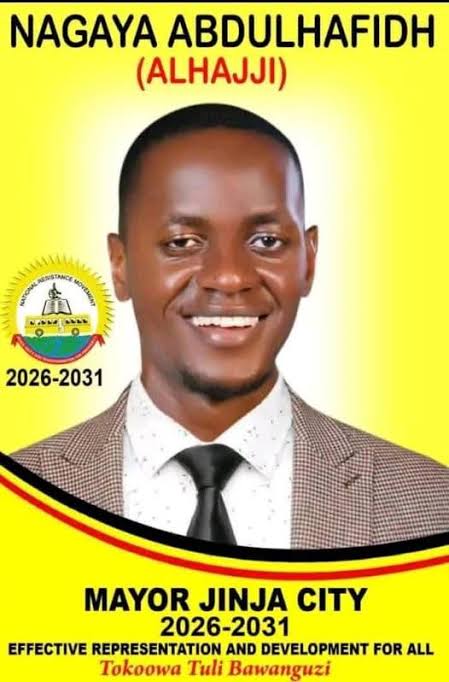
    Jinja City Mayor Alhaji Nagaya Abdulhafidh has formally written to the Uganda National Farmers Federation seeking temporary allocation of approximately 3.5 acres at Jinja Show Grounds to accommodate Ambercourt Market traders who must relocate to pave way for the expansion and improvement of Kimaka Aerodrome.

    Before the debate begins, before criticism gathers momentum, and before politics colours the discussion, it is important to dwell first on what the letter actually says, because it is within its content that the urgency, the reasoning and the spirit of the request become unmistakably clear, and it is only by starting there that the rest of the story can be fairly understood.

    What The Letter Says.

    In a letter dated November 23, 2026, addressed to the President of the Uganda National Farmers Federation in Kampala, Mayor Nagaya explains that Jinja City Council is faced with the challenge of relocating Ambercourt Market vendors following the ongoing expansion and improvement of Kimaka Aerodrome by the Civil Aviation Authority.
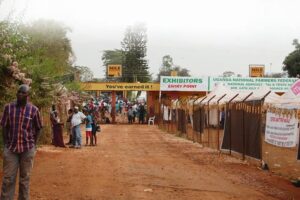
    He explains that the relocation has become urgent following a directive by the Uganda Civil Aviation Authority requiring the city to identify an alternative location for the affected traders, while adding that Ambercourt Market, which sits adjacent to the aerodrome, has been identified among the areas that must be vacated to provide space for the planned construction works.

    He further notes, with evident concern, that the 90-day grace period granted to facilitate the relocation has already expired, leaving the city under pressure to secure an alternative site so that the aerodrome expansion works can proceed without further delay.

    In his own words, the Mayor wrote that Jinja City Council is currently faced with the challenge of relocating Ambercourt Market vendors following the ongoing expansion and improvement of Kimaka Aerodrome by the Civil Aviation Authority.

    That single sentence carries the whole weight of the letter, because it is not a political statement but an administrative cry for help, coming from a city that has been told to move its traders, that has watched the time given to move them run out, and that must now act without having land on which to act.

    The Land He Is Asking For.

    Flowing naturally from that challenge, the Mayor then points to where he believes the solution lies, and he does so with precision, with restraint, and with a clear sense of what is possible.

    The proposed alternative location is a portion of land within the Uganda National Farmers Federation grounds, commonly known as Jinja Show Grounds, situated on Plot 13-19 Bridge Close.

    He says a technical assessment undertaken by Jinja City Council identified the land as suitable for temporary relocation because of its accessibility, available space and compatibility with the agricultural activities associated with the market.

    The proposed site is estimated to cover approximately 3.5 acres and would accommodate organised trading areas, access routes and essential facilities, including sanitation and lighting.

    He does not ask for the whole Show Grounds, neither does he ask for permanent ownership, but only for approximately 3.5 acres, for a temporary purpose, to be used in an organised and dignified way that respects both the traders and the host institution.

    Why He Believes Show Grounds Will Work.

    The letter does not stop at asking, because it goes on to explain why the Show Grounds is the most sensible choice available to the city, and why other distant options would do more harm than good.

    The Mayor says the arrangement would provide an opportunity to preserve the existing commercial character of Ambercourt while strengthening the relationship between agricultural producers, farmers and market traders, which is a relationship that has always defined the market and given it its unique identity.

    He argues, in the same breath, that Ambercourt is essentially a farmers’ market whose activities complement the objectives and mandate of the Uganda National Farmers Federation in promoting agricultural development, marketing and trade, and that locating the market within the Show Grounds would therefore create synergies between the Federation’s agricultural promotion activities and Jinja City’s efforts to facilitate agricultural marketing.

    Alongside that institutional logic, he points to the strategic position of the site, which has direct access from Bridge Street and is conveniently accessible from Jinja’s Central Business District, the existing Ambercourt Market catchment area and surrounding residential neighbourhoods.

    Retaining proximity to the market’s existing customer base, he says, would help affected traders maintain their businesses and minimise the disruption that could arise from relocation to a distant location, while the availability of approximately 3.5 acres of largely undeveloped land would also present an opportunity to organise the market in a more orderly manner, with proper provision for trading spaces and essential services.

    The letter, therefore, is not a vague plea, but a reasoned proposal grounded in a technical assessment, in location logic and in institutional compatibility, and it reads like a document prepared by people who understand both the market and the city.

    What He Says About The Traders.

    At the heart of the letter is the question of livelihoods, and it is here that the Mayor’s concern becomes most human, most immediate, and most difficult to ignore.

    He acknowledges that Ambercourt supports hundreds of traders, a significant proportion of whom are women and youth, with many households depending directly on the market for their income.

    The Mayor says providing an alternative trading location would ensure continuity of business operations, protect household incomes and prevent traders from being pushed into unplanned roadside vending, which would harm both the traders and the order of the city.

    He describes the proposed arrangement as mutually beneficial, arguing that accommodating Ambercourt temporarily within the Show Grounds would strengthen the commercial utilisation of the Federation’s facilities while providing an opportunity for interaction between farmers, agricultural producers and market traders.

    He further links the relocation to the wider economic importance of the Kimaka Aerodrome expansion, saying the project has the potential to enhance connectivity, trade, tourism and investment in Jinja City and the surrounding region.

    In other words, the Mayor is not opposing the aerodrome, but supporting it, while insisting that the traders who must give way for it should not be sacrificed in the process, and that development should be measured not only by what is built, but also by who is protected while it is being built.

    What He Says About The Terms.

    The letter is also careful on the question of duration and control, because it anticipates the fears that often surround land matters in Uganda, where temporary arrangements have sometimes become permanent disputes.

    The proposed arrangement is expressly temporary, with the Mayor indicating that the specific terms, duration and conditions of occupation could be mutually agreed upon between the Federation and Jinja City Council.

    He says the city is prepared to work closely with the Federation to ensure proper planning, orderly management and provision of the necessary temporary market facilities.

    This is not a demand, but an invitation to negotiate, to agree, and to enter a partnership built on mutual respect, with clear responsibilities for both sides and with safeguards that protect the Federation’s interests as much as the traders’ livelihoods.

    Who He Copied And Why It Matters.

    The letter was copied to the Minister of Local Government, the ministry’s Permanent Secretary, the Resident City Commissioner for Jinja, area Members of Parliament, the City Clerk, the Southern Division Mayor and the Chairman of Jinja City Land Board.

    That wide circulation underscores the urgency attached to the matter, while also showing that the Mayor is not acting in secrecy, but placing the matter on the official record before all the relevant authorities, so that no one can later claim they were not informed, and so that the decision can be owned collectively rather than blamed on one office.

    Finally, the Mayor appeals to the Federation to consider the request favourably and expeditiously, warning that the expired 90-day grace period has made it necessary to commence the relocation process without further delay.

    That is the full content of the letter, a request for 3.5 acres, a request for temporary use, a request to protect traders, and a request to allow development to proceed, and only after understanding that content can we fairly ask the deeper questions that the letter raises.

    The Aerodrome Expansion Behind The Letter.

    To understand why the letter had to be written at all, one must understand the scale and ambition of the Kimaka Aerodrome expansion, because this is not a small local project, but a national aviation investment with regional consequences.

    Kimaka Aerodrome, also known as Jinja Aerodrome, sits on historic land that dates back to the early 1950s, when it was established by the colonial administration, and for decades it remained largely dormant, used mainly as a training ground for the Uganda People’s Defence Forces, while commercial aviation attention remained focused on Entebbe.

    That long period of dormancy began to change when government, through the Uganda Civil Aviation Authority, embarked on a deliberate programme to revive upcountry aerodromes across the country, with Jinja identified as one of the most promising because of its tourism potential, its industrial base, and its strategic position on the northern shores of Lake Victoria.

    In January 2025, President Yoweri Museveni commissioned construction works for the upgrade of the runway and taxiway at Jinja Aerodrome in Kimaka, marking a significant milestone in Uganda’s aviation sector, and signalling that Jinja was no longer to be treated as a peripheral airfield, but as a gateway.

    Since then, works have progressed steadily, including the tarmacking of the runway, expansion of the aircraft apron, and construction of the perimeter fence and entrance gate, among other improvements, and those who have visited the site speak of a facility that is visibly transforming from a forgotten strip into a modern aerodrome.

    Yet the work is far from complete, because the Uganda Civil Aviation Authority has told Parliament that an additional Shs120 billion is required to complete the rehabilitation and expansion, citing funding shortfalls and delays in securing land required for the project.

    According to the Authority, the outstanding works include construction of a fully equipped air traffic control tower, installation of firefighting equipment and extension of the runway to 2.4 kilometres to meet the required aviation standards, without which the aerodrome cannot be licensed to handle increased traffic safely.

    The Authority has further explained that the expansion depends on securing additional land, including approximately 10 hectares reportedly pledged by President Museveni from land occupied by the Uganda People’s Defence Forces at Gaddafi Barracks, as well as the relocation of Ambercourt Market, which occupies about three acres near the facility.

    Members of Parliament on the Physical Infrastructure and Works Committee, led by Vice Chairperson William Taylor Tiyo, inspected the ongoing rehabilitation works in November and tasked Jinja City authorities and military leadership to explain the delay in releasing the land, warning that outstanding issues could derail timely completion.

    UCAA officials, led by Director of Airports and Aviation Security Sam Wonekha, told the committee that securing additional land and relocating the market were critical to completing the expansion programme, because the market’s proximity to the aerodrome poses a potential aviation safety risk, with market waste attracting birds that pose a serious hazard to aircraft.

    Bird strikes, as aviation experts explain, are not a minor inconvenience, but a serious safety concern that can damage engines, shatter windscreens, and in extreme cases cause accidents, which is why international aviation regulations require clear buffer zones around runways and strict control of activities that attract birds, animals and other wildlife near aerodromes.

    The Authority has also pointed out that the market’s presence contravenes the Civil Aviation (Aerodromes) Regulations, 2022, and could jeopardise licensing of the aerodrome if not addressed, which means the relocation is not merely a matter of convenience, but a legal and safety necessity.

    At the same time, government has indicated that once completed, Kimaka will be gazetted as an official entry and exit point for international flights, with the aim of allowing tourists to fly directly into Jinja instead of landing in Entebbe and travelling by road, a shift that would save time, attract high-value tourists, and position Jinja as a regional aviation hub for tourism, business and investment.

    When viewed in that light, the mayor’s letter becomes even more significant, because he is not writing in opposition to this national vision, but writing to ensure that the vision does not collapse under the weight of its own social cost, and that the aerodrome can be completed without destroying the market that has fed Jinja for generations.

    A Political Landlord Asking For His People.

    In Uganda’s local government tradition, the mayor is generally referred to as the political landlord of the city, a title that carries responsibility as much as honor, because he is the custodian of the people’s interests, the voice of the traders, the defender of the markets, and the first person to be called when the city’s livelihoods are threatened.

    That is the role Nagaya is playing in this matter, and it is important to be clear about what he is not asking for.

    He is not asking for land to build a personal house, neither is he asking for land to start a private business, nor is he asking for land to enrich himself, his family or his friends, but he is asking for land for hundreds of traders who wake up before dawn to feed Jinja, for women who sell matooke to pay school fees, for youth who load produce to earn a living, and for farmers who depend on Ambercourt to sell what they grow.

    If a political landlord cannot ask for 3.5 acres for his people, then one is left wondering for whom he can ask, and must a landlord really beg from his own tenants when the need is so plain and the purpose so public.

    The Show Grounds, though under the custody of the Uganda National Farmers Federation, is public land in its purpose, established to serve farmers, traders and the public, with its annual agricultural show standing as a public celebration of farming, and its grounds used for public exhibitions, public education and public commerce.

    To ask that a small portion of such land be used temporarily to save a public market is not an extravagant demand, but a reasonable request from a leader to an institution that exists to serve the same public, and it is a request that should be weighed not by who wrote it, but by who will benefit from it.

    A Market Is A Public Good.

    At the heart of this debate is a principle that students of philosophy understand very well, namely egalitarianism, which teaches that public goods must serve all people equally, not just the powerful, not just the connected, and not just the few who can afford private alternatives.

    Egalitarianism further teaches that a society is judged not by how it treats its richest citizens, but by how it protects its most vulnerable, and it is through that lens that the Ambercourt question must be viewed, because the traders at stake are not wealthy developers, but ordinary citizens whose daily survival depends on a stall, a sack of cassava, and a loyal customer.

    A market is a public good in the truest sense of the word, because it does not belong to one tribe, one party or one class, but belongs to the farmer who brings his cassava, the mother who buys vegetables for her family, the hotel that buys matooke for its guests, the school that buys beans for its pupils, and the tourist who stops to taste Jinja’s fresh fruits.

    When a market is protected, everyone benefits, and when a market is destroyed without an alternative, everyone suffers, although the poor suffer first and suffer most, because they have no savings to fall back on, no alternative business to run to, and no influential voice to plead their case.

    That is why the principle of egalitarianism speaks so clearly in this case, because if Jinja is to grow as a fair and just city, it cannot allow development to push its poorest traders to the margins while the benefits of that development flow only to the already privileged, and it cannot celebrate a new runway while the women who feed the city are left without a place to trade.

    Why Ambercourt Matters For A Tourism City.

    Jinja is no longer just an old industrial town on the Nile, because it has grown into Uganda’s adventure capital, home to the Source of the Nile, white-water rafting, bungee jumping, boat cruises, lakeside resorts, and a fast-growing calendar of festivals, conferences and cultural events.

    Tourism, however, does not survive on scenery alone, because it survives on food, and every hotel that hosts a tourist, every restaurant that serves a visitor, every lodge that prepares breakfast for a rafting group, and every roadside food vendor who feeds a boda rider or a day-tripper depends, directly or indirectly, on a reliable, affordable and organized food supply chain, with Ambercourt standing at the heart of that chain.

    Every morning, long before the city wakes, trucks arrive from across Busoga, Bugisu, Teso, Buganda and beyond, loaded with matooke, cassava, sweet potatoes, yams, cabbages, tomatoes, onions, fruits and vegetables, and by sunrise, buyers from Jinja, Kampala, Busia, Iganga, Kamuli and Mayuge are already negotiating prices, while by midday, much of that produce has found its way into homes, schools, restaurants, hotels and small food businesses across the region.

    Ambercourt’s history deepens its significance, because the market was established around July 2002 through a partnership between the then Jinja Municipal Council and the military, initially created to support the livelihoods of spouses of soldiers attached to Gaddafi Garrison along Kimaka Road, and it has since grown beyond that modest beginning into a major distribution centre that generates significant local revenue and sustains thousands of indirect jobs, from transporters and loaders to food vendors and packaging suppliers.

    If Ambercourt is disrupted without a proper alternative, the effects will ripple far beyond the traders themselves, because food prices will rise, supply will become irregular, small food businesses will struggle, hotels will pay more for produce, and the very tourism experience Jinja is selling will become more expensive and less reliable.

    A growing tourism city cannot afford a broken food market, because it needs a food market that is organized, accessible, hygienic and close to where people live, eat and trade, and the mayor’s proposal is therefore not just about finding space for traders, but about protecting the food system that supports Jinja’s households, its hospitality industry and its reputation as a welcoming tourism destination.

    In that sense, protecting Ambercourt is not an act of charity, but an act of economic wisdom, because a city that feeds its visitors well, feeds its residents affordably, and feeds its hotels reliably, is a city that will keep growing.

    Development That Carries People Along.

    The Mayor’s letter is not an objection to development, but a call for development that carries people along, for egalitarian development, where the benefits of growth are shared and the burdens are not placed only on the poor.

    A modern aerodrome will bring more tourists, more investors, more conferences and more business to Jinja, and it will make the city easier to reach, easier to market and easier to grow, and those benefits are real and should be celebrated.

    However, that growth will only be meaningful if the people who have kept Jinja fed are not left behind in the process, because a modern airport and a broken food market cannot coexist in a city that wants to be known for hospitality, and a runway that leads to empty hotels and expensive food will not deliver the prosperity it promises.

    The challenge, therefore, is not to choose between the aerodrome and the market, but to find a way for both to thrive, and the Show Grounds proposal offers precisely that path, by giving the aerodrome the space it needs to meet safety and licensing standards, while giving the traders a temporary home from which they can continue to serve the city.

    What Happens Next.

    The proposed allocation now places the Uganda National Farmers Federation at the centre of efforts to secure an alternative location for the affected traders, as Jinja City seeks to balance the demands of strategic infrastructure development with the need to protect livelihoods and sustain agricultural commerce.

    The outcome will be significant for the future of Ambercourt Market and the hundreds of traders who depend on it for their daily economic survival, and it will also be significant for Jinja’s food security, its tourism economy and its ability to grow without leaving its most hardworking people behind.

    Parliament’s Physical Infrastructure Committee has already pledged to convene stakeholders, including UCAA, Jinja City Council and the Ministry of Defense, to resolve the land impasse, and the Federation’s response will determine whether that process moves forward smoothly or stalls under fresh controversy.

    Jinja is growing, its airport is growing, its tourism is growing, and its population is growing, and the question before the Federation, and before the city, is whether its food market will grow with it, or be scattered in the name of growth.

    The mayor’s letter offers an answer, a temporary home at the Show Grounds, close to customers, close to farmers, and close to the city’s future, and in asking for it, the political landlord of Jinja is not asking for himself, but asking for his people, which surely is not asking too much.




  • Jinja Land Crisis: Minister Balaam Gives Town Clerk Kisekka Seven Days To Resolve Lions Club Title Dispute & Account For All City Property.

    Somewhere in Jinja City this week, files are being opened that were never meant to be opened, phones are ringing that no one wants to answer, names are being whispered in a corridor, signatures are being studied under a lamp, and titles are being checked, then checked again, as if looking at them longer will change what they say.

    That is what a seven-day ultimatum does. It does not just order paperwork. It unsettles people.

    The Letter That Landed Like A Surprise Drone Attack.

    On November 20, 2026, a letter from the Minister of Local Government landed in Jinja City like a surprise drone attack from an unexpected direction, with no warning, no public rally, and no press conference. It was just a two-page letter addressed to one man, Jinja City Town Clerk Godfrey Kisekka, but meant for many more.

    Minister Balaam Barugahara Ateenyi gave Kisekka seven days to resolve a disputed land title connected to the Lions Club property, to name everyone involved in how that title was processed, and to begin the legal process to have it cancelled if it was irregularly issued.

    It was not a suggestion but an ultimatum, copied to the Mayor of Jinja City, Abdulhafidh Nagaya, the city’s Members of Parliament, all city councilors, the Speaker of Jinja City Council, Juma ssozi, the Chairperson of the Jinja City Land Board, Jamil Mukama Ssanyu, the Resident City Commissioner, Salim Komakech, the City Internal Security Officer, James Kaawa, the Inspectorate of Government, the State House Anti-Corruption Unit, the Director of Criminal Investigations, and the Commissioner for Land Registration.

    The tone of the letter, as supplied to this desk, is blunt and unmistakable because the Minister directs Kisekka to establish how the title was issued, identify everyone involved, and pursue cancellation through the Commissioner for Land Registration if irregularity is proved.

    He then widens the net far beyond Lions Club, ordering a comprehensive inventory of all Jinja City Council properties, covering titles, certificates, leases, survey plans, locations, acreage, occupancy, encumbrances and disputes. And he closes the accountability loop with a warning that, where credible evidence of wrongdoing is established, those involved, including councillors, should be arrested and prosecuted in accordance with the law.

    In his own words, the Minister put it this way:

    “You are hereby directed to establish the circumstances under which the said title was issued, identify all officers and individuals involved in the process, and initiate corrective action to secure the cancellation of the title through the Commissioner for Land Registration and other competent authorities, in accordance with the law, if it is established to have been irregularly issued.”

    That single sentence captures the whole assignment: investigate, name names, and correct the record through lawful channels.

    The seven days, the Minister made clear, would run from the date the Town Clerk received the letter. Before the Minister visits Jinja City, he expects the dispute to have been addressed and the land documentation to be ready.

    The Minister did not stop at Lions Club. By ordering a full inventory, he was, in effect, asking Jinja to prove, on paper, what it actually owns.

    That is a profound demand for a city whose land administration has for years been associated with missing files, double allocations, competing titles, and more than 100 civil suits.

    If the inventory is done honestly, it could become the first true asset register Jinja City has ever had. If it is done casually, it will become another document that raises more questions than it answers.

    The letter also raises the question of political involvement, because the Minister expressed concern about the possible involvement of public officials and councilors in the irregular processing of the disputed title.

    He directed the Town Clerk to identify all officers and other individuals, including councilors, who participated in, facilitated or authorized the transaction.

    No individual has yet been declared guilty. That determination must follow investigation and due process.

    What Could Come Next: The Thunder After The Lightning.

    And here is where the speculation begins, because those who know Balaam Barugahara’s modus operandi know that a sudden strike is rarely the end. It is usually the warning shot before the heavier blow.

    The first letter finds the target. The second action finishes the job. And that second action, in Balaam’s world, is often swift, devastating, and administrative: interdiction.

    It is now openly speculated in Jinja that this letter may only be the first blow, and that the next blow could be far more devastating. Those who have watched the Minister operate in other districts say he has, before, ordered the interdiction of the whole workforce of a district — not one officer, not two, not a committee, but everyone — leaving an office hollowed out, paralyzed, and waiting for investigations to decide who returns and who never returns.

    If he applies that same modus operandi in Jinja, a city he personally has many interests and acquaintances, it would not be surprising if everyone at Jinja Town Hall is interdicted — from the Town Clerk’s office down through the technical departments — leaving only the casual workers like cleaners and tea girls and tea boys to open doors, sweep floors, and boil water in an empty building while investigators take over the files.

    That is speculation, but it is speculation grounded in pattern, not fantasy, and it explains the fear now gripping City Hall.

    Right now, Kisekka could be doing what any accounting officer does when a Minister writes in that tone: locking down files, calling in the physical planner, the surveyor, the land officer, the legal officer, and the records officer, and asking one brutal question — where is the complete file for Plot 18-22 Grant Road?

    He could also be tracing who handled the disputed Lions Club title, who minuted what, who signed what, and who stayed silent when silence was convenient, while preparing a report that will either clear his administration or implicate people he works with every day.

    According to jokes among commentators familiar with Town Hall dynamics, Kisekka whose methods have always involved locking himself in the office will this time put double locks just to focus on the specific task.

    At the same time, Jinja City Land Board headed by the sober-headed Counsel Jamil Ssanyu Mukama, supported by another celebrated lawyer, Alex Luganda, and other men and women of integrity, are doing their best to avoid such heart-piercing letters.

    They have been working quietly, carefully, and with due diligence to the dot, to ensure that the Land Board’s house is in order before the Minister’s visit turns into a public reckoning.

    Mayor Abdulhafidh Nagaya could be weighing what this means for the political leadership of the city, knowing that he is copied on a letter that speaks of arrests and prosecution.

    The city’s MPs — Dr. Timothy Batuwa Lusala for Jinja South West, Paul Mwiru for Jinja South East, Sarah Lwansasula as Jinja City Woman MP, and Hussein Muyonjo, alias Swengere, for Jinja North — could be preparing to ask, in Parliament and in Jinja, whether seven days will produce truth or theatre.

    The Resident City Commissioner (RCC) Salim Komakech and City Internal Security Officer James Kaawa could be watching the security and political temperature, aware that land in Jinja has never been just about land, but has always been about power, money, and who controls the future of the city.

    And somewhere, those who may have benefited from the confusion — in Council, in the registry, in business, or behind a charity badge — could be doing the most telling thing of all: trying to get ahead of the paper trail before the paper trail gets to them.

    To understand why a single plot on Grant Road could provoke such a strike, one must leave 2026 for a moment and go back to where the story began.

    Background: The Land That Was Never Meant To Be Sold-A Promise Made In 1969

    In 1969, Jinja was still a municipality, still a town built on trust, on community, and on the belief that some things belong to children forever. In that year, the Lions Club of Jinja did not sell the land. It did not abandon it. It offered it to the town, on one condition.

    On August 6, 1969, the Club wrote to the Jinja Town Clerk, through Visana, Raichura and Singh, asking Council to give a written undertaking. The words, quoted from that letter, deserve to be read slowly, because they are the foundation of everything that followed:

    “We are instructed to request you to give us an undertaking that the said plots shall be preserved exclusively and perpetually for Lions Children’s Park and that the council shall not, now or in future, lease them to any other person.”

    It was a gift to children, not to politicians, not to investors, not to any individual, with a condition of permanence and language that was absolute: exclusively, perpetually, and never to any other person.

    Five months later, on January 16, 1970, that gift was made public in a ceremony witnessed by several stakeholders, including the Deputy Mayor, when the Lions Club formally handed over the Lions Children’s Park to the Jinja Municipal Council.

    Six days later, on January 22, 1970, Club President Indrakant S. Patel wrote to the Town Clerk confirming the handing-over. That letter, referenced “Lions Club Children’s Park Handing-Over Ceremony on 16 January 1970,” was copied to B.S. Gill, R.L. Kisaja and Dr. G.N. Khatri, and bore the Council’s official stamp as proof of receipt.

    In it, Patel thanked the Council for arranging the Deputy Mayor’s presence (whose name was not mentioned), while also raising a complaint about Council enforcement officers who had allegedly used abusive language towards Club members, a small detail that shows the relationship between Lions and Council was already complicated, even in a moment of generosity.

    Those two letters: the 1969 undertaking and the 1970 handing-over, have defined the dispute ever since. For Council, the handing-over proves Lions surrendered the land.

    For Lions, the 1969 letter proves the surrender was conditional, and that the condition has never been lifted. For anyone who reads both, the question is unavoidable: if the land was given for children forever, how can it now be given to anyone else?

    For decades, that question was left unanswered, and the land remained in quiet use, until the paper trail changed everything.

    Forward To 2022: The Title & The Deal That Ignited The Storm.

    On January 4, 2022, under Instrument No. JJA 00027308, a lease registration title for the 0.8400-hectare plot was issued placing Jinja City Council as owner, with use as open space.

    The original title is recorded as Leasehold Registration Volume 267 Folio 1. That should have settled ownership. Instead, it set the stage for a new fight over who could dispose of the land, and how.

    On May 25, 2022, Jinja City Council endorsed a recommendation by the city executive then led by former Mayor Alton Peter Kasolo Okocha to lease the same land to a private investor, Grand Royale Impex Ltd, to develop it in line with its title covenant as a Children’s Park.

    When the decision leaked, Lions protested. The Club had applied for a title through the Jinja District Land Board, only for the application to be rejected on jurisdictional grounds — the land is municipal property, so the District Land Board had no mandate over it.

    Faced with the threat of eviction, Lions petitioned the Inspector General of Government to investigate and block the lease, a petition that kept the file in legal uncertainty for years.

    The then Mayor of Southern Division, Nasser Ashraf, who was said to be associated with the deal, also distanced himself, saying some officials at City Hall were fronting the investor. Those claims have not been proven in court, but they have continued to shape public suspicion.

    This is why the background matters because this is not a dispute that began with a title in 2022, but one that began with a promise in 1969, with a public ceremony in 1970, and with children. Any resolution that ignores that history will not hold, in law, in politics, or in the conscience of Jinja.

    The Eye Hospital That Everyone Supports.

    Out of that storm came a new proposal that almost everyone in Jinja supports: allow Lions Club to use the land to build a specialised Eye Hospital for Jinja City and the wider Busoga sub-region. The need is not in doubt, because thousands in Busoga live with preventable blindness, and a Lions Eye Hospital would be a major public good that honors the original spirit of the land: service to the vulnerable.

    That is why Jinja Resident City Commissioner Salim Komakech, speaking on November 1, 2026, as reported by The Exposure Uganda (TEU), said the project enjoyed city-wide goodwill but insisted that public land could not be allocated outside the law, when he declared: “Consensus among the leaders and stakeholders in the city is that Lions Club should get it and use it to build an eye hospital in Jinja City. No one disputes that. It is a noble cause. What we are saying is that giving out public land takes process.”

    He added: “This is not bureaucracy for its own sake. This is the shield that protects the investor. If we give land through a letter today, tomorrow someone will go to court and the court will nullify it for illegality.” That distinction — between supporting a noble project and following lawful process — is now at the centre of the Minister’s intervention, because a hospital built on contested land could spend years in court, while a hospital built on lawfully secured land can serve generations.

    It is also why the Minister’s letter cannot be read as a simple attack on Lions, or as a simple defence of Council, but as an attempt to force the city to produce the documents that should have settled the matter long ago.

    Are Some People Hiding Behind The Name Lions Club?

    Beneath the applause for charity, however, there is a harder and more uncomfortable question that commentators in Jinja are now asking, namely whether some people are using, or have been using, the name Lions Club purportedly to show they care about charity, yet in actual sense they are also dealers wearing a suit marked “Lions Club,” using a noble badge as a shield for private interest, for access to prime land, for influence in Council corridors, and for protection from scrutiny.

    That is the question that will not go away. According to commentators, it is precisely what Minister Balaam Barugahara Ateenyi should dig deeper into, as opposed to playing in the gallery where sentiments and lopsided voices are louder than reason and intelligence, where applause drowns out documents, and where whoever shouts “charity” loudest is assumed to be innocent.

    The Lion’s Club name is powerful because it carries 56 years of goodwill, eye camps, wheelchairs, food for the hungry, service to children, and that goodwill, commentators warn, can be weaponized, because once a person wraps himself in the Lions badge, every question becomes an attack on charity, every audit becomes an attack on the blind, and every demand for a title becomes an act of cruelty.

    But charity does not exempt anyone from the law, and a suit marked Lions Club does not make a land deal lawful. If the Minister is serious, say the commentators, he must separate the genuine Lions, the men and women who have served without pay, who have given glasses, who have buried the dead, who have fed the hungry, from the dealers who may have learned to speak the language of service while pursuing the logic of business.

    He must ask who signed what, who benefited from which transaction, who introduced Grand Royale Impex Ltd, who sat in which meeting, who received what facilitation, and who is now using public sympathy to block a lawful audit.

    Until those questions are answered with documents and not with emotions, Jinja will keep mistaking noise for truth, and sentiment for justice. In short, Balaam must not be seduced by the gallery, and he must not be frightened by it either. He must follow the paper trail, follow the money, follow the minutes, and follow the titles, and let reason and intelligence, not lopsided voices, decide who is a servant and who is a dealer in a Lions suit.

    Who Was Copied, And Why The List Matters?

    The political leadership of Jinja will not be able to watch this from a distance, because the Minister copied his letter to the city’s MPs, and they will now be expected to follow up, both in Parliament and in Jinja.

    Those MPs are Dr. Timothy Batuwa Lusala for Jinja South West, Paul Mwiru for Jinja South East, Sarah Lwansasula as Jinja City Woman MP, and Hussein Muyonjo, alias Swengere, for Jinja North. All four won their seats in the January 2026 general elections on the National Unity Platform ticket, giving NUP a clean sweep of Jinja City’s parliamentary representation, and their inclusion means voters will now watch whether parliamentary oversight translates into concrete answers on the ground.

    The Mayor of Jinja City, Abdulhafidh Nagaya of the NRM, whose election was also upheld by the High Court in Jinja on November 5, 2026, is likewise a recipient. The political leadership of the city, across party lines, is therefore squarely within the accountability process, and cannot claim it did not know.

    A City Haunted By Land Controversies.

    None of this happened in a vacuum, because Jinja’s land troubles have a history, and the Lions dispute sits within that history. One of the most prominent cases involved Spire Road Primary School, where allegations of illegal subdivision and allocation of school land triggered investigations by the State House Anti-Corruption Unit, the Internal Security Organization and police in July 2022, when several city officials were arrested over allegations that portions of school land had been subdivided and allocated to private developers, while Lakeside Primary School was also drawn into investigations over encroachment on its playground and titling of land occupied by school infrastructure.

    Those were allegations under investigation, not proof of guilt against every person named, but they exposed how vulnerable public institutional land becomes when safeguards fail.

    The Spire Road matter had already drawn ministerial attention in February 2019, when the then Ministers of State for Lands and Primary Education intervened over titles reportedly issued on school land, raising a wider question that has never been fully answered: how could land reserved for public services become the subject of competing private claims?

    The Missing Land Board And The Double-Allocation Problem

    A major institutional weakness followed Jinja’s elevation to city status, because by January 2024, Jinja City had gone approximately three years without a functional City Land Board, a situation the city’s leadership linked to revenue losses and administrative complications.

    In that vacuum, uncertainty grew over who could lawfully allocate land and under what authority, and when a new Board finally came into place, it inherited a difficult situation, with complaints involving double allocations, questionable titles and fraudulent transactions, and reports indicating the city was grappling with more than 100 civil suits connected to land disputes.

    The question that followed was troubling: how many public properties had been exposed to competing claims, and how many innocent buyers had acquired land without knowing the underlying transaction was disputed? For a growing urban centre where land is a major economic asset, such uncertainty undermines investment, discourages development, and exposes households to costly litigation.

    What The Directive Means for Town Clerk Godfrey Kisekka.

    For Kisekka, the test is both personal and institutional, because as Town Clerk, he is the chief administrative and accounting officer of the city, responsible for coordinating technical departments, implementing Council decisions, supervising administrative processes, and safeguarding public resources.

    It should be noted that while in Hoima a couple of weeks ago, the same Balaam verbally and publicly ordered the interdiction of the former Town Clerk who is actually Kisekka, and this makes life even harder for Kisekka now.

    The Minister’s letter places those responsibilities under direct scrutiny, even as it does not establish that Kisekka personally participated in, authorized or benefited from the disputed transaction.

    What it does establish is that he must now reconstruct, in seven days, the file Jinja has failed to produce in four years: the 1969 undertaking, the 1970 handing-over letter, the Council minutes of May 25, 2022, the Grand Royale Impex Ltd application, the Land Board minutes, the survey plans, and the correspondence with the Commissioner for Land Registration. At the same time, he must deliver something even larger, the full inventory of Jinja City’s properties, which must capture titles and certificates, leases, survey plans and locations, acreage, occupants, encumbrances, litigation and disputes.

    Done properly, it could reveal encroached properties, missing documents, improperly transferred assets, and occupancy that differs from official records. Done poorly, it will deepen the very mistrust it is meant to cure.

    What It Means For Jinja City Residents.

    For ordinary residents, the Minister’s intervention is not an abstract administrative exercise, because land in Jinja is the foundation for homes, businesses, schools, hospitals, roads and future urban development, and when public land becomes vulnerable to fraudulent allocations, the consequences extend far beyond those directly involved.

    Residents face the risk of losing investments, because the history of double allocations and disputed titles means people who buy land in good faith may find themselves in expensive legal battles, paying for land, obtaining documents, beginning construction, only to discover a competing title or an irregular original allocation. Such disputes can tie up household savings and business capital for years.

    The Minister’s directive, if implemented comprehensively, could help identify questionable transactions and establish a more reliable record of ownership. Residents should not, however, assume every existing title is invalid because an audit has been announced, since each disputed property must be examined on its own documentary and legal merits.

    There is also the protection of public institutions, because the disputes involving Spire Road and Lakeside Primary Schools show why land reserved for schools, hospitals, roads and playgrounds is not ordinary disposable property.

    Its loss deprives future generations of essential services and forces government to spend public money acquiring alternative land or defending litigation. There are financial implications for taxpayers as well, because legal fees, court awards, compensation claims, investigations and recovery of improperly allocated properties can consume resources that would otherwise finance roads, drainage, sanitation, education and healthcare. With more than 100 civil suits previously reported against the city over land, the financial burden is not theoretical, but a real threat to the city’s development agenda.

    Can An Irregular Title Simply Be Cancelled?

    Under the Registration of Titles Act, registration confers important legal protections on registered proprietors. A registered title is not, however, beyond legal challenge in circumstances recognised by law, including fraud or other legally established grounds. Cancellation or rectification must follow the applicable legal framework, because the city cannot resolve the dispute through political pronouncements or unilateral administrative action that disregards the rights of registered proprietors.

    The evidence must establish whether the land was lawfully available for allocation, whether necessary approvals were obtained, and whether any fraudulent representations were made.

    Where competing claims exist, statutory and judicial mechanisms must be followed. That distinction is critical: the Minister’s directive is not itself a court judgment declaring the Lions Club title fraudulent, but an instruction to investigate the circumstances of issuance and pursue cancellation if irregularity is established. That distinction protects the credibility of the investigation, and protects the rights of anyone who may hold a competing claim in good faith.

    Who Was Supposed To Protect Jinja’s Land?

    Beyond the Lions case, the Minister’s intervention raises a wider question about who was supposed to protect Jinja’s land in the first place. Jinja City’s land administration involves several institutions, the City Land Board, the Ministry of Lands and its zonal office, the Commissioner for Land Registration, and the city technical administration, each with different but interconnected responsibilities.

    The City Land Board has statutory responsibilities for administration and allocation of land within its jurisdiction, while the land registry is responsible for registration and maintenance of records, and the city administration must safeguard municipal assets and ensure transactions comply with the law. The mayor and councilors have political and oversight responsibilities, which must not be confused with the technical and statutory functions of land administration.

    The decision to copy the Inspectorate of Government, the State House Anti-Corruption Unit and the Criminal Investigations Directorate is one of the strongest signals in the Minister’s letter, because it communicates that public land is not the personal property of politicians, civil servants, councilors or influential individuals. Any official entrusted with public assets is expected to exercise that responsibility in accordance with the law. It also places pressure on investigative institutions to establish whether the disputed transaction involved isolated administrative mistakes, systemic weaknesses, or deliberate wrongdoing.

    If evidence of corruption is established, the public will expect more than transfers, suspensions or administrative explanations. There will be demands for accountability through legal processes. At the same time, investigations must be impartial, because political influence, personal relationships and institutional rivalries should not determine who is investigated or prosecuted.

    What Happens Next Will Decide Everything.

    What happens next will determine whether the seven-day ultimatum becomes a turning point or another round of official statements. The city administration must first secure all files relating to the Lions Club property: original allocation documents, minutes, survey records, lease documentation and correspondence with the Ministry of Lands.

    The City Land Board and relevant technical officers must then establish the legal history and current status of the land, from the 1969 undertaking, to the 1970 handing-over, to the 2022 title, to the 2022 Grand Royale decision, to the disputed title now under investigation.

    The Commissioner for Land Registration must be engaged to examine the circumstances surrounding the disputed title and determine the appropriate legal procedure.

    The city must undertake the comprehensive property inventory ordered by the Minister, covering all public assets rather than concentrating only on Lions Club.

    Any evidence of criminal conduct must be referred to the appropriate investigative authorities, while the city should publish an appropriately detailed account of its findings, subject to legitimate confidentiality and legal restrictions, so residents can understand what happened and what corrective action has been taken.

    For Kisekka, the assignment is to account. For investigative institutions, it is to establish the truth. For Jinja’s residents, it is to finally see an end to uncertainty over the ownership and protection of their city’s land.

    The proposed Lions Club eye hospital should not become another casualty of Jinja’s land controversies, and nor should public interest in the project become an excuse for bypassing the law, because the city needs both: a lawful resolution of the ownership dispute and a transparent process that protects the integrity of public land.


  • Jinja Celebrates As HTTC Delivers 782 Skilled Graduands To Power Uganda’s Biggest Tourism Workforce Ever.

    Jinja Celebrates As HTTC Delivers 782 Skilled Graduands To Power Uganda’s Biggest Tourism Workforce Ever.

    There are graduations that pass quietly, and there are graduations that mark a turning point in the life of a nation. The 17th Graduation Ceremony of the Hotel and Tourism Training College (HTTC) in Jinja, held on Friday, November 20, 2026, belonged firmly to the second kind.

    As 782 young Ugandans walked across the stage in their gowns, to ululation, tears, and thunderous applause, it was impossible not to feel that something larger than a ceremony was happening.


    This was not merely the largest graduation in the history of the College. It was a declaration — that Uganda is no longer content to admire its beauty from a distance, but is now deliberately training the men and women who will turn that beauty into livelihoods, dignity, and national pride.

    Presiding over the ceremony was the Honourable Minister of Tourism, Wildlife and Antiquities, Col. (Rtd) Tom Butime, flanked by the Permanent Secretary, the Executive Director of the Uganda Wildlife Authority, representatives of Government Ministries, Departments and Agencies, development partners, industry stakeholders, members of the diplomatic community, parents, guardians, staff, students and the media.

    Held under the theme, “Advancing Service Excellence and Innovation for Africa’s Hospitality and Tourism Future,” the ceremony brought together all the forces that shape Uganda’s tourism destiny.

    Yet at its heart were the graduands themselves — 782 stories of sacrifice, resilience, and transformation, drawn from two-year diplomas, certificates, and six-to-twelve-month apprenticeship programmes in hotel and tourism management, tour guiding, front office operations, food production, housekeeping, and pastry and bakery.

    That this historic moment unfolded in Jinja was no accident of geography. It was a homecoming in the truest sense. Jinja is no ordinary city. It is the city where the River Nile begins its majestic journey to the Mediterranean, where the Source of the Nile draws pilgrims, explorers, and tourists from every corner of the earth.

    It is the city that cradles the northern shores of Lake Victoria, Africa’s largest lake, and carries in its landscape the living memory of Uganda’s industrial ambition — from the Owen Falls Dam, now Nalubaale, to Kiira Dam, and the thunder of the once-mighty Ripon Falls and Bujagali Falls that once powered a nation’s dreams.

    Jinja City is at once a tourism city and a commercial city, a rare place where nature and industry meet in the same breath. With dozens of hotels and guesthouses of every class, from boutique lodges overlooking the Nile to welcoming budget stays for backpackers, with more than 100 factories humming along its industrial corridor, and with international schools and modern hospitals serving a cosmopolitan population, Jinja is not just a location for a tourism college. It is a living classroom. To train for hospitality in Jinja is to learn at the source — literally and figuratively.

    Hon Tom Butime Takes The Stage.

    Minister Butime rose to deliver his full address, and he did not waste a moment.

    He began by celebrating what the day represented: 782 graduands, up from 366 last year, an increase of more than 113 percent, graduating under a theme that demands excellence and innovation for Africa’s future. For the Minister, that surge was not just a college achievement. It was a national achievement, proof that Uganda is finally investing at the scale its tourism potential demands.

    Tourism Is Uganda’s Lifeline.

    Tourism, he reminded the nation in full, now contributes about 6.6 percent of Uganda’s Gross Domestic Product and supports more than 803,000 jobs. It is the livelihood of the guide on the Nile, the chef in a Kampala hotel, the housekeeper in a lakeside lodge, the craft seller at a cultural village, and the conservationist guarding the mountain gorilla. It is the thread that connects Uganda’s breathtaking natural endowment — its lakes, its falls, its forests, its wildlife, its culture — to the daily dignity of hundreds of thousands of families, and it is for that reason that the quality of those who serve in it matters so profoundly.

    Every graduand, the Minister said, must therefore understand the weight of the trust placed in them. They are not just job seekers. They are brand ambassadors for Uganda. They are custodians of heritage. They are the first smile a visitor meets, the first meal a visitor tastes, the first story a visitor hears about this country. The manner in which they serve will shape what the world believes about Uganda.

    When Partnership Works, No Talent Is Wasted.

    The Minister then turned, in full, to the question of sponsorship and inclusion. Of the 782 graduands, 553 benefited from sponsorship arrangements involving the ILO, the Ministry, Inter-Seed and the Enabel-supported WeWork project, while 229 were conventional students. That, he said, is what partnership looks like when it works — Government, development partners, and the private sector joining hands to ensure that no talented young Ugandan is locked out by poverty. He thanked the partners for standing with HTTC and urged them to continue, because the demand for skilled hospitality workers is only growing.

    More Than Buildings: Factories Of Dignity.

    On infrastructure, the Minister spoke with equal clarity and commitment. He pointed to the ongoing construction of the 600-capacity girls’ hostel as a concrete sign of Government’s commitment to safety, access, and dignity for female students, alongside continued investment in training equipment, ICT, and practical facilities. These are not buildings for show, he argued, but factories of dignity, where a young person from a vulnerable background walk in with nothing but hope and walks out with a skill the world will pay for.

    A Hard Truth: Excellence Needs Both Sons And Daughters.

    Yet even in celebration, the Minister did not shy away from the hard truths that must shape the next chapter, and he addressed them head-on. Of the 782 graduands, 561 were female, representing about 72 percent, while 221 were male, representing about 28 percent.

    While he celebrated the remarkable rise of women who now dominate and dignify Uganda’s service economy, he sounded a clear alarm over low male enrolment and called for deliberate sensitization to draw more boys and young men into tourism and hospitality. Service excellence, he insisted, cannot be built by half a nation, and Uganda needs all its sons and daughters to take their place in this national enterprise.

    Excellence Has Names.

    That call for balance was matched by a celebration of brilliance that brought the entire campus to its feet, for excellence at HTTC this year was not abstract. It had names, faces, and stories that will be remembered long after the gowns are folded away.

    At the summit of the class stood Ms Ssembatya Anna Maria, crowned Overall Best Graduand with a Cumulative Grade Point Average of 4.86 — a figure that speaks not of luck, but of long nights, discipline, and an unrelenting refusal to settle for average. In a class of 782, to rise above all is no small feat, and when her name was called, it was as if every parent in the crowd saw their own child in her triumph.

    Beside her, in a moment that drew thunderous applause, stood Catherine Nabutiti, named Best Graduand in the Diploma Category with a CGPA of 4.84, receiving her award directly from the hands of Minister Butime himself. The image of that moment — the Minister handing the award to a beaming Nabutiti — has since become one of the defining photographs of the day, a symbol of what happens when talent meets opportunity and hard work meets recognition.

    In their achievement, the College saw proof of its deepest conviction: that excellence is not imported, but homegrown, nurtured in Jinja by Ugandan lecturers, Ugandan discipline, and Ugandan dreams.

    What, then, awaits these 782 young professionals? If the College’s graduate tracer surveys are anything to go by, a future far brighter than the national average. Seventy-four percent of HTTC alumni secure employment within three to six months of completing their studies, a figure that speaks volumes about the power of skills-first training in a country where youth unemployment continues to trouble thousands of university graduates.

    HTTC does not train its students merely to memorise, but to do — to cook, to serve, to guide, to manage, to create — and it is that practical grounding that makes them employable the moment they leave the campus.

    Do Not Just Seek Jobs, Create Them.

    Minister Butime closed his address with fatherly firmness: Be professional. Be disciplined. Be entrepreneurial. Do not merely seek jobs, but create them. Open the bakery, start the tour company, build the guesthouse, employ your neighbour, and let Uganda’s tourism story be written by Ugandans themselves.

    That was the Minister’s message in full — and it set the tone for everything that followed.

    Principal Kawere Welcomes The Nation.

    From the moment the Principal rose to welcome the gathering, the day had unfolded as one seamless story — a story of transformation, partnership, excellence, and promise.

    In his welcome address, Principal Richard Kawere did not speak in generalities. He spoke in numbers that carried the weight of a revolution.

    “The College’s enrolment has increased from 500 students to over 1,300 students,” he told the gathering. “This represents a vote of confidence in the quality, relevance and practical orientation of our training programmes.”

    That growth, he explained, had translated directly into the day’s historic harvest. “This year, we are graduating 782 students compared to 366 last year, representing an increase of more than 113 per cent.”

    And this, the Principal insisted, was no accident. “This achievement is intentional and is as a result of deliberate investment in infrastructure, academic programmes, human resource capacity, partnerships and improved institutional visibility. It also reflects the growing recognition of hospitality and tourism as important avenues for employment, entrepreneurship and national development.”

    For HTTC, Uganda’s only government-owned institution for tourism and hospitality training, that intentional growth is the story of an institution that has refused to remain small. Once known as the Uganda Hotel and Tourism Training Institute, it now stands as the lone state college charged with building the workforce for an entire sector — and it is building it at scale.

    A College With Its Eyes On The World.

    If enrolment told the story of quantity, the Principal’s next revelation told the story of quality — and ambition. As HTTC pursues its vision of becoming a premier centre of excellence in hospitality and tourism training in Africa, international recognition and professional standards have become central to its strategy.

    The College has strengthened its engagement with the American Hotel and Lodging Educational Institute (AHLEI), through which 29 staff have attained professional certifications — a milestone that is directly raising the professional capacity of instructors and aligning training with internationally recognised hospitality standards.

    Beyond AHLEI, the College is deepening its engagement with the Council on Hotel, Restaurant and Institutional Education (CHRIE), which opens doors to academic networking, knowledge exchange, research, and exposure to international developments in hospitality and tourism education. It is also strengthening its place in the EUHOFA International Association of Hotel Schools, through which it seeks to strengthen institutional linkages, exchange best practices, and expose students and staff to global standards.

    And then there was a partnership that brought a human face to the international agenda. Through the Japan International Cooperation Agency (JICA), Ms Yuka Nakamula has spent the last three months at the College training students in Asian cuisines — a living example of how HTTC is preparing its graduates not just for Uganda, but for the world.

    These engagements complement other partnerships with institutions such as BOMA International Hospitality College, Kenya Utalii College, ITH Salzburg, and the Association of European Hotel and Tourism Schools. The intention, he said, is unmistakable: to ensure that an HTTC graduate is not only competent within the Ugandan labour market but is also equipped with the skills and professional standards required to compete in the international hospitality and tourism industry.

    That ambition is already bearing fruit on the world stage. Joel Makongo won a Bronze Medal at the WorldSkills Competition in Belgium in 2023. Brenda Alanyo and Terran Lugobe won the Best Designer category and 2nd Runners-up in the Culinary category at the Ladha Za Afrika Culinary Competition in Nairobi.

    Terran went on to represent Uganda at the WorldSkills Competition in China, where he won a Medal of Excellence in the Culinary category. “These achievements demonstrate the talent within our institution and the commitment of our instructors to nurturing world-class professionals,” Kawere said.

    Behind that talent stands a deep investment in the teachers themselves. Six members of staff are currently pursuing PhD programmes, while 13 are undertaking Master’s programmes — an investment intended to strengthen teaching capacity, research, innovation, and institutional leadership.

    Building The Future, Brick By Brick.

    From international standards, the Principal turned to the ground on which that excellence is built — infrastructure. With gratitude to the Government of Uganda and the World Bank for supporting infrastructure development, improvement of training facilities, and strengthening of capacity to deliver quality technical and vocational training, Kawere announced that the College’s training environment has significantly improved.

    At the centre of that transformation is the Crested Crane Hotel — the College’s application hotel — whose development is progressing towards operationalisation. Its official opening, Kawere said, will mark another important milestone in the history of the institution.

    The hotel will provide a practical training environment for students while also serving the hospitality needs of the wider community, enabling learners to gain hands-on experience in hotel operations, restaurant management, food and beverage service, accommodation management, and other hospitality functions.

    Looking ahead, the College is also looking forward to the construction of a modern health club and swimming pool, currently at the design phase. Construction is expected to commence soon.

    And for parents and guardians, there was reassuring news on the girls’ hostel. The funding required to complete this important facility has been availed, Kawere announced, and preparatory and implementation activities are already underway.

    “The hostel will improve accommodation capacity, enhance the safety and welfare of female students and create a more conducive environment for learning,” he said.

    Partnerships That Open Doors.

    No training institution, Kawere reminded the gathering, can achieve excellence in isolation. Its partnerships with the International Labour Organisation (ILO), the Ministry of Tourism, Wildlife and Antiquities, and Inter-Seed Sector Development under the Enabel-supported WeWork project have expanded access to practical skills training for young people, particularly those from vulnerable communities.

    Of the 782 graduands, 553 benefited from sponsorship arrangements under various programmes, while 229 are conventional students enrolled under the College’s regular training programmes. That balance, Kawere said, demonstrates the importance of partnerships in expanding access to skills development and improving employability.

    At the regional level, the College continues to strengthen its relationships with other hospitality training institutions, most recently through collaboration with Kenya Utalii College. Beyond the main campus, that partnership spirit has reached even further.

    Through Enabel and ISSD Uganda, HTTC has extended its hand to 500 vulnerable Primary Seven school dropouts, young people whom society had almost written off, with the first cohort of 250 already having completed training. In their quiet triumph lies perhaps the most moving testimony of the day — that a nation which invests in second chances invests in its own future.

    The Principal’s Final Charge.

    To the 782 graduands, Principal Kawere said: today is a moment of great pride and accomplishment. You have now acquired the knowledge and practical competencies needed to make a meaningful contribution to the hospitality and tourism industry. Become exemplary ambassadors of this institution. Uphold professionalism, innovativeness, integrity, teamwork, service excellence and sustainability. Remember that hospitality is about people. The manner in which you welcome a guest, respond to a concern, prepare a meal or deliver a service can make a lasting impression.

    Do not be afraid to explore entrepreneurship, he urged. The hospitality and tourism industry presents numerous opportunities for starting businesses, creating employment and contributing to community development. Pursue further studies and professional certifications. Your graduation should not mark the end of your learning journey. Continue acquiring new knowledge, developing your skills and adapting to emerging opportunities.

    A Promise For Uganda.

    As the caps were tossed and the dancing began, as lecturers were embraced and parents wept openly, it became clear that Jinja had witnessed more than a graduation. It had witnessed a promise — that Uganda is no longer waiting for the future of tourism, but training it, nurturing it, and sending it out, 782 strong, to serve the nation and the continent. And if this year is any indication, the best is yet to come.


  • Luuka RDC Vows To Cause Investigations As Waibuga Sub-County Boils Over Allegations Against Its Gombolola Chief.

    Luuka RDC Vows To Cause Investigations As Waibuga Sub-County Boils Over Allegations Against Its Gombolola Chief.

    The Resident District Commissioner (RDC) for Luuka, Michael Kibwika, has vowed to cause investigations into allegations of mismanagement and abuse of office against the Senior Assistant Secretary for Waibuga Sub-County, Byakika Jowadu.

    They allege that local revenue collected in Waibuga is receipted but never banked, claiming Byakika, working with a previous accountant, collected money from traders, issued receipts, and diverted the cash. They say copies of some receipts are available for investigators.

    The biggest source named is the sub-county milling machine under CAIIP. The complainants allege that since Byakika arrived in July 2024, not a coin from that machine has been banked. They want investigators to audit the machine’s collections against bank statements and URA records.

    They also allege that money paid for birth and death certificates is consumed and never banked. They want all receipt books and banking records for certificates produced.

    The telecommunication mast, locally known as omulongoti, is also in the complaint. The complainants allege that revenue from the mast for 2024/2025 was never properly accounted for. They want the district to produce the mast agreement and the bank statements.

    The complaint then turns to Discretionary Development Equalization Grant (DDEG), the money meant for boreholes, classrooms and health facilities. The complainants allege that DDEG funds and revenue returns have been diverted. They specifically say Parish Chiefs are not responsible for the alleged diversion.

    From money, the complaint moves to people. The complainants allege that newly elected Health Unit Management Committee and School Management Committee members, all unpaid volunteers, were asked to pay Shs 30,000 each before being sworn in.


    Staff, they allege, must also pay before the SAS signs official documents. The documents named include posting instructions and cheques for health center in-charges. The complainants say delays in signing cheques cripple health center operations, because drugs and fuel for outreach cannot be bought on time.

    The sub-county office attendant whose name was not disclosed in the document, the complaint adds, is underpaid and threatened with dismissal whenever he complains about his pay.

    The complainants further allege that no participatory planning meeting has been held in Waibuga since Byakika arrived in July 2024. Without meetings, they say, residents have been shut out of budgeting and priority-setting. They refer investigators to the Community Development Officer for confirmation.

    On PDM, the allegations get hotter. The complainants allege that Byakika forced Parish Chiefs and PDM Chairpersons to add names of people from Iganga District onto Waibuga PDM lists. When they refused, he allegedly threatened to dissolve the PDM committees and cause the transfer of the chiefs.

    Fresh reports now allege that transfers are being used to punish critics. Parish Chiefs who refused to add non-resident names, staff who asked about accountability, and leaders who demanded planning meetings are allegedly being targeted, threatened with transfer, or actually transferred.

    The reports further allege that the SAS enjoys strong support and protection from his superiors. The complainants argue that this alleged protection emboldens him and explains why earlier complaints led to no action.

    The complaint also drags in the Sub-County Veterinary Officer. The complainants allege that the SAS accuses the Vet of not working, yet the officer is active in the field. They further allege that the SAS demands livestock market revenue from the Vet, yet Waibuga has no livestock market and no slaughter slab.

    The police angle is the darkest. The complainants allege that the SAS stole the sub-county’s UEDCL electricity meter.They allege that he scammed Shs 500,000 from the Officer in Charge of Waibuga Police Station, claiming he would pay for power.


    They further allege that he steals chlorine meant for Evidence Action, the programme that provides chlorine for safe water to reduce cholera and typhoid.

    None of these allegations has been proven in court, before a tribunal, or through a formal audit.

    Speaking to this publication in a brief telephone interview Kibwika said the allegations could not be taken lightly.

    “These are very serious concerns which cannot be ignored. We need to get to bottom of these allegations through investigations, I will be directing for investigations into the allegations,” he said.

    He added that the outcome of the investigations would determine the next steps.

    “One proved right then the SAS will meet the law and if he is found innocent then he will be exonerated,” he said.

    The RDC’s vow comes at a time when the national mood has shifted against corruption. Across the country, citizens are excited by the Local Government Minister Hon Balaam Barugahara’s Expose the Corrupt campaign, which has encouraged ordinary people to name and shame public officers who abuse office.

    At the same time, many civil servants are in shivers, because the campaign has made it harder for misconduct to hide behind office, rank, or connections. It is in this atmosphere that Waibuga’s complaints have now reached the RDC, and it is in this atmosphere that residents expect action, not another promise that fades away.

    The allegations are contained in a complaint dated 18th November 2026. They include alleged failure to bank local revenue, alleged extortion of volunteers and staff, alleged failure to hold planning meetings, and alleged interference in the Parish Development Model. Together, they paint a picture of a sub-county where accountability has weakened, where residents feel excluded from decisions, and where those who ask questions fear punishment.

    SAS Declines To Comment.

    This publication contacted Byakika by telephone for his response. He declined to comment, and he promised to get back to this publication, but he had not done so by the time of publication despite follow-ups.

    This publication remains open to publishing his full response whenever he provides it.

    All allegations in this report are allegations. They have not been proven in court, before a tribunal, or through a formal audit. Byakika is presumed innocent until proven guilty through due process.

    Alleged Extortion Of Volunteers And Staff.

    The complainants allege that newly elected Health Unit Management Committee and School Management Committee members were asked to pay Shs 30,000 each before being sworn in. These committees are made up of volunteers who oversee health centres and schools without pay, and the alleged demand has therefore angered parents and elders who serve without reward.

    The complainants also allege that staff are forced to pay money before the SAS signs official documents, including posting instructions and cheques for health centre in-charges. They also allege that the sub-county office attendant is underpaid, and that when he complains, he is threatened with dismissal.

    No Participatory Planning Meetings.

    The complainants allege that no participatory planning meeting has been held in Waibuga since Byakika arrived in July 2024. Planning meetings are required by law, because residents, parish leaders, and technical staff are supposed to jointly identify priorities for the budget.

    Without these meetings, the complainants argue, residents cannot decide how their money is spent, and decisions are taken without the people who are supposed to benefit from them. They refer investigators to the Community Development Officer for confirmation.

    Parish Development Model Allegedly Under Threat.

    The Parish Development Model is the government’s flagship programme for moving households from subsistence to the money economy. Funds go through parishes and SACCOs, and only genuine residents of a parish are eligible.

    The complainants allege that Byakika has been forcing Parish Chiefs and PDM Chairpersons to include names of people from Iganga District in Waibuga’s PDM lists. When the chiefs and chairpersons refused, he allegedly threatened to dissolve the PDM committees and cause the transfer of the chiefs.

    The complainants cite PDM and LC II chairpersons from Butimbwa, Lwaki, and Busiiro parishes as witnesses. This publication has withheld their contacts for their safety.

    Transfers Allegedly Used As Punishment.

    Fresh reports now allege that transfers are being used to punish perceived critics of the SAS. Transfers are normal in public service, because they can be for career growth, filling gaps, or balancing staff, and that is lawful.

    But in Waibuga, the reports allege, transfers are being weaponised. Parish Chiefs who refused to add non-resident names, staff who asked about accountability, and leaders who demanded planning meetings are allegedly being targeted, threatened with transfer, or actually transferred.

    The reports further allege that the SAS enjoys strong support and protection from his superiors. The complainants argue that this alleged protection emboldens him and explains why complaints have not led to action.

    If true, this is serious, because a transfer used as revenge is not administration but victimization. The Whistleblowers Protection Act, 2010, protects people who expose wrongdoing, and investigators will therefore need to examine who was transferred, when, why, on whose recommendation, and whether due process was followed.

    Conflict With The Veterinary Officer.

    The complainants allege a strained relationship between the SAS and the Sub-County Veterinary Officer. They allege that the SAS keeps complaining that the Veterinary Officer does not work, yet the officer is active in the field.

    They also allege that the SAS demands livestock market revenue from the Vet, yet the sub-county has no livestock market and no slaughter slab.

    Sources have also alleged that the Veterinary Officer himself squandered some funds without banking. That allegation, like all others, has not been proven. It must also be investigated independently, so that no officer is condemned or cleared without evidence.

    Background: The Office Of The RDC.

    The RDC is the President’s representative in the district. The office is created under Article 203 of the Constitution of Uganda, 1995.

    Under that article, the RDC monitors the implementation of Central and Local Government services. The RDC also chairs the District Security Committee. The RDC further carries out any other functions assigned by the President or prescribed by Parliament.

    Section 71 of the Local Governments Act adds more duties. The RDC represents the President and Government in the district. The RDC coordinates Government services in the district. The RDC advises the District Chairperson on matters of national importance. The RDC monitors and inspects the activities of local governments.

    The RDC can also trigger accountability from above. The RDC can advise that a special audit be carried out. The RDC can draw the attention of the Auditor General to the need for a special investigation. The RDC can draw the attention of the Inspector General of Government to cases of mismanagement or abuse of office.

    That mandate matters in Waibuga, because the RDC does not have to wait for a formal complaint before he monitors, inspects, or refers a matter for audit.

    Background: The Office Of The SAS.

    The Senior Assistant Secretary, also called the Sub-County Chief, is the head of technical staff at the sub-county. The office is not a political post, but a public office created under Uganda’s decentralized system of local government.

    The legal basis for the office is found in several sources. The Constitution of Uganda, 1995, creates the decentralized system and the public service in which the SAS serves. The Local Governments Act, Cap 243, creates sub-county councils and provides for their administration. The Act also recognizes the rank of Senior Assistant Secretary as a senior public office in local government.

    The duties of the SAS are set out in the Ministry of Public Service Job Descriptions and Specifications for Jobs in Local Governments, 2011. The job description states that the SAS reports to the LC III Chairperson and the Chief Administrative Officer. It lists the core duties as preparing development plans, preparing work plans and budgets, arranging council meetings, implementing ordinances and government policies, carrying out general administration, collecting and accounting for local revenue, executing court orders, assisting in law and order, keeping council records, and supervising development projects.

    The financial duties are governed by the Local Governments Financial and Accounting Regulations, 2007. These regulations define a sub-county chief appointed as accounting officer by the Chief Administrative Officer. They set the rules for collection, receipting, banking, spending, and accountability for public money.

    The Public Finance Management Act, 2015, also applies, because it governs the management of public funds across government. It sets the duties of accounting officers and the need for proper accounts, audits, and value for money.

    Conduct and discipline are governed by the Uganda Public Service Standing Orders, 2021 Edition. These Standing Orders apply to all public officers. They set the rules for appointment, discipline, conduct, transfers, and terms of service.

    Allegations of diversion of funds, soliciting money, or abuse of office fall under the Inspectorate of Government Act and the Anti-Corruption Act. Reports of wrongdoing are protected under the Whistleblowers Protection Act, 2010.

    Because the office controls money, staff, and planning, any allegation against its holder affects the whole sub-county. That is why the complaints in Waibuga have caused deep concern.

    What Complainants Want.

    The complainants want an immediate investigation. They want a forensic audit of all revenue, DDEG funds, and PDM funds from July 2024 to date.

    They want all receipt books, bank statements, URA payment records, and accountability documents produced. These include records for the milling machine, the mast, and birth and death certificates.

    They want protection for whistleblowers. They want an immediate halt to any punitive transfers. They want a review of all recent transfers of Waibuga staff.

    They want the SAS to step aside temporarily to allow an independent investigation without interference. They want participatory planning meetings restored. They want police to investigate the meter, the alleged Shs 500,000, and the alleged theft of chlorine.

    What Happens Next.

    Waibuga now waits for action. The RDC has promised to cause investigations, and the test will be whether that promise leads to a special audit, a referral to the IGG and Auditor General, protection for witnesses, and a clear report to the public.

    If transfers are being used to punish critics, that must be investigated as part of the case. If any officer, including the Veterinary Officer, mishandled funds, that must also be investigated on evidence.

    The people of Waibuga deserve to know where their money goes. They deserve to know who is responsible. They deserve to know that public office is for public service, not private gain, and that transfers are for service, not revenge.

    Editor’s Note: This article reports allegations contained in a document dated 18th November 2026, plus fresh reports on alleged punitive transfers and alleged protection from superiors. The allegations have not been proven in a court of law. All persons mentioned are presumed innocent until proven guilty through due process. The Senior Assistant Secretary, Byakika Jowadu, was contacted by telephone, declined to comment, and promised to get back but had not done so by the time of publication. The Exposure Uganda (TEU) remains open to publishing his full response. Personal contacts of complainants have been withheld for their safety.


  • When A Poor Mother Cries for Justice, Who Listens? Jennipher Mushabe’s Heartbreaking, Five-Month Fight After Her Son Was Allegedly Beaten at Junior Multiple Skills School, Jinja City.

    When A Poor Mother Cries for Justice, Who Listens? Jennipher Mushabe’s Heartbreaking, Five-Month Fight After Her Son Was Allegedly Beaten at Junior Multiple Skills School, Jinja City.

    There is a common but devastatingly sad saying in Uganda that a poor person does not win any case when a rich and powerful person is involved.

    It is whispered in crowded markets, muttered in suffocating taxi parks, repeated in forgotten villages, and echoed bitterly in police corridors and court corridors, not as a joke, but as a cruel warning, and it is spoken by broken people who have tried to fight, who have drained their last coins on transport, on photocopies, on statements, on endless boda-boda fares to police, and who have finally trudged home empty-handed, humiliated and hopeless, not because they were wrong, but because they were poor, because they were voiceless, because they were vulnerable.

    That haunting fear now hangs, heavy and suffocating, over the case of Jennipher Mushabe, a poor, vulnerable, exhausted single mother in Jinja City, whose innocent son was allegedly subjected to a brutal, merciless beating by teachers at Junior Multiple Skills School after he reportedly obtained only 45%, which they coldly dismissed as below average, as if a mark on a paper could ever justify tearing apart a child’s body and shattering a child’s spirit.

    Her case has been adjourned multiple times, cruelly, repeatedly, suspiciously, and it is already forcing her to suspect, with painful justification, that her devastating vulnerability is being deliberately capitalized on, because she is dealing with a man who, she says, has brazenly defied many authorities, a man who walks with arrogant confidence while a poor mother walks with trembling fear.

    On many occasions, the director of the school has reportedly boasted, loudly and menacingly, of handling the matter to its logical conclusion, and that it will end in tears for the poverty-stricken mother and former parent who used to pay fees to his school, words that, if true, are not merely arrogant, they are chilling, intimidating, and a direct assault on the very idea of justice, because no school director should ever boast about crushing a mother who dared to demand protection for her own child.

    The Case In Court: A Charge As Grave As Torture.

    The matter is now Criminal Case No. 347: Nalugonda Vicky and others, charged with the grave, damning offence of Aggravated Torture Contrary to Section 5(h), 4(1) and 2 of the Prevention and Prohibition of Torture Act.

    That is not a minor school offence. That is not a simple misunderstanding. That is not mere indiscipline. That is torture, aggravated torture, a charge that speaks of cruelty, of deliberate infliction of pain, of power abused against a defenseless child.

    Some teachers suspected of being involved were arrested and arraigned before court and are now on bail, walking free while the child they allegedly brutalized still carries scars on his body and wounds on his soul. Several others are still at large, still hiding, still evading, still mocking the law.

    The Magistrate’s Court issued a Warrant of Arrest for them, a clear, lawful, binding order, but police at CPS Jinja, who had given them bonds with sureties, now say, astonishingly, that it is not within their power to look for the suspects still at large, a claim that leaves a poor mother asking, in anguish and disbelief, if it is not the police’s power to arrest, whose power is it?

    Even more shocking, the same suspects said to be in hiding have reportedly sneaked to the Resident State Attorney, RSA, where they claimed they are not part of the matter, and surprisingly, scandalously, the file has since been recalled from Court without informing the complainant, without informing the mother who has suffered, who has waited, who has cried, who has carried this case on her broken back for five agonizing months.

    That is why Jennipher is asking, with tears in her eyes and fire in her heart: if there is a warrant, if there is a charge of aggravated torture, if a Minister has already visited, if children have already testified, why is the mother still the one running, while the suspects are the ones walking free? Why is the victim still the one being punished, while the accused are still the ones being protected?

    This article is not a judgment. No court has yet decided what happened, and the teachers accused, the school director Hamza, and the police officers mentioned have not been found guilty. They are entitled, fully and fairly, to be heard and to defend themselves. But this article is an unflinching exposure of a system that, according to Jennipher, heartlessly tossed a poor mother around until senior officers had to intervene, and it is a thunderous reminder of what the laws and regulations of Uganda actually say about corporal punishment in schools, whether private or government-aided, and why no child, rich or poor, powerful or powerless, should ever be beaten in the name of discipline.

    What Jennipher Says Happened: A Mother’s Nightmare.

    According to Jennipher, her son was savagely beaten about five or six months ago, in an incident that left the child injured, terrified, traumatised, and left the mother with the kind of piercing, unbearable pain that no parent should ever have to carry, because a parent sends a child to school to learn, to be protected, to be nurtured and to grow, not to return home battered, bruised, in tears and in mortal fear of the very people who were trusted to teach him, to guide him, to love him.

    When she sought redress, she says she met towering hurdles at the school, where director Hamza allegedly did not handle the matter in a way that gave her even a flicker of confidence that her child would get justice, and where instead of an open, honest, compassionate and child-centred resolution, she felt blocked, dismissed, despised and pushed from one cold excuse to another, until she realised, with sickening clarity, that the school, which should have been the first place to protect her child, had become the first impenetrable wall in her long, lonely fight for justice.

    From the school she went to CPS Jinja, where she hoped, desperately hoped, that the law would finally speak for her son, but where, according to her harrowing account, she was literally tossed around, ruthlessly, from one office to another, from one detective to another, in a process that allegedly involved the Officer in Charge of Criminal Investigations, SP/D Loy Gift Namono, and her detectives, and where instead of feeling protected, she felt frustrated, humiliated, dehumanised and exhausted, as if her poverty had become her crime, as if her persistence had become her punishment, as if her motherhood had become her weakness.

    It was only after the Kiira Region bosses, led by the Regional Police Commander, SSP Charles Nsaba, intervened, that she says the matter began, slowly and reluctantly, to move. But that intervention itself raises a painful, piercing question, because if a poor mother needs a Regional Police Commander to intervene before her child’s case is taken seriously, what happens to the thousands of other poor mothers who do not know how to reach the RPC, who do not have transport to the regional office, who do not have a voice, who do not have anyone to speak for them, who simply suffer in silence and die in silence?

    From police the case moved to the Resident State Attorney, RSA, where she again faced crippling stress and agonising delay, and from the RSA to court, where adjournments, transport costs, endless waiting and reliving the trauma have become her new punishment, while she still struggles, heroically, to feed her children, to pay rent, to pay school fees and to hold her shattered family together.

    That is how the sad saying becomes brutally true: not because the law says the poor must lose, but because the process is made so expensive, so slow, so cruel and so painful that the poor give up, while the powerful simply wait, hire a lawyer, make a phone call, pull a string, and watch the case die a slow, silent death of delay.

    And that is precisely what Justice Delayed Is Justice Denied means. Every month this case drags, justice dies a little more. Delay is not neutral. Delay is a weapon.

    He Minister Came, Saw, And Heard Chilling Testimonies.

    Jennipher’s account does not stand alone, isolated and unsupported, because it was independently corroborated in dramatic, unforgettable fashion when the Minister of State for Gender, Labour and Social Development in charge of Children and Youth Affairs, Hon Dr Mercy Faith Lakisa, made an impromptu, surprise, thunderous visit to the school on 14 July 2026, and interacted directly, face to face, heart to heart, with the pupils.

    She was accompanied by SP Monica Mbakire, Officer in Charge of the Child and Family Protection Unit at Jinja CPS, and the child protection team from the Ministry, and she held a closed-door meeting with the learners, a meeting that would expose a horror that had been hidden behind school walls for far too long.

    What she heard was chilling, hair-raising, soul-shaking. Pupils confirmed, bravely and tearfully, that teachers were still administering corporal punishment, still caning, still beating, still terrorizing.

    By a show of hands, pupils raised their trembling hands to show they had been beaten, in front of the Minister, in front of police, in front of the world, a sea of small hands raised in pain, in protest, in a desperate plea for protection.

    The case that triggered the visit involved a Primary Five pupil reportedly caned repeatedly, mercilessly, for scoring 45% in mathematics against a demanded, unrealistic 90%. According to the Minister, eight teachers caned Primary Five pupils, each receiving more than 20 strokes, causing grievous injuries. Four pupils were subjected to a horrifying beating sequence where eight teachers caned them in turns, like a relay of cruelty, leaving severe physical injuries that required nursing for over a week, a week of pain, a week of tears, a week of a child lying in bed wondering what crime he had committed by failing a mathematics test.

    The Minister said one pupil was traumatised, deeply traumatised, and unwilling to return to school, a child who had lost his love for learning, his trust in teachers, his confidence in adults, all because of canes. She also expressed dismay, profound dismay, that many teachers admitted they did not know corporal punishment is outlawed, a shocking, scandalous admission that shows how deeply the illegal practice had become normalized, institutionalized, and celebrated inside the school.

    The Director Hamza Kizito, who joined the school in 2019, said three teachers were arrested and remanded while others fled, and that the matter was now before court. One accused teacher, identified as Teacher Vicky, denied ever caning the pupils, despite pupils implicating her, despite children pointing, despite scars speaking louder than denials.

    In other words, the children themselves, in front of a Minister, in front of police, in front of journalists, said they had been beaten, and showed living scars, fresh injuries, and deep, invisible trauma that cannot be explained away as discipline, that cannot be dismissed as correction, that cannot be hidden behind a school uniform.

    Even after that powerful, public, official visit, Jennipher says she is still being tossed around, still being delayed, still being ignored. That is the scandal. That is the shame. That is the indictment of the system.

    The Law Is Clear, Unambiguous, And Uncompromising: Corporal Punishment Is Illegal.

    Corporal punishment is banned, totally and unconditionally, in all schools in Uganda, private or government-aided, day or boarding, nursery or secondary. No teacher, no headteacher, no director, no prefect, no parent, no one, has a legal right to beat a child.

    The Constitution of Uganda, 1995, the supreme, sacred law of the land, guarantees in Article 24 freedom from torture and cruel, inhuman or degrading treatment or punishment, and in Article 44 it lists that freedom as non-derogable, meaning it cannot be taken away under any circumstances, not in war, not in emergency, not in school, not in the name of discipline, not in the name of culture, not in the name of tradition.

    The Children Act, as amended in 2016, prohibits corporal punishment in schools and demands child-friendly discipline. The Education Act, 2008, and Ministry guidelines prohibit beating, caning, slapping, kicking, pinching, prolonged kneeling, carrying heavy loads, or denial of food. The Penal Code makes assault and assault occasioning actual bodily harm criminal offences. Being a teacher is not a license to assault. Being in a classroom is not a defense to assault. Being a director is not a shield from accountability.

    Where beating amounts to torture, as alleged here, the Prevention and Prohibition of Torture Act applies, with its stern, uncompromising penalties. That is why the charge is not mere indiscipline. It is Aggravated Torture, a charge that carries the full weight of the law and the full condemnation of society.

    In short, there is no law that allows a teacher to beat a child, no regulation that allows a director to authorize beating, no cultural defense that overrides the Constitution, and no private school license that buys the right to beat a child, because a private school is subject to the same Constitution, the same Children Act, the same Education Act and the same Penal Code as a government school. A fee-paying school does not buy impunity. A powerful director does not buy immunity.

    What The Law Expects: From School, Police, RSA And Court.

    A school, when a child is beaten, must act immediately, transparently and in the best interest of the child. It must ensure urgent medical treatment, document injuries, inform the parent, preserve evidence, keep the accused teacher far away from the child, and cooperate fully with police and the District Education Officer. It must not intimidate, bribe, threaten or expel the child for reporting, because victimization of a child who reports abuse is itself a grave violation of the law and a cruel violation of the child’s right to education.

    Police, when a mother reports, must record the statement immediately, issue Police Form 3, take the child for medical examination, record witnesses, visit the school, recover the cane, arrest where evidence justifies, and forward the file to the RSA without unnecessary, suspicious delay. The OC CID must supervise detectives, ensure files do not mysteriously disappear, and treat every complainant, rich or poor, with dignity, compassion and professionalism.

    The RSA must advise promptly, fearlessly and impartially, must sanction charges where evidence supports them, and must guide police on further investigations, without keeping a poor mother waiting for months while her child lives in fear and trauma, while suspects roam free and boast.

    The court must hear the case expeditiously, protect the child as a vulnerable witness, allow the child to testify in a child-friendly, safe manner, consider the best interest of the child at every stage, and must never allow adjournments to be used as a cruel weapon to exhaust a poor complainant. Justice delayed is justice denied. A case that drags for years denies justice to the child, to the mother, and to the entire community.

    Why This Case Matters Far Beyond Jennipher.

    Jennipher’s case matters because it is not just about one child and one school, but about every child in Uganda who goes to school every morning trusting, innocently trusting, that the teacher will protect him, and about every poor parent who fears, with good reason, that if something happens to their child, no one will listen because they have no money, no connections and no lawyer.

    If a teacher can allegedly beat a child and the mother is tossed from office to office for five or six months, then other teachers will learn, dangerously, that beating is safe. Other directors will learn, arrogantly, that covering up is safe. Other children will learn, tragically, that reporting is useless. The ban on corporal punishment will remain a beautiful lie on paper while children continue to bleed in silence behind school walls.

    If, on the other hand, Jennipher’s case is handled swiftly, fairly, transparently and fearlessly, with the child protected, the mother supported, the teachers investigated, and the school held accountable, then every teacher in Jinja will know, with trembling clarity, that beating a child has consequences. Every director will know that covering up has consequences. Every child will know that the law is not only for the rich, but also for the poor, not only for the powerful, but also for the powerless.

    The Trauma That No One Sees: The Invisible Wounds.

    Beyond the law, there is the human cost that no file can capture, no court can measure, no police form can record, because a child who is beaten by a teacher does not only carry physical injuries, he carries fear, shame, anger, loss of confidence, loss of interest in school, nightmares, bed-wetting, isolation, and a broken, shattered trust in adults, a trust that may never fully heal.

    And a single mother who watches her child suffer, who runs from office to office, who is tossed and humiliated, who spends money she does not have, who is told to be patient while her child is in pain, carries trauma, depression, anxiety, insomnia and a feeling of helplessness that can break even the strongest woman, that can push even the bravest mother to the edge of despair.

    That is why the state, the school, the police, the RSA, the court, the Probation and Social Welfare Officer, the District Education Officer, and child protection organizations must treat this case not just as a file, not just as Case No. 347, but as a child in pain and a mother in crisis, and must provide urgent psychosocial support, medical support, legal aid and protection, because justice is not only about punishing the offender, but also about healing the victim, restoring the child, and rebuilding the mother.

    A Call To Action: Let Jinja And Uganda Act Now — Or Admit The Law Is For Sale.

    Enough of meetings. Enough of promises. Enough of photographs.

    This article calls, loudly and unapologetically, upon Director Hamza Kizito to stop boasting, stop intimidating, and start cooperating — fully, honestly, and without threats. Let him publicly commit, unequivocally, to zero tolerance for corporal punishment in his school, and let the District Education Officer and the Ministry of Education walk into that school, unannounced, and verify it. A school that beats children has no moral right to call itself a school. It is a torture chamber in uniform.

    It calls upon the Uganda Police Force, under RPC SSP Charles Nsaba, to stop explaining and start arresting. A Warrant of Arrest is not a suggestion. It is not a decoration. It is a command of court. Execute it. Explain to Uganda why suspects released on bond are still strolling free, still sneaking to offices, still boasting, while a poor mother is still running from office to office with a traumatised child on her back. And investigate, thoroughly and transparently, any allegation that officers at CPS Jinja, including OC CID SP/D Loy Gift Namono, tossed, delayed, or humiliated this complainant. Police must be the first refuge of the poor — not the first humiliation, not the first hurdle, not the first betrayal.

    It calls upon the RSA to come out of the shadows and explain, openly, why a live court file — Case No. 347 — was recalled from court without informing the complainant. Who ordered it? Why was Jennipher kept in darkness? Why were suspects allowed to present themselves as innocent bystanders while a warrant hung over their heads? A file recalled in secrecy smells of interference. Justice done in darkness is no justice at all. Return that file. Return it now. Let the court hear it.

    It calls upon the court to break this cruel, endless cycle of adjournments. Every adjournment is another wound. Every postponement is another punishment for the victim. A child cannot wait for justice like a file waits on a shelf. Hear this case. Hear it swiftly. Hear it in a child-sensitive manner. Protect the child witness. Let the scars speak.

    It calls upon the Ministry under Dr Lakisa to follow up her own 14 July visit — beyond the photograph, beyond the speech, beyond the headlines. Minister, you saw the raised hands. You heard the trembling testimonies. You saw the living scars. Do not let those children become just another press moment. Turn that visit into protection, into prosecution, into reform. Let SAUTI 116 work for Jennipher, not just ring for Jennipher.

    It calls upon human rights bodies, legal aid providers, and child protection organizations to stop watching from the sidelines and stand — firmly, visibly, fearlessly — with Jennipher. Give her a lawyer. Give her counselling. Give her protection. Do not let her fight this brutal battle alone, do not let her collapse under the weight of a system that seems determined to break her.

    And it calls upon the people of Jinja — the boda riders, the market women, the teachers who still have a conscience, the parents who still have a heart — to reject, completely and courageously, the poisonous lie that a poor person cannot win. Stand with the poor. Witness. Report. Refuse bribes. Refuse to be bought. Refuse to be silenced. Because a society that watches a poor mother tossed around for five months while her son’s pain is ignored has not just lost its conscience — it has lost its humanity, it has lost its soul, it has lost its right to call itself a community.

    Justice Delayed Is Justice Denied: The Poor Must Also Win.

    Let us call this case by its true name: Justice Delayed Is Justice Denied.

    Every month this file gathers dust, justice dies a little more. Every adjournment is a denial. Every missing suspect is a denial. Every recalled file is a denial. Every tossed-around mother is a denial. Delay is not neutral. Delay is a weapon. Delay punishes the innocent, protects the guilty, lets evidence rot, lets witnesses forget, lets scars fade, and lets a powerful man boast while a poor woman begs.

    Uganda’s Constitution did not promise justice for those who can pay. It did not promise justice for those who know the RPC. It did not promise justice for those who can hire a big lawyer. It promised justice for all — for Jennipher Mushabe, for her son, for every poor child in every classroom in this country.

    Jennipher has already shown extraordinary, heroic, almost superhuman courage. She has refused to give up when the system begged her to give up. She has walked from office to office on empty stomachs. She has endured humiliation that would have broken lesser women. She has carried her trauma, her single motherhood, her poverty, and still stood — tall, unbroken, defiant — for her son.

    Now Uganda must show courage. Will Jinja prove that a poor mother can win? Or will Jinja prove, once again, that the sad saying is true — that in Uganda, the poor lose, the rich laugh, and the law bows to money?

    The child has waited five or six agonizing months. The mother has waited five or six agonizing months. The scars are still there. The trauma is still there. The warrant is still there. The charge — Aggravated Torture — is still there.

    Justice must not wait any longer. Justice must not be delayed. Justice must not be denied.

    For if justice is delayed for Jennipher, it is denied to her son. And if it is denied to her son, it is denied to every child in Uganda.


  • Busoga International Polytechnic Set For Historic 4th Graduation As 113 Engineers, Builders & Oil And Gas Trainees Graduate At Igenge Hill.

    Busoga International Polytechnic Set For Historic 4th Graduation As 113 Engineers, Builders & Oil And Gas Trainees Graduate At Igenge Hill.

    There is an old popular wise saying that the higher you go, the cooler it becomes.

    It is a saying that every child in Busoga and other parts of Uganda has heard, a saying that farmers know when they climb a hill in the morning, a saying that travelers know when they leave the heat of the valley and feel the fresh breeze on the hilltop, and a saying that is both physical truth and life wisdom, because as you climb higher, the air becomes cooler, the dust settles, the view becomes clearer, and the noise of the low ground fades away.

    No single person coined it, because it belongs to the wisdom of generations, and science later confirmed what our grandparents already knew, which is that temperature falls as altitude rises, while life also teaches the same lesson, which is that those who rise through discipline, education and hard work find a cooler, calmer and clearer place in life.

    Nowhere in Jinja does that saying feel truer than at Busoga International Polytechnic (BIP), which sits proudly on Igenge Hill, opposite the official palace of the Busoga Kingdom, Kyabazinga His Majesty William Wilberforce Kadhumbula Nadiope Gabula IV, high above the heat, the dust and the noise of the town below, in a cool, clean and serene environment where learning feels like breathing fresh air.

    And on Saturday, November 28, 2026, that hill will be cooler still, and higher still, because Busoga International Polytechnic (BIP) will hold its 4th graduation ceremony, in what officials describe as the institution’s most significant graduation since its founding, because for the first time it will graduate Level 3 students alongside a new cohort of internationally certified oil and gas trainees.

    The announcement was made by the BIP Director, Ms Reham Mustafa, who told reporters that a total of 113 students will graduate in Engineering Level 2 and 3 and Construction Level 2 and 3, a milestone that marks the institution’s growth from a young vocational centre into a leading provider of engineering training in Busoga and Uganda as a whole, while also confirming that the graduation will include students who have been undergoing a certificate course in the Offshore Petroleum Industry Training Organisation, widely known as OPITO, which is widely required before being employed on offshore oil, gas and renewable energy installations.

    A Historic Day For Busoga And Uganda

    Addressing a news conference at the neat institution, which is acclaimed for its great ambience, Reham Mustafa told reporters that the guest of honour will be Innocent Kemigisha Mukooli, a Senior Technical and Vocational Education and Training (TVET) officer and Consultant at the Ministry of Education and Sports, whose presence is expected to underline the national importance of the ceremony and the growing place of BIP in Uganda’s TVET reforms.

    Ms. Innocent Kemigisha is an acclaimed educationist whose roles and responsibilities include being a desk officer representing TVET institutions in the Central region, while she also handles policy implementation and is actively championing the rollout of Uganda’s TVET Act 2025, which restructures vocational education to be employer-led and separates policy development, training delivery and regulation, a reform that places institutions like BIP at the center of Uganda’s skills revolution.

    Reham Mustafa also disclosed that 21 students offering OPITO will graduate, a number that reflects the growing demand for internationally recognized safety and maintenance skills as Uganda prepares for oil production and as young Ugandans seek opportunities in the global oil, gas and renewable energy industry.

    Flanked by the BIP Programmes Manager, Nabikamba Colline, and the Administrator, Ms. Victoria Mukoda, the Director said Busoga Kingdom officials led by the Prime Minister, Katukiro Dr Joseph Muvawala, and the Second Deputy Prime Minister, Hajji Ahmed Noor Osman, who heads partnerships, among others, will grace the ceremony, a presence that reflects the deep bond between the institution and the Kingdom that donated the land on which it stands.

    From Sharjah to Igenge Hill: How BIP Was Born.

    That bond goes back to November 2017, when during President Yoweri Kaguta Museveni’s visit to the United Arab Emirates, President Museveni held a jovial meeting with the Ruler of Sharjah, His Highness Sultan Bin Mohammed Al-Qasimi, where the two leaders discussed cooperation in areas of education, health and vocational training, and His Highness Sultan Bin Mohammed Al-Qasimi generously offered to donate the construction of a vocational institute, while President Museveni, through the Kingdom of Busoga, pledged to provide the land.

    Subsequently, the Ministry of Education and Sports, represented by the Honorable First Lady and Minister of Education and Sports, Mama Janet Kataha Museveni, and the Kingdom of Busoga signed a Memorandum of Understanding with the Sharjah Chamber of Commerce and Industry, UAE, on the relationship between the two countries to extend bridges of cooperation by establishing the Busoga Institute of Technology, to be specialized in vocational and technical training in Uganda, with the aim of addressing the shortage of skilled labour in key industries in the province of Busoga in particular and Uganda in general, thus addressing one of the main reasons for high unemployment and low productivity, and by establishing a vocational training centre in the town of Jinja, the supply of adequate labour force will be addressed in industries with a high potential for growth, namely oil and gas, manufacturing and construction.

    That vision is now bearing fruit, because Busoga International Polytechnic has grown into a leading vocational centre specializing in engineering training and education, committed to equipping individuals with the industry skills, qualifications and practical experience necessary to excel in the dynamic field of engineering, with a personalized approach, industry partnerships and a focus on emerging and crucial engineering fields, striving to meet the demands of both aspiring engineering technicians and the industry as a whole.

    Mission, Vision And What BIP Teaches.

    Ms. Reham Mustafa says the mission of the institution is to provide high-quality engineering training and education that prepares individuals for successful careers in the industry, aiming to bridge the gap between theoretical knowledge and practical skills by offering hands-on experiences, industry partnerships and recognized qualifications, through which it empowers individuals to contribute to the growth and innovation of the engineering sector, while its vision is to be a leading institution in engineering training, recognized for excellence, innovation and industry relevance, striving to create a positive impact on individuals, industries and the community by producing highly skilled engineering professionals capable of meeting the evolving challenges of the field.

    At BIP, students are offered comprehensive and tailored engineering training programmes designed to meet the specific needs of aspiring engineering technicians, with programmes covering a wide range of disciplines, including Mechanical, Electrical, Fluid Mechanics and Construction, enabling individuals to pursue their interests and career aspirations, and the current programmes include Pearson BTEC Level 2 and 3 Qualifications in Engineering, Pearson BTEC Level 2 Qualifications in Construction, and the OPITO Global 1 Training Certificate in Basic Maintenance Practices.

    The institution’s industrial workshops provide students with real-life engineering experiences, allowing them to apply their theoretical knowledge in practical settings, and these workshops enhance their skills, problem-solving abilities and adaptability to real-world engineering challenges, while its OPITO recognition, as a recognized OPITO Approved Centre, underscores the relevance and credibility of its qualifications, giving students confidence in their industry applicability and enabling them to pursue their specific areas of interest and career aspirations.

    The OPITO Global programmes combine classroom instruction with competence training, leading to a recognized international Oil and Gas qualification and opening doors to further career opportunities locally and abroad, while as a recognized centre by Pearson BTEC, a renowned UK awarding body, BIP provides qualifications that are valued and respected by the industry, and its partnership with Pearson BTEC ensures that its programmes meet rigorous quality standards and align with industry requirements.

    BIP believes in a personalized approach to learning, tailoring its programmes to meet the unique needs and aspirations of its students, with extra practical hours, individualized mentorship and a supportive learning environment, ensuring that industry skills are a key factor in the learning experience, while it fosters strong partnerships with leading local and international entities, promoting knowledge and technology transfers, increasing productivity and creating high-value added jobs, collaborations that ensure its training programmes remain relevant and aligned with industry trends and demands.

    Why This Training Is Now Strategic For Uganda And The World.

    The training offered at BIP is no longer merely important, it is now crucial and strategic, because the whole world is shifting, and Uganda is shifting with it, from an economy that rewards certificates alone to an economy that rewards proven, practical, safety-tested competence.

    Globally, the energy industry is in transition, with oil and gas still powering economies while renewable energy, offshore wind, hydrogen and green manufacturing expand rapidly, and employers in all these sectors now demand the same thing, which is technicians who can work safely offshore, maintain complex equipment, read drawings, follow procedures, and solve problems under pressure, and that is exactly what OPITO and BTEC training is designed to produce.

    In Uganda, the shift is even sharper, because the country is moving from oil discovery to oil production, from imported labour to local content, and from theoretical education to employer-led TVET under the TVET Act 2025, which means companies operating in Tilenga, Kingfisher, the East African Crude Oil Pipeline and the wider industrial parks will be legally and commercially required to employ Ugandans, yet they will only employ Ugandans who meet international safety and competence standards, and institutions like BIP are therefore not just schools, they are national strategic assets.

    The same shift is happening in construction and manufacturing, where Uganda’s growing cities, roads, factories, housing estates and industrial parks need technicians who can build to standard, install to standard, maintain to standard and inspect to standard, rather than workers who learn by trial and error, and the global labour market is also opening up, because certified technicians from Uganda can now compete for jobs in the Gulf, in East Africa and in offshore energy projects, provided their qualifications are internationally recognized, which is why Pearson BTEC and OPITO matter so much.

    In short, the world no longer asks what you studied, it asks what you can safely do, and BIP is training young people to answer that question with confidence, with evidence and with hands-on proof.

    An Institution That Feels Different From The Gate.

    Beyond the qualifications, what strikes a first-time visitor to BIP is the environment itself, because all rooms and facilities are air-conditioned, offering a cool and comfortable learning atmosphere that allows students to concentrate fully on their practical and theoretical work, even on the hottest Jinja afternoon.

    It is almost a miracle to see any piece of litter anywhere on the campus, because the compound is kept spotlessly clean, with no dust, no scattered papers and no neglected corners, while the walls look as if they were painted the very day you are stepping in, giving the whole institution a fresh, bright and welcoming appearance that reflects discipline, order and pride.

    From the gate, manned by private security guards who are alert, courteous and professional, to the front desk, where the jolly-looking Victoria Mukoda’s demeanor will make you want to stay even longer, the institution offers a high level of hospitality and professionalism that is rare in many training centres, and as a welcome gesture, coffee and water are offered to quench your thirst, a small act that speaks volumes about the culture of care at BIP.

    The paved compound, decorated with trees and flowers, completes the picture, creating a calm, green and inspiring environment where learning feels like a pleasure rather than a burden, and where parents, guests and employers who visit for the graduation will immediately understand why students speak so proudly of their institution.

    What Saturday Means For The Graduands.

    For the 113 graduands, Saturday 28th November will therefore be more than a ceremony, because it will be the celebration of years of discipline, practical training, mentorship and sacrifice, and for the first Level 3 graduands in particular, it will be a historic moment, proving that BIP has matured into an institution that can take a student from foundation level to advanced technician level without leaving Busoga.

    For the 21 OPITO graduands, the day will carry an even wider meaning, because they will leave Igenge Hill not only with a certificate but with an international passport to work on offshore installations, in oil and gas, and in renewable energy, at a time when Uganda’s oil sector is opening new opportunities and when global energy companies are searching for trained, safety-conscious technicians.

    For Busoga Kingdom, the graduation will be a moment of pride, because the land donated by the Kingdom has now produced engineers, builders and oil and gas technicians who will serve Busoga, Uganda and the world, while for the Ministry of Education and Sports, the ceremony will be a living example of what the TVET Act 2025 intends to achieve, which is employer-led, practical, and internationally competitive vocational education.

    A Powerful Warning: Without A Strong Foundation, Even The Best Training Will Fail.

    As Jinja prepares to host parents, kingdom officials, ministry officials, employers and well-wishers on Saturday, November 28, 2026, all eyes will be on Igenge Hill, opposite the palace of the Kyabazinga, where a small institution with a big vision will once again show that when you combine clean facilities, disciplined training, international qualifications and genuine hospitality, you do not just graduate students, you graduate the builders of a nation.

    Yet the graduation must also carry a powerful warning to Uganda, because the future that BIP represents will only be open to those who build a strong foundation from primary to secondary school, and many young people apply for these life-changing opportunities but always fail, not because they lack talent, not because they lack ambition, and not because they lack hard work, but because of poor English language and poor Mathematics.

    Engineering is the language of measurement, calculation, safety and precision, and a technician who cannot read instructions in English, write a clear report in English, understand a safety manual in English, or calculate load, current, pressure, volume and cost in Mathematics cannot be trusted offshore, cannot be trusted on a construction site, and cannot be trusted in a factory, however willing he or she may be.

    That is why parents, teachers, school managers and government must treat primary and secondary education not as a formality to be passed, but as the foundation on which every engineering, construction and oil and gas career must stand, because if the foundation is weak, the building will crack, and if English and Mathematics are weak, the dream of becoming a certified engineer, a builder or an OPITO technician will collapse at the interview, at the entrance test, or at the first safety assessment.


    BIP has shown what is possible when training is done properly, with discipline, with international standards and with genuine care, and the 113 graduands of Saturday are proof that Busoga’s children can compete with the world, provided they arrive prepared, and the greatest tribute Uganda can pay to this graduation is not just to celebrate the 113 who made it, but to ensure that the thousands who will apply next year arrive with strong English, strong Mathematics, strong discipline and strong foundations, so that no talented child is ever again locked out of the future because the foundation was neglected.

    The future now belongs to those who can build it, maintain it and keep it safe, and that future begins, not at Igenge Hill, but in the primary classroom where a child first learns to read, to count, to reason and to dream.


  • Asante International Christian School Stands With Jinja In The Fight Against Cancer.

    Asante International Christian School Stands With Jinja In The Fight Against Cancer.

    “It takes a village to raise a child, and it takes that same village to educate one”. That old popular African axiom found fresh meaning in Jinja City on Saturday 24 October 2026, when a three-year-old school joined an entire city in the fight against cancer at the Nile Cancer Run 2026.

    Asante International Christian School did not come to the Run as a bystander, but as a sponsor, with its staff, parents and pupils running alongside cancer survivors, health workers and ordinary residents in support of Rays of Hope Hospice Jinja.


    The moment captured a truth Jinja is beginning to understand more clearly: education and health cannot be separated, because a sick child cannot learn, a family without health information cannot seek treatment in time, and a school that teaches examinations without teaching compassion has left its work half done.

    According to the Director and Principal, Mrs. Ruth Chebet Mwanga, the Run gave staff, parents and pupils a chance to stand together behind a meaningful cause and to put the values taught at the school into action. She added that cancer affects many families, and supporting the fight against it is something worth standing for.

    A School Born From A Mother’s Search.


    Behind Asante is a mother’s frustration turned into a mission. The school, located at Plot 17, Nile Crescent, Ngobi House, in the heart of Jinja City, was established on 13th February 2023 by Mrs. Mwanga, with a vision of providing a nurturing and Biblically-based learning environment in which students can grow in the love and truth of Jesus Christ.

    On the founding, Mrs. Mwanga explained that after trying different schools for her children in Jinja, she realized there was a gap in the kind of Christ-centered education she was looking for. She had discovered the Accelerated Christian Education curriculum a few years earlier and had immediately fallen in love with its approach to learning, yet no school in Jinja was offering it. She felt led to start Asante International Christian School.

    She added that the location, very close to the heart of Jinja City, allows the school to serve children from different parts of the city and surrounding areas as it works towards raising a generation for Christ. In her view, there is a reason God placed the school exactly where it is. The school motto says it all: “Raising a Generation for Christ.”


    The First ACE School In Jinja.

    That mission found its engine in a curriculum Jinja had never seen before.

    Asante is the first school in Jinja to offer Accelerated Christian Education (A.C.E.), a Bible-based, self-paced learning program that allows learners to progress at their individual pace while developing independence, responsibility and a strong foundation in Christian values to serve their God-given purpose.


    Mrs. Mwanga was clear on the difference. Unlike the conventional classroom where learners generally progress together at the same pace, ACE allows each child to learn at their individual pace, take responsibility for their learning and master concepts before moving on. With a very hardworking and loving team, she said, the school is able to work on each child individually and provide quality education.

    She further explained that the school chose ACE because education should go beyond academic performance. The goal, she said, is children who not only excel academically but also develop good morals, godly character, independence, responsibility and a personal relationship with Christ.

    TEU Explainer: What Is A.C.E.?

    A.C.E. stands for Accelerated Christian Education. It started in the United States in 1970. Children learn from individual workbooks called PACEs. Each PACE covers one subject and one topic for about two to three weeks. It contains lessons, character stories, Bible verses, self-tests and a final test. A child must pass, usually at 80% and above, before moving to the next PACE.

    In class, children work from individual offices in a Learning Centre and set daily goals. Teachers work as Supervisors and Monitors, checking work and helping one-on-one.

    The system runs from ABCs with Ace and Christi for early readers, through Levels 1 to 12. At Asante, the early childhood version is called Step-by-Step, for children from 3 years.

    Faith Woven Into Every Lesson.

    From that foundation, faith flows into everything else. At Asante, Christian faith is integrated into every aspect of learning. The A.C.E. materials incorporate biblical principles and character-building values into everyday lessons. As learners study Mathematics, English and Science, they are also learning honesty, responsibility, respect and integrity, among others.

    Mrs. Mwanga noted that the school also holds daily devotions, which provide time for prayer, Bible study and spiritual growth. This, she said, ensures that the school is not only developing academically capable learners but also nurturing Godly character.


    Small Classes, Big Attention. The numbers tell their own story.

    Asante offers education from its Step-by-Step early childhood program through to Grade 12, admitting children from 3 years of age. Mrs. Mwanga said the school currently maintains a teacher-to-pupil ratio of 1:10, allowing it to give learners individual attention and support as they progress at their own pace.

    Beyond Books.

    But Asante is determined that childhood should not be caged in a workbook. Beyond books, the school offers swimming, robotics, chess, music which includes vocals, instruments and dance, art and ICDL certified computer sessions.

    On creativity, Mrs. Mwanga said the school believes in giving children the freedom to think creatively, explore ideas and bring their imagination to life. The aim, she said, is well-rounded children, not just academically capable learners.

    That philosophy came alive in the school’s recent Art and Design work under the theme “Imagine it, Shape it, Draw it, Colour it” — a celebration of imagination, discipline and expression.

    Trust Is Earned, Not Claimed.

    For a school barely three years old, reputation is everything — and it must be earned daily.

    Mrs. Mwanga said Asante has built trust through consistency, transparency and the quality of care given to each child. The school, she said, does its best to maintain open communication with parents, provide individual attention to learners and ensure that it delivers on what it promises.

    A parent visiting today, she said, would find a warm and welcoming learning environment, dedicated teachers and staff, engaged learners and a structured learning program. In her words, a very happy environment.

    Giving With Joy.

    That happiness, however, is not kept within the school fence. Asante carries out a community outreach every term, usually visiting a children’s home, a school or families within the community who may need a little help and encouragement.

    On Friday 6 November 2026, the school held its Asante Outreach under the theme “Giving with joy.”Reflecting on the day, Mrs. Mwanga said the school spends a few hours with the community having fun, praying, dancing, playing games, sharing gifts and enjoying each other’s company. At its heart, she said, it is about sharing love and making someone else’s day a little brighter.

    She added that the school also wants its children to experience life beyond the classroom — to interact with different people, appreciate what they have, share what they can, and understand that even the smallest act of kindness can make a difference. It is, she said, one of those activities where the lessons go far beyond what could ever be taught in a classroom.

    When The Classroom Met The Cancer Ward.

    It was that same spirit that took Asante to the Cancer Run. Rays of Hope Hospice Jinja is a pillar of palliative care, compassion and hope for families facing life-limiting illness in Busoga and beyond. Its work goes beyond treating disease. It walks with patients and families through pain, fear and grief, providing medical care, counselling, home visits and dignity at a time when families need it most.

    The Nile Cancer Run is its flagship community event — a run, a walk, a gathering and a statement that Jinja stands together against cancer.

    On the deeper connection to cancer, Mrs. Mwanga said it is something that has touched many people, either directly or through someone they know. It reminds us, she said, how fragile life can be, and it is a cause that deserves everyone’s attention.

    Beyond supporting those affected, she said, the school also wanted to be part of creating awareness about cancer, the importance of early detection and the need for timely treatment. Rays of Hope, she said, did an amazing job with that, and the school was glad to be part of it and will continue to be part of it.

    This is where education meets health in its most practical form, because a school that teaches children to care about the sick, to understand early detection, and to stand with grieving families is already doing public health work, even before its pupils ever enter a hospital or a clinic.

    A Word To Parents And Government.

    From that experience, Mrs. Mwanga offered a challenge to the wider society. To parents and the public, she said it is important to choose a school that truly sees the child and helps them grow in every area of life.

    The aim, she stressed, should be to raise children who know what they stand for and how to make a positive difference in society, not just to pass exams. Society, she said, should aim to raise leaders that have integrity, loving doctors, hardworking engineers and responsible citizens — generations that grow and build the society.

    To government, she expressed appreciation for the recognition and support given to the ACE curriculum in Uganda. Through that support, she said, the ACE community has continued to grow, with more schools embracing the curriculum and starting up across the country. She hopes the partnership continues to grow, with even more collaboration and support to help provide quality education to Ugandan children.

    The Road To 2027-Asante is not looking back. It is looking forward.

    Mrs. Mwanga said the school is looking forward to growth, with plans for 2027 and beyond to expand, introduce more programmes and improve facilities so that it can reach and serve even more children. The school, she said, wants to keep getting better at what it does and create even more opportunities for learners to grow.

    On the Nile Cancer Run, she was categorical: the school definitely hopes to support the Run every year, for as long as it can. It is a cause the school believes in and stands for, and it is happy to play its part in supporting the fight against cancer. Making a difference, she said, goes beyond the classroom — and this is one of the ways the school can give back to the community.

    Visit Asante International Christian School:

    Plot 17, Nile Crescent, Ngobi House, Jinja City, Uganda

    Admissions from 3 years Step-by-Step to Grade 12 ACE Curriculum Teacher-to-Pupil Ratio 1:10

    Support Rays of Hope Hospice Jinja:

    Join, donate, volunteer and run with them at the next Nile Cancer Run. Early detection saves lives. Compassion heals hearts.

    The Exposure Uganda (TEU) — We Expose, You Decide.


  • Minister Tanna’s Pen Vs. A Battle-Hardened Tycoon: Kagoma’s Ugx 330 Bn Dream Faces Abortion, But Its Founder Vows Never To Surrender.

    Minister Tanna’s Pen Vs. A Battle-Hardened Tycoon: Kagoma’s Ugx 330 Bn Dream Faces Abortion, But Its Founder Vows Never To Surrender.

    The much-awaited Kagoma Sugar Factory Ltd, the project expected to transform Buyengo Sub-County and finally put Jinja District on Uganda’s industrial map, now hangs precariously in balance.

    Located in Nakitoloko village, Kagoma was meant to be the district’s first factory and its first serious investment, in a district long described as a revenue desert.

    Jinja District has no meaningful revenue source, no industrial anchor and no factory to call its own, while neighbouring Jinja City boasts more than 100 investors. That breakthrough has now been frozen by a single ministerial letter.

    That letter has sent shockwaves through Buyengo. It has rattled farmers who were preparing for an economic facelift, unsettled youth who had begun to dream of jobs at home, and cast a shadow over the district’s first real chance to escape economic obscurity.

    Jinja District, headed by two-term chairman Moses Batwala Mbago, has watched for decades as Jinja City attracted industry, revenue, banks, hotels and jobs. The district remained a supplier of labour and raw cane, exporting its youth to the city and its cane to other districts, and receiving in return little more than promises. Kagoma was supposed to change that equation.

    For Busoga, the stakes are even higher. Busoga is Uganda’s leading cane-growing region and feeds the nation’s sugar industry with sweat and soil, yet remains one of the poorest regions in the country. That paradox has haunted policymakers for generations. Kagoma was presented as a direct answer to it: a factory owned by a son of the soil, located in the heart of the cane belt, designed to keep value in Busoga.

    For Uganda, the dispute has become a national test. It tests whether an investor who follows the law, secures a Uganda Investment Authority licence, wins community consent and carries a referral from State House can still be stopped by a ministerial letter that cites no study, attaches no figures and offers no hearing.

    The Latest Letter: Tanna Orders A Halt.

    The letter from the Minister of Trade, Industry and Cooperatives, Hon. Sanjay Tanna, dated 3 November 2026, is addressed to the Chairman, Uganda Sugar Industry Stakeholders Council. Its reference is ADM.090/429/01. Its title is Concern Regarding Setting Up Unauthorized Sugar Manufacturing by Kagoma Sugar Factory in Busoga Region.

    Tanna wrote:

    “The Ministry has continued to receive reports about insufficient cane supply to satisfy the current capacities of mills operating in Busoga region. Therefore, no new applications should be processed. The purpose of this letter is to direct the Council to halt processing of the recently received applications, including Kagoma Sugar Factory project in Jinja, Busoga region, until the registration of sugarcane farms owned by millers and out-growers is completed and new industry locations are cited by the Council.”

    Kagoma Sugar Factory Ltd CEO Mugawe Fredrick Samuel says he was never served with the letter. If that is confirmed, the company learned of a decision affecting USD 80 million not through formal service, but through rumour and a telephone call.

    The company further alleges that Jinja Resident District Commissioner Ahmed Kateregga Musaazi later telephoned its chairman and told him not to proceed.

    The halt is, in practical terms, open-ended. It can last long enough to kill the investment without ever formally refusing it. That is administrative death by delay. Investors fear it more than an outright refusal, because a refusal can be challenged in court within 30 days, while a delay can drag on until the financier walks away.

    Before That Letter: Kagoma Had Already Appealed To Museveni.

    Before Tanna’s letter, Kagoma had already appealed to President Yoweri Kaguta Museveni over delays and financial obstacles surrounding its sugar manufacturing licence, and sought a waiver of pre-licensing fees.

    In a letter dated 30 October 2026, addressed to the President at State House, Entebbe, Ref: KSF/LOANS/001, the company asked for help to secure the licence and exemption from the fees.

    The appeal was made on behalf of the board, management and local stakeholders. It invoked an earlier presidential directive in a letter dated 8 July 2021, addressed to the Minister of State for Investment, and cited engagements with the President at Kololo Grounds on 29 November 2023.

    At the centre of the appeal is Kagoma’s claim that President Museveni had previously directed government authorities to ensure the company received full support to establish a modern sugar plant in Buyengo. The latest letter therefore seeks to revive that earlier intervention and asks the Head of State to help remove outstanding administrative and financial barriers.

    Authored by Mugawe Fredrick Samuel, Chairman and CEO, the letter reads in part:

    “The company is ready to start the development of the project but is facing two critical hurdles in obtaining the necessary approvals, including delays in licensing approval and pre-licensing payment demand of 0.5% on total project valuation, USD 400,000.”

    That complaint raises a question for Parliament and the Ministry of Finance. A local investor is being told to pay USD 400,000 before pouring a foundation, before crushing a tonne and before earning a shilling. He says he got his UIA licence in four days and paid nothing.

    He is now being asked to fund the regulator before the regulator has decided whether he is fit to operate. The legal basis for that fee should be published for all investors to see.

    The Finance Ministry’s involvement matters because the request includes a financial concession. The Trade Ministry’s involvement matters because it oversees sugar policy and regulation. Both must now decide whether expediting an application is lawful, and whether exempting an investor from statutory fees is lawful.

    What The Hurdles Actually Are.

    Kagoma is not struggling against vague obstacles but against specific, documented hurdles, and each one has to be named because together they explain why a UGX 330 billion investment has been frozen before a single foundation is laid.

    The first wall is time itself, with Kagoma having applied on 11 October 2026 and watched its application get stamped received by the Ministry of Trade on 19 October 2026, only for the file to stall thereafter without any Council assessment ever being served on the company.

    Layered on top of that delay is money demanded upfront, because the company has been asked to pay USD 400,000 in pre-licensing fees, calculated as 0.5 percent of total project valuation, and that demand arrived before production, before revenue and before any licensing decision was made.

    What makes the halt even harder to defend is the absence of proof behind it, since the Minister’s letter cites reports of insufficient cane supply yet attaches no study, no figures and no assessment of whether existing mills can actually mill all the cane produced in the area.

    Then there is the way the decision travelled, with Kagoma insisting it was never served with the halt letter and instead learning of its fate by telephone from the RDC, a method that leaves no paper trail and no formal right of reply.

    Behind that decision sits a regulator whose own legitimacy is now in question, after published lists showed the Council’s miller seats going to representatives linked to large millers, while small and medium millers say their nominees were rejected and the Council has offered no published reasons for its choices.

    Beyond the regulator lies a market that does not welcome newcomers, dominated as it is by established millers with deep pockets, deep networks and a proven willingness to use the courts to block new entrants, most recently in the January 2025 High Court case in which the Uganda Sugar Manufacturers Association challenged approvals for CN Sugar and Shakti Sugar.

    And underneath all of it runs a contradiction at the heart of government, where one arm referred Kagoma for support while another arm froze it without even referencing that referral, leaving the investor caught between two different states speaking two different languages.

    Together, those hurdles amount to a siege. Each one alone would test a weaker investor. Together, they explain why this dispute has become a national story. Every investor watching Kagoma is asking a simple question: if this can happen to a Ugandan with a licence, with land, with community support and with a State House referral, what can happen to me?

    A Game-Changer For A Forgotten District.

    Kagoma, chaired by Mugawe Fredrick Samuel, promised Buyengo an economic revolution. It proposed a modern integrated plant with an initial crushing capacity of 2,000 tonnes of cane per day, a 15-megawatt bagasse-based cogeneration plant and an ethanol distillery. The estimated investment is USD 80 million, about UGX 330 billion, a sum that dwarfs anything Jinja District has attracted in a single project.

    The company says it holds Uganda Investment Authority Investment Licence No. 2022397137. It cites the International Finance Corporation as a prospective financier. That detail matters. IFC due diligence is rigorous and reputational. No serious investor invokes IFC lightly. No serious government treats an IFC-linked project lightly.

    The company says the project would create more than 3,500 direct and indirect jobs for Busoga youth and women. It says it would give out-growers a reliable market, allowing farmers to negotiate, to choose and to survive, instead of begging a single mill to collect cane rotting in the field.

    For Jinja District, the stakes could not be higher. Jinja City thrives on industry. Jinja District has remained a barren revenue desert, starved of factories, starved of local revenue and starved of the dignity that comes with industrialization. Kagoma was seen as the first seed that would break that barrenness. It would generate local service tax, trading licences, employment, housing demand and transport business. It would give banks, schools and health facilities a reason to grow in Buyengo.

    Local leaders describe Buyengo as a place that has waited too long. Youth leave at dawn for casual labour in Jinja City and return at dusk with little to show. Mothers watch cane trucks pass through their villages to mills in other districts. The question is asked again and again: why must our cane build other districts while our own district remains empty?

    Sugar manufacturing creates a market for agricultural produce and supports industrial processing, transportation, packaging, distribution and related activities. For Busoga, a modern factory could provide a more structured market for locally grown cane, especially for smallholder farmers who depend on established millers. It could stimulate production, encourage farmers to expand cultivation, improve practices and enter formal supply arrangements, and create direct jobs in operations, engineering, administration, quality control and logistics, plus indirect jobs in transport and agricultural inputs.

    In its licence application, Kagoma stated:

    “Kagoma Sugar Factory Ltd is a Ugandan company that intends to set up a modern sugar manufacturing plant with an initial crushing capacity of 2,000 tonnes of cane per day, 15 MW bagasse-based cogeneration plant, and ethanol distillery with an estimated total investment of USD 80,000,000, aimed at enhancing agro-industrialisation, import substitution, and local value addition in Uganda.”

    The Founder Who Refuses To Yield.

    Mugawe Fredrick Samuel is no stranger to hardship or high-stakes enterprise. Any policymaker who dismisses Kagoma as speculative misunderstands the man behind it.

    He built his name with the once powerful Gateway College Muguluka. Older residents of Jinja still associate that name with discipline, ambition and enterprise. The college educated hundreds of young people and became a symbol of what a determined local entrepreneur could achieve without waiting for government favour.

    He then ran Grace Coaches on the grueling Kampala-Juba route. That route demanded resilience and capital, and an ability to operate across borders under conditions that broke weaker operators. Breakdowns, insecurity, border delays and currency shocks were daily realities. Only operators with discipline and courage survived.

    After the pressures of that route, he moved his business operations to the Democratic Republic of Congo. Associates say he is revered there for his business acumen. He learned to operate in a complex and unforgiving environment and built a reputation for keeping his word and honoring contracts.

    He knows procedure, he knows the law and he knows, painfully, the cost of red tape. That is why his approach to Kagoma has been to seek documents before favours. It is why he sought licenses before ground-breaking. It is why he sought the head of state, President Museveni, who is seen by investors as the chief investor mobiliser, rather than cutting corners or operating in shadows.

    Surrender would mean abandoning Buyengo, abandoning farmers who planted in hope, abandoning youth who dreamed of jobs and abandoning a vision he has carried for years, from Jinja to Juba to Congo and back to Buyengo. Retreat is not in the vocabulary of a man who has survived routes, borders and bureaucracies that defeated others.

    His associates describe him as battle-hardened. They do not mean it as rhetoric. They mean it as experience. He has seen businesses rise and fall, negotiated with officials, financiers and communities across three countries, and understands that the true test of an entrepreneur is not how he celebrates when doors open, but how he stands when doors are slammed shut.

    A Presidential Referral Now In Question.

    The dispute carries weight because the paper trail begins at State House. That trail is not rumour. It is record.

    On 8 July 2021, Dr. Kenneth Omona, then Principal Private Secretary to the President, wrote to the Minister of State for Finance responsible for Privatisation and Investment, Hon. Evelyn Anite. He forwarded Kagoma’s expression of interest dated 7 June 2021.

    Dr Omona wrote:

    “I have been directed to forward to you a letter dated 7th June, 2021 from Kagoma Sugar Factory Ltd expressing interest to invest in sugar production in Uganda, for further management.”

    That referral shows the highest office in the land acknowledged the investment and sent it to government for support. It raises a question: why does Tanna’s later letter, which froze the same investment, not list the President as copied? Why does it not refer to the earlier State House referral? It reads as if one hand of government did not know what the other had done.

    Kagoma Sugar Factory Ltd chief says it met President Museveni again at Kololo on 29 November 2023. It later secured its UIA licence in four days without paying a shilling. That fact, it says, proves that when government wants to move, it can move swiftly, and when it wants to block, it can block indefinitely.

    For four decades, President Museveni has built his economic message around one promise: to support local and foreign investors, to build factories, create jobs, add value to agriculture and stop exporting jobs. That message is the backbone of wealth creation, industrialization, import substitution and the Parish Development Model (PDM).

    Kagoma’s appeal touches a central theme of that policy: the transformation of Uganda from an economy dependent on raw agricultural exports into one driven by manufacturing and value addition. Sugar manufacturing fits that agenda. It connects agriculture to industrial processing, and factories can use by-products such as molasses and bagasse to support ethanol production and energy generation.

    The People Of Buyengo Had Already Spoken.

    Before the Minister’s hammer fell, the people of Buyengo had already spoken. Their voice deserves attention, because it exposes the gap between Kampala boardrooms and Busoga fields.

    On 29 September 2026, Watindi Butwahiyi, LC1 Chairperson of Budhobya Cell, Bulugo Ward, Buyengo Town Council, wrote through the LCII Chairman and the GISO. He supported the project.

    He wrote:

    “We the local community of Budhobya Cell, Bulugo Ward, Buyengo Town Council have approved the proposed establishment of Kagoma Sugar Factory and fully welcome and support the project in our area due to high demand and overwhelming support from sugarcane growers in the area and the entire Busoga region.”

    That was not reluctant consent. It was a passionate embrace from a community desperate for a market, for jobs and for dignity. It was a community that says its cane rots while being told there is no market, and its youth leave for towns while being told there are no jobs.

    The Madhvani Lesson.

    In challenging the halt, Kagoma’s leadership reached for the most powerful history in Busoga: the story of Kakira itself.

    The Kagoma CEO argued that the indigenous people of Busoga freely and happily gave their land to Muljibhai Madhvani, land that became the factory that has grown into the biggest in East Africa, a towering industrial empire that employs thousands and carries Busoga’s name across the region.

    He argued that if residents had behaved as Tanna is now doing, with suspicion, obstruction and endless demands for registration before investment, there would be no Kakira and no Madhvani Group in Busoga.

    He also said that Busoga opened its doors when Madhvani came with little more than a vision and a promise, and is now being told to close its doors when one of its own sons comes with a licence, with land, with community consent and with USD 80 million. He said the Minister should pick a leaf from that history before teaching Busoga to fear the very investment that once saved it.

    Kakira Denies Any Involvement.

    Kakira Sugar Ltd has now broken its silence. Its position is unequivocal and must be reported with the same prominence as the allegations against the Minister, because fairness demands that every side be heard.

    The Company Secretary of Kakira Sugar Ltd, S.K. Iyengar, denies any involvement, directly or otherwise, in the matter. He says the Minister is doing his work independently and in accordance with the laws of the land.

    Iyengar’s denial is central to the record. It separates Kakira, as a company, from the Minister’s decision and places full responsibility for the halt order on the Ministry, not on the miller. That distinction will matter to Parliament, to State House and to any court asked to review the halt.

    This publication put Kagoma’s argument about Kakira’s proximity, capacity and market dominance to Kakira. Iyengar’s response was that Kakira had no hand, direct or indirect, in the Minister’s action.

    The Licensing Question.

    The appeal comes against a highly regulated sugar industry, where the establishment of new factories is governed by statutory licensing requirements that protect investors, farmers, existing millers and the long-term sustainability of the industry.

    Uganda’s Sugar Act, 2020 provides the legal framework for the sugar industry. As amended by the Sugar Amendment Act, 2025, which Parliament passed on 15 April 2025 and Museveni signed on 30 May 2025, it replaced the never-operationalized Sugar Board with the Uganda Sugar Industry Stakeholders Council.

    Under the Act, an investor must apply for a licence, provide prescribed particulars and pay the applicable fee. The licensing authority must consider suitability, experience and capacity. Where a licence is refused contrary to a recommendation to grant, reasons must be given. The aggrieved party may go to court within 30 days.

    The Ministry of Trade publishes a checklist for investors. It requires a completed UIA application form, certificate of incorporation, memorandum and articles of association and a comprehensive business plan.

    The business plan must address production capacity, sources of cane, land acreage, markets, capital investment, financing, electricity generation, use of molasses, implementation timetable, public health and environmental concerns. The Ministry also requires officials to inspect the proposed site and verify the information.

    These requirements show that a licence is not merely an administrative document. It is a regulatory safeguard to ensure that a proposed factory is commercially viable, environmentally sustainable and supported by adequate raw materials.

    Kagoma’s request therefore presents two distinct questions: can the licensing process be expedited in accordance with the law, and can the authorities lawfully consider relief from pre-licensing fees? A presidential directive may provide political impetus, but the ultimate licensing decision must still comply with legislation and regulatory procedures.

    The Sugar Regulations, 2025, provide a key test. Before refusing a licence on grounds of inadequate cane supply in an area with an existing mill, the Minister must establish that the existing mill is operating efficiently, and that it has the capacity, or willingness, to mill all cane that can be produced in that area. Proximity alone is not, on the face of the Regulations, a veto. The existence of Kakira is not, on the face of the Regulations, a veto. The question remains whether Kakira can mill everything Buyengo can grow.

    Kagoma says no such assessment has been served on it. It seeks confirmation of the exact distance from its site to Kakira under the 25-kilometre rule, whether it meets the 500-hectare, land-title and contract requirements, and whether Kakira’s capacity has been assessed against actual and projected cane production in the catchment. Those questions should already have been answered in writing.

    A Sector Already Grappling With Disputes.

    The significance of Kagoma’s appeal becomes clearer against recent developments in the sugar industry, especially in Busoga, where competition for cane, factory locations and regulatory approvals has become an increasingly important investment question.

    In January 2025, the High Court ruled in a case brought by the Uganda Sugar Manufacturers Association Ltd against the Attorney General and the Ministry of Trade. The court held that the Ministry had acted unlawfully by issuing approvals for sugar mills without following the statutory licensing procedure, and questioned the use of certificates of no objection when the law required the statutory framework to be followed.

    That ruling stressed that licensing decisions must be made by the legally authorised institution, not through administrative shortcuts, and exposed tensions between the desire to attract investors and the need to maintain an orderly, predictable and legally compliant industry.

    The Sugar Regulations, 2025, later provided procedures for applications, assessment, inspection, recommendations, licensing and supervision. That regulatory environment is relevant to Kagoma because its investment is in Jinja District, within the wider Busoga sugar-producing region.

    Other investments show why licensing cannot be treated as political endorsement. The proposed CN Sugar Factory in Namayingo District has faced prolonged licensing challenges, including disputes over cane availability, factory location and statutory requirements. In October 2026, reports indicated that the factory remained entangled in the dispute despite substantial investment.

    For Kagoma, the challenge is not simply to secure goodwill. It must demonstrate that the factory satisfies legal, technical, environmental and commercial requirements, including sufficient cane, a suitable location, adequate land and water, and compliance with environmental and public health rules.

    The Fee Question.

    One of the most significant aspects of Kagoma’s appeal is its request for a waiver of pre-licensing fees, which raises a broader policy debate: how can government balance revenue generation through regulatory charges with its duty to encourage productive investment?

    For an investor, pre-production costs can be substantial. They include land acquisition, feasibility studies, environmental assessments, engineering designs, equipment procurement, financing arrangements and regulatory approvals. An additional licensing charge can complicate planning, especially where a project has not started generating revenue.

    He wonders why some foreign investors are given free land in addition to many years of tax relief and yet local investors who have gotten land out of community free will are instead given tough and rigid terms and conditions.

    Kagoma therefore seeks consideration of whether pre-licensing charges can be waived. But a distinction must be drawn between expediting an application and exempting an investor from statutory fees.

    The former concerns administrative efficiency. The latter requires a lawful basis for exemption. A presidential intervention cannot, by itself, dispense with statutory requirements or override the powers assigned to regulatory institutions. The authorities must establish the nature of the fees, the legal provisions under which they are imposed and whether the law permits a waiver.

    That distinction will be critical. It will ensure that support for Kagoma does not undermine the regulatory framework for other investors, and that political access does not replace legal compliance.

    The Economics: Who Benefits From Competition.

    For policymakers, the dispute also turns on numbers. Numbers need honesty about their source. The figure of 16 factories does not come from an official gazette, a UIA register or a Ministry of Trade list. It comes from a business listing, a commercial directory that compiles publicly available business records, in this case compiled by PoiData and dated August 2025.

    Business listings are useful for counting visible businesses. They are not a regulator. They can miss closed mills, double-count branches or include factories that are licensed but not yet crushing. The figure of 16 should be read as an indicator, not gospel. Earlier government licensing in 2011 had already been projected to bring the country to 15 licensed factories. Seven mills now operate in and around Busoga alone. The area planted with cane tripled between 2000 and 2024.

    The authoritative count sits with the Council, UIA and the Ministry of Trade. They should publish it. What is not in dispute is the direction of travel. Bank of Uganda figures put production at more than 800,000 metric tonnes annually. Manufacturers told the Ministry of Finance in August 2026 that capacity had risen from about 400,000 metric tonnes to 800,000 metric tonnes. Sugar prices had fallen by nearly 30 percent largely because of that increase.

    When factories increase and supply increases, consumer prices tend to fall. Farmer prices are decided not by Kampala statistics, but by whether a farmer in Buyengo has one buyer or three buyers at harvest time. That truth is understood by every cane farmer in Busoga.

    James Kintu, a post-doctoral researcher at the University of Massachusetts Boston (UMass Boston) who spent more than 20 years in Uganda’s civil service, interviewed 27 officials, local leaders and farmer representatives in Jinja and Buyende. He found that hunger in Busoga was not caused by farmers not growing enough cane to sell. It was caused by a system in which mills sign contracts mainly with men, pay a lump sum to whoever signed, and leave households with up to 80 percent of farmland in cane and only about 20 percent for food crops.

    Kintu’s finding matters for Kagoma. The problem in Busoga, on his analysis, is not too much cane. It is too little bargaining power, too little choice and too little competition at the farm gate. Adding a buyer in Buyengo would give farmers an alternative to a single dominant mill. Blocking that buyer would lock them into the same monopsony that has kept cane prices falling.

    Farmers in Greater Kibaale have described a similar pattern. They depended almost entirely on Hoima Sugar and Kinyara Sugar. The two mills dominated the market and dictated prices that barely covered costs. Harvested cane was left to dry or burn when buyers failed to collect it. Farmers say that pattern repeats in Buyengo whenever one mill can decide whether cane is collected, when it is collected and at what price.

    Government itself intervened when millers slashed cane prices to as low as Shs90,000 a tonne. At a high-level meeting chaired by then Minister Hon. Francis Mwebesa, it was agreed that factories should not pay farmers below Shs125,000 per tonne. That intervention suggests the crisis is not surplus cane. It is surplus power in the hands of a few mills that can cut prices at will when farmers have nowhere else to go.

    Cane pricing is not a side issue for Parliament. Raw material typically represents 60 to 70 percent of total sugar production costs. When millers control that price, they control the farmer’s survival. That is why the Sugar Amendment Act, 2025, introduced a pricing formula, and why farmers say mills still impose a 5 percent trash deduction despite guidance scrapping it.

    A Council Under Scrutiny.

    The dispute is further complicated by who sits in judgment. The inaugural Council was inaugurated on 23 October 2025 after Cabinet approval on 6 October 2025. It was presented as self-regulation. Yet its miller seats, according to published lists, went to Mayur Muljibhai Madhvani, Milan Dobaria Vithalbhai and Ashish Monpara, with Rajbir Singh Rai as Chairperson.

    Small and medium millers under the Millers Association of Sugarcane, namely GM Sugar, Kamuli Sugar, Mayuge Sugar and Victoria Sugar, protested. They said all their nominees were rejected in favour of those fronted by Kakira Sugar, SCOUL and Kinyara Sugar Ltd. That protest has not been answered with published reasons.

    Critics argue that when the body that decides whether a new mill lives or dies includes the very big millers who would benefit if the new mill dies, the structure creates a perception of bias and an incentive to keep out competition. That is why transparency about recusals, declarations of interest and voting records matters, especially ahead of any engagement.

    From Stop To Engage.

    It is only after the appeal to President Museveni, after the letter, after the alleged phone call, after the panic in Buyengo, and after Kagoma challenged both the Minister and the RDC, that the RDC has spoken. His response marks the moment when a written STOP began to soften into a verbal ENGAGE.

    The engagement talk came, Mugawe says, because Kagoma challenged both the RDC and the Minister. Its chairman refused to accept a halt order that contained no evidence, no figures and no hearing. That challenge forced government to retreat from a written STOP to a verbal ENGAGE, without yet withdrawing the letter that caused the panic.

    When contacted through WhatsApp, RDC Ahmed Kateregga Musaazi did not deny involvement, knowledge of the Minister’s letter, or Kagoma’s complaint. He said engagement was coming, and that the pause had been agreed at a higher level.

    He stated:

    “I shall engage stakeholders mid this week, God willing. That was agreed between the minister, myself and the leading stakeholders.”

    Kateregga did not, in that message, confirm or deny the alleged phone call to Kagoma’s chairman. His statement confirms that he is seized of the matter and acting in concert with the Minister. That makes his promised engagement the next verifiable step in a dispute that has now reached State House, the Ministry of Trade and the Council.

    What Must Happen Next?

    The immediate question is whether the President’s administration and the relevant ministries will refer Kagoma’s appeal to the competent authorities, and whether the Trade Ministry and Finance Ministry will determine, on record, whether the USD 400,000 pre-licensing demand has a lawful basis and whether it can be waived.

    Other questions must also be answered: whether Kakira submitted a formal objection and what evidence it tabled, the exact distance from Kagoma’s site to Kakira under the 25-kilometre rule, whether Kagoma meets the 500-hectare, land-title and contract tests, whether Kakira’s capacity has been assessed against actual and projected cane production, why Kagoma says it was never served with the letter that froze its project, why Kagoma says it learned of its fate by phone from the RDC, the legal basis for the USD 400,000 demand, and what consideration was given to the IFC financing that Kagoma says now hangs in the balance.

    Ultimately, Kagoma’s appeal raises a question about the relationship between presidential directives, administrative efficiency and statutory regulation. Uganda needs new investments that expand manufacturing, create employment and strengthen value chains. Attracting investors also requires a regulatory environment where approvals are granted transparently, according to law and without unnecessary delay.

    The central test for government will be whether it can turn presidential investment commitments into tangible industrial development while ensuring that the law remains the ultimate guide to doing business. It must do so without making a Ugandan investor beg for what the law should already guarantee.

    For Mugawe Fredrick Samuel, the battle-hardened founder who has survived the Kampala-Juba route, who has built businesses across borders and who has refused to yield in the face of obstacles on every side, the message is clear. He will not surrender. He will not retreat. He will keep demanding what he believes Buyengo deserves: a fair hearing, a lawful decision and a chance to build.

    Right of reply: The Company Secretary of Kakira Sugar Ltd, S.K. Iyengar, denies any involvement, directly or otherwise, in the matter, saying the Minister is doing his work independently and in accordance with the laws of the land. RDC Ahmed Kateregga Musaazi responded via WhatsApp, stating: “I shall engage stakeholders mid this week, God willing. That was agreed between the minister, myself and the leading stakeholders.”


  • Kirunda Mubarak Takes Nagaya Election Victory Battle to Court of Appeal as Jinja City Mayoral Dispute Enters New Legal Phase.

    Kirunda Mubarak Takes Nagaya Election Victory Battle to Court of Appeal as Jinja City Mayoral Dispute Enters New Legal Phase.

    A Notice That Reopens the Contest.

    The contest for the office of Jinja City Mayor has entered a new and decisive legal phase after defeated National Unity Platform(NUP) candidate Kirunda Mubarak Edirisa lodged a Notice of Appeal against the High Court judgment that upheld the election of National Resistance Movement (NRM) candidate Hajji Abdulhafidh Nagaya, a development that transfers the dispute from the trial court to the Court of Appeal and places the legal reasoning of the High Court under full appellate scrutiny.

    The Notice of Appeal, which was filed through M/s Able Advocates, identifies Nagaya and the Electoral Commission as respondents and requests the High Court to furnish typed and certified proceedings to facilitate the preparation of the substantive appeal, a procedural step that signals a formal intention to challenge the decision delivered on 5th November, 2026 by Justice Vincent Wagona and that preserves Kirunda’s right to pursue the matter to the final appellate forum provided for under the Local Governments Act.

    The filing of the Notice of Appeal should not be mistaken for a reversal of the High Court judgment, because Nagaya remains the person whose election was upheld by the High Court unless and until the Court of Appeal makes a different order or grants an appropriate interim order, and the legal effect of the notice is therefore limited to initiating appellate proceedings while leaving the subsisting declaration of results intact pending determination.

    What the memorandum Must Prove.

    What Kirunda is challenging, and the precise basis upon which he intends to challenge it, will only become fully apparent when the memorandum of appeal is filed, because the Notice of Appeal itself does not disclose the detailed grounds of appeal and does not set out the specific findings of the trial court that the appellant considers to have been wrongly decided or the specific orders that he seeks from the appellate court.

    The Memorandum of Appeal, when filed, will be expected to identify the particular findings of law and fact that are said to be erroneous, to state the grounds of objection concisely and distinctly, and to indicate the relief sought, in accordance with the procedural framework that governs appeals to the Court of Appeal and with the established practice that an appeal is not an opportunity to repeat at large the allegations made at trial but is a focused challenge to identified errors in the judgment under appeal.

    The 323 Votes at the Heart of the Dispute.

    The central issues that are likely to attract appellate attention arise directly from the High Court’s treatment of the electoral irregularities that were established during the trial, and they concern the legal significance that ought to be attached to the wrongful crediting of 323 votes to Nagaya, the omission of results from nine polling stations from the final declaration, the interpretation of the statutory requirement that non-compliance must have affected the result in a substantial manner, and the weight that ought to have been given to the Electoral Commission’s admitted tallying and transmission failures.

    At East Secondary School polling station, N to Z, the trial court found that Nagaya had been credited with 260 votes instead of the 37 votes reflected on the declaration of results form, resulting in an overstatement of 223 votes, while at Masese I, BO to KAS, Lakeside Parkyard, Nagaya had been credited with 125 votes instead of 25 votes, resulting in a further overstatement of 100 votes, and the Electoral Commission’s Returning Officer, Madam Flavia Nakasi, acknowledged before the court that these discrepancies arose from data-entry mistakes by tally clerks who transferred figures from declaration forms to the final tally sheet.

    The trial court also established that results from nine polling stations had not been incorporated into the final declaration, although it declined to accept the petitioner’s contention that the 4,275 registered voters cited in respect of those stations represented 4,275 votes that should have been added to the tally, and it relied instead on seven certified declaration forms produced in court which showed that Kirunda had obtained 246 votes against Nagaya’s 234 votes, giving Kirunda a net advantage of only 12 votes across those stations.

    Buwairama & the Limits of Registered Voters.

    The trial court further considered the circumstances at Buwairama Mosque Compound, where voting had been interrupted by violence, and it held that the 488 registered voters at that station could not simply be treated as votes cast because the electoral exercise had not been completed, a finding that illustrates the distinction that courts in election petitions are required to draw between the number of persons registered to vote and the number of persons who actually cast valid votes.

    On the basis of those findings, Justice Wagona concluded that correcting the 323 inflated votes would reduce Nagaya’s winning margin from 1,460 votes to 1,137 votes, that the established irregularities had not reduced the margin sufficiently to place the victory in doubt, that there was insufficient evidence of systematic manipulation or of Nagaya’s personal involvement in an intentional scheme to alter the results, and that the petition should therefore be dismissed, the election upheld, and each party ordered to bear its own costs.

    Arithmetic Versus Integrity.

    The appeal will require the Court of Appeal to examine whether that conclusion correctly applied the law to the facts as found, and in particular whether the trial court correctly interpreted and applied the substantial-effect requirement under the Local Governments Act, which provides that an election may be set aside where failure to conduct the election in accordance with the law affected the result in a substantial manner, and whether the trial court’s essentially arithmetic approach to that requirement adequately captured the qualitative dimension of electoral integrity.

    The legal framework governing the appeal is of particular importance because the dispute concerns the election of a local government chairperson rather than a parliamentary election, and it is therefore governed by the Local Governments Act rather than by the Parliamentary Elections Act, a distinction that determines the appellate forum, the time within which the appeal must be determined, and the finality of the appellate decision.

    Why the Local Government Act Controls This Case.

    The Local Governments Act provides that a person aggrieved by the determination of a court hearing an election petition may appeal against the verdict, and it further provides that the appellate court shall hear and determine the appeal within three months after the day on which the petition was filed, while empowering the court to suspend other pending matters for purposes of expediting the appeal, a provision that underscores the legislative intention that election disputes should be resolved expeditiously in order to avoid prolonged uncertainty in the administration of local governments.

    Most significantly, the Act provides that the decision of the Court of Appeal in such an appeal is final, which means that the Court of Appeal’s determination will bring the ordinary judicial contest over the validity of Nagaya’s election to its final appellate conclusion and that there will be no further appeal to the Supreme Court in the ordinary course, a factor that increases the weight of the appellate decision for the parties, for Jinja City, and for the development of electoral jurisprudence in Uganda.

    The Procedural Path Forward.

    The procedural framework within which the appeal will be processed was clarified by the Court of Appeal in Ariko v Omara and Another, Election Petition Appeal No. 41 of 2022, in which the court held that, in the absence of specific procedural rules governing appeals from local government election petitions, the ordinary Court of Appeal Rules apply, and that holding establishes the procedural path along which Kirunda’s intended challenge will be handled.

    Under the Judicature (Court of Appeal Rules) Directions, the Court of Appeal is empowered to reappraise the evidence and draw its own inferences of fact, which means that the appellate judges are not necessarily confined to accepting the trial judge’s assessment of the evidence and may independently examine the evidence presented during the trial, assess the declaration of results forms, reconsider the testimony of the Returning Officer, and determine whether the conclusions reached by the trial court were justified.

    In exercising that responsibility, the appellate court ordinarily recognizes that the trial judge had the advantage of seeing and hearing witnesses testify, an advantage that an appellate court reading a cold record does not enjoy, and it will therefore approach the trial court’s findings of fact with appropriate deference while retaining the power to intervene where the findings are shown to be unsupported by the evidence or to have been reached through a misapprehension of the evidence.

    Reappraisal of the Record.

    The power of reappraisal could assume particular importance in the Jinja dispute because the High Court’s decision turned substantially on documentary evidence, including certified declaration of results forms, tally sheets and testimony concerning the disputed figures, and the appellate court will be able to examine whether the trial judge correctly evaluated the relationship between the original declaration forms and the figures eventually entered into the final tally.

    Unlike the restricted appeal provisions applicable to certain other categories of election disputes, the Local Governments Act provides for an appeal against the verdict without expressly limiting the appeal to questions of law alone, and the Court of Appeal’s examination may therefore encompass both the legal principles applied by the High Court and the factual conclusions drawn from the evidence, subject to the applicable procedural rules and to the established principles governing appellate interference with findings of fact.

    TEU Explainer: What Does “Inferences of Fact” Mean?

    In an election appeal, the Court of Appeal does not only check whether the trial judge got the law right. It is also allowed to look again at the evidence and draw its own inferences of fact.

    An inference of fact is a conclusion that a court reaches from the evidence before it, even where no witness directly stated that conclusion. It is different from direct evidence, which is what a witness saw, heard, or wrote down.

    For example, a Declaration of Results Form is direct evidence of the votes recorded at a polling station. A conclusion about why the figure on that form differs from the figure on the final tally sheet, and whether that difference was a clerical error or something more serious, is an inference drawn from the documents and the testimony.

    In the Jinja City case, the High Court drew inferences from the Declaration Forms, the tally sheets, and the testimony of the Returning Officer, including the inference that the discrepancies arose from data-entry errors. On appeal, the Court of Appeal is entitled to examine the same record and to draw its own inferences. It may agree with the trial court, or it may reach a different conclusion, provided that conclusion is supported by the evidence on record.

    This does not mean the Court of Appeal will rehear witnesses or receive new evidence as a matter of course. An appeal ordinarily proceeds on the record of the High Court. The power to draw fresh inferences is exercised on that record, and with appropriate regard to the fact that the trial judge had the advantage of seeing and hearing witnesses testify.

    Fresh Evidence & the Limits of Appeal.

    An appeal ordinarily proceeds on the record of the proceedings before the High Court, and the appellant cannot simply introduce fresh documents or new allegations that were never part of the original proceedings, although the Court of Appeal Rules give the appellate court discretion, for sufficient reason, to receive additional evidence or to direct that additional evidence be taken by the trial court or a commission, which is an exceptional procedural possibility rather than an automatic entitlement.

    After examining the grounds of appeal, the proceedings and the submissions of the parties, the Court of Appeal may uphold the High Court’s decision or find that the judgment cannot stand, and depending on its findings and the relief properly available, it may set aside or vary the decision, substitute an appropriate order, or remit aspects of the matter for further proceedings, with the central question being whether the evidence and the applicable law justify preserving Nagaya’s election or warranting a different legal outcome.

    Origins of the Jinja Mayoral Contest.

    The background to the appeal originates from the Jinja City mayoral election held on January 22, 2026, in which the Electoral Commission declared Nagaya, who contested on the National Resistance Movement ticket, the winner against Kirunda, who contested on the National Unity Platform ticket, and Kirunda subsequently petitioned the High Court seeking to overturn Nagaya’s election on grounds of electoral malpractice, wrongful tallying of votes, omission of polling station results, and failure by the Electoral Commission to conduct the election in accordance with the law.

    Kirunda contended that the irregularities were sufficiently serious to undermine the credibility of the declared results and sought an order nullifying Nagaya’s election and directing a fresh election, while Nagaya defended his victory on the basis that he had been lawfully elected and that the alleged irregularities did not affect the outcome, and the Electoral Commission also defended its declaration although evidence presented during the hearing exposed errors in the transfer of results from declaration forms to the final tally sheet.

    Counsel &Parties Before the Court.

    The parties to the intended appeal are Kirunda Mubarak Edirisa as appellant, Hajji Abdulhafidh Nagaya as respondent, and the Electoral Commission as respondent, and the appellant is represented by M/s Able Advocates, the firm that filed the Notice of Appeal on his behalf, while the legal representatives for the respondents in the appellate proceedings will be confirmed from the formal record of appearance, the memorandum of appeal when filed and served, and the Court of Appeal registry, and it would be improper to attribute appellate counsel to the respondents until those formal documents are on record.

    The trial was presided over by Justice Vincent Wagona, whose judgment of 5th November, 2026 is now the subject of challenge, and the evidence of Returning Officer Madam Flavia Nakasi, who admitted the data-entry errors, formed a central part of the record that the Court of Appeal will be required to re-examine.

    A Precedent Beyond One Mayoral Seat.

    The significance of Kirunda’s intended appeal extends beyond the political contest between two mayoral candidates, because it could clarify the meaning of substantial non-compliance in local government elections and provide authoritative guidance on how the threshold under the Local Governments Act should be applied where vote inflation is established and results from several polling stations are omitted.

    The appeal could also provide guidance on the evidential responsibility of the Electoral Commission, because the case raises questions about the reliability of the tallying process and the responsibility of electoral officials to ensure that figures appearing on declaration forms are accurately reflected in final results, and the Court of Appeal’s treatment of the Commission’s admissions will be closely watched by electoral administrators, lawyers and civil society organizations.

    The Declaration Form As Primary Evidence.

    The case could further reinforce the importance of polling-station-level evidence, because the High Court’s treatment of registered voters, actual votes cast and certified declaration forms demonstrates why election petitioners must distinguish between the number of people eligible to vote and the number who actually participated, and why the declaration of results form remains the primary evidence of what transpired at a polling station.

    The ruling could also influence future election petitions, because the Court of Appeal’s interpretation of the substantial-effect requirement may provide guidance to candidates, political parties, electoral officials and courts handling subsequent election disputes, and it may shape litigation strategy in local government elections for years to come.

    Jinja’s Shifting Political Terrain.

    From a political perspective, the dispute must be understood within the broader context of Jinja City’s evolving electoral landscape, in which the city has become increasingly competitive, opposition candidates have demonstrated the capacity to win parliamentary seats, and the ruling party has demonstrated that it retains the capacity to win executive office, a combination that has produced closely contested elections and heightened scrutiny of electoral administration.

    For the National Unity Platform, the appeal represents an effort to test, through the judicial process, whether the irregularities established at trial were sufficient to justify nullification, and the outcome will be relevant to the party’s assessment of the utility of election petitions as a mechanism for challenging declared results.

    What NRM Seeks To Defend.

    For the National Resistance Movement, the appeal represents a defence of the legitimacy of its hold on Jinja’s executive leadership, and the party will contend that the High Court correctly distinguished between administrative errors that did not alter the outcome and non-compliance of a character that would justify overturning an election and disenfranchising voters who cast valid votes.

    For the Electoral Commission, the appeal represents a further examination of its tallying and declaration processes, and the Commission will be expected to explain, with greater clarity, how errors of the magnitude established at trial occurred, what safeguards exist to prevent recurrence, and what measures have been taken to strengthen the transmission and tallying of results in future elections.

    Uncertainty in the City Administration.

    For the residents of Jinja City, the appeal represents a period of continued uncertainty about the final legal status of the mayoral office, although the law is clear that Nagaya remains in office pending determination of the appeal, and the city administration is expected to continue functioning while the appellate process runs its course.

    A litigant who appeals in an election dispute expects the appellate court to subject the trial judgment to rigorous, independent and impartial scrutiny, to determine whether the trial judge misdirected himself on the law, whether he drew inferences that the evidence could not support, and whether he applied the correct legal test to the facts that he found, and the litigant expects that scrutiny to be conducted on the basis of the record rather than on the basis of political sympathy or public sentiment.

    What Kirunda Mubarak Expects from the Appellate Court.

    A litigant in Kirunda’s position will expect the Court of Appeal to consider whether the trial court’s approach to substantial effect gave sufficient weight to the qualitative dimension of electoral integrity, and whether an election in which hundreds of votes are added to one candidate through admitted error and in which nine polling stations are left out of the declaration can properly be described as an election conducted in accordance with the law, even if the arithmetic, after correction, still leaves the declared winner ahead.

    A litigant in Nagaya’s position will expect the Court of Appeal to affirm that elections should not be overturned lightly, that voters who cast valid votes should not be disenfranchised because of clerical errors that did not change the outcome, and that the law deliberately sets a high threshold for nullification in order to promote stability in governance and to avoid endless litigation.

    The Electoral Commission will expect the Court of Appeal to consider the practical realities of administering a large election, while the court will be required to balance those realities against the constitutional obligation to ensure that elections are conducted in accordance with the law and that the declared result accurately reflects the votes cast.

    Balancing Stability & Legitimacy.

    The Court of Appeal will therefore be required to balance two competing values that lie at the heart of electoral law, namely the need to protect the declared will of the electorate and the obligation to ensure that elections are conducted in accordance with the law, and the manner in which it strikes that balance will be of lasting significance for electoral jurisprudence.

    The immediate next step in the appellate process is procedural but critical, because Kirunda’s lawyers must obtain the typed and certified proceedings from the High Court, prepare and file the memorandum of appeal setting out the specific grounds, and serve the respondents, who will then file their responses, after which the Court of Appeal will fix the matter for hearing, with the statutory imperative for expedition in local government election appeals suggesting that the matter will be prioritized.

    Both sides must prepare for a hearing that will be legally demanding and politically sensitive, and the courtroom in Kampala will become, for the duration of the appeal, a focal point for political attention in Jinja, with lawyers arguing about arithmetic and principle and judges being asked to determine whether the High Court’s reasoning can withstand appellate scrutiny.

    The Court of Appeal will have an opportunity to examine the legal and evidential questions arising from the dispute, guided by the record of the High Court proceedings and the specific grounds eventually filed, and its decision will determine whether Nagaya’s election stands or whether a different legal outcome is warranted.

    The Final Question Before the Court.

    In conclusion, the mayoral contest in Jinja City has not yet reached its final judicial chapter, because the High Court judgment, while upholding Nagaya’s election, left unresolved the broader legal question of how courts should respond when electoral irregularities are proved but are held not to have affected the result in a substantial manner, and it is that question that the Court of Appeal will now be called upon to answer.

    For Nagaya, the High Court judgment remains a victory and his election remains upheld, for Kirunda, the intended appeal offers an opportunity to challenge the legal reasoning through which the High Court reached that conclusion, and for the Electoral Commission, the case continues to raise questions about the accuracy and accountability of its tallying and declaration processes.

    Whatever the outcome, the case places an important question before Uganda’s electoral justice system, namely when electoral irregularities are proved, how much they should matter before the courts are prepared to overturn an election, and the answer that the Court of Appeal provides will shape the understanding of candidates, parties, electoral officials and courts in future local government elections.

    The determination of the Court of Appeal under the Local Governments Act will be final, and it will therefore bring certainty to Jinja City, clarity to electoral law, and closure to a dispute that has tested the capacity of the judicial system to adjudicate closely contested elections in accordance with the law and the evidence.

    TEU Editorial Explainer: The detailed grounds of appeal and the date of formal institution of the substantive appeal should be confirmed from the filed memorandum and the Court of Appeal registry.

    The three-month determination requirement in the Local Governments Act is calculated from the date the petition was filed, not from the date the Notice of Appeal was lodged.

    TUE: We Expose, You Decide


  • In A Thankless World, A Miracle Happens in Jinja: A Civilian Stands Up to Appreciate A Police Spokesperson.

    Kiira Region PRO SP James Mubi as Seen Through the Eyes of Ssali Moses.

    There is an old African proverb that says, “When you drink from the well, remember the one who dug it,” yet in today’s world, we drink, we walk away, and we forget the hands that dug the well, because appreciation has become the rarest currency in a world that knows how to demand, how to complain, and how to criticize, but has almost forgotten how to say a simple, honest thank you.

    It is no longer just Uganda that is thankless; it has become a thankless world, a world where nurses are abused after saving lives, where teachers are insulted after raising children, where parents are abandoned after sacrificing their youth, where soldiers return home to silence, and where good people are celebrated only when they are gone.

    As Maya Angelou wisely warned when she said, “People will forget what you said, people will forget what you did, but people will never forget how you made them feel,” and yet even that feeling is rarely repaid with gratitude while a person is still alive to feel it.

    In Uganda, we have perfected this disease, for we clap for people when they are dead, we praise them at funerals with tears that would have meant more at their birthdays, we write long tributes when they can no longer read them, and we wait until retirement, until sickness, until the grave, to say what we should have said while they were still serving, still struggling, still standing in the gap for us.

    At Home, The Same Disease.

    And nowhere is this thanklessness more visible than in our own homes, for we have 90 percent of men who will shower barmaids and waitresses with a million thank-you compliments and generous tips for a single plate of food served with a smile, yet at home, those same men become more like a breastfeeding lioness guarding her cubs — fierce, impatient, ready to roar at the slightest disturbance, and without even an iota of appreciation for the daily, endless chores their wives do at home.

    The barmaid is thanked for serving one meal, but the wife who wakes up at 5am to sweep, to cook, to wash, to iron, to bathe the children, to nurse the sick, to prepare the husband for work, and to keep the home standing through power cuts, water shortages, and empty pockets, is never thanked, as if her labour is not labour, as if her sacrifice is not sacrifice, as if her love is a duty that needs no gratitude.

    As the wise say, “We often value the stranger’s smile more than the family’s sacrifice,” and that is why many women in Uganda die slowly, not from disease, but from being unseen, for they cook for men who never say thank you, they clean for children who never say thank you, and they carry homes that never say thank you, while their husbands reserve all their compliments, all their laughter, and all their tips for women they will never marry.

    It is the same thankless spirit that has infected the whole world, for we appreciate the waitress who serves us for five minutes, but we ignore the wife who serves us for a lifetime, and we appreciate the stranger who smiles at us in the bar, but we despise the mother who prays for us at home, proving the painful proverb that “Familiarity breeds contempt.”

    If a man cannot say thank you to the woman who cooks his food every day, how will he say thank you to a police officer, to a teacher, to a nurse, or to a neighbour? If gratitude dies at home, it dies everywhere.

    That is why what is about to happen in Jinja is not just about police, it is about healing a nation that has forgotten how to be grateful, starting from the kitchen, to the station, to the nation.

    Who Is This Ssali Moses? — Before We Go Further, Let Us Introduce Him Properly.

    Many readers may be asking: who is this man who is appreciating a police spokesperson? Why should we listen to him? What has he done to earn the right to speak?

    Let us introduce him properly, because his story is the reason his words carry weight. Ssali Moses is not a police officer. He is a civilian. He is an author of 19 books. He is a writer, a thinker, and a volunteer who has given ten full years of his life — without salary, without title, without uniform — to a work called UPF Morale & Mindset, a work that seeks to build the heart, the mind, and the morale of the men and women in the Uganda Police Force.

    For ten years, Ssali has moved, on foot, on boda boda, on his own money, across all police stations under OPS 176/214/01, sitting with officers in small rooms, in dusty compounds, in parade grounds, listening to their frustrations, their fears, their family problems, their low pay, their long hours, and their broken spirits, and speaking to them about discipline, purpose, hope, mental strength, and the dignity of serving a nation that rarely says thank you.

    He did not start this work when it was popular. He started it when many officers did not understand it, when many commanders looked at him with suspicion, and when many asked what a civilian was doing talking to police about morale, as if morale was not a human need.

    He has written 19 books out of that journey, books born not in a comfortable office, but in police stations, in conversations, in tears, and in prayers, and for ten years he has remained faithful to that calling, even when he was ignored, even when he was doubted, and even when he had to fund his own movement from station to station.

    So, when Ssali Moses speaks about a police officer, he is not speaking as an outsider who read about police in a newspaper, he is speaking as a man who has lived among officers for a decade, who has eaten with them, cried with them, prayed with them, and watched them at their best and at their worst, and that is why, when such a man stands up to appreciate an officer, Uganda must pause and listen, because he has seen what most Ugandans have never seen.

    And Then, The Police Spokesperson.

    And it becomes even more shocking, almost unbelievable, when the person being appreciated is a police officer, and it becomes a near-miracle when the person being appreciated is a police spokesperson, because in this country, and indeed in many countries, spokespersons or PROs carry a difficult reputation.

    In deed many Ugandans have come to see them as professional defenders of the indefensible, as men who will stand before cameras and tell you that the white car you are seeing in front of you is actually maroon, that a man caught red-handed with a stolen car is not a thief but a suspect, and that investigations have begun, while asking you to remain calm when the community is burning.

    Whether that perception is fair or not, it is real, and it is why Ugandans have learned to laugh, to doubt, and to scroll past whenever a PRO speaks, because the public has been disappointed too many times, trust has been broken too many times, and when a PRO speaks, many people no longer hear information but hear damage control, as the old saying goes, “Once bitten, twice shy.”

    That is why what is happening in Jinja is a serious matter, and that is why it is news that this same Ssali Moses — the civilian volunteer of ten years, the author of 19 books, the man who has walked all police stations under OPS 176/214/01 — has stood up publicly to appreciate Afande SP James Mubi, the PRO Kiira Region, because in a thankless world, this is not a small thing, and in a cynical country, this is not normal, and when a man who has seen the inside of the Force for ten years appreciates a police spokesperson, you must stop and ask what this officer did differently to deserve what most officers never receive.

    Even Football Fans Have Joined The Joke.

    You could have heard the jokes from Ugandan football fans, who are still waiting for the Uganda Police Force mouthpiece, ACP Kituuma Rusoke, to confirm whether it is true that Manchester United is already in the relegation bracket — Manchester United, a team that boasts of dozens of trophies — because to them, the joke is simple: if it looks bad, call the Police spokesperson to tell you it is not bad.

    They go as far as asking the former spokesperson, CP Fred Enanga, to issue a statement, or to go to Naguru Police Headquarters to assure Ugandans that what you are seeing around Man United is misinformation, and to them, Enanga had mastered the skill, for he could stand before the nation with a straight face and make the unbelievable sound believable, make a crisis sound like a rumour, and make what your eyes had seen sound like what your eyes had imagined.

    The fans are joking, but as the wise say, “Behind every joke, there is a little truth,” and in Uganda, the office of the spokesperson has become, in the eyes of many, an office for managing perception rather than giving truth, and when people no longer believe what they see, they blame the man who told them not to believe their eyes, which is the heavy burden every PRO in Uganda carries today, whether he deserves it or not, and the dark shadow under which every police spokesperson must work.

    And that is exactly why Ssali’s tribute to Mubi is so heavy, because it comes from a man who knows the jokes, who has heard the laughter, and who still chooses to say, “Not this one.”

    Ssali Saw Him First In 2015.

    Ssali did not meet Mubi yesterday, for he met him in 2015, at Mbale CPS, when Mubi was still a Cadet Officer, with no big office, no big title, and no reason to notice a young volunteer who had just started a strange journey called Morale and Mindset.

    Ssali was just beginning his volunteer journey at that time, and many did not understand it, many asked what a civilian was doing moving from station to station talking about morale, mindset, discipline and purpose, some dismissed it, some tolerated it, and some waited for him to give up and disappear, as the world often does to visionaries, for as the saying goes, “A prophet is not honoured in his own home.”

    Mubi did not dismiss him, for he welcomed him, he guided him, and he supported his work wholeheartedly when support was scarce, and he opened doors when others had closed them, not because he wanted credit, but because he understood what many had missed — that a police officer is first a human being, and a human being who is broken inside cannot protect anyone outside.

    Ssali says that is the true test of a man — how he treats you when you have nothing to offer him in return, when you have no rank, no money, no connection, only a vision — and Mubi passed that test in 2015, and he has continued to pass it ever since, proving the wisdom of the proverb that “Character is how you treat those who can do nothing for you.”

    Not The Usual PRO.

    Ssali is not naive, for he has spent ten years inside police stations, he has seen the good, the bad, and the ugly, he knows what Ugandans say about spokespersons, he knows the jokes about Rusoke and Enanga, and he knows the anger, and that is exactly why his tribute to Mubi carries weight, because it does not come from ignorance but from experience.

    According to Ssali, Mubi epitomizes intelligence, humility, wisdom, competence, and true leadership, he is honest, decent, and deeply respected by all officers around him, he carries himself with dignity and delivers with excellence as PRO Kiira Region, he loves his Creator and is fully committed to executing his assignment, and in a world where many rise and forget where they came from, Mubi has risen without changing, as the old wisdom reminds us, “Humility is not thinking less of yourself, but thinking of yourself less.”

    In other words, Ssali is saying: this one is different, for this one does not speak to confuse you, this one does not speak to insult your eyes, this one does not tell you white is maroon, but this one tells you the truth with respect, explains with patience, corrects with dignity, and represents the Force with professionalism.

    In a country where the public has learned to expect spin, Mubi has chosen clarity; in a country where the public has learned to expect arrogance, Mubi has chosen humility; and in a country where the public has learned to expect fear, Mubi has chosen humanity, fulfilling the timeless truth that “Leadership is not about being in charge, but about taking care of those in your charge.”

    That is why Ssali’s appreciation is not just a personal thank you, but a public statement, a statement that says not every spokesperson is the same, not every PRO has mastered the art of denial, and some have mastered the art of truth.

    Why This Appreciation Matters.

    When a Ugandan appreciates a police officer, especially a PRO, it breaks a pattern, for it says we are not all blind, we can still see good when it exists, we can still separate the office from the man, and we can still say that while the system has failed us many times, there are still individuals inside the system who serve with honour, because as William Shakespeare wrote, “Some are born great, some achieve greatness, and some have greatness thrust upon them,” and Mubi, in Ssali’s eyes, belongs to those who achieve greatness quietly, day by day, without noise.

    Kiira Region and Jinja City, according to Ssali, are blessed to have such a professional and humane PRO, for Jinja (Kiira) is not an easy region to speak for, as it is a city of business, noisy politicians, students, travelers, markets, boda-bodas, noise, joy, and sometimes crime and tension, and to speak for the Police in such a city requires more than a uniform, it requires a heart that understands people.

    Mubi, Ssali says, has that heart, for he understands that behind every crime statistic is a family that is hurting, behind every press statement is a community waiting to feel safe again, and behind every officer is a man or woman who left home in the morning and hopes to return alive, which is why Mubi understood Morale and Mindset long before others did, because he understood that if you build the officer inside, you will protect the citizen outside, as the wise have always taught, “You cannot pour from an empty cup.”

    A Salute While He Is Still Serving.

    Ssali says gratitude must be spoken while people are still alive to hear it, for Uganda, and indeed the world, must stop waiting for funerals to praise good people, and must stop waiting for retirement parties to say thank you, because as the saying goes, “Give me my flowers while I can still smell them.”

    So today, through TEU, he salutes SP James Mubi, he salutes him for welcoming a volunteer when others did not understand, he salutes him for guiding him when he was still finding his way, he salutes him for standing for intelligence, humility, wisdom, competence and true leadership, he salutes him for being honest and decent in a profession where honesty is costly, and he salutes him for serving Kiira Region with dignity and excellence.

    In a thankless world, this is a miracle, and in a country where PROs are joked about as professional liars, where fans wait for Rusoke to deny a relegation and for Enanga to declare misinformation, this is a revolution, because when a civilian who has spent ten years inside police stations stands up and says, “This officer is different, this officer is honest, this officer deserves to be appreciated,” Uganda must listen.

    Because appreciation, in this world, is not cheap, it is earned, and as the African elders say, “Gratitude is the memory of the heart,” and according to Ssali Moses, SP James Mubi has earned a place in that memory.

    I salute you, Sir.

    Ssali Moses — Author of 19 Books | 10 Years Volunteer, UPF Morale & Mindset
    Tel: +256 759 628304 / 0765 702306

    As told to The Exposure Uganda (TEU).