Author: nelly

  • Prof Lubogo Breaks down Treason Law for Journalists & Lawyers After Lukwago Arrest Sparks ‘Basement Fever’ in Newsrooms.

    Prof Lubogo Breaks down Treason Law for Journalists & Lawyers After Lukwago Arrest Sparks ‘Basement Fever’ in Newsrooms.

    Following the arrest and remanding of former KCCA Lord Mayor Erias Lukwago over allegations of misprision of treason, legal minds and commentators across Uganda have been debating the issue through different lenses.

    The debate has dominated both mainstream and social media channels, saloons, joints, market stalls and in taxis or buses.

    On one premium WhatsApp group of journalists where some scribes are also practicing lawyers while others are social workers, theologians and philosophers, the debate has been more intense with each looking at it from his area of expertise.

    The debate was sparked by a WhatsApp message that circulated widely in the group of prominent scribes, laying out one advocate’s advice on how lawyers should respond when police ask questions that touch on client secrets.

    The Lukwago arrest has particularly puzzled and scared journalists, many whom are now asking whether covering, advising or associating with opposition figures could expose them to Section 25 of the Penal code on misprision of treason.

    For context: The WhatsApp message that started the debate.

    A message that circulated widely in journalists’ WhatsApp groups described an advocate who had been summoned by police over allegations of using forged medical documents to secure bail for a client.

    The advocate argued that advocate-client privilege meant he had no duty to disclose anything to police. The advice he received in return was that while privilege protects client communications, it is not absolute and does not allow a lawyer to conceal information about the commission of an offence.

    The advisor cited the Constitutional Court decision in Olara Otunnu versus Attorney General, which nullified Section 27A of the Police Act, meaning there is no legal obligation to attend police for questioning.

    Still, the advocate was told to state only what he actually knew about the source of the documents, without speculation. After giving that limited statement, his name was reportedly removed from the charge sheet while the person alleged to have forged the documents was charged.

    The same message then applied that reasoning to Counsel Elias Lukwago. It argued that if Lukwago had any information that Dr. Kizza Besigye was involved in treasonous acts, regardless of whether Lukwago was his lawyer, colleague or friend, then Section 25 of the Penal Code Act on misprision of treason would apply. That section provides that any person who knows another intends to commit treason but fails to report it promptly to the Attorney General, a magistrate, police officer or administrative officer commits an offence. The writer concluded that the law does not exempt advocates, so until it is changed, all lawyers including Lukwago are liable to be charged under it.
    Note: This is a paraphrase of the WhatsApp message provided for context. The allegations contained in it have not been proven in court and are presented here only to help readers understand the flow of the debate.

    Prof. Isaac Christopher Lubogo, a constitutional law scholar, has now offered a positioned note testing the tenability of that advisory against Ugandan law. He notes the fear in newsrooms is understandable, but much of the WhatsApp commentary, while technically correct,is legally incomplete.

    On the first issue of advocate-client privilege and alleged forged medical documents, Lubogo says the advice is legally sound. Ugandan law recognizes advocate-client privilege under the Evidence Act, which prevents lawyers from disclosing communications made in the course of professional employment unless the client consents. But that protection is not absolute.

    The Evidence Act itself provides that privilege does not apply where a communication is made in furtherance of an illegal purpose. This is the crime-fraud exception. It means an advocate cannot use confidentiality to conceal information about the commission of an offence.

    The advisory also correctly referenced the 2012 Constitutional Court decision in Olara Otunnu and Others versus Attorney General. In that case the court declared Section 27A of the Police Act unconstitutional for violating the constitutional rights to liberty and to remain silent. The effect is that a police invitation or summons for questioning is not legally mandatory today. Only a court summons or arrest warrant compels attendance.

    Lubogo argues that the advice given to the advocate struck the right balance. The lawyer disclosed only what he actually knew about how the documents came to him, stating that he received them from the client’s brother and had no knowledge of how the brother obtained them. That approach avoided the risk of perjury under the Penal Code while not breaching the duty of confidentiality owed to the client.

    The reported outcome, where the advocate’s name was later removed from the charge sheet while the alleged forger was prosecuted, reflects the practice of distinguishing between “uttering and creation” and “mere possession” under the forgery provisions of the Penal Code.

    The second and more contentious issue concerns misprision of treason under Section 25 of the Penal Code Act. That section states that any person who knows that another person intends to commit treason and fails to report it with reasonable dispatch to the Attorney General, a magistrate, police officer or administrative officer commits an offence punishable by life imprisonment. On the face of the law, the phrase “any person” includes advocates. Counsel Elias Lukwago, like any other citizen, is not expressly exempted.

    However, Lubogo warns that stating liability in theory without context is misleading. Section 25 requires proof of actual knowledge that someone intends to commit treason in the future, not merely knowledge of past acts. Political association, friendship, or even a professional retainer relationship does not meet that threshold. The prosecution must prove actual knowledge beyond reasonable doubt, as required by the Constitution and the Evidence Act.

    Equally important, confidential communications between advocate and client remain protected under the Evidence Act unless the prosecution can successfully invoke the narrow crime-fraud exception. That exception only applies if the prosecution can show with substantial evidence that the communication itself was made in furtherance of the treasonous purpose. Mere allegations are not enough. Courts have historically construed that exception narrowly to preserve public confidence in the legal system.

    Uganda has not yet had a Supreme Court decision that directly reconciles Section 25 of the Penal Code with Sections 125 to 128 of the Evidence Act for lawyers.

    Comparable jurisdictions such as the United Kingdom and Canada have wrestled with the same tension between public interest in preventing serious crime and public interest in confidential legal advice. Any Ugandan court faced with such a case would have to conduct a similar balancing exercise.

    For Counsel Lukwago’s situation, Lubogo says the critical legal questions are straightforward. Did he have actual knowledge that Dr. Kizza Besigye intended to commit treason going forward, as the law requires? Can the prosecution prove that knowledge beyond reasonable doubt? And are any communications protected by advocate-client privilege unless the crime-fraud exception is established with evidence? Mere representation, friendship or colleague status, he argues, is legally insufficient to establish the mental element for misprision of treason.

    The broader public lesson, according to Lubogo, is about the meaning of “absolute” versus “not absolute” rights in law. An absolute right has no exceptions, such as the constitutional prohibition on torture.

    A right that is not absolute, like advocate-client privilege, exists but comes with defined legal exceptions. In the same way, the right to silence means a citizen is not required to respond to a police invitation for questioning after the Olara Otunnu ruling. But that right is not absolute where other laws impose a duty, such as Section 25 on misprision of treason or where a court issues a summons.

    In short, while the law technically allows an advocate to be charged under Section 25, the practical barriers to conviction are substantial.

    Until Parliament amends the law or the courts give a definitive interpretation, advocates like all citizens remain bound by Section 25 in theory, but protected by the Constitution, the Evidence Act and the high burden of proof in practice.

    For dispatchers of information/news covering sensitive cases, the lesson is caution, not silence. Journalists and lawyers alike must understand that advocate-client privilege protects confidential communications, but it does not license concealment of ongoing crimes. Section 25 of the Penal Code Act applies to ‘any person’, including lawyers and journalists but proving knowledge and intent remains a high bar.

    As the Lukwago case shows, the fear in newsrooms is real but the law demands facts not speculation. Report what you know, avoid guessing and remember: privilege ends where crime begins.

    We are The Exposure Uganda (TEU) with our acclaimed slogan: We Expose, You Decide.

    The Exposure Uganda (TEU)Explainer.

    The nullified S 27 A of the Police Act that was inserted by the Police Amendment Act 2006 was titled, “procurement of Information and Attendance of Witness” which gave police very broad powers. The Constitutional Court nullified it in 2012 in Olara Otunu Vs Attorney General because it violated the right to liberty and the right to remain silent.

    Summary of What It Stated.

    Power to summon anyone: A police officer not below the rank of assistant inspector of police investigating an offence could, in writing, require the attendance before him/her of any person whom he/she has reason to believe has any knowledge which will assist in the investigation.

    Power to demand documents/things: The same officer could require the production of any document, matter or thing relevant to the offence under investigation.

    Where attendance could be required: The attendance could be required at the nearest police station or police office situated within the area in which that person resides or, for the time being, is found.

    Penalties for non-compliance: Subsections 27A (3) & (4) made it an offence to fail to honor the summons or produce documents. Police could jail or impose monetary fines on a person who refused. Police actually used it to charge journalists and editors.

    Why the court struck it out: The Constitutional Court held that forcing people to attend police stations and answer questions on demand clashed with constitutional values of liberty, freedom from self-incrimination, and due process. The court ruled the penalty provisions unconstitutional.

    Effect today: Since 2012, a police “invitation” or summons under Section 27A is not legally mandatory. Only a court summons or arrest warrant compels attendance. That’s why lawyers now advise clients they have no legal obligation to respond to police invitations.

    Although the police still use other provisions to issue summons. Under Criminal Procedure Act Cap 142, Section 55, police can issue a summons to witness if they are conducting investigations and a magistrate authorizes it. However, this is different from a police invitation because it comes from court.

    Under Section 24 of the Police Act, the police still have power to arrest without warrant for cognizable offences if they have reasonable suspicion they do not need to ‘summon’ you first.

    Other specific acts: For tax matters Uganda Revenue Authority (URA) uses Tax Procedures Code. For corruption uses Leadership Code Act and for Computer Misuse Act provisions, each Act has its own summons power.

    What police actually do now: Because Section 27A is gone, police often send an ‘invitation letter’, anyway hoping you will honor it voluntarily and many people for fear of what happens or out of ignorance still go.

    If you do not go and they think you are a suspect, they either arrest you directly under Section 24 Police Act or apply to a magistrate for a court summons/warrant under the Criminal Procedure Code.

    It’s the reason lawyers now advise their clients and citizens: “you have no legal obligation to attend police for questioning under Section 27A, but if police arrest you or issues a summons, then attendance becomes mandatory”.

    What is a summons? It is a legal document or order from a court that commands a person to appear before it at a specific date time and place. Unlike a police invitation, a court summons is mandatory. If you ignore it without good reason, you commit an offence. Police can then arrest you and bring you to court.

    A summons must be in writing, signed by a magistrate, state the offence/why you are needed, date, time and court location. It is usually served on you personally.

    Prof. Isaac Christopher Lubogo is a constitutional law scholar and author. This article is for general information and does not constitute legal advice. Individuals facing legal issues should consult a qualified advocate.
     

  • Kiyingi: The Constitution Cannot Be Décor when Abduction Replaces Warrant, the Republic Is at Risk.

    Kiyingi: The Constitution Cannot Be Décor when Abduction Replaces Warrant, the Republic Is at Risk.

    The Exposure Uganda (TEU) Preamble:

    When The Law Stops Speaking and Power Starts Posting.

    Every republic rest on a simple idea: power must explain itself in the language of law. Courts issue warrants. Parliament debates. Constitutions bind. That is the grammar of constitutional government.

    What Senior Advocate Asuman Kiyingi calls “Sovereign Lawlessness” is the moment that grammar collapses. When a military officer can enter a lawyer’s home without judicial authority, detain him in an unknown place, and then post photographs of the man blindfolded for the public to see, the Constitution ceases to be the rulebook. It becomes decoration.

    In Kiyingi’s context, “republic” does not just mean a country that is not a monarchy. He is using it in the constitutional and philosophical sense. A republic, for Kiyingi, is a political order where power belong to the people and is exercised through law, not through a person.

    Asuman Kiyingi writes not from anger alone but as a lawyer, a republican, and a student of history. Through the lawyer’s lens he sees breaches of due process and fair hearing, the basic promise that no one is above the law. Abduction without warrant, detention without record, threats aimed at Parliament, the judiciary and Buganda Kingdom. For him these are not political complaints. They are constitutional violations.

    Through the republican philosopher’s lens, he recalls James Madison’s warning about parchment barriers, the truth that constitutions fail when institutions lack courage.

    He recalls John Locke’s warning that when rulers govern by fear instead of law, sovereignty returns to the people. He also takes up Carl Schmitt’s dangerous question about who decides when the law is suspended. Kiyingi’s answer is clear. In a republic, nobody. The law decides.

    Through the historian’s lens he places Uganda beside Chad, Togo and Zaire not to copy their fate but to recognize a pattern. When family succession, military authority and personalized power converge, institutions are hollowed out one by one.

    What Kiyingi notes as different this time is style. Earlier regimes used legal procedure as camouflage. This one uses public humiliation as strategy.

    Kiyingi does not close with despair, he closes with Article 3. The Constitution itself anticipated moments when institutions would falter and it placed ultimate sovereignty not in the barracks, not in State House, not in Parliament, but in the people. His call is for citizens to raise the cost of lawlessness without breaking the law. Insist on procedure. Document abuses. Use regional courts. Stand together as institutions.

    Read Kiyingi’s piece and ask yourself which lens he is asking you to look through right now. Is it the lawyer’s lens that checks every action against the Constitution? Is it the republican’s lens that asks whether power can still explain itself. Or is it the historian’s lens that warns about patterns we have seen before. That is the choice he puts before every Ugandan reader.


    Sovereign Lawlessness: How to Salvage What Remains of the Uganda Republic.

    By Asuman Kiyingi

    A profound and suffocating state of fear has been systematically engineered across Uganda. For the average citizen, the traditional markers of constitutional governance appear increasingly overshadowed by the reality of an alternative power center operating beyond the restraints of civilian law.

    The country has been plunged into mounting public anxiety over a relentless series of high-handed actions that project the Chief of Defense Forces (CDF), General Muhoozi Kainerugaba, as all-powerful, unaccountable, and effectively beyond the reach of the institutions established by the Constitution.

    The most chilling manifestation of this unchecked authority unfolded in the pre-dawn darkness of mid-June 2026, when armed security operatives reportedly scaled residential fences in Wakaliga, Kampala. They did not arrive with judicial warrants. They arrived in unmarked “drone” minibuses and forcibly entered the residence of former Kampala Lord Mayor and senior advocate, Ssalongo Erias Lukwago. He was abducted by armed operatives and held incommunicado for days. When Lukwago eventually appeared before a court, visibly weakened and stripped of the ordinary protections of due process, he was charged with misprision of treason—an offence relating to the alleged failure to report a treasonous plot. By then, the institutional mask had completely fallen.

    The abduction and detention in an unknown ungazetted place were not merely acknowledged; they were publicly celebrated. Through statements posted on his verified X account, General Muhoozi Kainerugaba openly claimed responsibility for Lukwago’s capture and detention.

    The posts included photographs showing Lukwago blindfolded while in custody. In a series of posts, the General claimed that Lukwago had “urinated thrice,” required diapers, and would spend the night subjected to “kiboko” (caning). These statements, published by the country’s highest-ranking military officer, generated widespread alarm about the treatment of a senior advocate and opposition leader while in military custody.

    The same verified X account subsequently carried threats directed at political opponents and traditional institutions. In one widely circulated post, the General declared that after targeting opposition figures, he would pursue the Katikkiro of Buganda and the Kabaka if their television and radio stations did not cease broadcasting about the individual he captured and subsequently handed over to the police.

    When the head of a state’s military apparatus can summarily detain a senior officer of the court, torture him and boast about it publicly as a personal “capture,” and subsequently use dehumanizing slurs to threaten the Katikkiro and the Kabaka of Buganda, a dangerous constitutional threshold has been crossed. This is no longer merely political repression.

    It represents the consolidation of what may properly be described as Sovereign Lawlessness—a condition in which a dominant actor signals to the entire country that he is answerable to nobody except the ultimate source of personal power, standing effectively above Parliament, Cabinet, the courts, traditional institutions, and the citizenry.

    In constitutional theory and political science, this concept describes a dangerous mutation of state authority. It combines Carl Schmitt’s notion of the sovereign as the actor who decides on the exception with James Madison’s warning regarding “parchment barriers”—the structural reality that constitutional texts become ineffective when institutions lack the capacity or will to enforce them. Sovereign Lawlessness emerges when state power becomes detached from legal justification and accountability. Law ceases to function as a neutral framework governing society and instead becomes an instrument deployed selectively against opponents while granting effective immunity to those exercising power.

    Authority is no longer validated by constitutional office, legal process, or democratic delegation, but by the capacity to coerce and the willingness to exercise coercion publicly.

    This development is not disconnected from Uganda’s political history. Rather, it reflects a long-standing pattern in which independent centres of influence are systematically neutralised before they can mature into meaningful alternatives to executive authority.

    The fate of Col Dr. Kizza Besigye, the political isolation of Amama Mbabazi, the dismantling of General Kale Kayihura’s security networks, and the curtailment of Rebecca Kadaga’s independent parliamentary influence all illustrate variations of the same principle.

    Most recently, the political difficulties confronting Anita Among arguably follow a similar historical trajectory. The principle is quintessentially Machiavellian: a ruler must never permit the emergence of an independent centre of political gravity capable of rivaling the throne.

    Yet under General Muhoozi, this logic appears to have undergone a significant mutation. The earlier model relied upon legal processes, bureaucratic manoeuvres, and institutional management to preserve a veneer of constitutional order.

    The emerging model increasingly dispenses with subtlety. It does not merely manipulate institutions; it publicly humiliates them. Threatening the Buganda Kingdom, its Katikkiro, and its media platforms for reporting on a matter of public concern represents an attempt to subordinate one of Uganda’s most enduring centres of cultural and historical legitimacy to raw military authority.

    Uganda’s trajectory is not unique. Across Africa, republics have often been weakened when institutions were subordinated to family succession projects. In the Chadian model, following the death of President Idriss Déby in 2021, the constitutional succession framework was set aside as military authorities dissolved key structures to install his son, Mahamat Déby. The Togolese precedent offers an example of institutional capture; following the death of President Gnassingbé Eyadéma in 2005, the military facilitated the installation of his son, Faure Gnassingbé, using legislative institutions to regularise an extra-constitutional transfer of power.

    In the Mobutuist model of Zaire, meaningful coercive power was progressively concentrated within elite units personally loyal to Mobutu Sese Seko, draining practical authority from formal state offices. While Uganda’s circumstances remain distinct, repeated public declarations by General Muhoozi expressing his desire to succeed his father as President have naturally generated public debate regarding the future relationship between military authority, dynastic succession, and constitutional governance.

    The anxiety now gripping many Ugandans stems from a disturbing shift: ordinary civic activity increasingly risks being framed as subversion. Activities ordinarily protected under Chapter Four of the Constitution—political discussion, media engagement, public criticism, and civic mobilization—are increasingly treated as security concerns.

    Opposition figures, such as Leader of the Opposition Joel Ssenyonyi and vocal legislators like Ssemujju Nganda, are subjected to routine, public threats of containment. General Muhoozi has publicly stated that he intends to name a Leader of the Opposition of his choice to replace Ssenyonyi. Journalists and media organisations are vilified, with independent outlets like NTV and the Daily Monitor openly labeled by the CDF as circus clowns, alongside the ominous declaration that those days are over because leadership has been handed to his generation. Previously, when summoned to appear before a Parliamentary Committee, General Muhoozi refused to attend, derisively dismissing the Committee members.

    Most alarmingly, the logic of intimidation has begun extending even to senior figures within the state itself. When Major General (Rtd) Kahinda Otafiire publicly raised concerns about what he termed “rogue security elements” within the Police Crime Intelligence Directorate allegedly involved in unlawful killings, the response was not an institutional inquiry.

    Instead, he became the subject of public threats from military figures, with the CDF warning that the minister had provoked lions enough and was dangerously close to being arrested. Such incidents reinforce the terrifying perception that constitutional office no longer guarantees protection from arbitrary, personalized power.

    When institutions fail, constitutional responsibility does not disappear. The Constitution of Uganda locates sovereignty in the people. Article 1(1) explicitly provides that all power belongs to the people, while Article 3 imposes a mandatory injunction and a supreme constitutional right upon every citizen to defend the Constitution against efforts to subvert the established constitutional order. This does not require violence; indeed, constitutional fidelity demands precisely the opposite. It requires lawful, organised, and principled resistance to illegality.

    Under the lawful authority of Article 3, a terrified population can utilize specific, asymmetric mechanisms to raise the political cost of lawlessness. First, public servants remain custodians of legality through bureaucratic constitutionalism.

    To protect the state apparatus from absolute capture, civil servants and professional officers can insist upon strict procedural compliance, demand formal written instructions, document irregular directives, and maintain meticulous administrative records to slow and expose unconstitutional exercises of power.

    Second, where domestic remedies prove inadequate due to institutional capture, citizens and civil society organisations must systematically bypass local bottlenecks through regional and international litigation. Invoking supranational regional mechanisms, such as the East African Court of Justice (EACJ), places the regime under international legal scrutiny. Articles 6(d) and 7(2) of the EAC Treaty legally bind member states to the principles of good governance, democracy, the rule of law, and social justice, while Article 30(1) allows any resident of a Partner State to challenge the legality of state actions. Because EACJ judges sit entirely outside the reach of local military deployment, regional litigation dramatically increases the diplomatic and economic costs of unconstitutional conduct.

    Third, the digital age allows citizens to turn threats into legal exhibits through meticulous documentation and evidence preservation. The principal actors of this current overreach are leaving an undeniable, primary trail of their own lawlessness. Every public threat, admission of unlawful conduct, and documented abuse should be permanently archived. Today’s reckless social media post becomes tomorrow’s legal exhibit when international bodies look to enforce targeted transnational financial and travel sanctions under frameworks like the Global Magnitsky Human Rights Accountability Act—a path previously seen when General Kale Kayihura was sanctioned in 2019 for his alleged role in corruption and serious human rights abuses.

    Finally, because divide-and-rule methods rely on the isolation of individual targets, the most effective response is building institutional solidarity. When traditional cultural institutions like the Buganda Kingdom, religious bodies, professional associations like the Uganda Law Society, civil society organizations, and independent media explicitly align, they form an immense social block. Constitutional governance survives when institutions collectively refuse to stand alone, or to validate personalized tyranny by whatever name it is called.

    Sovereign Lawlessness is ultimately unstable. A political order that simultaneously intimidates the judiciary, weakens Parliament, threatens traditional institutions, attacks the media, and marginalizes constitutional safeguards gradually erodes its own foundations.

    The Constitution anticipated moments of institutional failure and therefore placed ultimate sovereignty not in the military, not in political parties, and not in individuals, but in the people themselves. The challenge facing Uganda today is not simply whether its institutions can survive. It is whether its citizens, acting lawfully and collectively under the authority of Article 3, can preserve the constitutional republic before personalized military power supplants it entirely.

    The writer is a Senior Advocate and former Minister.


  • World Converges In New York June 22-23 As HIV/AIDS Response Faces Funding Shock.

    193 UN Member States to Lock in 2030 Targets at High-Level Meeting on AIDS | Uganda’s Winnie Byanyima Leads Global Call.

    New York/Kampala- All 193 United Nations Member States will convene at the UN Secretariat in New York on Monday June 22 and Tuesday June 23, 2026, for the High-Level Meeting on HIV/AIDS #HLM2026AIDS.

    Held every five years since 2001, the HLM is the UN’s primary political mechanism for accountability and commitment in the global HIV response.

    According to an email sent to The Exposure Uganda (TEU) by UNAIDS Communications, UNAIDS issued a correction confirming the official HLM dates as June 22-23, with side events beginning Sunday June 21, 2026.

    The meeting will review progress against HIV since 2021 and adopt a new UN Political Declaration on HIV and AIDS to set global targets for 2030.

    The 193 Member States: Why Geography Matters.

    The UN comprises 193 sovereign states. By continent, the distribution is: Africa 54, Asia 46, Europe 46, North America 23, Oceania 14, South America 12. Africa’s 54 votes matter most because the continent carries the highest HIV burden, while Western Europe & Others control most donor funding. The Political Declaration requires consensus across all blocs.

    Current Global HIV Status: 2024 Data. According to WHO/UNAIDS 2025 estimates:

    Global burden: 40.8 million people were living with HIV globally at the end of 2024. An estimated 0.7% of adults 15-49 years worldwide live with HIV, but the WHO African Region remains most severely affected with 3.1% prevalence. Since the epidemic began, 91.4 million people have been infected and 44.1 million have died from HIV-related causes. In 2024 alone, 630,000 people died from AIDS-related illnesses.

    Treatment gap vs 2030 targets: The global benchmark is the “95-95-95” target, launched by UNAIDS in 2014 ahead of the 2015 Sustainable Development Goals. It requires 3 steps: 95% of people living with HIV know their status, 95% of those diagnosed are on antiretroviral therapy, and 95% of those on treatment have suppressed viral loads.

    When multiplied, 95% × 95% × 95% = 86%. The real goal is therefore 86% of all people living with HIV globally must be virally suppressed — the level at which new infections drop sharply because “Undetectable = Untransmittable”, or U=U.

    In 2024, the world stood at 87% who knew their status, 77% on ART, and 73% virally suppressed. Uganda is ahead of the global curve, achieving 94-96-92 on the cascade in 2024.

    Uganda: High Burden, Early Wins, Funding Pressure.

    Uganda remains among the 10 countries with the highest number of people living with HIV. The Ministry of Health (MOH/UBOS 2024 data shows adult HIV prevalence at 5.2% with approximately 1.59 million Ugandans living with HIV. Key populations and young women aged 15-24 still face disproportionate risk.

    But Uganda also counts breakthroughs: 96% of diagnosed Ugandans are on ART and 92% are virally suppressed. Mother-to-child transmission rates have dropped below 2%. Community-led testing and differentiated service delivery models pioneered in districts like Jinja are now cited as best practice by UNAIDS.

    Uganda’s delegation at HLM2026 is expected to push two things: 1) protection of domestic HIV financing as donor assistance declines, and 2) fast-tracked access to long-acting prevention like lenacapavir for adolescent girls and key populations.

    Scientific and Research Breakthroughs in Treatment & Prevention
    The 2026 HLM arrives as science delivers new tools:

    Lenacapavir: According to the UNAIDS email to The Exposure Uganda, UNAIDS described lenacapavir as “the most significant HIV prevention breakthrough in a generation”.

    The twice-yearly injectable provides 6 months of protection and showed near 100% efficacy in trials. UNAIDS stated: “It exists because decades of science, political will, community advocacy and global investment converged at exactly the right moment”.

    Uganda became one of the first 10 high-burden countries globally to receive lenacapavir, the twice-yearly injectable HIV prevention drug developed by Gilead Science.

    Uganda’s National Drug Authority (NDA) approved lenacapavir for use on 5 January,2026 after the US Food and Drug Administration(FDA) approval in June 2025.The first consignment of 19,200 doses donated by the Global Fund arrived on 24 February,2026, marking the launch of a new phase in HIV prevention under the US-Uganda partnership.

    The Ministry of Health then under Dr Ruth Jane Aceng Ocero who is also the Lira City Woman MP officially launched the nationwide rollout at Lira Regional Referral Hospital.

    Dr Jane Ruth Aceng Ocero now the Government Chief Whip called it a historic milestone in Uganda’s journey toward ending AIDS as a public health threat by 2030.

    Phase 1 started in April 2026 through 103 trained health facilities with plans to expand to 300 facilities by December 2026.

    By April 2026 Uganda had distributed about 19,000 doses to more than 104 health facilities, prioritizing adolescent girls, young women, pregnant and breastfeeding mothers, sex workers, truck drivers and people in HIV-discordant relationships.

    Clinical trials in Uganda showed lenacapavir was over 99% effective at preventing HIV when used as prescribed. Uganda is now among 8 African countries that had introduced lenacapavir for PrEP by April 2026.

    Long-acting ART: Injectable antiretroviral therapy administered every 2 months is now approved and replaces daily pills for 31.6 million people on treatment. The HLM thematic panel on June 22, 16:30-18:00 ET will address equitable access to these innovations.

    mRNA vaccine and bNAb research: Multiple clinical trials are advancing mRNA-based HIV vaccine candidates and broadly neutralizing antibodies, building on COVID-19 vaccine technology. While no cure exists yet, researchers report the strongest pipeline since 1981.

    Funding Crisis Threatens Gains.

    UNAIDS’ Global AIDS Brief released ahead of HLM2026 warns that development assistance fell by 23% in 2025, the sharpest drop on record.

    HIV testing programmes dropped 22% in high-burden settings, PrEP uptake fell 38% across 62 countries, and condom funding was cut by more than 90% in some cases.

    UNAIDS also documented a rollback of rights, with criminalization of marginalized populations increasing for the first time since tracking began.

    Winnie Byanyima: Ugandan Voice Leading UNAIDS.
    UNAIDS Executive Director and Under-Secretary-General of the United Nations Ms. Winnie Byanyima, a Ugandan national, is leading the global response at HLM2026.

    She is married to opposition political icon Col. Dr. Kizza Besigye, who is currently battling treason charges at Luzira Maximum Prison where he has spent more than 400 days.

    Quoting directly from the UNAIDS HLM2026AIDS newsletter/email sent to The Exposure Uganda, Byanyima stated:

    “Our job is to remind the world that now is not the time to step back. It is the time to finish what humanity started decades ago with such courage and solidarity. The Political Declaration agreed at this High-Level Meeting matters because it is how we recommit governments to shared responsibility and measurable progress.”

    She added that the convergence of science and political will is “now under threat” and described the HLM as “the most consequential HLM since 2001” because political will and funding, not science, are what is being lost.

    HLM2026 Program Highlights

    June 22, 15:00-16:30 ET: Thematic Panel 1 on resilient systems and sustainable financing.

    June 22, 16:30-18:00 ET: Thematic Panel 2 on equitable access to science, technology and innovation.

    June 23, 10:00-11:30 ET: Thematic Panel 3 on community leadership.
    Side events include “Delivering the HIV prevention ambition” on June 22, 13:15-14:30 ET and “One-person, multiple diseases” on June 23, 13:15-14:30 ET.

    All events will stream live on webtv.un.org.


  • Jinja’s Shs 81Bn Road Comeback Begins: Abubaker Technical Services to Bituminize 13.8KM of Southern Division Roads as New Mayor Nagaya Gets Early Win.

    Jinja City’s decades-long wait for durable roads is finally giving way to action. A Shs 81 billion prefinancing deal has been activated and M/S Abubaker Technical Services and General Supplies Limited is mobilizing to upgrade 13.82 kilometers of critical roads in Southern Division to asphalt concrete standard. Works begin anytime, according to flawless sources.

    For a city that once wore the crown of the East African Community’s industrial capital, the sound of graders and compactors returning to Southern Division carries more than engineering weight — it carries political and economic meaning.

    The project covers Rippon Road, Narambhai Road East and West, Oboja Road, Nile Crescent Road, Owen Road, Kirinya Road, Kyabazinga Road, Elgon Close, Kisinja Road, Nile Avenue, Gokhale East and West, Elizabeth Road, and Jackson Crescent.

    General engineering tests are included in the contract. These are the checks engineers run before, during and after road construction to make sure the work is safe, durable and worth the money and in this case the 81Bn Jinja is going to spend.

    The 2.51km Nile Crescent Road and 1.74km Kisinja Road are especially significant because they form the backbone that links several factories directly to the main highway, cutting the distance raw materials and finished goods must travel on broken surfaces.

    Contractor Profile: Local Capacity with Quarry Advantage.

    M/S Abubaker Technical Services and General Supplies Limited was registered in 2002 under number 52003 by the Registrar of Companies. The firm has spent more than two decades handling civil engineering and construction works across Uganda, and it is bringing that experience to Jinja.

    Its main offices and yard sit on 22,505 square meters (equivalent to 5.6 acres) at Plot 1508 Kigombya-Mukono, about 22 kilometers from Kampala city center along the Kampala-Jinja Highway. That location matters because it places equipment and logistics teams directly on the corridor that feeds Jinja, reducing the time and cost of moving machinery and materials.

    According to the company’s website, Abubaker Technical Services also owns a granite rock quarry site covering 161,120 square meters in Mayilikiti, Nakaseke District, 52 kilometers from Kampala off the Kampala-Gulu Highway.

    Owning its own quarry gives the contractor direct control over aggregates. City engineers say that vertical integration is crucial for a prefinancing project where speed, cost control, and consistent material quality determine whether deadlines are met or missed.

    City Hall Mood: A Smile From Ear to Ear.

    The timing of the project has created a visible mood shift at Jinja City Hall. The new Mayor His worship Hajji Abdulhafidh Nagaya, who unseated former NUP mayor His Worship Rio Alton Peter Kasolo ‘Okocha’, is barely three months in office. Yet he is inheriting the first major road upgrade in years.

    Sources at City Hall say the mayor must be a very happy man, smiling from mouth to ear at this development landing so early in his term. For a mayor who campaigned on restoring order and attracting investment, the Shs 81Bn tarmac is political oxygen. It is proof that Jinja can move from talk to works, and it arrives just as he is settling into the mayoral seat.

    The Exposure Uganda (TEU), a revolutionary digital news platform made repeated efforts to get an official comment from Mayor Nagaya. Calls to his known lines went unanswered and he did not call back by press time. Despite the silence, the symbolism is not lost on residents: a new mayor, a new road contract, and a city eager to believe that change is possible.

    Jinja City Council: Prefinancing Removes the Waiting Game.

    Jinja City Council PRO Rajab Kitto confirmed that the prefinancing arrangement is what allowed works to begin without waiting for delayed budget releases from the center.

    “This is a welcome intervention that will go a long way to solving road network challenges in the city once the regional industrial hub,” Kitto said. “For a city that wants to reclaim its position, infrastructure is the first language investors understand. Good roads tell them Jinja is ready for business again.”

    He noted that Southern Division roads have been choking under pressure from industrial traffic, commuter boda bodas, taxis, and population growth. With Abubaker Technical Services mobilizing from Kigombya and drawing aggregates from its Nakaseke quarry, Kitto expressed optimism that efficiency and quality will be prioritized.

    The Loud Call That Put This Project on the Table: Mbayo’s 2025 Letter to Museveni.

    The Shs 81Bn upgrade is answering a cry first made in March 2025 by then Speaker of Jinja City Council Bernard Mbayo. In an open letter to President Yoweri Museveni, Mbayo warned that Jinja’s roads were suffocating the very industrialists who power Uganda’s tax base and employment figures.

    Mbayo, a 15-year Jinja leader and member of the Urban Authorities Association of Uganda, reminded the President that Jinja was planned as one of the best cities in East and Central Africa.

    As a municipality it had 213 kilometers of roads built in the 60s, 70s and 80s. As a city, Jinja now has 516 kilometers to maintain — more than any other city council in Uganda. Yet under the World Bank-funded USMID program, only 3 kilometers are upgraded every 2-3 years. “We would require over 200 years to resolve the issue at this rate,” Mbayo who is now recuperating from the Jinja South West MP race loss wrote.

    His sharpest point was economic, not technical. He singled out the 9.8-kilometer Walukuba/Masese road that serves Nile Agro Industries Ltd, Engano Millers formerly Grain Milling, MMI Steel Ltd, Sunbelt Industries, Keshwala Group, Madhvani Steel Ltd, Bidco Uganda Ltd, Aluminum Giant Ltd, Nilus Tobacco factory Ltd, Busoga Forestry Ltd, Maganjo Millers Ltd, Abyssinia Steel Uganda Ltd and others.

    These firms bring about $350-400 million to the national treasury annually through taxes and local revenue and employ thousands of Ugandans. “Paradoxically these industries contribute significantly yet drive on roads in dire need of repair,” Mbayo stated. “This sounds like some ungrateful farmer who milks daily but is not ready to give the cow hay to sustain the steady flow of milk.”

    Mbayo (FDC) also urged the President to expedite the Uganda Cities and Municipalities Infrastructure Development program UCIMID for the 10 new cities, reconstruct the 127km Jinja-Budondo-Mbulamuti-Kamuli road, and fix industrial roads like Walukuba/Masese.

    In recent weeks, Jinja North MP Hon Hussein Muyonjo aka Swengere, probably still green and amateur in politics and leadership had been making wild and false accusations that Mabyo was the man frustrating construction of the road that stretches from Jinja through Kadaga’s Mbulamuti to Kamuli.

    Yet the record shows Mbayo has been in the forefront pushing for that very construction, using his position in the Urban Authorities Association and his direct letter to the President to demand action. This is politics where you must be seen and heard to be talking tough.

    Mbayo also flagged Colas Uganda’s offer to fund a feasibility study for 200 kilometers of city roads with a sovereign guarantee, and called for support to Jinja City’s own purchase of a grader and compactor from locally raised revenue.

    He tied roads to youth skilling at Nakabango, the Nine Plus One ICT Park and Acer assembly line, environmental protection of Lake Victoria, and free street lighting for power-hosting cities like Jinja and Njeru.

    From EAC Crown to Playing Catch-Up, Now Fighting Back.
    Mbayo’s letter was rooted in history that Jinja residents still feel. In the 1960s and 70s, Jinja was East Africa’s manufacturing heartbeat. The Owen Falls Dam powered steel mills, textile factories, and food processors. Trucks from Kenya and Tanzania converged on Jinja daily. It was Kampala’s quieter, more efficient cousin.

    Years of neglect, poor road maintenance, and shifting government priorities allowed Kampala to absorb investment, headquarters, and status. Factories that once roared along the Nile either closed or moved to the capital where roads, power, and policy attention were better. Jinja kept the history but lost the traffic.

    A veteran factory manager in Kimaka now in his retirement told The Exposure Uganda: “We had the industries, the dam, the railway, and the port. What we didn’t keep was the roads. When your trucks spend 2 hours in potholes, Kampala starts looking cheaper.”

    Why These 13.8KM Matter for Jinja’s Return.

    Urban economists agree that no city becomes an industrial hub without roads that move goods fast and cheap. In Jinja, where cement, steel, sugar, fish, and manufactured exports drive the economy, every minute a truck spends in a pothole is money lost. Every broken axle and tire are a cost passed to the consumer.

    A durable road network does three things Jinja urgently needs. First, it cuts transport and vehicle maintenance costs for boda bodas, taxis, and heavy trucks that keep the industrial park alive.

    Second, it makes Jinja attractive again to investors who compare cities by infrastructure before they compare tax incentives. Third, it improves quality of life for residents — less dust in dry season, less flooding in rains, safer routes for school children and ambulances.

    With the Standard Gauge Railway (SGR) project advancing, improved ferry services on Lake Victoria, and proximity to Kenya’s border, Jinja’s geography has always been an advantage. The missing piece was last-mile roads that could handle 21st century logistics. These 13.82 kilometers are the start of closing that gap.

    Protecting the Investment: A Shared Responsibility.

    As Abubaker Technical Services mobilizes equipment from its Kigombya yard and aggregates from Nakaseke, city leaders are also reminding residents that tarmac alone is not enough. Government, in partnership with the World Bank through USMID and now through prefinancing, is doing its part. The city must do its part too.

    Drainages must remain clear and not be used as washrooms or dumping sites for polythene kits and household waste. Mechanics must avoid turning well-paved roads into open garages where engine oil and diesel spill and dissolve the asphalt binder. Garbage must go to designated collection points instead of piling up in the middle of streets from Bugembe town Council to Main Street and Central Market.

    City Council has pledged to step up enforcement and public sensitization alongside construction. Politicians and technical staff have been urged to work together so that the roads serve their full design lifespan. The goal is simple: build once, protect always.

    A Statement of Intent for a New Era.

    The Shs 81Bn upgrade will not magically restore every factory that moved to Kampala. But it removes one major excuse investors have used for years.

    For Mayor Hajji Nagaya, barely three months into office, it is an early win that aligns with the promise of order and investment. For Southern Division residents, it means reduced congestion, fewer accidents, and higher property values along upgraded corridors.

    For Jinja as a city, it is a public statement: we are not just remembering our history as the EAC’s industrial capital, we are building the roads to become it again. The loud call Bernard Mbayo made in 2025 is now being answered, one kilometer at a time. President Museveni is known to be passionate about investors. Jinja is showing that with roads that keep the milk flowing.

    Conclusion: Good roads are the veins of an urban economy, and Jinja cannot afford to let them clot again.

    Every kilometer of tarmac laid by Abubaker Technical Services or any other contractor is more than concrete and bitumen: it is a lifeline for factories, a school route for children, an ambulance corridor for the sick, and a trade route for the trader at Central Market.

    In a city like Jinja seen as Busoga’s capital, where steel, sugar, cement and fish move daily to Kenya, Kampala and beyond, good roads determine whether investors stay or leave, whether a boda boda rider or truck driver eats or breaks an axle, whether property values rise or rot. When roads fail, the city fails. When roads work, jobs multiply, dust settles, floods recede, and confidence returns.

    But tarmac without discipline is a loan Jinja will pay twice.

    The Shs 81Bn being invested under Mayor Hajji Nagaya’s early watch will be wasted if drainages remain open toilets, if mechanics turn Owen Road, Gabula Road or Obote Road into a garage, if oil continues to eat the binder, and if garbage mountains keep rising from Bugembe to Nile Avenue.

    Best practices are not complex: dispose waste at designated points, keep drainages clear, report oil spills, and respect designated parking and service bays. Impunity must end — whether you are a rich family dumping kitchen waste at night, a politician telling technical staff to “go slow”, or a civil servant choosing TikTok or WhatsApp and YouTube channels over enforcement.

    Jinja’s comeback will be built on two things: kilometers of asphalt and a culture of responsibility.

    Let the graders roll, let the quarry stones bind, and let every resident decide today that they will protect what is being built. Because when the last truck leaves Abubaker’s yard, what remains is not the contractor’s job — it is ours. Protect the road, and the road will protect Jinja’s future.

    We Expose, You Decide.

  • “Entering God’s Rest in a Restless World”: Archbishop-Elect Prof. Bagambaki Mugume Richard Calls a Weary Generation to Build from Rest, Not Burnout Ahead of FFEWF Uganda Consecration.

    As news outlets flash headlines of bombs, deaths, earthquakes, political coups, and economic collapse, Ecclesiastical Patriarch Archbishop-Elect Professor Mugume Bagambaki Richard has delivered a word for a generation that is simply tired.

    Preaching from Hebrews 4:1-16 at Upper City Covenant Churches, the Five-Fold Episcopal World Federation FFEWF spiritual general titled his message “Entering God’s Rest in a Restless World”. It arrives just months before the Launching & Consecration of FFEWF Uganda on 14 Dec 2026 under the sub-theme “Built Together – Faith, Service & Transformation” Eph 2:20.

    Everyone is Tired, and God Sees It

    Archbishop-Elect Bagambaki does not begin with theology. He begins with reality. “Everyone is tired,” he says. “Tired of doing good and nobody seems to notice or appreciate. Tired of caring deeply and loving genuinely, only to end in betrayals, and sometimes even death or at the expense of your own health. Others are tired of forgiving because people take advantage of a soft heart. Tired of speaking up and pointing out issues, then being given names and shunned. Tired of being silent and composed, then being called a fool. Tired of being faithful, then being told you are not man enough. Tired of reckless and extravagant lifestyles around you. Tired of substance abuse pulling down friends and families. Tired of everything.”

    He pauses and looks at the weariness in the room. “This is not weakness. This is the weight of living in a world that runs on noise, pressure, and survival. The news is all bombs and funerals. The timelines are all outrage and anxiety. Even your phone is tired from carrying the world’s pain. God is not surprised by your tiredness. Hebrews 4 was written to tired people.”

    To Ugandans Who Now Fear and Tremble at Certain Words.

    In a direct word to the nation, Archbishop-Elect Bagambaki addresses the fear gripping many homes today. “To Ugandans who now fear and tremble at certain words like ‘drones’, ‘tweets’ and ‘basements’,” he says, “let me tell you what Hebrews 4 means for you.”

    He explains that fear is not a sign of weak faith, it is a sign that you are human and paying attention. But fear was never meant to be your address. “Drones in the sky or those on the roads (numberless vans) cannot steal the peace that Jesus gives. Tweets on timelines cannot cancel what God has written about your destiny. Basements built for hiding cannot hide you better than the shadow of the Almighty Ps 91:1.”

    Drawing from Hebrews 4:16, he tells citizens: “You do not have a high priest who is unable to sympathize with your fear. Jesus knows what it is to be hunted, to be betrayed by a tweet of false accusation, to pray in a garden at night. That is why you can come boldly to the throne of grace. Not to beg for survival, but to receive mercy for your fear and grace to stand steady when the nation is trembling.”

    His charge is simple: “Let your first reaction to bad news be prayer, not panic. Let your first hiding place be Christ, not a basement. Rest means your heart can be still even when the headlines are loud. The same God who gave Israel rest in the wilderness of rumors and war will give you rest in the age of drones and digital threats.”

    Rest is Not Laziness, It is God’s Design.

    Opening with the chaos of our age, the Archbishop-Elect observed how students at UCCSAT are studying, bishops are building, pastors are pastoring, nations are buying sophisticated weapons, and investors are on planes 24/7 chasing deals, vouchers, checks, partners, markets, and allies. Yet the only time society says “May His/Her Soul Rest in Peace” is when breathing stops.

    He asked the question lingering over every pulpit and parliament: “Do we really rest in this restless world?” Pointing to birds on branches and animals at water shores, he declared: “Even creation knows how to rest. Man was created to rest before he was commanded to work. Rest is not laziness. It is God’s design from Genesis 2:2.”

    Why Hebrews 4 Speaks Directly to This Moment.

    The book of Hebrews was written around AD 60-70 to believers living under persecution, rumors of war, and the threat of collapse. Rome was unstable. The Temple was under threat. Sound familiar? The author does not tell them to “try harder.” He tells them there is a rest that remains Heb 4:9.

    Archbishop-Elect Bagambaki explained that God’s rest is not escape from responsibility. It is the place where a stressed soul leans on Christ while still working. “You can be on the frontlines of ministry, business, or family, and still have a quiet heart,” he said. “That is what Hebrews calls ‘Sabbath rest for the people of God.’ It means your worth is no longer tied to applause, performance, or results. Jesus already said ‘It is finished’ John 19:30. You rest in His finished work, then you serve from strength, not emptiness.”

    The Promise of Rest and the Pathway to Enter It.

    From Hebrews 4:1-5 he warned that Israel missed Canaan Rest because of unbelief. Scripture speaks of two rests: Canaan Rest for the land, and Christ Rest for the soul. Many ministers today are busy but burned out because they work without faith, not from faith. His charge to leaders was simple: before you build cathedrals, enter rest. Before you chase crowds, be chased by His presence. Be still, and know that I am God Ps 46:10.

    Addressing the paradox in Hebrews 4:6-11 “strive to enter rest” he taught that the striving is not works but diligence to believe and obey daily. Rest comes by hearing God’s voice today, by mixing faith with what you hear, and by ceasing from your own works. He urged church planters not to rush to rent land. Unless the Lord builds the house, those who build labor in vain Ps 127:1. Start in your house, build character, wait for timing. That is resting while working.

    What “Rest” Really Means.

    To help ordinary readers appreciate the text, Archbishop-Elect Bagambaki paused to explain the word “rest” in plain language. In modern English, rest means to stop working, to relax, to find peace, or to lean on something for support. But during the time of Hebrews, the Greek word was katapausis which meant to stop, to settle down, to come to completion.

    For Jewish readers it carried the memory of God’s rest after creation in Genesis 2:2. God did not rest because He was tired, but because His work was finished, perfect, and satisfying. It also carried the memory of Canaan Rest under Joshua, when Israel finally stopped wandering and entered the Promised Land. Yet Hebrews 4:8 makes clear that if Joshua had given them true rest, God would not later speak of “another day.” Canaan was only a picture.

    The author of Hebrews points all of this to Jesus. To enter God’s rest means to stop striving to earn His love, because Christ has already said “It is finished.” It means peace from wandering and anxiety, and a Sabbath for the soul that stays calm even when the hands are busy. The warning is clear: unbelief blocks rest. Israel heard the promise but failed to enter because of disobedience. Rest is entered by trusting and obeying today, not tomorrow.

    How Bagambaki’s Message Meets Today’s Stress.

    Speaking as President & Chancellor of UCCSAT University and Archbishop of Upper City Covenant Churches, he applied the text to three pains of our time.

    For the tired do-gooder who is exhausted because nobody claps when you show up for people, Hebrews 4 says stop working for approval and start working from approval. You are already fully loved in Christ. The Living Word Heb 4:12 will expose the lie that says “you only matter when you produce.” Rest means your identity is secure even when the world ignores you.

    For the wounded forgiver who is tired of forgiving people who keep wounding you, the text points you to the Great High Priest Heb 4:14-16. Jesus was betrayed, abandoned, and misunderstood, yet without sin. He knows what it feels like to love and be hurt. So, you can come boldly to the throne of grace, not with religious words, but with your real pain. You receive mercy for the bitterness and grace to forgive again without destroying yourself.

    For the citizen drowning in bad news, when every bulletin is earthquakes, political instability, and death, anxiety becomes normal. But Hebrews 4:7 says “Today, if you hear His voice, do not harden your hearts.” God’s voice is still speaking above the noise. Rest means choosing to listen to His Word before you scroll the next disaster. It means building your house, your church, your business on His timing, not panic.

    The Power for Rest in the Word and the Throne.

    From Hebrews 4:12-16, God gives two resources to keep us resting while we serve. The Living Word acts like a surgeon, sharper than any two-edged sword, exposing pride that rushes, fear that paralyzes, and greed that borrows. That is why UCCSAT must be a place where the Word cuts before we build. The second resource is Christ the Great High Priest on the throne. He is not distant. He was tempted in every way as we are, yet without sin. Because He understands pressure, betrayal, and burnout, we can come boldly to the throne of grace for mercy and help in time of need. For bishops and pastors carrying the weight of Uganda, the message is clear: bring it to the throne. That is how FFEWF will serve with compassion, not with collapse.

    A Prophetic Word and Altar Call Before 14 Dec 2026.

    Hebrews 4 ends with an invitation, not a command: Come boldly to the throne of grace. Before the consecration, Archbishop-Elect Bagambaki asked every believer three heart-searching questions: Are you working from rest, or working for rest? Is your heart hardened by unbelief, delay, or disobedience? Have you brought your ministry plans, debts, land struggles, family needs, and overwhelming news to the throne of grace?

    Closing with an altar call, he declared prophetically over Five-Fold Episcopal World Federation FFEWF Uganda: “As Ecclesiastical Patriarch, I decree: We shall build cathedrals, but we shall not burn out. We shall engage a restless nation, but we shall keep our souls. We shall face news of bombs and earthquakes, but we shall rest in Christ. Come to me, all you who labor and are heavy laden, and I will give you rest Matt 11:28.”

    Closing prayer: Father, we thank You for the rest that remains in Christ. Forgive us for striving without faith and building without You. Today we enter Your rest. We lay down anxiety, pride, and rushing. We take up Your yoke which is easy and Your burden which is light. Let UCCSAT, Upper City Covenant Churches, and FFEWF Uganda be a house of rest, prayer, and power. In Jesus’ mighty name, Amen.

    There remains therefore a rest for the people of God Heb 4:9

    About the Preacher.

    Archbishop-Elect Professor Mugume Bagambaki Richard serves as Ecclesiastical Patriarch, Five-Fold Episcopal World Federation | Archbishop, Upper City Covenant Churches | President & Chancellor, UCCSAT University.

    For ministry, counseling, consecration, and theological training inquiries:
    WhatsApp: +256775050183
    Email: fivefoldepiscopalworldfederati@gmail.com

    The Exposure Uganda (TEU) – Covering Faith, Governance & National Transformation.

    We Expose, You Decide.

  • SPA Hon. Florence Mutyabule Congratulates New Ministers, Celebrates Busoga’s Team, and Appeals to M7 for More Slots.

    Hon. Florence Mutyabule, Senior Presidential Advisor on Poverty Alleviation, has sent warm congratulations to all newly appointed ministers now in a 10-day induction at NALI Kyankwanzi, while celebrating Busoga’s strong presence in Cabinet and gently appealing to President Museveni for more slots for the sub-region.

    In her Thursday statement, Hon Mutyabule called the reshuffle “a bold step toward inclusive governance” and urged appointees to keep poverty reduction and grassroots service at the center of their work.

    Busoga’s Proud Team.

    Hon Mutyabule highlighted four leaders from the Kyabazinga-led sub-region:
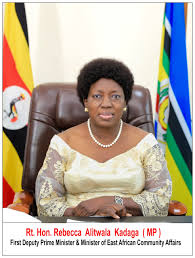
    Rt. Hon. Rebecca Alitwala Kadaga ,retained as First Deputy Prime Minister & Minister for EAC Affairs, Rt. Hon. Hajjat Rukia Isanga Nakadama(the Mayuge District Woman MP) retained as Third Deputy Prime Minister & Minister Without Portfolio,Rt. Hon. Justine Kasule Lumumba appointed Minister of ICT and National Guidance taking over from Hon Dr Chris Baromunsi who now sits at the Wandageya-based Health Ministry and
    Hon. Princess Persis Namuganza –the MP Bukono who was retained as State Minister for Lands,Housing and urban Development.

    “I congratulate all those who retained their portfolio and the newly appointed ministers on their elevation. This is a call to duty, and I have no doubt you will serve Uganda with dedication, integrity, and results,” Mutyabule said.

    Heaping Praises on Mama Kadaga.

    Mutyabule reserved special admiration for Rt Hon Rebecca Alitwala Kadaga,whom she fondly calls Mama, describing her retention as a win for both Busoga and Uganda.

    “Mama Kadaga is a library of experience and a tower of knowledge,her wisdom will not only add great value to the caninet,but will also continue to lobby tirelessly for Busoga and for Uganda at the regional level”,she said.

    She noted that Kadaga’s decades in Parliament, as Speaker, and now as First Deputy Prime Minister give her a unique ability to bridge government policy with community needs.

    “More than titles and offices, Busoga needs unity of purpose, Mama Kadaga has always been the mother who brings us together across districts, across political lines. I pray she continues to use her voice to ensure Busoga speaks with one voice so that our projects, our farmers, and our children benefit faster,” Mutyabule added.

    A Sister’s Note for Rt Hon Justine Kasule Lumumba.

    With sisterly pride, Florence Mutyabule also celebrated Rt. Hon. Justine Kasule Lumumba’s appointment to the strategic docket of Information, ICT and National Guidance.

    “Lumumba is a teacher by profession, a mother who feels the pain of Ugandan homes, and a veteran politician who served Bugiri as Woman MP, Parliament as Government Chief Whip, and the Movement as NRM Secretary General,” she said.

    “From the chalkboard to the Cabinet table, she has walked a journey of service. I have hope that she will stand up to the occasion and ensure government speaks with one clear, truthful voice that informs, unites, and inspires.”

    Pleasant Surprises Across Cabinet.

    Mrs. Mutyabule(wife to the Namisambya-born Busoga Lukiiko Speaker George William Wanume Mutyabule) has also welcomed other national appointments that signaled continuity and recognition of performance: the retention of H.E Maj. Jessica Alupo as Vice President, the retention of Rt. Hon. Robinah Nabbanja as Prime Minister, the elevation of Hon Balam Barugahara to full minister, and the appointment of Hon Justine Nameere(Masaka district Woman MP) as State Minister for Local Government — a docket central to PDM and district service delivery.

    “These decisions show that hard work is seen. Together with Busoga’s team, they strengthen our push for results,” she said.

    Mutyabue asks For More.

    10 Days at Kyankwanzi for Alignment.

    The ministers and permanent secretaries are at NALI Kyankwanzi from June 15–23, 2026 for orientation. President Museveni opened with a warning against corruption: “You are here to serve the people, not yourselves. We must transform Uganda into a modern country.”

    The Head of Public Service Lucy Nakyobe stressed the issue of accountability saying the public expects results, not excuses.

    The retreat focuses on the NRM Manifesto 2026–2031, Ten-Fold Growth Strategy, physical project monitoring, and embedding ethics into daily work.

    “Busoga Still Has More to Offer, Mzee”
    While celebrating the current team and Kadaga’s unifying role, Mutyabule appealed to President Museveni for more representation.

    She said Busoga has capacity and leaders ready to serve and that more slots would help the region move faster in all sectors in a bid to kick poverty out of households and community.

    Mrs. Mutyabule pledged to work closely with all ministers post-induction to align SACCOs and PDM with village needs.

    Closing with a prayer, she said: “May God grant you wisdom to serve selflessly. Busoga is proud of you. Uganda is counting on you.”

    Background.

    Hon. Florence Mutyabule served as Woman MP for Namutumba before becoming SPA on Poverty Alleviation. She also served for close to 20 years as headteacher of the Church-founded Buckley High School at CMS in Iganga.

    Besides several public positions held, Mrs. Florence Mutyabule was also the President Mothers Union for 10 years in Busoga Diocese.

    After June 23, ministers will settle down to their respective dockets where delivery units are expected to track performance quarterly under the 2026-31 slogan Kisanja No Sleep &Zero Nguzi.

    The Exposure Uganda (TEU) Explainer.

    What Do Ministers Actually Do? Roles, Duties & Why Kyankwanzi Retreats Matter.

    As newly appointed ministers undergo a 10-day induction at the National Leadership Institute NALI Kyankwanzi, many Ugandans are asking: What exactly is the job of a minister? And why does government spend time and money on retreats?

    The Exposure Uganda breaks it down in this explainer.

    Roles & Responsibilities of Ministers.

    Under Uganda’s Constitution and the Ministerial Code of Conduct, ministers are the political heads of government. Their core duties are:

    Policy & Law Making: Ministers initiate policies, draft bills, and pilot them through Parliament. Once laws pass, they translate them into regulations and programs that affect every citizen from Kampala to Karamoja.

    Oversight of Ministries & Agencies: Each minister supervises their ministry, departments, and agencies. They set strategy, approve budgets, monitor performance, and ensure services like health, roads, and education actually reach the village.

    Cabinet Collective Responsibility: All ministers sit in Cabinet every Monday at State House Entebbe. There they debate national issues, approve the budget, and make binding decisions. Once Cabinet decides, every minister must publicly support it — even if they argued against it in the room. “We speak with one voice.”

    Accountability to Parliament & Wananchi: Ministers answer questions in Parliament, defend their budgets, and explain government programs to the public through barazas, radio, and field visits. They listen, explain, and are held to account.

    National Service, Not Regional Service: Though appointed from different regions, ministers swear to serve Uganda’s 45M+ people. Local concerns inform them, but their mandate is national — unity, security, economic growth, and service delivery for all tribes and regions.

    Why Retreats/Induction at NALI Kyankwanzi Are Important.

    The Kyankwanzi induction is not ceremonial. It’s where government sets its engine. Here’s why it matters:

    Alignment on Vision: President Museveni and senior cadres re-ground ministers on national priorities: wealth creation, jobs, PDM, fighting corruption, and service delivery. Every minister leaves with the same script. No one goes off-message.

    Team Building: Ministers come from different regions, parties, and backgrounds. The retreat breaks silos. They debate issues, disagree, then agree. That unity is what makes Cabinet decisions strong and fast.

    Training on Ethics & Rules: New and returning ministers are drilled on public finance management, budgeting, conflict of interest, and the Ministerial Code. This reduces scandals and improves discipline in handling public money.

    Connecting Policy to the Village: Sessions link high-level decisions in Entebbe to programs on the ground — SACCOs, Emyooga, sub county roads, health centers and schools. Ministers leave knowing how a signature in Cabinet changes life in Oyam, Amuru, Terego, Bushenyi, Ibanda and Kyenjojo or Namutumba, Arua, or Kanungu.

    Clear Performance Targets: President Museveni sets measurable Key Performance Indicators (KPIs). Each minister knows what they must deliver in 5 years. Retreats remove ambiguity so when Parliament asks “what have you done?”, there’s a clear answer.

    The Exposure Uganda (TEU) will continue unpacking government processes so citizens understand how decisions are made in their name.

    For story tips/comments: exposureuganda000@gmail.com

    Or WhatsApp 0776462509/0792140712


  • Misprision of Treason Vs Legal Privilege: Lubogo Dissects the Constitutional Stakes in Lukwago’s Prosecution.

    Misprision of Treason Vs Legal Privilege: Lubogo Dissects the Constitutional Stakes in Lukwago’s Prosecution.

    The Exposure Uganda (TEU)Preamble.

    The charge of misprision of treason against a defense counsel sits at the intersection of criminal law, constitutional rights, and the duty of confidentiality that underpins legal representation.

    For context, misprision means the neglect or concealment of a crime one knows about. Under Section 25(1) of the Penal Code Act Cap 120, misprision of treason occurs when a person, knowing that another is about to commit or has committed treason, fails ‘as soon as is reasonably practicable’ to report it to a magistrate, police officer, or other person in authority. The offence carries a penalty of imprisonment for seven years upon conviction-a felony but far short of treason itself, which attracts the death penalty under Section 23.

    This analysis by Isaac Christopher Lubogo examines Erias Lukwago’s case not as a political commentary, but as a critical test of how Ugandan law balances state security interests against Article 28’s non-derogable right to a fair hearing and the protections of legal professional privilege under Sections 125–128 of the Evidence Act.

    It is worth noting that Lubogo does not suffer from any shortage of words, diction, or adjectives. But just as a wealthy man does not throw cash hither and thither, so too does Lubogo understand the economy of words. Every word, adjective, and phrase are deliberate and measured. Just as in audit there is “value for money”, in the legal, journalistic, and literary world there is “value for word”. Nothing here is ornamental; every line serves a purpose.

    The issues raised go beyond one individual: they touch every citizen’s access to confidential legal advice, the prosecution’s burden of proof, and the narrow scope of the crime-fraud exception. To preserve the integrity of the argument and avoid misrepresentation, the full text below should be read exactly as authored.

    Invitation To TEU Readers.

    I invite you to read the Executive Summary verbatim as prepared by the author. The legal reasoning relies on precise wording, citations, and sequencing that are essential to understanding the constitutional and evidentiary challenges identified.

    Please read the full text below without paraphrase or omission.

    Executive Summary.

    Critical Legal Analysis of the Charge of Misprision of Treason Against Erias Lukwago.

    (By: Isaac Christopher Lubogo).

    The prosecution of Erias Lukwago for misprision of treason raises fundamental questions concerning the relationship between criminal liability, constitutional rights, and legal professional privilege. Lukwago, a senior advocate and defense counsel for Dr. Kizza Besigye, has been charged under Section 25 of the Penal Code Act for allegedly failing to report knowledge of a treasonous plot.

    Under Ugandan law, misprision of treason requires proof that an accused person had actual knowledge of another person’s intention to commit treason and failed to report that information to the appropriate authorities or failed to take reasonable steps to prevent the offence. The prosecution therefore bears the burden of proving actual knowledge beyond reasonable doubt. Mere political association, friendship, or professional representation is insufficient.

    The central legal difficulty facing the prosecution is that any alleged knowledge possessed by Lukwago may have arisen during the course of his professional representation of Dr. Besigye.

    Sections 125–128 of the Evidence Act protect confidential communications between an advocate and client. Such privilege belongs to the client and cannot ordinarily be disclosed without the client’s consent. Consequently, information obtained through legal consultations is generally inadmissible against the advocate.

    The prosecution can only overcome this protection if it successfully invokes the crime-fraud exception by proving that the communications were made in furtherance of an illegal purpose. This exception is narrowly construed and requires substantial evidence. Mere allegations of criminal conduct are not enough.

    The Constitution further strengthens Lukwago’s position. Article 28 guarantees the right to a fair hearing, while Article 44(c) makes that right non-derogable. Any prosecution that relies on privileged lawyer-client communications risks undermining the constitutional right to effective legal representation.

    If lawyers can be criminally prosecuted for information received from clients during legal consultations, accused persons may no longer communicate openly with counsel, thereby weakening the entire administration of justice.

    Ugandan jurisprudence, including Salvatori Abuki v Attorney General and earlier treason-related litigation involving Dr. Kizza Besigye, demonstrates that courts closely scrutinize prosecutions that threaten constitutional guarantees. Courts have consistently emphasized that both the purpose and effect of state action must comply with constitutional standards.

    In conclusion, while the offence of misprision of treason exists in Ugandan law and can legally be charged, the case against Erias Lukwago faces significant constitutional and evidentiary challenges.

    The prosecution will only be sustainable if the state can prove actual knowledge through independent, admissible, and non-privileged evidence, or establish that the communications fall within the narrow crime-fraud exception.

    Failing this, the charge may be vulnerable to challenge on grounds of legal professional privilege and the non-derogable constitutional right to a fair hearing.

    Isaac Christopher Lubogo

    Suigeneris


  • President Museveni Calls for Political Integration to Deal With Future Security Threats.

    President Gen (Rtd) Yoweri Kaguta Museveni also Commander-in-Chief (C-i-C) of the Uganda People’s Defence Forces (UPDF) has today delivered a lecture of opportunity to army officers at the Senior Command and Staff College-Kimaka, Jinja City.

    During the lecture, President Museveni criticised the past African leaders in the colonial era who just looked on when the continent was being taken over by colonialists and attributed part of Africa’s problems to their selfishness.


    “The chiefs and kings were here glorifying themselves when their building was falling down. This strategic danger was known but neglected by kings and chiefs,” he said.

    Gen. Museveni informed the officers that for the last 60 years, the National Resistance Movement (NRM) has been reminding the citizens of the historical missions needed by Uganda, East Africa and Africa at large to develop and be at par with the western countries.

    “The first historical mission is how to ensure prosperity of our people. We have told you that one of the factors to help you prosper is economic integration of the African market. We have been struggling with it so you the young people should continue with it instead of dancing pakachini and watching European football. If we don’t integrate we shall be in problems you people,” he said.

    According to President Museveni, in order for East Africa or Africa at large to safeguard itself from future threats, it needs to politically integrate.

    “Security is the second historical mission. How can we go to the moon? We must go to the moon and find the Americans there, find the Chinese, Russians and Indians, we tell them that this also belongs to us. If you’re not going to be just a boy scout movement and be able to defend Africa, we must be able to operate on land, air, navy and in space but can Uganda have a space program? Or can we go to ocean? No, we are cut off by the irrational colonial borders. That’s why the answer there is political integration. We have been talking about the East African Integration but if Presidents want to remain big fish in the small ponds, then that issue will not be addressed.”

    President Museveni also noted that some African countries are facing land shortage due to the growing population. He said this challenge is majorly caused by underdevelopment whereby majority of the population relies on manual labour and agriculture.

    “Land is only crucial for agriculture but in money economy, many people are in manufacturing and services, a few are in agriculture.”

    On the conflicts in the Middle East and global implication on East Africa, President Museveni said the conflicts have less impact because Africa as a continent has everything and it’s upon the Africans to put the resources into good use.

    The issue of sectarianism of tribes and religion, President Museveni described the narrative as ideological bankruptcy.

    “The politics of identity is politics of parasites.”

    The President also underscored the critical role of Patriotism and Pan-Africanism in promoting markets for the country’s products.

    On job creation, President Museveni informed the officers that Uganda has four sectors of the economy which are helping its citizens to create wealth and jobs which include commercial agriculture, manufacturing, services and ICT.

    The Commandant of the Senior Staff College-Kimaka, Brig Gen. Kabango Michael hailed President Museveni for his visionary and strategic leadership which has guided Uganda on the path of peace, stability and prosperity.

    “Your presence today is a great inspiration to both the faculty and the students who are gathered here,” he said.

    “The course before you sir, is intake 21-2025/2026 which commenced on 8th July 2025, and they are due to graduate on the 2nd July, 2026.”

    The course comprises 52 students; 38 of these are Ugandans while the 14 are from other friendly countries including Burundi, Egypt, Kenya, Malawi, Rwanda, South Africa, South Sudan and Tanzania.


  • “Start Small, Build Right, Wait on The Lord”: Archbishop Elect Bagambaki Warns Young Ministers Against ‘Fast Food Faith’

    In an age of fast food, fast trains, fast internet, fast jets, intercontinental ballistic missiles, and “kill me quick” liquor promising instant riches, Archbishop Elect Professor Mugume Bagambaki Richard has delivered a counter-cultural charge to Uganda’s emerging church leaders: Go slow, but sure in the Lord.

    Teaching under the theme “Start Small, Build Right, Wait on the Lord”, the Ecclesiastical Patriarch of the Five-Fold Episcopal World Federation did not mince words. Speaking as a father to sons and daughters in ministry, he said the ministry graveyard is full of “future giants” who died from “rushing and crushing” ,not from the devil, but from impatience.

    Despise Not Small Beginnings.

    Quoting Zechariah 4:10, the Archbishop Elect dismantled the cathedral-or-bust mentality crippling young pastors. “Big farms start with one seed. Big forests start with one seed. Generals started as civilians,” he said. “Jesus Christ builds His Church at His stage and His timing, not yours.”

    His discipline is blunt: Start in your sitting room, then the veranda you planned, then the compound. Citing Luke 16:10, he warned against rushing to rent houses or “swampy NEMA-gazzetted wetland” that drains money and derails timing. “Unless you are on personal church business, not divine calling,” he added.

    Honor Your Priest Eli Before You Claim Samuel’s Mic.  

    Drawing from 1 Samuel 3:9, Bagambaki called for order in the house of God. Young ministers must submit to spiritual fathers while the vision is “still burning in your spiritual father’s house” and not run away as prodigal sons. “Outside there the world may not welcome you as you think.”

    He reminded leaders that Jesus trained the Apostles for 3½ years before Pentecost. “Join a Seminary like Upper City Covenant Seminary (UCCSAT). Knowledge plus maturity saves you from rushing and crushing,” he said, citing 2 Timothy 2:15.

    Training In The Tools Of Truth: Why The Pulpit Needs The Classroom.

    Contrary to the widely mistaken belief that ministry training ignores disciplines like philosophy, economics, literature, theology, sociology, psychology, health, accountancy, statistics, and community development, Archbishop Bagambaki stressed the opposite: training is non-negotiable.

    “Jesus guided His disciples for 3 years,” he said. “These tools help men and women called by God to interpret the Bible correctly and in context, and to apply it relevantly.” Pastors called by God should not embarrass themselves before professionals like lawyers, doctors, health workers, or university dons because they are ill-equipped. “The pulpit must be able to speak to the parliament, the hospital, the lecture room, and the marketplace without ignorance.”

    He told the audience that seminary is not cemetery, it is the armoury where revelation meets research, and anointing meets understanding.

    The Role Of The Holy Spirit: Power And Wisdom.  

    Yet Bagambaki was quick to balance the scales. Training without the Holy Spirit produces “dry intellectuals.” Anointing without training produces “noisy amateurs.” The Church needs both.

    “The Holy Spirit is our teacher,” he said, referencing John 14:26. “He gives power to witness, wisdom to govern, and revelation to build. But He does not anoint laziness. He partners with preparation.” He pointed to Acts 2: after 3½ years of teaching, the Upper Room ordination came by fire. “The Spirit falls on order. The Spirit fills vessels that have been shaped. Wait for Him, but train while you wait.”

    Build Your House Before The Church.

    With Psalm 127:1 as anchor, the Archbishop Elect gave counsel that shocked some: Ask God first for a home land. “Build a house within your means. Have rooms for privacy: your boys, girls, store, maid’s room, with a good planned veranda.”

    He cautioned against being deceived by “low brain manipulators” who praise a young minister for casting out one demon. “Pride says ‘I can’t sleep in church while you are renting in slums.’ Wisdom says ‘I won’t build on sand while God is still laying my foundation’,” referencing Matthew 7:26-27.

    Process Before Prominence.  

    Cathedrals, crowds, anointing, financial breakthrough, fame, among others, all are process, Bagambaki insisted, quoting James 1:4 and Ecclesiastes 3:1. “Before you start a church, first plant food that will sustain your family. Plant coffee and cocoa, cassava and beans, sweet potatoes or simsim and banana. They are long-term investments. Food is security,” he said, citing Proverbs 27:27.

    Only after the home is stable should leaders mobilize for buying church land, not renting. “Get an official government plan from your respective urban councils, approval, then mobilize materials and build within your means as the Lord provides.” He warned against “copy and paste” from senior leaders with 20, 40, 60 years in ministry. “Who deceived you every called minister is for a cathedral and crowds?”

    Teamwork: Share the Burden

    Quoting Galatians 6:2, he urged leaders to ask God for wisdom to appoint a church government. “Now the burden is shared with Christ and His body, not just you, your wife, and children. That is how Upper City Covenant Churches and FFEWF are built  ‘Built Together’ Ephesians 2:20.”

    Father’s Warning In A Fast World.

    Closing with Hosea 4:6, the Archbishop Elect said: “We have lost many future giants through lack of knowledge, maturity, poor grooming, rushing and crushing in ministry. It is my prayer you will not crush, my daughter or son in the Lord.”

    In a world obsessed with speed, Bagambaki reminded the Church that even in fables, the slow creatures win races. “The chameleon and tortoise have always won,” he said. “Wait on the Lord. Start in your house. Honor your spiritual father. Build by wisdom. Train. Be filled with the Holy Spirit. The God who calls you is faithful to build His Church through you at the right time.”

    Shalom. 

    For mentorship, training, or ordination inquiries under the Five-Fold Episcopal World Federation and UCCSAT University, contact:

    WhatsApp: +256775050183*

    Email: fivefoldepiscopalworldfederati@gmail.com

    Archbishop Elect Professor Mugume Bagambaki Richard_ Ecclesiastical Patriarch, FFEWF | Archbishop, Upper City Covenant Churches | President & Chancellor, UCCSAT University.


  • Beyond Parchment Barriers: Why the Military Abduction Of Counsel Erias Lukwago Is An Existential Crossroad For Ugandan Jurisprudence.

    Beyond Parchment Barriers: Why the Military Abduction Of Counsel Erias Lukwago Is An Existential Crossroad For Ugandan Jurisprudence.

    The Exposure Uganda (TEU)Preamble: The Causeway and The Sword.

    “The law is a causeway upon which, so long as he keeps to it, a citizen may walk safely.”

    Robert Bolt wrote that for Sir Thomas More in A Man for All Seasons, not as poetry but as political engineering. More was warning his son-in-law: tear down every law to get at the Devil, and when the Devil turns round on you, there is nowhere left to stand. The laws are the causeway through the swamp. Cut them, and we all sink.

    Jurisprudence has a parallel axiom, older than Blackstone: the sword and the pen are the two great instruments of power. Cedant arma togae. Let arms yield to the toga. When the sword arrests the pen, it confesses it has no answer for the argument. Force replaces reason only when reason has already won.

    On the morning of June 15, 2026, the Special Forces Command did not merely breach a wire fence in Wakaliga. They breached Bolt’s causeway. They cut down Article 23 of the Constitution, which says no person shall be deprived of liberty save by court order.

    They cut down the UPDF Act, which grants soldiers no power to arrest civilians in bedrooms. They cut down the UN Basic Principles on the Role of Lawyers, which forbid identifying advocates with their clients’ causes. They cut it all down to stop one man from delivering one envelope.

    That man, Erias Lukwago, has walked Bolt’s causeway for decades. He served 15 years as Lord Mayor of Kampala and as a Member of Parliament. He is a veteran opposition figure who now leads the People’s Front for Freedom, born of the break from FDC.

    He is a Senior Advocate of the High Court. On that morning he was not organizing a rebellion. He was doing what Cicero’s togae were meant to do: serving process. The document was for the Chief of Defense Forces, in a pending human rights application for Dr. Kizza Besigye, detained over 400 days without trial.

    The state’s answer was not a pleading. It was a raid, an assault on Zawedde Lubwama Lukwago, and a tweet: “I have captured a FOOL and taken him to the basement!” Later, “the fool will not sleep tonite. Kiboko mpaka…”

    That is the sword speaking because the pen has it cornered. It is the boast that betrays the fear — fear of Article 119’s command to the Attorney General, fear of Section 13 of the Human Rights (Enforcement) Act, fear of Justice Emmanuel Baguma’s bench.

    So, Sir Thomas More’s question returns to us: with the laws cut down to seize one lawyer, where will the Attorney General stand? Where will Parliament stand? Where will the clergy stand when the Devil turns round? Article 3(4) does not leave that as philosophy. It imposes a duty to resist.

    Now, Board With Us.

    TEU readers, the diagnosis is laid out. The causeway has been cut. The sword has seized the pen. What follows is not opinion. It is law.

    Senior Advocate Asuman Kiyingi now takes you inside the raid. He names the Articles breached, the Acts ignored, the international standards shredded. He names the motive: stopping a court summons. He names the remedy: habeas corpus, Article 119, criminal charges, judicial protection.

    We Do Not Flinch, We Are The Exposure Uganda(TEU), We Expose, You Decide.

    This is Beyond Parchment Barriers. Read every line. Read it like your Constitution depends on it. Because it does.

    Beyond Parchment Barriers: Why The Military Abduction Of Counsel Erias Lukwago Is An Existential Crossroad For Ugandan Jurisprudence.

    By Asuman Kiyingi

    On the morning of June 15, 2026, the fragile facade of constitutionalism in Uganda suffered a devastating, calculated blow. The violent apprehension of senior advocate Erias Lukwago from his private residence in Wakaliga, Kampala, was not a standard law enforcement operation; it was a state-sanctioned assault on the independence of the legal profession and the administration of justice. While corporate legal bodies like the Uganda Law Society and Uganda Muslim Lawyers Association, and civil society organizations have understandably issued measured, diplomatically guarded institutional statements, those of us who have spent decades in the service of the law, the constitution, and the state cannot afford the luxury of polite euphemisms. We must call this what it is: an illegal military abduction and a retaliatory subversion of judicial process.

    The tactical details of the raid bear the precise hallmarks of state-sanctioned lawlessness. Heavily armed elements of the Special Forces Command (SFC) cut the perimeter wire fencing of Counsel Lukwago’s home, committed physical assault and battery against his wife, Zawedde Lubwama Lukwago, and invaded a private bedroom without a judicial warrant. To execute domestic arrests against civilians in this manner is fundamentally ultra vires (beyond statutory authority). Under the 1995 Constitution and the UPDF Act, military detachments possess no residual powers to enforce domestic criminal law against civilians. Bypassing standard legal protocols, such as a criminal summons or a civilian police warrant, reduces our criminal justice system to arbitrary gun rule.

    However, the constitutional violation runs far deeper than a lawless arrest. We must unmask the true, chilling motive behind this operation. This abduction occurred precisely while Counsel Lukwago, acting in his professional capacity as lead defense counsel for veteran opposition politician Dr. Kizza Besigye, was preparing to legally serve formal High Court documents to the Chief of Defence Forces (CDF), General Muhoozi Kainerugaba, regarding an ongoing human rights and treason-related application. Intercepting an advocate to violently prevent the service of court process on a military commander is a blatant, criminal obstruction of justice. It signals a terrifying reality: that high-ranking military officials consider themselves above the reach of the law and are willing to paralyze the legal system to maintain institutional immunity.

    This contempt for the judiciary has been flagrantly broadcast to the public. Simultaneously with the raid, the CDF, Gen. Muhoozi Kainerugaba, issued public declarations on social media platform X, stating, “I will HANG Kizza Besigye the first chance I get to do it!”—followed by the unauthorized circulation of an image showing Counsel Lukwago in military custody. The last X post I saw from General Muhoozi around 7.40 pm was a picture of a distraught Lukwago in custody captioned “the fool will not sleep tonite. Kiboko mpaka…”. Such behavior openly subverts the presumption of innocence guaranteed under Article 28(3)(a) of our Constitution and treats the formal judicial system with total contempt. Public commentary by persons holding high public office carries massive systemic influence; when it is used to preview extrajudicial executions and parade arrested advocates, it utterly breaks down public confidence in the rule of law.

    By subjecting a prominent advocate to a forced, violent apprehension in direct connection with his professional duties, the state has also flagrantly violated the UN Basic Principles on the Role of Lawyers (1990). These international standards mandate that governments ensure lawyers can perform their professional functions without intimidation, hindrance, or improper interference, and explicitly dictate that lawyers shall not be identified with their clients’ causes. The protection of an advocate is not an elite privilege; it is the ultimate shield for the ordinary citizen. If a senior advocate and political party president can be snatched from his bed for serving a court document, no citizen in this country can ever safely look to the courts for refuge.

    A Framework for Immediate Accountability

    Consequently, we must shift from passive condemnation to an unyielding framework of accountability:

    • Immediate Habeas Corpus:The government must immediately disclose the exact place of detention where Counsel Erias Lukwago is being held by the SFC and ensure his immediate, unconditional release or his prompt arraignment before a competent, civilian court of law.
    • Intervention of the Attorney General:Under Article 119 of the Constitution, the Attorney General must formally intervene as the principal legal adviser to the government, affirm that military bodies like the SFC have zero legal authority to detain civilians, and advise the executive to halt these systemic violations of the UPDF Act.
    • Criminal Prosecution of Commanders:In light of the reported severe physical assaults perpetrated against Counsel Lukwago’s family during the raid, criminal proceedings for assault, battery, and kidnap must be initiated against the operational commanders of the SFC unit involved.
    • Protection of the Bench:The Chief Justice and the Principal Judge must provide robust institutional protection to High Court Judge Justice Emmanuel Baguma and the entire bench. The judiciary must not allow military intimidation to halt or stall the processing of constitutional human rights enforcement applications.

    The Constitutional Command to Resist

    James Madison famously warned that constitutional provisions, when undefended, are mere “parchment barriers” against the encroaching nature of power. We are currently witnessing those barriers being shredded.

    We must remind all state actors and military commanders that the Constitution is the supreme law of the land and binds all authorities and persons throughout Uganda. Article 3(4) of the 1995 Constitution imposes a sacred, non-derogable obligation on all citizens to defend the constitutional order and resist any person or group attempting to subvert or abrogate it.

    I therefore call upon the Uganda Law Society, Parliament, the clergy, and all citizens of goodwill to recognize this abduction not merely as an isolated attack on an individual, but as an existential threat to the independence of both the Bench and the Bar. We must collectively, legally, and unyieldingly resist this creeping militarization of our legal system before the courts are rendered entirely obsolete.

    For God and My Country.

    The writer is a Senior Advocate of the High Court of Uganda, a Constitutional Law Scholar, and a former Minister.