Tag: Prof Bagambaki

  • From Pulpit to Soil, From Raw Beans to Roasted Value: Uganda Asked to Stop ‘Donating Jobs Abroad’

    “Uganda’s soil is sacred ground, and it is time the Church treated it that way,” declared Archbishop Elect Professor Mugume Bagambaki Richard, Ecclesiastical Patriarch of the Five-Fold Episcopal World Federation and Archbishop of Upper City Covenant Churches, as he addressed church leaders, pastors, and believers across Uganda on the eve of the International Day of the Tropics, 29 June.

    His message was direct: the Church must return to the land with the same zeal it brings to the pulpit, because true Christianity is not idle waiting but diligent work carried out while watching for God.

    Archbishop Bagambaki was not speaking to politicians or technocrats, but to the household of faith, calling parishes to open church land for demonstration farms, families to turn idle time into planting time, and young people to see agriculture and agro-processing as honor rather than shame, so that Uganda can model the dignity of labor and rise as the prosperous nation God designed her to be.

    The Biblical Theology Of Work.

    This call does not suggest that prayer is bad, because Uganda’s strength has long been its devotion through morning fellowships, overnights, crusades, and street preaching that form character and dependence on God.

    Scripture, however, never separates prayer from work, but joins them, and Archbishop Bagambaki anchored his message in 2 Thessalonians 3:10: “If anyone is not willing to work, let him not eat,” explaining that Paul was not condemning the sick, the elderly, or widows whom the Church must care for, but confronting believers who had abandoned work out of misplaced expectation of Christ’s immediate return.

    Paul himself modeled responsibility, saying, “We worked night and day… so as not to be a burden to any of you,” and the Bible’s language confirms the link, since the Hebrew avodah and Greek ergon mean to till, to keep, and to serve, the same words used for Eden’s mandate “to work it and keep it” and for priestly service in the Tabernacle, which means farming and worship are not rivals but two expressions of stewardship, and therefore “the soil is an altar,” the Archbishop said, “and when we plant in faith and work with excellence, we harvest both bread and blessing.”

    ‘Rich Lands, Poor People’: The Tropics Paradox.

    The Archbishop’s call coincides with the International Day of the Tropics, established in 2016 after the State of the Tropics Report to highlight the opportunities and challenges facing tropical regions, and Gertrude Kamya Othieno, Political Sociologist and Founder of the Global People’s Network, GPN, argues that the day exposes a painful paradox because the Tropics hold almost half the world’s population along with the greatest biodiversity, minerals, fertile soils, sunshine, and strategic waterways, yet many tropical countries remain among the poorest.

    “Raw materials leave the Tropics cheaply. Finished products return expensively. The wealth flows outward. Dependency remains,” Kamya wrote, pointing to cocoa from Ghana, coffee from Uganda, Ethiopia, Colombia and Brazil, palm oil, coltan, timber, and oil that feed global industries while farmers and communities receive the smallest share.

    What Do We Mean by The Tropics?

    The Tropics are the region of the earth between the Tropic of cancer at 23.5 degrees North and the Tropic of Capricorn at 23.5 degrees south- a warm belt around the equator where Uganda lies.

    Countries in the Tropics share hot climates, two rain seasons, rich biodiversity, fertile soils and year-round sunshine. The belt includes most of Africa, Latin America, South and Southeast Asia and the Pacific and is home to nearly half the world’s population.

    It is also the region most dependent on agriculture and raw commodity exports, which is why the ‘rich lands, poor people’ paradox keeps appearing in development debates.

    “For centuries, colonial systems organized tropical economies around extraction, and political independence did not always change that, so we continue to export what we do not consume and consume what we do not produce. The result is a paradox: rich lands, poor people,” she added.

    Museveni: ‘Stop Donating Money Through Raw Exports’
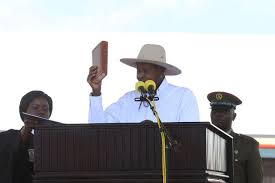
    That analysis echoes a point President Yoweri Museveni has made for decades, warning against “donating money and jobs abroad” by exporting unprocessed commodities, because when Ugandans ship raw coffee, cocoa, or minerals, European and American factories capture the jobs, the by-products, and the profits, then roast, package, and brand the goods before selling them back to Africans at a higher price.

    “You hear someone say, ‘I like UK Coffee’ or ‘American Coffee,’” the President has said, “yet that coffee came from Uganda. We grew it. But we gave away the jobs and the value.” His consistent demand has been for value addition: process, roast, and package in Uganda so that jobs, skills, and wealth remain here.

    Where Church, Society, and State Meet?
    Therefore, Archbishop Bagambaki’s appeal is both spiritual and economic, urging the Church to lead by example because it cannot preach self-reliance and live in dependency, while GPN calls for a shift from exporting raw materials to creating value, from being objects of research to producers of knowledge, and from being subjects of global narratives to authors of our own stories, insisting that “the greatest resource of the Tropics is not beneath the soil or hidden in the forests, but the people themselves.”

    “As we commemorate the International Day of the Tropics, perhaps we should ask not simply how to save the Tropics, but rather: Who has benefited most from the Tropics—and who has paid the price?” Kamya concluded.

    For Uganda, the message converges in three voices: the Church says work is worship, civil society says value must stay here, and the State says stop donating jobs abroad, which means the pulpit forms character, the soil releases provision, prayer invites God’s hand, and work puts our hand to His creation, so that when all three are honored, faith becomes food and dependency gives way to dignity.


  • Beyond Sunday Palm Branches: Archbishop-Elect Prof Mugume Bagambaki Demands Easter Care for Widows, Orphans, Refugees & Prisoners.

    Archbishop‑elect Professor Mugume Bagambaki Richard the Ecclesiastical Episcopal Conference archbishop of the Upper City Covenant Churches, president of the Five‑Fold Episcopal World Federation and Chancellor of UCCSAT University, used the March 29th Palm Sunday mass to unfold the theological weight of Christ’s Jerusalem entry and press its relevance on Ugandan believers.

    He said Palm Sunday commemorates Jesus’ triumphal approach to Jerusalem one week before His death and resurrection (Matt 21:1‑11), the start of Passion Week.

    Travelling over the Mount of Olives—also called Mount Olivet or Jabal az‑Zaytūn, and known as the Mount of Corruption because Solomon built idol shrines there (1 Kings 11:7)—Jesus neared Golgotha, the “place of the skull” under the Church of the Holy Sepulchre, to secure salvation for the lost (Luke 19:10).

    Prof Bagambaki recounted how Jesus sent disciples to Bethphage, still marked by a Franciscan chapel on Jerusalem’s eastern slope. They found the colt exactly as foretold; the owners accepted “The Lord needs it” (Luke 19:31‑34).

    Why Palm Leaves?

    Palms became national symbols after Simon Maccabeus’ Judean revolt in the 160s BC, the very emblem later waved for Jesus. Christ’s choice of a colt—not a war horse—fulfilled Zechariah 9:9, projecting peace rather than revolt.

    Zachariah 9:9: “Rejoice greatly, Daughter Zion! See, your king comes to you, righteous and victorious, lowly and riding on a donkey, on a colt, the foal of a donkey”.

    Yet the same crowds who shouted “Hosanna” hailed a political liberator; days later, disappointed and goaded by authorities, they yelled “crucify” and chose Barabbas. “The lesson,” Bagambaki said, “is loyalty that outlasts unmet agendas.

    According to antiquity, palm branches were used by Jews to welcome Jesus as a triumphant king during his entry into Jerusalem, symbolizing victory, peace and national liberation.

    Their botanical characteristics, featuring tall, sturdy fronds and parallel veins made them ideal for waving, while their cultural significance as symbols of victory over Roman occupation aligned with the hope for a messianic deliverer.

    Palms have held an important role for humans throughout much of history. Many common products and foods come from palms. The palm branch was a symbol of triumph and victory in Roman times. Just like the people of Lango use oboke olwedo, the Romans rewarded champions of the games and celebrated success in war with palm branches. The palm has many meanings in both ancient and modern eastern religion.

    According to Calvin Institute of Christian Worship attached to Calvin University, in ancient times the palm tree was associated with life and blessing. Found in desert oases, it was referred to as the tree of life.

    The branch was used as a victory symbol at public games and in battles.

    In the Old Testament palm fronds were carried in the festival of Booths (Leviticus 23:40) as well as used as a motif in the design of the temple (I Kings 6:29-35).

    Palms also appeared in the funeral art of the catacombs, symbolizing Christ’s triumph over sin and death. This image depicts the joy and the sorrow of the moment-the paradox of Christ’s victory of life through humility and death

    Palms appeared in the funeral art of the catacombs, symbolizing Christ’s triumph over sin and death. This image depicts the joy and the sorrow of the moment—the paradox of Christ’s victory of life through humility and death.

    Who Was Simon Maccabeus?

    Simon Maccabeus was a Jewish leader who, in the 160s BC, reclaimed Jerusalem and was welcomed with palms, fixing palms as victory symbols. A colt signaled humility and fulfillment of prophecy (Zech 9:9), contrasting war horses.

    Palms, durable and fruitful, symbolized righteousness and joy (Ps 92:12)—flowers or other leaves would have lacked that political‑religious weight.

    The Message

    He told worshippers that Palm Sunday is more than waving palm branches,

    it exposes the gulf between crowd‑pleasing messiahs and the Savior who wept over Jerusalem (Luke 19:41‑44) because the city “did not recognize the time of God’s coming.”

    Yet the crowd mistook the moment for a political enthronement. Jesus wept over Jerusalem (Luke 19:41‑44) because the city missed the peace offered; days later, disappointed and stirred by authorities, the same voices chose Barabbas and shouted “crucify.”

    To bring the sermon closer, he asked a very hard question: Do we celebrate Jesus only when he looks like a winning King?”

    Prof Bagambaki drove the lesson home: wives abandon sick husbands, and vice versa, supporters cling to leaders only for material gain, and people prefer success to strugglers, a kind of fair‑weather loyalty that mirrors the Jerusalem crowd.

    “Jesus saves souls, not parties or power,” he urged, calling Ugandans to loyalty that endures unmet expectations and walks the Golgotha Road, not just the palm‑strewn parade.

    Archbishop Bagambaki told the worshippers that the crowd’s shift from “hosana” to “crucify” him mirrors everyday betrayals so common in Uganda and the world today and its that fickleness that Jesus wept over.

    For Christians, Palm Sunday opens Holy Week by flipping expectations, here they cheer a king who rides a colt, not a tank or jet fighters, it is a dress rehearsal for Easter to celebrate the parade then walk the hard road to the cross, keeping loyalty when hosanas fade.

    Against wars, greed, corruption and selfishness, Palm Sunday is the perfect art which says Jesus rejects the war-horse, the loot and the ‘me-first’ agenda.

    Bagambaki told his congregation to wave palms but follow the donkey by building peace, sharing resources and staying loyal when there is nothing to gain.

    As Easter nears, Prof Bagambaki warns Ugandans not to turn holy days into expensive parties awash in drink, casual sex, theft or worse.

    “The cross is not a backdrop for excess, while some spend on self-indulgence, widows, orphans, people with disabilities, the sick, prisoners, refugees and the destitute are left in the cold”, he said.

    The prelate calls on the nation to swap revelry for mercy, share food, visit the lonely, protect the vulnerable and follow the donkey-king whose victory was measured in sacrifice, not spectacle.