Tag: Parliament

  • Mwiru Opens Speaker Race As Sun Tzu’s Last Two Chapters Play Out In A Unicameral House.

    Mwiru Opens Speaker Race As Sun Tzu’s Last Two Chapters Play Out In A Unicameral House.

    On Monday 25th May,2026 529 Members of Parliament will enter the chamber to elect a Speaker for the 12th Parliament in what has become a contest shaped by Sun Tzu’s final chapters, where Chapter 12, Attack by Fire, collides with Chapter 13, The Use of Spies, and the Constitution’s secret ballot ensures that the real war remains invisible to the public eye.
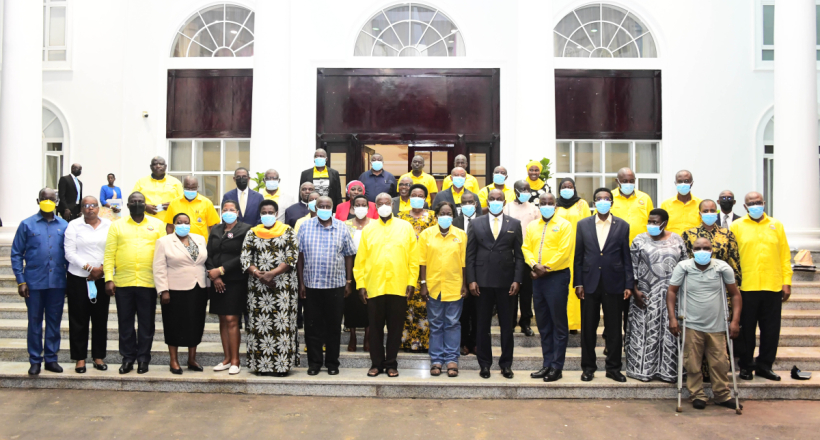
    The National Resistance Movement (NRM) Central Executive Committee (CEC) met on Friday 22 May 2026 at State House Entebbe and attempted to subdue the enemy without fighting by endorsing a candidate and presenting the outcome as settled, yet the law vests the election in the MPs themselves and the ballot they will cast in private allows an individual to applaud on Friday and vote differently on Monday without ever being known.

    That tension between public display and private choice has turned what appeared to be a walkover into a three-way contest in which establishment force, opposition strategy, and cross-party patience will be tested against one another under Uganda’s unicameral system, where there is no second chamber to review or dilute the decision.

    The race opened early in the week then climaxed on Friday when veteran politician Hon. Paul Mwiru of Jinja South East constituency fired the first shot by declaring his candidature with a 1,252-word manifesto and the official endorsement of the National Unity Platform, a move that recast the Speaker’s election from coronation to contest and forced the House to confront questions of transparency, budget discipline, and institutional independence that had been muted under previous leadership.
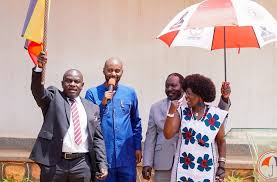
    Hon Mwiru, a lawyer by profession, told MPs and the country that Parliament must be rediscovered after a period defined by lavish spending, secret budgets, and corruption allegations against an institution constitutionally mandated to guard public funds, and he promised a public disclosure policy that would publish Parliament’s outputs and costs while shifting resources from CSR and donations to committees and substantive social investments.

    He has asked whether Ugandans want billions spent on luxury vehicles like Rolls Royce while hospitals lack medicine, insisted that the Ten-Fold Growth Strategy must be matched with funding for health, schools, and the Parish Development Model, and said that under his watch corruption would attract severe sanctions and the Rules of Procedure would be adapted to entrench transparency.

    NUP, whose leader/former presidential candidate Hon. Robert Kyagulanyi alias Bobi Wine remains outside the country, endorsed Hon Mwiru and enters the 12th Parliament with 50 MPs, down from the 57 it held in 2021. This still makes it the largest opposition bloc but also means Mwiru must look beyond his caucus to reach the 265 votes needed to win in a House of 529 members.

    Into the same contest has stepped former Defense Minister/West Budama Central constituency in Tororo district Hon Jacob Oboth Oboth, who is being rallied by Uganda’s Chief of defense Forces(CDF) Gen. Muhoozi Kainerugaba, founder of the Patriotic League of Uganda, after the fall of Rt. Hon. Anette Anita Among, who was forced out by a corruption and abuse-of-office probe after serving a single term and thereby broke the unwritten formula that had carried Rt Hon Edward Ssekandi and Rt Hon Rebecca Alitwala Kadaga through ten-year tenures.

    Hon Oboth is now positioned as the establishment choice with backing from PLU and elements inside NRM, and he is waging Sun Tzu’s Attack by Fire by showing overwhelming strength early, using CEC’s Friday endorsement at Entebbe, military visibility, and the memory of party discipline to burn momentum and signal that resistance will carry the cost of lost committees, funding, and future tickets.
    That strategy seeks to win without a fight, yet it risks provoking the very rebellion it aims to prevent, as happened in 2011 when Rebecca Kadaga defied NRM CEC and won the speakership with 302 votes against FDC’s Nathan Nandala Mafabi’s 72 after the party’s endorsed candidate Edward Kiwanuka Ssekandi withdrew.

    The secret ballot freed MPs to act on private judgment rather than public instruction.

    Hon. Nobert Mao, the former Justice Minister and DP president, is also in the contest and is not written off, because in a secret ballot a candidate who appears marginal on Friday can become decisive on Monday and Mao’s two decades of cross-party relationships give him access to the quiet networks that Sun Tzu describes in Chapter 13.
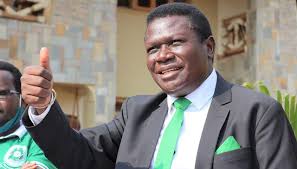
    Hon Mao is running the Empty Fort Strategy, appearing weak with a small DP presence while his alliances work beneath the surface, and he does not need to win the noise but rather a split between Hon Oboth and Hon Mwiru that forces a run-off where his bridge-building and appeal to independents and disillusioned NRM MPs can become decisive.

    Sun Tzu’s advice to wait at ease while the enemy is toiling and struggling fits Hon Mao’s posture, since he benefits if the two larger forces exhaust each other and the vote proceeds to a second round.

    Uganda’s unicameral system intensifies the stakes because there is no Senate or Upper House to check or balance the Speaker’s authority, and the 1995 Constitution entrenched a single Parliament of 529 MPs built on the British common law tradition mixed with statute, so that a Bill is introduced, debated, and passed in the same House.

    Under Article 82 of the Constitution the Speaker presides over all sittings, interprets the Rules of Procedure with finality, certifies Money Bills, chairs the Parliamentary Commission which controls Parliament’s budget and staff, represents Parliament to the President, Chief Justice, and foreign parliaments, sits on the National Security Council, and can act as President for up to fourteen days if the President and Vice President are unavailable, which places the Speaker third in the Order of Precedence of 1999 after the President and Vice President and ahead of the Chief Justice and Prime Minister.

    In bicameral systems those powers are divided, but in Uganda they are fused in one office, which is why Monday’s vote is the single most consequential act of the new Parliament and why the Speaker elected will preside over all legislation, committee appointments, and disciplinary matters for five years without a second chance.

    The law governing the election is straightforward yet decisive, requiring that a candidate be a Ugandan citizen qualified to be an MP, allowing a non-MP to stand but forcing them to vacate their seat if elected from within the House, and mandating that nominations be submitted to the Clerk to Parliament and seconded, after which the Clerk presides until a speaker is sworn in.

    Voting is by secret ballot of MPs present and voting, and a candidate needs more than half of all votes cast, which means 265 if all 529 members vote, and if no one reaches that mark the top two proceed to a run-off, with the term set at five years and renewable and no constitutional limit on the number of terms.

    For more than twenty years NRM operated on the expectation of ten-year tenures for Speaker and Deputy, a formula that ended with Among’s single term and the corruption probe that removed her, leaving behind a precedent that automatic succession is no longer assured and that the secret ballot can override party instruction.

    The vote arithmetic reflects the House’s composition, with NRM holding about 372 seats including constituency MPs, district woman MPs, and NRM-aligned independents, which means that CEC’s endorsement at Entebbe on Friday should give its candidate an advantage if the whip holds, while NUP’s 50 MPs back Mwiru, independents make up about 68 seats, and UPDF and special interest MPs hold the remainder and are traditionally aligned with the establishment but are not legally bound.

    Mwiru therefore needs all 50 of NUP, a majority of independents, and at least 130 NRM defectors to reach 265, Oboth needs to keep NRM intact and pick up a handful of independents, and Mao needs a coalition of opposition, independents, and NRM MPs disillusioned by the Among probe and tired of the old formula, and because the ballot is secret none of those calculations can be verified until the Clerk announces the result.

    CEC’s decision on Friday, which endorsed Hon Oboth Oboth and Hon Thomas Tayebwa was political rather than legal, and an MP who attended and publicly supported the party’s choice at State House Entebbe may still vote differently on Monday, a reality that explains why “it is not over until it is over” and “never say never” circulate among members who understand that defying CEC carries internal cost but remains constitutionally protected.

    Because Uganda has no Upper House, the Speaker elected on Monday will control the entire legislative agenda for five years, and the three strategies on display map directly onto Sun Tzu’s last two chapters.

    Hon Oboth is using fire to prevent a fight, Hon Mwiru is using spies to turn the enemy’s discontent into votes, and Mao is using patience and the empty fort to profit from a split.

    The old ten-year formula is dead, the one-term precedent is fresh, and the secret ballot erases certainty. Parliament meets on Monday to elect the Speaker of the 12th Parliament for 2026 to 2031, CEC spoke on Friday at Entebbe, the manifestos have circulated, and the whips have done their work, but only the 529 MPs in the chamber will decide, and in a unicameral system, as in Sun Tzu’s final chapters, that decision is the beginning and the end of the matter.

    TEU Explainer: Who is Sun Tzu?  

    If you have seen “Sun Tzu” or “Tsu Sun” quoted in our Speaker race story, here’s who he is and why he matters to Monday’s vote.

    The Person. Sun Tzu was a Chinese military general, strategist, and philosopher who lived around 500 BC during the Spring and Autumn period.

    Tsu Sun is the same name, just an older way of writing it in English.

    He was not a king or emperor, but was an advisor. His job was to teach leaders how to win wars without destroying their own army.

    The Book: The Art of War.

    Around 2,500 years ago he wrote The Art of War. It’s 13 short chapters.

    It’s not about swords. It’s about strategy: how to read your opponent, how to use information, when to attack, when to wait.

    It’s now used by armies, CEOs, lawyers, politicians and journalists because the rules do not change whether the battlefield is China in 500 BC or Parliament in Kampala in 2026.

    Why TEU is Using Him for the Speaker Race.

    Uganda’s Speaker election on Monday is not just about who has more MPs. It’s about strategy under a secret ballot. Sun Tzu’s last 2 chapters explain it best:

    Chapter 12: Attack by Fire.

    Idea: Show overwhelming force so the enemy gives up before you fight.

    In Parliament: That’s CEC meeting Friday 22 May at State House Entebbe, endorsing a candidate, and using party discipline.

    The message: “Don’t fight, you’ll lose committees and funding.” Goal  win without a vote.

    Chapter 13: The Use of Spies.

    Idea: Real victory comes from secret information. What people say in public is not what they’ll do in private.

    In Parliament: That’s the secret ballot. An MP can stand with CEC on Friday and vote differently on Monday. Nobody knows until the Clerk announces the result. The “spy” is the private vote.

    The 2 Quotes We Used. All warfare is based on deception in Ch. 13

    For TEU readers: CEC’s Friday endorsement is public. The real decision is hidden until Monday. Don’t trust the noise.

    “The supreme art of war is to subdue the enemy without fighting.” in Ch. 3

    For our readers: If Oboth/CEC can scare enough MPs into line, they win without counting 265 votes. If they fail, there’s a rebellion like 2011.

    Monday decides who understood Sun Tzu better.

    We Expose. You Decide.
  • Ex-Minister Asuman Kiyingi on Parliament, the Law and The Flight Plan.

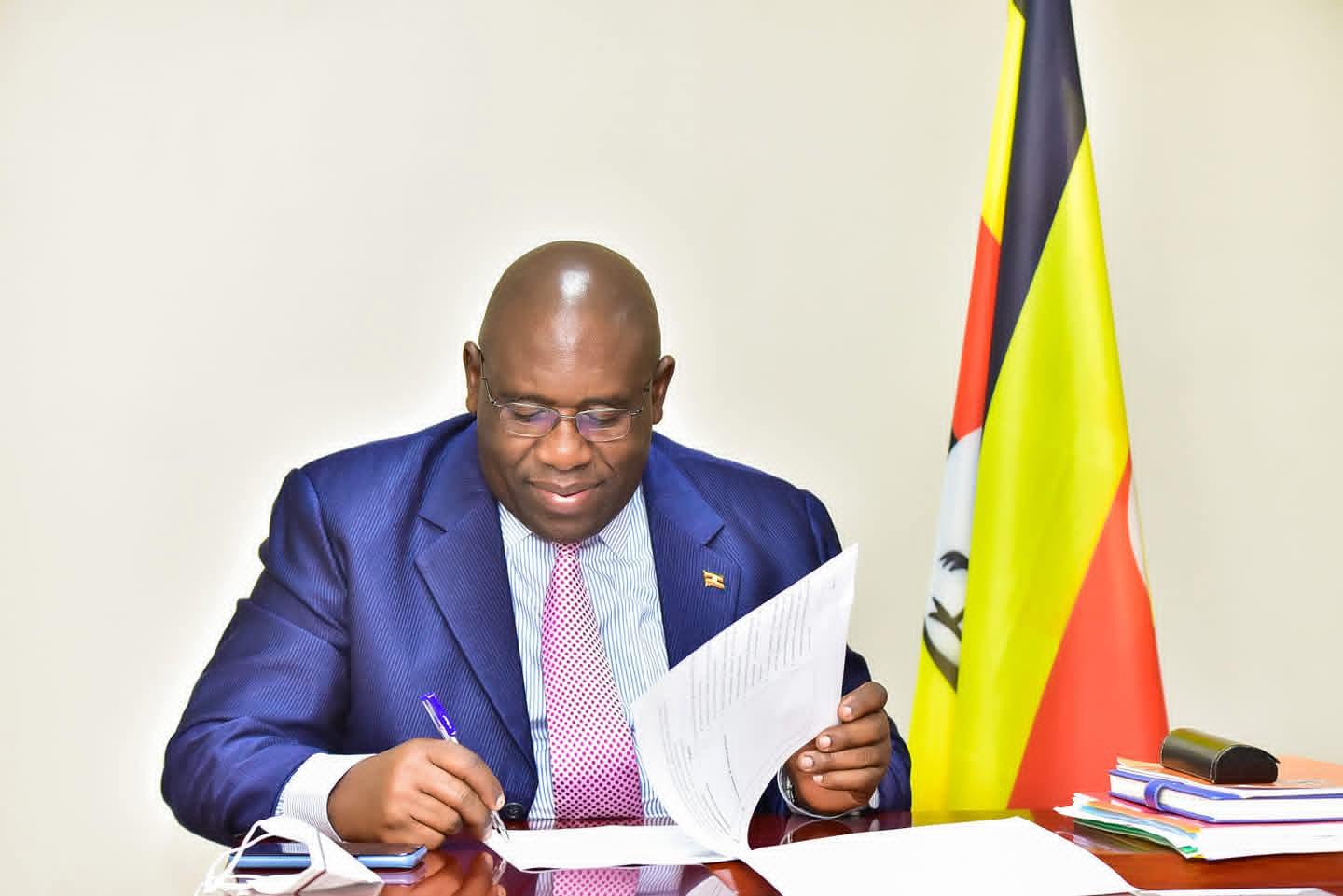
    Ex-Minister Asuman Kiyingi on Parliament, the Law and The Flight Plan.

    Preamble to The Exposure Uganda (TEU)  

    In-Flight Briefing TEU-20260518

    Welcome aboard TEU Supersonic.

    Relax, this is not a fighter jet and we are not dropping anything except footnotes. TEU Supersonic is a passenger plane, and you are the kind of passenger we like: smart, restless, allergic to half-truths, and thirsty for information that actually makes sense.

    We are flying at cruising altitude of “Let’s Talk About It Properly.” Destination: a clearer view of Parliament, the law, and why both should behave like they belong to you.

    For this trip, please switch your mind to “curious” mode and stow away “I already know everything” mode. It will not fit in the overhead bin.

    Keep your skepticism on. Keep your sense of humor on. If an idea makes you uncomfortable, breathe, read it again, then decide. Our job is not to sell you a destination. It’s to make sure you can see the map, read the compass, and ask why the plane keeps circling the same runway.

    A plane only works if the crew knows the manual and the passengers know where it’s supposed to go. Lately, Parliament has felt less like a deliberative body and more like a lounge where the guest list gets decided before you arrive. That’s not how it’s supposed to work.

    Here’s the simple philosophy: a republic is a shared aircraft. The Constitution is the manual. The people are both passengers and part-owners. When the manual gets ignored, everyone feels the turbulence.

    So, we have invited Hon. Asuman Kiyingi to the cockpit for today’s leg. He is not here to shout. He is here to read the manual out loud, explain why Article 82 and Article 208(2) matter, and show what happens when Parliament and the law stop being spectators in their own story.

    Think of this as your in-flight briefing no jargon without translation, no outrage without context. Just a clear, sharp look at where we are, why it matters, and what a functioning flight plan looks like.

    Fasten your seatbelts, open your mind, and keep your questions ready. Hon. Asuman Kiyingi will be with you shortly.

    TEU Supersonic: We Expose, You Decide.  

    Transporting the knowledge-thirsty, one honest conversation at a time.

    Beyond Anita Among: What Must Be Done to Reclaim Parliamentary Independence and the Rule of Law in Uganda

    By Asuman Kiyingi

    The high-stakes political crisis unfolding as the 12th Parliament takes shape—marked by citizen petitions under the Leadership Code Act, high-profile asset investigations, cash seizures, and the sudden withdrawal of political endorsements for the outgoing Speaker, Anita Annet Among, and her deputy, Thomas Tayebwa—has left the Ugandan public locked in a state of shock and anxiety. From the ostentatious displays of multi-billion-shilling luxury vehicles amidst widespread economic distress to the current dramatic security operations on Anita Among’s residences in Nakasero and Kigo, the balance of power is shifting rapidly.

    Yet, as the state security apparatus and ruling party factions scramble to manage this fallout, the most damning indictment is not directed solely at the beleaguered outgoing leadership of the August House. It should be shared with the formal Opposition, whose silence and strategic paralysis have reduced them to passive spectators of their country’s destiny.

    The Costs of Safe Cynicism: The Opposition’s Abdication of Duty

    Faced with this seismic rift within the National Resistance Movement (NRM) coalition, the main opposition parties have offered neither a unified institutional statement nor hinted at a consensus candidate for the Speakership. Instead, the opposition’s response has been outsourced to individual outbursts of safe cynicism and sharp wit. While theatrical advice urging the embattled Speaker to “use her resources and fight on,” or mocking the executive’s hypocrisy, makes for engaging political satire, it is a poor substitute for a robust counter-narrative and strategy.

    By retreating into silence, the opposition has effectively conceded that the Speakership of the 12th Parliament is an “internal NRM affair.” This passive stance permits President Yoweri Museveni and the leadership of the Patriotic League of Uganda (PLU) to project themselves as anti-corruption crusaders.

    Yet this posture is a profound historical distortion. The current enforcement is deeply duplicitous; it is a half-hearted commitment to anti-corruption operating strictly on the calculus of a “use-and-dump” strategy.

    The historical timeline exposes this acute duplicity:

    1. The Trigger: Digital Exposure and Institutional Shielding

    The current crisis traces its most recent origins directly to February and March 2024, when Agora Discourse—whose leading public figures included investigative journalist Agather Atuhaire, lawyer Godwin Toko, and Dr. Jimmy Spire Ssentongo—launched the #UgandaParliamentExhibition on X. The exhibition unmasked Speaker Anita Among’s massive per diem allocations, multi-billion-shilling “Corporate Social Responsibility” (CSR) funds routed through private staff accounts, nepotism, and the controversial 500-million-shilling “Service Award.”

    Following these explosive revelations, public interest lawyers formally petitioned the Inspectorate of Government (IGG) to investigate. Rather than launching an immediate probe, the IGG deployed an administrative delaying tactic, advising that the office could not act because the Auditor General was handling a routine financial audit of Parliament. Frustrated, activist lawyers bypassed the IGG and directly petitioned the Leadership Code Tribunal (LCT). The LCT flatly rejected the petition on jurisdictional grounds, clarifying that under the statutory command of the Leadership Code Act, it cannot receive direct complaints from citizens; it can only adjudicate cases exclusively investigated and referred to it by the IGG.

    1. The Street Mobilization and State Repression

    While the formal avenues of accountability were blocked by this bureaucratic game of legal “ping-pong,” public anger boiled over. Inspired by youth movements across the region, a decentralized coalition organized the #March2Parliament anti-corruption demonstrations between July 22 and July 25, 2024.

    Instead of listening to the citizens, the executive stood firmly behind Anita Among, shielding her from scrutiny. President Museveni issued televised warnings that protesters were “playing with fire.” Security forces responded with iron-fisted repression. Over 104 individuals were arrested. High-profile figures at the National Unity Platform (NUP) headquarters, including Deputy President Dr. Lina Zedriga Waru and Members of Parliament Francis Zaake, Charles Tebandeke, and Hassan Kirumira, were targeted. On the streets, prominent youth leaders like former Makerere University Guild President Salim Papa Were and activist Praise Aloikin were dragged into police vans.

    The state deployed a tactical legal shortcut to break the movement’s momentum: approximately 100 peaceful citizens were hurried through magistrates’ courts, charged with the colonial-era misdemeanor of “Common Nuisance” under the Penal Code Act, and systematically denied bail—remanding them to facilities such as Luzira Prison and Kitalya Prison for weeks.

    To allow the executive to now rewrite history, activating the IGG and deploying security agencies in highly publicized searches and operations only when it becomes politically convenient to neutralize Among as a front-runner for the 12th Parliament, is a catastrophic failure of opposition leadership. It validates a system where accountability is never structural, but merely a weapon of selective enforcement used to discard loyalists who have outgrown their political utility.

    The Constitutional Overreach: The Shadow of Military Dictation

    Compounding this institutional vacuum is the deeply troubling, unconstitutional behavior of external political and military actors seeking to dictate the leadership of Parliament, a co-equal branch of government. The aggressive posturing by the Chief of Defence Forces (CDF) and the leadership of the PLU represents a serious encroachment on the constitutional order.

    This overreach was plainly on display during a thanksgiving party held in Kyungu, Mukono District, for outgoing Defence Minister hon Jacob Oboth-Oboth. At the event, PLU Secretary General and Kasambya County MP Hon David Kabanda went as far as to explicitly proclaim Oboth-Oboth the “next Speaker of Parliament.” Kabanda openly stated that he was executing direct instructions from the Chairman of the PLU, CDF Gen. Muhoozi Kainerugaba, and that the choice had been formally endorsed by President Museveni.

    To have the leadership of Parliament decreed at a private celebratory function by a military command structure is not only a violation of basic democratic tenets but a direct affront to Uganda’s Constitution:

    Article 208(2) of the Constitution explicitly mandates that the Uganda People’s Defence Forces (UPDF) must be non-partisan, national in character, and subordinate to civilian authority. When the choice of the next Speaker is openly dictated by the CDF through a political pressure group, the constitutional wall separating the military from civilian politics collapses.

    Article 82 provides that the election of the Speaker is the exclusive, sovereign prerogative of elected Members of Parliament. This mandate is executed through a secret ballot free from external coercion, as required under Rule 5 of the Rules of Procedure of the Parliament of Uganda.

    When military and factional entities treat the Speakership as a fait accompli to be settled via executive fiat or military decrees before the House even convenes, they reduce Parliament to a mere department of State House. The opposition’s failure to forcefully denounce and voice a constitutional objection to this overreach is an abdication of its duty to defend democratic governance.

    A Strategic Path Forward: Exploiting Fractures and Building a National Consensus

    The opposition must immediately abandon its current positioning as an audience to NRM theater and recognize that public anger across Uganda has created a rare opening for genuine structural change. Even from a position of numerical minority in the House, a sophisticated, proactive strategy can fundamentally alter the dynamics of the 12th Parliament.

    1.Court Courageous NRM Independents and Reformers

    The heavy-handed tactics used to neutralize the incumbent Speaker, combined with the overt military dictation of her successor witnessed in Mukono, have sent shockwaves through the backbenches of the ruling party. Many NRM and independent legislators are quietly terrified, realizing that the executive and military apparatus can completely bypass party organs and parliamentary rules to impose leaders.

    The opposition need not field a purely partisan candidate destined for certain defeat. Instead, they can actively court, endorse, and build a coalition around a courageous, independent-minded NRM candidate or a respected legal institutionalist willing to contest as an independent in the Speaker race. By exploiting internal anxieties through the constitutional and procedural guarantee of a secret ballot in the election of the Speaker, the opposition can galvanize a cross-party alliance of legislators eager to reclaim parliamentary independence from military and executive dictation.

    2.Make Universal Prosecution the Clarion Call.

    The opposition must shift the national narrative from the vulnerabilities of an individual to a systemic demand for uniform rule of law. The clarion call must be unambiguous: the full, transparent prosecution of all implicated culprits.

    The recovery of massive, unmapped cash reserves from a leader’s residence triggers immediate public outrage. While establishing strict criminal convictions for illicit enrichment under Section 31 of the Anti-Corruption Act or money laundering under the Anti-Money Laundering Act (AMLA) requires proving the underlying offense and navigating shifting evidentiary burdens, the state has shown it can move swiftly when motivated.

    The opposition must demand that this standard be universally applied. If the state is genuinely fighting corruption, lifestyle audits, asset tracing, wealth declarations, residential searches, and forensic audits currently deployed against the outgoing Speaker must be extended to all. Demanding equal enforcement exposes the selective nature of the current crackdown and prevents the regime from using anti-corruption rhetoric as a tool for selective political containment and fixing the Speaker race.

    1. Champion Legislative Decoupling

    The current crisis provides the ultimate justification for a comprehensive Parliamentary Reform Bill. The opposition must lead the charge to strip the Office of the Speaker of the immense, unilateral financial patronage and budgetary discretion that has turned the position into a toxic prize and an executive target. By tabling structural reforms to insulate oversight committees such as COSASE and PAC, and demanding total transparency in parliamentary expenditure, the opposition can channel public outrage into lasting institutional safeguards.

    Conclusion

    Ugandans are weary of a political landscape where accountability is only delivered as a byproduct of elite betrayal and “use-and-dump” calculations. The national anger generated by the exposure of systemic rot in the 11th Parliament must not be squandered or allowed to be co-opted by those who tolerated, built, or maintained the patronage network in the first place.

    The current crisis presents an opportunity that transcends the woes of any individual politician. If the opposition can rise above its paralyzing cynicism, stand firmly behind the constitutional independence of the legislature, and construct a broad anti-corruption consensus with courageous independent reformers, a new path becomes possible. The battle for the 12th Parliament must not be about which faction of the ruling establishment has the upper hand; it must be about dismantling the parchment barriers that protect the corrupt and beginning the arduous work of building a truly accountable, corruption-free Uganda.

    The writer is a Senior Advocate and former Minister.