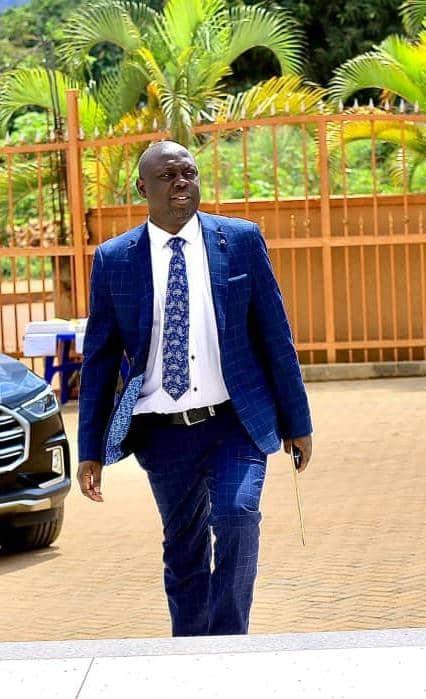
On Wednesday 29th July,2026, Luuka District Engineer Twaha Tabandeka was arrested and detained at Luuka Central Police Station.
He is being investigated over UGX 169.2 million that was released under the 2025/2026 budget to work on the 9.4km Budhabangula-Naigombya road.
The money was meant for what engineers call periodic maintenance — bush clearing, swamp raising, shaping, compaction, gravelling, and installing culverts. In simple terms, turning a muddy footpath into a road that boda-bodas, taxis, and expectant mothers could use even during rains.

According to a 24 July 2026 letter by Resident District Commissioner Michael Kibwika, all the money was released and spent.

But when the RDC visited the site, the swamps were still there. There was no gravel. Most culverts had not been installed.
Long-service-Kibwika said he had earlier asked the Chief Administrative Officer(CAO) to intervene by reprimanding staff and deploying district machinery, but nothing changed. With patience exhausted, he ordered police to investigate.
When the engineer’s family pleaded for bond, Kibwika drove them to the site. Faced with the impassable road, they admitted the work was not done and asked for two more weeks. The RDC refused.
“The deadline for this project expired in May. Twaha failed to complete the work despite receiving the funds. At this stage, the matter is being handled in accordance with the law, and due process must take its course,” Kibwika said.
That arrest has now opened a much bigger conversation across Uganda.

“Technical People” With Pens And Papers Blamed For Uganda’s Failed Services
Across Uganda, from the farthest village in Karamoja to the trading centers of Busoga, the cries are the same: roads that are impassable, health centers without drugs, and schools where teachers and nurses report when they feel like it.
Despite billions of shillings injected into districts every financial year by the central government, service delivery remains broken. And residents say they know exactly who to blame — the civil servants who call Themselves “Technical People”.
The Ground Reality Vs The Reports.
The main complaints from citizens countrywide follow a painful pattern.
First are the poor road networks, especially feeder roads. These are the small roads that connect a mother in labor to the nearest health center, a farmer with a sack of matooke to the market, and a pupil with torn shoes to school. When it rains, these roads become death traps of mud and swamps. Yet on district reports, they are marked as “completed” and “funded”.
Second is the health sector crisis. In many government health centers, patients are told “there are no drugs” while at the same time boxes of government medicine are found being sold in private clinics. Residents also complain of nurses and midwives who come late, leave early, or simply do not show up at all — a problem known as absenteeism.
The common thread in all these failures, according to residents and political leaders, is the same group of people: district engineers, health officers, planners and accountants — the “technical people” who sit in offices with pens and papers.

How The System Is Gamed.
Their method, locals say, is simple. They write very beautiful reports. They fill forms with big English. They take photos of one spot of gravel and claim an entire 10km road has been worked on. They sign for drugs that never reached the health center. They claim allowances for supervision that never happened.
By the time auditors or politicians visit, the money is already gone. And when citizens protest, these same technical people hide behind procedure and say “we followed the guidelines.”
It is this gap between paper and reality that is turning residents against government programs. To a mother who walked 7km with a sick child only to find no Panadol, a government report means nothing.
The Second Betrayal: When Thieves Get Compensated. However, the anger of Ugandans goes deeper than just stolen money.
It is also not surprising to many residents that nearly all cases and accusations against these technical people abort even before they reach the gates of the courts.
The reason, according to legal experts and frustrated politicians, is simple. Once arrested or interdicted, the suspects rush to court arguing that the district or ministry did not follow proper termination or interdiction procedures as required by the Public Service Standing Orders.
And because the paperwork was rushed, or because state lawyers file weak submissions intentionally, the state ends up losing the case.
At the end of the day, the very workers who allegedly stole public money walk out of court not in handcuffs, but with court orders awarding them millions of shillings in compensation and damages for “wrongful dismissal”.
There are widespread allegations that in some of these cases, there is collusion between the accused and state lawyers, who deliberately bungle the prosecution so that government loses. The lawyers and the accused then, it is alleged, secretly share the booty from the court awards.
To residents, this is a double injury. First their road is not done. Then their taxes are used again to pay the person who stole from them.

Luuka Case Puts Spotlight On The Problem.
The arrest of Luuka District Engineer Twaha Tabandeka on Wednesday is the latest example of this national crisis playing out at district level.
Eng Tabandeka is being investigated over UGX 169.2 million that was released to work on the 9.4km Budhabangula-Naigombya road under the 2025/2026 budget. The money was meant for what engineers call periodic maintenance — a major upgrade that includes bush clearing, swamp raising, shaping, compaction, gravelling, and installing culverts.
In plain terms, it meant turning a muddy footpath into a road that could be used by boda-bodas, taxis, and expectant mothers going to hospital even during rains.
According to a 24 July 2026 letter by Resident District Commissioner Michael Kibwika, all the money was released and spent. But when the RDC visited the site, the swamps were still there, there was no gravel, and most culverts had not been installed.
Kibwika said he had even asked the Chief Administrative Officer to intervene by reprimanding staff and deploying district machinery, but nothing changed. With patience exhausted, he ordered police to investigate.
When the engineer’s family pleaded for bond, Kibwika drove them to the site. Faced with the impassable road, they admitted the work was not done and asked for two more weeks. The RDC refused.
“The deadline for this project expired in May. Twaha failed to complete the work despite receiving the funds. At this stage, the matter is being handled in accordance with the law, and due process must take its course,” Kibwika said.
Eng. Tabandeka is now detained at Luuka Central Police Station where reports say his colleagues are trying to ‘sweet talk’ the police bosses and secure his release on bond.
Why This Matters to Every Ugandan.
The Luuka case is not isolated. It mirrors what happens in dozens of districts where money is released for health, education, water and roads, but citizens see no results.
Experts say this is why government, despite increasing the budget every year, continues to get poor approval ratings in rural areas. People do not feel the money.
Political leaders now argue that the biggest sabotage of government programs is not coming from the opposition, but from within — from civil servants who have turned public office into a business.
“These technical people are the reason residents are hostile to government,” one LC5 chairman in Eastern Uganda told The Exposure Uganda (TEU). “They eat the money, write a good report, and then tell the minister that everything is okay.”
What Government Is Doing.
The Ministry of Finance and the Office of the Prime Minister have in recent years introduced systems like the Program Based Budgeting and quarterly accountability to try and track money to the last shilling.
The State House Anti-Corruption Unit and RDCs have also been empowered to arrest and prosecute. The Anti-Corruption Act provides up to 14 years in jail for embezzlement, while the Public Finance Management Act allows for personal refund of lost money.
But residents say arrests must be followed by convictions, not compensation.
“Arresting one engineer will not fix our road,” a resident of Naigombya said. “We want the road. We want drugs in the hospital. We want to see thieves in jail, not in court being paid.”
The Way Forward.
For many Ugandans, the solution is simple: less paperwork, more ground supervision. Citizens want RDCs, CAOs and local leaders to physically verify projects before signing completion certificates. They also want community members to be involved in monitoring so that a report cannot be written from an office in Kampala or at the district headquarters or inside a hotel room.
Until that happens, the cycle will continue — money will be released, technical people will write flowery reports, cases will collapse in court, and residents will continue to suffer.
As RDC Kibwika put it in Luuka: “Public money is meant for service delivery. If you cannot deliver, you will face the law.”
The Exposure Uganda (TEU) Editorial.
Public Service Is a Calling, Not A License to Steal
The arrest of a district engineer in Luuka over UGX 169.2 million meant for the Budhabangula-Naigombya road is not just another corruption story. It is a national indictment.
It forces the country to ask a hard question: When did being a civil servant in Uganda stop being a calling and become a business? When did a government stamp turn into a license to abuse office, write flowery reports, and walk away with public money?
The Core Of Public Service.
Globally, civil and public servants exist for one reason: to implement. They are the hands that turn policy into roads, clinics, classrooms, and clean water.
They are not demi-gods. They are not more intelligent than the farmer in Bududa, the boda-boda rider in Gulu, or the market vendor in Jinja Central Market or Wandegeya whose taxes pay their salaries.
What makes them different is privilege — the privilege of trust. 45 million Ugandans have entrusted them with money, with decisions, and with their future.
That privilege comes with duty. Not the duty to enrich yourself. The duty to deliver.
Experts in public administration argue that public service is essentially a covenant of trust. The moment an officer begins to treat public resources as personal property, that covenant is broken and service delivery collapses.
When The Pen Replaces The Shovel.
Across the country the complaint is the same. Feeder roads that were “completed” on paper but are impassable in reality. Health centers that have “received drugs” in the stock book but have empty shelves. Schools with teachers who exist on the payroll but not in class.
The method is now well known. Use the pen, not the shovel.
A technical officer will sit in an office and produce 20 pages of accountability with big English, photos of one trench, and signatures of people who were never consulted. The money is gone, the work is not done, but the report is perfect.
Governance analysts who have studied Uganda’s local government system note a dangerous trend where a class of bureaucrats have become experts at defeating accountability rather than delivering services.
They argue that when procedure becomes more important than results, citizens naturally grow hostile to government because they judge the state by what these technical people do on the ground.
The Double Injury.
What makes Ugandans angriest is what happens next.
When a civil servant is finally caught, interdicted, or arrested, the case rarely ends in jail. Instead, it dies in court on a technicality. “Proper procedure was not followed.” “The interdiction letter was late.”
Then comes the second injury: the court awards the same person millions in compensation for “wrongful dismissal”. Paid with taxpayer money.
Legal observers and anti-corruption watchdogs have repeatedly flagged this pattern. They warn that weak prosecution, poor documentation by HR, and in some alleged cases collusion, lead to the state losing cases. The result is that the very public whose money was stolen ends up paying the accused again in damages.
So first, the public loses the road. Then the public loses again to pay the thief. That is why people say government is working for civil servants, not for citizens.
A Global Standard We Have Forgotten.
In countries that work, being a civil servant is seen as honor. In Rwanda, a district engineer who fails to deliver a road is fired and blacklisted. In Singapore, public officers are among the best paid, but also the most jailed when they steal. In Botswana, permanent secretaries physically visit projects every quarter.
The message is clear: implementation is not optional. It is the job.
Government leaders have also repeatedly reminded public officers that their role is not to file reports but to ensure services reach the last person in the village. If that person is not feeling government, then the system has failed.
What Must Change.
To restore sanity, analysts and citizens agree on a few urgent steps.
First, the dignity of service must be restored. Recruitment, promotion and deployment must be based on patriotism and performance, not connections. A civil servant must wake up every day knowing they serve people, not a system.
Second, ground truth must beat paperwork. No project should be certified complete until the RDC, CAO, LC5 and community representatives have physically verified it. A mother who uses that road is the best auditor.
Third, prosecution must aim to convict, not to compensate. The DPP, the Inspectorate of Government, and State Attorneys must build watertight cases. Any officer found to be sabotaging a corruption case must themselves face the law.
Finally, there must be transparency. Ugandans deserve to know who received money and what was delivered. Contractor names, amounts, and status of works should be published in every sub-county.
Conclusion: Choose Service Or Leave.
To every civil and public servant reading this: Nobody forced you to take that job.
You applied. You were interviewed. You were trusted. That trust is a privilege. Do not turn it into a license for abuse.
You are not smarter than Ugandans. You are simply the person they hired to implement. Implement roads. Implement drugs. Implement education. Implement water.
If you cannot, then respect the office enough to leave it for someone who will.
Because Uganda does not have a money problem. Uganda has an implementation problem. And that problem has a name and an address: the office of the technical person who forgot that public service is a calling.
As President Museveni has repeatedly said: “Public office is not for personal aggrandizement. It is for service.”
Let the Luuka case be the last warning.
The Exposure Uganda
We Expose, You Decide.
Is there a ghost project in your district? Send us documents and photos on WhatsApp 0776462509 or email us at exposureuganda000@gmail.com