Tag: Kiyingi

  • The Saturday Raid At Radio Simba: Ex-Minister Kiyingi Says Rwomushana Arrest Is Bigger Than One Man.

    The Saturday Raid At Radio Simba: Ex-Minister Kiyingi Says Rwomushana Arrest Is Bigger Than One Man.

    What happened on Saturday 5th September, 2026 at Radio Simba, shortly before Charles Rwomushana could even start participating in the programme Gasimbagane ne Bannamawulire(Face Off With The Press), when armed personnel entered the studio and took him away, has been treated by many as a brief incident concerning one commentator that ended with his release after a night in detention.

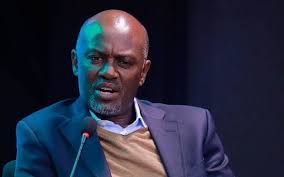
    Senior Counsel and former Minister Hon. Asuman Kiyingi, who first received the news through urgent whispers that cut through the celebratory rhythms of a traditional kwanjula he was attending in Jinja, argues in the reflection below that such an interpretation misses the deeper constitutional warning embedded in the manner of the arrest itself.

    As the distinguished American jurist Judge Billings Learned Hand (1872-1961) of the United States Court of Appeals for the Second Circuit cautioned in his celebrated 1944 Central Park address titled The Spirit of Liberty, later published in The Spirit of Liberty: Papers and Addresses of Learned Hand (1952), “Liberty lies in the hearts of men and women; when it dies there, no constitution, no law, no court can save it,” a warning that resonates profoundly with the moment Hon. Kiyingi describes.

    Hon. Kiyingi therefore invites us to look beyond the question of whether Rwomushana’s commentary was agreeable or provocative, and to confront the larger question of what happens to a republic when citizens begin advising each other to watch their words and steps, when wetereze becomes common counsel, and when political disagreements that should be resolved through argument, evidence and lawful process acquire a security dimension that justifies coercive intervention.

    Tracing Uganda’s turbulent journey from the crises of 1966, 1971 and 1985 to the historic settlement of 1995, which sought to transform legitimacy from the gun to the Constitution and establish under Article 208 a national and non-partisan force subordinate to civilian authority, Hon. Kiyingi examines whether that settlement is now being eroded not by a dramatic coup but by the gradual normalization of military and security influence within civilian political life.

    We present his essay verbatim and in full below for your reflective reading, not to demand agreement with every line, but to provide space for serious interrogation of whether the principles of the 1995 Constitution continue to regulate the exercise of power and protect the freedom of citizens to question, debate and scrutinize without fear.

    Disclaimer: The Exposure Uganda (TEU).

    The essay below by Senior Counsel and former Minister Hon. Asuman Kiyingi is published as a thought-leadership contribution in the public interest.

    While it has been published verbatim to preserve the author’s voice, reasoning and legal analysis, it was accepted for publication after editorial review in accordance with our standards for matters of significant constitutional and public importance.

    The perspectives and interpretations advanced are those of the author and are presented as his considered opinion. They do not necessarily reflect the editorial position of The Exposure Uganda, its management or its publishers.

    In keeping with our duty to foster robust democratic discourse and the citizens’ right to hold divergent views under Article 29 of the Constitution of Uganda, we provide this platform without prejudice and without taking sides.

    The Exposure Uganda remains open to publishing reasoned responses, rebuttals or contrary viewpoints from any person or institution mentioned or affected by the issues raised.

    We Expose, You Decide.

    Beyond Rwomushana’s Arrest: Creeping Militarization & The Unmaking Of The 1995 Constitution.

    By Asuman Kiyingi

    The news arrived not through a formal legal dispatch or a parliamentary press release, but as a series of urgent, social-media-based whispers breaking through the celebratory rhythms of a traditional kwanjula in Jinja, which I was attending.

    While families exchanged gifts and celebrated the happy moment of their children getting married, a chilling report rippled across reception tables: armed security personnel had entered the Kampala studios of Radio Simba and taken political commentator Charles Rwomushana away during a live broadcast of Gasimbagane ne Bannamawulire.

    The joyful atmosphere gave way to a familiar, sobering refrain: “My friend, wetereze”—watch your words and your steps.

    That quiet warning reveals something deeper than the fate of one commentator. It is the sound of self-censorship settling over a society.

    When citizens begin advising one another not merely to speak carefully, but to avoid speaking at all about certain people or subjects, the boundaries of constitutional freedom have already begun to shift. The instinct becomes self-preservation: silence is golden because it guarantees your safety. As the Luganda adage puts it, asirise teyejjusa—the silent person regrets nothing.

    But the constitutional alarm raised by Rwomushana’s seizure goes far beyond Rwomushana himself.

    The fundamental question is not whether his commentary was wise, reckless, provocative or polite. Nor is it whether he sometimes expressed political opinions with which one may disagree.

    The constitutional question is more fundamental:

    What happens to a republic when citizens can no longer safely evaluate, question or debate the conduct and political ambitions of those who command military power?

    Beyond one arrest: the anatomy of militarised civilian governance

    Reports now indicate that Rwomushana has been released after spending the night in detention. That development is welcome. But his release does not retrospectively answer the constitutional questions raised by his seizure, the identity and authority of those who took him, the legal basis for his detention, or the message conveyed by armed intervention during a live political broadcast. Latest reporting confirms that armed men removed him from Radio Simba while he was participating in the programme, although the circumstances and institutional responsibility for the operation have not been fully explained publicly.

    The important point, therefore, is not that Rwomushana remained in detention indefinitely.

    It is that a political commentator was removed from a live broadcast by armed personnel and detained overnight in circumstances that initially lacked a clear public explanation.

    That raises another unavoidable constitutional question: what happens when security power becomes the instrument through which politically sensitive public discourse is policed?

    This requires us to look beyond the individual incident.

    Uganda’s contemporary trajectory is not a return to the classical military dictatorship of the 1970s. The courts have not been abolished. Parliament still sits. Elections are still held. The Constitution remains formally in force.

    The danger is therefore subtler.

    It is the possibility of militarised civilian governance: a system in which civilian institutions formally remain intact while military personnel, security institutions and coercive habits increasingly influence or determine the boundaries of permissible political behaviour.

    There is an important distinction between three forms of government.

    Classical military government occurs when the armed forces openly overthrow civilian authority, suspend constitutional government and assume direct political control.

    Civilian constitutional government exists when the armed forces are subordinated to elected civilian authority, remain politically neutral and exercise coercive power within transparent constitutional and statutory limits.

    Militarised civilian governance occupies the dangerous space between the two. Civilian institutions remain formally operative, but military personnel, security agencies and coercive logic progressively shape political life and determine what citizens may safely say or do.

    Uganda increasingly exhibits characteristics of this third model.

    The process operates through at least four dimensions.

    First, personnel. Serving military officers increasingly become visible participants in politically consequential activity, thereby blurring the traditional boundary between military command and partisan politics.

    Second, institutions. Security agencies increasingly become the first resort in dealing with political and civic disputes that ought ordinarily to be managed through civilian institutions, ordinary law and political debate.

    Third, discourse. Political disagreement is increasingly capable of being reframed as a question of security, stability or national interest. Once that happens, criticism of political actors can be treated as something more sinister than criticism.

    Fourth, civic psychology. Citizens begin internalising the consequences of coercive power. They censor themselves before anyone needs to censor them.

    This fourth dimension may ultimately be the most consequential.

    A state does not need to arrest everyone in order to silence society.

    It only needs to scare or convince enough people that speaking carries an unacceptable risk.

    The constitutional lesson of Uganda’s history

    Uganda’s history demonstrates the danger of allowing coercive power to become a substitute for constitutional politics.

    The 1966 constitutional crisis showed that constitutional disputes could be settled by force rather than constitutional procedure.

    The 1971 coup demonstrated the consequences of allowing military power to displace civilian constitutional authority altogether.

    The turmoil of 1980–1985 showed how electoral legitimacy could coexist with devastating armed conflict when political authority could not effectively control competing instruments of force.

    The 1985 military intervention further entrenched the idea that military intervention could become an accepted mechanism for political transition.

    These were not merely different episodes in Uganda’s turbulent history. Together they revealed a recurring constitutional trajectory: the inability of political institutions to establish an unquestioned principle that the gun must remain subordinate to law and civilian political authority.

    The 1995 Constitution represented a historic attempt to break that cycle.

    This is particularly significant because it was enacted under an NRM government that had itself achieved power through armed struggle.

    The 1995 constitutional settlement was therefore, in an important sense, an attempt to transform the source of political legitimacy.

    The legitimacy of the gun was to give way to the legitimacy of the Constitution.

    The armed forces were no longer to be the arbiters of political succession. Under Article 208, the Uganda People’s Defence Forces were constitutionally conceived as a national, non-partisan institution, subordinate to civilian authority and subject to constitutional discipline.

    The deeper promise of 1995 was therefore not simply that Uganda would have another written Constitution.

    It was that politics would command the gun, rather than the gun command politics.

    That is the promise whose erosion is becoming more apparent each passing day.

    The unmaking from within

    As I have noted before, constitutional unmaking does not necessarily begin with the suspension of a Constitution.

    Sometimes it begins with the gradual removal of the conditions that make constitutional government meaningful.

    Article 105(2), which imposed presidential term limits, was removed in 2005.

    Article 102(b), which imposed an upper age limit for presidential candidates, was removed in 2017.

    Those were formal constitutional amendments.

    But constitutional erosion can also occur without changing a single word of the constitutional text.

    It can occur through practice.

    It occurs when constitutional provisions and principles are repeatedly violated, ignored, stretched or rendered politically inapplicable until conduct once regarded as constitutionally impermissible becomes normal.

    That is why Article 208 deserves particular attention.

    The Constitution does not merely create an army. It establishes the constitutional character of the armed forces. Their national and non-partisan character is not ornamental. It is designed to prevent the coercive instruments of the State from becoming instruments of partisan political competition.

    This brings us to the extraordinary constitutional stress test presented by the political role of the serving Chief of Defence Forces, Gen. Muhoozi Kainerugaba.

    That constitutional tension has acquired a new and unusually explicit dimension. In an X post of 6 September 2026, Andrew Mwenda publicly stated that he was instructed by Gen. Muhoozi Kainerugaba, the chairman of PLU, to inform the public that PLU does not intend to become a political party but will remain “a civic organization, pressure group and social movement within the NRM” and pursue all its goals within the ruling party.

    The significance of that declaration is not that PLU has chosen to remain outside the formal definition of a political party. It is that the serving head of Uganda’s armed forces is publicly identified as the chairman of an organisation whose stated purpose includes pursuing political goals within the governing political movement.

    This makes the constitutional question harder to avoid. The issue is no longer simply whether a serving military commander has political aspirations. It is whether the constitutional requirement that the armed forces remain national and non-partisan is compatible with their serving commander simultaneously occupying a leadership position in an explicitly political mobilisation organisation operating within the ruling party.

    Even if one attached legal significance to the distinction between a political party and a political movement, that does not by itself resolve the constitutional question of partisan political activity by the serving head of the armed forces.

    The question, therefore, is not whether Gen. Muhoozi Kainerugaba is personally competent, popular or politically ambitious.

    Nor is it whether he has the right, as a citizen, to harbour political aspirations.

    The constitutional question is this:

    What constitutional provision or principle permits the serving head of a constitutionally mandated non-partisan armed force simultaneously to operate as an active political actor and prospective presidential candidate?

    That question deserves a constitutional answer, not merely a political one.

    The burden should not rest upon ordinary citizens to explain why the combination of active military command and partisan political ambition is compatible with Article 208.

    The burden rests upon those responsible for the arrangement to explain how it can be reconciled with the constitutional requirement of a non-partisan armed force.

    The stakes extend beyond the question of who may eventually occupy State House. The deeper constitutional danger arises when the institutions capable of using force become entangled in determining who should occupy it. Once succession becomes a contest in which military loyalties, rather than constitutional procedures and electoral choice, can influence the outcome, the distinction between political authority and coercive authority begins to collapse.

    This concern is no longer confined to Uganda’s domestic political debate. In its 3 September 2026 assessment of Uganda’s trajectory, The Economist warned that President Museveni’s declining grip on power could create either an increasingly authoritarian succession or a struggle among those surrounding him and within the security establishment. Whether or not one accepts every aspect of that assessment, the warning illustrates the constitutional stakes of the present moment: what happens when presidential succession becomes inseparable from the loyalties and ambitions of those who command the coercive instruments of the State?

    This matters because once military command and partisan political ambition become intertwined, political criticism itself becomes vulnerable to reclassification.

    A citizen who questions a political ambition may suddenly appear to be questioning military authority.

    A commentator who analyses succession may be portrayed as threatening stability.

    A political dispute may acquire a security dimension.

    And once political questions are transformed into security questions, coercive institutions acquire a justification for entering spaces that properly belong to political debate.

    That is how militarised civilian governance advances without the declaration of martial law.

    The politics of “wetereze”

    This brings us back to the most revealing word in this story:

    Wetereze.

    Align yourself to the new reality.

    Watch your words.

    Watch your steps.

    Be careful what you say.

    Be careful about whom you discuss.

    Be careful about whom you criticise.

    I have personally heard more than enough of this advice from family members, relatives, friends and even foes.

    There is an important constitutional phenomenon hidden inside this apparently ordinary advice.

    The Constitution does not become meaningless only when the State openly prohibits speech. It is also weakened when citizens cease exercising their constitutional freedoms because they fear the consequences of doing so.

    That is the politics of wetereze.

    Its power lies precisely in its informality.

    No decree needs to be issued.

    No newspaper needs to be formally banned.

    No constitutional provision needs to be repealed.

    One commentator is taken away.

    Another is warned.

    A journalist becomes cautious.

    An editor softens a headline.

    A politician chooses not to raise a difficult question.

    A citizen deletes a social-media post.

    Eventually, people begin censoring themselves.

    The cumulative effect is profound.

    One arrest does not unmake a Constitution. But one arrest can contribute to a political culture in which everyone learns the lesson that speaking carries high risks.

    That is how constitutional unmaking occurs.

    Not always dramatically.

    Not necessarily through tanks in the streets.

    Sometimes through a gradual alteration of the boundaries of permissible participation until citizens voluntarily retreat from the constitutional space that belongs to them.

    The danger is not necessarily a coup

    This is why it would be a mistake to understand creeping militarisation only through the vocabulary of coups and military dictatorships.

    The greater danger may be precisely that there is no coup.

    There may be no suspension of Parliament.

    No abolition of the courts.

    No dissolution of the Constitution.

    No declaration that the military has assumed power.

    Instead, the institutions remain.

    But their practical relationship to coercive authority changes.

    Civilian regulators defer to security agencies.

    Political disagreements acquire security implications.

    Serving military commanders become increasingly prominent in political affairs.

    Citizens learn that some subjects are safer avoided.

    The formal constitutional architecture survives while its substantive operating culture changes.

    This is militarized civilian governance.

    And it is potentially more difficult to recognize because every individual step can be defended as exceptional, necessary or unrelated to the larger transformation.

    But constitutionalism is not protected merely by the survival of constitutional institutions on paper.

    It requires a political culture in which those institutions actually constrain power.

    The rule of law and the Rwomushana question

    There is, of course, a legitimate role for the State in investigating unlawful conduct.

    Freedom of expression is not a license to commit crimes.

    If a citizen crosses a statutory boundary, the State is entitled to investigate and, where the law permits, arrest and prosecute.

    But that power must itself be exercised according to law.

    Any deprivation of liberty must have a lawful basis. The person detained must be informed of the reasons for the deprivation of liberty, and constitutional safeguards—including access to due process and judicial protection—must be respected.

    The distinction is fundamental.

    A constitutional State does not become weaker because it uses law against unlawful conduct. It becomes weaker when coercion is used in place of law.

    That is why the circumstances surrounding Rwomushana’s detention matter even if one disagrees completely with anything he may have said.

    The proper constitutional response to controversial political commentary is normally argument, evidence, rebuttal and, where necessary, lawful process.

    The coercive response is different.

    When armed personnel enter a media studio and remove a commentator from a live broadcast, the visual message extends far beyond the individual concerned.

    It tells everyone watching:

    There are subjects about which you should think twice before speaking.

    That is the constitutional significance of the wetereze phenomenon.

    The subsequent release of Rwomushana does not answer that question. It merely changes the question from where he was being held to why armed personnel were required to remove him from a live political broadcast in the first place.

    The Constitution’s real test

    The ultimate test of the 1995 Constitution is therefore not whether its text remains printed in the statute books.

    The real test is whether its principles continue to regulate the exercise of power.

    Can citizens question those who exercise political power?

    Can they debate presidential succession?

    Can they scrutinise the political conduct of serving military commanders?

    Can journalists and commentators discuss such matters without fearing that political disagreement will be transformed into a security offence?

    Can civilian institutions remain genuinely superior to coercive institutions?

    And, above all, can the armed forces remain constitutionally subordinate to civilian political authority and genuinely non-partisan?

    These are not abstract academic questions.

    They go to the heart of the constitutional settlement Uganda made in 1995.

    Uganda does not need another military dictatorship to lose the promise of that Constitution.

    It only needs to become accustomed to the idea that military and security power may enter ordinary political life whenever political controversy becomes sufficiently inconvenient.

    That is why the seizure of Charles Rwomushana should concern even those who dislike his politics or disagree with his commentary.

    The issue is bigger than Rwomushana.

    It is bigger than Muhoozi.

    It is bigger than the current succession debate.

    It is about whether Uganda’s constitutional order can maintain the boundary between political authority and coercive authority.

    The danger facing Uganda may therefore not be an imminent military coup.

    It may be something more gradual and, for that reason, more difficult to resist: the normalisation of military authority within civilian political life until constitutional government remains formally intact but becomes substantively subordinate to security power.

    The question, therefore, is not simply why Charles Rwomushana was taken away.

    It is what, precisely, the authorities considered so dangerous about what he was saying that a live radio programme required the intervention of armed men.

    In a constitutional republic, ideas are answered with better ideas, allegations with evidence, and unlawful conduct with lawful process.

    When open political debate is answered instead by the presence of armed power, the Constitution begins to lose something more important than its words.

    It begins to lose its authority.

    And when citizens respond by whispering wetereze, the unmaking of constitutional government may already have begun.

    The writer is a senior advocate of the High Court of Uganda and a former Minister.


  • Asuman Kiyingi Closes Debate with Morrison Rwakakamba, Flags Concerns Over Civilian Authority.

    Asuman Kiyingi Closes Debate with Morrison Rwakakamba, Flags Concerns Over Civilian Authority.

    “A constitution is not self-enforcing. It survives only to the extent that power continues to reside where the Constitution placed it.”

    Senior Advocate and former Minister Hon Asuman Kiyingi has closed his public exchange with presidential advisor Morrison Rwakakamba, saying the debate has clarified a fundamental divergence on how to measure constitutional health in Uganda.

    In a statement titled “After the Exchange: The Constitutional Questions That Remain” published Monday, Kiyingi thanked Rwakakamba for engaging the subject with civility. He, however, maintained that the central question is not whether institutions exist, but whether they still wield the authority the Constitution gave them.

    On the question of institutional independence
    Kiyingi said two conceptions of constitutionalism emerged during the exchange.

    “One measures constitutional health by the continued existence of institutions and the availability of legal remedies. The other asks a more demanding question: Do those institutions continue to exercise the independent authority that the Constitution entrusts to them, or are they yielding to informal, parallel centers of power?” he wrote.

    Invoking the rule of law tradition, Kiyingi quoted British jurist A.V. Dicey, 1835-1922, author of The Law of the Constitution: “The rule of law means the absolute supremacy or predominance of regular law as opposed to the influence of arbitrary power.” Dicey’s formulation remains the foundation of constitutional law across Commonwealth jurisdictions.

    He added the warning of Lord Acton, 1834-1902, the British historian and liberal thinker: “Power tends to corrupt, and absolute power corrupts absolutely.” Acton’s maxim is still invoked by courts and anti-corruption bodies worldwide when testing limits on authority.
    “My concern has always been with the latter,” Kiyingi stated.

    Article 208 and the PLU structure.

    The former minister said Article 208, which requires the army to be non-partisan and subordinate to civilian authority, sits at the center of the controversy.

    “Civilian supremacy is not a slogan,” Kiyingi wrote. “It is the bedrock on which republics stand or fall.”

    He cited Samuel Huntington, 1927-2008, the Harvard political scientist and author of The Soldier and the State: “In a democratic polity the military is a tool of the state, not the master of the state.” Huntington’s work remains the standard text on civil-military relations in democracies.

    Kiyingi pointed to the recent public release of the Patriotic League of Uganda (PLU) Central Executive Committee as a case study. The structure lists an active, uniform-wearing military commander at the apex of a political organization, with senior government and parliamentary officials within the hierarchy.

    He also cited the processing of Hon. Dennis Namara’s bill to amend the Administration of Parliament Act.

    “While the legislative maneuvering occurs entirely within the formal rules of procedure, the reality that it is being utilized to execute a publicly stated desire by the military command to restructure the leadership of the Opposition cannot be ignored,” he stated.

    Echoing Baron de Montesquieu, 1689-1755, the French philosopher whose The Spirit of the Laws shaped modern separation of powers, Kiyingi warned: “There is no liberty if the power of judging is not separated from the legislative and executive powers.” Montesquieu’s framework underpins Uganda’s 1995 Constitution and most democratic systems today.

    “When internal legislative mechanisms are deployed to fulfill an external command, we must ask whether civilian authority is still autonomous,” he added.

    Media, legality and the absence of regulators.

    On the question of the media, Kiyingi raised concerns about recent interventions at Nation Media Group. He noted that before those interventions, the military command had publicly called for a press of “revolutionaries and cadres.”

    Quoting Thomas Jefferson, 1743-1826, drafter of the US Declaration of Independence: “Were it left to me to decide whether we should have a government without newspapers or newspapers without a government, I should not hesitate a moment to prefer the latter.” Jefferson’s defense of a free press is still cited in free speech jurisprudence globally.

    He said that when editorial and management changes followed, while the statutory regulator, the Uganda Communications Commission, was publicly absent, it raised the question of whether legality had yielded to informal command.


    Kiyingi invoked the ancient common law maxim “Ubi jus, ibi remedium” — where there is a right, there is a remedy. “It is a principle articulated by Sir Edward Coke and William Blackstone that the law will not recognize a right without also providing a means to enforce it. If statutory bodies mandated to regulate are bypassed, then the right exists on paper but the remedy is gone. In that case, the law becomes ornamental,” he stated.

    Warning against “slow poison”

    Kiyingi rejected the view that current developments are mere “stresses” those institutions can withstand. He referenced Prof. Mahmood Mamdani, b.1946, the Ugandan scholar at Columbia University and author of Slow Poison, 2024, warning that states can erode gradually.

    “It can act as a slow poison — a gradual, calculated hollowing out of civilian structures from within, where the outer skin of the institution is preserved… while its vital organs of accountability are systematically liquidated,” he wrote. Mamdani’s work on the postcolonial state is widely taught and debated across Africa.

    He invoked Vaclav Havel, 1936-2011, Czech playwright, dissident and first post-communist President: “The tragedy of modern man is not that he knows less and less about the meaning of his own life, but that it bothers him less and less.” Havel remains a global symbol of moral resistance to authoritarianism.

    And Martin Luther King Jr., 1929-1968, American civil rights leader and Nobel Laureate: “Injustice anywhere is a threat to justice everywhere.” King’s principle continues to anchor human rights law and constitutional interpretation.

    Constitution as a continuing national project.

    Kiyingi said he was not predicting collapse, nor denying that Uganda’s institutions continue to exist. His purpose, he said, was to invite reflection on whether constitutional authority still resides where the Constitution placed it.

    Quoting John Locke, 1632-1704, the English philosopher whose Two Treatises of Government shaped liberal constitutionalism: “Wherever law ends, tyranny begins.” Locke’s ideas on limited government directly influenced the US Constitution and many others.

    And James Madison, 1751-1836, “Father of the US Constitution” and 4th US President: “If men were angels, no government would be necessary. If angels were to govern men, neither external nor internal controls on government would be necessary.” Madison’s Federalist Papers remain the manual for constitutional design.

    “A constitution is a continuing national project that depends entirely on public vigilance, institutional courage, professional integrity, and a shared constitutional culture,” the former minister stated.

    He closed with Hannah Arendt, 1906-1975, the German-American political philosopher and author of The Origins of Totalitarianism: “The sad truth is that most evil is done by people who never make up their minds to be good or evil.” Arendt’s work on power, bureaucracy and civic responsibility is now central to debates on democratic erosion worldwide.

    Kiyingi said he would now leave the particular debate, but will continue to contribute to the national conversation on constitutionalism.

    The Exposure Uganda (TEU) Editorial.

    A Nation Strengthened by Conversation. Democracies do not collapse in a single moment, they weaken when citizens stop talking to each other, and when disagreement is mistaken for disloyalty.

    What Uganda needs now is not uniformity of opinion, but the healthy intercourse of ideas: robust, respectful, and unafraid. That conversation must happen in Parliament and the press, in the academy and the marketplace, in boardrooms and in village meetings, online and offline. It is in that exchange that a constitution stays alive.

    We do not have to agree on everything to belong to the same country. The rainbow teaches us this: it is beautiful precisely because it holds many different colors. The fact that the world is full of millions of different, beautiful colors does not make any one of them less useful. Each has its place. Each reflects its own light. And together they form something no single color could ever achieve alone.

    This is the spirit in which we commend the recent public exchange between Senior Advocate Asuman Kiyingi and Presidential Advisor Morrison Rwakakamba.

    In an era where many rush to insult or to claim a monopoly of knowledge, the two gentlemen modeled something different: civility, patriotism, and a willingness to listen. They disagreed fundamentally, but they did so without questioning each other’s love for country. That is the standard we must normalize.

    Unlike those who mistakenly believe they alone hold all wisdom and therefore refuse to hear anybody else; Uganda’s future depends on leaders and citizens who can argue, learn, and still walk forward together.

    If we can govern ourselves in this way, different voices, different views, one nation — then the Constitution will not be a document we only quote in crisis. It will and should be a culture we practice every day.

    That is how institutions endure. That is how a republic is built.

    At The Exposure Uganda (TEU), we are not just another website, we are a revolutionary digital news platform.

    We were not built to chase clicks, echo press releases, or serve power or any grouping and individual. We were built to do what the moment demands: expose truth, defend facts, and return judgment to the people.

    We come with the professional competence to investigate without fear, the institutional ability to verify without shortcuts, and the ethical demands to publish without malice.

    We are non-partisan. We do not belong to any party, any patron, any cabal. Our only loyalty is to the Constitution, to the public interest, and to you the citizen.

    In a time when many claim a monopoly of knowledge and refuse to listen, TEU chooses a different path. We will ask the hard questions. We will name what others hide; we will publish what others fear.

    Because democracy cannot survive in darkness, because a nation is only as strong as the information its people have. Because you deserve to know before you decide.

    The Exposure Uganda (TEU): We Expose, You Decide.


  • Kiyingi To Mwenda: What Happens When A CDF Who Is Not A First Son Takes Over Command?

    Kiyingi To Mwenda: What Happens When A CDF Who Is Not A First Son Takes Over Command?

    The Exposure Uganda Preamble.

    Andrew Mwenda the CEO of The Independent Magazine/PLU promoter has already put his product on the public shelf. His label reads: “The Military Strongman.” Ingredients: Less democracy, executive command, military discipline to defeat corruption. Best before: Now. Warning: Do not debate.

    On the other hand, Hon. Asuman Kiyingi is now the counter-salesman. He is not launching a new product.

    He is holding Mwenda’s up to the light, checking the batch number, the expiry date, and Uganda’s medical history with this exact formula.

    Hon. Asuman Kiyingi’s Inspection Report:

    According to Asuman Kiyingi, Mwenda’s assertion that “Gen. Muhoozi Kainerugaba is very powerful”, is not only flawed but misleading and exaggerated. Kiyingi argues that individuals should not be above institutions — that is the rule in a democratic nation. The moment individuals sit above institutions, you are no longer in a democracy. You are in a different system altogether.

    Kiyingi’s Deeper Audit finds:

    Uganda’s medical history is clear: the 1966 crisis, 1971 Amin coup, 1985 Tito Okello-short-lived military junta. Each arrived promising discipline and anti-corruption. Each left with constitutional collapse and institutional death. When the gun is above the Constitution, institutions decay.

    Mwenda contradicts himself: He once wrote with Roger Tangri that “military corruption was the result of government and army leaders not being subject to public accountability.” Secrecy and impunity caused ghost soldiers and junk helicopters, not democracy.

    The African shelf is full of this brand: Sudan’s cycles of coups. Nigeria’s military-era mega-scandals. Burkina Faso’s Traoré praised online, but flagged by observers for secrecy, detentions, and shrinking freedoms.

    Military populism reorganizes corruption, it doesn’t end it.

    The PLU contradiction: A movement claiming moral renewal cannot use mobilizers like Hon Michael Mawanda who carry public controversy over cooperative funds. Moving from civilian patronage to military patronage only changes who benefits.

    Singapore is not a barracks: East Asia’s success was civilian bureaucracies, rules, and merit — not social media decrees or public humiliation of Parliament.

    TEU Supermarket Rules remain the same:

    Fit Uganda’s diet: Democratic governance, socio-economic, cultural, and spiritual nourishment within the constitutional framework. That’s our nutrition label.

    No expired goods: 1966, 1971, 1985 already tested. Side effects: coups, collapse, institutional death.

    No dumped goods: Foreign recipes for “hard men” never calibrated for our laws.

    No poison labeled as medicine: Secrecy, impunity, and rule by force cause lawlessness. That’s a health upset.

    No personal brands above institutional shelves: In a democracy, the Constitution is the manager, not any general.

    And TEU recognizes the customer’s fatigue:

    Ugandans are tired of “democracy” laced with populism. The moment government touches an official for abuse of office, the kith and kin scream! “Leave Our Son! Leave Our Daughter! He’s being witch-hunted!”.  

    Tired of road, school, and hospital money swallowed by the “untouchables” who hide behind legal technicalities while citizens go hungry and angry.

    So, if Mwenda’s claim is that only the military can bring sanity where civilian systems have failed, then let that be clear on the packaging. Let the customer see it, test it, and weigh the cost.

    At TEU, we do not shout. We do not force. We Expose.

    Mwenda has marketed and Hon. Kiyingi is countering. The ingredients are now on the counter: history, evidence, the Constitution, ghost soldiers, junk helicopters, Sudan/Nigeria/Burkina case studies, the PLU contradiction, and the principle that no individual should tower over institutions in a democracy.

    We Expose, You Decide.

    Inspect before you ingest. Uganda has survived food poisoning before. It cannot afford another, but it also cannot keep eating rot and calling it democracy.

    Hon Kiyingi puts this question directly to Mwenda:

    The CDF office should be configured so that the next generals to occupy it can freely execute their duties unfettered-because there is a well-laid-out system, not because of who sits in it’s Mwenda answer this:

    What happens if another CDF who is not a First Son takes office?

    He argues that if the system only works when a specific individual is in command, then it is not a system, it is a personality cult wearing military uniform.

    Kiyingi’s point is that corruption and indiscipline are not cured by hoping the ‘right man’ gets the chair. They are cured by building a chair so strong, so rule-bound that even the wrong man cannot sit crooked.

    Mwenda’s military Strongman model fails this test, it bets Uganda’s security on individuals, not institutions.

    Editorial Note At TEU:

    At TEU, we have no shortage of adjectives, analogies, or metaphors. We are a revolutionary digital platform, not a boring, recycled news stall.

    We use language as a flashlight, to expose, to clarify, to make you see the ingredients clearly. If the truth sounds sharp, it’s because expired goods sting.

    Invitation To Customers:

    Dear Reader, come armed with your shopping list. Bring your Constitution, your memory of 1966/1971/1985.

    TEU is not a sermon, it’s a self-service counter, touch the product, read the label. Compare the expiry dates.

    We have exposed the ingredients. You do the shopping. If the “Military Strongman” fits your diet, buy it. If it doesn’t, leave it on the shelf. But do not buy blind.

    The Illusion of the Military Strongman: Why Uganda Cannot Fight Corruption Through Martial Politics.

     A Rebuttal to Andrew Mwenda

    By Asuman Kiyingi

    In a recent essay, Andrew Mwenda attempted to justify what is becoming an increasingly dangerous trend in Uganda’s politics: the growing dominance of military influence over civilian institutions.

    His argument is simple but deeply flawed. He claims Uganda has outgrown President Yoweri Museveni’s old politics of compromise and now needs a harder, more forceful system under General Muhoozi Kainerugaba — one driven by military discipline, executive command, and less regard for democratic procedures.

    According to Mwenda, military-style decisiveness is necessary to defeat corruption and push Uganda toward economic transformation. He presents reported security operations against Speaker Anita Among, public threats against parliamentary leaders, and direct military involvement in political questions as signs of a new and necessary order.

    But history — especially Uganda’s history — tells us the exact opposite.

    The idea that corruption can be defeated by concentrating more power in the hands of soldiers or politically connected military elites is one of the oldest and most dangerous myths in African politics.

    Almost every military intervention on the continent has come wrapped in the language of discipline, patriotism, anti-corruption, and national salvation. Yet the result has almost always been the same: weaker institutions, greater fear, deeper corruption, and eventual instability.

    Uganda itself is a painful example.

    The 1966 Ugandan constitutional crisis was justified as necessary to overcome political paralysis and strengthen national unity. Instead, it destroyed constitutional order and elevated military power above civilian institutions. That collapse opened the road to the 1971 Ugandan coup d’état by Idi Amin, who also arrived promising discipline, efficiency, and an end to corruption. What followed was economic collapse, mass repression, and the destruction of state institutions.

    The 1985 military junta claimed it was rescuing Uganda from misrule. It instead deepened instability and fragmentation. Even the 1986 NRM takeover, which promised a “fundamental change” built on rule-based governance and accountability, with the Constitution of Uganda as the supreme law, increasingly struggles today with the very problems it once pledged to eliminate.

    The lesson from Uganda’s history is therefore very clear: whenever the gun becomes more powerful than the Constitution, institutions decay and personal rule expands.

    Mwenda’s argument is also contradicted by his own earlier work. Long before becoming a defender of militarized politics, he built his reputation as an investigative journalist exposing corruption within Uganda’s political and military systems. Together with scholar Roger Tangri, Mwenda documented how lack of public accountability within the military created conditions for corruption to thrive. And Uganda’s own experience proves the point.

    The UPDF has over the years faced repeated allegations and scandals involving ghost soldiers, classified expenditure abuses, procurement controversies, and the infamous junk military helicopter scandal of the late 1990s. These were not failures caused by “too much democracy.” They were failures made possible by secrecy, impunity, and lack of oversight.

    As Roger Tangri and Andrew M. Mwenda wrote in their 2003 study Military Corruption & Ugandan Politics since the Late 1990s:

    “We argue that the prevalence of military corruption was the result of government and army leaders not being subject to public accountability.”

    That earlier analysis was correct — and it completely discredits Mwenda’s current position.

    A system dominated by military power cannot easily fight corruption because unchecked power itself becomes the source of corruption. When institutions are weakened and decisions depend on loyalty to individuals rather than transparent rules, accountability disappears. The people enforcing the law become insulated from the law.

    This is why the claim that Uganda needs “less democracy” to fight corruption is so dangerous. Corruption does not grow because Parliament debates too much or because courts exist. Corruption grows where there is secrecy, fear, impunity, and concentration of power without oversight.

    The experience of other African countries confirms this.

    In Sudan, military interventions repeatedly claimed to be correcting civilian failure, yet they produced cycles of dictatorship and civil conflict. In Nigeria, successive military governments promised discipline while overseeing some of the largest corruption scandals in Africa’s history.

    Today in Burkina Faso, Captain Ibrahim Traoré is praised by many online supporters as a revolutionary anti-corruption leader. Yet independent observers and rights organizations continue to raise concerns about shrinking civic freedoms, lack of transparency, arbitrary detentions, and growing secrecy around security expenditures.

    Military populism often looks attractive in moments of public frustration like we are experiencing in Uganda today. But once accountability is weakened in the name of patriotism or discipline, corruption simply reorganizes itself around the new centers of power.

    The PLU Contradiction.

    The contradiction at the heart of the Patriotic League of Uganda (PLU) is impossible to ignore. Mwenda presents the movement as a clean break from the old politics of patronage and corruption. Yet many of the figures surrounding the project are themselves products of the same political system they claim to oppose.

    One prominent example is Hon Michael Mawanda, an important mobilizer within PLU circles, who has faced serious public controversy and legal proceedings linked to allegations surrounding cooperative compensation funds. Whether courts ultimately convict or acquit him is beside the point. The deeper issue is political credibility.

    A movement claiming to represent moral renewal cannot convincingly present itself as an anti-corruption vanguard while relying on networks already associated in the public mind with patronage politics, wealth accumulation, and political deal-making.

    The same public skepticism extends to several vocal figures orbiting the PLU project whose public profiles have long attracted controversy regarding influence, patronage, and proximity to power. This is why many Ugandans increasingly suspect that the struggle is not really against corruption itself, but over who controls the state, the security apparatus, and Uganda’s future oil and mineral wealth.

    Moving from civilian patronage to military-centered patronage does not end corruption. It simply changes who benefits from it.

    Supporters of authoritarian politics often point to countries like Singapore or South Korea to argue that strong states require hard leadership. But this comparison is misleading.

    The East Asian success stories were built on disciplined civilian bureaucracies, predictable rules, merit-based institutions, and long-term state planning — not social media decrees, military intimidation, or the public humiliation of civilian institutions.

    Economic transformation requires strong institutions, not rule by fear.

    Uganda’s future cannot be secured by weakening constitutional governance in favor of military-centered politics. Once soldiers begin openly shaping parliamentary leadership, public contract awards, budget priorities, and succession politics, civilian authority becomes symbolic rather than real. And once power becomes dependent on force rather than law, no citizen or institution remains secure.

    The answer to corruption is not unchecked military influence. It is stronger courts, independent oversight bodies, transparent public finance systems, professional civil service institutions, and equal application of the law.

    Uganda has already travelled the road of militarized politics before. The country knows where it leads. The challenge now is not to romanticize strongmen, but to build institutions strong enough that no individual — civilian or military — stands above the Constitution.

    The writer is a Senior Advocate and former MP/ Minister.