Tag: Archbishop Bagambaki

  • Archbishop-Elect Prof. Mugume Bagambaki Charges Ministers to Defend Faith in “Last Days”.

    UCCSAT Seminary Address Calls Clergy to Guard Doctrine, Pursue Godliness Amid Global Skepticism.

    The Exposure Uganda (TEU).

    Editor’s Note: Why We Wrote It This Way. Before you scroll away, pause and receive this article in context. The length and language here are deliberate. TEU is not just another news platform, we are a revolutionary digital newsroom, and we do things differently, passionately.

    Every TEU piece is crafted with attention to detail, we give you all the ingredients that make an article sweet to consume, nutritious for your mind, and nourishing for your spirit. Because information is food, and we refuse to let our readers suffer from information malnutrition.

    So read it fully, chew on it, let the doctrine, the history, the charge from Archbishop Mugume settle. Don’t skim truth.

    We Expose, You Decide.

    The Exposure Uganda (TEU)Preamble: When the Word Is Dismissed.

    It is increasingly difficult for both laity and clergy to speak of Scripture with confidence. Across lecture halls, radio and television stations, newspaper columns, social media feeds, and even from some pulpits, the Bible is no longer merely questioned. It is dismissed.

    The Word of God is described as feeble, outdated, or a western ideology meant to keep people in the dark. “Religion is the opium of the poor,” critics repeat, arguing that faith numbs people while power and wealth rule the world. In an age where military and economic might are treated as the only real paths to security, Scripture is mocked as wishful thinking.

    The skepticism has moved inside the church as well. Some so-called men of God have been filmed tearing pages from the Bible, calling it merely the work of men. Others question core doctrines openly: Is there really heaven or hell? Where does God live? If God put us on earth, why does the Bible say we shall go to heaven? These are not new questions, but they are being asked louder and with less patience for answers rooted in Scripture.

    As May 2026 drew to a close last weekend, ministers gathered at Upper City Covenant Seminary and Theological College University listened to what Archbishop Elect Prof. Mugume Bagambaki Richard called a trumpet blast for this generation.

    In a special address titled “The Faithful Steward in the Last Days”, drawn from 1 Timothy 4:1-16, the Ecclesiastical Patriarch of the Five-Fold Episcopal World Federation and President/Chancellor of UCCSAT warned that the pulpit has become the frontline in a battle over truth.

    In this climate, Archbishop Elect Prof. Mugume told seminary students, clergy, and ministers in training that Paul’s letter to Timothy was written for exactly this moment. Timothy was not an abstract figure. He was a young pastor, the son of a Jewish mother and a Greek father, converted through Paul’s preaching. Paul mentored him, ordained him, and left him in Ephesus to shepherd a church under pressure. Timothy was young, facing older elders, false teachers, and a culture that despised his authority. Paul’s letter was a survival manual for a minister standing in a storm.

    For context of TEU readers: Ephesus was the heart of intellectual pride, religious mixing, and moral compromise in the first century. It housed the Temple of Artemis, one of the seven wonders of the ancient world, and it was a center for magic, philosophy, and trade.

    Today Ephesus lies in ruins near modern Selçuk in Turkey. The great city that once boasted wealth and influence is now a field of broken columns. The harbor silted up, the trade routes shifted, and the city faded. The Word Paul sent to Timothy, however, still speaks to churches two thousand years later. Civilizations collapse. Scripture remains.

    Turkey, known as a transcontinental (crossroads of Europe and Asia) country with 3% in Europe a place called Thrace and Istanbul on both sides of the Bosphorus.The other 97% is in Asia, called Anatolia or Asia Minor.

    Sermon Body: Four Charges from the Patriarch.

    Prof. Mugume, who is due for consecration and installation on 14 December, 2026 framed the passage around four charges for ministers who must survive the last days. The first charge is to discern and defend the faith. Paul writes that the Spirit expressly says some will depart from the faith in later times.

    The archbishop stressed that this is not cultural commentary but Spirit-inspired foresight. Bishops do not guess the times; they heed the Spirit. The danger, he noted, is not persecution from outside but defection from within.

    When the pulpit becomes a platform for departure, the church bleeds from the inside. He identified doctrines of demons as demonic strategy, not just human error. That is why ministry must war in the Spirit, not only debate in the mind. On legalism, he pointed to verses forbidding marriage and certain foods.

    Any teaching that adds human rules to Christ’s finished work is a yoke God never placed on His people. God’s answer is clear: everything created by God is good and sanctified by the word of God and prayer. The church does not retreat into superstition. It receives creation with thanksgiving, Scripture, and prayer. His charge to clergy echoed Titus 1:9. A bishop must give instruction in sound doctrine and rebuke those who contradict it. Guard the table of the Lord from poison, he told ministers.

    The second charge is to be an athlete of godliness. Train yourself for godliness, Paul commands. From the Chancellor’s desk, Prof. Mugume said UCCSAT trains minds, but Paul trains hearts.

    A degree without devotion produces PhD Pharisees, he said, adding that a good minister must first be nourished on the words of faith before feeding others. In 2026 and modern ear, he said, irreverent silly myths look like viral lies, conspiracy doctrines, and TikTok theology.

    Everything must be tested, explaining that the Greek word gymnazo means to train like an athlete. Godliness is not mystical drift. It is daily repetition of prayer, Word, fasting, and holiness. Bodily fitness helps for seventy years. Godliness has value for seventy years plus eternity. That is the investment Paul calls for. Ministry fatigue, the archbishop said, is cured by eternal vision because our hope is set on the living God.

    The third charge is to let your life preach, let no one despise you for your youth, Paul told Timothy and to be an example. The archbishop explained that this means authority is earned in holiness, not age.

    Example speaks louder than titles and that the five-fold ministry is proven in speech, conduct, love, faith, and purity. For every pulpit, Paul gives three priorities: public reading of Scripture, exhortation, and teaching.

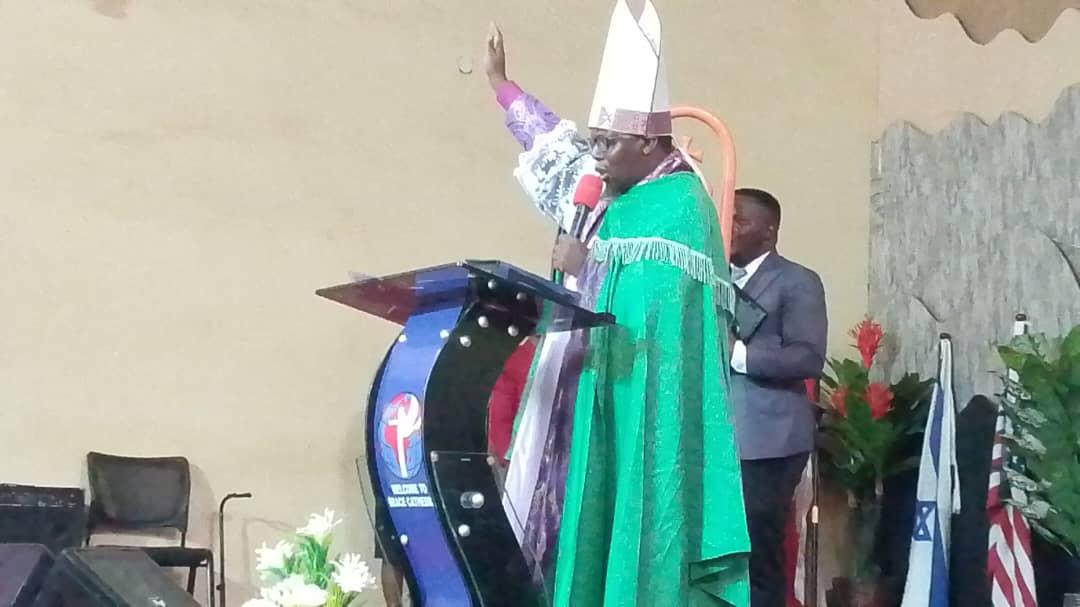
    Before building programs, the church must build people with Scripture and the Bible remains the curriculum. Titles open doors, Prof. Mugume reminded Upper City Covenant Churches, but character keeps them open. The mitre is a symbol. The cross is the standard. He urged every parish to reflect that they are not a club of titles, but a school of Christlikeness.

    What is the Mitre?

    The mitre is the pointed, split headpiece many associate with bishops and archbishops. Another word for it is simply the “bishop’s hat” or “episcopal mitre”.

    It is not jewelry or a crown of power. The two peaks represent the Old and New Testaments, reminding the wearer that his first duty is to teach both Law and Gospel. The split down the middle points to the tongues of fire at Pentecost, meaning every bishop stands under the Spirit, not above the Word.

    As Archbishop-Elect Prof. Mugume said, “The mitre is a symbol. The cross is the standard.” It is worn during processions, blessings, confirmations, and ordinations to show the church: this man is set apart to guard doctrine and feed the flock.

    It comes off during prayer and the Eucharistic prayer to show that before God, office bows to worship. For TEU readers, the lesson is simple: titles and vestments mean nothing without a life and doctrine that match 1 Timothy 4:16.

    Training Does Not Replace the Spirit, It Stewards It.  

    In this same vein, another voice has grown louder, some pastors dismiss formal training in ministry as a waste of time. They argue the twelve apostles never attended a seminary. They point out that Jesus Himself did not go to a university but worked in a carpentry workshop with Joseph.

    From this they conclude that doctrine is irrelevant, and that those called to serve have no business with philosophy, economics, Aristotle, Plato, Socrates, Shakespeare, Chinua Achebe, or Wole Soyinka.

    The archbishop addressed this view directly, reminding ministers that while the Spirit calls, the Spirit also equips. The apostles may not have enrolled in a seminary, but they were trained. Three years with Christ was the most rigorous theological, pastoral, and missional school in history.

    They learned Scripture by hearing it expounded daily, they learned prayer by watching Jesus pray, and they learned doctrine by wrestling with His teaching. That was training, even if it did not look like a modern classroom.

    The early church understood this and it is the basis when the apostles appointed deacons in Acts, they looked for men full of the Spirit and wisdom. When Paul wrote to Timothy, he told him to entrust what he heard to faithful men who will be able to teach others also. The word able means trained, tested, proven. The church has always set apart time for preparation because sheep deserve shepherds who know the terrain.

    Doctrine is not irrelevant, it is the map and without it, sincerity leads people off cliffs. Paul charged Timothy to watch his life and doctrine closely. Jesus warned that false teachers would come with convincing words.

    Philosophy (the language of Theology), Political Science, Economics, Statistics, Literature, and History, among others are not masters of the pulpit, but they are tools.

    Paul proved this at Mars Hill, the Areopagus in Athens, where he preached to the philosophers and thinkers of his day. Instead of ignoring their culture, he engaged it.

    He began with their altar to an Unknown God and then quoted their own poets. He said, “In him we live and move and have our being,” echoing the Cretan poet Epimenides. He declared, “We are his offspring,” quoting the Stoic poet Aratus.

    Then he pressed them to repent because God has fixed a day when he will judge the world in righteousness by a man he has appointed. Paul did not fear their books but used them as a bridge to the gospel.

    This means understanding Socrates, Plato or Aristotle and Immanuel Kant or Chinua Achebe does not make a man worldly. It makes him wise enough to translate the gospel into the language of his generation. Ignorance is not holiness. Preparation is not unbelief.

    Jesus grew in wisdom and stature, and in favor with God and man Luke 2:52 tells us. He knew the Scriptures so well that at twelve He was asking questions in the temple courts that amazed teachers.

    Archbishop Mugume used the same principle for clergy saying just like Jesus grew intellectually “wisdom”, physically “stature”, spiritually “favor with God”, and socially “favor with man”, ministers must also grow in all four areas, not just spiritual gifting.

    The carpentry workshop taught Him work ethic, but the Scriptures taught Him truth and we follow both patterns. A call without preparation produces enthusiasm without accuracy, he said and added that a degree without devotion produces the PhD Pharisees the Archbishop warned about.

    What the church needs is devotion plus preparation, Spirit plus skill, fire plus focus.

    So, to every young minister listening: Do not despise training. Do not fear books. Seminary will not give you the call, but it will help you keep the call. It will teach you to rightly divide the Word, to recognize heresy, to counsel the broken, and to lead the church with wisdom.

    The world is reading Socrates, Plato, Aristotle, Wole Soyinka, and Chinua Achebe or William Shakespeare. If the church cannot read Scripture well and understand the world well, we will keep losing the conversation. Training does not make the preacher, Spirit does, but training helps the preacher not to waste the Spirit.

    The fourth charge is to fan the flame and finish well. Do not neglect the gift you have, Paul wrote. Keep a close watch on your life and doctrine. Ministry, the Archbishop said, is not self-appointment. It is Spirit gifting plus church confirmation.

    The Five-Fold Episcopal World Federation exists to guard this order. Ministers must be absorbed in their calling, not half-hearted. Visible progress should embarrass a minister’s past self. Stagnation is a scandal to calling.

    On the question of ministry, Prof. Mugume addressed a growing argument that everyone in any profession is in ministry because of the priesthood of all believers. He clarified that the Bible teaches all believers are a royal priesthood, called to witness for Christ in their homes, workplaces, and communities.

    That is a priesthood of service and witness. But there is also a distinct calling to the office of minister, elder, and bishop, confirmed by the church through laying on of hands. All believers minister, but not all are called to preach and teach with authority in the pulpit. The distinction matters because it guards order and accountability.

    Paul’s final instruction is to guard two things: life and doctrine. Lose doctrine and you drift into heresy. Lose life and you fall into hypocrisy. Guard both, and you will save yourself and your hearers. Your endurance, the archbishop said, is someone’s salvation.

    Conclusion: The Word Outlasts Every Storm.

    In closing, Prof. Mugume told the Five-Fold Episcopal World Federation that 1 Timothy 4 is Paul’s job description for survival in the last days. Defend truth without fear, discipline yourself without excuse, display Christ without apology, and develop your gift without neglect. He closed with 1 Timothy 4:16 and a patriarchal blessing. May the God who called Aaron to holy garments call you to holy living. May your doctrine be pure, your life be blameless, and your ministry be fruitful. And may the churches under Upper City Covenant and FFEWF be known not for noise, but for fidelity to Christ.

    So, to every preacher, clergy, and minister in training reading this: Do not tire. Do not quit. The pulpit may feel like a lonely place today. The questions are sharper. The mockery is louder. The world says the Bible is feeble, a western story, opium for the poor. Even some voices from inside the church tear at its pages. But history, both sacred and secular, has one verdict that never changes. God’s Word stands when everything else falls.

    The prophet Jeremiah knew this weight. For forty years he preached to kings and priests who refused to listen. He was thrown into a muddy cistern for telling the truth. Yet every word he spoke came to pass, Babylon fell exactly as he declared. The empire that silenced him is dust, His words remain.

    Celebrated 20th century English writer/journalist Gilbert Keith Chesterton (1874-1936) referred to by friends as “The Apostle of Common Sense” said, “The Christian ideal has not been tried and found wanting, it has been found difficult and left untried.” The difficulty is not proof of failure. It is proof of its weight.

    The early apostles faced the same test. Eleven frightened men in an upper room, with no army, no wealth, no platform. Rome had legions. Caesar claimed the title Lord and God. Within three centuries, the message of a crucified carpenter conquered that empire without drawing a sword. Nero burned Christians, but he could not burn the gospel. Tertullian saw it clearly when he wrote, “The blood of the martyrs is the seed of the church.” What they tried to destroy became what multiplied.

    Even secular history bows to this pattern. The Soviet Union spent seventy years trying to erase God. Churches became museums, Bibles were banned and state propaganda declared religion dead. Then in 1991 the USSR collapsed overnight. Churches reopened. People stood in lines for Bibles the moment they were allowed. Ideology shattered. Scripture remained.

    Voltaire (Francois-Marie Arouet), the French philosopher, writer and loud voice of European Enlightenment (1694-1778), mocked Christianity and predicted the Bible would vanish within one hundred years.

    A century later, his own printing press in Geneva was bought and turned into a Bible printing house. C.S. Lewis captured the irony best: “Christianity, if false, is of no importance, and if true, of infinite importance. The only thing it cannot be is moderately important.” Time keeps proving he was right.

    The French Revolution (1789-1799) tried to replace God in the traditional Christianity with “Reason” as the supreme authority in 1793.

    Churches were closed or repurposed, altars were torn down. Priests were executed and forced to swear loyalty and made to be employees of the state.

    Calendar was changed and they created a new “French Revolution Calendar” to erase Sunday and Christian feast days. Each month got 10-day ‘weeks’ called decades.

    The Cult of Reason led by Jacques Hebert and others, Paris set up festivals where a woman would be enthroned as the “Goddess of Reason” inside churches. The idea was that human reason, science and liberty would replace God, saints and revelation. Months were renamed. Within ten years the experiment collapsed. Napoleon reopened the churches. The guillotine could not cut out the hunger for eternity in the human heart.

    This is why Isaiah’s promise still stands unbroken: The grass withers, the flower fades, but the word of our God will stand forever. Empires rise and fall. Philosophies change with every generation. Military and economic power look permanent until they are not. But the Word that spoke the world into being will never go out of date. It will never be defeated. It will never become unnecessary.

    So, preacher, guard doctrine when it is unpopular. Practice godliness when no one is watching. Be an example when you are young, old, celebrated, or ignored. Your endurance is someone’s salvation. Your faithfulness today is building the church that will stand tomorrow. The crowd may be smaller. The questions may be harder. Preach anyway. Teach anyway. Live holy anyway.

    Because at the end of it all, tanks will rust, trends will fade, and every platform will go silent. Only one voice will have the last word. God’s Word. And those who proclaimed it faithfully will stand with it.

    Why It Matters for Mugume’s UCCSAT Charge:

    Archbishop Mugume in his message warned the clergy: The pulpit is the frontline as Scripture faces dismissal.

    The French Revolution is a real-world example of what happens when a society tries to build on reason alone and push biblical doctrine to the side. After the chaos, Napoleon had to bring the Church back with the Concordat of 1801 because the state could not replace what faith held together. In short, The Revolution did not erase God legally, but tried to dethrone Him publicly and install Reason as the new god of the nation.

    Persist in this, for by so doing you will save both yourself and your hearers, 1 Timothy 4:16. To Him be glory in the Church and in Christ Jesus, forever and ever. Amen.

    Delivered by Archbishop Elect Prof. Mugume Bagambaki Richard.

    Ecclesiastical Patriarch, Five-Fold Episcopal World Federation.

    Contact: WhatsApp +256775050183 | Email: fivefoldepiscopalworldfederati@gmail.com.


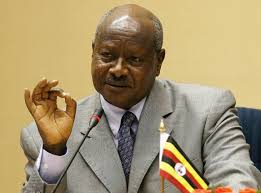
  • God’s Sovereignty Is Ever Better Than Man-made Sovereignty Bills: Museveni Clarifies Law Will Not Block Remittances As Archbishop-Elect Prof Mugume Says Only Heaven Rules Absolutely.

    God’s Sovereignty Is Ever Better Than Man-made Sovereignty Bills: Museveni Clarifies Law Will Not Block Remittances As Archbishop-Elect Prof Mugume Says Only Heaven Rules Absolutely.

    Preamble: This Law Is Not A Ugandan Invention But The Stakes Are Uniquely Ours.

    Every nation guards its right to decide. The United States has FARA (Foreign Agents Registration Act). Russia has its Foreign Agents Law. Kenya has the Public Benefits Organizations Act. Ethiopia, India, Israel, and the European Union all regulate foreign funding and influence, many with clauses tougher than Uganda’s current draft.

    The Protection of Sovereignty Bill 2026 is therefore not an isolated Ugandan invention. What makes it urgent is how it collides with family remittances, church donations, and the doctrine of a God who, as Daniel 4:35 declares, “does according to His will… and none can stay His hand.”

    This week, as Parliament’s Legal and Defense Committee reviews revisions, Uganda’s President Yoweri Kaguta Museveni, Archbishop Elect Professor Mugume Bagambaki Richard, Bank of Uganda Governor, the World Bank, religious bodies, the media, and senior bankers like Madam Irene Aguti have all entered the arena. The Bill will likely become law. The question for Labour Day 2026 is whether it will govern by consent, by coercion, or by grace. 

    When Family Love Met A Foreign Agent Clause.

    When Cissy sent 207,000 shillings from Canada this week, her uncle in Otwal Trading Centre in Oyam district did not ask Parliament for permission. He raised his hands and gave thanks saying: “Obanga ber, atin omini obedo atini” translated as ‘ God Is good, the child of your brother is your child’.

    Until last week, the original draft of the now contentious Protection of Sovereignty Bill 2026 risked defining that act of family love as “foreign agency.”

    Today, both State House and the Church have spoken, and the conversation has shifted from fear to doctrine, from clauses to creeds, yet not all Ugandans are persuaded.

    “Oppressive And Exploitative”, A Patriot Banker Breaks Ranks.

     “I totally do not agree with that bill, it is oppressive and exploitative. And this is coming from a patriot,” said Madam Irene Aguti, a senior banker and human rights enthusiast, in comments to The Exposure Uganda (TEU) on Thursday. “I understand the need to widen the tax base, but some of the clauses simply alienate our fellow Ugandans, it needs to be rethought,” Aguti roars.

    The Revision: What Changed After The Backlash.

    Her remarks land as Government revises the Bill’s most contested provisions. The definition of “foreign agent” has been narrowed. Ugandan citizens are no longer broadly categorized as foreign agents.

    Financial institutions, media houses, the Uganda Law Society, health facilities, academic and research institutions, and faith-based organizations are now exempted, provided external funding is used for authorized purposes such as service delivery, education, research, or religious activities.

    Diaspora remittances, foreign direct investment, grants, trade financing, and humanitarian support will not be restricted unless linked to prohibited activities. Prosecutors must now prove intent to deliberately act against Uganda’s national interest before any case can proceed.

    The Attorney General Hon. Kiryowa Kiwanuka has also limited liability specifically to “agents of a foreigner,” and the responsible minister may expand the list of exempted entities by regulation. The Legal and Defense Committee of Parliament is reviewing the changes before tabling its final report.

    M7 Steps In: “Policy Independence, Not Money Restrictions”.

    As the Bill is being amended, Uganda’s long serving President, Gen (Rtd) Yoweri Kaguta Museveni addressed Ugandans, particularly the youth, to clarify what he called “growing public debate and misinformation.”

    Gen Museveni dismisses claims that the Bill seeks to restrict foreign investment, remittances, or external support to religious institutions. The version he introduced in Cabinet, he says, is focused strictly on safeguarding Uganda’s independence in decision-making, not limiting financial flows into or out of the country.

    The President traced the sovereignty struggle to Africa’s colonial past, when the continent, except Ethiopia, fell under foreign domination following centuries of slave trade and internal divisions.

    He credits Pan-African movements, including figures like Marcus Garvey and organizations such as the ANC of South Africa, alongside global allies, for securing Africa’s liberation, culminating in South Africa’s independence in 1994.

    According to Museveni, the core purpose of sovereignty is to preserve Uganda’s authority to determine its own policies across political, social, economic, and diplomatic spheres. These include decisions on governance structures, cultural values, economic strategies, and foreign relations.

    Quoting a principle, he attributed to Mwalimu Julius Nyerere, Gen Museveni underscored that true independence includes the freedom for a nation to make its own choices even mistakes without external interference. He warned against foreign influence through funding or advocacy aimed at shaping Uganda’s internal decisions.

    He reaffirms that Uganda’s Constitution provides for the exercise of sovereignty through democratic processes such as elections and referenda, and urged both domestic and international actors to respect these mechanisms.

    Museveni stresses that Uganda remains committed to a free-market economy, allowing the unrestricted movement of legally earned money, including remittances, investments, and donations. He describes this openness as a key driver of economic resilience, particularly in counterbalancing inefficiencies within public institutions.

    Drawing on a personal example, he cited efforts to revive Ankole cattle, once dismissed by colonial-era experts, which have since gained international recognition.

    He acknowledges South African President Cyril Ramaphosa for supporting their promotion. The President made it clear that government would not support any policy that interferes with private sector financial flows, noting that such freedoms are central to Uganda’s economic growth and transformation. He added that he had engaged government officials, including Hon. Denis Hamson Obua and Parliamentary Committee leaders, to ensure the Bill remains focused on protecting policy independence without encroaching on private enterprise or financial freedoms.

    The ‘Old Man’ from Rwakitura concluded by encouraging those seeking to influence others to do so through positive example rather than coercion, referencing a teaching from the Book of Matthew — “let your light shine before others, so that they may see your good works,” Matthew 5:16, and “whoever would be great among you must be your servant,” Matthew 20:26.

    The Pulpit Answers Parliament: Archbishop Mugume On Sovereignty, Free Will, Grace.

    While the State clarifies its Bill, Archbishop Elect Professor Mugume Bagambaki Richard, the Ecclesiastical Episcopal Patriarch of Five-Fold Episcopal World Federation and Chancellor of UCCSAT University, releases a Labour Day theological treatise that has since circulated across churches, WhatsApp groups, and community radio. His message: “God’s sovereignty is ever better than man-made sovereignty bills.”

    The Archbishop teaches that the sovereignty of God refers to the fact that God is in complete control of the universe. A belief in God’s sovereignty, he writes, is distinct from fatalism, which denies human free will. Humans are able to make genuine choices that have real consequences. God does not directly cause everything to happen, yet He does allow all that happens to happen. And, ultimately, God’s will is going to be accomplished.

    At first blush these statements may seem unimportant to one’s daily life and better suited for an esoteric theological discussion. However, the sovereignty of God is quite practical and has a significant impact on our daily lives.

    The sovereignty of God impacts everyday life in that it removes all cause for worry. We can trust that what the Bible claims about God’s character is backed up by His ability. Not only does God love us, but He has the ability to care for us. Those who are part of the family of God can claim the promise in Romans 8:28, “And we know that in all things God works for the good of those who love him, who have been called according to his purpose.” We can rest in the fact that our God is actually able to work all things for our good, even when we cannot readily see how that may happen.

    The sovereignty of God impacts everyday life in that we can trust God’s sanctifying work in us. Many times, Christians feel that maturing in the faith is completely up to them, as if God saves us and then expects us to do the rest. Christians do play a role in their own maturity. We are certainly called to obedience, and what we do matters.

    However, in recognizing that God is sovereign, we also trust Him to bring us to maturity. See Galatians 3:3 and Philippians 1:6. Looking to Romans 8 again, we read, “For those God foreknew he also predestined to be conformed to the image of his Son, that he might be the firstborn among many brothers and sisters. And those he predestined, he also called; those he called, he also justified; those he justified, he also glorified.

    What, then, shall we say in response to these things? If God is for us, who can be against us? He who did not spare his own Son, but gave him up for us all: how will he not also, along with him, graciously give us all things? Who will bring any charge against those whom God has chosen? It is God who justifies.

    Who then is the one who condemns? No one. Christ Jesus who died, more than that, who was raised to life, is at the right hand of God and is also interceding for us.” Romans 8:29–34. Our salvation has been God’s sovereign plan from eternity past. Rather than focus on our own performance, we can rest in the character of God and focus instead on actually getting to know Him.

    The sovereignty of God also affects how we make decisions, we recognize that God is in control, so we need not be paralyzed by decision-making. If we make the wrong decision, all is not lost. We can trust in God’s faithfulness and His ability to set us back on the right course.

    On a related note, we can and should make decisions. God’s sovereign control does not mean that we sit idly by and allow life to happen. It means that we can go bravely into life, trusting that our loving Father sees the larger picture and is faithfully working everything for His glory.

    That God is sovereign impacts our sense of identity. When we understand how powerful God is and how much He loves us, we can know we are secure in Him. As the objects of God’s sovereign love, we allow God to define us and give us our worth rather than look to the changing ideals of the world to do so. When we understand that God is in complete control, we are freed to live our lives. We need not fear ultimate failure or final destruction. Romans 8:1. We need not fear worthlessness. We can be confident that God will have His way and that it will be good. We can trust that the One who says He loves us is fully able to act on that love in all ways. We can trust that, even when the world seems completely out of control, God is in control. We know He has the big picture covered, so we can trust Him with our daily details.

    God’s sovereignty works together with free will. It is impossible for us to fully understand the dynamics of a holy God molding and shaping the will of man. Scripture is clear that God knows the future, Matthew 6:8; Psalm 139:1-4, and has total sovereign control over all things, Colossians 1:16-17; Daniel 4:35. The Bible also says that we must choose God or be eternally separated from Him. We are held responsible for our actions, Romans 3:19; 6:23; 9:19-21. How these facts work together is impossible for a finite mind to comprehend, Romans 11:33-36.

    People can take one of two extremes in regard to this question. Some emphasize the sovereignty of God to the point that human beings are little more than robots simply doing what they have been sovereignly programmed to do. Others emphasize free will to the point of God not having complete control and/or knowledge of all things.

    Neither of these positions is biblical. The truth is that God does not violate our wills by choosing us and redeeming us. Rather, He changes our hearts so that our wills choose Him. “We love Him because He first loved us,” 1 John 4:19, and “You did not choose me, but I chose you,” John 15:16.

    What are we to do then? First, we are to trust in the Lord, knowing that He is in control, Proverbs 3:5-6. God’s sovereignty is supposed to be a comfort to us, not an issue to be concerned about or debate over. Second, we are to live our lives making wise decisions in accordance with God’s Word, 2 Timothy 3:16-17; James 1:5.

    There will be no excuses before God for why we chose to disobey Him. We will have no one to blame but ourselves for our sin. Last but not least, we are to worship the Lord, praising Him that He is so wonderful, infinite, powerful, full of grace and mercy, and sovereign.

    Now about sovereign grace. Sovereign grace combines two of God’s attributes, His sovereignty and His graciousness. Both of these characteristics of God are so vast that many volumes have been written about each. Briefly though, the doctrine of sovereign grace is the melding of the two into a thrilling truth that gives us a glimpse into the mind and heart of our great God.

    The sovereignty of God is His total control of all things past, present, and future. Nothing happens beyond His knowledge and control. All things are either caused by Him or allowed by Him for His own purposes and in accordance with His perfect will and timing, Romans 11:36; 1 Corinthians 8:6. He is the only absolute and omnipotent ruler of the universe and is sovereign in creation, providence, and redemption.

    The other half of sovereign grace is grace. The grace of God is His unmerited favor toward those who have not earned it. It is undeserved favor. There are numerous examples of God’s grace in the Bible, both to His people and to those who reject Him.

    Mary found grace in the eyes of the Lord who bestowed upon her the privilege of bearing the Savior of mankind, Luke 1:28. She may have been a godly young woman, but nothing she could have done would have made her worthy of such a blessing. She was the recipient of God’s grace, and He sovereignly chose her for the task, sovereign grace.

    The apostle Paul admits that he was a servant of God only by grace and it was by grace that he labored effectively for the cause of Christ, 1 Corinthians 15:10. Sovereign grace chose to save Paul on the Damascus Road, and sovereign grace showered him with untold blessings.

    As Christians we, too, benefit from God’s sovereign grace. “For by grace are you saved through faith,” Ephesians 2:8. Our very salvation and position in Christ is due to His grace through the faith that He gives us, Hebrews 12:2. Even those who hate God receive His grace.

    Every breath God allows them to take is a product of His common grace to all creation: “He makes His sun to rise on the evil and on the good, and sends rain on the just and on the unjust,” Matthew 5:45. Even the atheist enjoys the effects of God’s sovereign grace through God’s beautiful creation and His provision of the resources necessary for food, clothing, and housing. God doesn’t owe these things to us, but He sovereignly provides them to exhibit His grace.

    The sovereign grace of God is noted most often by theologians in the matter of election. We see it best explained in Ephesians 1:5–6: “He predestined us to be adopted as his sons through Jesus Christ, in accordance with his pleasure and will to the praise of his glorious grace, which he has freely given us in the One he loves.” Here, in the same sentence, we have a reference to predestination, God’s sovereignty, and God’s glorious grace, sovereign grace.

    God sovereignly chose those He would save through His gracious act of sending His Son to die on the cross for their salvation. Sinners were unable to save themselves or, like Mary, to merit God’s favor because of their transgression of His Law. “But where sin abounded, grace did much more abound,” Romans 5:20. Therefore, Christians are “justified freely by His grace through the redemption that is in Christ Jesus,” Romans 3:24.

    Contact Archbishop Mugume: +256775050183 mugumebagambakirichard@gmail.com


  • Archbishop-Elect Bagambaki Casts Christian Life As Olympic Race, Summons Paul’s Athletic Metaphors For Weary Ugandan Church.

    Archbishop‑elect Amb. Prof. Mugume Bagambaki Richard of Upper City Covenant Churches has again released a lengthy meditation this week comparing Christian discipleship to Olympic athletics, framing Paul’s racing metaphors as a blueprint for Uganda’s beleaguered believers.

    In a WhatsApp‑circulated note (signed with his chancellor title at UCCSAT University), Prof Bagambaki strings together 1 Corinthians 9, Hebrews 12, Galatians 5 and 2 Timothy 4 to argue that sanctification requires the same painful discipline as a sprinter’s training: lay aside sin, keep eyes on Christ, reject legalism, endure.

    Historical thread.

    St Paul’s athletic images struck his first audience precisely because Greek games were public, grueling, and rule‑bound. “Run to get the prize” (1 Cor 9:24) would have echoed in Corinth, a city that hosted Isthmian contests; Hebrews’ “throw off every weight” mirrors a runner discarding cloak and food‑belt.

    Paul wrote to cities that actually held games: Corinth hosted the Isthmian Games every two years—foot‑races, wrestling, a pine‑wreath prize; analogies came baked into local skyline, not from a commentary.

    Runners trained at dawn, shed weight, obeyed judges, and accepted only one winner. Losers got olive‑branch portraits, not medals. That factual backdrop sharpened his metaphors: “run to get the prize” implied sweat‑drenched laps around a stadium crowd, not Sunday‑jogger inspiration.

    The games were brutal and public, which made endurance visible and quitting embarrassing; perfect pressure for letters urging churches not to drift when persecution bit.

    When he urges Timothy to “compete by the rules,” he’s referencing referees who disqualified athletes for false starts—freedom in Christ, in other words, still had lanes. The games were brutal and public, which made endurance visible and quitting embarrassing; perfect pressure for letters urging churches not to drift when persecution bit.

    The archbishop-elect’s memo revives that literal context, noting the ancient link between sweat and glory.

    In 1 Corinthians 9 Paul defends his apostolic freedom like marriage and salary, among others to remove obstacles to the gospel,” becoming all things to all that I might win some”.

    Corinth was divided, some questioning his credentials, so he wanted concrete self-sacrifice to silence critics and model evangelistic flexibility.

    Galatians 5 Paul reacts to Judaizes who were insisting that Gentile converts be circumcised declares for freedom Christ has set us free and warns that using freedom for self-indulgence destroys community, instead serve one another through love.

    In Uganda the text presses both sides those who add tribal or moral hoops to true Christianity and those who treat liberation as permission toward a Spirit-led ethic visible in anti-corruption activism and care for child mothers.

    In 2 Timothy 4, Paul’s final letter from a Roman cell, urging Timothy to ‘preach the word in season and out…, “ I have fought the good fight”  .

    For Ugandan clerics, and civil leaders facing intimidation, it is a memo to keep speaking truth on justice and environment even when crowds chase ‘itching ears’, trusting that endurance is its own testimony.

    Again, in Uganda today this reads as a challenge to the clergy/pastors and politicians who earn from the ministry or office-are they willing to surrender privilege so that the message or service reaches fisher community on Lake Victoria or Lake Kyoga, refugees in settlement camps, market women, roadside vendors, among other vulnerabilities without being priced out.

    Hebrews 12 written to Jewish-background believers under pressure likely pre-70 AD persecution), who were tempted to drift back to temple routines.

    The author urges them to run with endurance fixing eyes on Jesus, embracing hardship as discipline. The motivation is to keep a weary community from abandoning faith.

    Churches in Uganda facing burn out from scarcity, unemployment, political fatigue and business failure frustration to family-related issues among other challenges can hear it as permission to name suffering as discipline that produces steadfastness, not as reason to quit door to door and lifestyle witnessing.

    Prof Bagambaki directs the metaphor at churches navigating politics, land disputes and economic pressure. He warns that “returning to performance‑based religion” trips runners—an indirect jab at prosperity gospel currents in Kampala, and other cities or towns and at clergy who “cut in” with partisan endorsements.

    For Bagambaki, the “prize” is not medals but “the upward call…to become like Jesus” (Phil 3:14), steadiness amid voter intimidation, and service despite meager stipends. UCCSAT students, he implies, should read hard and preach holier rather than chasing titles.

    Why now. Ugandan Christians face headline‑fatigue: parish splits over land, elections testing church neutrality, and economic strain on seminary graduates and ministry challenges where many Christians are becoming ‘rebellious.

    Recasting faith as a race reframes endurance as normal. The piece is less exegesis than exhortation: train, obey the rules, fix your eyes on Christ, finish.

    Prof Bagambaki closes with Paul’s valedictory: “I have fought the good fight, I have finished the race” (2 Tim 4:7), offering Ugandan believers a lexicon of perseverance while academics will parse his exegesis, ordinary readers get the message—keep running. Tel +256 774 459971; brichardmugume@yahoo.com.