Category: Uncategorized

  • M7’s Former Minister Exposes PLU: How Endorsements Across 146 Districts Violate Article 208(2) As He Peeps Inside PLU’s Presidential Machine.

    M7’s Former Minister Exposes PLU: How Endorsements Across 146 Districts Violate Article 208(2) As He Peeps Inside PLU’s Presidential Machine.

    Preamble: The Guardians and The Family.

    From Plato (c. 428-348 BC) in The Republic (c. 375 BC) warning that the guardians of the city must never become merchants of power, to Baron de Montesquieu (1689-1755) in De l’Esprit des Lois (1748) insisting on the separation of executive, legislative and military power, to General Carl von Clausewitz (1780-1831) in Vom Kriege / On War (1832) establishing that war is politics by other means but must remain subordinate to civilian politics – republics have faced one existential question: Quis custodiet ipsos custodes? Who guards the guardians when the guardians decide to guard a family?

    Rome did not fall on 10 January 49 BC when Gaius Julius Caesar (100-44 BC) crossed the Rubicon River with the XIII Legion. It fell when the Roman Senate convinced itself that a serving general could remain a serving general while campaigning to become Caesar.

    England did not lose its Parliament when Oliver Cromwell (1599-1658) abolished the Rump Parliament on 20 April 1653. He destroyed it by sitting in Parliament with his Army outside, fusing barracks and bench.

    In post-colonial Africa, from Kwame Nkrumah (1909-1972) and his Convention People’s Party (CPP) in Ghana after independence in 1957, to Mobutu Sese Seko (1930-1997) and his Mouvement Populaire de la Revolution (MPR) in Zaire after 1965, the most durable authoritarianism was never the classic coup d’état. It was the slow, legalistic fusion of barracks, party, and bloodline until the state could no longer tell where the army ended and the family began.

    It is in this long philosophical, political, historical and military tradition – from Plato to Montesquieu to Clausewitz, from Caesar to Cromwell to Mobutu – that the current Ugandan constitutional moment of October 2026 must be read.

    What follows is not an interpretation. It is the verbatim text of Counsel Asuman Kiyingi‘s analysis – Of Museveni’s Smoking Gun & Rwakakamba’s Bankrupt Defense Of Militarism and Dynasty (2026) – presented in full, without edit, for the reader to judge on law, on history, and on principle.

    Read it verbatim:

    Recent developments demonstrate why these safeguards matter beyond the courtroom. On 31 October, Muhoozi declared:

    “PLU will approve all new RDCs in the country.”

    Yet Article 203 vests RDC appointments in the President. Political organizations may recommend candidates, but recommendations differ fundamentally from claiming approval authority over presidential appointees.

    Does PLU merely intend to advise the President, or must prospective RDCs secure its approval? If the latter, where does that authority originate?

    The implications become more troubling against the background of intimidation and factional tensions surrounding the succession campaign.

    General Kahinda Otafiire faced threats following his parliamentary criticism of the CDF’s conduct. Minister for the Presidency Milly Babirye Babalanda publicly complained about hostility towards herself and officials perceived as loyal to Museveni.

    Hadijah Namyalo, coordinator of political mobilisation for the NRM National Chairman, had her security detail withdrawn amid confrontation with PLU figures.

    On 30 October, Museveni reportedly directed its restoration and ordered an investigation, indicating that he had neither authorized nor known about the withdrawal.

    Who ordered it? Were security arrangements influenced by competing political loyalties?

    Responsibility remains to be established, but these developments raise serious concerns about competing centres of political authority.

    President Museveni occupies four overlapping positions: Head of State, Commander-in-Chief, NRM Chairman and Muhoozi’s father. These relationships heighten rather than diminish his constitutional responsibilities.

    In his 11 October letter, Museveni wrote:

    “As the Father of Muhoozi, a resistance fighter and the one who encouraged him to join the Army, I know him to excel on most of these considerations.”

    A father’s assessment of his son is natural. But presenting that assessment to the ruling party’s leadership while his son commands the national army creates unmistakable constitutional tension.

    The Constitution does not prohibit a President’s son from seeking the presidency. Neither does it permit familial succession ambitions to override military neutrality, equal political competition or civilian supremacy.

    When the President’s son commands the army while directing a nationwide presidential campaign, the danger extends beyond favouritism to the potential conversion of republican institutions into instruments of dynastic succession.

    Museveni argues that procedures without substance are barren. But military non-partisanship is no empty procedural requirement. It safeguards against converting armed power into partisan advantage.

    If Muhoozi wishes to pursue the presidency, he should relinquish military command before engaging in partisan competition. If he remains CDF, the Commander-in-Chief must enforce military neutrality.

    The Constitution recognizes no familial exception to military neutrality.

    Rwakakamba also criticizes the ULS for demanding disciplinary and prosecutorial action.

    Yet section 3 of the Uganda Law Society Act establishes its responsibilities concerning justice and the rule of law, while Article 3(4) recognizes citizens’ duty to defend the constitutional order.

    Issuing a legal opinion is not exercising judicial authority. The ULS may identify apparent violations and demand investigation; competent institutions must independently determine legal consequences through due process.

    The controversy demands expeditious judicial resolution.

    Under Article 137, the Constitutional Court should determine PLU’s legal character and the compatibility of Muhoozi’s chairmanship and political direction with Article 208(2). Applicable retirement obligations and PLU’s claimed influence over RDC appointments also require appropriate legal scrutiny.

    Museveni’s letter, Muhoozi’s directives and PLU’s formal notice provide important evidentiary material.

    The Attorney General, Electoral Commission and military authorities must discharge their respective duties. Above all, the judiciary must resolve this controversy independently and without intimidation.

    Rwakakamba is correct that soldiers retain constitutional rights and lawful pressure groups may undertake civic advocacy.

    But those propositions do not answer the ULS’s central objection.

    Ugandans may support Muhoozi’s presidential ambitions. The question is whether the serving commander of their national army may personally direct the political machinery promoting those ambitions.

    Museveni’s letter supplies the smoking gun. Muhoozi’s directives reinforce its significance. The experiences of Otafiire, Babalanda and Namyalo expose the wider dangers of militarized succession.

    The UPDF belongs to the Republic of Uganda, not to a family, faction or succession project.

    President Museveni must choose between enforcing military neutrality and acquiescing in its erosion.

    Ultimately, the question is whether Uganda’s constitutional institutions still possess the independence and courage to prevent military power from becoming the guarantor of dynastic succession.

    The writer is a senior advocate, former Member of Parliament and former Minister.


  • Jinja RCC Salim Komakech Weighs On The Proposed Lions Club Eye Hospital Land, Comments On Antipoverty Programmes & Vacation Security.

    Jinja RCC Salim Komakech Weighs On The Proposed Lions Club Eye Hospital Land, Comments On Antipoverty Programmes & Vacation Security.

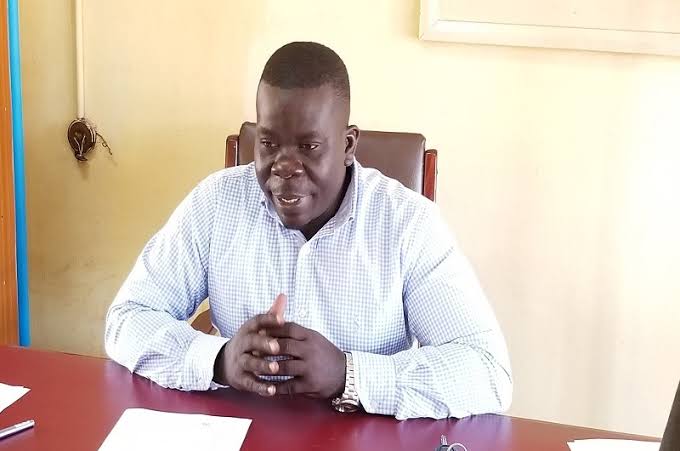
    The Resident City Commissioner (RCC) of Jinja, Salim Komakech, has broken his silence on the protracted dispute over the land that the Lion’s Club wants to use to build a specialized eye hospital, saying while the project enjoys city-wide goodwill, public land cannot be dished out like personal property.

    In an exclusive interview with The Exposure Uganda, Komakech insisted that his office is not fighting the eye hospital idea. What he is fighting, he said, is the dangerous habit of allocating public land outside the law.

    “Consensus among the leaders and stakeholders in the city is that Lions Club should get it and use it to build an eye hospital in Jinja City. No one disputes that. It is a noble cause. What we are saying is that giving out public land takes process,” he said.

    What Is At Stake: Plot 18-22 Grant Road.

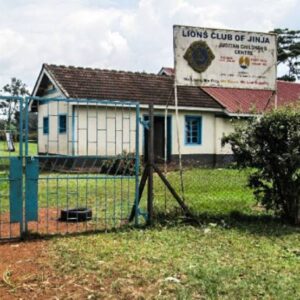
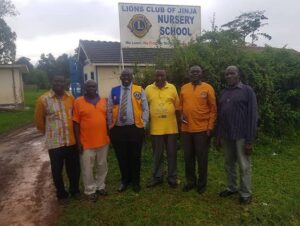
    At the center of the storm is Plot 18-22 Grant Road, a prime piece in the heart of Jinja City. The land currently houses the Lions Club premises and the Juditah Children’s Centre and Nursery School. Official records are clear – the land belongs to Jinja City Council, not the District Land Board. That legal distinction is the root of the entire saga.

    The Lion’s Club has been a sitting tenant on the property since the late 1960s. For over five decades, the club has used the site as a base for humanitarian work – from eye camps and provision of eyeglasses to supporting vulnerable children.

    The controversy started on 25th May 2022 when Jinja City Council endorsed a recommendation by the city executive then led by former Mayor Alton Peter Kasolo Okocha to lease the same land to a private investor, Grand Royale Impex Ltd. The company was to develop the land in line with its title covenant as a Children’s Park.

    This was not the first attempt to re-purpose the site. Around 2020, city authorities had floated the idea of partnering with the Muslim community to set up an Islamic education center on the same land. That plan collapsed.

    When the 2022 decision to hand the land to Grand Royale Impex Ltd leaked, the Lions Club protested. The club had applied for a title through the Jinja District Land Board, but the application was rejected on jurisdictional grounds – the land is municipal property, so the District Land Board has no mandate over it.

    Left with the threat of eviction, the Lions Club leadership petitioned the Inspector General of Government to investigate and block the lease. That petition has kept the file in legal purgatory ever since.

    Why Process Must Lead.

    Komakech said this background explains why he insists on due process. The law, he argued, is the only shield that protects both the public and the investor.

    He cited Article 237(1) and Article 239 of the Constitution, Section 49, 59 and 60 of the Land Act Cap 227, and Sections 30, 33 and 34 of the Local Governments Act Cap 138, read together with the Public Finance Management Act 2015, Section 34, and Articles 93 and 119 of the Constitution which provide for parliamentary oversight.

    In simple terms, council must debate and pass a resolution specifying the land, its size and purpose. The mayor must then write to the Ministry of Local Government. The Ministry then processes it and, where the law requires, seeks Parliament’s approval.

    “This is not bureaucracy for its own sake. This is the shield that protects the investor. If we give land through a letter today, tomorrow someone will go to court and the court will nullify it for illegality. The Inspectorate of Government has cancelled many allocations across the country for exactly that reason. Do we want Lions Club to build an eye hospital and then have it demolished because we skipped Parliament? We don’t,” Komakech said.

    For the Lion’s Club, the legal clarification is also instructive. Because the land belongs to Jinja City Council, the correct landlord is the city council, not the District Land Board.

    The Dirty Underbelly: How ‘A Man Of God’ Was Lured Into The Land Games.

    It is right after this legal position that the saga takes a darker, more criminal twist.

    This publication has established from flawless sources that a handful of political leaders and civil servants in Jinja City, fully aware of the contested status of Plot 18-22 Grant Road, have turned the dispute into a cash cow.

    In what can only be described as a shoddy, predatory and morally bankrupt maneuver, these officials allegedly lured a senior religious leader and convinced him to part with millions of shillings. The money was solicited under the guise of facilitating the title process. In street parlance, it was to “wet the beaks” of key officials in the decision-making chain.

    The illicit cash, our sources reveal, was then allegedly shared among the officials themselves, with a promise that they would in turn pull strings to ensure the yet to be identified man of God gets the land.

    This is not facilitation, but extortion, influence peddling and abuse of office in its rawest form.

    Some sources have reacted angrily saying it is utterly shameful that individuals entrusted with protecting public assets would prey on a man of the cloth – a religious leader whose ministry runs on tithes, offerings and public goodwill – and fleece him of millions with empty promises of a title that legally belongs to the city.

    Under Article 237(1) of the Constitution, Section 59 of the Land Act, and Section 34 of the Local Governments Act, any title procured through backdoor cash is null, void and liable to cancellation.

    Those who reportedly partook of the illicit money should be reminded that the Penal Code Act criminalizes obtaining money by false pretense and abuse of office, while the Anti-Corruption Act Cap 116 provides for prosecution, dismissal and recovery of illicit gains. If indeed a man of God was defrauded, refund is not enough – accountability must follow.

    TEU is yet to dig deeper and establish full details of this likely shoddy deal, including the identity of the prey and the predators. Investigations continue.

    Jinja City Land Board Distances Itself, Awaits Probe Findings.

    However, a member of the board who commented on condition of anonymity in order to speak candidly distanced the current Jinja City Land Board from the controversial giveaway, arguing that the current board was not yet in office when the disputed allocations were engineered and therefore cannot be held responsible for historical irregularities.

    The member added that as a board they are anxiously waiting for the outcomes of the ongoing probes by the Inspectorate of Government and other relevant agencies, and are ready to comply fully with whatever findings and recommendations will be issued in the interest of transparency and rule of law.

    “For now, our hands are tied and we are tightlipped, so kindly allow the relevant investigation agencies to conclude their work without undue interference,” the source said, emphasizing that any premature pronouncements could prejudice the investigations that are already underway.

    PDM And Emyooga: From Chaos To Systems.

    Turning to service delivery, Komakech said Jinja City has fixed the foundational mess that had dogged wealth creation programmes.

    He disclosed that 99.9 percent of the new leadership structures across the 26 or 27 wards of the city have been instituted and enrolled on WENDI, the digital payment system government uses for the Parish Development Model.

    “That is done. It was a difficult reorganization but it had to be done to create order,” he said, adding that focus has now shifted to beneficiaries. Government is moving to selection, verification and cleaning of registers to eliminate duplication and ghosts.

    “Soon selection of beneficiaries will be done and we shall verify and remove duplication of beneficiaries and weed out non-eligible persons. PDM money is for people in subsistence to join the money economy. It is not for people who already have stable incomes,” he said.

    On Emyooga, Salim Komakech pointed to success stories. Southern Division Produce Dealers SACCO now holds a portfolio of more than Shs100 million. Veterans SACCOs are also doing well, though their money is still being held by the National Enterprise Corporation.

    “We are encouraging all SACCOs to increase their portfolio. Save more, invest more, don’t consume seed capital,” he said and warned that government will not compromise on repayment.

    “We are not going to compromise on repayment. If you don’t repay, you kill the SACCO and you deny your neighbor a chance,” he said, citing the Cooperative Societies Act Cap 112.

    Jinja City Land Board Member Declines Comment.

    When approached for a comment on the matter to enrich this article, Issa Ambitious Muwhezi, a member of the Land Board who is familiar with land related issues in the city declined to discuss the matter saying he is by law not authorized to discuss such issues with the media apart from the chairman Counsel Jamil Sanyu Mukama or the Board Secretary Abubaker Kirunda Menya who are designated spokesperson of the board.

    His response, while procedurally correct, underscores the sensitivity and controversy surrounding land issues in Jinja where officials are constrained leaving members of the public to rely on censored official channels.

    Security: Hotspots Mapped, Vacists Warned.

    On security, Komakech said Jinja City is generally calm but security has mapped sporadic hotspots – Budumbuli zone and Bugembe Town Council, Wanyange and Mafubira in Northern Division, Masese around Tank Area, in Southern Division where theft and marijuana smoking are common.

    “These are sporadic cases of insecurity in known areas. We have mapped them and patrols have been enhanced,” he said.

    With schools closing for a four-month holiday, he issued a stern warning to adults who view vacationists as easy prey.

    I want to warn members of the public who think vacists are adults to subject them to sexual activities. They are coming back to have a break and refresh but not for sex. Four months is a long time. We must keep them safe,” he said.

    The RCC cited the Children’s Act Cap 59 and Section 129 of the Penal Code Act which makes defilement a capital offence.

    “We shall not relax and resume the next layers of education with damaged children. Don’t let the vacists loose. Don’t let them go back to school with STIs. Don’t let them end up in jail. Don’t let them end up pregnant. The law will bite,” he warned, urging parents to keep children engaged in productive work and to monitor their movement and phone usage throughout the long holiday.


  • WELCOME TO THE DINING TABLE: The Exposure Uganda (TEU) Serves Viva College Principal’s Delicious Parenting Meal for the Long Vacation.

    WELCOME TO THE DINING TABLE: The Exposure Uganda (TEU) Serves Viva College Principal’s Delicious Parenting Meal for the Long Vacation.

    TEU Preamble

    We do not do school adverts; we do not do public relations for institutions. But when we find a meal that can feed a whole generation of parents, we set a dining table in the middle of the public square and invite everyone to sit.

    This is such a meal. It has been prepared by Dennis Alfred Anguyo, the Principal of Viva College School, not in a laboratory of theories, but in the daily reality of raising thousands of young people who live between two worlds.

    The world of the classroom where we tell them to be disciplined, and the world of the phone where everything tells them to be distracted. The world of examinations where we measure them by marks, and the world of life where they will be measured by character.

    We are serving this meal at a very particular time, as candidates complete their national examinations and schools prepare to release learners for the long vacation. This is that strange season when children are excited and parents are unprepared. When freedom arrives before purpose does. When the school bell goes silent and no one is sure what should replace it.

    Many parents think the vacation is about budget, about transport, about where the child will sleep and what they will eat. These matter but this meal is about something deeper. It is about who will occupy your child’s time, attention and heart when the timetable disappears.

    That is why we have set this table for two kinds of parents at once.

    For you, the parent who has never stepped foot inside Viva College School. You have only heard the name in passing. You are welcome. This table is your window. Sit down and peep into what a school looks like when it decides that education is not just about passing examinations, but about raising children who can survive a noisy world with their values intact.

    And for you, the parent of Viva College School. You already know the gate, the uniform, the teachers. You pay fees, you come on visitation days. This table is your mirror. Sit down and remember why you chose this formation in the first place, and why what your child does at home during this long vacation will either reinforce everything we built at school or quietly undo it.

    We ask both of you to do what wise elders taught us to do. To behave like goats who mow grass in the day then sit at night to chew the cud.

    In the day, the goat moves. It gathers. It eats whatever is before it. But at night, it sits. It ruminates. It digests. It turns what it gathered in the noise of the day into nourishment in the quiet of the night.

    Parents must do the same. In the day, we are bombarded. Messages, warnings, trends, advice, TikTok, WhatsApp, gossip, fear. We gather it all. But at night, when the children are asleep and the house is quiet, we must sit and ruminate. We must ask ourselves, what are we really feeding our children? What is shaping their day, their decisions, their character?

    We will not summarize this meal. We will not dilute it. We will not put it in numbers. We will serve it verbatim, in the Principal’s own words, seasoned with his own experience as an educator and a parent.

    So, wash your hands. Sit at this dining table. Come with your hunger as a parent who wants to do better, whether you are inside Viva or outside Viva. The meal is ready.

    Here is the parenting meal, served verbatim from the table of the Principal of Viva College School.

    The Long Vacation: An Exciting Season For Children, A Defining Responsibility For Parents.

    As candidates complete their national examinations and schools prepare to release learners for the long vacation, parents must prepare for more than holiday budgets, family visits and entertainment. They must prepare to reclaim their children’s time, attention and development.

    Across Uganda, the completion of national examinations signals the beginning of a much-anticipated season for thousands of learners. For candidates, the prospect of leaving examination rooms behind brings relief, excitement and the promise of freedom. For parents, it often means welcoming home children who have spent months immersed in revision, examinations, school routines and the expectations of academic achievement.

    The temptation is to regard the vacation as a well-deserved period of rest in which children can finally do whatever they please.

    But beneath the excitement lies a question every responsible parent must confront: What exactly awaits our children during the long vacation, and are we adequately prepared for it?

    The vacation is not inherently dangerous. It is an important opportunity for recovery, family bonding, exploration, personal development and the discovery of talents beyond the classroom. Yet, when freedom comes without structure, supervision or meaningful engagement, the same period can expose children to risks that may have lasting consequences.

    The challenge before parents is to ensure that the freedom of vacation becomes an opportunity for growth rather than a period of avoidable vulnerability.

    The world has changed, and parenting must change with it. In his presentation, The Challenges of Parenting in the Contemporary World, the Principal of Viva College School, Dennis Alfred Anguyo, draws attention to the changing environment in which today’s children are growing up.

    Unlike previous generations, today’s learners inhabit a digitally connected world in which information, entertainment, relationships and social influences are available almost continuously. Artificial intelligence, social media, online gaming, instant messaging and digital entertainment have created opportunities that previous generations could hardly imagine.

    However, these developments also mean that children can encounter harmful influences from the privacy of their bedrooms. Online exploitation, cyberbullying, exposure to inappropriate content, scams, substance-related influences and contact with predatory individuals are among the risks that parents must understand.

    The concern is not that every child will encounter these dangers, but that parents can no longer assume their children are safe simply because they are physically at home. A child may be seated in the living room while mentally and socially immersed in an online environment the parent knows little about.

    The modern parent must therefore be present both physically and relationally, understanding not only where the child is but also what occupies the child’s attention, who influences their decisions and whether they feel safe seeking help.

    When the examination pressure disappears, for candidates, completing national examinations can produce a sudden change in routine. Months of structured learning, scheduled activities and close supervision may give way to weeks of unstructured time.

    Some candidates will use the opportunity to rest, read, develop practical skills, participate in family activities or explore career interests. Others may struggle with boredom, uncertainty about their future, pressure from friends or the desire to experience freedoms they previously associated with adulthood.

    This transition deserves particular attention because the end of examinations is not merely the end of an academic exercise. It can also be a period of personal and emotional adjustment. Candidates may feel relieved one moment and anxious the next. They may worry about results, compare themselves with peers, question their future choices or feel pressure to prove that they are now mature enough to make independent decisions.

    Parents should resist the assumption that every child will automatically manage this transition well. Some will need reassurance, some will need direction, and others will need help discovering constructive ways to use their newfound time.

    The danger of an idle mind without purpose is real. An important principle for the vacation period is that children need purposeful engagement. An idle mind is not necessarily a dangerous mind. Rest and unstructured play are essential to healthy development. The problem arises when extended periods without meaningful activity, guidance or social support leave young people vulnerable to boredom, impulsive decisions and unhealthy influences.

    When every day begins without a plan and ends without reflection, children may increasingly seek excitement wherever it is available. Peer pressure can become more influential, digital entertainment can consume excessive hours, and risky invitations may become attractive simply because they offer novelty.

    Parents should therefore help children develop a balanced vacation routine. This need not resemble a school timetable. Rather, it should provide a healthy mixture of rest, recreation, reading, household responsibilities, physical activity, family interaction, practical learning and age-appropriate social engagement. The objective is not to occupy every minute of a child’s day. It is to help the child discover that freedom is most rewarding when accompanied by purpose.

    The risks parents must not ignore are present in every home, whether in a village or in the city.

    As young people reconnect with friends, they may encounter pressure to participate in activities that conflict with their family’s values or their own best interests. Parents should know their children’s friends, establish clear expectations for outings and ensure that transport, destinations and supervision arrangements are appropriate.

    Parents should have age-appropriate conversations about privacy, digital footprints, online strangers, explicit content, cyberbullying and the sharing of personal images. Reasonable parental controls can help, but they work best when accompanied by trust, open communication and digital literacy.

    Children need honest, age-appropriate information about the consequences of substance use and the importance of refusing unsafe situations. Parents should remain alert to significant changes in behaviour, unexplained absences or other concerning patterns without assuming that every change is evidence of wrongdoing.

    Adolescents need clear guidance about consent, personal boundaries, coercion, grooming, age-appropriate relationships and the difference between genuine care and manipulation. Parents should ensure that children understand they can report uncomfortable experiences without fear of blame or punishment.

    The end of examinations can bring relief, but it can also create anxiety about results, university or vocational choices, relationships and expectations. Children need reassurance that their worth is not defined by a single examination result and that setbacks can be addressed with guidance and planning.

    A vacation spent entirely on screens, sleeping late and avoiding responsibilities can mean missed opportunities for growth. Reading, sports, community service, learning a practical skill, exploring a career and helping at home can make the break both enjoyable and developmental.

    These concerns should not turn parents into investigators who treat every child with suspicion. They should instead encourage adults to become informed, approachable and attentive guardians.

    Parents must reclaim the relationship, not merely control the child. One of the most important lessons from the contemporary parenting discussion is that communication remains a parent’s strongest protective resource.

    Rules matter, but rules without relationships may encourage children to conceal their difficulties. Surveillance without trust can make them reluctant to seek help. Punishment without listening may close the very channels through which parents could understand what is happening.

    Parents should create an atmosphere in which children can speak honestly about friendships, online experiences, mistakes, fears and ambitions. Ask open-ended questions. Listen before responding. Spend time with each child individually. Discuss family expectations and explain the reasons behind boundaries. Where mistakes occur, combine appropriate consequences with opportunities for learning and restoration.

    Most importantly, children should know that when they find themselves in a dangerous or uncomfortable situation, they can call upon a trusted adult for help. A child who fears every conversation with a parent may hide a problem. A child who trusts a parent is more likely to seek guidance before that problem becomes a crisis.

    Vacation should become a season of discovery. Beyond protection, parents have an opportunity to make this vacation meaningful.

    For candidates completing a major educational stage, the months ahead can be used to reflect on their strengths, interests and future aspirations. They can explore vocational skills, participate in sports, develop reading habits, volunteer in the community, learn responsible money management and contribute to family life.

    Parents can encourage children to participate in age-appropriate household responsibilities, visit relatives, engage in constructive community activities and explore careers through safe, organised experiences. They can also give children room to rest. After an intense examination season, recovery matters. A balanced vacation should not become another period of relentless performance demands.

    The goal is to help young people return to their next stage of life more mature, self-aware, responsible and prepared to make sound decisions.

    The school cannot do it alone. As schools release learners for the vacation, the responsibility for their daily care shifts significantly towards families and guardians. Schools may continue to offer guidance, but they cannot supervise every decision a learner makes outside the school environment.

    This is why the partnership between home and school must extend beyond the classroom calendar. At Viva College School, the educational ambition is to nurture learners who can rise to their potential and contribute meaningfully to society. That ambition requires more than academic instruction. It calls for the consistent reinforcement of discipline, respect, care for others, individual responsibility and the pursuit of excellence.

    Parents and guardians are indispensable partners in this process. The values children practise at home during the vacation can either reinforce the lessons learned at school or undermine them. As candidates transition from one stage of education to another, parents should also begin conversations about subject choices, career aspirations, personal responsibility and the expectations that accompany greater independence.

    The end of examinations should therefore mark the beginning of another important phase of parenting, not a withdrawal from it.

    Our call to parents is to prepare before the vacation begins. Before candidates leave school, parents should consider a simple but practical plan that includes agreeing on reasonable daily routines, establishing clear expectations about outings and communication, discussing online safety and sensible digital boundaries, identifying constructive activities that match the child’s interests, making time for honest conversations about examination experiences and future plans, ensuring children know which trusted adults they can contact, and balancing supervision with opportunities for age-appropriate independence.

    These measures do not require extraordinary financial resources. They require time, consistency, communication and the willingness to remain involved in a child’s life.

    The final examination is not the final parenting responsibility. As the country prepares to welcome its vacationists, parents must recognise that the end of examinations is a milestone, not a suspension of responsibility.

    Our children are entering a world of enormous possibilities, but also one that demands discernment, resilience and strong personal values. We cannot shield them from every challenge, nor should we attempt to control every aspect of their lives. We must, however, equip them to recognise danger, make responsible choices, seek help when necessary and recover from mistakes.

    The real measure of a successful vacation will not simply be whether children enjoyed themselves or returned to school refreshed. It will also be whether they used the opportunity to develop greater maturity, stronger relationships, useful skills and a clearer sense of direction.

    The question every parent must ask is this: when the school timetable disappears, what will take its place in shaping my child’s day, decisions and character?

    Let us not wait for a crisis before becoming involved. Let us prepare our homes, our conversations and our expectations before the vacation begins. The vacation may release our children from the classroom, but it must never release us from the responsibility of parenting.

    DENNIS ALFRED ANGUYO
    Principal of Viva College School.


  • UNAPCO Asks Government to Deploy Mental Health Experts in All Health Facilities as Cases Surge in Busoga.

    UNAPCO Asks Government to Deploy Mental Health Experts in All Health Facilities as Cases Surge in Busoga.

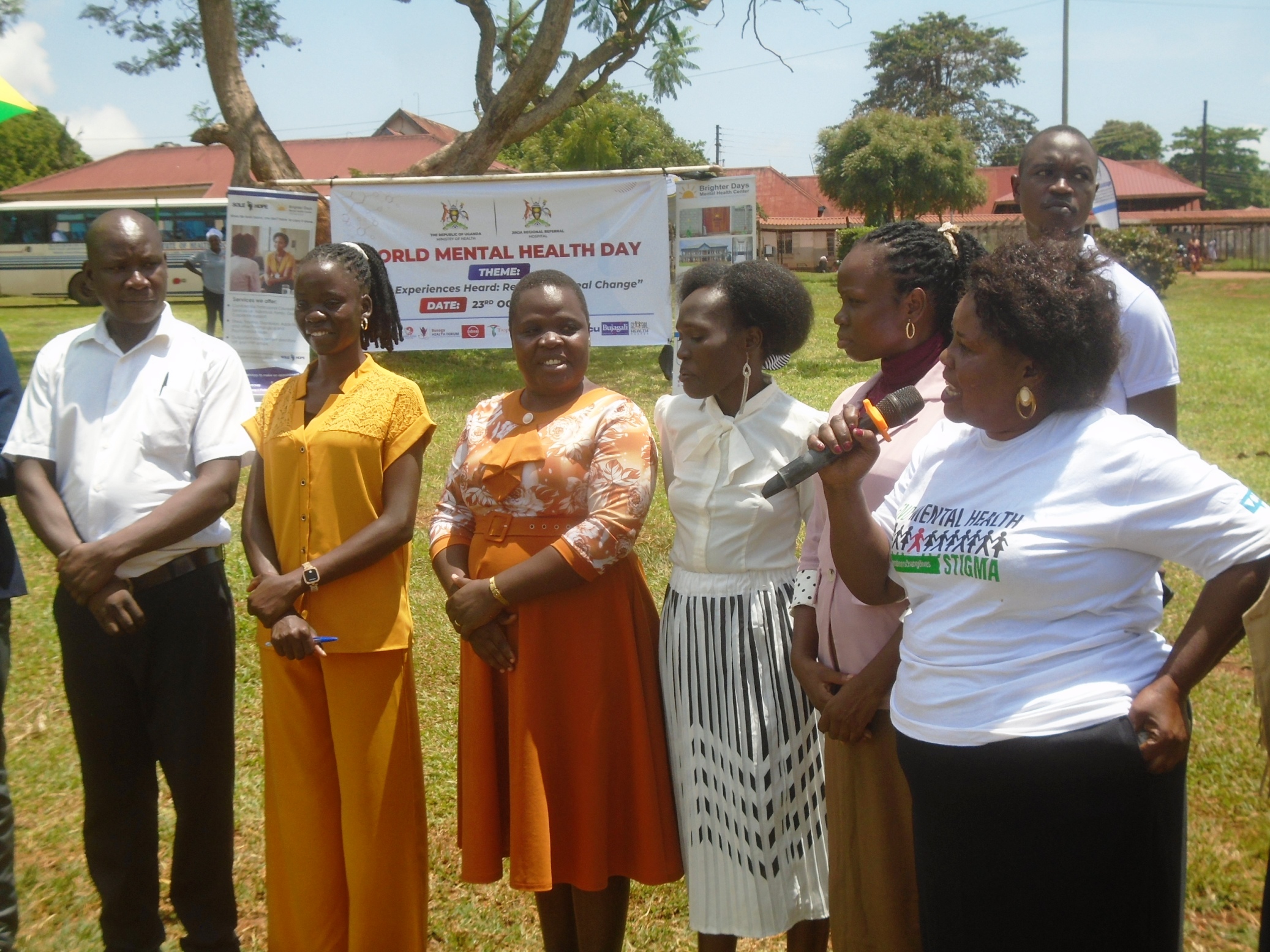
    Health workers in Jinja have asked government to prioritize recruitment of Psychiatric Clinical Officers across all health facilities, from Health Centre III to the national referral hospital, in a bid to improve response to the rising cases of mental health illnesses in the country.

    The call was made during commemoration of World Mental Health Day organized by Jinja Regional Referral Hospital on Saturday October 24, 2026, at the hospital’s mental health unit.

    Speaking at the event held under the theme “Lived Experiences Heard: Real Voices, Real Change,” Sam Sabagereka, President of the Uganda National Association of Psychiatric Clinical Officers (UNAPCO), said bringing mental health experts closer to communities would enable early detection, improve recovery and reduce expenses for patients and their families.

    “By bringing them closer to communities, we could reduce people’s vulnerability. Also, we hope this will improve recovery of patients and reduce expenses on treatment as their challenges will be detected and tackled early,” Sabagereka said.

    He explained that currently, services of psychiatric clinical officers are mostly accessed at regional referral hospitals and at Mulago, the national referral hospital, while lower facilities that are nearest to the population remain without expertise.

    “It would make a great impact if we had these experts deployed even at the lowest health units, which are closest to the community people,” he said.

    World Mental Health Day is celebrated globally every October 10, but Uganda held its national celebration on October 11 this year, while Jinja held its district event on October 24 to allow participation of schools and partners across Busoga.

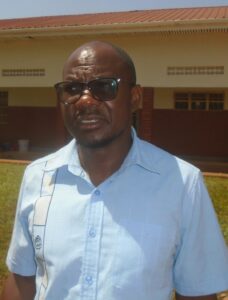
    Dr. Kenneth Kalani, a consultant psychiatrist and senior medical officer at the Ministry of Health who was chief guest, said government structure provides for at least a psychiatric clinical officer from Health Centre IV upwards while Health Centre IIIs have psychiatric nurses.

    He advised districts and cities to prioritize these professionals during their recruitment exercises, noting that recruitment is now decentralized and districts often focus on other cadres.

    He added that government has embarked on a re-training exercise of general health workers, during which they are equipped with skills to recognize patients with mental illness through the WHO Mental Health Gap Action Programme (mhGAP).

    According to Dr Kalani, some of the factors driving mental illness include stressful factors such as struggle to get basic needs and unemployment which results in poverty.

    Noah Suubi, a parent whose son developed mental illness while studying electrical engineering at university in 2019, said they initially thought it was a spiritual issue and prayed over it without success before being advised to visit Jinja hospital where he was put on treatment and has since improved, resumed studies and graduated.

    Moses Waiswa, another parent whose child had a mental challenge, decried discrimination in society and lack of medicine for mental illnesses at most health facilities, calling upon policy makers to put in place laws to protect these people and link them to development partners like it is with people living with HIV/AIDS.

    Jinja Hospital Senior Executive Consultant (SEC (, Dr. Alfred Yayi, in a speech read by Dr. Michael Mulowooza, said mental health must be everyone’s concern as it affects people of all ages, backgrounds and status, stressing that seeking help is an act of courage and recovery is possible.

    The Staffing Gap And What Needs To Be Done.

    Jinja Regional Referral Hospital serves more than twelve districts in Busoga with a combined population of over six million people, yet it operates with less than five psychiatric clinical officers, two psychiatric nurses and one visiting consultant psychiatrist.

    Nationally, Uganda has less than 50 psychiatrists for over 45 million people, which translates into one psychiatrist for every 900,000 people against the WHO recommended ratio of one for every 10,000, while about 800 Psychiatric Clinical Officers have been trained but only about 400 are in government service.

    According to UNAPCO, more than 70 percent of established posts for psychiatric clinical officers at Health Centre IV and psychiatric nurses at Health Centre III remain vacant, forcing patients to travel long distances to Jinja, Mbale or Mulago at a cost of between Shs 50,000 and Shs 150,000.

    At the end of the commemoration, participants called upon government through the Ministry of Public Service to create and fill posts for psychiatric clinical officers at all Health Centre IIIs and IVs, urged district service commissions to prioritize mental health cadres, asked National Medical Stores to ensure consistent supply of mental health medicines, and appealed to Parliament to fully operationalize the Mental Health Act of 2019 to protect rights of patients.

    For health workers in Jinja, the message remains that bringing experts closer to communities will bring healing closer to home, because without mental health, there can be no complete health.

    TEU Explainer: What Mental Health Really Is.

    For many families in Jinja and across Busoga, the phrase mental health still evokes only one image, that of a violent person on the street who must be taken to Butabika or Jinja hospital’s psychiatric ward, yet that image is incomplete and misleading.

    According to the World Health Organization, mental health is a state of well-being in which an individual realizes his or her own abilities, can cope with normal stresses of life, can work productively and is able to contribute to his or her community.

    In simple terms, mental health is the health of the mind, just as physical health is the health of the body, and it exists on a continuum where most people move between wellness and illness at different points in life.

    At Jinja Regional Referral Hospital, for example, records show that out of 60 to 80 patients who visit the mental health unit daily, with numbers rising beyond 120 on Mondays, less than ten percent present with severe psychosis that makes them violent or disorganized, while the majority come with depression, anxiety, substance use disorders, bipolar disorder and epilepsy, all of which are treatable when detected early.

    This means that a student who has failed to sleep for two weeks before exams, a mother who cries daily and has lost interest in her business, or a young man who has resorted to alcohol and marijuana to cope with unemployment, are all experiencing mental health challenges that need professional attention, not stigma.

    TEU Explainer: Why Witchcraft Blame &Wrong Prayers Make It Worse.

    It is very common in many Ugandan families to explain mental illness through witchcraft, especially when the affected person was previously known to be bright, successful or well-behaved at school.

    In such cases, relatives often say that boy was very bright at school so jealous people have bewitched him, or that he stole something and was bewitched as punishment, or that jealous relatives sent amayembe or kifaro and that is why he is like that.

    Once that narrative takes hold, the family embarks on a long journey from one traditional healer to another, spending months and large sums of money on rituals and herbs, while the underlying medical condition continues to worsen without treatment.

    In other instances, families turn to men and women of God who, despite good intentions, have no training in clinical psychology or psychiatry, and spend days and weeks shouting over the patient in the name of exorcism, declaring “I rebuke you in the name of Jesus, I command you in the name of Jesus, get out of him,” while the patient is denied food, sleep and medication.

    In many of these cases, the prolonged shouting, fasting and chaining only worsens the situation, leaving the patient exhausted, dehydrated and more distressed than before.

    The Exposure Uganda is not dismissing spiritual or divine healing through prayers, because faith and prayer remain important sources of comfort, hope and resilience for many patients and families, and many people draw strength from their religious beliefs during recovery.

    What health workers emphasize, however, is that prayer should complement medical care rather than replace it, and that genuine spiritual support, when offered calmly, respectfully and alongside professional assessment, counselling and medication, can be part of holistic recovery, whereas shouting, condemnation and prolonged exorcism without referral only delays healing and increases suffering.


  • MK Snubs Jinja City As MMP Marriot 5-Star Hotel Groundbreaking Ceremony Flops.

    MK Snubs Jinja City As MMP Marriot 5-Star Hotel Groundbreaking Ceremony Flops.

    The highly anticipated groundbreaking ceremony for MMP’s proposed five-star hotel in Jinja City has suffered a major setback after Gen Muhoozi Kainerugaba (MK), the Chief of Defense Forces (CDF) of the Uganda People’s Defense Forces (UPDF) and leader of the Patriotic League of Uganda (PLU), cancelled his scheduled appearance until further notice, just hours before the event.

    What was initially billed as a high-profile investment milestone has increasingly taken on a political dimension, with the proposed hotel site reportedly turning into a political landmine.

    And by 10am on Thursday 29th October 2026, reports started trickling in that the much-anticipated ‘guest of honor’(MK) would not make it due to unforeseen circumstances.

    Promoters and the seemingly connected fellows from Jinja and Busoga started making frantic calls to reverse the really bad news but a highly trained soldier as he is, Gen MK stuck to his decision with a big NO, probably having pick clear intelligence on the ground.

    So, what should have been a celebration on Bridge Street on Friday 30th October,2026 was a field of empty tents, silent speakers and folded chairs, a perfect metaphor for a project that has promised Jinja so much and delivered so little for nearly two decades.

    The Land That Started It All: Chairman’s Park.

    The connection between Black Eagles Investment Limited and Chairman’s Park in Jinja revolves around a high-profile, multi-decade land dispute over the development of a luxury hotel near the Source of the Nile Agriculture and Trade Show Grounds.

    The Chairman’s Park is a 12-acre plot of prime land located along Plots 1-9 on Bridge Street in Jinja, situated near the Jinja Golf Course and the Source of the Nile. It was originally gazetted by the Jinja Municipal Council as a public leisure park, a green lung where the city breathed, where families picnicked and where mayors hosted dignitaries arriving to see the Source of the Nile.

    That identity changed in 2008 when the Jinja District Land Board allocated the Chairman’s Park land to an investor group, Black Eagles Investment Limited, for a premium of Shs 80 million. This amount was arrived at, according to sources by the government valuer.  

    On paper it looked like progress. Black Eagles Investment planned to build a massive Shs 50 billion, five-star luxury hotel initially planned as a 140-room that would finally give Jinja a bed worthy of its status as Uganda’s adventure capital.

    What followed was not construction but conflict. The Jinja Municipal Council repeatedly attempted to halt the project and recover the land, arguing they were the rightful sitting tenants and that green spaces should remain open to the public.

    The Inspector General of Government (IGG) entered the fray, petitions flew, caveats were placed, and the 7 acres became a legal battleground.

    This led to years of legal stalemates and stalled construction, turning Chairman’s Park from a public park into Jinja’s most famous white elephant, a bushy, iron-sheet fenced reminder on Bridge Street that good intentions without clean paperwork produce only weeds.

    It was only after years of friction that the IGG later cleared the project, and recent city leadership signed memorandums of understanding to resolve the impasse, paving way for a new investor to take over the dream that Black Eagles had failed to deliver.

    How MMP Enterprises U And Margan Patel Revived The Dream.

    It appears, like it happens with many companies, money failed for Black Eagles and the company quietly sold its interest in the land which for years had been described as a white elephant to Margan Patel through his company MMP.

    Patel did not come with small talk. He came with a global brand. Through MMP Group, he signed an MoU with Marriott International and revived the project as the MMP Five-Star Hotel, a seven-floor luxury multi-bedroom facility featuring world-class amenities.

    According to available details, the hotel will include around 100 elegantly designed rooms and suites, along with multiple banqueting halls, restaurants, bars, party lawns and other high-end recreational spaces.

    It is expected to position Jinja as a premier destination capable of hosting major national and international events. A standout feature will be a world-class swimming pool complemented by sophisticated dining areas.

    The hotel forms part of MMP Group’s broader real estate and hospitality initiatives in Jinja, alongside projects like the MMP Industrial Park, Barj Palace and an upcoming ultra-modern shopping mall.

    It is strategically planned near key tourist attractions, including the Source of the Nile, to capitalize on the area’s natural appeal and boost local tourism and economic growth.

    For a city that has watched Kampala take all the conferences and all the dollars, this was finally Jinja’s moment. Which is why the Chief of Defence Forces and PLU leader Gen Muhoozi Kainerugaba was scheduled to officiate the official groundbreaking ceremony for the proposed MMP Five-Star Hotel in Jinja City on 30th October 2026.

    Why The Ceremony Flopped: The Shadow That Would Not Leave.

    Sources who purport to love MK, who is also Chairman and Founder of PLU, argued that MK widely known as an anti-corruption crusader should not identify with a project whose background is laced with suspicion and ambiguity, even if the IGG had previously cleared it, because public perception does not read IGG reports, it reads headlines.

    Much as Jinja City and indeed Busoga need such a facility which would have been the first of its kind in the region, this group believed to be led by powerful politicians and business chaps say the presence of MK who is currently trending like hot loaf with nationwide endorsement for a bigger task in 2031 and with one of his blue-eyed apostles Hon Balaam Barugahaare(Local Government Minister) doing wonders countryside, will give room to critics that he preaches one thing but does the opposite.

    That argument gained traction at the eleventh hour when fresh queries were raised about the whole project from the initial stages spanning over 18 years.

    Much as invisible political and business factors have been blamed for the saga, sources intimated that MK is the consumer of intelligence and he could not have simply relied on unfiltered information.

    For a man who occupies the sensitive office of CDF, where every public appearance is interpreted as institutional endorsement, stepping onto Plots 1-9 Bridge Street while those questions were still swirling was deemed too risky.

    The Cost Of A Flop: Why Patel, Not The Crowd, Pays.

    For now, it’s the talk of the town and has given skits and segments to the so-called bloggers who are actually vloggers in their hundreds who had hoped to get opportunity to not only take selfies with MK but also to flatter him into dishing some cash to them, something MK is known to detest.

    But the real loss is not selfies. Take note that service providers from Public Address System to MC, foods and beverages to attendees and VIPs were already secured by Patel himself, meaning financial loss is for Patel, not prospective attendees.

    MMP had paid for everything. The tents, the 500 chairs, the powerful PA system, the Master of Ceremonies, the catering for VIPs and ordinary attendees, the bottled water, the sodas, the photography and live streaming. The service providers did not come on credit to council, they came on Patel’s purchase order.

    Now that food is wasted, those tents have since been folded at a cost, and those service providers will still demand full payment. This financial loss comes at this critical time when Uganda shilling is at its lowest ebb in years against the US dollars and fuel is expected to peak 10k in December in Kampala while upcountry far away could as well hit 15k and food and commodity prices skyrocketing. In an economy where every litre of diesel is gold, Patel has just burnt fuel to transport disappointment.

    What A Five-Star Hotel Means For Jinja And What Marriott Means.

    To understand why this flop hurts Jinja so deeply, one must understand what a five-star hotel truly means and what Marriott represents.

    A five-star hotel is not just a building with 100 rooms. Under international rating, a five-star means 24-hour concierge and reception, world-class swimming pool and spa, multiple fine dining restaurants and bars, banqueting halls with simultaneous translation, high-speed lifts, backup power and water, presidential suites, disability access, international fire and safety standards, and service levels where a guest’s name is remembered.

    For Jinja City, which currently has no single internationally rated five-star facility, it would mean ability to host presidential retreats, international NGO conferences, Nile investment summits and wealthy tourists who currently sleep in Kampala and drive to Jinja for two hours just to see the Source and leave.

    Marriott is not just a name. Marriott International is the world’s largest hotel company by number of rooms, with over 8,800 properties in 139 countries, owner of Ritz-Carlton, JW Marriott, Sheraton and Courtyard brands. When Marriott puts its name on Plots 1-9 Bridge Street, it puts Jinja on the same global booking engine that puts Paris, Dubai and New York.

    A tourist searching Marriott.com for Uganda would for the first time see Jinja, not just Kampala. That is foreign exchange, jobs for 600 youth, market for Busoga farmers supplying five-star kitchens, and pride for a city that has long been called a former industrial capital.

    That is why the failure of 30th October 2026 is not just about tents. It is about Jinja’s future being postponed again, just as it was postponed from 2008 when Black Eagles paid Shs 80 million and delivered nothing.

    The truth remains the highly billed and publicized groundbreaking ceremony flopped. Gen Muhoozi pulled out amid serious allegations, not because he does not believe in Jinja, but because those who love him believe his anti-corruption brand must not be seen blessing land whose journey from public park to Black Eagles to MMP still raises questions, even after IGG clearance.

    This is not the first time Patel known as one of the big investors is facing such setbacks because some years ago, he had a protracted legal battle over a stretch of prime land commonly referred to as Tirupati Land which hitherto remains a court matter.

    And until those questions are answered with documents, not speeches, Chairman’s Park will remain what it has been for 18 years – Jinja’s most expensive 7-acre lesson that even Marriott cannot build on ambiguous ground.

    However, sources familiar with the matter have condemned the chronic disease of frustration that has characterized investments in Jinja over petty or trivial non issues.

    They argue that for 18 years nobody raised any issue or complaint on the land whether with the police, court or IGG but that it’s disappointing that they wait in the last minute to frustrate an investor who has already committed billions of shillings to the project.

    The company awarded the contract is M/s Seyani Brothers & Company Ltd one of the most reputed and biggest civil and building contractors in East Africa.Founed in Nairobi, Kenya by Prabat Bhimji Siyani and his brothers in 1978, the company expanded to Kampala, Uganda in 1991 as Seyani Brothers & Co(U)Ltd, formally separately in 2001 to focus on Uganda market.

    It is a 200 billion Uganda Shillings project that is going to add value to Jinja City and Busoga as well as offer direct and indirect employment to residents.


  • The River Between Came To Mwiri: How Ngũgĩ’s Boy Who Was Left Alone Became Uganda’s Reckless Man.

    The River Between Came To Mwiri: How Ngũgĩ’s Boy Who Was Left Alone Became Uganda’s Reckless Man.

    The Exposure Uganda (TEU) Special Report.

    In 1965, a young Kenyan then called James Ngugi wrote a small novel that every Ugandan who passed through a Literature classroom at O-Level, A-Level, university or teachers’ college was forced to touch. It was titled The River Between.

    The novel was not voluminous. Its power lay in its architecture. Two ridges, Kameno which clung to tradition and Makuyu which had embraced the white man’s school and church, are separated by a river called Honia, which translates as cure. The river that was meant to cure ended up dividing.

    Between those ridges stood a boy, Waiyaki. His father Chege, a seer, charged him with a heavy prophecy: you will be our saviour, learn all the wisdom of the white man but do not forget your own. Chege died shortly after, leaving the boy to learn manhood without a father to guide him through responsibility, burden-bearing, home management and firmness when both ridges pulled him in opposite directions.

    Waiyaki proceeded to Siriana mission school where he learned to read, to build schools and to fall in love with Nyambura. The tragedy of Waiyaki was not ignorance. He possessed knowledge in abundance but lacked character formation. In trying to please everyone, he ended up building nothing and burning much. The educated boy without guidance matured into a confused man who stood on the ridge uncertain whether to build or to burn.

    Anyone who did English Double at university or teachers’ college underlined that sentence. Anyone who did Literature wrote an essay about it, passed and then closed the book, forgetting the boy.

    When Waiyaki Walked Into Wairaka.

    On Saturday, 24th October 2026, that boy walked into the Church-founed Mwiri Primary School and sat in the Annual General Meeting.

    Mwiri PS is not just any school. It sits in Wairaka, Kakira Town Council, Jinja District, on elevated ground overlooking Lake Victoria, directly opposite the Madhavani-built M.M. Wairaka College, on the historic Mwiri ridge that has produced Uganda’s elite for a century.
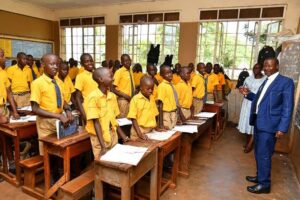
    Its Annual General Meeting and Visitation Day was held at the school campus in Wairaka, Jinja district, bringing together parents, teachers, learners and management.

    He did not come as Waiyaki. He came as the Ugandan boy child described by Jenifer Menya.

    The speaker was not a guest hired for effect. Madam Jenifer Menya is the Chairperson of the School Management Committee (SMC) of Mwiri PS itself, the statutory body that must account for every child in that compound.

    She is by profession a teacher of Biology and Agriculture, subjects that deal with life, growth and cultivation, which perhaps explains why she understands growth better than those who only teach facts. Jenifer who has taught in many schools including Jinja SS now heads St Paul Senior Secondary School, Mbulamuti, the historic hill of Uganda’s First Female Speaker of Parliament and now First Deputy Prime Minister and Minister for East African Community Affairs, Kamuli District Woman MP Rt Hon Rebecca Alitwala Kadaga, (Mama Busoga).

    Ms. Jenifer Menya, popularly known at school as ‘Mama’ or ‘Madam’ is a mother who has raised her own sons and daughters with discipline and a career teacher whose former students now occupy key positions in public and private spaces across Busoga and beyond.

    When she speaks about a boy left to learn alone, she has watched that boy grow from Primary One to Senior Six, in the laboratory and in the garden.
    What made her speech historic for anyone who ever did Literature is the contrast in delivery. Ngũgĩ wa Thiong’o is a literary man who wraps truth in proverbs, rivers and ridges. Jenifer Menya is a Biology and Agriculture teacher who believes in calling a spade a spade, because in her subjects, you cannot fake germination.

    From James Ngugi to Ngũgĩ wa Thiong’o: Why the Colonial Name Had to Die.

    Readers knew him as James Ngugi, but that name tells a colonial story. Born in 1938 in Limuru, Kenya, he was baptized as James Ngugi. James was his Christian colonial’s name. Ngugi was his Gikuyu name. Thiong’o was his father’s name. The full colonial arrangement meant he carried the church and the colony on his head.
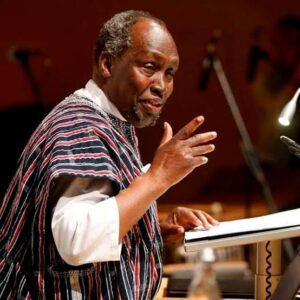
    He wrote his early novels, The River Between, Weep Not, Child and A Grain of Wheat, as James Ngugi. The rupture came in 1977 when he and Ngũgĩ wa Mirii wrote a play in pure Gikuyu, Ngaahika Ndeenda (I Will Marry When I Want), performed by peasants and workers in his village Kamiriithu, not in English but in the language of their mothers. The play exposed land grabbing and the betrayal of workers. The Moi government considered it dangerous.

    On 31st December 1977, he was arrested by the Daniel arap Moi government and detained without trial at Kamiti Maximum Security Prison for a year. Without paper, he wrote his next novel Caitaani Mutharaba-ini (Devil on the Cross) on toilet paper, in Gikuyu. In that cell he reached a conclusion that would define his life: to enslave a people, you take their language and give them your names, making them ashamed of their mother’s tongue.

    He dropped James forever. He became Ngũgĩ wa Thiong’o, meaning Ngũgĩ son of Thiong’o, and vowed never to write his creative work in English again. The change was not a pen name. It was a political return home.

    Examination Tools You Crammed: What They Really Mean.

    For readers who did not do English Double, the tools Ngũgĩ employed matter because Menya deliberately used their opposite.

    Allegory is when an entire story stands for another bigger story. The two ridges in The River Between are not just hills. They represent two systems, tradition and colonial modernity. Waiyaki between them embodies every African child caught between two worlds.

    Symbolism is when a small object carries a large idea. River Honia, meaning cure, is supposed to heal the division between ridges, yet it physically separates them. The river therefore symbolizes a cure that has become a wound. Education in the novel operates the same way, promising liberation while producing alienation.

    Binary Opposition is Ngũgĩ’s central scaffold. He deliberately creates opposites to trap the protagonist: Kameno versus Makuyu, Chege the traditional seer versus Joshua the Christian convert, Muthoni who chooses circumcision versus Nyambura who chooses the church, circumcised versus uncircumcised.

    Bildungsroman, often misspelt as Bildungsrooman, is a German coinage meaning a novel of formation. It traces a boy’s growth into manhood. The River Between is a classic Bildungsroman, following Waiyaki from a child listening to Chege’s prophecy to a confused man who loses everything because formation was incomplete.

    Foreshadowing is the early hint of a later collapse. Chege tells Waiyaki early that the white man will come and that Waiyaki must learn his wisdom and become a savior. That prophecy foreshadows both rise and failure.

    Irony is when the opposite of expectation occurs. Waiyaki seeks education at Siriana to unite his people. Ironically, that same education is what makes his own people distrust him.

    Ngũgĩ hides truth in a river so that the reader must dig to find it. That is literature. Jenifer Menya at Mwiri PS does not hide truth in a river. She throws truth in the face.

    The Blunt Biology Teacher From Mbulamuti Hill.

    Ms. Jenifer Menya did not employ proverbs, innuendos or beating around the bush. As a teacher of Biology and Agriculture who has always insisted on calling a spade a spade, she was blunt, because in Biology you cannot lie about life, and in Agriculture you cannot harvest what you did not plant.

    That bluntness is precisely why teachers who did English Double at university or teachers’ college felt they had returned to a Literature class in their olden days as students, only this time the teacher was not asking them to analyze Waiyaki. She was showing them Waiyaki’s grandson in Kakira.

    “We in Uganda have placed a lot of focus on the girl child but left the boy child loose,” she told the AGM attendees at Mwiri Primary School.

    That single sentence functioned as Ngũgĩ’s prophecy rendered in plain English. Uganda has groomed the girl child, taught her to speak, to study, to dream and to stand, while the boy child has been left loose, wandering without guidance that suits community existence.

    The Five Strokes of a Reckless Man.

    Because the boy was left loose, the country is now reaping broken homes. According to Menya, it is not surprising that there is an alarming rise in cases of separation, domestic violence and divorce, because unprepared and unpolished boys later become men who marry well-groomed daughters and end up ruining their future and lives.

    Unlike Ngũgĩ who would use a symbol, Jenifer Menya used a hammer. She described the modern Waiyaki in five interconnected strokes, each failure breeding the next.

    The chain begins with emptiness. He drinks himself silly, not because alcohol is scarce but because values are scarce. A man who has no center will always search for something to fill the emptiness.

    From emptiness emerges a home without a manager. Uganda has taught him that manhood is money, that once he drops cash his duty ends. Consequently, he has no idea how families are managed.

    The absence of management translates into absence of care. He grows into a husband who does not know care but demands to be cared for, waiting to be served like a child who never left his mother’s hut. The condition is a direct result of never being taught to be responsible for his siblings and therefore never learning how to take care of others.

    That same lack of guidance follows him onto the road, which explains reckless driving and frequent accidents. A boy who was never told to slow down at home will not slow down on the highway.

    When he finally steps out of the car, appearance tells the same story. He has no ethics and dresses half naked in the name of balance, with trousers sagging and protruding to the disgust of society, confusing exposure with fashion and indecency with confidence.

    In Jenifer Menya’s words, they are literally irresponsible and reckless in all ways.

    Pampered With Degrees, Starved of Character.

    She said Ugandan parents have for years pampered that boy. The country claps when he obtains First Class, posts his degree on social media, buys him a car, builds him a bungalow and excuses his excesses because he is a boy.

    Ms. Menya confronted that pampering culture directly at Mwiri Primary School. She told parents and Ugandans who pride themselves in pampering the boy child that life outside the classroom, lecture halls, hostels and family living rooms can have no mercy and is very harsh. Life will not ask for a transcript. Life will ask for software and by software she did not mean a laptop. She meant the software of life: responsibility, ethics, care, family management, hard work, humility, respect, discipline and the ability to bear another’s burden.

    These competencies enable navigation beyond first class certificates, diplomas or degrees. A certificate can secure a job, but only software can sustain a marriage, raise a child or prevent a man from killing someone on the road because he was taught that speed equals manhood.

    For a teacher of Biology and Agriculture, the metaphor was natural. You cannot get milk from a bull, however well you feed it. You cannot harvest maize where you planted weeds. Uganda has been feeding the boy child with marks while starving him of values.

    The Source Is Us: Maids Cannot Wash Character-She says.

    Having diagnosed the symptom, Ms. Menya traced the source to the household.

    Children are now left to maids, aunts(sengas) and relatives. She cautioned parents against delegating parenting to relatives, warning that sometimes children are abused by members of extended families living with relatives, and even when abuse does not occur, absence itself wounds.

    To drive the point home, she distilled it into a truth every mother at Mwiri Primary School understood instantly. A maid can wash a child’s clothes but cannot wash his character. An aunt can cook food for a child but cannot cook his identity. A relative can offer a roof, but only a mother and father can offer direction, because presence is parenting. Character cannot be outsourced.

    She reminded the AGM attendees of what classic mothers taught: a home is not built by money alone but by willing hands. She invoked scripture: train up a child in the way he should go so that when he is old, he will not depart from it, and bear one another’s burdens, beginning with a boy learning to bear his sister’s burden.

    A Literature Revision Class in Wairaka.

    It was at this point that the audience transformed, and this is what made Wanyange different from a routine AGM.

    In that gathering sat teachers, many of whom did English Double at the university and teachers’ college, men and women who in their olden days as students sat in Literature classes, underlined Kameno and Makuyu (with colored pencils because highlighters were not common), debated Waiyaki’s failure and wrote essays about Chege’s prophecy. Some teach English and Literature at various school while others are senior education officials.

    For them, Ms. Jenifer Menya was no longer delivering an AGM speech. She was inadvertently conducting a Literature revision class. They heard Chege’s voice again: learn all the ways of the white man but don’t forget your own. They saw what happens when that instruction is abandoned.

    They nodded not as parents being lectured, but as former Literature students who finally understood why Waiyaki failed. He was the boy left loose. He was never taught to be responsible for his siblings. He was given books but not character.

    One teacher whispered to another that this was The River Between live. The boy who stood between two ridges not knowing whether to build or to burn has become the man who stands between marriage and divorce not knowing whether to build a home or to burn it.

    Celebration, Condolence and Governance: The Family AGM.

    Even as she corrected, Ms. Jenifer Menya also celebrated and condoled, as a family AGM should. The once upon a time famous man Mark Mwanje died in 2025, a P5 pupil Shamol Waisukirawa lost his father and the school matron Beatrice lost her father, among others.

    She thanked parents for honoring the invitation to the AGM of Mwiri PS, noting that the gathering provides an opportunity to reflect on progress, assess achievements and challenges and agree on strategies for improvement. School development, she said, is a shared responsibility that requires active participation of management, teachers, parents, learners and stakeholders.

    On behalf of the Management Committee, she appreciated the support, commitment and cooperation parents have continued to extend to the school. In the same spirit she commended the Headteacher and the entire teaching and non-teaching staff for dedication to duty.

    Saluting the Quiet Spine of Mwiri PS.

    She specifically saluted the Mwiri Primary School fraternity headed by the heartwarming Ronald Mwanga, both teaching and support staff, explaining that teachers who prepare lessons at dawn and mark books past midnight, matrons who wake when children cry at night, cooks who feed hundreds, cleaners who preserve dignity, guards and groundmen who keep the compound safe and secretaries who maintain order, constitute the quiet spine of Mwiri PS.

    From the school she turned to partners, appreciating the Education Officer for technical guidance and thanking parents and guardians who support children through payment of requirements, provision of learning materials and guidance at home.

    Transparency, Headteachers Factory and Fees.

    From mourning she moved to governance, stating that the Management Committee recognizes the importance of transparency and accountability and is committed to ensuring that resources entrusted to the school are used responsibly and for the intended purpose.

    To demonstrate that commitment, she noted that the school has ensured staff undertake professional development, evidenced by the number of headteachers promoted through Mwiri PS. The school does not just teach children, she said proudly, it makes headteachers, serving as a leadership incubator whose products now lead schools across Jinja and beyond.

    On finances, she said the school’s financial prudence speaks volumes and asked parents to trust the committee because the institution trains a whole person, not just a candidate who passes PLE but a person who can think, work, respect and serve.

    On fees, she was blunt and visionary at once. She asked parents to dream big and to prepare to add some money next year, not to punish them but to fund better boarding, better feeding, better equipped learning corners and motivated teachers, because excellence has a cost.

    Why Wairaka Must Become Uganda’s Fireplace.

    Why should Jenifer Menya’s message, spoken on a Primary School compound overlooking Lake Victoria opposite M.M. Wairaka College, generate a national dialogue?

    Because what she said at Mwiri PS is not a school issue. It is a national crisis hiding as a domestic complaint.

    Every day in Uganda, the country counts divorces, road accidents caused by reckless boys who were never told to slow down, well-groomed girls marrying boys who were left loose and bars full of graduates drinking themselves silly not because alcohol is cheap but because character is absent. The country counts all that and calls it news. Menya called it what it is: failed parenting of the boy child.

    This is why her counsel must become an everyday issue among cultural and religious leaders. History should shame Uganda into listening.

    Globally, great ideas have never started in State House or the White House. They have always begun around fireplaces on hills. Jesus taught on a hill. Moses received law on a hill.

    Gikuyu elders resolved the fate of Waiyaki on a hill. The idea that would save Kenya was born around a fireplace in Kamiriithu village when Ngũgĩ and peasants sat with workers and wrote a play in their own language.

    Mbulamuti hill where Ms. Jenifer Menya now heads St Paul Senior Secondary is itself a hill of history, the hill that has offered counsel to millions.

    Mwiri hill, the great hill that watches Wanyange and Lake Victoria, has produced this country’s elite. Wanyange and Wairaka form a hill. Mwiri Primary School sits on that hill, overlooking the lake and facing M.M. Wairaka. On that hill, around the fireplace of an AGM, a Biology and Agriculture teacher lit a fire, because she knows that what is not cultivated with intention grows wild.

    We Do Not Need Trump or Putin to Teach Us How to Raise Sons.

    Ugandan parents should not ignore Jenifer Menya’s counsel and dismiss it as a minor issue during an AGM, something to clap for and forget by the time they reach the Jinja-Iganga highway.

    Uganda has developed a habit of waiting for big names to lecture before listening. The country waits for Donald Trump to tweet, for Vladimir Putin to threaten, for Benjamin Netanyahu to bomb, for Macron to speak from Paris, for a policy paper from Italy, France or Germany, for a white expert from an NGO to bring a PowerPoint about the boy child. The nation waits for outsiders to explain how to raise its own sons.

    Jenifer Menya has done it without PowerPoint, without a foreign grant and without a proverb to hide behind. At Mwiri PS, in plain English, calling a spade a spade, she told the country that the software of life is more important than the certificate.

    Her instruction was simple: do not leave the boy to maids and aunts, do not pamper him with degrees while starving him of responsibility and do not imagine that the classroom will teach him what only the living room, the garden, the kitchen and a parent’s lap can teach.

    In Agriculture, you prepare the soil before you plant. In Biology, you nurture life from cell to organism. The boy child needs the same preparation and nurture.

    If Uganda does not make this an everyday conversation in cultural palaces, churches, mosques, clan meetings, staffrooms and taxi parks where reckless boys drive, the country will continue to produce Waiyakis.

    Boys who stand between two ridges, between a first-class degree and a failed marriage, between a car and a coffin, between money and manhood, not knowing whether to build or to burn.

    Ngũgĩ started with a river. Menya ended with a home. The river divided. The home must unite.

    Editor’s Note: Why We Write Long At TEU.

    Some readers complain. They say articles at The Exposure Uganda are sweet but very long. We plead guilty and we will not apologize, because the complaint itself explains why we must write the way we do.

    Add to the lazy and fashionable excuse that people have no time to read long articles.

    That excuse would be summarized by lawyer as intellectually dishonest, null and void ab initio, frivolous, vexatious and utterly inconsequential before the bar of serious discourse. It would not survive a minute of cross-examination at the high court of reason and knowledge.

    It is not a time problem; it is a discipline problem. The same Ugandan who claims he has no five minutes to read an article that explains his marriage, his son’s reckless driving and his daughter’s future, will spend three hours scrolling TikTok crude jokes and WhatsApp rumors. What we lack is not time. What we lack is seriousness.

    Classical journalism has always been anchored on timeless truths that shallow content has forgotten. The New York Times told the world that All The News That’s Fit To Print must be printed. The Washington Post warns that Democracy Dies in Darkness. The Guardian reminds us that Facts Are Sacred, Comment Is Free.

    And as George Orwell, the greatest journalist of truth, put it, Journalism is printing what someone else does not want printed. Everything else is public relations. At The Exposure Uganda, we choose journalism. We choose sacred facts over sacred likes.

    We believe there is still a cream in Uganda – teachers like Ms. Jenifer Menya who teaches Biology and Agriculture, teachers of English Double, parents, university dons, students, cultural leaders, religious leaders, serious business people, serious youth – who do not just want to know. They want to reflectively read, analyze and pick issues wrapped or blanketed in everyday events. If you have read this story from Mwiri PS to the last line, you are part of that cream.

    We cook like a skilled and caring chef. Anyone can boil water; anyone can cook meat or chicken. It takes a chef to make food that guests will remember and return for.

    At TEU we live by a simple kitchen truth: Good Food Takes Time. And by the same measure, good journalism takes space. We don’t rush the truth to fit a headline.

    We also live by a classroom truth that Jenifer Menya embodies: A teacher of Biology and Agriculture does not just teach life, she nurtures it. In Biology you study life from cell to organism. In Agriculture you prepare the soil before you plant. You cannot fake germination, you cannot harvest maize where you planted weeds, and you cannot get milk from a bull however well you feed it. That is why Menya’s lesson on the boy child hits harder than any NGO PowerPoint. She is not teaching a subject. She is nurturing a generation.

    This truth is echoed by a celebrated fellow Biology teacher and Lusoga news guru currently pursuing his PhD, Michael Kifubangabo and who now reads news at Hon Nathan Nandala’s owned Bridge FM, has always told his students:

    “Biology teaches us that you cannot neglect the cell and expect to save the body. The boy child is that cell. Ignore him when he is small, and you will spend a lifetime trying to repair the man when he is broken.”

    That is the cell Jenifer Menya was talking about at Mwiri PS. That is the cell Uganda has ignored.

    At TEU we invest what cheap content never invests: intellect, time, skill, research, language, memory and heart. We take a simple AGM overlooking Lake Victoria opposite M.M. Wairaka College and connect it to Ngũgĩ wa Thiong’o, to Kamiti Prison, to River Honia, to Kameno and Makuyu, to your home. We wrap truth in story so that when you taste it, you will always want more. You may not finish it in one sitting. Save it. Return to it at night. Discuss it around your own fireplace.

    We tell it differently. Others report an event. We expose a pattern. Others quote a speaker. We place that speaker in history. Others count words. We make words count.

    So, to those who say we are long, we say your hurry is too short. If you want quick jokes, TikTok is free. If you want to understand Uganda, welcome to TEU.

    We Expose, You Decide.
     

  • What Starts In Mwiri Changes The Nation: Mwiri Primary Records Zero Failures At First AGM Under New Headteacher Ronald Mwanga.

    What Starts In Mwiri Changes The Nation: Mwiri Primary Records Zero Failures At First AGM Under New Headteacher Ronald Mwanga.

    Mwiri Primary School has registered zero failures in its 2026 mock examinations, with 131 out of 145 PLE candidates passing in Division One and 14 in Division Two.

    The stellar performance was revealed on Saturday, 24th October 2026, during the first PTA Annual General Meeting since the appointment of headteacher Mwanga Ronald.

    The AGM attracted hundreds of parents, the School PPTA chaired by John Ibanda, District Education Officer Eria Kisambira, teaching and non-teaching staff, political leaders, and clergy from Busoga Diocese and elsewhere who are also parents at the school.

    The Area MP Hon Grace Paddy Kirya Wanzala and District Woman MP Hon Peace Tibyaze were invited but did not attend due to heavy constituency engagements.

    To put the day into context for the purpose of this article, an Annual General Meeting is the supreme forum of accountability where management renders stewardship to the true owners of the school – the parents. It is where figures are interrogated, philosophy restated, and the future charted.

    In the case of Mwiri, a historic Church of Uganda school founded in 1966 and described as the ‘academic nursery bed’ that feeds Busoga College Mwiri, this AGM was therefore a homecoming of trust and renewal.

    In his opening remarks, Mwanga thanked the Bishop of Busoga Diocese Rt Rev Prof Dr Grace Lubaale and Jinja District Local Government for trusting him with a national heritage.

    From there, the soft-spoken headteacher anchored his address on Mwiri’s enduring philosophy: What Starts In Mwiri Changes The Nation. This philosophy is supported by a vision to be a leading school in academic and environmental standards, a mission to empower pupils through holistic education to become reliable, independent and God-fearing citizens, and a motto Kulwa Katonda n’Egwanga Lyaffe (For God and Our Country) from which Uganda’s national motto is believed to have been derived.

    This year’s theme is maximization of time on tasks for quality result. In addition to that, the school continues to draw inspiration from the fact that it gave Uganda a beautiful motto that has stood over years, motivating all pupils who pass through Mwiri Primary and Busoga College Mwiri to excel.

    Transitioning from philosophy to lived experience, the meeting heard from an old boy. Although absent, Hon Kirya in a message pledged total support for the school programme because Mwiri is the school that began his journey. Hon Kirya was at Mwiri Primary in the mid-1970s.

    In his own words: “Mwiri is not just a school to me; it is the foundation of who I am today as a Member of Parliament and procurement consultant. The discipline, ethics and fear of God instilled in us is what has carried us through public service. When you pass through Mwiri, you carry a mark of excellence.”

    As a practical step, he pledged to donate tree seedlings to green the compound and to lobby for more support to eliminate asbestos structures and transform the learning environment.

    Moving from inspiration to hard evidence, Mwanga reported enrollment of 677 boys: P1 39, P2 52, P3 65, P4 96, P5 150, P6 130 and P7 145 candidates fully registered for PLE, handled by 53 teaching and non-teaching staff.

    On academics, teaching has been effective and several programmes put in place are paying off. All 145 candidates passed mock with 131 in Division One and 14 in Division Two without any failure, raising optimism for PLE. This is a leap from last year’s 99 candidates where 62 passed in Division One and 37 in Division Two under former headteacher Muhairwa David whom Mwanga praised for laying a strong foundation.

    Reflecting on the result, Mwanga offered a philosophy of teaching: “Education is not filling a pail, it is lighting a fire. A teacher does not just teach mathematics; he models integrity. A pupil does not just pass exams; he must pass the test of character. At Mwiri we teach the boy, not just the subject.”

    Beyond books, the focus shifted to character and welfare. Discipline remains commendable as the school continues to reinforce rules to shape boys into responsible, God-fearing and law-abiding citizens. Health is managed by two resident nurses and a visiting doctor. Boys have been active in ball games and Music Dance and Drama at school and district levels, some representing Jinja District at national games in Tororo.

    Closely linked to welfare was the question of meals. In this regard, parents were happy to note that on Visiting Days the administration always makes very delicious meals like beef and chicken and rice and matooke plus thick cocktail juice which are standard for parents, staff and pupils.

    This prompted Mwanga to pronounce that, parents do not have to bother carrying food since what they prepare is sufficient enough.

    “We feed the boys as our own children. A hungry child cannot learn. We serve the same food to parents, staff and pupils. That is the Mwiri way – equality, dignity and excellence on the same plate,” he said.

    However, the most contentious issue was language. Some parents stressed the need to adhere to pupils speaking English throughout.

    One mother from Bugiri who said she was speaking on behalf of many others said even at home there is no space for vernacular since examinations are set in English not Lusoga.

    In sharp contrast, a section of parents pushed back saying they are in the land of the Kyabazinga where they cannot afford to ignore Lusoga. The group who stubbornly switched to Lusoga in their contributions to illustrate that indeed they are loyal subjects of His Majesty William Wilberforce K Nadiope Gabula IV said even English language that some people literally worship is part of English culture so there is need to balance.

    At this point, Mwanga intervened with a philosophical reflection. He said language is three things at once: a means of communication, a medium of instruction, and a carrier of culture which must be promoted and preserved diligently for posterity.

    Expanding on this, he noted: “Language is not just words. Language is thought. A child thinks in a language. For learners in lower primary, mother tongue is the bridge to understanding. A child who masters his mother tongue first masters other languages better. So Lusoga is not the enemy of English; Lusoga is the foundation for English.”

    He added that examinations are in English and English is the language of wider communication, so it must be enforced for academic purposes especially from P4 upwards. But Lusoga must be promoted and preserved as part of culture and identity.

    “A language preserved is a culture preserved; a culture preserved is a people preserved. Our vision is to produce a boy who can argue a case in perfect English in a boardroom in Kampala, and the same boy can respectfully address the Kyabazinga in Lusoga. That is holistic education,” he said.

    Consequently, the meeting resolved that English will be emphasized for academic excellence while Lusoga will be respected and celebrated through debates, MDD, storytelling and cultural days.

    Turning to resources, Mwanga thanked parents who clear fees in time and reminded them of the SMC resolution requiring at least 40 percent fees clearance before reporting, which has enabled prompt payment of suppliers and staff.

    In terms of visible progress, achievements include installation of security floodlights all over the school, ongoing reroofing of staff houses to eliminate asbestos, fixing glasses in all classrooms and dormitories, installation of solar panel water pump, renovation of P1 flush toilets and showers, procurement of 150 new beds for lower classes, repair of 342 old beds, procurement of 280 mattresses, receipt of 1,028 iron sheets from Office of the Prime Minister enabling removal of asbestos from major buildings, planting trees and securing water dispenser for teachers.

    Nevertheless, challenges remain. These include construction of perimeter wall and new gate stalled due to financial constraints, need for more classrooms and dormitories, de-roofing of remaining asbestos structures like dispensary, kitchen, store and four teachers houses, renovation and extension of dining hall, low enrollment in lower primary, high prices of goods and slow fees clearance.

    Finally, the meeting heard from the parent leadership. The PTA Chairman, a committed parent leader and mobilizer who has bridged the gap between parents and administration and ensured parental voice drives school improvement, echoed the success stories and pledged continued support for progressive transformation.

    “What we have seen today is leadership that speaks with results. Mwanga has not come to manage Mwiri; he has come to transform it. As parents we have seen the lights, the new beds, the mock results. A school is as good as its headteacher’s philosophy. If the headteacher believes in excellence, the boys will excel. Our role as PTA is to be co-teachers at home,” the PTA Chairman said.

    Similarly, Finance Committee Chairman Medi Mbentyo, a respected financial steward and media personality-cum politician who has brought discipline and transparency, presented a 1.6 billion shillings budget for 2027 which was unanimously approved after amendments.

    “This budget is not about spending money; it is about investing in a boy who will one day be a bishop, minister, president. We are managing every shilling with fear of God, since Kulwa Katonda n’Egwanga Lyaffe is not a slogan – it is an accountability tool,” Mbentyo said.

    Parents however rejected PTA fees increment citing economic meltdown where dollar fetches more than 4000 shillings and fuel over 7000 shillings per litre with commodity prices skyrocketing.

    In his closing remarks, the PTA Chairman John Ibanda said he is optimistic stalled projects will be restarted in 2027 with vigor and encouraged parents to continue paying dues.

    In conclusion, admission of newcomers for 2027 will begin on Monday 4th January 2027 and parents were urged to mobilize others enthusiastically for greater enrollment and sustained excellence.


  • AN OP-ED/OPINION PIECE. Cancer Does Not Wait for The Next Run: Why Support for Rays of Hope Hospice Jinja Must Not End with The Finish Line.

    AN OP-ED/OPINION PIECE. Cancer Does Not Wait for The Next Run: Why Support for Rays of Hope Hospice Jinja Must Not End with The Finish Line.

    The t-shirts/vests have been folded, the banners have been pulled down, the loudspeakers that echoed across Jinja City on Saturday have been switched off, and the thousands who thronged the streets for the Nile Cancer Run have returned to their offices, shops, classrooms and homes.

    For many individuals, companies and organizations, the logical conclusion is that the event is over, and therefore the cause can rest until next October when another date is announced, another theme is unveiled, and another round of mobilization begins.

    That conclusion, while understandable from a calendar perspective, is dangerously misleading because cancer, unlike our organized events, does not observe seasons, does not respect financial years, and does not wait for the next run to attack, and the same disease that we ran against last Saturday morning is, at this very moment, quietly eating into the breast of a mother in Bugembe, silently blocking the throat of a father in Butagaya, and slowly taking root in the cervix of a young housewife in Mayuge who has never heard of HPV vaccination and thinks bleeding after intimacy is normal.

    Cancer works like a rat in the night, as our elders in Busoga say, nibbling at the toes of its victim so gently, so persistently, that the victim only wakes up in the morning to find wounds that have already become septic and impossible to clean.

    This is precisely how families in our communities discover cancer, not at the first sign of a small painless lump or slight abnormal bleeding, but when the bleeding has become uncontrollable and foul-smelling, when the lump has burst through the skin and become a wound, when the pain can no longer be masked by herbs, shrine visits and prolonged prayers.

    This is the brutal reality that Rays of Hope Hospice Jinja(RHHJ) lives with every single day, long after the running kits have stopped selling and the ceremonial guests have flown back to Kampala, because while the public sees the glamour of a well-organized run, the hospice staff see the daily queue of patients who have sold everything and still cannot afford a full course of treatment, and whose only remaining hope is early detection for their children and pain relief for themselves.

    An entity like Rays of Hope Hospice Jinja can only help when people like you support it, and anyone who imagines that palliative care, cancer screening, community awareness, and prevention can be sustained by good intentions alone has not understood how health systems work anywhere in the world, from Jinja to Johannesburg, from Kampala to Canada, because compassion without facilitation is just sympathy that cannot buy a litre of fuel or a screening kit.

    Globally, there is no single government, no matter how rich, powerful or well-intentioned, that has defeated cancer alone through Ministry of Health budgets, and the success stories we admire from afar, whether it is the American Cancer Society in the United States, Macmillan Cancer Support in the United Kingdom, or the Uganda Cancer Institute itself, were all built on the same principle that now sustains Rays of Hope: that ordinary people, small businesses, large corporations, schools, churches, mosques, youth/women associations and individual families decided that they would not leave the fight to government alone and that they would create a parallel community insurance through sustained giving.

    In the United States, the Relay for Life did not end cancer, but the dollars raised from community runs and cake sales pay for the research that discovers new drugs, for the patient transport that ensures a poor mother does not miss her appointment, and for the free accommodation that allows a patient from a distant village to stay in hospital for six weeks of radiotherapy, while in the United Kingdom, the charity shops run by Macmillan on every high street are what pay for the specialist nurses who visit dying patients at home to change wounds and administer morphine, because governments pay for hospitals, but communities pay for dignity, for access, and for humanity.

    Rays of Hope Hospice Jinja is operating on that exact global model, but with far fewer resources and against far greater odds, because while a patient in London worries about the side effects of chemotherapy and whether she will lose her hair, a patient in Jinja worries about whether she will afford the taxi fare to get to chemotherapy, whether her children will be chased from school while she is away in Kampala, and whether she will have morphine to sleep at night without screaming and waking the entire village.

    The organization you saw organizing the run is, for the rest of the year, running a far more difficult and less glamorous marathon, one that involves fueling vehicles to trace patients who have defaulted from treatment because they had no transport money, buying colostomy bags for patients who cannot afford them and are using old polythene bags, training village health teams to talk about prostate cancer to men who consider discussion of private parts taboo, mobilizing and vaccinating 35,152 girls against HPV with support from partners, screening 4,090 women for cervical cancer and 3,557 for breast cancer, and, perhaps most painfully, sitting with families in small mud-walled houses to help them accept that their loved one will die, and ensuring that death happens with less pain, more peace, and a little more dignity.

    None of that work stops because the run is over, and in fact, the period after the run is when the work intensifies rather than reduces, because the awareness created by the run generates massive demand, as more women come asking to be screened, more schools call asking for health talks, more men quietly approach the offices situated on plot 18B Kiira road, asking if they can be checked for prostate cancer without their wives knowing, and if there is no money, no fuel, no test kits, no staff facilitation, that demand quickly turns into disappointment, and disappointment turns back into the dangerous silence where cancer thrives and kills without ever being reported.

    Therefore, to argue that we will wait until next October is to knowingly sentence another cohort of patients to late diagnosis and preventable death, and it is to fundamentally misunderstand what supporting a cause means, because authentic support is not an event, it is a commitment that lives beyond the event, and it is measured not by how loudly we cheered on the day of the run, but by how quietly we continue to give when no one is watching.

    This is why the call must now shift from running to walking, driving, calling, and emailing Rays of Hope with whatever package you can to sustain the cause, and no contribution should be dismissed as too small to be meaningless, nor should any be considered too big to be unnecessary, because in the economy of saving lives, every shilling has a name and a face attached to it.

    If you are a company that did not manage to sponsor before the run due to budget cycles or late information, your finance department can still wire support for a specific and measurable component, such as sponsoring 100 cervical cancer screenings at 20,000 shillings each, or fueling the community outreach van for a month, or printing health education materials in Lusoga and English, or adopting a school for HPV awareness, and if you are a school that missed the run, you can invite the RHHJ team to speak to your senior girls and staff, and pay for their transport and lunch as your humble contribution.

    If you are an individual who did not buy a kit because you were upcountry or financially constrained, you can still walk to their offices , or drive there, or simply call or email them and ask, “What do you need this month, and how can I be part of it?” because what is needed is not always money, as they need volunteers to pack kits, they need public address systems for community outreaches, they need community mobilizers who know the local language, they need a church that will allow them to screen mothers after Sunday service, and they need a mosque that will allow them to talk to men after Juma prayers without judgment.

    The most authoritative truth about cancer control, documented by the World Health Organization and evidenced in every country that has made tangible progress against the disease, is that early detection, prevention, and palliative care are community-owned functions, not hospital-owned functions, and hospitals will always wait for patients to come when it is already too late, while community organizations like Rays of Hope Hospice Jinja go to where patients are before it is too late, but they can only go if you fuel them, support them, and believe in them.

    It is intellectually and spiritually dishonest to post dozens of Bible verses about being your brother’s keeper on social media, to quote the Quoran about saving one life as if you have saved all of humanity, and then to remain indifferent when the very organization that lives those verses daily, without quoting them, is struggling to keep its programs alive because the community that ran one day has gone back to sleep for 364 days, waiting for another reason to wake up.

    Faith without works is dead, charity without consistency is public relations, and quoting scripture without practicing it is noise, whereas true support is what happens when the cameras are gone, when the MC has gone home, when there are no certificates to be awarded, and when the only reward is the quiet knowledge that somewhere, a stranger you may never meet is alive or is dying without pain because you cared.

    Rays of Hope Hospice Jinja has proven, year after year since 2018 when this initiative started as the Fight Women’s Cancer Run and has now grown into the Nile Cancer Run embracing prostate cancer screening alongside the continuing focus on cervical and breast cancer, that a local organization with local leadership can rally an entire city, attract partners from Murchison River Lodge to Bank of Africa to small community schools like Mother Kevin, Jinja SSS, PMM Girls, Goodheart SS, Kamuli Community SS, and turn that rally into measurable results that save lives, but that proof will mean nothing if we treat it as a one-day festival rather than a year-long movement.

    Cancer is running its own relentless marathon in Busoga, and it is not taking a break, it is not resting, it is not waiting for funding, which means those of us who claim to care cannot afford to take a break either, and the next person to sit on that simple wooden bench at RHHJ, waiting for results that will change their family forever, may be your most loyal employee, your best customer, your most disciplined student, your beloved sister, or you yourself.

    To Our Broadcasters & Journalists: We Want Some More.

    To our broadcasters and journalists who played a part by intensifying and amplifying the campaign, who carried the message from the hospice gates to the furthest villages in Busoga and beyond through your airwaves, your cameras, your pens and your social media platforms, you cannot be thanked enough, because you turned a local run into a regional conversation and forced cancer into the public discourse where it belongs.

    But like that boy in Charles Dickens’ unforgettable novel Oliver Twist, who after being given a small bowl of porridge timidly held out his empty bowl and whispered the famous words, “Please, sir, I want some more,” Rays of Hope Hospice Jinja and the general population that you serve are today holding out their bowls and asking for more.

    The run may be over, but the cancer story is far from over, and we humbly and strongly appeal to you to continue generating more cancer awareness-related skits in your programme segments and talk shows, to initiate debates on early screening and prevention, to host survivors and health workers who can speak in Lusoga, Luganda and English, to post more educative content on your social media pages where the youth spend their time, and to write more investigative and human-interest stories in your papers that expose the gaps and celebrate the progress.

    A jingle played once is easily forgotten, a poster seen once is easily ignored, but a message repeated consistently through drama, through talk shows, through news, and through social media becomes a culture, and you as media have the unparalleled power to turn cancer from a whispered fear in bedrooms into a normal public conversation in markets, schools, and places of worship, and we need that power every day, not just in October.

    Please, we want some more.

    A Sincere Appreciation &An Open Door.

    As we make this passionate call for sustained support beyond the run, it would be a grave omission not to pause and sincerely appreciate everyone who made this year’s Nile Cancer Run a resounding success and a powerful demonstration of community solidarity.

    Rays of Hope Hospice Jinja extends its heartfelt gratitude to all participants who bought a kit, woke up early, braved the morning chill, and ran, walked, and sweated for a cause bigger than themselves, because your presence alone was a powerful message that Busoga is waking up to the reality of cancer and that silence is no longer an option.

    We thank our partners and sponsors who lent a hand by way of cash and material donations, logistical support, publicity, and mobilization, because your generosity has already been translated into vaccines, screenings, awareness sessions, and comfort for patients who would otherwise have nowhere to turn and no one to turn to.

    In a special way, we appreciate: Murchison River Lodge, Bank of Uganda, Bank of Africa, Arken Farm, Nzuri Timber, Nilus Group Limited, Sanlam, Yalelo Uganda, Cavendish University, St. Francis Health Care Services Njeru, Grace Laboratories, Asante International School, Mother Kevin Secondary School, His Heart for Africa, Jinja City Council, JIPRA, Health First Gym & Fitness Centre, APCA, Smart FM, NBS FM, Busoga One Radio, Bridge FM, Baba FM, International Institute of Health Sciences, Bank of Africa, AJK Group Limited, JPC 2 Friends, and the many individuals, families, and small businesses who purchased kits for themselves and their families and encouraged others to do the same.

    You did not just sponsor an event; you invested in life, you invested in early detection, and you invested in the dignity of a dying patient who wants to leave this world without unbearable pain.

    And to those who, for one reason or another, did not make it this year, whether due to competing commitments, financial constraints, late information, or simply being undecided, the door is still open. It has not closed, it will not close, and it is deliberately left open because cancer has not closed its own door.

    Rays of Hope Hospice Jinja is still here in Jinja City its offices are open, its phones are on, its vehicles are ready to move, and its need for your partnership is even greater now that the run is over and the real work of following up on the awareness created has begun.

    Cancer did not end on Saturday. Therefore, your chance to help did not end on Saturday either.

    You can still walk in. You can still drive in. You can still call. You can still email. You can still send whatever package you have, cash or in-kind, and it will be received with profound gratitude and put to immediate use where it matters most: saving a life, reducing pain, and giving hope where there was none.

    Thank you for running. Thank you for giving. And thank you in advance for continuing to stand with us until Busoga is free from late cancer presentation.


  • The Exposure Uganda (TEU) PICTORIAL: Jinja Did Not Just Walk, It Declared War on Cancer.

    There are days when a city just exists. And there are days when a city speaks.

    On Saturday, Jinja spoke.

    It did not speak in boardrooms. It did not speak in press conferences. It spoke with feet on tarmac. With white vests stained with sweat. With pink and blue ribbons pinned over hearts. With a brass band that refused to stop beating even when the rain threatened.

    This was The Nile Cancer Run 2026.

    It was not a run. It was a protest. A protest against a disease that has taken our mothers, our fathers, our sisters, our children, and told us to keep quiet.

    Jinja refused to keep quiet.

    From Main Street to Bell Avenue to, Obote Way, to Nalufenya road and to Radio Road, among others. From Pilkington College Muguluka students marching in perfect lines to a father holding his little daughter’s hand so she could learn early what it means to stand for others. From mothers pushing strollers to women holding phones high to record history.

    Nile International Hospital opened the road. Busoga walked it.

    The Exposure Uganda was there from the first whistle to the last step. We did not just take photos. We collected evidence. Evidence that when Busoga unites, cancer can be defeated.

    We Expose, You Decide. Here are the photos.

     

    They say ‘he’ who laughs last laughs best, but here in Jinja we say ‘she’ who laughs last laughs better.


  • Rays of Hope Hospice Jinja’s 9th Nile Cancer Run 2026: Katukiro Coveys Kyabazinga Blessings, Danish Ambassador Brings Ildsjael Fire to Busoga.

    The 9th Edition of the Nile Cancer Run 2026 held Saturday 24th October,2026 in Jinja City will be remembered not just for kilometers covered, but for a powerful, heartfelt story of humility, punctuality and a soul on fire that unfolded before a single speech was made.

    Unlike most Guests of Honour in Uganda who usually arrive late and offer a litany of apologies while some do not even bother to say sorry for keeping you waiting, Owek. Hajji Noor Ahmed Osman, Second Deputy Prime Minister (Katukiro) and Head of Partnerships, Obwa Kyabazinga Bwa Busoga, and H.E. Signe Winding Albjerg, the Danish Ambassador to Uganda, were religiously on time and were already at the venue as early as 6:30 am.

    This was more remarkable for the Danish Ambassador who drove from Kampala along the busy Jinja-Kampala highway on a Saturday morning when Visitation Days (VDs) in boarding schools have become the headline catchphrase and traffic jam is at its best from Bweyogerere, Mukono, Lugazi, Njeru to Jinja Bridge, yet she was at the venue quite earlier than many thought, accompanied by her husband, with no siren, no convoy, no visible security comprising of CT police or VVIP police and at times the military.

    On her part, the Ambassador did something that left an undeniable mark in the hearts and minds of Jinja City and Busoga residents who are used to finding difficulties moving near high-profile personalities except during campaigns when they can even shake hands and dance with them.

    She simply walked into the parking lot that had been gazetted as the warm-up point as early as 6:30am, mingled and chatted freely with fans, mothers, boda riders, pupils and children some below 10 years, laughing, taking selfies, helping adjust a child’s vest, and many only discovered later that kumbe she was a diplomat when she was finally ushered to the podium.

    Hundreds of enthusiastic Ugandans including foreign nationals, plus children some below 10, had already assembled as early as 6:00 am for the event organized by Rays of Hope Hospice Jinja (RHHJ) in partnership with Health First Gym Center commonly known as Hared Fitness. The parking lot was already a sea of white and purple vests.

    Thankfully, the weather was one of the best Jinja has had in recent weeks. Clouds had gathered up in the sky since early morning, thick, grey and heavily pregnant with rain, but refused to rain and instead created a cool, calm and perfect environment for running, walking and riding, a huge relief from the usual scorching October sun.

    As expected of Ugandans who neighboring Kenyans say like burudani or kufurahia, Kiswahili for partying or fun, the warm-up was full of fun as men and women, girls and boys irrespective of age were seen wiggling and twisting and dancing and shouting while many were taking selfies, photos and videos posting them on various platforms.

    Ugandans are widely described as party animals who like dancing, drinking and enjoying, and even when the national team Uganda Cranes is playing you can see how crazy Ugandans can be.

    Ugandans who usually joke (we don’t want stress) make fun or create comedy skits in anything, when a clergy fights in a church it becomes fun, when a pastor complains why followers drop only coins as offertory, they make fun and turn it into TikTok skits.

    So was the Nile Cancer Run 2026.

    Then the flag-off: walkers of 5km, runners of 10km and riders of 15km flagged off at different short intervals to avoid clashes by Hajji Osman, the Ambassador and Jinja District Kadhi Sheikh Ismail Adi Basoga. The Ambassador did not just flag off, she first participated in the 5km walk alongside several others led by the Brass band, walking with children, elderly grandmothers, pregnant mothers, pupils and market vendors, waving at residents who had lined the route from Main Street to the Nile, cheering the children who ran ahead of her.

    The Jinja District Kadhi Sheikh Ismail Adi Basoga also flagged the different segments and walked the 5km with the Brass band, in solidarity with patients.

    Veteran politician and NRM diehard Hon. Daudi Migereko, a rare face in runs, also caused excitement among fans who have for decades seen him only on political podiums but was in a pair of short khaki with powerful jogging and running canvas with the Nile Cancer Run vest, walking and jogging with youth.

    Then, as if it was a heavenly blessing, as soon as the runners, walkers and riders returned to the parking lot and the two main guests climbed the podium to deliver their speeches, the clouds that had refused to rain since morning finally opened and it started drizzling peacefully, not a heavy storm but a soft, cool drizzle that settled dust and cooled sweaty bodies. Participants did not run for shelter.

    It was in that blessed drizzle that the two leaders delivered messages that can be appreciated globally, and both took time to deeply appreciate partners from the corporate world, to organizations and individuals who put in their money, whether big or small, in cash or in kind, to make the day a success.

    Osman: Kyabazinga’s Blessings, Cancer Reality and A Three-Point Call.

    Hajji Osman conveyed warm greetings and blessings from the Kyabazinga who has consistently and persistently been at the forefront on health-related issues that affect his subjects.

    He expounded that the Kyabazinga’s vision for Busoga rests on health as the first pillar, because without health there is no education, without health there is no agriculture, without health there is no wealth.

    Owek Osman reminded participants that Busoga still battles preventable diseases, maternal deaths, teenage pregnancies and rising non-communicable diseases like diabetes, hypertension and cancer, and that most of his subjects are poor and cannot afford private hospitals in Kampala or abroad, so they depend on Jinja Regional Referral Hospital, health centre IVs and community facilities like Rays of Hope Hospice Jinja.

    On cancer, Osman was blunt and moved many to silence. He said cancer is a silent, cruel and expensive killer that does not discriminate between rich or poor, young or old, Musoga or foreigner. He said its biggest weapons are not tumours but silence, ignorance, stigma and fear, because many still think cancer is witchcraft, many fear to test, many hide until it is too late, and many die in pain at home without morphine or counselling.

    He said the second weapon is cost, because cancer impoverishes families who sell land, cattle, houses and property to pay for chemotherapy, transport to Mulago or Hospice Africa Uganda, and in the end the patient dies and the family remains in debt and broken.

    But he brought good news that brought hope to the drizzle-soaked crowd: cancer is not a death sentence if detected early. Cervical cancer can be prevented by vaccine and screening, breast cancer can be treated if found early, prostate cancer can be managed if men stop hiding and test. Therefore, he made three passionate appeals that form the core of the Kingdom’s health message.

    First, go for screening and take someone with you this week. Take your wife for cervical and breast screening, take your husband for prostate screening, take your children for check-ups, take your neighbor who is shy. Screening saves life and saves money.

    Second, live healthy by eating local healthy foods like millet, sweet potatoes, greens and fruits, exercising regularly at places like Hared Fitness, avoiding excessive alcohol, tobacco and reckless lifestyles that invite cancer. He said Busoga has the best foods in Uganda but we have abandoned them for processed foods and sodas.

    Third, continue to support the cancer cause because the money contributed will buy medicine, oral morphine, fuel for home visits and support screening camps in rural Jinja, Kamuli, Buyende, Iganga and Mayuge or Namayingo and Kaliro where cancer is still mistaken for witchcraft and where many women have never had a cervical screening in their lives.

    He then appreciated all partners from the corporate world, from organizations and individuals who put in their money, from banks, factories, schools, boda associations, to market vendors and children who paid 10,000 shillings, saying every shilling counts and is a blessing to a patient who has lost hope, and that the Kingdom recognizes and blesses such hands.

    “You have run for a reason, you have walked for a purpose, you have ridden for life. For a Healthy Busoga, we have run, we shall screen, and we shall save lives. Obusoga Okwisania Na Maani(Unity Is Strength),” he said.

    The Ambassador’s Soul On Fire And Passionate Global Appeal.

    The Ambassador’s address lasted only about three minutes and was greeted with applause because participants are used to hearing long speeches of more than an hour even when audience is tired, and were heard saying one thing they like about these bazzungu is they do not waste people’s time, every word they make is a powerful point.

    As a good public speaker who does quick audience analysis, she first looked up at the drizzle, smiled and humorously said she is a daughter of a farmer back in Denmark who knows the value of rain and so she always brings rains whenever she goes, attracting a bout of laughter from sweat-drizzled participants.

    Like Osman, she also deeply appreciated every fan who walked, ran and rode and every partner from the corporate world, organizations and individuals who put in their money, whether big or small, cash or in kind, saying in Denmark they believe no contribution is too small when it comes from the heart, and that what she saw in Jinja is partnership in action, not on paper.

    She said apart from fun and enjoyment they got as they participated in one accord as a family of humanity concerned with affairs and welfare of fellow human beings, they had sent a clear message as far as awareness is concerned, a message louder than any poster.

    The envoy then quickly brought the Danish word that captured Jinja and built her passionate global appeal on it.

    “When I arrived here at 6:30am and walked 5km with you this morning, I saw something that in my home country Denmark we have a very special word for.

    The word is ILDSJAEL. Ild means fire. Sjael means soul. A soul on fire. A person who burns with passion for others, who works not for money, not for fame, but because their heart tells them to serve. Today I have seen hundreds of Ildsjaels here under this blessed drizzle. You are all Ildsjaels.”

    “My passionate appeal to you, to Uganda and to the world listening today, is that you build on this soul-on-fire mentality you exhibited during this Nile Cancer Run 2026.

    Use it in the general fight against poor health and cancer in particular, because cancer is not just a medical chart. It devastates families who lose a mother, it devastates communities who lose a teacher, a farmer, a nurse, a security personnel and eventually it devastates nations who lose productive people. If we keep this fire burning, if we screen early, if we talk openly in homes, mosques, churches and schools, if we live healthy, we can beat it. Keep the fire. Keep the soul. Denmark will continue to stand with you.”

    Only one person in the crowd, Dr. Margrethe Junicker, a volunteer medical doctor attached to RHHJ and the main fundraiser, understood the word best when mentioned, but as is our TEU modus operandi as a revolutionary digital news platform, this reporter delved into the matter and put the word and the farmer remark into context for readers to appreciate why it matters for Busoga and for the world.

    REPORTER’S CONTEXT.

    In Danish culture, Ildsjael is one of the most powerful compliments because it has no direct English translation. It is reserved for rare people driven by inner fire and moral calling to serve without expecting payment or fame, who see a problem and act even alone.

    That is exactly what RHHJ did, starting with almost nothing when cancer patients were dying in pain at home with no morphine, and today becoming a beacon for Busoga.

    That is what the 5km walkers including grandmothers and children below 10, the 10km runners and the 15km riders did, sacrificing Saturday morning, energy and money for a patient they may never meet.

    That fire is the core message that can be appreciated globally, from Jinja to Copenhagen, from a parking lot to a palace: that humanity still has souls on fire.

    The whole official function ended a few minutes to 10 am, another record for public functions in Jinja that normally drag until late afternoon, and this early ending was highly appreciated.

    However, although official speeches and formalities ended a few minutes to 10am, some participants continued with fun, dancing, selfies, second rounds of aerobics with Hared Fitness instructors and DJs playing as children wiggled in cool post-drizzle breeze.

    The Voice Behind the Run.

    It would be incomplete to talk about the event without mentioning one name: Madam Sylvia Nakami, the Executive Director, Rays of Hope Hospice Jinja.

    Her voice was tired, but her message was firm because for weeks she has had sleepless nights, always on the roads, in streets, in offices and on phone, ensuring everything went on well. On Saturday, when she finally held the microphone, she spoke not as an organizer, but as a witness to what late cancer does to families.

    She said this year’s run has attracted stronger support than ever before from local businesses, organisations and companies – a powerful demonstration of the community’s commitment to tackling cancer together.

    From businesses and banks to schools, health facilities and radio stations, supporters across Jinja and beyond stepped forward to make the run possible. Their contributions, participation and publicity are helping bring cancer into public conversation and encouraging people to seek help earlier.

    RHHJ warmly thanks its sponsors: Murchison River Lodge, Bank of Uganda, Arken Farm, Nzuri Timber, Nilus Group Limited, Sanlam, Yalelo Uganda, Cavendish University, St. Francis Health Care Services Njeru, Grace Laboratories, Asante International School, Mother Kevin Secondary School, His Heart for Africa, Jinja City Council, JIPRA, Health First Gym & Fitness Centre, APCA, Smart FM, NBS FM, Busoga One Radio, Bridge FM, The Exposure Uganda, International Institute of Health Sciences, Bank of Africa, AJK Group Limited, JPC, 2 Friends, and the many individuals who purchased running kits for themselves and families.

    All were awarded certificates of recognition and appreciation. And she reminded the crowd why they were running.


    “Every day, we meet people whose cancer has been discovered too late. Some did not recognize the warning signs. Others could not afford investigations or lived too far from services. Behind each late diagnosis is a person – and a family whose life is changed.”

    Yet, she said, there is real reason for hope. HPV vaccination can prevent cervical cancer. Screening can identify changes before cancer develops, while earlier diagnosis improves chances of successful treatment.

    “What began in 2018 as the Fight Women’s Cancer Run has grown into the Nile Cancer Run, embracing prostate cancer screening alongside the continuing focus on cervical and breast cancer.”

    In 2025, RHHJ’s work helped vaccinate 35,152 girls against HPV, screen 4,090 women for cervical cancer and 3,557 for breast cancer, and support 279 patients who could not afford diagnostic tests and treatment.

    “The run helps sustain this wider work: raising awareness, bringing prevention and screening closer to communities, supporting access to diagnosis and treatment, and providing palliative care for people living with advanced illness.”

    She concluded with a call: “Everyone has a part to play.” And finally, she saw off the Ambassador and the ever ready and committed Hajji Noor Ahmed Osman.