Category: POLITICS

Analysis of political issues affecting Uganda, including government policies, elections, and governance.

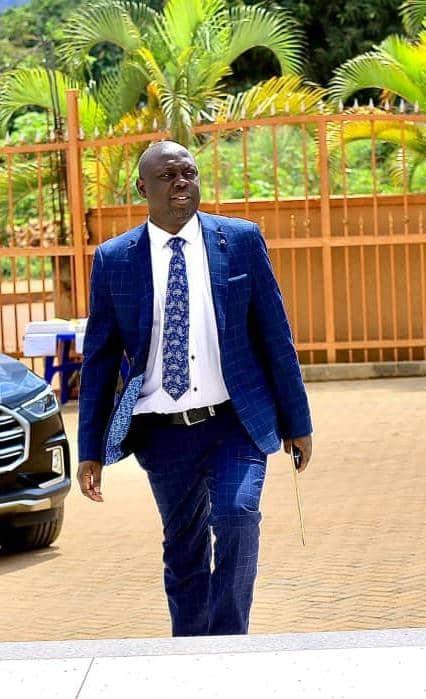
  • State House’s Hajji Farouk Kirunda Rolls Out Luuka District Leadership Symposium Ahead of Budget Cycle, RDC Kibwika Says Symposium, Not induction But Strategic Leadership Clinic

    State House’s Hajji Farouk Kirunda Rolls Out Luuka District Leadership Symposium Ahead of Budget Cycle, RDC Kibwika Says Symposium, Not induction But Strategic Leadership Clinic

    In a move aimed at fast-tracking service delivery and cohesion in one of Busoga’s newest political generations, Luuka Resident District Commissioner Michael Kibwika has summoned all newly elected leaders for a high-level symposium this Saturday, May 2, 2026.

    The one-day “Leadership Symposium” will be held at the Parish Council Hall, Kitwekyambogo from 9:00am to 4:00pm, according to an April 28th invitation letter signed by RDC Kibwika and seen by The Exposure Uganda (TEU).
    Who Is Invited?

    The RDC’s letter, addressed to “Hon MPs, LC5 Chairman newly elected, Councilors, CAO Luuka, all Heads of Department, all Chairpersons LC3 newly elected, all Parish Councilors newly elected,” says the symposium is organized by the Office of the Special Assistant to His Excellency in charge of Mobilization/Deputy Presidential Press Secretary, Hajji Farouk Kirunda.

    Copied in are the Deputy RDC, DPC Luuka, and DISO Luuka, signaling the security and governance weight attached to the meeting.

    Symposium Vs Induction: What Is the Difference?

    While the RDC’s letter does not list the “critical topical areas for service delivery” to be handled, TEU understands the symposium will tackle gaps often missed in standard inductions.

    What is a Symposium?

    A symposium is a focused, expert-led discussion where leaders interrogate specific problems and share solutions. Unlike an induction, which is a basic orientation on rules, laws, and office procedure, a symposium is strategic. It asks questions like: “Now that you are in office, how do we actually deliver?”

    Key Difference:  

    Induction: “This is your office, these are the laws, this is how council works.”

    Symposium: “These are the potholes, this is why budgets fail, this is how councilors and technical staff clash, let us fix it.

    Local government experts told TEU that symposia are increasingly used by State House to cure the “elected but clueless” syndrome that cripples service delivery in Year One of new councils.

    Expected Topics- TEU Analysis.

    Though not listed in the letter, TEU expects resource persons to handle:

    Proper planning and budgeting: Why many districts return money to Treasury amidst plenty of needs.

    Mandate of Local Government: LC5 vs CAO vs Council: Who does what? The eyes on and hands off phrase.

    Cohesion between politicians and technical staff: Ending the RDC/CAO/LC5 chronic wars.

    Role of the IGG: Accountability, not witch-hunt.

    Councilors as agents of socio-economic transformation: Beyond motions and choruses of ‘points of order’, or ‘points of information’ to markets, boreholes, schools and health centers and roads.

    Conflict-sensitive leadership: Keeping Luuka peaceful post-elections and avoid using your positions to pursuing personal vendettas.

    Spotlight: Hajji Farouk Kirunda State House Mobiliser.

    The symposium is being spearheaded by Hajji Farouk Kirunda, Special Assistant to the President in charge of Mobilization and Deputy Presidential Press Secretary.

    Known in Busoga and State House corridors as a “bridge-builder with zero drama,” Hajji Kirunda has quietly earned respect for taking presidential messages to the grassroots without the usual Kampala fanfare.

    His mobilization style: door-to-door, mosque/church-to-market, radio to bloggers and public engagements, among others has made him one of President Museveni’s most trusted link-men in Busoga sub-region.

    Sources say Kirunda’s office is rolling out similar symposia across Busoga to ensure the NRM’s 2026-2031 manifesto is, “understood in the village, not just launched in Kololo.”

    RDC Kibwika: Politician Turned Security Chief.

    The invitation bears the signature of a man who knows both politics and administration. Michael Kibwika is no stranger to local government trenches:

    Former Councilor, Busembatya Town Council for 10 years, former Vice Chairperson, Iganga District Local Government, RDC Busia, Buikwe, and Jinja before posting to Luuka.

    This rare blend, elected politician who became presidential representative, makes Kibwika uniquely placed to chair Luuka’s sensitive District Security Committee (DSC) while mentoring new leaders. His journey from council floor to security briefings means he understands both the politics of votes and the discipline of delivery.

    “RDC Kibwika does not just read intelligence briefs. He has contested, won, lost, and governed,” said a senior Luuka technocrat. “When he calls a symposium, it is not academic. It is practical.”

    Why This Matters.

    Luuka, carved from Iganga in 2010, still battles poor road network, health center stock-outs, and youth unemployment. With a fresh crop of LC3s, LC5, and parish councilors sworn in this year, the May 2nd symposium is State House’s earliest attempt to “immunize” them against the usual first-term paralysis.

    As one newly elected LC3 chairperson told TEU: “We campaigned on roads and water. But nobody told us how to write a workplan. If this symposium teaches us that, then Hajji Kirunda and RDC Kibwika will have saved us.”

    Event Details:  

    Date: Saturday, May 2, 2026  

    Time: 9:00am – 4:00pm  

    Venue: Parish Council Hall, Kitwekyambogo .

    Convenor: Office of Hajji Farouk Kirunda, State House.  


  • “Go Study How A Bulldozer Works, You Will Be Smashed The Same Way”-Batwala Vows To Flatten Blackmail, Job Cartels Like Anthills.

    “Nemo iudex in causa sua” -No one should be a judge in his own cause. That ancient rule of natural justice now hangs over Busoga Square where Jinja District LC5 Chairman Moses Batwala has broken a two-week silence with a blistering counter-offensive, branding the probe into his decade-old academic papers a “politically motivated witch-hunt” engineered by civil servants and defeated politicians who want a chairman they can “pocket.”

    Addressing journalists from his Busoga Square office, a defiant Batwala dismissed claims he was hiding from Uganda Police criminal summons, revealing he had been bedridden for nearly two weeks — a medical absence his adversaries twisted into allegations of flight.

    Batwala accuses what he calls ‘desperate and sadistic rivals’ of turning Tiktok and WhatsApp into a courtroom and themselves into judges, over academic papers he presented nearly 10 years ago.

    “The beauty of everything is that sickness is not an item for only one person called Batwala. At a certain point, even those celebrating and mocking my sick period will fall sick, God forbid,” Batwala charged.

    “Stop crucifying and convicting me on TikTok, WhatsApp, and Facebook. Stop bribing lousy radio presenters to blackmail me. My office address is known. If you have summons, bring them. My secretaries can receive and sign on my behalf. That is the standard, civilized way,” he dared.

    Go Study How A Bulldozer Works-Batwala’s Warning.

    Batwala doubled down on his nickname warning opponents to first understand what they are up against.

    “I am called The Bulldozer for a reason. My haters should go and study how a bulldozer works or operates. I vow to handle them the same way”, he said.

    For context how powerful is a bulldozer?

    In construction, a bulldozer is not a machine you negotiate with. It does not swerve for anthills, gossip or propaganda. It clears obstacles like trees, rocks, illegal structures by sheer weight, traction and a blade that does not ask permission. It moves forward, it flattens resistance, it clears what is in its path and levels ground for what is coming next.

    That is the image Batwala is invoking, that he will not debate his legitimacy on social media. He will roll over the ‘anthills’ of blackmail, the ‘rocks’ of paid accusers and the ‘illegal structures’ of job selling cartels. Then he will level the ground for his five-year mandate.

    “a bulldozer does not stop for noise, it stops when the job is done”, he said.

    “I am the Last NRM Bull Standing”-Batwala.

    Batwala maintains his troubles are payback for surviving the January 22 Local Government elections that became a political bloodbath for the ruling NRM in Busoga.

    While the NUP wave humbled powerful party bigwigs — including Hon. Alex Brandon Kintu aka _Omusayi Omuto, who lost to political novice and radio presenter Odwori John, commonly known as OJ — and swept out Hon. Moses Grace Balyeku, Hon. Nathan Samson Moses Igeme Nabeta, and Richard Mbazira, Batwala emerged as the rare NRM “bull” who held ground.

    “Many of them have remained with NRM flags in their sitting rooms while NUP candidates are hitching to be sworn in next month. I am the one they failed to eat. Now they want to finish me with paper wars,” Batwala told reporters.

    He alleges the complaint by “concerned citizen” Paul Mukova is a proxy war.

    Multiple sources in Jinja claim the cabal fighting Batwala comprises civil servants who want an LC5 chairman they can “pocket” — a pliable boss to facilitate the sale of jobs through compromised members of the District Service Commission.

    “They do not want a bulldozer. They want a puppet who will sign blank recruitment forms. I refused. Now they have opened GEF 20-08-2025,” Batwala said.

    The Paper Trail and the DPP’s Desk.

     Mukova’s petition to Buwenge Police alleges Batwala lacked A-Level or its equivalent when he was appointed Vice Chairperson in 2006 and when he contested LC5 in 2016 — a race won by Titus Kisambira, who later appointed Batwala his deputy.

    Mukova’s attorney wrote to the DPP: _ “…the police at Buwenge seems to have been compromised… seek for your immediate intervention.”

    On December 10, 2025, Resident Chief State Attorney Caroline Marion Acio ordered the file sent to the Regional DPP.

    The legal question: Under the Local Government Act, both chairperson and vice chairperson must have a minimum of A-Level or its equivalent. Records show Batwala sat UCE in 2017 and UACE in 2019, after his 2006 appointment and 2016 contest.

    Former District Chairman Lt(Rtd) Hannington Basekana admitted: “He (Batwala) did present some A-level papers in 2006, but I did not scrutinize the details… I was a loner in the Council, full of wars. I focused on service delivery.”

    Basekana added that councilors approved Batwala in minutes “not because his papers were clean, but because majority of councilors were against me.”

    “I Have Valid Papers Even Now”

    Batwala is unmoved. “The most important thing is that I have valid and genuine papers after doing fresh examinations. Whoever is running around is either idle and jobless or desperate and frustrated.”

    He insists the motive is clear: “They threatened to block my swearing-in with propaganda. They said I was in a coma after learning the ‘truth’ would deny me my 5-year tenure. All lies.”

    .A Pattern of Paper Casualties.

    Uganda’s political landscape is littered with leaders felled by academic integrity questions with a number of leaders being thrown out over the same matter by zealous opponents who usually use ‘concerned citizen’.

    The DPP’s complaint seeks “an investigation into the genuineness of the academic documents and qualifications of Batwala Moses between 2006–2016 in order to determine his eligibility to serve.”

    For now, the “Bulldozer” remains at Busoga Square, daring the system to follow procedure. “I survived the NUP wave. I will survive this paper wave. Because God is good — and the truth is stubborn.”

    The DPP, not digital mobs, will have the final word.

    EDITOR’S NOTE: This publication (The Exposure Uganda (TEU) verified that Moses Batwala holds authentic UCE 2017 and UACE 2019 certificates from UNEB.

    The dispute concerns academic documents presented between 2006 and 2016.


  • From Newsroom To Uganda Human Rights Commission: Rosemary Kemigisha Describes Journalists As Human Rights Defenders, Urges Duty Bearers To Protect Them.

    “When the microphone dies, democracy coughs,” Senior Human Rights Officer attached to the Uganda Human Rights Commission (UHRC) Ms. Rose Mary Kemigisha told a post‑election dialogue organized by Sensitive Uganda and the UHRC at the Source of the Nile Hotel in Jinja City.

    Now, several years when she covered Uganda’s contested polls, Kemigisha fondly called RMK or simply Kem by peers returned not with a pipette of ink but with a scalpel of principle, dissecting 15 January’s vote through the prism of Article 29: freedom to seek, receive and impart information.

    Ms. Kemigisha opened with election arithmetic: “Our country has just completed a critical cycle of elections, there are winners thumping chests, losers counting losses and crying foul, and petitions already in motion”.

    Her voice comes from the tense season she once had as a reporter for the state‑owned New Vision, during the era of William Pike—historically close to the then NRA rebel leader now President Gen (Rtd)Yoweri Kaguta Museveni who successfully battled Dr Apollo Milton Obote’s government.

    Those Pike‑era lessons in discipline, editorial ethical adherence, independence and verifying rough copy shaped her keynote’s cadence.

    Like they say “You cannot stop birds flying overhead, but you can stop them nesting in your hair”, Ms. Kemigisha’s butchered draft stressed that that what matters, now, is what happens after the contest especially for journalists who should leave no room for lazy ideas to roost.

    Her preamble set the tone for an address, veteran journalists like Rev Nelly Nelsons Otto who trades under the byline “Nelly Otto” and Moroto-based Joe Wacha later called, “real butchering”

    Addressing reporters, editors, security chiefs, and CSO representatives from Busoga and Bukedi (18 districts) after Uganda’s tense polls, Ms. Kemigisha unpacked a Reuters Institute snapshot.

    From the Reuters Institute interviews she cited six Ugandan journalists who were kept anonymous described January’s elections as the most restrictive stretch they had covered.

    The internet blackout dragged longer than 2016 or 2021, collapsing live updates; TV crews were forced to narrate scenes over the phone because video could not upload.

    Reporters who covered Kawempe North by-election and Mbale City said police confiscated cameras and threatened detention; two women said editors pulled them from field work, calling it “too risky.”

    Accreditation letters were revoked without explanation, forcing journalists to spend weeks in vetting queues. One freelancer described handing memory cards to a boda‑boda rider after confirming the rider knew four alternative routes in case of road‑blocks.

    Another spoke of “no safety, no story” becoming a newsroom rule: editors spiked a nighttime raid piece rather than risk a team.

    The blackout, she argued, “did not merely disrupt reporting; it entrenched impunity.” Police who once offered shelter now seized gear and beat reporters.

    Accreditation became a filter—journalists spent weeks in vetting queues only to be dropped without reason. The support scaffold of CSOs fell when they were suspended before voting day.

    “No one has the right to silence another… and no one should allow another to be silenced,” she said, quoting Article 29 back to the security chiefs in the room.Journalists, she insisted, are human rights defenders.

    The Reuters interviews bore proof: when a reporter in Kawempe was detained, colleagues reported the arrest so he did not disappear; rival radio stations met in backstreets to exchange interviews; editors who invoked the rule “no safety, no story” literally saved lives.

    Yet she admitted shadows, women passed over for field work, “envelope journalism” born of wages thinner than a newspaper margin, and media houses whose owners also sit in parliament.

    The Impunity Of Some Duty Bearers.

    She said the greatest threat to human rights observance is impunity, where a duty bearer knows that what they are doing is bad but does it all the same because they know there will not be accountability or consequences.

    Kemigisha said impunity is not abstract, it is the shrug before the assault and that it chokes rights faster than any law.

    In her expanded narrative, that victory rests on load‑bearing walls—safety for journalists, security posture that protects rather than pursues, and a civic humility that lets criticism live.

    Information, she reminded them, is power; power kept in daylight is power held to account.

    Those present noted Kemigisha still carries that newsroom darling’s calm, the contagious smile and unruffled demeanor that once made copy-tasters lean in rather than flinch.

    Media As Power, Not Ornament.

    In a plain-spoken segment of her address, Kemigisha told the dialogue attendees that information is the business of media and that information is power, reminding them that citizens who do not know their rights can not defend them and that watchdog scrutiny which is independent criticism of established power is how full citizenship breathes.

    When the press is free, she argued, everyone’s speech lifts and when it is muzzled, freedoms crumple together.

    On civic competence, vote by vote, she quoted the Commonwealth Election Broadcasting Guidelines stating that the media must convince people that politics is not a theatre, or sloganeering, it is their health, education, culture, security and future.

    In practice, she listed the beat, explain policies, profile candidates, decode procedures, reflect women, youth, PWDs, minorities and turn election noise into usable knowledge.

    Roles Beyond Headlines.

    The Senior Human Rights Officer also ran a checklist almost as a litany-educate and entertain, yes but also host public dialogue, expose rights abuses and violations, monitor state obligations, set the agenda, amplify the voiceless, mirror society’s progress and rot and do so all within the ethical code. “Professionalism is not garnish, it is duty”, she stressed.

    Journalists As Defenders.

    Leaning forward, Kemigisha called reporters ‘human rights defenders’ who need special protection. This means reporters do the same front-line work as any rights defender like exposing abuses, documenting violations and holding power accountable, often at personal risk.

    “They speak for others at personal risk, attacks on them are attacks on the public’s right to know”, she said.

    Election Time Table.

    Linking back to the January’s chaos, boda-boda couriers, accreditation revoked, cameras and recorders seized, she spelled out expectations-vote yourself, provide accurate, timely coverage at every level, bridge electorate, parties and the Justice Simon Byabakama-led Electoral Commission, promote peace while deescalating tension, reflect diversity, and hold power accountable.

    Above all stay alive and safe not safety because no story is bigger than your life-and for rosemary Kemigisha this is not a footnote but the first line in the code.

    Kemigisha framed media freedom as Article 29 blood flow— “the right to seek, receive and impart information…so citizens can know their rights, defend them and vote.”

    She warned that attacks on press freedom cascade: “No one has the right to silence another… and no one should allow another to be silenced.” Journalists, she said, were “human rights defenders” who kept the rule “no safety, no story” alive by moving in groups, sharing footage across rival stations and, when a reporter was detained, bearing witness so he did not disappear.

    Her address, in dialogue parlance, was less post‑mortem than field manual for 2026—and a reminder that “information is power, and power kept in daylight is power held to account.”

    As Kemigisha delivered her keynote address, Farouk Nyende-UHRC’s Jinja Regional office head and Programme Manager Rebecca Nanyonjo beamed from the front and back row.

    RMK concluded with the Commission Chair (Mariam Fauzat Wangadya’s) line as benediction: an election “where every Ugandan feels seen and heard is already a victory, even before results are announced.”

    Participants said the senior officer’s authoritative, incisive address was a proud moment for the commission-substance over slogans, a living reminder that UHRC posts are held by people who know why they are there.

  • From Bugembe To Jinja City: Longest Serving Soft-spoken Sozi Juma’s Quiet Bet Will Beat Backroom Political Arithmetic At Town Hall.

    While national attention fixates on who will wield the gavel in the 12th Parliament, quiet maneuvers are shaping Jinja City Council’s next leadership. Bernard Mbayo’s speakership expires with the outgoing term, and veterans are already positioning themselves for the chamber’s top job.

    Among them, Sozi Juma—councilor for Persons With Disabilities (PWD)—has stepped forward. Fresh from re-election for another five years, Juma says experience and continuity put him in the frame. “I’ve sat through budgets, bylaws and heated debates; the Council needs a speaker who knows the Act and respects members,” he told reporters this week.

    Sozi Juma’s pitch: consultation, not backroom deals.

    Sozi Juma’s speakership bid rests on a résumé few in the incoming chamber can match. He cut his teeth at Bugembe Town Council for two terms before joining Jinja City Council in 2021; re-election this year makes him one of Jinja’s longest-serving voices.

    He went to Masese Co-Educational Primary, then Jinja Secondary—the mighty school, locals still call it—for O and A levels. He holds a diploma in social sciences and a bachelor’s in counselling from Kampala University. Colleagues say the training shows: he listens before he gavels.

    If elected speaker, Juma’s first promise is plain-spoken in the best way: bridge politicians and the technical wing.

    The mayor’s team drafts plans; engineers, education officials led by Paul Baliraine Mugajjo and health officers led by Dr Frederick Isabirye, among others implement them.

    Too often councilors and technocrats talk past each other, and services stall. “A chamber is not a workshop nor a deal room, consult, clarify, then decide—that’s how PDM and Emyooga and other services will reach parishes without drama”, he says.

    On fights, Sozi Juma says he prefers dialogue to confrontation and backroom arithmetic. He says he is explicit about what he calls the chamber’s disease: councilors who must be paid to pass budgets or approve projects.

    “We will not run a deal-making house,” Juma told supporters after Tuesday’s Gulume briefing. “Argue with files, not envelopes.”


    None of this is abstract for him. Husband to one wife, father to four, and a believer who names God as Allah, Sozi Juma describes fairness as habit, not slogan—learned in Bugembe, tested in Jinja, shaped by counselling.

    Veterans like the line; first-timers hear a rulebook. In a council under pressure to deliver drains, stalls and order, he’s betting that procedure plus patience will beat charisma and cash.


    Sozi Juma would likely have faced stiff competition from councilor-elect Julius Kayira—known as “Nabambula”—whose grassroots following and dimes makes him a natural chamber operator.

    But Kayira, who subscribes to the opposition NUP is currently on remand at Kirinya Prison over alleged criminal trespass, a case pursued by business figure Patel Magan that has muted his speakership prospects.

    Kayira’s absence recalibrates the race; Juma’s bid, endorsed quietly by some veterans, is the first public flag in what could be Jinja’s most consequential speakership race in years.

    The contest matters because RCC Richard Gulume’s Tuesday reset leaned heavily on order under Cap 243, joint oversight of PDM and Emyooga, and bylaws over banners.

    Whoever succeeds Bernard Mbayo will referee exactly that: a chamber with first-time, mayors-elect and councilors-elect, to be sworn in late May, under pressure to turn trillions in parish funds into visible services.

    Names of other contenders have not been formally declared, but councilors expect lobbying in division caucuses before nominations.

    For Sozi Juma, the disability constituency he represents sharpens his pitch: “service delivery is not a slogan—it is ramps, clinics, lights,” he said. Supporters point to his calm mediation during the 2022 market fees standoff as proof of temperament.

    Mbayo, who held the speakership through fractious terms, leaves a mixed record—praised for tightening order papers, criticized when plenary spilled into trivia.

    The next speaker must memorize Gulume’s brief: keep councilors-elect inside the room, bind council to the Local Governments Act and measure leadership by drains, not decibels.

    Roles of A Council Speaker.

    Under Uganda’s Local Governments Act (Cap 243), a city council speaker’s core functions are: preside at all council meetings and maintain order, enforcing rules of procedure much like the Speaker of Parliament.

    He convenes meetings when needed; no business is transacted before the speaker is elected.

    Also oversees, on council’s behalf—the performance of government officers delivering services in the city and monitor implementation of projects.

    He acts as communication channel between government, the council, and residents.

    Generally, monitor administration in the city and report to council (state of affairs at least once in six months).

    He also monitors projects and activities by government, local government, and NGOs in the area and steps in to perform the chairperson’s (Mayor’s) functions if both chairperson and vice chairperson are unable, after taking oath.

    The speaker presides over election/removal of the deputy speaker; protect impartiality—speaker is full-time, barred from offices of profit.

    How Speaker Is Elected.

    Councilors nominate candidates at the first council meeting, then vote—often by secret ballot. The winner needs a simple majority; one vote per member and no debate before the poll.

    That person takes oath, becomes a full-time presiding officer, and can’t hold other offices of profit.

    Commentators say the speakership is not decided in a vacuum. In Jinja City, stakeholders like Mayor Al Hajji Abdulhafid Nagaya, brother to the Deputy RCC in charge of Jinja Northern Division Amis Nagaya Kiganira, the Town Clerk Geoffrey Kisseka and department heads will have to care whether the incoming Speaker is the type who will help technocrats implement rather than ambush or arm-twist them.

    Jinja RCC, the security team and the business community as well as investors also have clear interest in the person going to preside over council business. So Sozi Juma must be in a position to read the map by converting his nice words into a coalition that holds when ballots open.


  • Gulume Flags Off Jinja City Team: Unity First, Service Delivery Test Set For Incoming Leaders 2026-31.

    Jinja RCC Richard Gulume Balyainho put it bluntly at Tuesday’s meeting: the city will not be rebuilt or guided by hoarse slogans from dusty campaign trails and market corners but by agreements forged in the Council Chambers.

    He was echoing—without quoting—the German-American political thinker Hannah Arendt (1906–1975), who argued that “power springs up between people when they act together and disappears as soon as they disperse.”

    Gulume’s point lands the same way: Jinja’s MPs-elect, Mayor-elect, division mayors-elect and councilors-elect will only move services if they keep acting together inside the room, not outside it.

    The MPs-elect Hon Dr Timothy Lusala Batuwa (South West), Hon Paul Mwiru (South East) and Hussein Muyonjo aka ‘Swengere’ plus Sarah Lwansasula (Jinja City Woman) were conspicuously absent from the otherwise well-attended meeting, a gap that has left some wondering whether their cooperation will hold once they are sworn in.

    The convener Gulume, called the gathering the first of its kind in years and framed it a reset: campaign slogans belong to the trail not the chamber. The common denominator, he said, is service.

    The RCC warned the mostly first-time leaders yet to be sworn in towards the last week of May against over-expectation, reminding them that leadership is a calling, not a market and that focus should stay on the wananchi not rewards.

    He challenged them to drive poverty out of their own pockets first—run a shop, a garden, something that pays—so their preaching on wealth creation isn’t parody.

    It’s counter-productive, he said, for miserable-looking leaders to lecture on markets when they themselves look like case studies

    Gulume added that a core duty for the new leaders is to monitor government programmes, the Parish Development Model (PDM), Emyooga, and similar schemes—so city residents actually see a way out of poverty, not just posters.

    PDM is Uganda’s latest grassroots push where government cash and extension is routed through the parish, organized in savings/enterprise groups, aiming to move households from subsistence into the money economy via coffee, poultry, craft or trade, among others. It is counted on as the flagship poverty-leap programme the RCC wants councilors to promote and monitor.

    Emyooga runs alongside PDM-presidential initiative for specialized groups like artisans, welders, boda-boda, women’s enterprises among others.

    He pressed each member to keep the Local Government Act at hand as ‘your political/leadership bible or Quran’ to stay on the lawful side of whatever decisions they make.

    The Local Governments Act (Cap 243) is Uganda’s decentralization statute. Key amendments include the 2017 Act-adding speakers/deputy speakers for lower councils, tightening removal procedures and 2020 instruments updating schedules.

    The law spells out councils’ political/legislative powers, duties of chairpersons, budgets, bylaws/ordinances and fiscal splits of local revenue.

    Gulume’s advice tracks its core-follow the Act’s procedures, keep politics subordinates to service and use bylaws or ordinances, not slogans as your guide.

    Some of the veteran councilors like Mzee John Muwema, Sozi Juma, Maria Kasasa, and Mama Joy Balyeku, among others have welcomed the move calling it a good gesture that will help the new leaders to steer the council to the right path.

  • “42 of 44” As Vibes Don’t Lie: Jinja’s NRM Camp Calls AAA’s Busoga Payback and Walyomu Switches the Song From Mama to Mulamu.

    Like they say if you would build something solid, begin where people are gathered, Jinja Safari Hotel on Monday 2nd March, 2026 took on the feel of a campaign stage.

    A self-styled group of NRM enthusiasts “Anita Among team”—elders, youth organizers and local traders—waved posters of the incumbent Speaker and President Museveni while telling reporters they have already persuaded 42 out of 44 MPs-elect to back Rt Hon Annette Among for a second term alongside her deputy, Rt Hon Thomas Tayebwa.

    The roll call read like a local directory: veteran NRM leader and mobiliser Mzee Hajji Haruna Ntuyo (chairperson, elderly), veteran NRM honcho Hajji Badru Watongola, sports broadcaster Mayengo Geoffrey  who subscribes to the Gen Muhoozi Kainerugaba(CDF)-founded PLU), Byakika Sox, Edith Tukahirwa—“Mama Lumonde,” Busoga’s Irish-potato supplier—Allan Zabwe (NRM Youth), Ntalo Shaban, Namayo Bruno, Rakib Romanz, Arafat Sowedi, Kinene Fahad (“Mr. Cash”), Babirye Ruth and Kanyago Irene (“Small” despite her frame).

    Edith Tukahirwa said Among’s dedication to the NRM is matched by her passion for women, pledging to expand their empowerment if returned Speaker.

    Former Jinja district youth councilor Ntuyo Mohammed (Gen Sec NRM), made it clear that the Speakership position is a matter of national dimension and interest urging some disgruntled politicians to style up and ‘go with the sail or the sail will go with them’ meaning they should adjust to the popular forces they cannot control, rather than fight them and get dragged away.

    In other words, Mohammed Ntuyo’s message is clear: work with the prevailing momentum, or else it will carry you where you did not plan to go.

    Hajji Badru Watongola who has a bruising history with Kadaga said Among’s speakership brings hope to Busoga because she works to unite people rather than preside over a rag-tag Busoga.

    When asked why they are not backing Hon Persis Namuganza the ‘daughter of the soil’ in Busoga, the group says the speakership should not be reduced to sectarian math: Busoga has held it for years with support from other regions, so now it is payback time.

    They add that Among whom they kept on referring to as ‘Triple A’(AAA), personally reached out to local mobilisers to build support, while Namuganza has not.

    They say that humility and ground-level approach has earned their loyalty.

    They framed Among as the NRM party’s unifying beat, praising her mobilization muscle and national recognition, just as challenge drums grow louder.

    As everyone is aware, Hon Norbert Mao, the Justice and Constitutional Affairs Minister and Pece–Laroo MP-elect, is pitching a reformist tempo; the MP Bukono State Minister Hon Princess Persis Namuganza offers an executive hook.

    Hon Mao is seen by some as a cleaner alternative, a lawyer with long experience-Makerere University guild president, MP and Gulu District Chairman, hence (‘Chairman’).

    People and supporters point to his scandal-free record, sober temperament and reluctance to personalize fights as qualities befitting Speaker.

    But Among’s Jinja camp calls Mao an ‘outsider’ not NRM and says the western sanctions fallout stems from Among’s vocal opposition to foreign practices they view as incompatible with Ugandan values.

    In their argument, Among is a clean-hearted, well-meaning leader caught by circumstance.

    In Ugandan street proverb style, the Jinja camp warns: “Vibes do not lie; dancers do,” urging MPs to keep the speakership playlist steady.

    Most notable was the mention of Hon Moses Muwanika Walyomu, the Kagoma County veteran long loyal to Rt Hon Rebecca Alitwala Kadaga, Among’s well-known rival.

    “He has seen the light,” organizers said, presenting him as their latest catch, music is how a crowded room learns to breathe together,” a mobiliser Geoffrey Mayengo remarked.

    As Florentine Renaissance diplomat, writer and political thinker Nicolo Machiavelli (1469-1527) observed, “fortune favors the adaptable, but voters remember names”, Hon Walyomu stands accused of borrowing Kadaga’s name to win office, then pivoting to Among for favors in the 2026-31 term, a switch critics say shows how quickly Ugandan loyalty can reroute when the speakership changes address.

    For Among’s choir, the gamble is that familiarity and fundraising reach will drown out new riffs. For rivals, the bet is that parliament’s dance floor is ready for a different rhythm when the House chooses its next speaker.

    The group, who’s each of the members wanted to be heard on the reporters’ microphones or seen on cameras, poured all its vibe into the scrum with chants, laughter, placards thrust forward turning the press huddle into a stage and making sure Jinja’s energy level was unmissable.

    Ugandans continue to watch the space with nervous curiosity, waiting to see how the race unfolds and who carries it over the line. The question humming beneath the chants is simple: does the winner take all, or does the winner win for all.

    For now, Jinja’s and in deed Busoga’s microphone and placards have chosen their chorus-Annette Anita Among, Triple A, Museveni Oyee-but the ultimate test lies beyond the slogans. If the Speakership is to bind Busoga and the wider map, the victor’s job will be to turn rally vibe into a thread that holds, not a rope that splits.

    Editorial- TEU.

    As The Exposure Uganda (TEU)ends its notebook on Jinja, the facts sit plain: camps have chosen, chants have named their favorite, and Busoga’s ‘payback’ argument has squared off against Mao’s outsider resume and Namuganza’ quiet candidacy.

    What is missing, still, is a speakership that feels less like a regional dividend and more like a house rule everyone’s trust.

    We expose the slogans, the outreach, the grievances and the sanctions-bruised narrative. You decide whether winner-take-all politics serves parliament or whether, this time, winner wins for all.

  • MADISON IN BUSOGA: Eyes and Ears on Tuesday as RCC Gulume Tells New Jinja City Leaders “Serve, Don’t Slogan”.

    “The highest office is to serve,” the 4th US President and a Founding Father, often called the ‘Father of the Constitution’ for drafting much of it and the Bill of Rights, James Madison (1751-1836) wrote.

    In writing this, James Madison meant that public office is not about status or personal gain but about duty to the people, serving citizens, protecting liberty and the common good.

    In Madison’s republican view, the ‘highest’ office is the one exercised with self-restraint and responsibility to constituents, not self-interest.

    This is a principle Jinja RCC Richard Gulume Balyainho now leans on as he convenes Jinja’s newly elected leaders meeting next week. Gulume says it’s not about sloganeering “People Power, Our Power”, or “NRM Oyee” but about doing the work Busoga’s ‘sitting room’ demands.

    “Next week on Tuesday 3rd March, 2026, I will have a discussion with all the elected leaders from Jinja City where we shall also have an interface with key technical and security heads of department to get to know one another as we wait for the swearing in around May…” he announced.

    The city’s January 15 general elections surprise — every MP seat went to NUP, but the mayor’s chair was narrowly snatched by NRM’s “yellow bus,” in the name of Hajji Abdul-Hafidh Nagaya and the party also secured more councilor slots than NUP, leaving the opposition a handful of seats rather than a sweep.

    MPs-elect: Hon Dr Timothy Lusala Batuwa (Jinja South West), Hon Paul Mwiru (Jinja South East), Hussein Muyonjoa alias “Swengere” (Jinja North) and Woman MP Sarah Lwasansa) Jinja City Woman MP).

    NRM’s Hajji Abdul-Hafidh Nagaya narrowly won Jinja City mayor, while NUP took the divisions: Simon Kasirye (South) and Ayub Wabika (North).

    Asked why Jinja City was painted NUP red, Gulume summed it up with an old saying: the people look like their leaders, they get the leaders they deserve. He then listed intrigue, cliques, jealousy and infighting among NRM bosses as the real reasons behind the party’s embarrassing wipe-out.

    Gulume says sitting and lamenting will not help, adding it is time to wake up, pick up courage and work closely with the crop of elected leaders to guide the wananchi out of poverty.

    Gulume casts the retreat as a service compact: pragmatic overlap with the NRM manifesto and central transfers are necessary because opposition MPs control no budget line.

    Gulume’s draft notes eavesdropped by The Exposure Uganda (TEU), a revolutionary digital news platform put education, health and roads at the top of the delivery plan for the tourism-and-trade hub, once the EAC’s industrial town.

    He says Jinja city currently facing challenges with its roads, stands to benefit from about 50 km of road renovations this season under different central government interventions.

    The most irritating example is the Dunlop-Masese Road which runs past Jinja’s biggest taxpayers, firms like Nile Agro Industries, Sunbelt Textiles Company, Keswhala Group, Madhavani Steel, Tip Top Bread Industry and Giant Uganda Ltd, among others sending billions of shillings a year to the national coffers, yet is riddled with potholes so deep they now look like basins fit for fish ponds.

    Residents, especially opposition leaders and supporters have long seized on the road’s sorry state to campaign against the ruling NRM.

    Gulume calls Jinja “the sitting room of Busoga”-if the city catches a cough, he says, the whole sub region sneezes. In his framing, Jinja City must model leadership so the flu does not spread.


    The RCC uses that metaphor to justify the meeting itself, Jinja’s role as Busoga’s ‘living room’, meaning the technical wing and political leadership need a close healthy working relationship, otherwise the whole sub region feels the chill.

    “This is not time for blame games why NRM lost the key slots, who betrayed whom but for work…”, Gulume says.

    Some of NUP attendees we talked to say they will come to “protect the mandate, not surrender oversight,” aware of Polish-German Marxist revolutionary theorist Rosa Luxemburg’s warning that “who does not move, does not notice his chains.”

    With the NRM mayor and a council majority sharing the table, Gulume’s belief is that Madison’s idea of serving can outweigh party arithmetic a clean and litter-free city, well-lit city and a healthy and prosperous population.

    The RCC also thanked the outgoing Jinja City leaders saying they had been cooperative with stakeholders, including his office.

    Being in opposition, he counsels, should not be a license to oppose everything or pick fights which only undermines growth. He hopes the incoming leaders will do likewise and work together for the community.

    The veteran mobiliser styled as ‘Super RCC/RDC’ having worked, supported, defended and promoted the NRM and President Yoweri Museveni also uses the occasion to congratulate Ugandans for massively voting back President Museveni.

    “The more than 71%obtained by our candidate is a clear sign and vote of confidence in NRM and President Museveni to continue steering the nation to greater heights…”, he said.

    Conclusion.

    The test, then, is not loyalty cards or chants but deliveries: classrooms with teachers present every week, drugs on health-centers shelves with health workers to deliver, roads that drain before dark, streets well-lit, crime-free city with no mountains of foul-smelling garbage and others.

    If the Tuesday hand-shake settles into quarterly reviews with data, not flowery speeches and if the opposition and NRM councilors can push without obstructing, Jinja City could reset Busoga’s tone before the real swearing-in begins.

  • FDC’s Kirya Wanzala’s 100-Day Plan: A New Era of Pragmatic Leadership-Separating Politics From Development In Butembe County.

    To some individuals, success is just around the corner waiting to be seized, while for others it is a long and winding road paved with relentless pursuit and unwavering dedication that requires perseverance and grit.

    As the old adage goes “when one door closes, another opens”, but it is the ones who knock persistently like Grace Paddy Kirya Wanzala, the MP-elect for Butembe County in Jinja district, who ultimately reap the rewards of their labour.

    This mantra has been Kirya Wanzala’s guiding principle for over two decades.

    Despite facing repeated setbacks and heartbreaks, Kirya Wanzala refused to let disappointment define him. Instead, he channeled his energy into building a reputation for empathy, kindness, and community service.

    His perseverance finally paid off when he emerged victorious in the January 15 parliamentary elections on the FDC ticket, winning the hearts of the Butembe County residents.

    Even media personalities, particularly broadcasters who previously dismissed him as a serious news source or news maker are now clamoring to host him on their radio talk shows.


    Meanwhile fellow politicians who once wrote him off as a perennial loser are now scrambling to get his phone number not only to offer congratulations but also to wish him well and pledge support, promising to work with him in the days and years ahead.

    As Wanzala’s victory continues to resonate across the district and region, some of his closest friends and allies are speaking out about his journey to another political success. “…we have seen him go through thick and thin, when he was struggling to seek political office, many of those who are now calling him are fair-weather friends not true ones…”, said a one Ronald Isiko of Busedde sub county.

    Wanzala himself says, “they are only around when the sun is shining, I have been in this journey for 20 years, and I have seen who my true friends, some saw me as a vulnerable target…”

    As he prepares to take office, Wanzala is set to draw inspiration from the wisdom of two of America’s most iconic presidents Franklin Delano Roosevelt (1882-1945), who famously said, “The only thing we have to fear is fear itself’, and Theodoore Roosevelt (1858-1919) who embodied the spirit of perseverance and determination with his mantra “do what you can with what you have, where you are”.

    Like the 26th President of the US (Theodore Roosevelt), Kirya Wanzala’s journey to parliament has been marked by grit, resilience and a commitment nt to public service

    With a clear vision for his constituency and a determination to make a meaningful impact, Wanzala is poised to make the most of his first 100 days in office.

    In an exclusive interview with The Exposure Uganda (TEU), a revolutionary digital news platform, Kirya Wanzala shares his plans to identify key allies in Parliament, push for crucial legislative issues, and deliver tangible results for his constituents.

    “…within the first 100 days I should have identified a team that is should cooperate with in terms of caucus so that if there is any policy related or legislation brought before the parliament we can work as a team on how to contribute accordingly…”, he remarks.

    The FDC diehard also promises to organize a join thanksgiving/victory service where all MPs, religious and other stakeholders from Busoga will be invited as a show of solidarity that they are ready and willing to work for the sub region which boasts of 4.4 million people.

    “…by so doing we as MPs from Busoga will kick start a teaming programme which will eventually help us identify socio economic issues or gaps in our respective constituencies and districts and jointly brainstorm on how to mitigate the challengers therein…”, he explains.

    Kirya Wanzala promises to use the funds usually allocated to new MPs by Parliament for personal SUVs and wardrobe improvement to instead procure a coaster to ease transport in Kakira and constituency rather than the useless ambulances being paraded by most MPs.

    The workers of Kakira earn very low wages and they always get challenges when it comes to transport especially when going for social ceremonies like marriages and funerals.

    Information available indicate that nearly all the ambulances donated by politicians, specifically the MPs with their portraits or branding are not fully equipped or staffed to provide adequate emergency care.

    The branding of ambulances with politicians’ portraits are seen by most people as a form of self-promotion rather than a genuine attempt to improve healthcare services.

    Most of the ambulances donated by MPs countrywide do not meet the required standard and to make matters worse the portraits of the donor MPs are always splashed on them, something health experts say dilute the purpose of ambulances.

    “… I already have a heavy-duty hybrid Toyota Land Cruiser, so there is no need for a new vehicle or funds to upgrade my wardrobe which I can comfortable afford without getting assistance from parliament…’the MP-elect says.

    Quoting Hellen Keller (1880-1968), a celebrated American author, disability rights advocate and lecturer who said “alone we can do so little, together we can do so much…”, Kirya Wanzala known for his procurement and audit expertise says he will always adopt the management by consultation phrase to execute his duties.

    Basing on this principle and being a smart lobbyist and networker, Kirya Wanzala promises to lobby the Ministry of Transport and Works to secure some road equipment like graders and wheel loaders currently gathering dust and rust in workshops to work on some roads.

    “…Being an opposition politician does not mean I can not engage or relate with the sitting government, after all our target is about service delivery to the citizens of Uganda beyond my personal ego or interests…”, Kirya Wanzala says.

    This is a departure from the usual position taken by most opposition political players who mistakenly think and believe they should have nothing to do with the ruling party although, paradoxically they also draw their emoluments from the government.

    Kirya Wanzala also promises to tackle the chronic problem which has persisted in Butembe but specifically in Kakira where rival supporters of former candidates Shaban Okumu and Charles Sande Kabule on one hand and NRM’s Jacob Kabondo.

    “…I have already started getting calls from rival supporters asking me to devise ways of forging unity and reconciliation to Kakira where for months or years people have lived a hide and seek life…”, he says.

    Kirya Wanzala has also reiterated his commitment to separating politics from development, signaling his willingness to work with the ruling NRM government under President Yoweri Museveni.

    This stance has earned him praise from some quarters with many describing him as a pragmatic leader who prioritizes development over partisan politics. Commentators have contrasted his approach with that of some opposition politicians who they say are more focused on grandstanding and publicity stunts than on delivering tangible results for their constituents.

    A better devil to work with is how some have described Kirya Wanzala suggesting that his pragmatic approach is likely to yield more benefits for his constituents than the adversarial politics of some opponents.

    With a clear vision for his constituency and a determination to make a difference, Kirya Wanzala is set to make the most of his first 100 days in office. By working with key allies in Parliament and in Government, identifying socio-economic issues and lobbying for crucial legislative issues, Kirya Wanzala aims to deliver results that will benefit the people of Butembe Constituency whose past two MPs performed dismally.

  • Buikwe Election Disputes Pile UP: NRM’s Badru Kabuye, NUP’s Nabatanzi Take Election Disputes to Court, Seek Nullification of Results.

    Like they often say “the process is just as important as the outcome…” the National Resistance Movement (NRM) flagbearer for the Njeru Municipality Member of Parliament seat, Badru Kabuye Mpoza, has rejected the results of the recent parliamentary elections, citing glaring evidence of irregularities, illegalities, and malpractices.

    Kabuye, who garnered 13,003 votes, was reportedly defeated by Musanje Moses of the National Unity Platform (NUP), who garnered 18,665 votes and was declared the winner by the Buikwe District Returning Officer, Kagona Moses.

    Allegations of Electoral Malpractices.

    In a press conference held at the Jinja City based Safari Hotel, Kabuye expressed his disappointment and frustration with the electoral process, stating that the will of the people of Njeru Municipality had been circumvented by a handful of selfish and insecure politicians.

    He accused a prominent politician of conspiring to frustrate his victory, alleging that the individual in question does not want any person to rise up from within the NRM party, thereby preventing President Yoweri Museveni from identifying rising stars.

    It is worth noting that Kabuye’s claims of being targeted due to his potential to shine in politics resonate with the experiences of many individuals who have felt overshadowed in the past.

    Interestingly, Kabuye’s accusations evoke the instinctual behavior of male ducks who often identify and eliminate younger rivals to maintain dominance.

    Similarly, in the cutthroat world of Ugandan politics, it is not uncommon for established figures to feel threatened by emerging talents like Kabuye.

    Commentators are asking an-all important question whether Kabuye’s ambition will be derailed by the politics of survival or he will successfully navigate the complex web of alliance and rivalries to achieve his goal.

    Legal Action.

    Kabuye announced that his team of lawyers is gathering evidence to challenge the election results in court. He expressed confidence that the High Court would overturn the election results in his favor, given the alleged irregularities in the electoral process. Kabuye’s determination to seek legal recourse has been echoed by his supporters, who are calling for a transparent and fair investigation into the electoral process.

    Election Disputes and the Courts.

    Election disputes are a common feature of Ugandan politics, and the courts have often been called upon to resolve these disputes.

    The judiciary has a crucial role to play in ensuring that the electoral process is fair, transparent, and in accordance with the law. In recent years, the courts have demonstrated a willingness to intervene in electoral disputes, and their decisions have had significant implications for the outcome of elections.

    Election Results.

    The results of the Njeru Municipality parliamentary elections are as follows:

    – Musanje Moses (NUP) – 18,665 votes

    – Badru Kabuye Mpoza (NRM) – 13,003 votes

    – Kalema Caesar (Independent) – 2,472 votes

    – Ismail Kimwero Bumali (Independent) – 1,353 votes

    – Lwanga Jimmy (Independent) – 1,201 votes

    – Musoke Paul Sebulime (Independent) – 1,196 votes

    – Njaka Hassan (Independent) – 719 votes

    CamScanner 19-01-2026 15.00

    – Muyombya Richard (FDC) – 573 votes

    – Magala Isaac Nelson (Independent) – 89 votes.

    Uganda’s courts are bracing for a surge in election disputes with hundreds expected at the constituency level. This anticipation comes on the heels of the presidential and parliamentary election.

    Implications.

    The outcome of this dispute is likely to have significant implications for the Njeru Municipality and the wider political landscape. The case will be closely watched by political analysts, lawyers, and the general public, as it may set a precedent for future electoral disputes.

    The courts will have to carefully consider the evidence presented and make a determination based on the law, ensuring that justice is served and the integrity of the electoral process is upheld.

    In a related development, Faridah Nabatanzi the NUP candidate for the Buikwe District Woman MP seat is contesting the victory of Hon Diana Mutasingwa the incumbent and minister of State in the Office of the Vice President and NRM candidate.

    Nabatanzi alleges that her victory was stolen through outright broad day robbery and has already instructed her lawyers to challenge the results.

    In a phone interview, Nabatanzi stated that her lawyers are already working on the ground to dispute the election outcome, although she did not provide further details.

    This development marks the second time Diana Mutasingwa faces legal challenges over her electoral victory. In 2021, her main challenger Resty Nakapachu a broadcaster in Jinja City threatened to contest the results.

    However, the matter was settled out of court and in private after Diana Mutasingwa and her team extended an olive branch to Nakapachu.

    Following this, Nakapachu opted not to run against Mutasingwa in the just concluded parliamentary elections.

  • Time Is Up-The Bulldozer’s Demolition Notice: Jinja Wants A Change- Abdallah Suta’s Candidacy Gains Momentum As Batwala’s Popularity Wanes.

    As the Local Government elections draw near, residents of Jinja district are rallying behind Abdallah Suta to unseat the incumbent LC5 chairman, Moses Batwala.

    The move is seen as a vote of no confidence in Batwala’s leadership, with many citing his abrasive and confrontational style as a major turn-off. It seems that Batwala has forgotten that with great power comes great responsibility, and his actions have fallen short of the expectations of the people he is supposed to serve.

    The just concluded parliamentary elections on January 15, which saw the ousting of several high-profile politicians, including cabinet ministers, have emboldened Jinja residents to demand change.

    The election of Peace Tibyaze as the Jinja District Woman MP on the NRM ticket has also energized the electorate to rally behind Suta apparently to politically revenge against Batwala.

    In a stunning upset, Peace Tibyaze the daughter of Mzee Francis Samanya, a sugarcane grower from Busedde sub county has shattered the mold of Jinja’s toxic politics, marked by blackmail, clique formation and intrigue to emerge victorious in a fiercely contested election.

    Tibyaze’s message of peace (as the name suggests) and unity aligned with the people who seem eager for a new era of leadership in the district where they call their only home.

    A Leadership Crisis.

    Residents have accused Batwala of failing to deliver on his campaign promises, including the completion of the district headquarters. The project, which was started during the reign of former LC5 chairman Titus Kisambira, has stalled, and Batwala is now asking for votes to complete it.

    “…It’s time to vote in a person of integrity, a true leader as opposed to a manipulator and a populist who uses sentiments and drama to appear to be working,” said Paul Mukova, a resident of Buwenge Town Council.

    The Bulldozer Metaphor.

    Batwala’s self-proclaimed moniker as a “bulldozer” has come back to haunt him. Many residents are now demanding that he step aside and make way for a more polished leader like Abdallah Suta, who they believe can bring about positive change.

    “…Bulldozers are meant for rough terrain, and that’s exactly what Batwala is good at – fighting and using propaganda and populism to confuse the populace…,” said a senior resident.

    He added, “…We need a leader who can drive the district forward with finesse and sophistication, not someone who is stuck in the rough….”

    Former Speaker Speaks Out.

    Former Jinja District speaker and a seasoned politician with a strong track record Michael Nyende Musana has also joined the chorus of critics calling for Batwala’s ouster.

    Musana, who served as Speaker when Batwala was the Vice chairperson says he is ashamed to be associated with Batwala’s leadership style and is determined to ensure that the “bulldozer” is put in its right place.

    “…I am always ashamed to introduce myself as a resident under Batwala’s leadership, he is a bulldozer who is more interested in fighting and causing chaos than in serving the people. It’s time for a change, and I’m determined to see Batwala out of office…”

    Allegations of Corruption.

    The alleged sale of jobs in the district has also sparked outrage, with parents and guardians claiming they are being forced to sell assets to secure employment. Batwala has denied the allegations, but the issue remains a major concern for residents.

    “…We want a new leader who will restore peace and harmony in the district, where the political leaders work together with the technical wing…,” said Jacob Batambuze, a resident of Buwenge Town Council.