Category: Editors Choice

  • “Entering God’s Rest in a Restless World”: Archbishop-Elect Prof. Bagambaki Mugume Richard Calls a Weary Generation to Build from Rest, Not Burnout Ahead of FFEWF Uganda Consecration.

    As news outlets flash headlines of bombs, deaths, earthquakes, political coups, and economic collapse, Ecclesiastical Patriarch Archbishop-Elect Professor Mugume Bagambaki Richard has delivered a word for a generation that is simply tired.

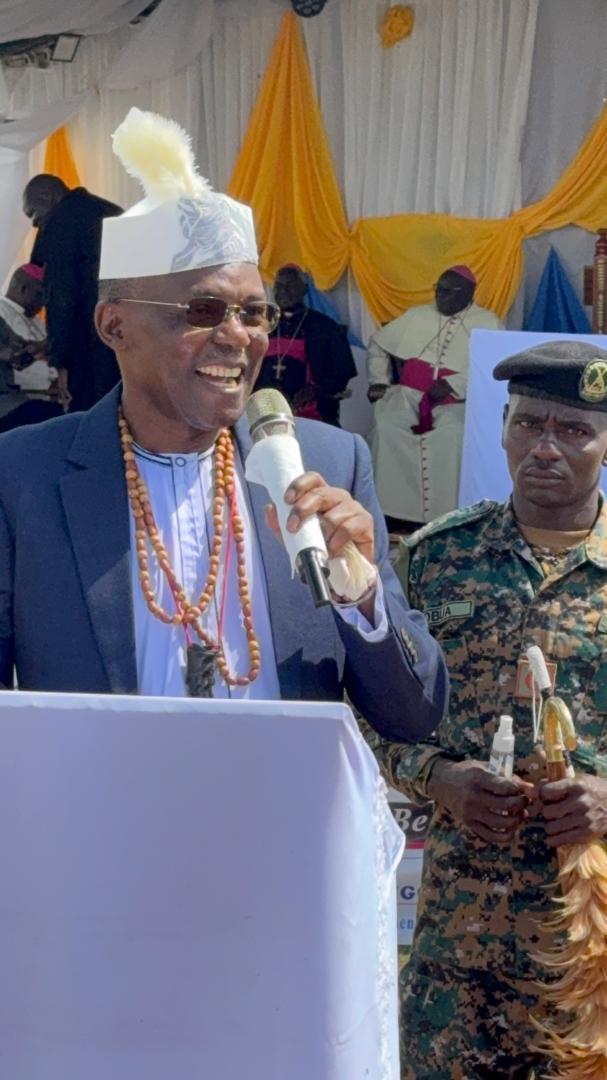
    Preaching from Hebrews 4:1-16 at Upper City Covenant Churches, the Five-Fold Episcopal World Federation FFEWF spiritual general titled his message “Entering God’s Rest in a Restless World”. It arrives just months before the Launching & Consecration of FFEWF Uganda on 14 Dec 2026 under the sub-theme “Built Together – Faith, Service & Transformation” Eph 2:20.

    Everyone is Tired, and God Sees It

    Archbishop-Elect Bagambaki does not begin with theology. He begins with reality. “Everyone is tired,” he says. “Tired of doing good and nobody seems to notice or appreciate. Tired of caring deeply and loving genuinely, only to end in betrayals, and sometimes even death or at the expense of your own health. Others are tired of forgiving because people take advantage of a soft heart. Tired of speaking up and pointing out issues, then being given names and shunned. Tired of being silent and composed, then being called a fool. Tired of being faithful, then being told you are not man enough. Tired of reckless and extravagant lifestyles around you. Tired of substance abuse pulling down friends and families. Tired of everything.”

    He pauses and looks at the weariness in the room. “This is not weakness. This is the weight of living in a world that runs on noise, pressure, and survival. The news is all bombs and funerals. The timelines are all outrage and anxiety. Even your phone is tired from carrying the world’s pain. God is not surprised by your tiredness. Hebrews 4 was written to tired people.”

    To Ugandans Who Now Fear and Tremble at Certain Words.

    In a direct word to the nation, Archbishop-Elect Bagambaki addresses the fear gripping many homes today. “To Ugandans who now fear and tremble at certain words like ‘drones’, ‘tweets’ and ‘basements’,” he says, “let me tell you what Hebrews 4 means for you.”

    He explains that fear is not a sign of weak faith, it is a sign that you are human and paying attention. But fear was never meant to be your address. “Drones in the sky or those on the roads (numberless vans) cannot steal the peace that Jesus gives. Tweets on timelines cannot cancel what God has written about your destiny. Basements built for hiding cannot hide you better than the shadow of the Almighty Ps 91:1.”

    Drawing from Hebrews 4:16, he tells citizens: “You do not have a high priest who is unable to sympathize with your fear. Jesus knows what it is to be hunted, to be betrayed by a tweet of false accusation, to pray in a garden at night. That is why you can come boldly to the throne of grace. Not to beg for survival, but to receive mercy for your fear and grace to stand steady when the nation is trembling.”

    His charge is simple: “Let your first reaction to bad news be prayer, not panic. Let your first hiding place be Christ, not a basement. Rest means your heart can be still even when the headlines are loud. The same God who gave Israel rest in the wilderness of rumors and war will give you rest in the age of drones and digital threats.”

    Rest is Not Laziness, It is God’s Design.

    Opening with the chaos of our age, the Archbishop-Elect observed how students at UCCSAT are studying, bishops are building, pastors are pastoring, nations are buying sophisticated weapons, and investors are on planes 24/7 chasing deals, vouchers, checks, partners, markets, and allies. Yet the only time society says “May His/Her Soul Rest in Peace” is when breathing stops.

    He asked the question lingering over every pulpit and parliament: “Do we really rest in this restless world?” Pointing to birds on branches and animals at water shores, he declared: “Even creation knows how to rest. Man was created to rest before he was commanded to work. Rest is not laziness. It is God’s design from Genesis 2:2.”

    Why Hebrews 4 Speaks Directly to This Moment.

    The book of Hebrews was written around AD 60-70 to believers living under persecution, rumors of war, and the threat of collapse. Rome was unstable. The Temple was under threat. Sound familiar? The author does not tell them to “try harder.” He tells them there is a rest that remains Heb 4:9.

    Archbishop-Elect Bagambaki explained that God’s rest is not escape from responsibility. It is the place where a stressed soul leans on Christ while still working. “You can be on the frontlines of ministry, business, or family, and still have a quiet heart,” he said. “That is what Hebrews calls ‘Sabbath rest for the people of God.’ It means your worth is no longer tied to applause, performance, or results. Jesus already said ‘It is finished’ John 19:30. You rest in His finished work, then you serve from strength, not emptiness.”

    The Promise of Rest and the Pathway to Enter It.

    From Hebrews 4:1-5 he warned that Israel missed Canaan Rest because of unbelief. Scripture speaks of two rests: Canaan Rest for the land, and Christ Rest for the soul. Many ministers today are busy but burned out because they work without faith, not from faith. His charge to leaders was simple: before you build cathedrals, enter rest. Before you chase crowds, be chased by His presence. Be still, and know that I am God Ps 46:10.

    Addressing the paradox in Hebrews 4:6-11 “strive to enter rest” he taught that the striving is not works but diligence to believe and obey daily. Rest comes by hearing God’s voice today, by mixing faith with what you hear, and by ceasing from your own works. He urged church planters not to rush to rent land. Unless the Lord builds the house, those who build labor in vain Ps 127:1. Start in your house, build character, wait for timing. That is resting while working.

    What “Rest” Really Means.

    To help ordinary readers appreciate the text, Archbishop-Elect Bagambaki paused to explain the word “rest” in plain language. In modern English, rest means to stop working, to relax, to find peace, or to lean on something for support. But during the time of Hebrews, the Greek word was katapausis which meant to stop, to settle down, to come to completion.

    For Jewish readers it carried the memory of God’s rest after creation in Genesis 2:2. God did not rest because He was tired, but because His work was finished, perfect, and satisfying. It also carried the memory of Canaan Rest under Joshua, when Israel finally stopped wandering and entered the Promised Land. Yet Hebrews 4:8 makes clear that if Joshua had given them true rest, God would not later speak of “another day.” Canaan was only a picture.

    The author of Hebrews points all of this to Jesus. To enter God’s rest means to stop striving to earn His love, because Christ has already said “It is finished.” It means peace from wandering and anxiety, and a Sabbath for the soul that stays calm even when the hands are busy. The warning is clear: unbelief blocks rest. Israel heard the promise but failed to enter because of disobedience. Rest is entered by trusting and obeying today, not tomorrow.

    How Bagambaki’s Message Meets Today’s Stress.

    Speaking as President & Chancellor of UCCSAT University and Archbishop of Upper City Covenant Churches, he applied the text to three pains of our time.

    For the tired do-gooder who is exhausted because nobody claps when you show up for people, Hebrews 4 says stop working for approval and start working from approval. You are already fully loved in Christ. The Living Word Heb 4:12 will expose the lie that says “you only matter when you produce.” Rest means your identity is secure even when the world ignores you.

    For the wounded forgiver who is tired of forgiving people who keep wounding you, the text points you to the Great High Priest Heb 4:14-16. Jesus was betrayed, abandoned, and misunderstood, yet without sin. He knows what it feels like to love and be hurt. So, you can come boldly to the throne of grace, not with religious words, but with your real pain. You receive mercy for the bitterness and grace to forgive again without destroying yourself.

    For the citizen drowning in bad news, when every bulletin is earthquakes, political instability, and death, anxiety becomes normal. But Hebrews 4:7 says “Today, if you hear His voice, do not harden your hearts.” God’s voice is still speaking above the noise. Rest means choosing to listen to His Word before you scroll the next disaster. It means building your house, your church, your business on His timing, not panic.

    The Power for Rest in the Word and the Throne.

    From Hebrews 4:12-16, God gives two resources to keep us resting while we serve. The Living Word acts like a surgeon, sharper than any two-edged sword, exposing pride that rushes, fear that paralyzes, and greed that borrows. That is why UCCSAT must be a place where the Word cuts before we build. The second resource is Christ the Great High Priest on the throne. He is not distant. He was tempted in every way as we are, yet without sin. Because He understands pressure, betrayal, and burnout, we can come boldly to the throne of grace for mercy and help in time of need. For bishops and pastors carrying the weight of Uganda, the message is clear: bring it to the throne. That is how FFEWF will serve with compassion, not with collapse.

    A Prophetic Word and Altar Call Before 14 Dec 2026.

    Hebrews 4 ends with an invitation, not a command: Come boldly to the throne of grace. Before the consecration, Archbishop-Elect Bagambaki asked every believer three heart-searching questions: Are you working from rest, or working for rest? Is your heart hardened by unbelief, delay, or disobedience? Have you brought your ministry plans, debts, land struggles, family needs, and overwhelming news to the throne of grace?

    Closing with an altar call, he declared prophetically over Five-Fold Episcopal World Federation FFEWF Uganda: “As Ecclesiastical Patriarch, I decree: We shall build cathedrals, but we shall not burn out. We shall engage a restless nation, but we shall keep our souls. We shall face news of bombs and earthquakes, but we shall rest in Christ. Come to me, all you who labor and are heavy laden, and I will give you rest Matt 11:28.”

    Closing prayer: Father, we thank You for the rest that remains in Christ. Forgive us for striving without faith and building without You. Today we enter Your rest. We lay down anxiety, pride, and rushing. We take up Your yoke which is easy and Your burden which is light. Let UCCSAT, Upper City Covenant Churches, and FFEWF Uganda be a house of rest, prayer, and power. In Jesus’ mighty name, Amen.

    There remains therefore a rest for the people of God Heb 4:9

    About the Preacher.

    Archbishop-Elect Professor Mugume Bagambaki Richard serves as Ecclesiastical Patriarch, Five-Fold Episcopal World Federation | Archbishop, Upper City Covenant Churches | President & Chancellor, UCCSAT University.

    For ministry, counseling, consecration, and theological training inquiries:
    WhatsApp: +256775050183
    Email: fivefoldepiscopalworldfederati@gmail.com

    The Exposure Uganda (TEU) – Covering Faith, Governance & National Transformation.

    We Expose, You Decide.

  • SPA Hon. Florence Mutyabule Congratulates New Ministers, Celebrates Busoga’s Team, and Appeals to M7 for More Slots.

    Hon. Florence Mutyabule, Senior Presidential Advisor on Poverty Alleviation, has sent warm congratulations to all newly appointed ministers now in a 10-day induction at NALI Kyankwanzi, while celebrating Busoga’s strong presence in Cabinet and gently appealing to President Museveni for more slots for the sub-region.

    In her Thursday statement, Hon Mutyabule called the reshuffle “a bold step toward inclusive governance” and urged appointees to keep poverty reduction and grassroots service at the center of their work.

    Busoga’s Proud Team.

    Hon Mutyabule highlighted four leaders from the Kyabazinga-led sub-region:
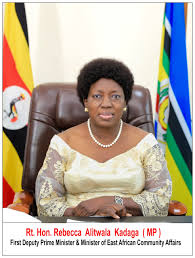
    Rt. Hon. Rebecca Alitwala Kadaga ,retained as First Deputy Prime Minister & Minister for EAC Affairs, Rt. Hon. Hajjat Rukia Isanga Nakadama(the Mayuge District Woman MP) retained as Third Deputy Prime Minister & Minister Without Portfolio,Rt. Hon. Justine Kasule Lumumba appointed Minister of ICT and National Guidance taking over from Hon Dr Chris Baromunsi who now sits at the Wandageya-based Health Ministry and
    Hon. Princess Persis Namuganza –the MP Bukono who was retained as State Minister for Lands,Housing and urban Development.

    “I congratulate all those who retained their portfolio and the newly appointed ministers on their elevation. This is a call to duty, and I have no doubt you will serve Uganda with dedication, integrity, and results,” Mutyabule said.

    Heaping Praises on Mama Kadaga.

    Mutyabule reserved special admiration for Rt Hon Rebecca Alitwala Kadaga,whom she fondly calls Mama, describing her retention as a win for both Busoga and Uganda.

    “Mama Kadaga is a library of experience and a tower of knowledge,her wisdom will not only add great value to the caninet,but will also continue to lobby tirelessly for Busoga and for Uganda at the regional level”,she said.

    She noted that Kadaga’s decades in Parliament, as Speaker, and now as First Deputy Prime Minister give her a unique ability to bridge government policy with community needs.

    “More than titles and offices, Busoga needs unity of purpose, Mama Kadaga has always been the mother who brings us together across districts, across political lines. I pray she continues to use her voice to ensure Busoga speaks with one voice so that our projects, our farmers, and our children benefit faster,” Mutyabule added.

    A Sister’s Note for Rt Hon Justine Kasule Lumumba.

    With sisterly pride, Florence Mutyabule also celebrated Rt. Hon. Justine Kasule Lumumba’s appointment to the strategic docket of Information, ICT and National Guidance.

    “Lumumba is a teacher by profession, a mother who feels the pain of Ugandan homes, and a veteran politician who served Bugiri as Woman MP, Parliament as Government Chief Whip, and the Movement as NRM Secretary General,” she said.

    “From the chalkboard to the Cabinet table, she has walked a journey of service. I have hope that she will stand up to the occasion and ensure government speaks with one clear, truthful voice that informs, unites, and inspires.”

    Pleasant Surprises Across Cabinet.

    Mrs. Mutyabule(wife to the Namisambya-born Busoga Lukiiko Speaker George William Wanume Mutyabule) has also welcomed other national appointments that signaled continuity and recognition of performance: the retention of H.E Maj. Jessica Alupo as Vice President, the retention of Rt. Hon. Robinah Nabbanja as Prime Minister, the elevation of Hon Balam Barugahara to full minister, and the appointment of Hon Justine Nameere(Masaka district Woman MP) as State Minister for Local Government — a docket central to PDM and district service delivery.

    “These decisions show that hard work is seen. Together with Busoga’s team, they strengthen our push for results,” she said.

    Mutyabue asks For More.

    10 Days at Kyankwanzi for Alignment.

    The ministers and permanent secretaries are at NALI Kyankwanzi from June 15–23, 2026 for orientation. President Museveni opened with a warning against corruption: “You are here to serve the people, not yourselves. We must transform Uganda into a modern country.”

    The Head of Public Service Lucy Nakyobe stressed the issue of accountability saying the public expects results, not excuses.

    The retreat focuses on the NRM Manifesto 2026–2031, Ten-Fold Growth Strategy, physical project monitoring, and embedding ethics into daily work.

    “Busoga Still Has More to Offer, Mzee”
    While celebrating the current team and Kadaga’s unifying role, Mutyabule appealed to President Museveni for more representation.

    She said Busoga has capacity and leaders ready to serve and that more slots would help the region move faster in all sectors in a bid to kick poverty out of households and community.

    Mrs. Mutyabule pledged to work closely with all ministers post-induction to align SACCOs and PDM with village needs.

    Closing with a prayer, she said: “May God grant you wisdom to serve selflessly. Busoga is proud of you. Uganda is counting on you.”

    Background.

    Hon. Florence Mutyabule served as Woman MP for Namutumba before becoming SPA on Poverty Alleviation. She also served for close to 20 years as headteacher of the Church-founded Buckley High School at CMS in Iganga.

    Besides several public positions held, Mrs. Florence Mutyabule was also the President Mothers Union for 10 years in Busoga Diocese.

    After June 23, ministers will settle down to their respective dockets where delivery units are expected to track performance quarterly under the 2026-31 slogan Kisanja No Sleep &Zero Nguzi.

    The Exposure Uganda (TEU) Explainer.

    What Do Ministers Actually Do? Roles, Duties & Why Kyankwanzi Retreats Matter.

    As newly appointed ministers undergo a 10-day induction at the National Leadership Institute NALI Kyankwanzi, many Ugandans are asking: What exactly is the job of a minister? And why does government spend time and money on retreats?

    The Exposure Uganda breaks it down in this explainer.

    Roles & Responsibilities of Ministers.

    Under Uganda’s Constitution and the Ministerial Code of Conduct, ministers are the political heads of government. Their core duties are:

    Policy & Law Making: Ministers initiate policies, draft bills, and pilot them through Parliament. Once laws pass, they translate them into regulations and programs that affect every citizen from Kampala to Karamoja.

    Oversight of Ministries & Agencies: Each minister supervises their ministry, departments, and agencies. They set strategy, approve budgets, monitor performance, and ensure services like health, roads, and education actually reach the village.

    Cabinet Collective Responsibility: All ministers sit in Cabinet every Monday at State House Entebbe. There they debate national issues, approve the budget, and make binding decisions. Once Cabinet decides, every minister must publicly support it — even if they argued against it in the room. “We speak with one voice.”

    Accountability to Parliament & Wananchi: Ministers answer questions in Parliament, defend their budgets, and explain government programs to the public through barazas, radio, and field visits. They listen, explain, and are held to account.

    National Service, Not Regional Service: Though appointed from different regions, ministers swear to serve Uganda’s 45M+ people. Local concerns inform them, but their mandate is national — unity, security, economic growth, and service delivery for all tribes and regions.

    Why Retreats/Induction at NALI Kyankwanzi Are Important.

    The Kyankwanzi induction is not ceremonial. It’s where government sets its engine. Here’s why it matters:

    Alignment on Vision: President Museveni and senior cadres re-ground ministers on national priorities: wealth creation, jobs, PDM, fighting corruption, and service delivery. Every minister leaves with the same script. No one goes off-message.

    Team Building: Ministers come from different regions, parties, and backgrounds. The retreat breaks silos. They debate issues, disagree, then agree. That unity is what makes Cabinet decisions strong and fast.

    Training on Ethics & Rules: New and returning ministers are drilled on public finance management, budgeting, conflict of interest, and the Ministerial Code. This reduces scandals and improves discipline in handling public money.

    Connecting Policy to the Village: Sessions link high-level decisions in Entebbe to programs on the ground — SACCOs, Emyooga, sub county roads, health centers and schools. Ministers leave knowing how a signature in Cabinet changes life in Oyam, Amuru, Terego, Bushenyi, Ibanda and Kyenjojo or Namutumba, Arua, or Kanungu.

    Clear Performance Targets: President Museveni sets measurable Key Performance Indicators (KPIs). Each minister knows what they must deliver in 5 years. Retreats remove ambiguity so when Parliament asks “what have you done?”, there’s a clear answer.

    The Exposure Uganda (TEU) will continue unpacking government processes so citizens understand how decisions are made in their name.

    For story tips/comments: exposureuganda000@gmail.com

    Or WhatsApp 0776462509/0792140712


  • Bishop Lubaale praises Wanzala’s 20-year grit as new Butembe MP holds thanksgiving; Mwiru tells Ugandan Voters ‘Stop treating MPs as ATMs’

    “Perseverance is not a long race; it is many short races one after the other.” Walter Elliot (1888–1958), the Scottish Unionist politician, physician, and writer who represented several constituencies, wrote a line that fits everywhere.

    It certainly fitted Sunday at MM Wairaka College playground, where Bishop of Busoga Diocese Rt Rev Prof Dr Grace Lubaale watched Hon Grace Paddy Kirya Wanzala end a 20-year, five-election marathon and called him “a rare type of leader.”

    The bishop described newly elected Butembe Constituency MP Hon Grace Paddy Kirya Wanzala as “a rare type of leader” during a thanksgiving service held Sunday at the playground of MM Wairaka College, capping a 20-year, five-election journey to Parliament.

    “Few politicians contest five times without turning bitter,” Lubaale told congregants. “He lost four elections, often by small margins, yet remained positive, avoided violence, and refused to bribe voters. He focused on his manifesto. Wanzala is a rare type of person, leader and politician who should be celebrated.”

    The service was the second of two, the first was held Saturday at Busedde Seed Secondary School, where retired Bishop of Busoga Diocese Rt Rev Samson Moses Naimanhe Mukembo presided.

    In an address to the Busedde Seed School congregation, Bishop Naimanhe asked Wanzala to always remember the kindness and faithfulness of God who has kept him alive and changed his title to an honorable MP.

    He urged the MP to seek God’s guidance so that the task ahead is handled with prudence and dignity to serve better the constituents.


    Five points of thanksgiving.

    Bishop Lubaale, accompanied by about a dozen of clergymen anchored his sermon on five reasons for Hon Wanzala’s thanksgiving, each drawn from the MP’s lived journey:

    Recognize he came from far.

    Bishop Lubaale traced Wanzala’s humble beginnings to a childhood without modern amenities. He saw electricity and flush toilets for the first time in secondary school while visiting a relative in what is now Jinja City.

    Family accounts say the young Wanzala once tried to blow out an electric bulb with his mouth, as one does with the once-popular tadooba wax lamp.

    At another time, he wanted to trap vehicles with nylon strings and ropes, thinking saloon cars were antelopes, lorries were buffalos, and buses were elephants. Relatives, “while dying with laughter,” explained what vehicles were and taught him brands like Ford, Toyota, Benz, Peugeot, and Nissan.

    Today, the former Busedde sub county councilor, international procurement consultant drives a white 2025 Toyota Land Cruiser TX hybrid. While some other new entrant MPs are anxiously thirsting for the more than 300M/- usually given to MPs to acquire new four-wheel drives, Hon Wanzala is already consulting on where to invest the money in the constituency.

    To show that God has been with him in his life’s journey, the bishop said Wanzala should not depart from God’s ways but continue recognizing and trusting His faithfulness.

    God has been present in his life.

    The bishop compared Wanzala to King David. When the prophet Samuel came to anoint a king in 1 Samuel 16, Jesse presented seven sons but left David in the bush tending sheep.

    Only when Samuel insisted did the father reluctantly call him. David later became king and “a man after God’s own heart,” (Acts 13:22), notwithstanding the scandals that befell him. Likewise, Wanzala lost four election cycles, always by a small margin and “more often he was openly rigged out,” yet he remained alive and is now an MP.

    The former senior don at Kyambogo University noted that Uganda’s politics from nomination to declaration are “full of scandals and violence.” Some people win but the second or third candidate is declared, and courts are subdued by “shameless and corrupt elements.”

    For Wanzala to win as an opposition FDC candidate and be declared and gazette and sworn in, Lubaale said, “shows God has been with him.”

    Serve humanity with humility.  

    Now that he is Hon. MP, Bishop Lubaale who is only six months in the Bugembe office urged Wanzala not to forget God’s hand and begin bragging to the very people who voted him.

    “Go to Parliament and always take the correct views from the electorate, not personal interests,” he said. Service, the Bishop stressed, must remain people-centered.

    Uphold the position using knowledge, understanding, and wisdom.

    Some MPs, the bishop warned, “spend more time and energy on chasing and clicking deals as opposed to representing his people.”

    Without mentioning names, the bishop said some MPs have in the past been linked to lose sexual immorality, theft and scandal and fraud among others.

    “We would not be happy to learn or hear that Wanzala is being implicated or involved in some dubious deals which undermines his integrity as a distinguished leader and person in society”, the bishop cautioned

    This message comes after the homes of the former Speaker Rt Hon Annette Anita Among were raided by security agencies, while some like former minister/MP Hon Agnes Nanduttu is now in jail and others in court.

    Trust God for More.

    The bishop asked Wanzala to continue trusting God, since He has been faithful over the years. “If He did it after 20 years and four losses, He can do more,” Lubaale said.

    The 20-year road to Parliament.

    Wanzala first ran in 2006, polling 10,609 votes against then Government Chief Whip Hon Daudi Migereko’s 18,799. In 2011 he lost by 814 votes: 16,833 to 16,019.

    Former intelligence officer and Jinja LC5 chairman Lt Hannington Basakana got 2,101 as an Independent. In 2016, NRM’s Nelson Lufafa beat him 26,157 to 23,202. The 2021 race was decided by 99 votes, with Independent David Livingstone Zijjan taking 5,818, NRM’s Jacob Kabondo 5,782, and Wanzala 5,719.

    On January 15, 2026, Wanzala won on the FDC ticket with 6,215 votes. NRM’s Jacob Kabondo got 5,799, while NRM-leaning Independent Shaban Okumu polled 4,798.

    Constitutional Mandate of an MP.

    Under Article 79 of the 1995 Constitution of Uganda, Parliament’s functions and the core duties of an MP are fourfold:

    Legislation an MP is to make laws on any matter for the peace, order, development and good governance of Uganda.

    Representation- an MP presents views of constituents and special interest groups in Parliament.

    Oversight-the MP monitors government programs and keep the Executive in check. Budget appropriation he or she debates and approves the national budget and taxation.

    Wanzala: “I will lead by consultation”  

    In his speech, Wanzala who was flanked by his wife Jennifer Wanzala, pledged to lead by consultation through regular and frequent meetings with youth, women, the elderly and PWDs.

    He said Butembe can only move forward when every voice is heard, and promised to engage headteachers and teachers to handle poor education standards in the predominantly sugarcane-growing constituency, which houses Kakira Sugar Works under the Madhvani Group of Companies – the biggest in Uganda.


    “Our children must benefit from the economy around them, not just cut cane.”

    On peace and security following decades of election violence among rival supporters, Wanzala said he will work with every stakeholder, including security, to de-escalate tensions. “We cannot develop when campaigns mean fighting.”

    Mwiru: ‘Stop treating MPs as ATMs’.

    Unease settled over MM Wairaka College grounds when Jinja South East MP Hon Paul Mwiru, the Opposition Chief Whip, took the podium. Standing in for Leader of Opposition Hon Joel Ssenyonyi, Mwiru thanked voters for choosing Wanzala as “the most suitable and best choice,” then dropped the niceties.

    He told off residents to give Wanzala time to embark on his four constitutional roles.

    Mwiru caused dead silence in a crowd that would ululate when the microphone holder coughed. “Most MPs run away or change phone numbers because in a single day an MP receives close to 500 calls all asking for money for a sick wife, marriage, weddings, parties, associations and groups,” Mwiru said. “Which in real sense is not possible and practical even if an MP was earning 1 billion shillings per month.”

    The NUP politician also used the same gathering to send the message to Ugandans at large, saying the practice of treating MPs as their ATMs should stop because it is not only boring but pungent.

    He softened a bit, adding that if an MP goes an extra mile and contributes to social welfare it should be appreciated in that context and should not become forceful and mandatory.

    “Some voters or even non-registered residents have the guts to say unless you do this for us you will not leave this venue or you will not pass through this road,” Mwiru said.

    When he handed the microphone to MC of the day Tonney Wantimba aka Masurubu, an Inspector of Schools who also works at Nathan Igeme Nabeta’s NBS as a side hustle, Mwiru received less than a dozen handclaps.

    “The hardest thing in Uganda today is being an MP where everyone expects the MP to solve their personal problems from bundles or airtime to marriage, burials and medical bills to school fees,” he said.

    Rival turns up, crowns Wanzala ‘Political Baba’

    Former Kakira Town Council chairman Charles Sande Kabule, who contested against Wanzala, stunned attendees by appearing at both services. He urged Butembe people to unite.

    Borrowing from a popular saying, Kabule said: “After the death of a husband, the children will always call the new husband got by their mother as Baba.” He added, “Hon. Wanzala is now the new Political Baba of Butembe after our elected MP Hon David Livingstone Zijjan not only disappeared but relocated to Jinja North where he lost in the NRM primary election to Edwin Lufafa, who also lost the main election to radio comedian Hussein Muyonjo aka Swengere.”

    What ‘Hon.’ Means.

    Hon is short for Honorable, the official courtesy title for Members of Parliament in Uganda and across Commonwealth parliaments. It signals public trust and an expectation of integrity.

    The style dates to British parliamentary tradition from the 16th–17th centuries and was inherited at independence in 1962.

    What is thanksgiving?

    Thanksgiving is expressing gratitude to God for mercies or deliverance, through prayer, song, and testimony. Key texts include 1 Thessalonians 5:18_  “Give thanks in all circumstances”; Psalm 100:4 “Enter his gates with thanksgiving”; and _Colossians 3:17  “Do it all… giving thanks to God the Father.”

    Wanzala closed by reaffirming his focus on rural roads, seed school staffing, and market access for farmers. “The people voted for service, not speeches,” he said. “As your Political Baba, I won’t forget where I came from.”

    TEU Explainer:

    If Uganda’s Parliament is to regain its constitutional spine, other leaders must amplify Mwiru’s unpopular truth and resist the populist sugar rush.

    As 18th-century statesman Edmund Burke warned, “your representative owes you, not his industry only, but his judgement, and he betrays, instead of serving you, if he sacrifices it to your opinion”.

    An MP who trades legislation for salt, cash, soap and waragi or enguli has not served, he has bribed. As a citizenry that barters its civic power for petty gifts has auctioned its future.

    Plato saw it coming 2,400 years ago:” One of the penalties for refusing to participate in politics is that you end up being governed by your inferiors”.

    But the inverse is also true that when voters reduce Article 79 to a shopping list and leaders pander to it, Parliament fills with merchants of applause, not architects of policy.

    Leaders across the aisle should echo Mwiru not for political mileage, but for national survival. As John Adams put it, public business must always be done by somebody, it will be done by somebody or other. If the wise keep financing weddings instead of debating bills, the country pays in hospitals without drugs, schools without teachers and roads that return each rainy season.

    The people of Uganda must reclaim their role as citizens, not political clients or customers. The Honorable must earn the title by telling hard truths, not tickling ears.

    We are The Exposure Uganda.

    We Expose, You Decide.

  • Oliver Twist in Lira: Lango Paramount Chief Welcomes Museveni’s 4 Appointments, Asks For More Sons/Daughters In Juicy Positions.

    Oliver Twist in Lira: Lango Paramount Chief Welcomes Museveni’s 4 Appointments, Asks For More Sons/Daughters In Juicy Positions.

    The Lango Paramount Chief, also known as Won Nyaci Me Lango Eng. Dr Michael Moses Odongo Okune, has welcomed President Gen. Yoweri Kaguta Museveni’s appointment of 4 sons and daughters of Lango to Cabinet and State Ministerial positions in the new government 2026-2031.

    In a statement issued from the Lango Cultural Institution in Lira City, the Paramount Chief used Medieval English wisdom “a bird in hand is worth two in the bush,” noting that Lango is happy with the appointments while still looking forward to more representation.

    He stressed that the appointments are a sure gain and Lango should first appreciate what has been given before asking for additional positions in statutory bodies and commissions.

    The four Lango Appointees: Portfolio, Constituency and Mandate.

    According to the new list released by President Museveni:

    Hon. Sam Engola (Erute South constituency) is now Minister, Office of the Prime Minister in charge of Relief, Disaster Preparedness and Refugees.

    His mandate is drawn from Article 110 of the Constitution which places the Office of the Prime Minister at the center of coordinating government business, disaster response, refugee management and relief operations. He will oversee OPM’s response to climate shocks, floods, drought and refugee influx from neighboring countries.

    Hon. Dr. Jane Ruth Aceng Ocero is now Minister of Information, Communications Technology and National Guidance. She is the Lira City Woman MP. Her mandate comes from the Constitution and the ICT Ministry Act, covering national communication policy, digital transformation, government messaging and public guidance. Her former Health docket has been handed to Hon. Dr. Chris Baryomunsi.

    Hon. Sandra Santa Alum is now Minister of State, Office of the President in charge of Economic Monitoring. She is the UPC Woman MP for Oyam District.

    Her role is anchored in the Office of the President and derives authority from the President’s directive to track implementation of government programs and ensure value for money across all sectors.

    This is being seen as a kind of compensation in place of veteran politician Hon. Betty Amongi Akena. Amongi, former Minister of Gender, Labour and Social Development and MP for Oyam South, crossed to Lira City in the last elections but lost to Hon. Dr. Jane Ruth Aceng Ocero. The Gender docket has now been given to Lt. Gen. Henry Tumukunde.

    Hon. Dr. Faith Mercy Lakisa is now Minister of State for Gender, Labour and Social Development, holding the Youth and Children Affairs portfolio. She is the Alebtong District Woman MP.

    Her mandate is provided for under the Ministry of Gender, Labour and Social Development Act, focusing on youth empowerment, skilling, child protection, labour rights and social protection. She replaces Hon. Balam Barugahara, who now goes to politically guide the Ministry of Local Government as its minister.

    In a Parliament of over 500 MPs, the 4 slots are being hailed in Lango as significant recognition of the sub-region’s contribution to national leadership. Lango gave Museveni 84% votes in the January 15 polls, rated as one of the best in the country.

    Paramount Chief’s Message: Serve with Diligence and Prudence.

    HRH Dr. Odongo Okune congratulated the ministers and urged them to live up to Lango’s reputation for honesty, hard work, and integrity.

    “On behalf of the Lango people, I welcome and congratulate our sons and daughters appointed by His Excellency the President. Lango has been known for honesty and hard work. I challenge you to serve diligently and prudently, with integrity and accountability, so that you bring development and honor to the people you represent and to Uganda at large,” the Paramount Chief said.

    He added that the ministers should prioritize disaster preparedness, ICT and national guidance, economic monitoring, youth employment, and protection of human rights in their respective dockets.

    Hon Dr Jane Ruth Aceng’s Choice Not Coincidental.

    The Paramount Chief noted that Dr. Aceng’s move to ICT and National Guidance is not coincidental. She has been shining at critical times whenever epidemics or pandemics like Ebola, Marburg, and COVID-19 broke out.

    She spoke not only eloquently but with clarity and technical knowledge which has always been praised nationally and internationally. It is hoped she will transfer the same to speak for the government, to explain policy with precision and to guide the public with confidence in times of crisis.

    Hon Sam Engola’s Long, Rough Road in NRM.

    The Paramount Chief particularly noted Hon. Sam Engola’s political journey. Engola has fought for decades to popularize the NRM and President Museveni, beginning from the early years when more than 90 percent of people in Lango and Northern Uganda were hostile to the Museveni administration.

    During the height of political campaigns in Lira Municipality, now City, a mocking Lango phrase emerged: “Cam Engola.” It sounds like “Sam Engola” but literally means “Eat Engola,” with cam meaning food or to eat in Lango dialect.

    Critics and NRM opponents then known as “Lira Boys” would tell residents to feign loyalty to Sam Engola so that they could benefit from or ‘eat’ whatever gifts he offered at political rallies. Nonetheless, Sam Engola’s resilience and political mobilization with practical gestures earned him recognition.

    At that time the region held strong political nostalgia for the ousted UPC President Dr. Apollo Milton Obote and his UPC government. Obote was a son of the soil, hailing from Akokoro sub county in Apac district where his tomb lies. UPC remains strong in Lango and has posted 12 MPs in the current parliament emanating from the last elections.


    Despite that hostile terrain, Hon Engola stayed the course and built NRM structures in Lango. His elevation to full Minister in OPM is being read in Lango as recognition of that loyalty and endurance.

    Hon. Denis Hamson Obua: From Government Chief Whip to Presidential Advisor.

    The Paramount Chief also acknowledged Hon. Denis Hamson Obua, former Ajuri MP who did not return to Parliament in the last elections. Obua served as Government Chief Whip, a position that derives its mandate from the Rules of Procedure of Parliament to mobilize NRM MPs and ensure party discipline on the floor. That docket has now been given to Hon. Justine Kasule Lumumba who once held it before being elevated as Secretary General of NRM.

    President Museveni has listed Hon. Denis Hamson Obua among presidential advisors although the portfolio has not yet been announced. The Paramount Chief said Obua’s service as Chief Whip and MP should be remembered as part of Lango’s contribution to national leadership.

    Appreciation to President Museveni.

    HRH Dr. Odongo Okune also expressed gratitude to President Museveni for what he termed a careful and deliberate selection. “We appreciate His Excellency for remembering Lango and for recognizing our leaders. This gesture strengthens unity and inclusion in national governance,” he stated.

    Like Oliver Twist: Lango Asks for More in Statutory Bodies.

    As Charles Dickens wrote in Oliver Twist; or, The Parish Boy’s Progress (1837–1839), “Please, sir, I want some more.” The line is spoken by Oliver in Chapter 2 when he asks the workhouse beadle for a second helping of gruel, and it has become iconic for humbly asking for more despite hardship.

    Borrowing from this, the Paramount Chief said Lango is an Oliver Twist of service, not of greed. “More, please. Lango requests His Excellency to consider more sons and daughters of Lango for appointment to other statutory bodies, commissions, and agencies. We have competent professionals ready to serve Uganda,” HRH Dr. Okune noted.

    He cited Lango’s pool of doctors, engineers, teachers, and administrators who can contribute to bodies like the Public Service Commission, Electoral Commission, Equal Opportunities Commission, and UHRC.

    Context: Why the Appointments Matter.

    With over 500 MPs, securing 4 cabinet slots gives Lango direct voice in policy and budget decisions for the 2026-2031 term. Engola takes on disaster response and refugee management at a time when climate shocks and regional conflicts test OPM’s capacity.

    Dr. Aceng shifts from Health to ICT and National Guidance, bringing executive experience to communication and digital transformation. Santa Alum steps into economic monitoring, a role critical to tracking government programs and value for money. Dr. Lakisa enters national politics with the Youth and Children Affairs portfolio, tasked with skilling and child protection.

    Stakeholders in Lira, Alebtong, Erute South,Oyam  and the whole of Lango say the appointments raise expectations for tangible delivery on feeder roads, health facility staffing, youth skilling, and disaster response.

    Next Steps. The appointees are expected to take oath before Parliament under Article 114 of the Constitution before assuming office. The Lango Cultural Institution says it will organize a thanksgiving prayer for the new ministers once they are sworn in.

    The Exposure Uganda Editorial.

      “Carry the Amuka: Lango’s Four Must Be Rhinos, Not Hyenas”

    Lango has been granted a seat at the high table with four of our own: Hon. Engola, Hon Dr. Aceng, Hon. Alum, and Hon Dr. Lakisa now hold Cabinet and State Ministerial dockets. This is not luck, it is the dividend of loyalty paid when the NRM was unpopular in Lango, and of resilience when the political terrain was hostile.

    But take note that elevation is a test, power reveals character. And Lango has a character it must carry to Kampala: Amuka.

    In Lango, the rhinoceros is Amuka our totem. The elders call it the Chief Magistrate of the Jungle. Why? Because Amuka is clean, orderly, and deliberate. It does not start wars. It does not chase conflict. It forgives easily, walks its path with dignity, and minds its territory.

    But provoke Amuka at your own risk, and you meet a force that does not retreat. Its charge is final, its defense absolute.

    This is the philosophy Lango must export to Cabinet.

    Stoic philosopher Marcus Aurelius(121-180AD) wrote: “You have power over your mind, not outside events.” A minister cannot control every slight, every whisper, every political trap. But a minister control whether he responds like Amuka or like a hyena.

    The hyena has been the downfall of many leaders. It laughs at its own, fights in the shadows, and uses office as a launch pad to bite fellow leaders. The graveyard of Ugandan politics is full of hyenas who died with a thud loud, sudden, and forgotten. They won battles in the press, but lost the war of legacy. They mistook the ministry for a throne and colleagues for enemies. They ended with titles, but no honor.

    To the four, and to all Lango sons and daughters in public or private portfolios: Carry the Amuka.

    Be clean and organized like Amuka. The Chief Magistrate does not rule with chaos. Deliver in OPM, ICT, Economic Monitoring, and Gender with prudence, transparency, and results. Let your work be the verdict.

    Be forgiving, not combative. Amuka does not trigger war. Do not turn ministerial office into a boxing ring against fellow Lango leaders. When elephants fight, the grass dies. When Lango ministers fight, it is the farmer in Alebtong, the trader in Lira City, and the youth in Oyam who bleed.

    Be fierce in defense, not offense. Amuka only charges when provoked. Defend Lango’s interests, defend Uganda’s policies, defend the people’s money. But do not attack your own to look strong. A rhino that charges its herd is a rhino that dies alone.

    The philosopher Lao Tzu said: “A leader is best when people barely know he exists. When his work is done, they will say: we did it ourselves.”. That is Amuka. No noise, no petty fights, just impact.

    Lango has asked for “more, please” like Oliver Twist. If you carry the Amuka with pride and integrity, the answer will be “yes.” If you carry the hyena, the answer will be silence.

    So let the nation say it:“Surely Lango people are great. The Amuka people are wonderful people of integrity.”

    Leave your ego at the door of Cabinet. Wear the Amuka on your chest. Serve with humility, defend with courage, and build with unity.

    Because history does not remember who won the argument. History remembers who left the road paved, the hospital stocked, and the youth skilled.

    Be Amuka. Lango is watching.

    We Expose, You Decide.

  • “I Will Govern Dokolo With Chalk, A Lesson Plan, A Microphone, And A Ledger”- New LC5 Chairman Peter Ogwang ‘Petero’ Vows to Turn Dokolo into a Gateway on the Trans-Africa Highway.

    “If you give me chalk, I will teach discipline and impart knowledge, if you give me a lesson scheme, I will plan for development. If you give me a microphone, I will speak truth to the people and sensitize the wanainchi if you give me a ledger, I will account for every shilling. That is how I will run Dokolo.”

    With those words, Peter Ogwang “Petero”, newly sworn in as LC5 Chairman of Dokolo District, opened a new chapter for a district sitting on one of Africa’s most vital arteries: the Jinja-Mbale-Soroti-Lira-Gulu corridor that stretches north to Juba and forms part of the Trans-Africa Highway.

    For Petero, that geography is not a footnote, it is a mandate.  

    “Dokolo is not on the sidelines of history, we are on the highway that connects East Africa to South Sudan, that carries trade, culture, and ideas across borders. A district on the Trans-Africa Highway cannot afford to think like a village. We must think like a gateway”, he said.

    There is already an aura of excitement among stakeholders, especially the technical staff, who are eager to see and work with the mid-age man with three trades.

    They expect him to employ his skills and experience to govern a district whose name excites Ugandans from Kisoro to Kyenjo, Bushenyi and Ibanda to Masaka and Nakasongola, Hoima up to West Nile, Acholi and Karamoja alike.

    “Dokolo is not an obscure name, it sits on the map of Uganda’s imagination” Petero said and quickly added: “When a district is known from the mountains of Kisoro to the cattle corridors of Karamoja, failure is not an option. The country is watching.”


    From Classroom to Council: The Tools of a Teacher.

    Petero, a secondary school teacher by training, abandoned blackboard chalk for the microphone and became a household name as “Petero” on Rhino FM 96.1 Lira and Kiira FM 88.6 Jinja. He later moved into business consultancy; he now says those three trades are the instruments of his governance.

    “In the classroom, I learned that nothing works without a plan, the lesson scheme is sacred because it respects the time and mind of the learner.

    In Dokolo, our budget will be our lesson scheme. Every project will have an objective, a method, and a measurable outcome. No more teaching chaos and calling it development”, Peter Ogwang declared.

    He pledged the same discipline he used behind the microphone to public communication: “A leader who cannot explain policy to a farmer in Adok or Alapata cannot lead that farmer. The microphone is not for slogans, it is for clarity, for accountability, and for listening., so I will speak often, but I will listen more”, the former radio presenter cum political leader said.

    From the studio, he brings a rule no presenter can ignore:  “No presenter goes live without a script, without research, without prior preparation. You do not guess on air. In Dokolo, we will not govern by guesswork either. Every decision will be researched, prepared, and defended with facts. That is how you respect the people.”

    And the ledger?  “Every shilling that enters Dokolo is not ours, it belongs to the mother in Amuda who walks 5km for medicine, to the youth in Agwata who need skills, to the trader on the highway who needs security. I will govern with an open ledger because a leader who fears scrutiny has something to hide.”

    “Corruption Must Not Be Lip Service”

    Administered by Lira Chief Magistrate His Worship Humphrey Joe Adoko, Petero Ogwang’s maiden ceremony at the District Headquarters was blunt. He said the fight against corruption must not be a slogan to numb the population. Key stakeholders must be seen doing the right thing.

    He reminded civil servants, who prefer the title ‘technical staff’, that they are the implementors of government programs from the center to the village.

    “Do not sleep on the job, this will be a term of no sleep and zero corruption, just as the President promised. I will offer you maximum cooperation and a harmonious working relationship. My style is leadership by and through consultation”, he told CAO Oryomo Grangfil Omonda and his team.

    He called for value for money and an end to procurement scandals. He also warned against the sale of jobs through the District Service Commission, which he described as an “eye sore for years.”

    “Service delivery also means sons and daughters of the district whose poor parents sold land to educate them get jobs, instead of those jobs being sold to children of the wealthy who are already empowered”, the LC5 boss said.

    Challenges on the Ground.

    Petero Ogwang, who hails from a humble background in Bar-dege, Bata Sub- County, cited Dokolo’s urgent needs: poor roads, ill-equipped health facilities that force mothers to use unsafe Traditional Birth Attendants, a laughable standard of education, dysfunctional water sources including dead boreholes, and inadequate funding.

    He noted the irony of his village name: “Bar-dege means a place of many aero planes, yet not even a single scrap or spare part of a plane has ever been seen in the entire sub-county. We will change that symbolism; we will build a district that flies.”

    Politics Ends at the Ballot. Service Begins After.

    Though he is “100 percent UPC” and won under the Uganda People’s Congress banner, Petero said campaigns are over.

    “I will religiously ensure that the NRM manifesto under President Yoweri Museveni, who won with 71% on January 15 and was sworn in on May 12, is implemented to the dot, together with our district programs. Both target the ordinary citizen.”

    “When health centers have no drugs, when roads are bad, when education fails, when waterborne diseases spread, everyone is affected irrespective of party. So let us work together”, he appealed.

    He urged households to embrace Parish Development Model (PDM), Emyooga, and Operation Wealth Creation.

    “Poverty knows no boundary, color, or faith. Every home in Dokolo must join the money economy.”

    Dokolo on the Highway of Opportunity.

    Petero Ogwang’s first act will be to convene technical staff, security, religious, and cultural leaders.

    “My approach is leadership by consultation. The highway that runs through us carries many voices: Acholi, Busoga, Bukedi, Teso, including traders from Juba, truck drivers from Mombasa. If we listen, Dokolo can become the rest stop of ideas, investment, and integrity”, he said.

    Running under UPC, he says the party’s founding ideals of national unity and service are not nostalgia but a blueprint for healing.

    “The UPC taught us that Uganda is bigger than tribe and bigger than fear. Dokolo, sitting on the Trans-Africa Highway, must live that truth. We will not be a district that begs for attention. We will be a district that earns it through discipline, production, and peace.”

    Like President Museveni has repeatedly told Ugandans, being along the tarmac alone does not automatically translate to wealth. This follows years of persistent demands by locals and their leaders for paved roads.

    Building on that warning, Petero Ogwang urged Dokolo residents, especially the youth to stop merely sitting by the highway to count and admire the numerous vehicles that ply the route.

    “You must be strategic, produce goods and services that passengers and travelers can buy, turn this highway from a spectacle into a marketplace. That is how you get daily income and improve your living standards”.

    For Petero Ogwang, the Jinja-Mbale-Soroti-Dokolo-Lira-Gulu-Juba corridor is not a mere roadside attraction but Dokolo must trade on it not just live beside it.

    Restoring Dokolo’s Image.

    Carved from Lira in 2005 and operational since July 2006, Dokolo has been selected for the national malaria vaccination program alongside Oyam, Kole, Alebtong, and Lira City.

    “When investors look at the map, they see the Jinja-Mbale-Soroti-Lira-Gulu-Juba corridor. When they look at Dokolo, I want them to see opportunity. We will clean our image, secure our routes, educate our children, and protect our people. The world passes through us. Let them say Dokolo works.”

    Conclusion.

    With an MBA from UMI, a Bachelor’s in Development Studies, and a Diploma in Education from Kyambogo, Petero blends academic rigor with street-level business and communication.

    He closed with a promise: the speech on Friday is not a performance, it is a contract. Dokolo’s time on the margins is over. Our time on the highway of progress has begun.

    About Peter Ogwang ‘Petero’.

    Peter Ogwang is a business consultant, entrepreneur, former radio presenter, and educator. He holds a Master’s in Business Administration from UMI, a Bachelor’s in Development Studies, and a Diploma in Education from Kyambogo University.

    He is now the LC5 Chairman of Dokolo District under the Uganda People’s Congress, running on a platform of servant leadership, unity, and inclusive development.

    The Exposure Uganda Conclusion / Position:

    TEU therefore advises both the political and technical leadership in Dokolo and across all districts to abandon the politics of supremacy and embrace the discipline of service.

    The LC5 Chairman must lead with humility and consultation, not confrontation. The CAO must execute with integrity and transparency, not defiance or delay.

    Corruption, ego, and arrogance are not tools of governance; they are the very reasons districts fail. Ugandans did not vote for noise, and they did not recruit technocrats for sabotage.

    They entrusted both offices with one mandate: to deliver. Let the chairman hold the chalk, let the CAO hold the ledger, but let both write on the same blackboard: the welfare of the wanainchi.

    There is no prize for winning internal fights. There is only shame in losing the public trust. Dokolo is on the Trans-Africa Highway. Let it be known as the district where politics and technocracy worked together, not where they worked against each other.

    We Expose, You Decide.


  • From Hosana to Calvary: Archbishop Muwanga Says Uganda Is Nailing AAA To a Cross On Kigo, Nakasero, Naguru and Bukedea Hills.

    TEU Preamble.

    “Jerusalem had Golgotha, the Place of the Skull. Uganda now has its own hills: Kigo, Nakasero, Naguru, and Bukedea. And a nation that erects a cross for its own daughter will discover that the nails were forged in its own house.

    On Palm Sunday the crowd roared “Hosanna to the Son of David,” and by Good Friday it howled “Crucify him, crucify him” (Matthew 21:9; 27:22-23).

    Five days were enough for adoration to curdle into execution. Pilate asked, “Why, what evil has he done?”, but the mob did not answer (Mark 15:14).

    Today Rt. Hon. Annette Anita Among (AAA), described in the media as the embattled former Speaker from Bukedea, is being marched toward a Ugandan Calvary.

    On Kigo, Nakasero and Naguru Hills, where she has established luxurious residential buildings, armed security operatives, the Uganda Police Force (UPF) personnel and UPDF soldiers backed by detectives and intelligence personnel are scanning and scavenging for evidence of alleged crime.

    On Bukedea Hills, her ancestral home, she built the residential structures now under scrutiny. The stones have moved, but the ritual has not.

    At Calvary, two thieves were crucified beside Christ. One joined the mockers, the other rebuked them and asked for mercy (Luke 23:39-42).

    Using that biblical reference, Archbishop Dr. Daniel Muwanga of Kimaka Faith Fellowship Ministries International stands in the gap like the penitent thief who spoke for mercy. He refuses to join the chorus and instead repeats Christ’s words: “Let him who is without sin cast the first stone” (John 8:7).

    This is not an absolution. It is an indictment of hypocrisy, because Paul’s message as recorded in his letter to the Romans 3:23 is clear: “All have sinned and fall short of the glory of God”. When a family hangs its children in the public square, it is not cleansing itself. It is setting itself ablaze.

    From Hosanna to Calvary: Archbishop Muwanga Says Uganda Is Nailing Anita Among to A Cross on Kigo, Nakasero, Naguru and Bukedea Hills.

    The chant “Jail her, jail her” is the same cadence that turned Jerusalem’s Hosanna on Palm Sunday into “Crucify him” on Good Friday Matthew 21:9; 27:23.

    Archbishop Muwanga, whose admiration for Rt. Hon. Among’s mobilization acumen is undisguised, says Uganda has reached its Friday, and the cross is being built on home soil. In an exclusive interview with The Exposure Uganda, he described Among as being marched to a modern Golgotha, not on Judean rock but on the hills where she built and now lives.

    He recalls the Luganda proverb “Omuti ogukutudde tegukusala”, the tree that gives you shade does not cut you down ,yet here the country is sharpening axes at the roots.

    Drawing from the Gospel account, Muwanga likens himself to the penitent thief who rebuked the mockers at Calvary and spoke for mercy Luke 23:40-41. While others condemn, he intercedes. He hurls Christ’s words at the Pharisees of our time: “Let any one of you who is without sin be the first to throw a stone” (John 8:7), and he cites Romans 3: 23: “All have sinned and all are corrupt in one way or the other”, to argue that no Ugandan stands clean enough to be the executioner.

    He takes a jibe at Ugandans who steal even mere picktooths, spoons, or table salt, and pack drinks and food from parties.

    Others dump garbage, including used pampers and pads, onto streets and backstreets. Others turn drainage systems into washrooms. Others vandalize road furniture, roads, and signposts for schools, hospitals and local government offices simply to sell scraps for quick and dirty money.  “Are these the type of people to condemn Among or others? Woe unto Ugandans”, he laments.

    “Mr. President, Do You See the Log in Your Own Eye?”

    The Pentecostal archbishop asks whether President Museveni is unaware that many officials in his government have amassed mountains of wealth, stashed cash in homes, yet parade in public as angels.

    He recalls Museveni’s caution to former IGG Beti Olive Namisango Kamya, (BONK), when she proposed a lifestyle audit. The President told her to go slow, reasoning that such an audit would panic thieves and drive them to invest stolen money abroad.

    The implied position was that a person who steals and builds in Uganda is a better devil than one who bleeds the country and banks overseas.

    As they say, you cannot sweep your neighbor’s compound when your own is drowning in rubbish. If that was wisdom then, Muwanga asks, why is it an issue now?

    This, he says, is why Among can wail like Shakespeare’s broken king. In King Lear, Act 3, Scene 2, King Lear is driven into a storm by his own daughters after he gave them his kingdom. Homeless and betrayed, he cries: “I am a man more sinned against than sinning”.

    Lear (described by his readers as an old daf) admitted his folly, but argued that the cruelty of his children far exceeded his mistakes.

    Muwanga adds another layer from the same tragedy. In King Lear, Act 4, Scene 1, Gloucester, after his eyes are gouged, declares: “I stumbled when I saw.”.

    He means he only gained true sight after blindness. Lear himself finds clarity in the storm.

    “So, it is with Among, she is now seeing properly after the dust of betrayal has filled her eyes. She stumbled when she trusted. She sees now that the same hands she fed are the ones throwing stones”, Muwanga noted.

    Muwanga says Among stands in the same storm. She mobilized votes, spent openly, and raised Uganda’s profile with assets like the gifted Rolls Royce. Others hid and banked abroad, yet she alone is being nailed to the cross on the very hills where her houses stand.

    The punishment, he argues, far exceeds the alleged crime, and the betrayal comes from those who once knelt and clapped for her favors.

    The Rolls Royce Gift and the “Mulamo”

     Muwanga adds that the Rolls Royce, which Ugandans should have been proud of for adding to our inventory of great rides, has become another weapon. He states that the vehicle is a gift, not a purchase. Instead of celebrating that a Ugandan has been honored with such a machine, the public is bashing the woman who received it.

    He notes that Among is being referred to as “Mulamo,”a local Kisoga word for in-law, because she is married to FUFA President Eng. Moses Magogo, a Musoga from Buyende and MP for Budiope East.

    As they say, you do not stone the person who brings a new dish to the village feast. Yet Ugandans, Muwanga argues, have turned pride into ridicule.

    Rather than ask how we can expand our automotive and business inventory, we choose to crucify the woman who was gifted the car. The crime, he suggests, is not the Rolls Royce. The crime is that she is visible, powerful, and a woman, and that she accepted honor openly while others hide their wealth in darkness.

    “I Am Not Defending Corruption; I Am Defending Dignity”

    Muwanga defends his argument and warns it must not be misconstrued as promoting corruption or impunity. He insists that top leaders who have contributed to the nation should not be dumped and humiliated in the public square. There are lawful avenues of rehabilitation, restitution, and due process.

    He then poses the question that will shape the next generation of leaders: What will others think once they assume office? If contribution and receiving a gift earn you a cross and humiliation, the lesson is clear. Steal and hide, because if you are exposed you will be dumped and shamed. If you hide well, you survive. As they say, when you kill the messenger who came in the open, you teach the next messenger to come in the dark.

    Therefore, Muwanga argues, Uganda must choose between a system that corrects and a culture that crucifies. One builds the nation, the other teaches its best minds to bury their work in darkness.

    The Kangaroo Court of Social Media.

    Muwanga demands evidence: has any Auditor General’s Report, CID dossier, IGG indictment, State House Anti-Corruption Unit finding, or court order been produced, or is this a political exorcism masquerading as accountability? Or does the President not have faith and confidence in the very institutions his government created to combat graft? He warns that Uganda is convicting a citizen on radio waves and TikTok, not in a courtroom.

    He says at Golgotha Rome held a trial, here the jury is a hashtag and the sentence is a meme. As they say, when you beat the drum in the village, the whole world hears your family’s quarrel.

    Muwanga adds: “Ugandans have become super mockers who dance at the graveyards of others on social media platforms without fear or shame. But when the same cruel hands of death strike right in their heartbeat, they are quick to cry foul looking for political scapegoats to comfort them.”

    He notes that the same MPs who knelt and worshipped Among while seeking freebies have now sprinted to bow before Hon. Jacob Oboth Oboth, the Gen. Muhoozi Kainerugaba-annointed successor. As they say, when the wind shifts even the banana leaves pretend, they always faced that way.

    Muwanga likens the NRM to a large family. A stubborn child is counselled, not executed in the marketplace, and any parent who parades the family’s filth to the village is not brave but suicidal.

    He argues that NRM thinks it is exposing Among, but it is confessing to the world that it has presided over abuse, plunder and extravagance while millions of Ugandans cannot afford a single meal.

    Some believe this will draw applause as anti-corruption, but the world will remember that the same hands that politically butchered Kadaga now cry crocodile tears over Among. You cannot eat your cake and then demand a refund.

    He invokes the ten lepers Luke 17:11-19, arguing that Rt. Hon. Among traversed the country ahead of the 2026 elections mobilizing votes for Museveni and NRM flagbearers, and she delivered.

    It is the ingratitude of the nine lepers, he says. Only one returned to thank Jesus. Instead of gratitude, Among is getting a cross. His counsel is to tap her capacity to manage political warfare, flip the opposition, mobilize, and bankroll causes that matter.

    His plea is direct: if there is one leader President Museveni and Gen. Muhoozi Kainerugaba better known as MK need now, it is Annette Anita Among. Not a saint, but a strategist, not perfect, but indispensable.

    From Calvary to Kampala: The Reckoning.  

    At Golgotha the crowd thought it was killing a threat but it was killing a mirror. The Pharisees thought they were defending the law; they were murdering mercy. Rome exiled Cicero and later begged for his tongue.

    Who Was Cicero?

    Marcus Tullius Cicero(106-43BC) was Rome’s greatest orator and statesman. He was not a general like Caesar or Pompey. His weapon was his tongue (like Uganda’s Hon Ibrahim Semujju Nganda, Hon Nobert Mao, Hon Jonathan Odur and, Hon Theodore Ssekikubo and Hon Samuel Odonga Otto), speeches that could make or break the audience and government. He defended the Republic, exposed conspiracies, and spoke truth to power.

    Why Was He Exiled? 58 BC.

    Cicero’s “crime” was that he executed 5 conspirators of the Catiline Plot without a formal trial. He acted to save Rome from a coup.

    But his political enemies, led by the tribune Publius Clodius Pulcher, passed a law: “Anyone who executed a Roman citizen without trial shall be exiled”. The law was written specifically to target Cicero.

    So, Cicero fled Rome voluntarily to avoid arrest and spent 16 months in Greece and Macedonia, 58-57 BC. He called it the worst period of his life. In letters he wrote: “I have lost the fatherland, my dignity, and my reputation.”

    This is the key parallel to Uganda’s Rt Hon Annette Anita Among: He was punished for an act done in service of the state, by the same people who later needed him.

    Why Was He Recalled? 57 BC.

    Rome realized it had made a mistake, because without Cicero, the Republic was drifting into chaos. The Senate, the people, and even political rivals passed a law to recall him. When he returned, Rome welcomed him like a hero. Crowds lined the streets.

    Later, when Caesar was assassinated in 44 BC, Rome needed Cicero’s voice again. He delivered the Philippics 14 speeches attacking Mark Antony. That’s the “they later begged for his tongue” part. Antony eventually had Cicero killed and displayed his head and hands in the Forum as a warning: “This is what happens to those who speak.”

    The Lesson for Uganda/NRM.

    Rome with Cicero  NRM with Among. Exiled him for acting in the Republic’s interest- “Crucifying” her after successfully mobilizing votes openly in 2026.

    The lesson is that when a movement starts devouring its own, it is not reforming but panicking, and when a party launders its shame in the market square, it is not transparent but naked.

    We Expose. You Decide.


  • Mwiru Opens Speaker Race As Sun Tzu’s Last Two Chapters Play Out In A Unicameral House.

    Mwiru Opens Speaker Race As Sun Tzu’s Last Two Chapters Play Out In A Unicameral House.

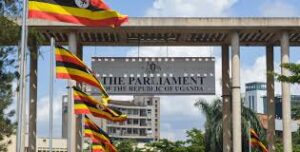
    On Monday 25th May,2026 529 Members of Parliament will enter the chamber to elect a Speaker for the 12th Parliament in what has become a contest shaped by Sun Tzu’s final chapters, where Chapter 12, Attack by Fire, collides with Chapter 13, The Use of Spies, and the Constitution’s secret ballot ensures that the real war remains invisible to the public eye.

    The National Resistance Movement (NRM) Central Executive Committee (CEC) met on Friday 22 May 2026 at State House Entebbe and attempted to subdue the enemy without fighting by endorsing a candidate and presenting the outcome as settled, yet the law vests the election in the MPs themselves and the ballot they will cast in private allows an individual to applaud on Friday and vote differently on Monday without ever being known.

    That tension between public display and private choice has turned what appeared to be a walkover into a three-way contest in which establishment force, opposition strategy, and cross-party patience will be tested against one another under Uganda’s unicameral system, where there is no second chamber to review or dilute the decision.

    The race opened early in the week then climaxed on Friday when veteran politician Hon. Paul Mwiru of Jinja South East constituency fired the first shot by declaring his candidature with a 1,252-word manifesto and the official endorsement of the National Unity Platform, a move that recast the Speaker’s election from coronation to contest and forced the House to confront questions of transparency, budget discipline, and institutional independence that had been muted under previous leadership.

    Hon Mwiru, a lawyer by profession, told MPs and the country that Parliament must be rediscovered after a period defined by lavish spending, secret budgets, and corruption allegations against an institution constitutionally mandated to guard public funds, and he promised a public disclosure policy that would publish Parliament’s outputs and costs while shifting resources from CSR and donations to committees and substantive social investments.

    He has asked whether Ugandans want billions spent on luxury vehicles like Rolls Royce while hospitals lack medicine, insisted that the Ten-Fold Growth Strategy must be matched with funding for health, schools, and the Parish Development Model, and said that under his watch corruption would attract severe sanctions and the Rules of Procedure would be adapted to entrench transparency.

    NUP, whose leader/former presidential candidate Hon. Robert Kyagulanyi alias Bobi Wine remains outside the country, endorsed Hon Mwiru and enters the 12th Parliament with 50 MPs, down from the 57 it held in 2021. This still makes it the largest opposition bloc but also means Mwiru must look beyond his caucus to reach the 265 votes needed to win in a House of 529 members.

    Into the same contest has stepped former Defense Minister/West Budama Central constituency in Tororo district Hon Jacob Oboth Oboth, who is being rallied by Uganda’s Chief of defense Forces(CDF) Gen. Muhoozi Kainerugaba, founder of the Patriotic League of Uganda, after the fall of Rt. Hon. Anette Anita Among, who was forced out by a corruption and abuse-of-office probe after serving a single term and thereby broke the unwritten formula that had carried Rt Hon Edward Ssekandi and Rt Hon Rebecca Alitwala Kadaga through ten-year tenures.

    Hon Oboth is now positioned as the establishment choice with backing from PLU and elements inside NRM, and he is waging Sun Tzu’s Attack by Fire by showing overwhelming strength early, using CEC’s Friday endorsement at Entebbe, military visibility, and the memory of party discipline to burn momentum and signal that resistance will carry the cost of lost committees, funding, and future tickets.

    That strategy seeks to win without a fight, yet it risks provoking the very rebellion it aims to prevent, as happened in 2011 when Rebecca Kadaga defied NRM CEC and won the speakership with 302 votes against FDC’s Nathan Nandala Mafabi’s 72 after the party’s endorsed candidate Edward Kiwanuka Ssekandi withdrew.

    The secret ballot freed MPs to act on private judgment rather than public instruction.

    Hon. Nobert Mao, the former Justice Minister and DP president, is also in the contest and is not written off, because in a secret ballot a candidate who appears marginal on Friday can become decisive on Monday and Mao’s two decades of cross-party relationships give him access to the quiet networks that Sun Tzu describes in Chapter 13.

    Hon Mao is running the Empty Fort Strategy, appearing weak with a small DP presence while his alliances work beneath the surface, and he does not need to win the noise but rather a split between Hon Oboth and Hon Mwiru that forces a run-off where his bridge-building and appeal to independents and disillusioned NRM MPs can become decisive.

    Sun Tzu’s advice to wait at ease while the enemy is toiling and struggling fits Hon Mao’s posture, since he benefits if the two larger forces exhaust each other and the vote proceeds to a second round.

    Uganda’s unicameral system intensifies the stakes because there is no Senate or Upper House to check or balance the Speaker’s authority, and the 1995 Constitution entrenched a single Parliament of 529 MPs built on the British common law tradition mixed with statute, so that a Bill is introduced, debated, and passed in the same House.

    Under Article 82 of the Constitution the Speaker presides over all sittings, interprets the Rules of Procedure with finality, certifies Money Bills, chairs the Parliamentary Commission which controls Parliament’s budget and staff, represents Parliament to the President, Chief Justice, and foreign parliaments, sits on the National Security Council, and can act as President for up to fourteen days if the President and Vice President are unavailable, which places the Speaker third in the Order of Precedence of 1999 after the President and Vice President and ahead of the Chief Justice and Prime Minister.

    In bicameral systems those powers are divided, but in Uganda they are fused in one office, which is why Monday’s vote is the single most consequential act of the new Parliament and why the Speaker elected will preside over all legislation, committee appointments, and disciplinary matters for five years without a second chance.

    The law governing the election is straightforward yet decisive, requiring that a candidate be a Ugandan citizen qualified to be an MP, allowing a non-MP to stand but forcing them to vacate their seat if elected from within the House, and mandating that nominations be submitted to the Clerk to Parliament and seconded, after which the Clerk presides until a speaker is sworn in.

    Voting is by secret ballot of MPs present and voting, and a candidate needs more than half of all votes cast, which means 265 if all 529 members vote, and if no one reaches that mark the top two proceed to a run-off, with the term set at five years and renewable and no constitutional limit on the number of terms.

    For more than twenty years NRM operated on the expectation of ten-year tenures for Speaker and Deputy, a formula that ended with Among’s single term and the corruption probe that removed her, leaving behind a precedent that automatic succession is no longer assured and that the secret ballot can override party instruction.

    The vote arithmetic reflects the House’s composition, with NRM holding about 372 seats including constituency MPs, district woman MPs, and NRM-aligned independents, which means that CEC’s endorsement at Entebbe on Friday should give its candidate an advantage if the whip holds, while NUP’s 50 MPs back Mwiru, independents make up about 68 seats, and UPDF and special interest MPs hold the remainder and are traditionally aligned with the establishment but are not legally bound.

    Mwiru therefore needs all 50 of NUP, a majority of independents, and at least 130 NRM defectors to reach 265, Oboth needs to keep NRM intact and pick up a handful of independents, and Mao needs a coalition of opposition, independents, and NRM MPs disillusioned by the Among probe and tired of the old formula, and because the ballot is secret none of those calculations can be verified until the Clerk announces the result.

    CEC’s decision on Friday, which endorsed Hon Oboth Oboth and Hon Thomas Tayebwa was political rather than legal, and an MP who attended and publicly supported the party’s choice at State House Entebbe may still vote differently on Monday, a reality that explains why “it is not over until it is over” and “never say never” circulate among members who understand that defying CEC carries internal cost but remains constitutionally protected.

    Because Uganda has no Upper House, the Speaker elected on Monday will control the entire legislative agenda for five years, and the three strategies on display map directly onto Sun Tzu’s last two chapters.

    Hon Oboth is using fire to prevent a fight, Hon Mwiru is using spies to turn the enemy’s discontent into votes, and Mao is using patience and the empty fort to profit from a split.

    The old ten-year formula is dead, the one-term precedent is fresh, and the secret ballot erases certainty. Parliament meets on Monday to elect the Speaker of the 12th Parliament for 2026 to 2031, CEC spoke on Friday at Entebbe, the manifestos have circulated, and the whips have done their work, but only the 529 MPs in the chamber will decide, and in a unicameral system, as in Sun Tzu’s final chapters, that decision is the beginning and the end of the matter.

    TEU Explainer: Who is Sun Tzu?  

    If you have seen “Sun Tzu” or “Tsu Sun” quoted in our Speaker race story, here’s who he is and why he matters to Monday’s vote.

    The Person. Sun Tzu was a Chinese military general, strategist, and philosopher who lived around 500 BC during the Spring and Autumn period.

    Tsu Sun is the same name, just an older way of writing it in English.

    He was not a king or emperor, but was an advisor. His job was to teach leaders how to win wars without destroying their own army.

    The Book: The Art of War.

    Around 2,500 years ago he wrote The Art of War. It’s 13 short chapters.

    It’s not about swords. It’s about strategy: how to read your opponent, how to use information, when to attack, when to wait.

    It’s now used by armies, CEOs, lawyers, politicians and journalists because the rules do not change whether the battlefield is China in 500 BC or Parliament in Kampala in 2026.

    Why TEU is Using Him for the Speaker Race.

    Uganda’s Speaker election on Monday is not just about who has more MPs. It’s about strategy under a secret ballot. Sun Tzu’s last 2 chapters explain it best:

    Chapter 12: Attack by Fire.

    Idea: Show overwhelming force so the enemy gives up before you fight.

    In Parliament: That’s CEC meeting Friday 22 May at State House Entebbe, endorsing a candidate, and using party discipline.

    The message: “Don’t fight, you’ll lose committees and funding.” Goal  win without a vote.

    Chapter 13: The Use of Spies.

    Idea: Real victory comes from secret information. What people say in public is not what they’ll do in private.

    In Parliament: That’s the secret ballot. An MP can stand with CEC on Friday and vote differently on Monday. Nobody knows until the Clerk announces the result. The “spy” is the private vote.

    The 2 Quotes We Used. All warfare is based on deception in Ch. 13

    For TEU readers: CEC’s Friday endorsement is public. The real decision is hidden until Monday. Don’t trust the noise.

    “The supreme art of war is to subdue the enemy without fighting.” in Ch. 3

    For our readers: If Oboth/CEC can scare enough MPs into line, they win without counting 265 votes. If they fail, there’s a rebellion like 2011.

    Monday decides who understood Sun Tzu better.

    We Expose. You Decide.

  • The Weight Of the Gavel: How Annette Anita Among Became Uganda’s Modern Tragedy Of Hubris–A Global Feature on Power, Arrivalism, and the Ancient Law of Gravity.

    The Weight Of the Gavel: How Annette Anita Among Became Uganda’s Modern Tragedy Of Hubris–A Global Feature on Power, Arrivalism, and the Ancient Law of Gravity.

    There is a word the ancient Greeks carved into their tragedies with fear and reverence, and that word is hubris, a form of arrogant pride that convinces a mortal that he has outgrown the human condition, that the laws which bind lesser men no longer apply to him, and that the gods themselves must make room for his ascent.

    According to Oxford English dictionary, hubris is defined as excessive pride or self-confidence.

    Merriam-Webster defines it as exaggerated pride or self-confidence, but also as a great or foolish amount of pride or confidence that leads to disaster. Then Cambridge dictionary puts hubris as pride or confidence that is unreasonable or extreme.

    The key thread in all the three definitions is that hubris is not normal pride, it is excessive, unreasonable and destructive pride that makes you ignore limits.

    Hubris is not confidence, which is the quiet knowledge that you can do a job, and it is not ambition, which is the healthy desire to rise, but it is the intoxicating delusion that you have arrived, that you are untouchable, and that history will make an exception for you.

    Every civilization that has survived long enough to write its own story has also written the epitaph of those who succumbed to hubris, because the Greeks understood that hubris always summons its twin, nemesis, the inevitable, crushing downfall that follows when a mortal dares to equate himself with the divine.

    From the roof of Babylon where King Nebuchadnezzar declared that he had built the great city by his own mighty power and was driven to eat grass like cattle for seven years, to the podium in Caesarea where King Herod Agrippa accepted the crowd’s shout of “the voice of a god” and was eaten by worms in the same hour, to the cliffs of Crete where Icarus flew too close to the sun and drowned in the Aegean Sea, the script has never changed, and it is a script that Uganda is now reading aloud with Rt Hon Annette Anita Among as its most visible protagonist.

    The on-going Anita Among’s story cannot be understood as a mere political scandal, nor can it be reduced to the language of sanctions, investigations, or parliamentary revolts, because beneath those headlines lies a universal archetype that has haunted power since the first king claimed the sky, and that archetype is the moment when power stops being a responsibility and becomes a possession, when the Speaker’s gavel stops being a tool of order and becomes a weapon of silence, when the House of Speaking ceases to be a forum for debate and becomes a private chamber where only one voice is permitted to echo.

    Her ascent was swift and intoxicating, a trajectory that carried her from Bukedea District Woman MP to the Chair of Uganda’s 11th Parliament at the age of forty-eight, a rise that would test the humility of any mortal because when foreign delegations bow, when bills move at your nod, when your name alone can stall or accelerate the machinery of government, the whisper of hubris begins to speak in the language of Nebuchadnezzar: “I built this.”

    The danger of that whisper is not that it is loud, but that it is seductive, and it tells you that the rules written for those still climbing no longer apply to you, that the institutions designed to check power are now inconveniences to be managed, and that the people who once carried you to the chair are now subjects to be corrected.

    The clearest moment of that intoxication came when Anita Among publicly shouted down Hon Jackson Karugaba Kafuuzi, the Deputy Attorney General, a lawyer born in 1977 with years of litigation and legislation behind him and appointed by President Yoweri Museveni, the man Ugandans refer to as the “Fountain of Honor,” and in that moment she did not merely disagree with his legal opinion, she vowed that he would never be permitted to speak in Parliament so long as she held the gavel, a statement that should have frozen the blood of every Ugandan who understands that Parliament is, by constitutional design, the House of Speaking, the one place where government and opposition, attorney and backbencher, must argue, correct, and deliberate on laws that affect forty-eight million citizens.

    To declare that the government’s chief legal adviser would not be allowed to utter a word was to declare that this was not a house of speaking but her house, and that is the precise moment when hubris stops being a private sin and becomes a public assault on the republic itself, because Caligula mocked the Roman Senate, but Anita Among attempted to silence it, and Macbeth murdered Duncan to secure the crown, but Anita Among attempted to murder debate to secure the chair.

    The insults did not end with the Deputy Attorney General, for on multiple occasions she referred to elected Members of Parliament as being “without sense,” dismissing men and women who had survived campaigns, police teargas, and rural mobilization as children who needed to be scolded, and in that language we hear the echo of Herod Agrippa who accepted worship and did not rebuke it, and we hear the echo of every leader who believes that the people who elected them are now beneath them, because hubris always ends with the leader looking down from a height that exists only in his own imagination.

    But the intimidation did not end at the floor of Parliament, because hubris, once intoxicated with the gavel, extends its shadow into the electoral arena, where aspirants who dared to contest against preferred candidates were systematically intimidated and threatened into quitting the races, while a few others were lucky enough to be bribed or bought off with money, favors, or promises, until only the chosen favorites sailed through unopposed or walked over weak, demoralized opponents who had been hollowed out before the first vote was cast.

    Reports that have since circulated suggest that this machinery of control was not a solo act, but a coordinated operation in which some officials from the Judiciary, the Electoral Commission, and the Police were handy in ensuring that the shoddy projects tied to Anita Among’s name moved through the system without scrutiny, approval, or resistance, turning institutions that should have been referees into accomplices.

    The most glaring and heartbreaking example of this power without restraint unfolded in Jinja City, where within a few days a piece of land belonging to the Jinja Nile Resort Hotel mysteriously bore titles in the names of Anita Among’s twin children, who are minors and could not have legally transacted, negotiated, or earned such property, leaving the original investors in tears and in shock as they watched years of capital, sweat, and legitimate business evaporate in the face of a signature and a stamp.

    This is not merely an abuse of office; it is the textbook definition of hubris in action, because it reveals a belief that laws, land registries, children’s rights, and investors’ livelihoods are all negotiable once you have arrived, and it proves that when a leader believes herself untouchable, she will reach not only for the microphone but for other people’s land, other people’s children’s futures, and other people’s tears.

    What makes the Anita Among saga particularly Ugandan, and particularly dangerous, is that she is not an isolated case but the most visible manifestation of a silent epidemic that runs through the big shots who keep billions in manholes that carry no water, through the Chief Accountants who preside over garages that house no cars, through the commissioners and contractors who believe that invisibility is immunity and that because they do not drive a Rolls Royce they cannot be seen, when in fact their invisibility is their greatest vulnerability because it is born of the same arrivalism that convinced Nebuchadnezzar he was a god and convinced Icarus that the sun was his friend.

    This is the spirit Ugandans call “I have arrived,” and it is the spirit that tells a technocrat that he is above the Auditor General, that tells a political broker that he is above the Inspectorate, and that tells a citizen to say “Uganda, you are serious alone,” which is our national lullaby for impunity, the belief that if you steal quietly and do not flash your wealth, the tears of the mother who buried her child because the hospital had no medicine will never find you.

    But tears do not evaporate, they accumulate, and they bounce back, and the physics of hubris is as reliable as the physics of gravity, which is why we now see the nemesis arriving in the form of international sanctions from the United States and the United Kingdom, in the form of domestic investigations and parliamentary revolts, in the form of a public repudiation that no amount of wealth or political capital can silence, because the doctor who survived COVID-19 but cannot pay school fees, the soldier who faced bombs in Somalia but was shouted down by a civilian, and the citizen who was sent home from a government hospital to “go buy medicines” while money was being used as tissue in sealed rooms, all of them have contributed their tears to a reservoir that does not forget and does not forgive.

    The Bible did not hide King David’s adultery nor the planned murder of his army commander Uriah the Hittite, and it did not hide Peter’s denial, because scripture is not interested in public relations but in pedagogy, and history did not hide Napoleon’s exile or Idi Amin’s flight to Saudi Arabia, because the past is not a biography but a manual, and Anita Among’s name will become coursework for students of Literature who will study her as a modern tragic heroine, for students of Political Science who will dissect her as a case study in institutional overreach, and for students of Law who will parse her for attempting to silence the Deputy Attorney General in the House of Speaking, and this is not cruelty but necessity, because a nation that refuses to study its fallen cannot avoid falling in the same way.

    Among the Lango where I come from, there is a proverb that says Pe Ikun Wang Bur Ilwangi, which means do not surrender the wound to the fly, because when a wound is left open the fly comes, lays eggs, and creates maggots, and Uganda’s wound is corruption, arrivalism is the fly, and the silent Anitas in their garages are the maggots, and if we surrender the wound to the fly, we will all rot together, but if we join hands and do something we may yet heal.

    So, the question is not whether power corrupts, because Lord Acton(1834-1902) settled that in 1887, and the question is not whether Anita Among is the first to fall, because Nebuchadnezzar, Herod, Caligula, and Macbeth fell before her, but the question is whether Ugandans and Africans are finally literate enough to read the manual that history has written in blood and worms and melted wax, and whether we are brave enough to be serious together instead of serious alone, because you can silence journalists, you can shout at generals, you can shut down a Deputy Attorney General, you can buy off investigators, but you cannot outrun tears, you cannot outrun history, and you cannot outrun gravity.

    Every Nebuchadnezzar meets the grass, every Herod meets the worms, every Icarus meets the sea, every Caligula meets the Guard, every Macbeth meets the sword, and every Speaker who silences the House meets the gavel of history, and every silent Anita meets the day the manhole is opened, and on that day the world will see that hubris was never a private affair but a public crime, and that the law of gravity applies to Speakers and to clerks, to the visible and to the hidden, to the ones on television and to the ones counting cash in sealed rooms.

    Uganda must follow this saga with keen interest, not as gossip but as a case study, because if we do not learn from Anette Anita Among, we will become her, and most of us will not even get a headline when we fall, we will simply rot in our garages, and that is why Pe Ikun Wang Bur Ilwangi, that is why we must be serious together, and that is why the weight of the gavel is heavier than the weight of gold.

    TEU Editorial Position.

    Why Journalism Is the Third Arm of State Integrity

    Professional media houses do not follow individuals, they follow impact and they follow it for the same reason other state institutions do their work: because the country cannot survive if any one arm abandons its post.

    The Daily Monitor, The New Vision, NTV, NBS, and TEU, among others, are doing the same because it is right. Not because it is popular. Not because it is safe. Because it is right.

    The UPDF does not apologize for protecting territorial integrity.  You cannot tell the Uganda People’s Defense Forces to “stop guarding the border” because a neighbor is offended.

    Their duty is the map of Uganda because when the border is breached, they respond and that is their oath.

    The Uganda Police does not apologize for maintaining internal security hygiene and you cannot tell the Uganda Police to “stop checking counterfeit goods” because a trader is powerful.

    Their duty is the hygiene of the republic. When crime is reported, they investigate. That is their oath.

    Journalism does not apologize for maintaining constitutional hygiene, you cannot tell The Daily Monitor, The New Vision, NTV, NBS, or TEU to “stop reporting on Parliament” because an office holder is offended. Our duty is the hygiene of the Constitution.

    When the House of Speaking is declared closed to the Deputy Attorney General, when aspirants are intimidated, when strategic land is titled to minors, when the Judiciary, EC, and Police are alleged to facilitate irregularities we report because that is our oath.

    The parallel is exact:  UPDF protects the land the Police protect the law.

    Journalism protects the record.

    If one arm fails, the other two are exposed. If the border is porous, crime increases. If crime is unchecked, the border is meaningless. If the record is falsified, both the border and the law are meaningless because the public cannot know what is real.

    This is why “public interest” is not a slogan, it is a doctrine.

    The Guardian newspaper exposed the Panama Papers. The New York Times exposed Watergate. The Daily Monitor and state-owned New Vision, among others have exposed CHOGM money, pension scandals, and OPM scandals.

    NTV and NBS have broadcast investigations that forced resignations, investigations and prosecutions.

    They did not do it because they were “after” a person, they did it because they were “for” the Republic. TEU does the same. The case of the 11th Parliament meets every global test of public interest: governance, public funds, fair elections, and institutional integrity.

    Therefore, TEU’s position is non-negotiable:  We are not pursuing Anita Among. We are pursuing impunity. We are not attacking a person. We are defending an institution. We are not practicing vendetta journalism. We are practicing constitutional journalism.

    Our acclaimed slogan stands: We Expose. You Decide.


  • From Fake CID Summons To Digital Grave-Dancing: How Uganda’s Online Space Has Become A Moral Wasteland.

    From Fake CID Summons To Digital Grave-Dancing: How Uganda’s Online Space Has Become A Moral Wasteland.

    A flyer is making rounds again on WhatsApp and Facebook, the same one that surfaced in 2024 claiming that 30 Members of Parliament would be summoned to CID Kibuli on Monday, 17th June 2024 at 10:30 am and thereafter arrested for corruption in the 11th Parliament.

    The names are listed in full: Hon Joel Ssenyonyi (former LOP), Hon Ibrahim Ssemujju Nganda, Hon Fox Odoi-Oywelowo, Hon Florence Asiimwe, and at number 5, Hon. Iddi Isabirye, former MP for Bunya South. The document looks urgent, but it has no letterhead, no signature, no case reference number, and no stamp of the Uganda Police Force.

    Only one problem with this urgency: 17th June 2024 came and went, no summons was issued, no arrests were made, and CID Kibuli did not publish any statement on the matter.

    The Uganda Police dismissed the document in 2024 as fake and misleading, reminding the public that criminal investigations are communicated through official channels and not through graphics designed for viral sharing.

    Hon. Iddi Isabirye has since scoffed at his inclusion on the list, describing it as a product of idle haters. He noted that he served Parliament for two terms of five years each, acted as Vice Chairperson of the ICT Committee for five years, and walked those years without a shred of scandal, because real accountability has records, not rumors.

    His reaction points to something deeper that is being lost in the digital age: in African society, and in scripture, it was taboo to spread rumors or propaganda about others, especially elders and leaders.

    African Custom, Scripture, and the Sanctity of the Dead.

    While the fake list circulates, another ugliness is unfolding. In sections of Kayunga and Jinja, some users are celebrating the death of Presidential Advisor Moses Kalisa Karangwa, who died on May 18 in a road accident.

    Instead of condolences, they posted videos mocking the accident. Instead of silence, they turned the funeral into content.

    For centuries across African societies, death was handled with deep sensitivity, collective mourning, and restraint. Among the Baganda, Basoga, Lango, Acholi and many other communities, the dead were not ridiculed because death was understood as a sacred passage, not a political weapon.

    Elders taught that to mock the dead was to invite misfortune upon the living, and to spread falsehood about a person, living or dead, was to break the moral fabric that held the clan together.

    The Bible reinforces this ethic in several places. Proverbs 11:13 warns that: “A gossip betrays a confidence, but a trustworthy person keeps a secret”, while Ephesians 4:29 instructs believers to “Let no corrupting talk come out of your mouths, but only such as is good for building up.”

    Ecclesiastes 7:1 says, “A good name is better than precious ointment, and the day of death than the day of birth”, reminding us that dignity in death outweighs the noise of life. To celebrate a man’s death or to circulate a lie about his colleagues is to violate both custom and scripture.

    What Scholars and Researchers Say About Death, Leaders, and Elders.

    Anthropologists and social researchers have documented how African societies treated death and leadership with reverence because leaders embodied collective memory.

    In his study African Religions and Philosophy, John S. Mbiti (Kenyan theologian and author) observed that among Africans, “Death is not the end of life, but a transition to the community of the living-dead, and therefore it demands respect, not mockery.”

    To dance on a grave was not just cruel; it was cosmological disorder.

    Political scientist Prof Mahmood Mamdani, writing on the post-colonial state in Africa, noted that when institutions weaken, “public discourse is replaced by rumor, and rumor becomes the currency of political struggle.”

    The fake 30-MP list is exactly that: rumor weaponized to destroy reputations without trial, evidence, or due process.

    Nigerian Communications scholar and media researcher Prof Nnamdi Ekeanyanwu, in research on social media and African values, found that: “the erosion of communal ethics on digital platforms has led to the normalization of grave-dancing, where the death of public figures is celebrated as victory.”

    He warned that this culture will eventually turn on the celebrants themselves, because a society that does not bury its dead with dignity cannot protect its living with justice.

     The Link Between the Lie and the Grave.

    The recycled list and the celebration of Karangwa’s death are not separate issues. They are two expressions of the same collapse. One destroys the living through falsehood, the other disrespects the dead through mockery. Both are fueled by cheap data and a culture where people sacrifice money for supper to buy bundles, not to build up others, but to pull them down.

    When custom breaks, law is next. Under the Computer Misuse Act, spreading false information about criminal proceedings is an offense, and content intended to ridicule the dead violates both the law and the communal values that the Constitution seeks to protect. More importantly, when a society loses the ability to mourn together, it loses the ability to govern together.

    The Key Takeaway.

    The 30-MP list is false. Police said so in 2024, the date has passed, and nothing in it happened. Do not forward it.

    Moses Kalisa Karangwa is dead. He deserves respect, his family deserves privacy, and Ugandans deserve to remember him without the noise of digital grave-dancers.

    Uganda has real corruption to fight. It has IGG files, DPP charges, and SH-ACU operations that move with evidence, not flyers. It also has a cultural and biblical tradition that says you do not spread rumors about others, you do not dance on graves, and you do not sacrifice your name for a moment of online applause.

    Rest in peace, Moses Kalisa Karangwa. Our condolences to the family. 

    To the authors and forwarders of fake lists and death memes: custom is watching, scripture is clear, and the law is awake.

    The TEU Position Statement. On Digital Grave-Dancing, Recycled Hoaxes, and the Erosion of Civic Decency.  

    At TEU, we do not flinch from hard truths, and we do not mince words when the public square is desecrated.

    The dual spectacles unfolding on our timelines, a recycled 2024 hoax listing 30 MPs for phantom arrests, and the grotesque celebration of Presidential Advisor Moses Kalisa Karangwa’s death in Kayunga and Jinja are not mere “online banter.” They are symptoms of a civic pathology that must be named, condemned, and excised.

    We Condemn the Manufacture and Circulation of Fake Lists.

    The document purporting to summon and arrest 30 MPs on 17th June 2024 was debunked by Uganda Police in 2024. It has no letterhead, no case reference, no legal standing. Its resurrection is deliberate disinformation: a counterfeit brief designed to assassinate character, stoke panic, and pollute the discourse on real anti-corruption work by IGG, SH-ACU, and DPP.

    To propagate it is to become a co-conspirator in a smear campaign. It is libel by retweet, defamation by forward. TEU considers this a direct assault on due process and the presumption of innocence.

    We Condemn Digital Grave-Dancing as Moral Bankruptcy.

    The mockery of Moses Kalisa Karangwa’s death is not political critique. It is negrophilic glee. It is the digital equivalent of dancing on a freshly dug grave.

    For centuries, African cosmology treated death as a sacred threshold, not a spectator sport. Elders taught that to ridicule the departed was to invoke collective misfortune. Scripture concurs: “A good name is better than precious ointment, and the day of death than the day of birth” (Ecclesiastes 7:1).

    What we are witnessing is the inversion of this ethic: a culture where data bundles are used to weaponize grief and monetize malice.

    The Connecting Thread: Ethics Collapse, Institutions Bleed.

    Both acts the hoax and the mockery are cut from the same cloth. They replace evidence with innuendo, and condolence with content. They treat reputations as disposable and mortality as a meme. Scholars like Mbiti and Mamdani have warned that when rumor replaces record, and when elders are not accorded reverence, the social contract frays.

    A society that cannot mourn cannot govern. A citizenry that cannot verify cannot self-rule.TEU’s Call: Digital Self-Restraint and the Law of the Leveler.

    We urge all digital users to exercise radical self-restraint. Verify before you virilize. Pause before you post. Remember that sickness and death are the ultimate social levelers. No title, no tribe, no political card immunizes anyone from the hospital bed or the hearse.

    Today you celebrate another man’s funeral. Tomorrow, your own family may be the trending topic. The algorithm has no loyalty, and the internet has no memory for apologies.

    TEU Verdict: The 30-MP list is FALSE-cycled hoax, dismissed by Police in 2024, void ab initio.

    Celebrating Karangwa’s death is INHUMANE. It violates Ugandan custom, constitutional dignity, and basic humanity.

    Final Word.

    TEU stands for forensic truth, not frenzied fiction. For institutional accountability, not individual humiliation. For journalism that illuminates, not platforms that incinerate.

    To those trading in fake lists: Cease. To those dancing on graves: Desist.

    Because in the end, the smartphone is not a sword, data is not a license for cruelty, and no one is beyond the reach of mortality.

    Rest in peace, Moses Kalisa Karangwa. Condolences to the bereaved.

    To purveyors of hoaxes: The law is awake. History is recording.

    We Expose. You Decide.

  • Editorial: The Empty Chair That Spoke Louder Than the Oath At Kololo Independence Ceremonial Grounds.

    Editorial: The Empty Chair That Spoke Louder Than the Oath At Kololo Independence Ceremonial Grounds.

    We Expose, You Decide.


    On Tuesday 12th May 2026, Uganda witnessed what it has seen six times before: the swearing-in of Gen (Rtd)Yoweri Kaguta Museveni for a 7th term.

    The guns boomed (the 21-gun salute rang out) and immediately after, the skies over Kololo and Kampala came alive. Russian-made Sukhoi fighter jets roared across the capital in tight, precise formation, trailing the national colors. Behind them, UPDF commandoes descended in synchronized parachute jumps, landing to the amazement of the crowd below.

    The display drew applause and raised phones from the stands where foreign heads of state, government representatives and members of the diplomatic corps sat alongside Ugandan citizens. It was a moment of pageantry meant to project strength, order and continuity.

    But history will not remember this day for the oath alone. It will remember it for the empty chair.

    For 40 years, Mama Janet Kataha Museveni stood beside her husband on every defining national day. Her absence on Tuesday was a human moment that reminded 48 million Ugandans that power, age, and politics cannot shield anyone from the fragility of life.

    From Kisoro to West Nile, from Karamoja to Bunyoro, from Busoga to Lango and Acholi, anxiety and questions hung on the hearts and lips of everyone. Some whispered them in private. Others voiced them loudly. And as usual, the haters used the moment to spin toxic messages of division and cynicism.

    Yet even in that noise, another sound rose: Ugandans of good spirit bowing their heads and praying for the nation and for the First Family to remain united and strong.

    At The Exposure Uganda, we choose to report the facts without embellishment. Mama Janet was absent. The nation saw visible gaps in the First Family’s public appearance. The future feels more open than it has in a decade. But facts alone do not carry a nation. Character does.

    When Uncertainty Hits, Discern Truth From Lies.

    Scripture: “For I know the plans I have for you,” declares the Lord, “plans to prosper you and not to harm you, plans to give you hope and a future.”

    Jeremiah 29:11

    Context: In 597 BC, Judah was in Babylonian exile. False prophets were telling the people what they wanted to hear: “You’ll be back home soon, this is temporary.” Jeremiah 29:8-9 warns: “Do not let the prophets and diviners among you deceive you… they are prophesying lies to you in my name.”

    Jeremiah’s real message was harder but true: the exile would last 70 years, so settle, work, and seek the welfare of Babylon. Yet in the middle of that hard truth, he gave verse 11 God’s promise that He had not forgotten them and had a future in store.

    For Uganda: Right now, many voices are playing the role of false prophets. They are spinning what people want to hear: doom, dynasty, collapse, or quick fixes. They use Mama Janet’s absence to manufacture panic.

    But the truth is: Uganda is not collapsing because one chair was empty. The real task is what Jeremiah told the exiles , settle down, do the work, seek the welfare of the nation, and trust that God’s long-term plan is still in motion. Discernment matters more than noise.

    Courage Is Required When the Future Feels Unknown.

     Scripture: “Have I not commanded you? Be strong and courageous. Do not be afraid; do not be discouraged, for the Lord your God will be with you wherever you go.” Joshua 1:9.

    Context: Moses had just died. Joshua was taking over leadership of a restless nation heading into unknown territory. God’s command was to be courageous because His presence, not Joshua’s ability, would carry them.

    For Uganda: Transitions make people afraid. Whether it is about leadership, the economy, or security, fear can paralyze us. This verse is a call to move forward with courage, knowing that God’s presence does not leave when leaders change.

    A Nation Should Respond to a Mother’s Sickness with Prayer, Not Speculation.

    Scripture: “Elisha turned away and walked back and forth in the room and then got on the bed and stretched out on him once more. The boy sneezed seven times and opened his eyes.”2 Kings 4:35

    Context: The Shunammite woman’s son died suddenly. She went straight to the prophet Elisha. He prayed, and God restored the boy to life.

    For Uganda: Many Ugandans are praying for Mama Janet’s recovery. This story says that prayer to the God who gives life is not wasted. It also models how a nation should respond to a “mother’s” sickness with intercession, not speculation and gossip.

    God Always Has a Remnant Holding the Nation Together.

    Scripture: “Yet I reserve seven thousand in Israel all whose knees have not bowed down to Baal and whose mouths have not kissed him.” 1 Kings 19:18

    Context: Elijah was discouraged, thinking he was the only one left serving God. God showed him there were 7,000 others still faithful.

    For Uganda: In moments when leaders look isolated and the future looks shaky, this reminds us that Uganda’s future is not dependent on one family or one leader. Thousands of teachers, nurses, pastors, entrepreneurs, and ordinary citizens are holding the country together quietly.

     Even With Little, God Can Stretch It.

    Scripture: “For this is what the Lord, the God of Israel, says: ‘The jar of flour will not be used up and the jug of oil will not run dry until the day the Lord sends rain on the land.’” 1 Kings 17:14.

    Context: During famine, the widow of Zarephath had one last meal. Elijah told her to give it to him first, and God multiplied it.

    For Uganda: Many Ugandans feel like they are running on the last of their “flour and oil” economically and socially. This story reminds us that God can stretch what little we have when we act in faith and trust Him, rather than panic.

     Our Conclusion.

    The 7th term begins with a question mark, not an exclamation point. That is not weakness. That is honesty.

    In uncertain times, everyone speaks. But not everyone tells the truth. Let this be the term where Uganda rejects the false prophets of social media and politics, and holds onto the truth that God’s purpose for the nation is bigger than one ceremony.

    Let this be the term where we stop confusing noise for leadership, and start demanding truth, service, and unity. Let this be the term where the First Family, like every other Ugandan family, remembers that strength is not in hiding frailty, but in facing it together.

    We at The Exposure Uganda will continue to expose what others hide. We will hold power accountable. We will give voice to the ordinary Ugandan who cares more about medicine in the hospital than about slogans on the podium.

    And from all of us at The Exposure Uganda: Get well soon, Mama Janet Kataha Museveni. Uganda needs your prayers and we join thousands across the country in wishing you a quick and full recovery.

    Decide whether you will feed the cycle of hate, or whether you will be part of the generation that chooses prayer over provocation, truth over tribalism, and unity over uncertainty.

    But at the end of the day, We Expose, You Decide.